
Reviewed · PHOTOGRAPHY SESSIONS
Tokyo Cyberpunk Street Photo Tour
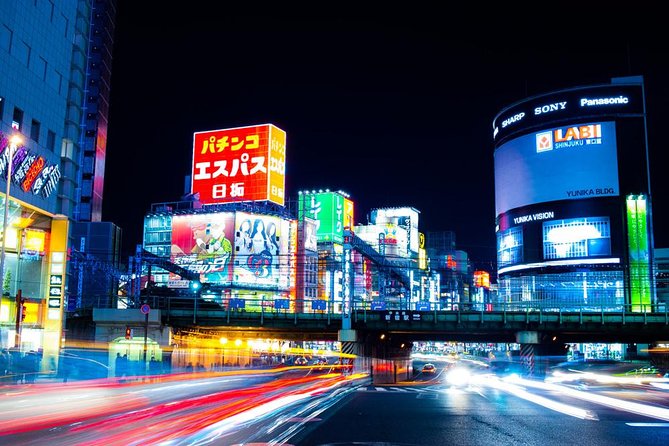
Tokyo looks most dramatic after dark. This three-hour photo walk takes you from Shinjuku’s glowing streets to Shibuya Crossing, with a professional photographer helping you handle neon, crowds, reflections, and long exposures. I especially like the focus on real shooting practice and the option to use either a camera or smartphone. The small group, capped at four people, also gives you a fair chance to get personal help.
The price is $184.99 per group of up to two, which is reasonable for a private-feeling lesson in one of Tokyo’s most photogenic areas. The main caution is the pace: one participant had trouble keeping up with a fast-walking guide and missed part of the tour, so tell your guide if you need a slower walk. You will also pay your own local transport fare between Shinjuku and Shibuya.
In This Review
- Key points at a glance
- Why Tokyo works so well at night
- Starting at Shinjuku’s Kabukicho
- Omoide Yokocho and Tokyo’s smaller scenes
- Moving from Shinjuku to Shibuya
- Shibuya Crossing as the grand finale
- What the photography lesson actually teaches
- Group size, pace, and guide quality
- Timing, weather, and what to bring
- Who should book this photo walk?
- Is $184.99 good value?
- Should you book the Tokyo Cyberpunk Street Photo Tour?
- FAQ
- How long does the Tokyo Cyberpunk Street Photo Tour last?
- What time does the tour start?
- Where does the tour begin and end?
- What locations are included?
- Can I use a smartphone instead of a camera?
- How many people can join?
- What happens if bad weather cancels the tour?
Key points at a glance
- Shinjuku after dark: Begin near Kabukicho, where neon signs, traffic, and narrow streets give you plenty to frame.
- Omoide Yokocho atmosphere: Spend about 30 minutes around Memory Lane, a compact area of tiny eateries and glowing signs.
- Hands-on camera help: Guides such as Charles, Lukasz, Luke, and Stefane have helped visitors adjust both dedicated cameras and iPhones.
- Small-group instruction: With no more than four people, the guide can work directly with different skill levels.
- Shibuya Crossing finale: Finish among the lights and moving crowds at Tokyo’s famous crossing, a strong place to try long exposures.
- Weather matters: The experience requires good weather, though one guide reportedly offered alternate plans when rain arrived.
Why Tokyo works so well at night
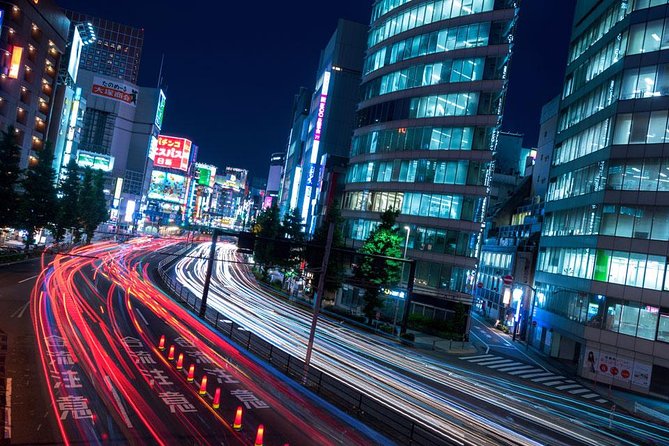
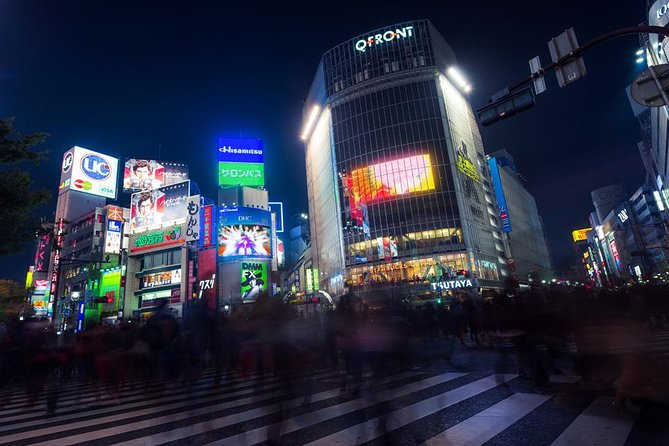
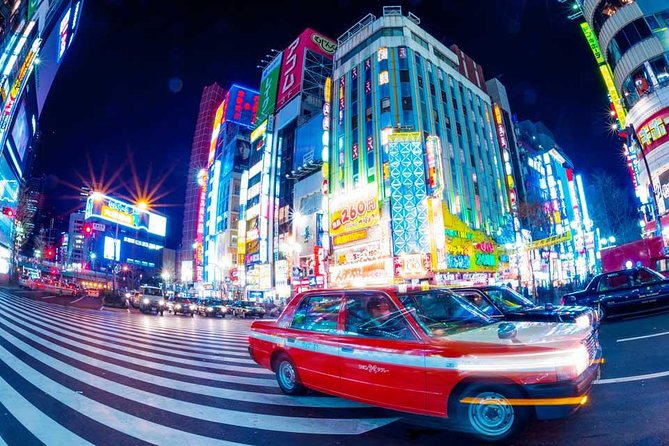
Tokyo gives you several kinds of photographic problems in a single evening. Bright signs sit beside dark alleys. People move quickly through pools of artificial light. Reflections appear in shop windows and wet pavement, while trains, taxis, and crowds add motion.
That mix is useful because you are not just photographing famous sights. You are learning how to handle difficult light. The guide can help you adjust shutter speed, exposure, contrast, composition, and framing as conditions change.
The tour is aimed at photographers, but you do not need professional equipment or advanced skills. Several people joined with only their phones and still received practical advice. One guide showed an iPhone user how to use the contrast slider and lock function, two small adjustments that can make a big difference when you are trying to control a night image.
I like this practical approach. You do not simply walk past a bright sign while someone names the neighborhood. You stop, frame the subject, make a setting change, and try again. That workshop pattern, demonstration followed by practice, is one of the strongest reasons to book.
More Photo Tours in Tokyo
- Best Go Kart Experience in Shibuya Crossing with Iconic Photos
★ 5.0 · 348 reviews - Tokyo Go-Karting Experience: Shibuya Crossing with Photos
★ 4.8 · 190 reviews - Tokyo by Night Photography Tour (Private Option Available)
★ 5.0 · 151 reviews
Starting at Shinjuku’s Kabukicho
The meeting point is Happy Lemon Keio Shinjuku Shop, at 1-chōme-1-4 Nishishinjuku, Shinjuku City. The tour begins at 7:00 pm, near Shinjuku Station, one of the most important transport hubs in Tokyo.
Give yourself extra time to find the meeting place. Shinjuku Station is enormous, and one participant arrived in the area early but still spent about 20 minutes locating the group. The directions may seem clear on paper, but large stations can turn a simple meeting into a small expedition of their own.
From the meeting point, you head toward Kabukicho. This entertainment district is a strong opening because it offers an immediate hit of Tokyo at night: colorful signs, illuminated buildings, busy sidewalks, and side streets that change character every few steps.
The scheduled time here is about one hour. That gives you enough time to work on more than simple snapshots. Your guide may point out lines in the architecture, bright color combinations, people moving through the frame, or ways to avoid letting a sign overwhelm the subject.
For beginners, this is where the lesson can become useful fast. You may learn how to keep a bright sign from washing out the rest of the image, how to hold a phone steady, or how to choose a moment when a passerby adds scale without taking over the picture.
For experienced photographers, Kabukicho offers room to experiment. Try slower shutter speeds for light movement, or look for layers that combine signs, pedestrians, and street reflections. The guide’s value here is not simply knowing the area. It is helping you recognize a good frame before the moment disappears.
Omoide Yokocho and Tokyo’s smaller scenes
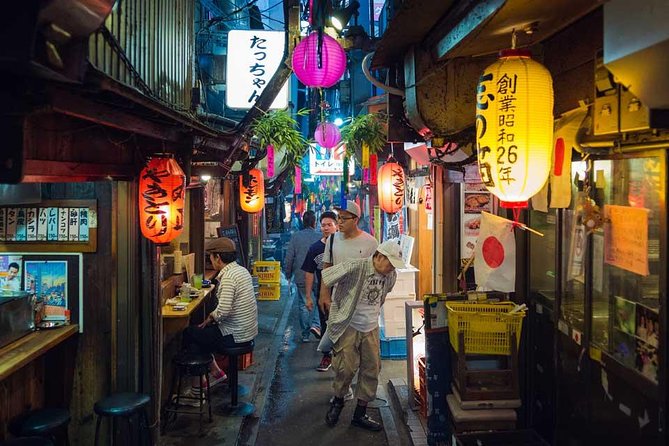
The next listed stop is Omoide Yokocho, also called Memory Lane. You spend about 30 minutes here, and the change from Kabukicho is important.
Kabukicho gives you wide urban energy and tall illuminated signs. Omoide Yokocho is more compact, with narrow lanes and small restaurants. The tighter space encourages different compositions. You might frame a row of lights, use a doorway as a natural border, or look for repeated shapes along the lane.
This stop is useful for anyone who tends to photograph only famous landmarks. The area gives you local street detail rather than a single postcard view. Small signs, cooking spaces, overhead lights, and passing figures can tell a more intimate story of Tokyo at night.
The short time allocation also means you should stay focused. Thirty minutes can pass quickly if you are checking every setting and reviewing every image. I would arrive ready to shoot, with your battery charged and your camera or phone easy to access.
The guide may also help you decide what to leave out. Night photographs often become cluttered because there is so much to see. A simple frame with one main subject can work better than trying to include every sign and person in the lane.
Moving from Shinjuku to Shibuya
After Shinjuku, the group travels by train to Shibuya. The local fare is not included, so carry a way to pay for that ride. The information for the experience refers to the transport exclusion as bus fare, while the route itself specifies a train, so it is sensible to budget for your own public transport cost.
This transfer breaks the evening into two photographic settings. Shinjuku gives you dense streets and small lanes. Shibuya brings wider views, youth culture, nightlife signs, and one of Tokyo’s most famous public spaces.
The tour ends at 2-chōme-2-1 Dōgenzaka, Shibuya, rather than returning to Shinjuku. That is handy if you plan to continue your evening in Shibuya. It also means you should not leave important belongings at your starting point or assume the guide will bring you back.
Keep the group together during the transfer and through the crowded streets. One participant had difficulty when a guide walked too quickly and eventually lost contact with the group. The maximum group size is only four, which helps, but you still need to stay alert at station entrances and busy crossings.
A completely different kind of day out in Tokyo:
- Mt Fuji and Hakone 1-Day Bus Tour Return by Bullet Train
★ 5.0 · 26,383 reviews - 1-Day Tokyo Bus Tour
★ 5.0 · 14,250 reviews - Tokyo: TOKYO SKYTREE® Admission ticket
★ 4.5 · 11,192 reviews - Tokyo: teamLab Planets TOKYO Digital Art Museum Entry Ticket
★ 4.6 · 9,779 reviews
Shibuya Crossing as the grand finale
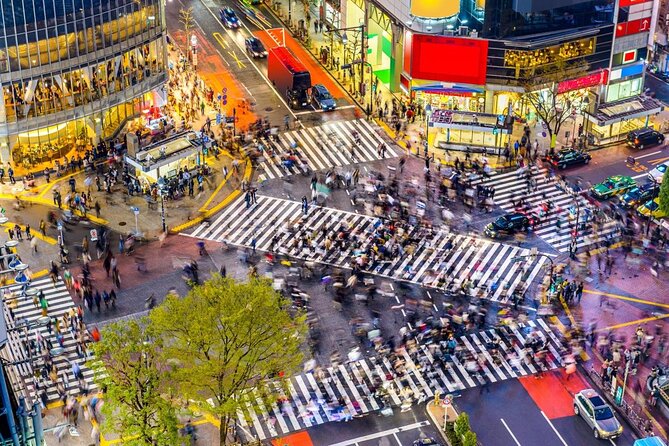
The final major stop is Shibuya Crossing, with about 45 minutes scheduled here. It is the tour’s most obvious landmark, but the lesson is more than taking a picture of a famous intersection.
The crossing gives you movement on a huge scale. Hundreds or thousands of people may pass through the frame, while illuminated signs and buildings form the backdrop. This is a natural place to try long exposure, especially if you want pedestrians to become flowing shapes rather than sharply defined figures.
A guide can help you decide how much motion to show. A very slow shutter may turn the crowd into streaks. A faster setting can freeze one person while the rest of the crossing remains active. Your choice depends on the story you want the photograph to tell.
The area is associated with the futuristic nighttime mood often compared with Blade Runner. That reference helps explain the tour’s title, but you do not need to chase a movie replica. The real appeal is the contrast between ordinary commuters, giant signs, traffic, and constant movement.
This is also where smartphone users can get strong results. Modern phones handle low light better than many people expect, but the key is knowing how to control exposure and hold the frame steady. The guides have worked with iPhones as well as Canon and Fuji cameras, according to the practical experiences shared by participants.
What the photography lesson actually teaches
The instruction centers on street photography and night technique. Expect advice on composition, camera settings, long exposure, framing, and candid moments.
That list sounds technical, but the teaching appears to be direct and usable. Lukasz was praised for demonstrating a method and then giving people time to practice it. Charles was repeatedly described as patient, cheerful, and helpful with settings. Luke was noted for taking time with both beginners and more experienced photographers. Stefane helped one participant understand a camera’s abilities and offered suggestions on finding the right shot.
The exact guide can vary, so the personality and teaching style will not be identical for every departure. Still, the strongest pattern is personal instruction rather than a formal classroom talk.
You should bring a camera with some control over shutter speed or overall exposure if you want to get the most from the technical side. A tripod was suggested by one participant, but it is not listed as included equipment. If you use a phone, that is fine too, but you will benefit from arriving familiar with basic camera controls.
The tour is not designed to turn you into a professional photographer in one evening. One less enthusiastic assessment found it useful mainly as a photo walk and not as a broad lesson about Tokyo. That is fair. If you want detailed cultural history or a major sightseeing tour, this is not the best match. If you want better night images, it is much more on target.
Group size, pace, and guide quality
The group can include a maximum of four people. At the advertised price, two people can share the $184.99 cost, making it about $92.50 per person before transport if two people book together.
That is not a cheap evening walk, but the value improves if you want instruction. You are paying for access to a professional photography guide, a planned route through two major districts, and help with your own equipment. A standard sightseeing walk may show you the same neighborhoods, but it will not normally stop to adjust your shutter speed or explain why your phone image looks flat.
The small group also matters if you have a specific goal. You can ask for help with long exposures, candid street scenes, or phone photography. Several highly positive experiences came from people who received direct attention from Charles or Lukasz, including one person who had a private session and found it especially helpful.
Pace is the main practical concern. Tokyo’s sidewalks and stations can be crowded, and the route covers more than one neighborhood. If you walk slowly, have mobility limitations, or want lots of time at every location, tell the guide at the start. Most people can participate, and the activity is near public transport, but the experience is still an evening walking tour through crowded city districts.
Timing, weather, and what to bring
The tour starts at 7:00 pm and lasts approximately three hours, although the detailed description calls it a 2.5-hour photo adventure. Treat it as an evening commitment of roughly two and a half to three hours.
Good weather is required. If poor weather cancels the experience, you are offered another date or a full refund. Rain does not always end the evening, since one guide arranged alternate plans during wet conditions, but you should not count on the full route operating exactly as planned in bad weather.
Bring a charged camera or phone, spare battery power if you have it, and enough storage space for night images. A camera with manual control over shutter speed or exposure is useful. A tripod may help with long exposures, but the supplied details do not say that one is provided.
Wear shoes suited to city walking. You will move through Shinjuku, use public transport, and continue through Shibuya. Keep your equipment simple enough to manage in a crowd, and stay close to the guide during station transfers.
Who should book this photo walk?
I would recommend it most strongly to:
- Smartphone users who want more control over night images
- Beginners who want patient, hands-on help
- Amateur photographers practicing long exposure
- Couples who want a shared evening activity
- Visitors who want striking images of Shinjuku and Shibuya
- Experienced photographers looking for new compositions in Tokyo
It is also a smart choice early in a Tokyo visit. One person joined soon after arriving in Japan and found the route a useful first look at the city at night. You get your bearings in two major districts while learning where and how to photograph them.
I would be more cautious if your main goal is cultural explanation. The emphasis is photography, not a detailed account of Tokyo’s neighborhoods. You should also think twice if you dislike fixed routes, walking in crowds, or working at a brisk pace.
Is $184.99 good value?
For two people, the cost is reasonable if you treat the tour as a private lesson with a local route. You receive a professional photography instructor, a small group, and several carefully chosen shooting areas. The value is strongest when you actively ask questions and practice each technique rather than simply following along.
For one person, the price feels steeper, though a solo booking may bring more direct instruction. One participant described receiving especially focused help when alone with the guide. The listed price is per group of up to two, so confirm the booking terms before paying if you are traveling solo.
The cost does not cover the local transport between Shinjuku and Shibuya. That extra fare should be small compared with the booking price, but it is still worth planning for. The experience is non-refundable and cannot be changed for personal reasons, so choose your date carefully.
Should you book the Tokyo Cyberpunk Street Photo Tour?
Book it if you want to improve your night photography while seeing Tokyo’s neon districts in a compact evening. The strongest reasons are the small group, the repeated praise for patient instruction, and the fact that guides can help with both advanced cameras and ordinary phones.
I would choose it for a couple sharing the cost, a beginner wanting clear guidance, or anyone who wants more than a quick snapshot at Shibuya Crossing. Contact the operator in advance if you need a slower pace or more precise meeting instructions.
Skip it if you want a history-heavy walking tour, a relaxed stroll with no technical focus, or a fully covered transport experience. For the right audience, though, it offers a useful mix of Tokyo nightlife and practical camera training, with a memory card full of images at the end.
FAQ
How long does the Tokyo Cyberpunk Street Photo Tour last?
The experience is advertised as approximately three hours. The detailed description gives the photo adventure as about 2.5 hours, so allow roughly two and a half to three hours.
What time does the tour start?
The tour starts at 7:00 pm.
Where does the tour begin and end?
It begins at Happy Lemon Keio Shinjuku Shop, 1-chōme-1-4 Nishishinjuku, Shinjuku City, Tokyo. It ends at 2-chōme-2-1 Dōgenzaka, Shibuya.
What locations are included?
The route includes Kabukicho, Omoide Yokocho Memory Lane, and Shibuya Crossing. The wider experience covers the Shinjuku and Shibuya areas after dark.
Can I use a smartphone instead of a camera?
Yes. The tour supports photography with a camera or smartphone, and guides have provided practical tips for iPhone users.
How many people can join?
The maximum group size is four people. The price of $184.99 covers a group of up to two.
What happens if bad weather cancels the tour?
If poor weather causes the experience to be canceled, you will be offered another date or a full refund. The experience is otherwise non-refundable and cannot be changed for personal reasons.
Just added around Tokyo
- Tokyo 6hr Instagram Highlights Private Tour with Licensed Guide★ 5.0 · 38 reviews
- Tokyo Small Group Tour with Guide★ 4.5 · 38 reviews
- Tokyo Sumo Experience with Live Show & Audience Challenge★ 5.0 · 38 reviews
- Japanese Food Cooking Class in Asakusa, Tokyo★ 5.0 · 39 reviews
- Very popular in Harajuku♡Animal petting zoo★ 4.6 · 39 reviews
- Ramen Making from Scratch with Tokyo Mom(Vegan Option Available)★ 5.0 · 39 reviews
- Tokyo JDM Night: 600hp C63s AMG Edition 1 (Private)★ 4.9 · 39 reviews
- Tokyo: Kimono Rental inside Shinjuku Gyoen National Garden★ 4.9 · 39 reviews
Photography Sessions, compared.
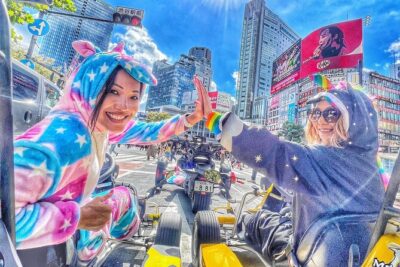
Best Go Kart Experience in Shibuya Crossing with Iconic Photos
Read our review →
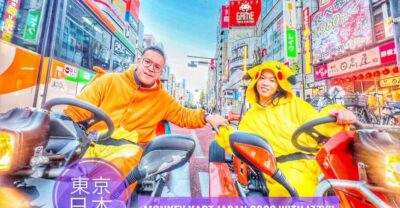
Tokyo Go-Karting Experience: Shibuya Crossing with Photos
Read our review →
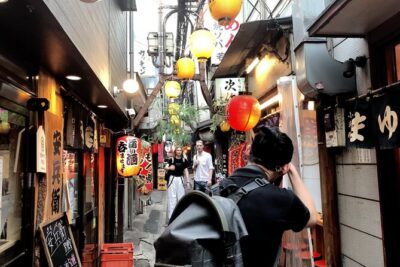
Tokyo by Night Photography Tour (Private Option Available)
Read our review →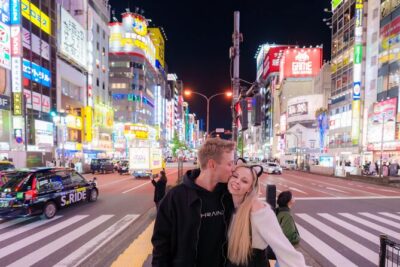
![[Okinawa Blue Cave] Snorkeling with Private Guide+ Free Photos](https://7.thejapaneseguide.com/wp-content/uploads/okinawa-blue-cave-snorkeling-with-private-guide-free-photos-400x267.jpg)
[Okinawa Blue Cave] Snorkeling with Private Guide+ Free Photos
Read our review →
Browse the lists this tour appears in