
Reviewed · JDM CAR CULTURE TOURS
Tokyo: Daikoku JDM Car Meet & Night Car Culture Tour
Tokyo’s car scene comes alive after dark. This four-hour outing takes you from Shibuya through illuminated expressways, across Rainbow Bridge, into APIT Autobacs, and finally to the famous Daikoku Parking Area. I like the mix of city sightseeing and genuine car culture, and I like that guides such as Michael, Mori, Jason, and Karim explain what you are seeing instead of simply driving you around. The main catch is simple: the cars are never guaranteed, and Daikoku can close without notice.
You pay $98 per person for a small-group experience limited to 10 people. That is good value if you care about Japanese performance cars, tuning, or the Tokyo roads seen in films and racing games. It is less compelling if you expect illegal drifting, street racing, or a fixed display of rare supercars. This is a respectful public car meet, not a Hollywood set.
In This Review
- Key points at a glance
- Why this tour works for car fans and curious sightseers
- Rainbow Bridge gives the night its first big lift
- APIT Autobacs is a smart first stop
- Tatsumi 1st Parking Area adds a second car stop
- Daikoku Parking Area is the reason to book
- The vehicles make a real difference
- What the guides add to the experience
- How the timing and weather affect your night
- Is $98 a fair price?
- Who should book this experience?
- Should you book the Daikoku JDM night tour?
- FAQ
- How long does the Daikoku JDM car tour last?
- Is Daikoku Parking Area guaranteed to be open?
- What cars will I see during the tour?
- What vehicle will I ride in?
- Is the tour suitable for children?
- What languages are available?
- What is included in the $98 price?
Key points at a glance
- Daikoku is the main event: You get about an hour at one of Japan’s best-known car gathering spots when it is open.
- The drive is part of the experience: Rainbow Bridge, the C1 routes, Tokyo Tower, Tokyo Skytree, Haneda, and Yokohama add a moving city view.
- APIT Autobacs is more than a shop: Allow about 25 minutes to browse parts, accessories, memorabilia, and impressive builds.
- Your guide shapes the night: Michael, Mori, Jason, and Karim have received especially warm praise for car knowledge, safe driving, and friendly conversation.
- The vehicle varies: You might ride in a van, sedan, Nissan Skyline, RX-7, Lexus LS, or another selected JDM, European, or luxury vehicle.
- Timing affects the cars: Friday and weekend nights may offer a fuller car park, but the operator cannot promise what will arrive.
Why this tour works for car fans and curious sightseers
The clever part of this experience is that it does not treat Daikoku as an isolated attraction. You reach it by traveling through Tokyo’s great night-time routes, so the city itself becomes part of the show.
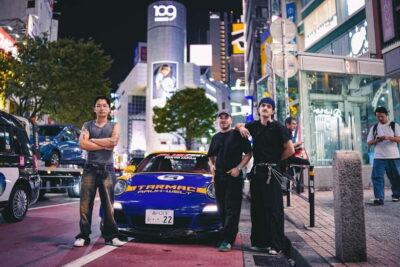
You may start at 2-chōme-29-8 Dōgenzaka, near Shibuya, with another starting option depending on the booking you choose. From there, the vehicle passes Roppongi Hills before heading toward Rainbow Bridge. The ride gives you time to ask questions, talk cars, and learn how Tokyo’s road culture fits into the wider Japanese auto scene.
I would not book this expecting a lecture with a fixed script. The best moments seem to come from conversation. Michael has more than 25 years of auto-industry experience with Japanese, European, and American brands. Mori has been praised for explaining both car culture and details around Tokyo. Jason and Karim are also frequently singled out for calm driving and easy conversation.
That personal element matters. A parking lot full of modified cars can be hard to understand if you do not already know a Skyline from a Supra or a factory model from a heavily changed build. A good guide points out why a car matters, how a modification changes its character, and what makes a meeting feel Japanese rather than simply expensive.
The tour runs in English by default. Japanese, Polish, Italian, and German may also be available, which is useful for mixed groups.
More JDM car culture tours in Tokyo:
- GT-R35 800hp Club Membership – secret underground car meet
★ 4.8 · 998 reviews - Secret Car Meet: R34 Skyline Car Club Membership
★ 4.8 · 494 reviews - Tokyo Drift: Daikoku PA Supreme Car Experience 大黒PA
★ 4.7 · 372 reviews
Rainbow Bridge gives the night its first big lift
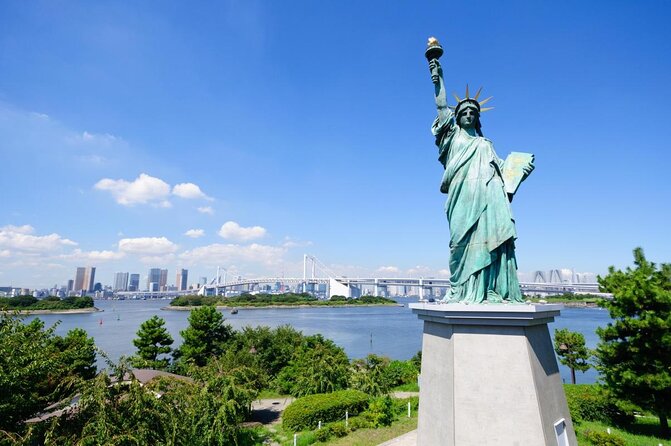
Rainbow Bridge is a pass-by stop rather than a long photo break, but it helps set the mood. Tokyo’s lights spread around the vehicle as you cross toward the waterfront and expressway network.
You do not need to be a serious petrolhead to enjoy this part. The views provide a pleasant contrast to the later hours spent studying bumpers, wheels, exhausts, and engine details. The route may also pass Tokyo Skytree, Tokyo Tower, Haneda Airport, Yokohama, and central Tokyo.
One of the strongest parts of the drive is the sense of motion. Several people have compared the expressway loop to a real-life racing game, though the driving remains legal and controlled. That distinction is important. The tour uses the atmosphere of Tokyo Drift, Initial D, and Wangan Midnight without copying their reckless behavior.
Do not expect tire smoke or street racing. The operator is clear that all driving follows local laws, and the guides are praised for safe handling. You get the lights, roads, cars, and stories, not the dangerous stunts.
APIT Autobacs is a smart first stop
The stop at APIT Autobacs Shinonome usually lasts around 25 minutes. This is Japan’s largest automotive store, and it is a good place to see how car culture works beyond a parking-lot meet.
Inside, you might find tuning parts, accessories, memorabilia, and performance-related merchandise. It is also a useful stop if you want a small souvenir that is more connected to the local scene than a generic Tokyo key ring.
The time limit is both helpful and frustrating. Twenty-five minutes gives you enough time to look around, but not enough for a slow, serious shopping trip. One person wished for more time, though the shorter visit may protect your wallet. If you are buying gifts or car parts, decide before you arrive what kind of item you want.
APIT also helps newcomers. At Daikoku, the cars may be dramatic and unfamiliar. At Autobacs, you can see the products and parts that support the tuning world. It gives context to the custom builds you will see later.
Tatsumi 1st Parking Area adds a second car stop
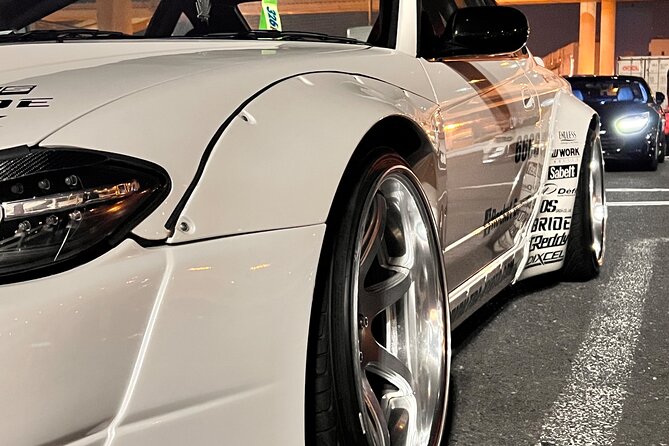
Tatsumi 1st Parking Area is scheduled for about 15 minutes on the weekday route. It is not presented as a guaranteed car show. It is a working public rest area where an informal gathering may or may not be taking place.
That uncertainty is part of the deal. You might find several interesting cars, or you might find a quieter stop. The guides adjust according to the day, time, traffic, and conditions. Other possible locations include Umihara, Gaienmae, or another meet area.
This is where expectations matter most. The tour promises access to well-known meeting places, not a specific count of GT-Rs, Ferraris, Lamborghinis, or other rare machines. If you want a fixed collection of cars, a museum would be more predictable. If you enjoy the possibility of seeing something unexpected, these stops make the evening feel more authentic.
A few more Tokyo experiences worth weighing up
- Tokyo Night Foodie Tour in Shinjuku – Seasonal Sushi, Wagyu Beef
★ 5.0 · 1,161 reviews - Tokyo After 5: Authentic Japanese Food & Drink Night Tour
★ 4.5 · 560 reviews - Tokyo: Samurai Entertainment Night Show in Kanda Shrine
★ 4.6 · 417 reviews - The Dark Side of Tokyo – Night Walking Tour Shinjuku Kabukicho
★ 4.5 · 297 reviews
Daikoku Parking Area is the reason to book
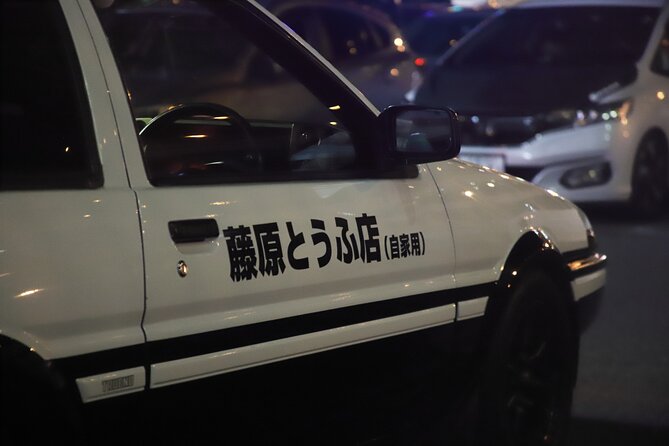
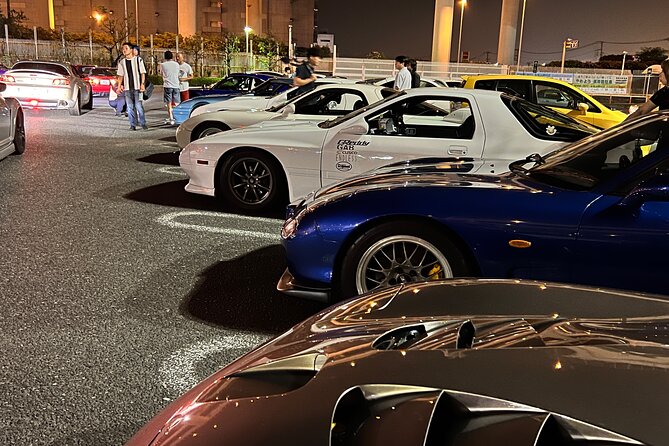
Daikoku Parking Area is the centerpiece, with about one hour set aside for exploring. For car fans, this is the moment when the tour shifts from scenic drive to open-air auto show.
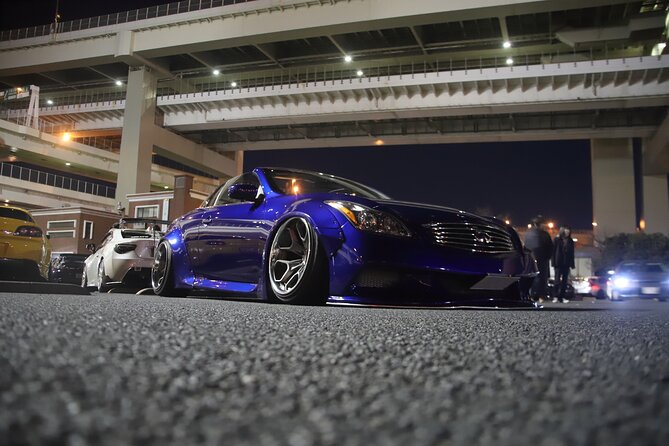
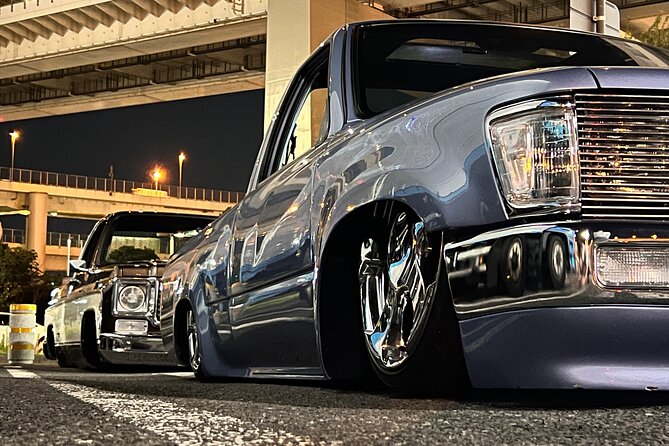
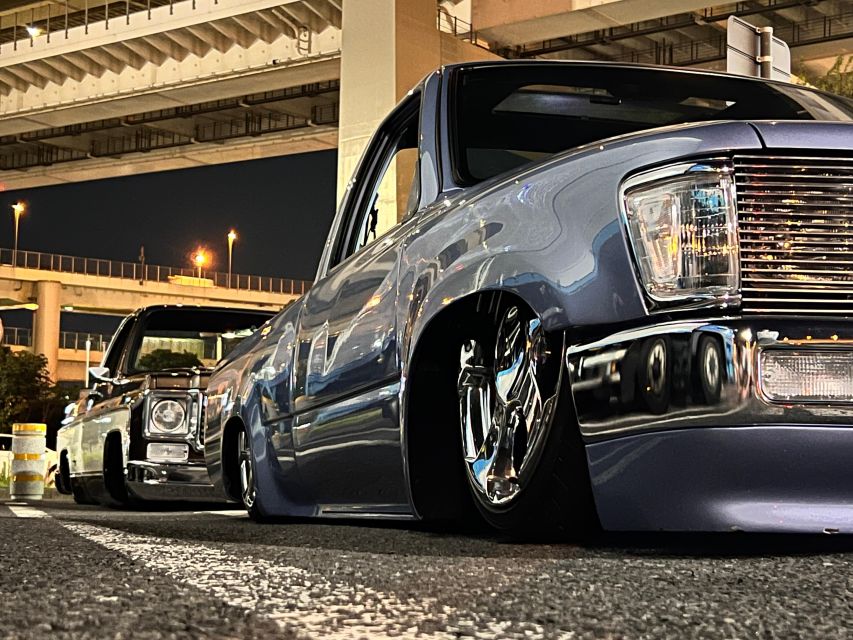
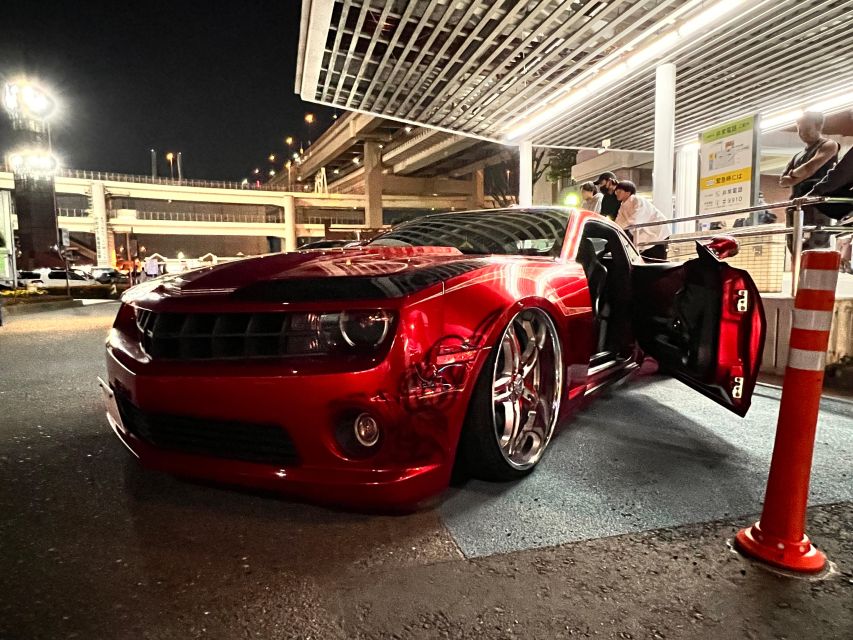
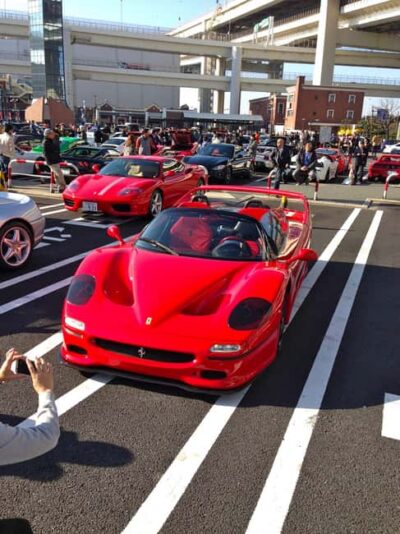
The parking area has attracted enthusiasts for more than 30 years. Depending on the night, you might see generations of Nissan GT-Rs, older Skylines, tuned Japanese cars, German and American models, Ferraris, Lamborghinis, and perhaps something unusually rare. One particularly lucky group saw an LFA arrive shortly before leaving.
The range is more important than any single model. Daikoku is not only about polished supercars. It can include older builds, modern performance cars, carefully restored machines, and highly modified projects. You may find one car that interests you, then turn around and notice something completely different.
Friday and weekend evenings may offer a fuller lot. A Saturday visit has been described as a full house, and a Friday group found the parking area nearly packed. Still, do not treat that as a promise. The number and type of cars depend on local owners, weather, timing, and the day of the week.
Daikoku is also a public rest stop, not a private event venue. It may close without notice. If it is closed, the guide changes the route and uses other locations to keep the night worthwhile. That flexibility is useful, but it means you should accept some uncertainty before booking.
Be respectful while you are there. This is a community gathering, not a stage built for visitors. Follow your guide’s instructions, avoid blocking cars, and remember that the owners are sharing a public space rather than performing for a tour group.
The vehicles make a real difference
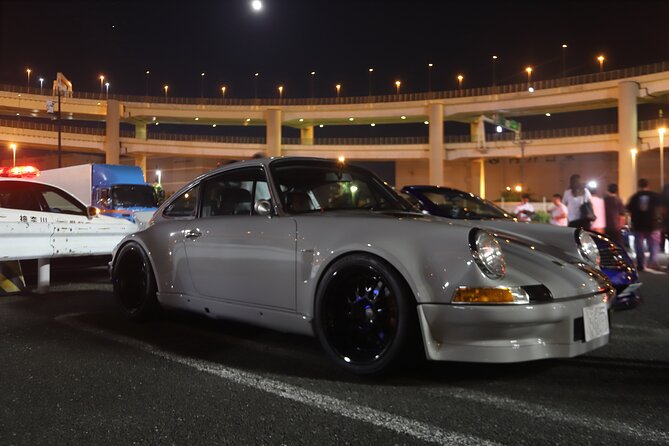
The vehicle you ride in depends on availability and group size. Options can include spacious vans, sedans, Japanese performance cars, European vehicles, and luxury models. Some are customized by the operator, while others are factory high-performance cars.
A van makes sense for a larger group and gives you room to talk with other participants. It may feel less special than riding in a famous sports car, but it is practical and comfortable.
The smaller-car option can be the highlight of the evening. One guest rode in a Nissan Skyline, while another praised a Nissan RX-7 and its sound. An LS sedan was described as comfortable for the full loop. Rear-seat space in a compact sports car can be tight, especially for taller adults. A five-foot-four passenger found the RX-7 manageable, but you should not expect limousine room in an iconic performance car.
For larger bookings, a van group may be split between two vehicles. If the exact car matters to you, contact the operator before the tour, but understand that vehicle selection remains subject to availability.
The vehicles are described as clean and well maintained. That is reassuring for a four-hour night on Tokyo’s roads. Still, think of the car as an important bonus, not the central guarantee. Daikoku and the guide’s insight are the safer reasons to book.
What the guides add to the experience
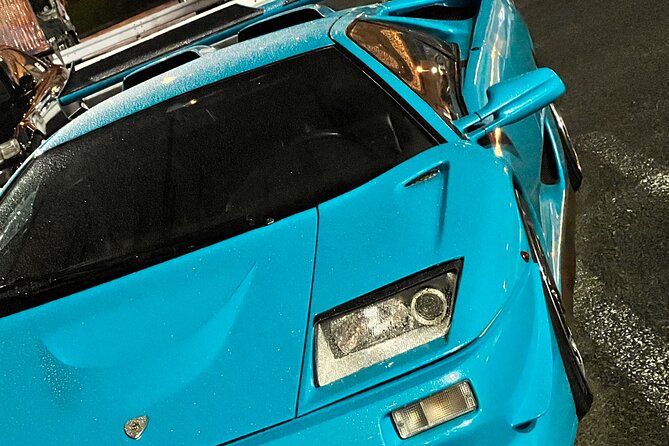
The strongest praise centers on the hosts. Michael is often described as warm, clear, and deeply informed about cars, games, films, and Tokyo itself. Mori has been praised for answering questions, explaining city details during the drive, and allowing enough free time at stops.
Jason receives high marks for safe driving and detailed explanations, with one guest especially enjoying an RX-7 ride. Karim is noted for making the ride feel relaxed, handling rainy conditions well, and explaining both the cars and the city. Julian has been praised for keeping the stops unhurried and making sure everyone had time to look around.
Those details tell you what kind of tour this is. You are not simply handed a route and left to take photographs. The guide is part driver, part local interpreter, and part car-scene translator.
The group is capped at 10, which keeps the outing smaller than a standard bus excursion. A small group also helps when you want to ask about a particular car or change the conversation toward Japanese road culture, tuning, or automotive history.
How the timing and weather affect your night
The experience lasts four hours, but the exact starting time depends on availability. Night is the best choice for the full effect, especially for the Rainbow Bridge views and Tokyo’s illuminated skyline. Daytime departures may be offered depending on conditions, but they will have a different mood.
The day of the week also matters. Weekend and Friday nights may bring more cars to Daikoku and the other parking areas. Weekday visits can still be rewarding, and one Tuesday group found plenty to see, but the turnout is never fixed.
Traffic can change the route and the amount of time available at each stop. Weather usually does not cancel the experience, although heavy rain may lead to cancellation for safety and enjoyment. Even in ordinary rain, the guides may continue and adjust the pace.
Bring a passport or ID card. Food, drinks, alcohol, and smoking are not allowed in the vehicle. Children under five cannot join, and children aged five to seven who need a booster seat require advance contact with the provider. The experience is not suitable for wheelchair users.
Hotel pickup and drop-off are not included. The meeting point depends on the option you book, and the listed drop-off is at the Dōgenzaka meeting location. Confirm the exact meeting details before setting out.
Is $98 a fair price?
At $98, this is not the cheapest way to see Tokyo at night, but it combines transportation, a four-hour route, a small group, guide service, and access to places that are awkward to reach on your own.
The value improves if you would otherwise need to arrange a taxi or rental car to reach Daikoku. Public transport is not a simple substitute for this route, especially when you want to connect central Tokyo, APIT, Tatsumi, and the waterfront in one evening.
You also avoid the problem of driving yourself through unfamiliar expressways. The guides handle the roads while you watch the city and talk cars. That is worth paying for in a place where traffic, toll routes, and parking rules can complicate an independent outing.
The value is weaker if your interest in cars is only casual and you dislike flexible plans. Some stops may be quiet, Daikoku may close, and the vehicle may be a van rather than a Skyline or RX-7. The price buys access and local guidance, not a guaranteed supercar ride.
Free cancellation up to 24 hours ahead and the option to reserve now and pay later add useful flexibility. All listed fees and taxes are included, while food, drinks, and souvenirs cost extra.
Who should book this experience?
I would choose this tour if you grew up with Gran Turismo, Need for Speed, Initial D, Tokyo Drift, or Wangan Midnight and want to see the real places behind the imagery.
It also suits a parent booking a memorable night for a car-loving child or teenager. An eight-year-old reportedly enjoyed the outing, and several families found the guides welcoming. Just check the booster-seat requirement for younger children.
You do not need to know every engine code. One non-car specialist still found the experience interesting because the guide connected the vehicles to Tokyo and Japanese culture. The city views and road journey give you something to enjoy even if you cannot tell a Skyline from a Silvia.
I would hesitate if you need wheelchair access, require a guaranteed vehicle model, or expect a formal event with a confirmed lineup. I would also think twice if heavy rain is forecast and your schedule has no room for a possible cancellation.
Should you book the Daikoku JDM night tour?
Book it if you want a safe, social, and flexible introduction to Tokyo’s car scene, especially on a Friday or weekend night. The best parts are the ride through the illuminated city, the APIT stop, the chance to see Daikoku in full swing, and the guides who bring meaning to the machines.
Go in with the right expectations. You may see spectacular GT-Rs, an old Skyline, an RX-7, or a surprise supercar, but you may also encounter a quieter night. That gamble is part of what makes the experience feel like a real car meet rather than a staged attraction.
At $98, I consider it a strong choice for car enthusiasts and a worthwhile change of pace for curious visitors. Just remember: Tokyo supplies the roads, the owners supply the cars, and neither follows a script.
FAQ
How long does the Daikoku JDM car tour last?
The experience lasts four hours. Starting times vary, so you need to check availability for your chosen date.
Is Daikoku Parking Area guaranteed to be open?
No. Daikoku Parking Area is public and may close without notice. If it is closed, the host changes the route and uses other locations.
What cars will I see during the tour?
No specific cars are guaranteed. The stops are informal meeting places, so the vehicles depend on the day, time, weather, and who arrives. You might see modified JDM cars, European and American vehicles, luxury cars, and high-performance models.
What vehicle will I ride in?
Vehicle selection depends on availability and group size. Options can include vans, sedans, JDM performance cars, European vehicles, and luxury vehicles. Larger groups may be split between two vans.
Is the tour suitable for children?
Children under five cannot join. Children aged five to seven who need a booster seat require advance contact with the activity provider.
What languages are available?
English is the default language. Japanese, Polish, Italian, and German may also be available.
What is included in the $98 price?
The price includes the four-hour guided experience, transportation during the tour, Tokyo views, access to the car-meet locations, and all fees and taxes. Food, drinks, and souvenirs are not included.
Just added around Tokyo
- Tokyo 6hr Instagram Highlights Private Tour with Licensed Guide★ 5.0 · 38 reviews
- Tokyo Small Group Tour with Guide★ 4.5 · 38 reviews
- Tokyo Sumo Experience with Live Show & Audience Challenge★ 5.0 · 38 reviews
- Japanese Food Cooking Class in Asakusa, Tokyo★ 5.0 · 39 reviews
- Very popular in Harajuku♡Animal petting zoo★ 4.6 · 39 reviews
- Ramen Making from Scratch with Tokyo Mom(Vegan Option Available)★ 5.0 · 39 reviews
- Tokyo JDM Night: 600hp C63s AMG Edition 1 (Private)★ 4.9 · 39 reviews
- Tokyo: Kimono Rental inside Shinjuku Gyoen National Garden★ 4.9 · 39 reviews
JDM Car Culture Tours, compared.
GT-R35 800hp Club Membership – secret underground car meet
Read our review →
Secret Car Meet: R34 Skyline Car Club Membership
Read our review →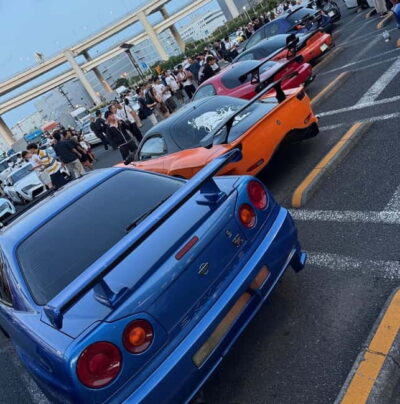
EVO, WRX, Skyline – JDM Night Run to Daikoku Car Meet
Read our review →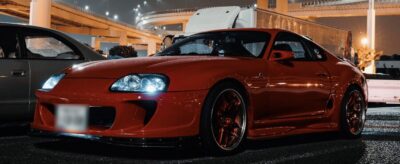
Tokyo Drift: Daikoku PA Supreme Car Experience 大黒PA
Read our review →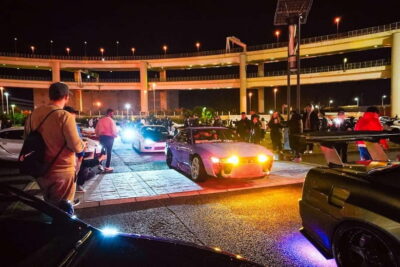
Go Daikoku PA Fast & Furious 3 Sports Car Meetup
Read our review →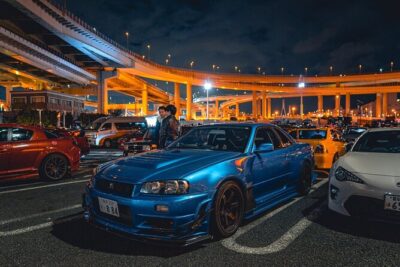
Browse the lists this tour appears in