
Reviewed · FOOD & DRINK
Tokyo After 5: Authentic Japanese Food & Drink Night Tour
Tokyo tastes best after dark. This small-group walk links polished Ginza with old-school food streets, giving you monjayaki, yakitori, wagashi, and local drinks in one evening. I like the small group of no more than eight and the way an English-speaking guide handles menus, subway transfers, and local food customs. The main caution is that the meal can feel lighter than expected, and the advertised three eateries may not be the reality on every departure.
I also like the mix of settings. You move from a department store in Ginza to a grill-top monjayaki restaurant and then to a compact yakitori alley where office workers unwind over beer or sake. But this is not the right pick if you need vegetarian, vegan, or gluten-free food, or if you expect a long, multi-course feast.
In This Review
- Key points at a glance
- Starting beneath the Ginza Lion
- Ginza after five
- Tsukishima and the monjayaki lesson
- The small bars of Yurakucho
- How much food do you really get?
- The guide can make or break the evening
- Walking, stairs, and the pace of the night
- Dietary needs and dining expectations
- Is $122.33 a fair price?
- Who should book this Tokyo evening?
- Should you book Tokyo After 5?
- FAQ
- Where does the tour start?
- Where does the tour end?
- How long does the experience last?
- How many people can join the tour?
- What food is included?
- Are drinks included?
- Can children or guests under 20 drink alcohol?
Key points at a glance
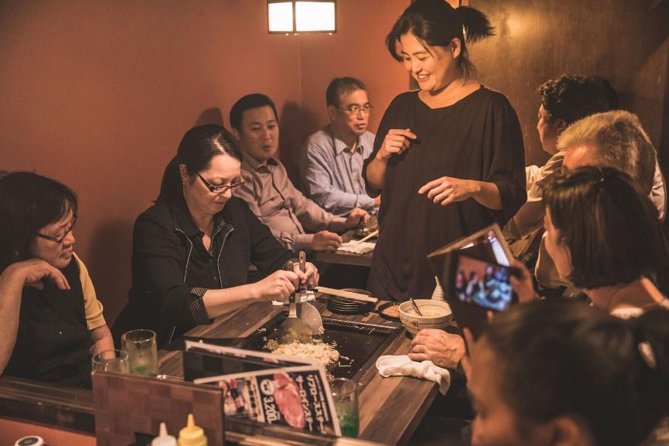
- Monjayaki cooked at your table: Try Tokyo’s soft, savory pancake while it sizzles on a hot grill.
- Three distinctive food stops: The plan includes wagashi, monjayaki, and yakitori, although the wagashi may be bought from a department store rather than served in a restaurant.
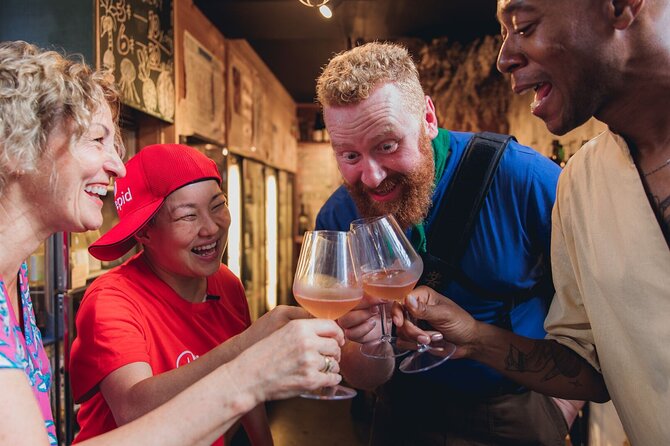
- Two drinks included: Choose from options such as sake, beer, or a soft drink, with extra drinks available to buy.
- Ginza after dark: See the bright department stores, polished streets, and the possible stop at Itoya stationery shop before heading to local food districts.
- Subway travel made easy: Two subway tickets are included, and your guide leads the way through Tokyo’s sometimes confusing underground system.
- A lively but active evening: Expect about three and a half hours, moderate walking, stairs, and quick movement between stops.
Starting beneath the Ginza Lion
Your evening begins at 5 pm in front of the Lion statue outside Mitsukoshi Ginza, at 4-6-16 Ginza. This is a clear meeting point in central Tokyo, but arrive early. The tour starts on time, and Ginza Station and the Mitsukoshi department store can be busy and confusing if you are rushing.
The first part of the experience is more about setting the scene than filling your stomach. Tokyo’s department stores are worth seeing, especially their food floors and carefully presented sweets. You may receive wagashi, a traditional Japanese confection, as one of the first tastes of the night.
This opening can be pleasant, but it is also the tour’s least food-focused section. One account describes a stop to see small plants growing under artificial lights in the department store, while other evenings may include a visit to Itoya, the famous stationery shop. These extras may interest you if you enjoy Japanese design, retail culture, and small city details. If you arrive hungry and expect immediate restaurant food, the wait may test your patience.
More Food Tours in Tokyo
- Tokyo: Shinjuku Food Tour (13 Dishes at 4 Local Eateries)
★ 5.0 · 6,603 reviews - Tokyo Tsukiji Fish Market Food and Culture Walking Tour
★ 5.0 · 3,184 reviews - Tokyo: Shinjuku Food Tour (15 Dishes and 4 Eateries)
★ 4.9 · 2,033 reviews
Ginza after five
Ginza changes character as offices empty and the lights come on. The district is known for luxury shops, major department stores, fine restaurants, and broad streets. Your guide may point out details you would miss while simply walking from one station to another.
I see this opening as a short orientation to central Tokyo rather than a full sightseeing tour. You get a taste of the city’s polished side before heading to more modest neighborhood eateries. That contrast is one of the evening’s best ideas: Ginza shows you Tokyo’s formal face, while Tsukishima and Yurakucho offer food in tighter, more casual spaces.
The guide is also useful here for practical reasons. English-language signs are common in Ginza, but food labels and department store displays can still be hard to interpret. A good guide can explain what you are looking at without turning the walk into a lecture.
Tsukishima and the monjayaki lesson
The tour then uses the subway to reach Tsukishima Monja Street. The two subway tickets are included, so you do not need to work out the fare or route during the evening. This is a real benefit on a first Tokyo visit, especially when the group is moving together and time is limited.
Tsukishima is associated with monjayaki, a Tokyo specialty that looks quite different from the fluffy savory pancakes many people know from Osaka. The mixture is wetter and softer, with ingredients spread across the hot plate and cooked at the table. Cabbage is a common part of the dish, and seafood may also appear.
The fun is partly in the cooking. You watch the mixture sizzle, use the small spatula, and eat it directly from the grill. Your guide or chef can show you how to handle it, which makes this more than a plate simply placed in front of you. For many people, this is the evening’s most memorable food experience.
The dish may also be a surprise. Some people expect a substantial pancake and instead find a salty cabbage-based snack with modest amounts of seafood. If you are not fond of cabbage, monjayaki may not be your favorite stop. I would think of it as a local specialty and cooking lesson, not as the main course of a large dinner.
The time listed for Tsukishima is about 90 minutes. That allows room for the subway ride, seating, cooking, eating, and conversation. It is also where the guide’s language ability matters most. A strong guide can explain the dish’s origin, show you how to cook it, and translate questions for the chef. Guides named Yuko and Mizuki have been praised for clear explanations and warm, attentive service, while another guide, Rocky, was noted for taking extra care on an early food guiding assignment.
The small bars of Yurakucho
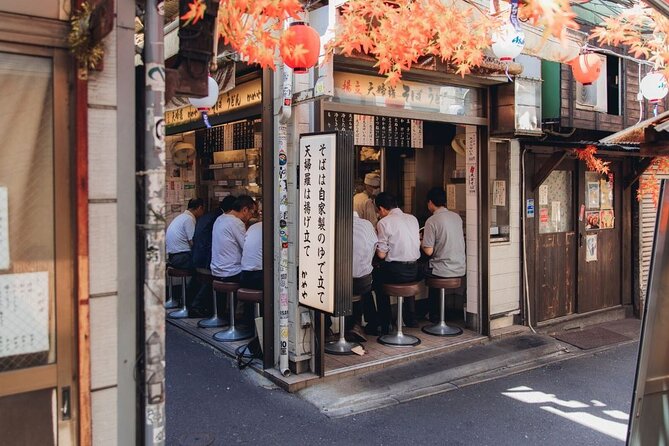
The final stop is Yurakucho Sanchoku Inshokugai, also called Yurakucho Farm to Table Dining Alley or Yakitori Alley. The name points to the atmosphere: narrow, casual food businesses grouped close together beneath and around the railway area.
Here you can expect yakitori, the familiar Japanese grilled skewers, served with a house tare sauce. Tare is the sweet-salty glaze brushed over grilled meat, and each shop may have its own balance of flavors. The skewers can include different cuts, so do not assume every piece will be a standard chicken thigh or breast. One account specifically found chicken cartilage instead of the expected chicken skewers, while another found some grilled meat undercooked for personal taste.
That is useful information, not a reason to avoid the stop. Yakitori alleys are about variety and local habits, and less familiar cuts are part of the experience. Still, you should tell the guide early if you have strong preferences about texture or doneness.
One of the two included drinks is served here, commonly beer or sake. Sake may be poured in the traditional overflowing style, with a glass set inside a small wooden box and filled until the drink spills into the box. It is a simple ritual, but a fun one to try.
This final stop often gets the strongest praise because the setting feels relaxed and distinctly local. You are not eating in a large tourist restaurant with a fixed show. You sit close to the grill, share food, and watch the after-work crowd settle in. You can also remain in the bar after the official tour ends, or continue your evening elsewhere.
A completely different kind of day out in Tokyo:
- Mt Fuji and Hakone 1-Day Bus Tour Return by Bullet Train
★ 5.0 · 26,383 reviews - 1-Day Tokyo Bus Tour
★ 5.0 · 14,250 reviews - Tokyo: TOKYO SKYTREE® Admission ticket
★ 4.5 · 11,192 reviews - Tokyo: teamLab Planets TOKYO Digital Art Museum Entry Ticket
★ 4.6 · 9,779 reviews
How much food do you really get?
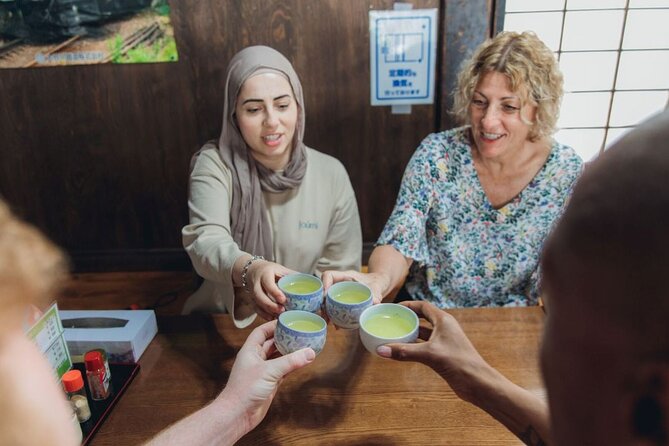
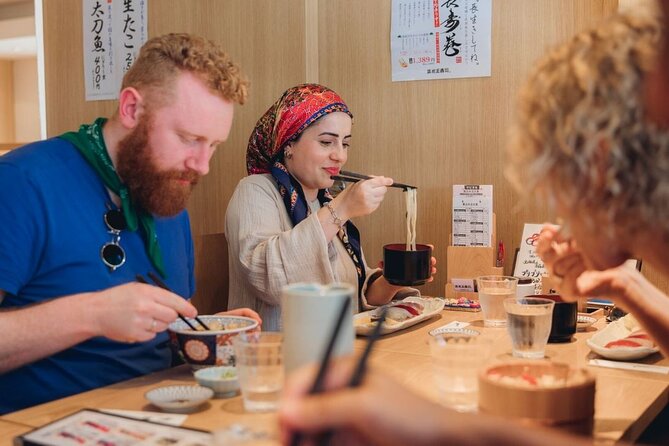
The included food is described as three local dishes: wagashi, monjayaki, and yakitori. In practical terms, the portions may work better as a progressive tasting than as a full dinner.
Wagashi is usually a sweet, delicate start. Monjayaki gives you a hot savory dish and the chance to cook at the table. Yakitori and small side dishes finish the night with grilled flavors and a drink. Several people found the food delicious and satisfying, but at least one evening included only small samples before the final izakaya stop.
I suggest eating a light snack before the tour, especially if you normally want a full dinner. Do not arrive stuffed, since you will want room for new flavors, but do not assume this replaces a large evening meal. The tour price of $122.33 makes more sense if you value the guide, transportation, food translation, and access to places you might not approach alone. It is less attractive if you are judging the cost only by the amount of food.
Two drinks are included. Additional drinks cost extra. Participants under 20 receive non-alcoholic drinks because Tokyo’s legal drinking age is 20. The minimum age for the tour itself is 12.
The guide can make or break the evening
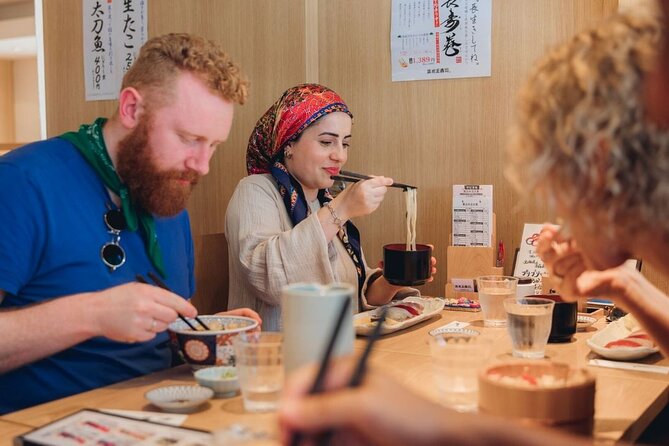
A small group can make this experience personal. With a maximum of eight people, the guide has a better chance to explain dishes, answer questions, and keep everyone together on the subway and busy streets.
The strongest guide experiences include help with the underground system, smooth movement between neighborhoods, and explanations of food customs. Yuko has been singled out for making the subway changes easy and adding useful context to each dish. Mizuki has also been described as courteous, funny, and good at introducing unfamiliar foods. Shoehi and Rocky have received praise for creating a friendly mood.
But guide quality is not perfectly predictable. Clear English is especially important in a food tour because the point is not only to eat. You want to know what is on the grill, how it is prepared, and why the dish matters. Some departures have felt quiet or rushed, with little explanation and difficulty understanding the guide.
You can help the evening along by asking direct questions. Ask what each skewer is, how the monjayaki mixture should be cooked, and what kind of sake or beer you are receiving. A curious attitude gives the guide more chances to add value.
Walking, stairs, and the pace of the night
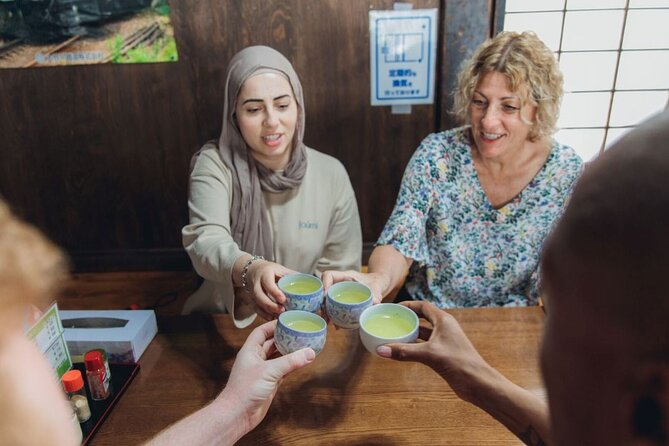
The tour lasts about three and a half hours and involves a moderate amount of walking. You walk around Ginza, use the subway, walk through Tsukishima, and later move toward Yurakucho. Wear comfortable shoes.
The pace may feel brisk. Some parts involve stairs, station corridors, and long walks between food stops. One account specifically found the walk to the first food destination longer than expected, while another complained about high-speed walking and difficulty keeping the group together.
This is not a slow stroll with frequent seated breaks. Stay close to the guide, especially when leaving a station or crossing a busy street. If you have trouble with stairs or fast walking, ask about the pace at the beginning so expectations are clear.
The tour ends at Ginza Station, at 4-1-2 Ginza. That is convenient for continuing your evening, since you can return to your hotel by subway or head toward another nightlife area.
Dietary needs and dining expectations
This tour does not offer vegetarian, vegan, or gluten-free options. The restaurants visited are locally owned and may not be equipped to adjust dishes for every dietary requirement.
Allergy concerns should be discussed as early as possible, but you should not book this experience if you need a carefully controlled menu. The food may include seafood, meat, sauces, and ingredients that are difficult to identify without translation.
The tour also suits adventurous eaters better than cautious eaters. Monjayaki can contain cabbage and seafood, and yakitori may include less familiar cuts. If you prefer to know every ingredient in advance, this format may feel uncomfortable.
On the other hand, this is exactly why the guide can be useful. You get help ordering and a chance to try foods that are difficult to identify on your own. The best attitude is curious, but clear about your limits.
Is $122.33 a fair price?
At $122.33 per person, this is not a cheap food crawl. You are paying for about three and a half hours, a small group, an English-speaking guide, three planned food tastes, two drinks, and two subway tickets.
The value depends on what you want from Tokyo. If you already know the city’s food streets and are comfortable ordering in small Japanese bars, you could spend less by eating independently. You might also receive more food for the same money at a regular restaurant.
If you are new to Tokyo, the cost covers useful support. You do not need to choose a restaurant, decode a menu, navigate two subway trips, or worry about walking into a tiny bar without knowing the local routine. The guide also gives you recommendations for the rest of your stay.
Book about 52 days ahead if your dates are fixed. That average booking pattern suggests that popular departures can fill well before a trip. Free cancellation is available up to 24 hours before the start time. Poor weather can also lead to a different date or a full refund.
Who should book this Tokyo evening?
I would choose this tour if you want a guided introduction to Tokyo food culture rather than a large dinner. It suits first-time visitors, couples, solo visitors who want company, and anyone who likes trying unfamiliar dishes in a friendly group.
It is also a good first-night activity. You get an early look at Ginza, learn how to use the subway with a local guide, and finish with ideas for where to eat and drink later in your trip.
I would skip it if you need special dietary accommodations, dislike shared small plates, want a filling dinner, or prefer a slow and carefully explained tour. I would also be cautious if you are uncomfortable with cartilage, seafood, cabbage-heavy dishes, or the possibility that the group moves quickly.
Should you book Tokyo After 5?
Book it if your priority is access. The strongest part of the evening is not the quantity of food, but the chance to enter local-style places in Tsukishima and Yurakucho with someone who can guide the ordering and explain what is happening.
Go in expecting a tasting route, not three full restaurant meals. Confirm the food plan with the guide at the start, stay close during the subway and walking sections, and eat a small snack beforehand. With those expectations, the monjayaki cooking, overflowing sake pour, and compact yakitori alley can make a memorable Tokyo night.
FAQ
Where does the tour start?
It starts at Mitsukoshi Ginza, in front of the Lion statue facing Chuo Street, at 4-6-16 Ginza, Chuo City, Tokyo.
Where does the tour end?
The tour ends at Ginza Station, at 4-1-2 Ginza, Chuo City, Tokyo.
How long does the experience last?
The tour lasts approximately three hours and 30 minutes.
How many people can join the tour?
The maximum group size is eight people.
What food is included?
The planned food includes wagashi, monjayaki, and yakitori, along with local side dishes that may be served at the restaurants.
Are drinks included?
Yes. Two drinks are included, such as sake, beer, or a soft drink. Additional drinks can be purchased separately.
Can children or guests under 20 drink alcohol?
The minimum age for the tour is 12. The legal drinking age in Tokyo is 20, so anyone under 20 will receive non-alcoholic drinks.
Just added around Tokyo
- Tokyo 6hr Instagram Highlights Private Tour with Licensed Guide★ 5.0 · 38 reviews
- Tokyo Small Group Tour with Guide★ 4.5 · 38 reviews
- Tokyo Sumo Experience with Live Show & Audience Challenge★ 5.0 · 38 reviews
- Japanese Food Cooking Class in Asakusa, Tokyo★ 5.0 · 39 reviews
- Very popular in Harajuku♡Animal petting zoo★ 4.6 · 39 reviews
- Ramen Making from Scratch with Tokyo Mom(Vegan Option Available)★ 5.0 · 39 reviews
- Tokyo JDM Night: 600hp C63s AMG Edition 1 (Private)★ 4.9 · 39 reviews
- Tokyo: Kimono Rental inside Shinjuku Gyoen National Garden★ 4.9 · 39 reviews
Food & Drink, compared.
Shinjuku Food Tour (13 Dishes at 4 Local Eateries)
Read our review →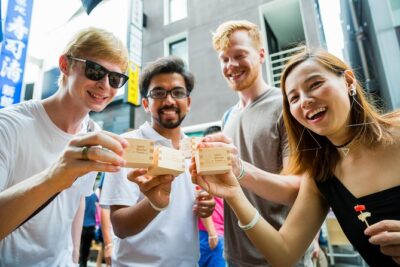
Tokyo Tsukiji Fish Market Food and Culture Walking Tour
Read our review →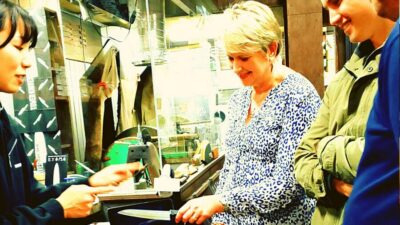
Shinsekai Food Tour with 13-15 Dishes at 5 Eateries
Read our review →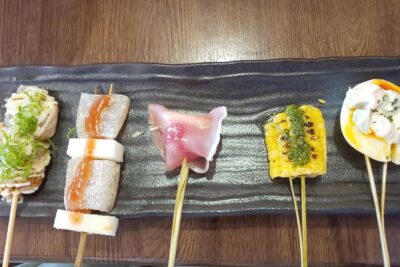
Osaka Food Tour: 13 Dishes at 5 Local Eateries
Read our review →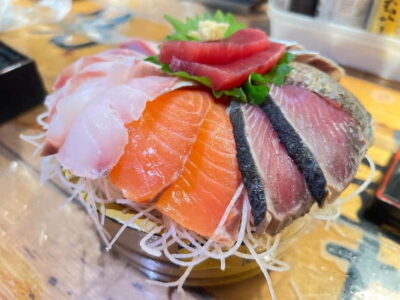
Shinjuku Food Tour (15 Dishes and 4 Eateries)
Read our review →
Best of Shinjuku: Izakaya Food Tour (4 Stops, 14+ Tastings)
Read our review →
Kyoto Night Foodie Tour in Gion (9+ dishes + 6 Sake tastings)
Read our review →
Hungry Osaka Street Food Tour:15 Tastings & 3 Drinks with a Local
Read our review →Browse the lists this tour appears in