
Reviewed · JDM CAR CULTURE TOURS
JDM Itasha trip to famous car meet up spot Daikoku Parking
Tokyo looks different from a racecar. This private night outing combines a thrilling drive through Shinjuku, Shibuya, and across Rainbow Bridge with a stop at Daikoku Parking Area, a famous meeting place for Japan’s car scene. I like the small group size, capped at three, and I like that your driver handles the roads while explaining Tokyo and Japanese motoring.
The main caution is that Daikoku is never predictable. Weather, the night of the week, and pure luck affect which cars appear. The ride may be a Toyota 86, Nissan GT-R, or another featured car, and taller passengers should know that some sports cars have tight cabins.
In This Review
- Key points to know before booking
- Why this Tokyo night tour feels different
- Starting among Shinjuku’s neon signs
- Tokyo’s raised highways and skyline views
- Crossing Rainbow Bridge at night
- Reaching futuristic Odaiba
- The Daikoku Parking Area experience
- The cars: Toyota 86, GT-R, and Itasha style
- How the private format affects the value
- What guides add to the ride
- Timing, weather, and practical limits
- Who should book the Daikoku trip
- Should you book it?
- FAQ
- Where does the tour start?
- Where does the tour end?
- How many people can join?
- How long does the experience last?
- What places can I see during the drive?
- What car will I ride in?
- Is admission to Daikoku Parking Area included?
- Is the tour suitable for people who are not car enthusiasts?
- What happens if the weather is bad?
Key points to know before booking
- You arrive at Daikoku in an Itasha or performance car, rather than trying to reach the remote parking area on your own.
- The route is part of the attraction, with night views of Shinjuku, Shibuya, Tokyo Tower, Tokyo Skytree, Rainbow Bridge, and Odaiba.
- Your group has the car to itself, with a maximum of three people and a private driver.
- The Daikoku stop lasts about 90 minutes, giving you time to walk around, take photos, and inspect the cars.
- The car meet changes every night, so you might see tuned Japanese cars, classic models, supercars, or a quieter gathering.
- The price is $191.60 per group, not per person, which makes it a fair deal for two or three people who care about cars.
Why this Tokyo night tour feels different
Most Tokyo sightseeing takes place at street level or from a train window. This trip gives you a different view, with the city rising around you as you travel on its broad, raised expressways.
The route is not a point-to-point transfer. You are going out for the drive itself. Your driver takes care of navigation, traffic, and the confusing highway connections while you watch Tokyo’s towers pass by. That makes the outing especially useful if you want the atmosphere of a night drive but do not want to rent a car or work out the route to Daikoku yourself.
The experience is private for your group, with space for up to three people. That matters in a small sports car. You can ask questions, talk about cars, and make photo stops in a more relaxed way than on a large bus tour. Several guides, including Jeremy, Graham, Alistair, and other members of Team Open Tours, are described as friendly and well informed about both cars and life in Japan.
The tour lasts roughly two to three hours. The exact length can vary with the drive and the time spent at Daikoku. The meeting point is at 5-8 Funamachi in Shinjuku City, and the tour returns there at the end.
More JDM car culture tours in Tokyo:
- GT-R35 800hp Club Membership – secret underground car meet
★ 4.8 · 998 reviews - Tokyo: Daikoku JDM Car Meet & Night Car Culture Tour
★ 4.8 · 626 reviews - Secret Car Meet: R34 Skyline Car Club Membership
★ 4.8 · 494 reviews
Starting among Shinjuku’s neon signs
The outing begins in Shinjuku, described here as the real center of Tokyo. That is a fitting start. Giant screens, glowing signs, and tall buildings give you an immediate hit of Tokyo after dark.
You will not spend the opening part walking through the entertainment streets. Instead, you meet your driver and settle into the featured car before heading toward the highway. The appeal is the contrast: one moment you are surrounded by signs and pedestrians, and soon after you are moving through Tokyo’s road network with towers on both sides.
This first section is also when you can get comfortable with your driver. Guides such as Graham and Jeremy have been praised for explaining Japanese cars, the city, and everyday life in Japan. If you have questions about GT-Rs, Skylines, RX-7s, Subarus, Silvias, or Japanese tuning, this is the time to ask.
Do not expect a formal sightseeing stop at every named district. Shinjuku and Shibuya are part of the route, not long walking visits. You see them from the car, which is precisely the point of this experience.
Tokyo’s raised highways and skyline views
The highway section is the tour’s moving viewpoint. You zigzag between skyscrapers and get glimpses of landmarks such as Tokyo Tower and Tokyo Skytree. You also see a side of the city that is easy to miss when your day is spent on the subway.
I like this part because it gives the tour a sense of motion without asking you to drive. Tokyo’s highway system can be difficult for a first-time visitor to understand, with multiple levels, ramps, and fast-moving traffic. A trained driver lets you enjoy the view instead of watching signs and trying to guess the next turn.
The ride can also be a highlight for people who are not serious car fans. One parent described the outing as a favorite part of a family trip, while another said a partner who was less interested in cars enjoyed it enough to want to repeat it. That makes the route more than a specialist activity.
Still, this is not a guaranteed high-speed run. Traffic, road conditions, and safety come first. Some people may find the drive exciting because of the setting, engine sound, and car itself, but you should not book it expecting a racetrack session.
Crossing Rainbow Bridge at night
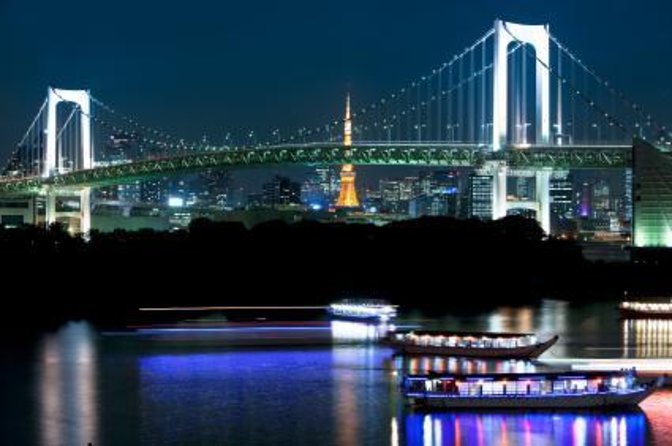
Rainbow Bridge is the visual centerpiece of the route. The car crosses the bridge toward Odaiba, with Tokyo’s lights stretching across the water and reflections adding extra sparkle after dark.
This is one of the strongest reasons to choose the night departure. A train can take you toward Odaiba, but it does not give you the same open view from a sports car crossing the bridge. You get a moving panorama rather than a single lookout.
The bridge crossing also gives the tour a clear rhythm. Shinjuku provides the neon opening, the highways supply the fast-moving city views, and Rainbow Bridge creates the big visual moment before the trip reaches Daikoku.
Bring a phone or camera, but keep your expectations sensible. You are taking photos from a moving vehicle, often at night. The best results may come from enjoying the view first and photographing the car, bridge, and skyline when you are stopped.
A few more Tokyo experiences worth weighing up
- Mt Fuji and Hakone 1-Day Bus Tour Return by Bullet Train
★ 5.0 · 26,383 reviews - 1-Day Tokyo Bus Tour
★ 5.0 · 14,250 reviews - Tokyo: TOKYO SKYTREE® Admission ticket
★ 4.5 · 11,192 reviews - Tokyo: teamLab Planets TOKYO Digital Art Museum Entry Ticket
★ 4.6 · 9,779 reviews
Reaching futuristic Odaiba
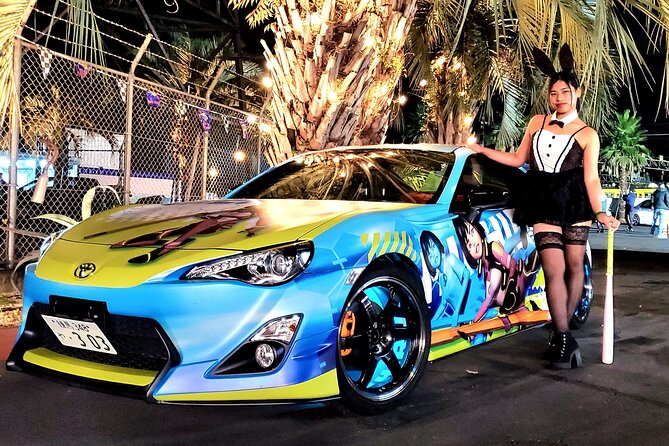
After crossing Rainbow Bridge, the route heads toward Odaiba, the futuristic waterfront district. The tour description places this section around nightfall, when the skyline, bridge, and water can look especially striking.
Odaiba is not the final stop, so you should not think of this as a full visit to its attractions. You pass through the district as part of the larger drive. That brief look is valuable because it connects several sides of Tokyo in one outing: the dense inland districts, the expressways, the waterfront, and the industrial port area near Daikoku.
The change in scenery is part of what makes the trip feel like a proper city tour rather than a simple ride to a car park. You get a sense of Tokyo’s scale and how its districts link together by road.
The Daikoku Parking Area experience
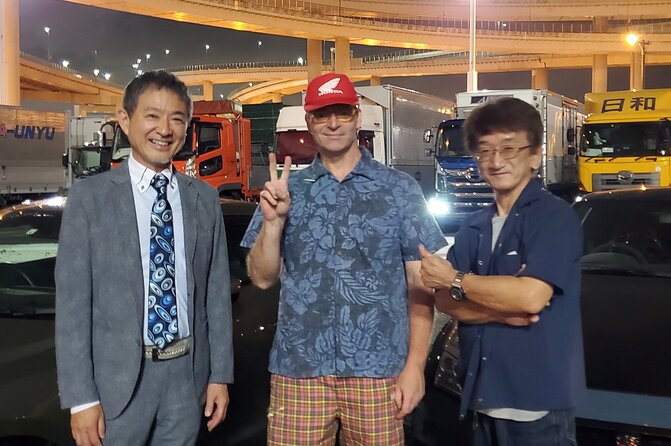
Daikoku Parking Area is the reason most car fans book this experience. Located in the Yokohama area, it is a well-known meeting place for Japan’s car community. The tour uses the arrival itself as part of the show, with the car entering among the lights and other vehicles.
Once there, you have about 90 minutes to look around. Admission is free. The parking area also has shops, vending machines, and toilets, useful details for a late-night stop.
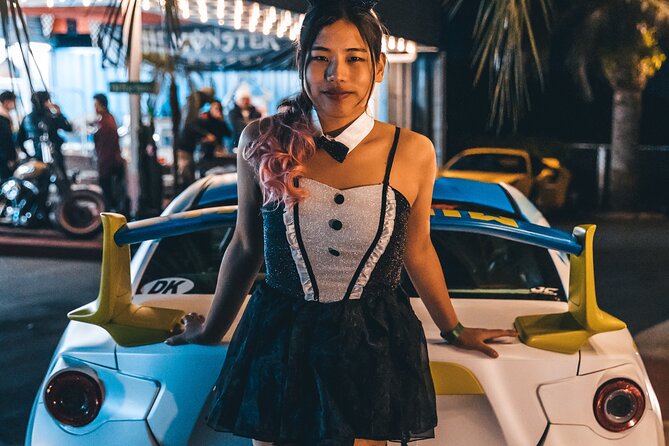
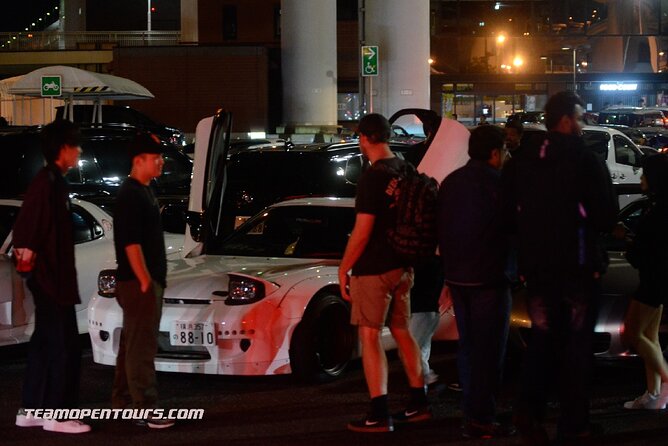
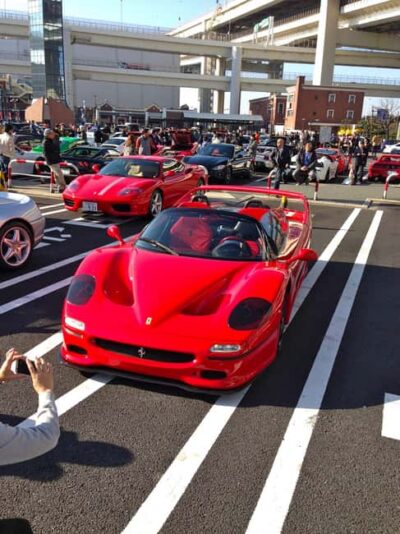
The car mix changes constantly. On a strong night, you might see Nissan Skylines, GT-Rs, RX-7s, Subarus, Silvias, older Japanese performance cars, and tuned vehicles. Italian and other high-end exotics can appear too. Past outings have included Ferraris, McLarens, and even a Koenigsegg, but none of these should be treated as a promise.
That unpredictability is both the charm and the weakness. One night may bring more than 300 cars and a packed lot. Another night, especially in poor weather or on a quieter weekday, may offer much less. One person had a disappointing visit because there was not much happening. The operator allows cancellation when bad weather affects the trip, but the number and type of cars remain outside anyone’s control.
Your guide helps you make sense of the scene. Instead of simply dropping you at the entrance, the driver can point out interesting cars and explain parts of Japanese car culture. Some guides also drive around the lot first so you can see what is present before walking off on your own.
The cars: Toyota 86, GT-R, and Itasha style
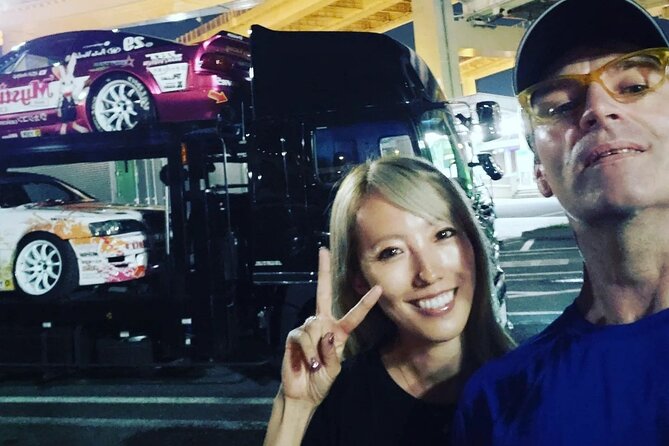
The experience is advertised around an iconic 86 racecar, but the actual vehicle can vary. Past rides have included a Toyota GT 86 and Nissan GT-Rs, and one participant was able to choose from available cars for a family member.
That variation is important. A GT-R creates a very different ride from a Toyota 86, but both fit the mood of the trip. You should confirm the available car if having a particular model is central to your decision.
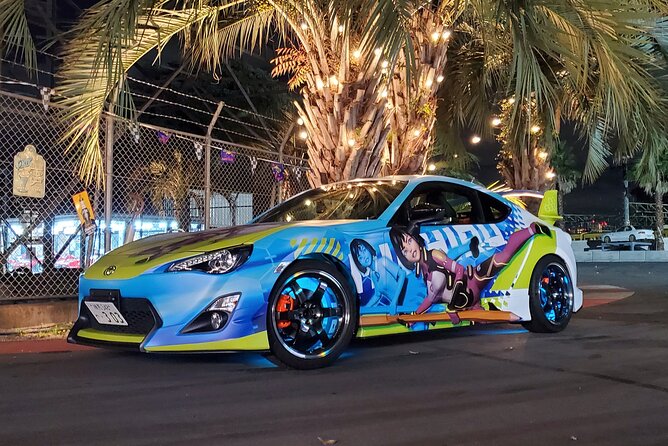
The Itasha theme adds another layer. Itasha cars are decorated performance cars, often with prominent character artwork. The cars are meant to attract attention, and arriving in one gives the entrance to Daikoku a theatrical quality. One car’s featured character was created by Jeremy, adding a personal touch to the vehicle rather than making it feel like a generic rental.
Several people especially enjoyed the arrival, describing the feeling of reaching Daikoku in one of the most noticeable cars in the lot. That does not mean every night turns into a public spectacle, but the car itself is part of the entertainment.
Sports cars are not built around spacious rear seating. A five-foot-ten passenger found the car manageable but noted that a six-foot-four passenger had a difficult time. If you are tall, traveling with two adults, or carrying bulky camera equipment, ask about seating before you book.
How the private format affects the value
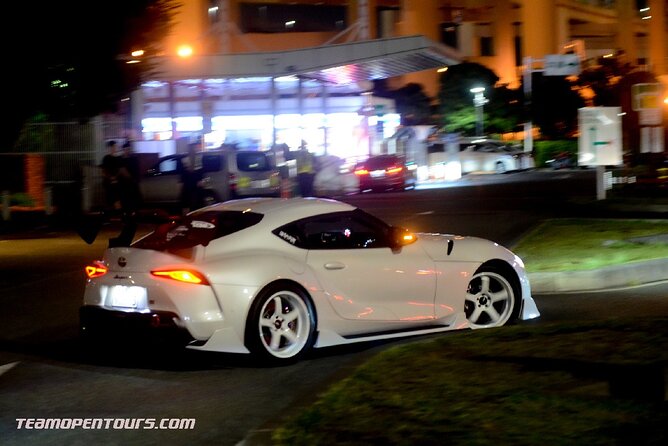
The price is $191.60 per group of up to three people. For one person, that is a sizeable cost. For three people, it works out to about $64 per person, assuming the group is full.
That fee covers more than transportation. You are paying for a private driver, a themed performance car, a guided night route through Tokyo, the Rainbow Bridge crossing, and access to Daikoku without having to solve the transport problem yourself.
Daikoku is not a simple subway destination. Reaching it independently can be difficult, and the route involves port-area roads that are not easy to plan around. The private format removes that practical headache. You also get a local car enthusiast who can explain what you are seeing.
I think the value is strongest for two or three people, especially a parent with teenagers, friends who share an interest in Japanese cars, or a couple looking for an unusual night out. Solo visitors can still enjoy it, but the cost is harder to justify unless the car and Daikoku scene are major priorities.
What guides add to the ride
The driver makes or breaks a private tour. The strongest part of this experience is the combination of driving and conversation.
Jeremy has been praised for discussing both the Tokyo car scene and everyday life in Japan. Graham has been singled out for explaining the city and the cars during the drive. Alistair has also been praised for giving useful suggestions for the rest of a Tokyo stay. Other drivers, including Nanakommm, have been remembered for making the evening friendly and relaxed.
That personal contact changes the mood. You are not simply sitting in a fast car while someone follows a route. You can ask why certain models matter, how the local tuning scene works, or what you are likely to see at Daikoku. If you are new to Japanese performance cars, this context helps you understand the gathering instead of just photographing unfamiliar badges.
The experience is also suitable for non-car enthusiasts, based on the way some couples and families have enjoyed it. You still receive the Tokyo night drive, bridge views, and a look at an unusual local scene, even if you cannot tell an R34 from an R35.
Timing, weather, and practical limits
This is a night outing, and the most attractive views are after dark. The precise start time is arranged around the booking, with some outings beginning close to midnight. That can work well for teenagers and night owls, but it may not suit young children or anyone who needs an early bedtime.
The experience requires good weather. If poor weather cancels the trip, you are offered another date or a full refund. You can also cancel up to 24 hours before the start for a full refund. Inside that 24-hour window, refunds and changes are not accepted.
The meeting point is near public transportation, and the activity returns to the same meeting point. Confirmation is provided when you book. Most people can participate, but the car’s limited space is the practical issue to consider.
Daikoku’s car selection is the other limit. Do not buy this as a guaranteed Ferrari, GT-R, or Skyline sighting. Buy it for the chance to see a changing Japanese car meet, along with a memorable route through Tokyo.
Who should book the Daikoku trip
I would put this near the top of the list for anyone who already follows Japanese performance cars. The chance to ride in an 86 or GT-R, cross Rainbow Bridge, and arrive at Daikoku with a guide is hard to duplicate through ordinary sightseeing.
It also suits families with older children. Several outings have been especially popular with teenagers and young adults, including groups with sons aged 17, 19, and 23. The private setting lets the guide answer specific questions instead of giving a general speech meant for a large group.
Couples can enjoy it too, especially if one person is more interested in cars than the other. The skyline, bridge, and late-night atmosphere give the less committed passenger plenty to enjoy.
I would be more cautious if you dislike tight sports-car seating, cannot handle a late night, or need a guaranteed list of cars. I would also check the vehicle arrangement if you are very tall or if the exact model matters to you.
Should you book it?
Book this experience if you want a private Tokyo night drive with real car culture at the end, not just a transfer to a parking area. The highway route, Rainbow Bridge, Itasha car, and guide-led visit make the whole evening feel connected.
For the best value, bring two other people and treat the Daikoku car selection as a pleasant surprise rather than a promise. If the weather is poor or your schedule is flexible, keep an alternate night in mind. For car fans, this can be the highlight of a Tokyo visit. For everyone else, it is still a lively and unusual way to see the city after dark.
FAQ
Where does the tour start?
The tour starts at 5-8 Funamachi, Shinjuku City, Tokyo 160-0006, Japan.
Where does the tour end?
The activity ends back at the meeting point.
How many people can join?
This is a private activity for a maximum of three guests.
How long does the experience last?
The full experience takes approximately two to three hours. The stop at Daikoku Parking Area lasts about one hour and 30 minutes.
What places can I see during the drive?
The route passes through or near Shinjuku, Shibuya, Tokyo Tower, Tokyo Skytree, Rainbow Bridge, and Odaiba.
What car will I ride in?
The experience is centered on an iconic 86 racecar, but available vehicles can vary. Past rides have included Toyota 86 models and Nissan GT-Rs.
Is admission to Daikoku Parking Area included?
Yes. Admission to Daikoku Parking Area is listed as free.
Is the tour suitable for people who are not car enthusiasts?
Yes. The night drive, Tokyo views, Rainbow Bridge, and guide commentary can appeal to people who are less focused on cars.
What happens if the weather is bad?
The experience requires good weather. If the operator cancels because of poor weather, you can choose another date or receive a full refund. You can also cancel at least 24 hours before the start time for a full refund.
Just added around Tokyo
- Tokyo 6hr Instagram Highlights Private Tour with Licensed Guide★ 5.0 · 38 reviews
- Tokyo Small Group Tour with Guide★ 4.5 · 38 reviews
- Tokyo Sumo Experience with Live Show & Audience Challenge★ 5.0 · 38 reviews
- Japanese Food Cooking Class in Asakusa, Tokyo★ 5.0 · 39 reviews
- Very popular in Harajuku♡Animal petting zoo★ 4.6 · 39 reviews
- Ramen Making from Scratch with Tokyo Mom(Vegan Option Available)★ 5.0 · 39 reviews
- Tokyo JDM Night: 600hp C63s AMG Edition 1 (Private)★ 4.9 · 39 reviews
- Tokyo: Kimono Rental inside Shinjuku Gyoen National Garden★ 4.9 · 39 reviews
JDM Car Culture Tours, compared.
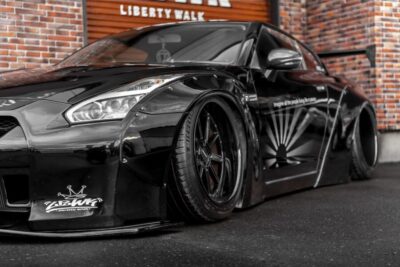
GT-R35 800hp Club Membership – secret underground car meet
Read our review →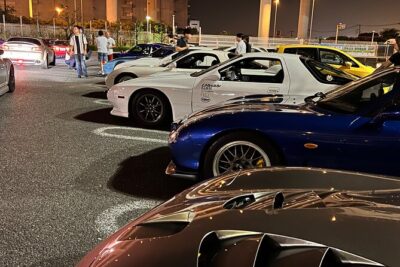
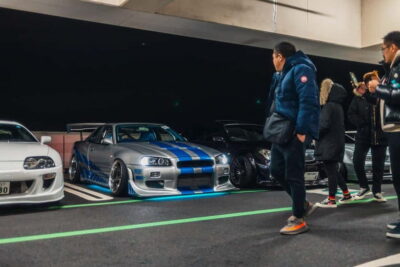
Secret Car Meet: R34 Skyline Car Club Membership
Read our review →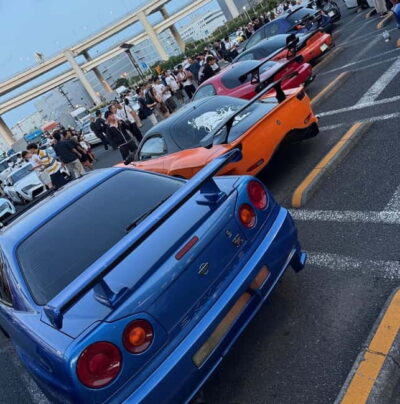
EVO, WRX, Skyline – JDM Night Run to Daikoku Car Meet
Read our review →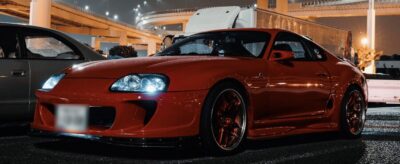
Tokyo Drift: Daikoku PA Supreme Car Experience 大黒PA
Read our review →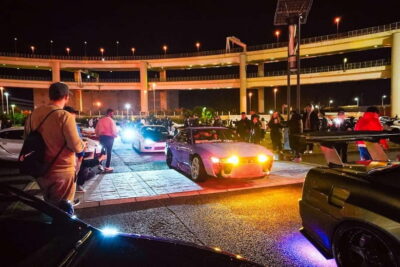
Go Daikoku PA Fast & Furious 3 Sports Car Meetup
Read our review →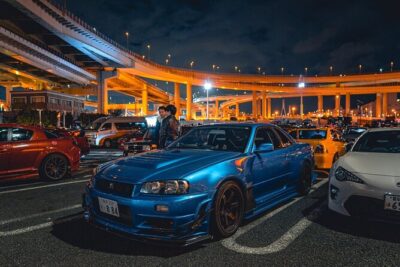
Browse the lists this tour appears in