Reviewed · FULL-DAY
Koyasan Full-Day Private Tour
Koyasan rewards slow footsteps. This six-hour private tour brings you to the mountain town’s most important sacred sites, from the great Daimon Gate to the cedar-lined cemetery of Okunoin. I like the private format, which lets your guide adjust the pace and answer questions properly. I also like the focus on religious meaning, not just architecture. The main consideration is walking: Okunoin covers roughly 2 to 3 kilometers, and the day requires moderate fitness.
You meet at 10 a.m. at Daimon Gate and finish at Kongobuji Temple. Guides such as Noriko have earned especially warm praise for explaining Kobo Daishi, Japanese customs, and Shingon Buddhism in clear, personal terms. Admission fees, lunch, and some local transport cost extra, so the advertised price is not your final total.
In This Review
- Key points to know before booking
- Why Koyasan is best understood with a guide
- Starting at Daimon Gate at 10 a.m.
- Danjo Garan and the lessons of Kobo Daishi
- Walking Okunoin’s cedar-lined cemetery
- Kongobuji Temple, paintings, and rock garden
- What the private format is really worth
- The guides who shape the day
- Who should book this Koyasan tour?
- My booking recommendation
- FAQ
- How long does the Koyasan Full-Day Private Tour last?
- Where does the tour start and finish?
- How much walking is involved?
- Are admission fees included?
- Is lunch included?
- What happens if bad weather cancels the tour?
Key points to know before booking
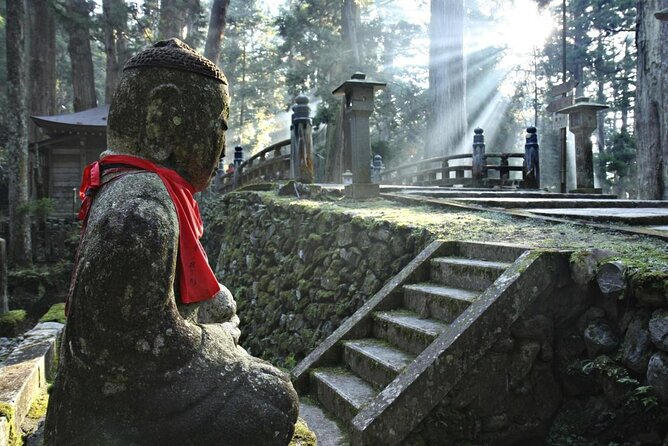
- Okunoin is the emotional center: Walk beneath old cedar trees through Koyasan’s largest cemetery to Kobo Daishi’s mausoleum.
- The guide adds the meaning: Learn why the temples, pagodas, rituals, and memorials matter instead of simply photographing them.
- Daimon Gate gives you a useful start: Begin with an overview of Koyasan before entering its main religious areas.
- Danjo Garan links study with worship: See the main hall and Kompon Daito, the fundamental pagoda associated with Kobo Daishi.
- Kongobuji ends the visit indoors: Take in old sliding-door paintings and a carefully arranged rock garden.
- Budget for extras: Plan on ¥2,000 per person for several admissions, about ¥500 for public transportation, and additional money for lunch.
Why Koyasan is best understood with a guide
Koyasan is not simply a pretty temple town in the mountains. It is a major center of Shingon Esoteric Buddhism, the school founded by Kobo Daishi, also known as Kukai. Its buildings, cemeteries, rituals, and paths all connect to that religious tradition.
You can visit the sites alone, but the details are easy to miss. A guide can explain the role of Danjo Garan, the importance of Okunoin, and the place of Kongobuji within the Shingon community. That turns a series of attractive buildings into a more coherent visit.
The private setup matters here. You are not trying to keep up with a large group or wait while a guide answers someone else’s question. If you are curious about Japanese religion, ask freely. If your interest is more visual or historical, your guide can spend less time on doctrine and more time on architecture, art, and local customs.
The strongest guide feedback is attached to Noriko, who is praised for her warmth, enthusiasm, and ability to explain Koyasan in personal terms. Her background in Wakayama adds local context. Ricardo and Toshio Shimizu have also led this experience, with Toshio especially noted for careful help with transport directions and timing.
Guide assignment is not guaranteed, so you should treat those names as useful possibilities rather than promises. Still, the consistently positive comments about the guiding style tell you what makes this tour work: the human explanation, not just the route.
A few more Japan experiences worth weighing up
- From Tokyo: Mount Fuji Full-Day Sightseeing Trip
★ 4.5 · 4,970 reviews - Mount Fuji Full-Day Private Tour from Tokyo (Customizable)
★ 4.9 · 1,470 reviews - Hiroshima / Miyajima Full-day Private Tour with Government Licensed Guide
★ 5.0 · 1,298 reviews
Starting at Daimon Gate at 10 a.m.
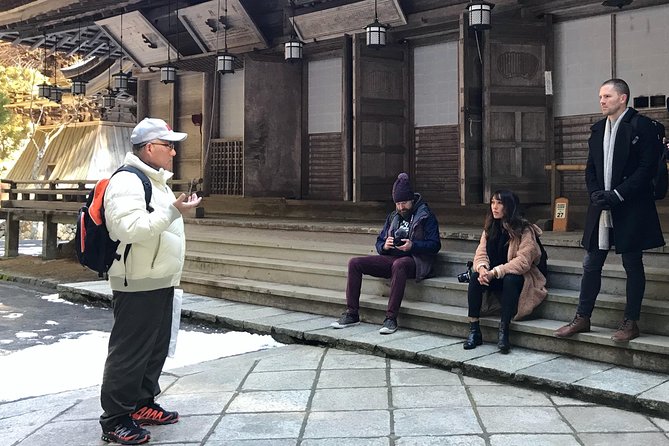
The tour begins at Koyasan Daimon, the large gate that marks one of the traditional entrances to the sacred town. You spend about 30 minutes getting an overview of Koyasan and its religious setting.
This is a sensible opening. Koyasan can feel confusing at first because its important sites are spread across a compact but substantial mountain settlement. Starting with general orientation helps you understand what you are seeing later.
The meeting point is specific: Daimon Gate, Koya, Ito District, Wakayama Prefecture. You are responsible for reaching it by 10 a.m., so allow time to arrange your own route to the mountain. The guide fee is included, but public transportation is not. The stated transportation cost is about ¥500 per person.
That transport charge is small, but it matters when comparing the tour with a self-guided day. You should also remember that reaching Koyasan from elsewhere in Japan is separate from this tour. The experience begins at Daimon rather than at your hotel or a major railway station.
Danjo Garan and the lessons of Kobo Daishi
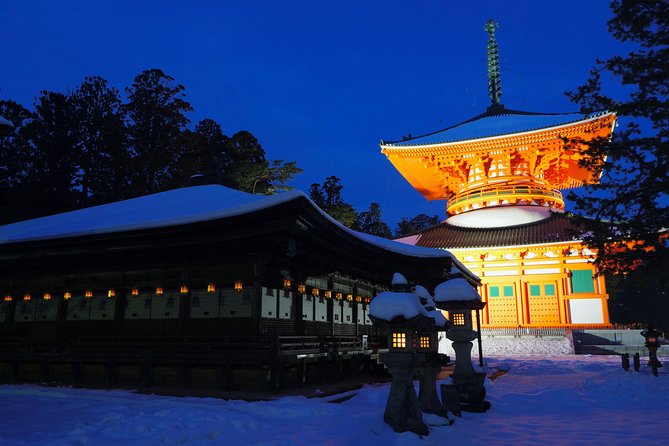
From Daimon, the tour continues to Koyasan Danjo Garan, one of the town’s central religious complexes. You spend about an hour visiting the main hall and Kompon Daito, the fundamental pagoda.
Danjo Garan is where the tour’s religious side becomes more concrete. Your guide explains Kobo Daishi’s teachings and the role of Japanese religion in Koyasan. The purpose is not simply to identify a pagoda or point out a hall. It is to show how Buddhist study and practice shaped this mountain community.
Kompon Daito is especially important because it is tied to the teaching tradition of Shingon Esoteric Buddhism. The complex is also associated with monks studying and training, giving the site an active religious purpose rather than making it just an old monument.
Admission is not included. The combined admission for Kongobuji Temple, Kompon Daito, and Kondo is listed as ¥2,000 per person. The exact breakdown is not provided, so bring enough yen or confirm payment arrangements before you go.
An hour is enough for a focused introduction, though visitors who want extensive time for photography or quiet reflection may find the pace brisk. A private guide can help here by judging your interest. You might move along efficiently, or spend more time discussing the buildings and beliefs.
Walking Okunoin’s cedar-lined cemetery
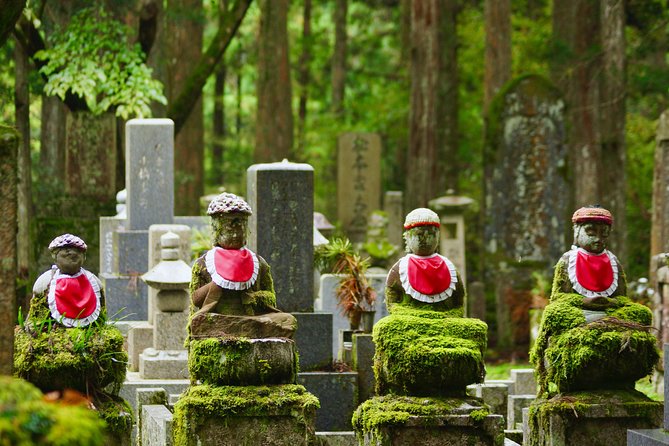
Okunoin is the heart of the visit. You walk roughly 2 to 3 kilometers through Koyasan’s largest cemetery toward Kobo Daishi’s mausoleum. The route takes about 90 minutes.
The supplied route description gives both 2 kilometers and about 3 kilometers, so you should expect a substantial walk rather than a short stroll. Wear comfortable shoes and be ready for a quiet, steady pace. The tour requires moderate physical fitness, and this is the part of the day most likely to test your legs.
The atmosphere changes as you move through the cemetery. Gravestones sit among old cedar trees, creating a solemn setting that many people find mysterious and peaceful. The point is not speed. You are there to notice the setting, listen to the guide, and understand why Okunoin is considered Koyasan’s most sacred place.
A good guide makes a major difference here. Noriko has been praised for explaining Kobo Daishi while keeping the walk personal and reflective. On one occasion, she joined visitors in prayer at the mausoleum. Another group unexpectedly took part in a Kechien Kanjo ritual with her, an experience described as memorable and meaningful.
Those details also show why you should remain open to the character of the day. The route is planned, but a religious site can offer moments that do not fit neatly into a schedule. At the same time, you should not book this tour expecting a ritual. Such opportunities are not guaranteed.
Okunoin is also the site where weather matters most. The tour requires good weather, and poor conditions can lead to a new date or a full refund. Rain does not automatically ruin Koyasan, and one group enjoyed the visit in wet weather, but slippery paths and long walking can make the route less comfortable.
A completely different kind of day out in Japan:
- Mt Fuji and Hakone 1-Day Bus Tour Return by Bullet Train
★ 5.0 · 26,383 reviews - 1-Day Tokyo Bus Tour
★ 5.0 · 14,250 reviews - PERFECT KYOTO 1-Day Bus Tour
★ 5.0 · 13,518 reviews - Tokyo: TOKYO SKYTREE® Admission ticket
★ 4.5 · 11,192 reviews
Kongobuji Temple, paintings, and rock garden
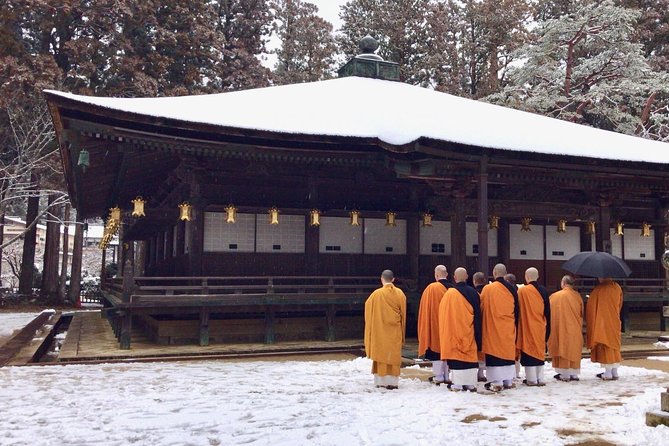
The final major stop is Kongobuji Temple, the head temple of Koyasan’s Shingon Esoteric Buddhist tradition. You spend about an hour here.
Inside, you can see richly decorated sliding-door paintings dating from roughly 400 years ago. These works give the visit a different tone from Okunoin. The cemetery is quiet and atmospheric, while Kongobuji offers art, rooms, and formal temple design.
The temple’s rock garden is another highlight. Its simplicity rewards a few unhurried minutes. Your guide can help explain how to look at the garden and how it fits the larger temple setting, though the supplied information does not specify a particular viewing position or ceremony.
Kongobuji is where the tour ends, which is convenient if you want to continue exploring the town on your own afterward. It also means you should think about your next move before the day begins. The tour does not return you to Daimon.
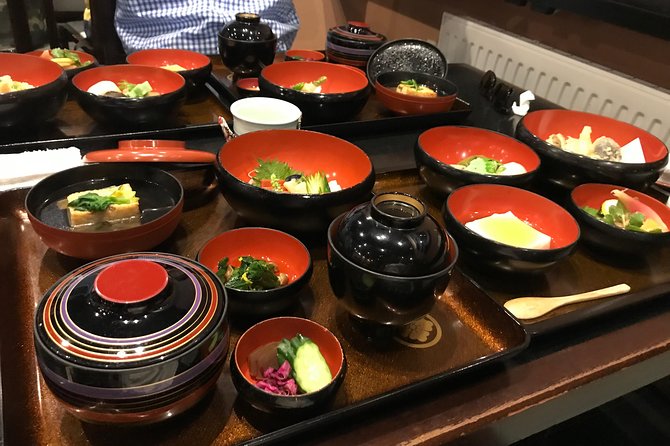
Admission to Kongobuji is extra and part of the ¥2,000 combined fee listed for Kongobuji, Kompon Daito, and Kondo. Lunch is not included. Some visitors have enjoyed a vegetarian meal at a local restaurant arranged or suggested by the guide, but you should not assume lunch is part of the package. Ask your guide about food plans at the start of the day.
What the private format is really worth
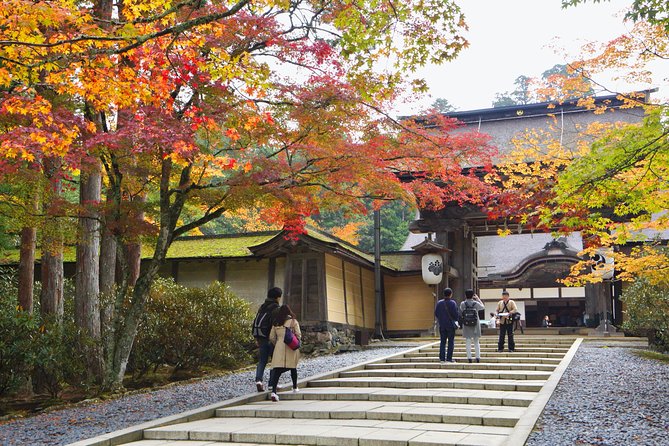
The price is $131.78 per person. For a private tour, that is easier to justify when you are traveling with several people, especially because group discounts may be available. The more people in your private group, the more the guide fee can make sense compared with paying for several separate private explanations.
You still need to add the ¥2,000 admission charge, about ¥500 for public transportation, and lunch. The total cost therefore sits above the headline price. Even so, the value is reasonable if your main goal is to understand Koyasan rather than simply check off its temples.
I would be less certain about booking it if you prefer complete independence, long photo stops, or a slow day with no fixed route. The tour covers four major locations in about six hours, so it has a clear structure and a fair amount of ground to cover.
For families or groups of friends, the private format is a strong advantage. Six people have previously enjoyed the tour together, and smaller groups of two, three, and four have also used it. You can shape the conversation around your own interests, which is particularly helpful when one person wants religious context and another is more interested in art or Japanese customs.
The guides who shape the day
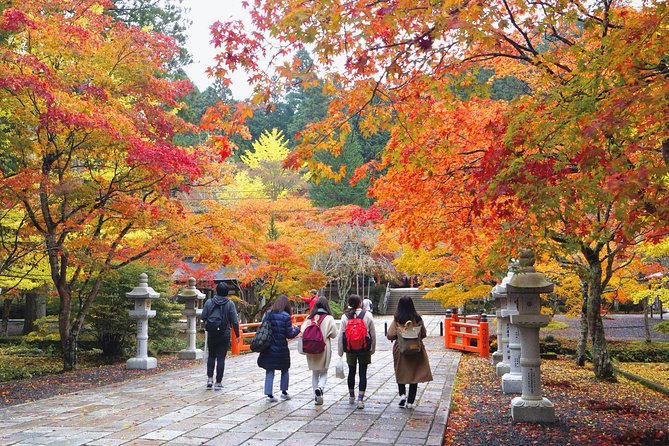
Noriko is the name most closely associated with the best personal accounts of this tour. Her approach combines explanations of Buddhism with local stories, customs, and practical help. She has also helped visitors with parts of their wider Japan trip, including questions about ryokan arrangements.
Her style appears especially suited to visitors who want more than facts. She has discussed Kobo Daishi through everyday ideas such as love and water, connecting abstract Buddhist teaching with ordinary life. That kind of conversation will appeal to you if you enjoy asking questions and making cultural connections.
Ricardo has also guided the route and is described as friendly and well informed. Toshio Shimizu, identified as a nationally licensed guide specializing in Koyasan, has helped visitors with directions, train platforms, ticket types, and schedules in addition to leading the tour itself.
Since the guide is assigned by the provider, you should not book on the assumption that Noriko will lead your group. If a particular guide is important to you, ask before confirming. The experience provider is WAK Guide.
Who should book this Koyasan tour?
I would recommend it most strongly for first-time visitors to Koyasan who want cultural context. It is also a good fit if you are interested in Japanese religion but do not know where to begin, or if you want a thoughtful introduction before spending more time in the town on your own.
The tour suits:
- Couples and families who prefer a private pace
- Small groups sharing the cost
- Visitors with moderate fitness who can walk 2 to 3 kilometers at Okunoin
- People interested in Kobo Daishi, Shingon Buddhism, temples, rituals, and Japanese customs
- Anyone who wants help understanding what they are seeing
You should think twice if you have serious walking limitations, want a fully flexible schedule, or dislike paying separate admission and transport costs. Service animals are allowed, and the meeting point is near public transportation, but the tour data does not provide detailed information about step-free access or restroom locations.
The experience is booked, on average, 74 days ahead. That suggests you should plan early if your Japan schedule is fixed, especially for a private date. Free cancellation is available up to 24 hours before the start time. Changes or cancellations inside that window are not accepted for a refund, while a weather cancellation offers another date or a full refund.
My booking recommendation
Book this tour if you want Koyasan explained by a person who cares about its spiritual meaning. Okunoin is the main reason to go, but Danjo Garan and Kongobuji give the walk a useful beginning and end. The private guide helps connect all three places.
I would book it for a first visit, a family group, or anyone who wants a memorable introduction to Kobo Daishi and Shingon Buddhism. I would skip it only if you are happy to research the temples yourself and want to set your own pace.
Before paying, confirm the meeting details, expected guide, admission costs, transport arrangements, and lunch plan. Wear good walking shoes, arrive at Daimon before 10 a.m., and leave room in your day for Okunoin to take its time. That is where Koyasan makes its strongest impression.
FAQ
How long does the Koyasan Full-Day Private Tour last?
The tour lasts approximately six hours. It begins at 10 a.m. at Daimon Gate and ends at Kongobuji Temple.
Where does the tour start and finish?
You meet at Daimon Gate in Koyasan, Wakayama Prefecture. The tour ends at Kongobuji Temple.
How much walking is involved?
The Okunoin portion covers roughly 2 to 3 kilometers and takes about 1 hour and 30 minutes. A moderate level of physical fitness is recommended.
Are admission fees included?
No. Admission to Kongobuji Temple, Kompon Daito, and Kondo costs ¥2,000 per person. The tour price includes the guide fee but not these admissions.
Is lunch included?
No. Lunch at a restaurant or cafe is not included. Some guides may help suggest or arrange a local restaurant, but you should plan to pay separately.
What happens if bad weather cancels the tour?
The experience requires good weather. If it is canceled because of poor weather, you can choose another date or receive a full refund. You can also cancel for a full refund up to 24 hours before the start time.
Just added around Japan
- Osaka Japanese Cooking And Matcha Class near Osaka Castle★ 5.0 · 22 reviews
- Tokyo Shibuya Walking tour With A Guide★ 4.4 · 22 reviews
- Private Ring Craft Experience in Kanazawa★ 5.0 · 22 reviews
- Osaka Sushi Miso soup Adventure: A Journey of Exotic Flavors★ 5.0 · 22 reviews
- Tokyo’s Authentic and Finest Taiko Drumming Workshop★ 5.0 · 22 reviews
- Okinawa East Coast 3-hour Marine Experience: Kayak or SUP★ 5.0 · 22 reviews
- Private Tokyo Local Food and Drink Tour with a Bar Hopping Master★ 5.0 · 22 reviews
- Tokyo: Visit Sumo Morning Practice with English Guide★ 4.5 · 22 reviews
Full-Day, compared.
Mount Fuji Full-Day Private Tour from Tokyo (Customizable)
Read our review →
Hiroshima / Miyajima Full-day Private Tour with Government Licensed Guide
Read our review →

5 Top Highlights of Kyoto Full Day Bike Tour (E-bike option)
Read our review →
Full Day Biking Tour Exploring the Best of Kyoto
Read our review →