
Reviewed · SUMO EXPERIENCES
Tokyo: Visit Sumo Morning Practice with English Guide
Sumo practice hits differently up close. This Tokyo morning visit takes you into Takasago Stable, a training room linked with champions, where you can watch wrestlers stretch, clash, and work through demanding practice. I like the rare access and the chance to see the sport without the polished feel of a formal tournament. I also like having an English-speaking guide who can explain the rules, customs, and Japanese terms as the action unfolds. The main drawback is simple: you sit quietly for much of the experience, often on the floor or small seats, and an unexpectedly crowded stable can make the view tight.
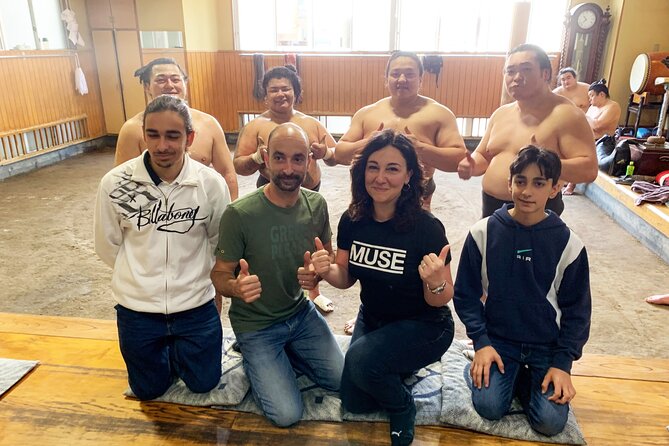
The 8:00 a.m. start is early, but it works well for a Tokyo morning. After the practice, you can continue to Asakusa or explore the Ryogoku area. The guide meets you near Ryogoku Station, walks you to the stable, helps with questions, and arranges a commemorative photo with the wrestlers.
In This Review
- Key points to know before booking
- Why morning practice is better than a tournament for some people
- Finding the guide near Ryogoku Station
- Entering Takasago Stable and taking your seat
- What you actually see during the 90-minute session
- The photo with the wrestlers
- What the guide adds to the experience
- How the price compares with the experience
- Combining the stable with Asakusa and Ryogoku
- Who will enjoy this sumo experience most
- Booking, cancellation, and useful morning advice
- Should you book the Tokyo sumo morning practice?
- FAQ
- Where does the sumo morning practice tour begin?
- Where does the tour end?
- How long does the experience last?
- Is an English guide included?
- Can I take a photo with the wrestlers?
- How many people can join the tour?
- Can I cancel for a full refund?
Key points to know before booking
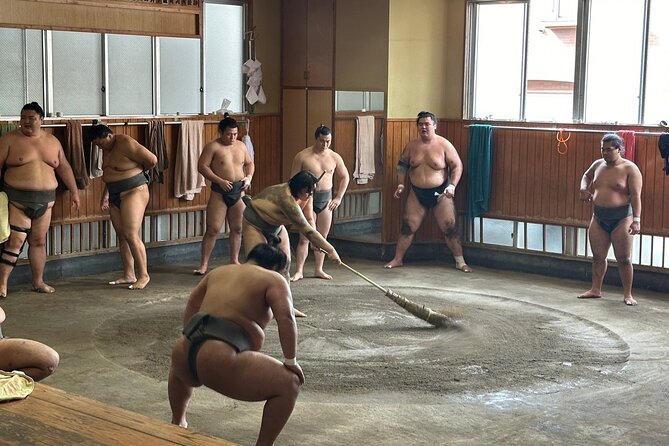
- Watch real training at Takasago Stable: This is a serious practice session, not a staged performance.
- Get close to the action: Training takes place at close range, so you hear the impact and feel the force of the bouts.
- Meet at 8:00 a.m. near Ryogoku Station: Allow extra time to find the A3 exit and the exact meeting point.
- English support makes a difference: Guides explain sumo terms, history, training exercises, and etiquette.
- Expect traditional seating: You may sit on the floor or use a small stool for around 90 minutes.
- Plan a flexible morning: The experience lasts about 1.5 to 2 hours and finishes at Takasago Stable, not back at the station.
Why morning practice is better than a tournament for some people
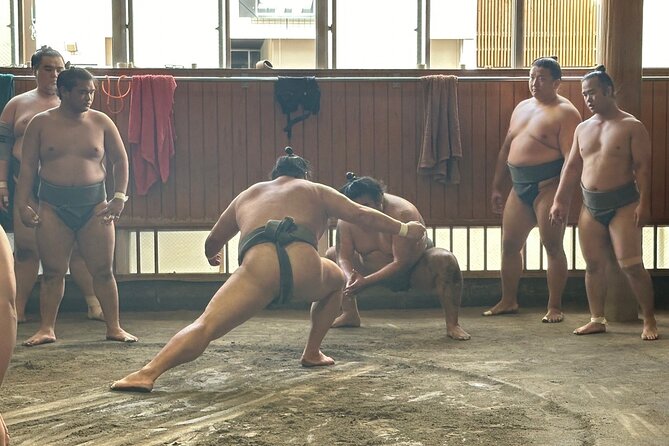
A tournament gives you the spectacle: music, ceremony, crowds, formal bouts, and a large arena. Morning practice gives you something quieter and more revealing. You see the athletes before the public show, working through the same movements again and again.
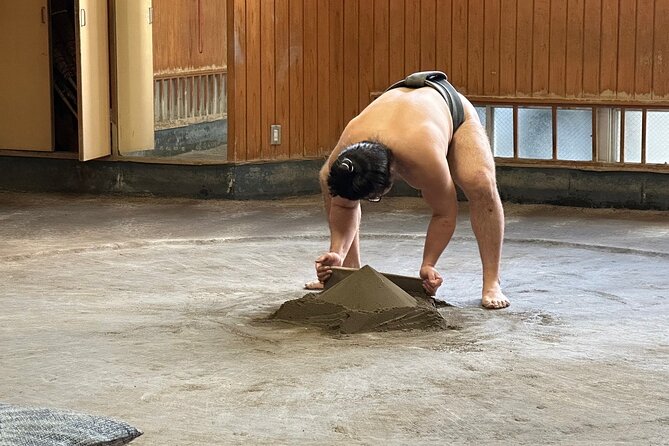
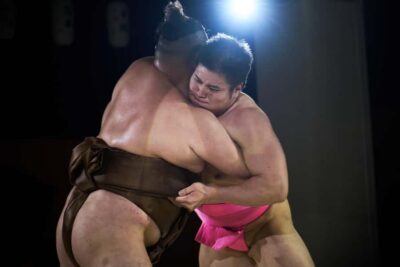
The session begins with stretching and preparation. This can last roughly 30 minutes, sometimes a little longer. The younger wrestlers then challenge one another, followed by more powerful wrestlers taking part in intense practice bouts. The order helps you understand that sumo is not simply two large men charging at one another. It is a demanding daily discipline built on balance, timing, strength, repetition, and endurance.
I like the lack of stagecraft. The wrestlers are not performing for applause, and the guide does not turn the practice into a comedy act. You watch athletes doing their work. That makes the experience especially worthwhile if you respect sport, training, or Japanese customs.
The tradeoff is that a training session has no guaranteed dramatic finale. The length and exact sequence depend on what happens at the stable that morning. If you want a fast-moving show with constant explanation, this may feel slow. If you are happy to observe carefully, the quiet stretches are part of the point.
More Sumo Experiences in Tokyo
- Tokyo: Sumo Show Experience with Chicken Hot Pot and a Photo
★ 4.8 · 6,678 reviews - Tokyo: Sumo Show and Dining Experience
★ 4.8 · 2,742 reviews - the SUMO show
★ 5.0 · 1,960 reviews
Finding the guide near Ryogoku Station
The stated meeting point is around 1-chōme-4-29 Yokoami in Sumida City, near Ryogoku Station. The tour begins at 8:00 a.m., but the group leaves the station area at about 7:45, so do not treat 8:00 as your arrival time.
The A3 exit matters. Ryogoku Station has more than one exit, and it is easy to come out on the wrong side. Allow yourself an extra 10 minutes to locate A3, especially if you are unfamiliar with Tokyo’s station layout. A guide should be waiting with a sign, and the operator says two staff members may be present. Still, arriving early is the sensible choice.
One past problem involved a guide and part of the group losing contact before reaching the stable. The operator apologized and clarified that the meeting time is 15 minutes before the published start. A confirmation message is sent the day before, with a guide’s WhatsApp number for day-of problems. Keep that message handy and check your phone before leaving your hotel.
The walk from the station to the sumo room takes about 10 minutes. Some people choose to take a taxi directly from their accommodation, which can be easier if you are carrying luggage, traveling with older family members, or staying far from Ryogoku. The advertised tour begins at the station, so confirm your arrangements before assuming a direct taxi drop-off will work.
Entering Takasago Stable and taking your seat
Takasago Stable is the heart of the experience. The stable is a working training space, not a museum or visitor center. The guide leads you from the meeting place into the room, where you are shown where to sit and reminded to watch respectfully.
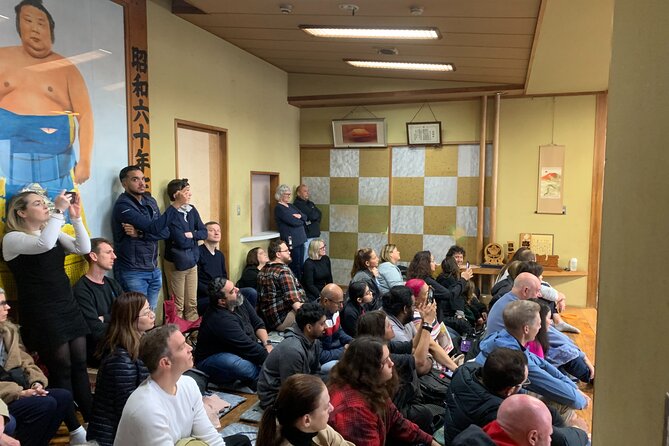
Space is limited. You might sit on the floor in traditional fashion or use a small stool. This is an important practical detail for anyone with stiff knees, back trouble, or difficulty sitting low. The session lasts about 90 minutes, and remaining comfortable can affect how much you enjoy it.
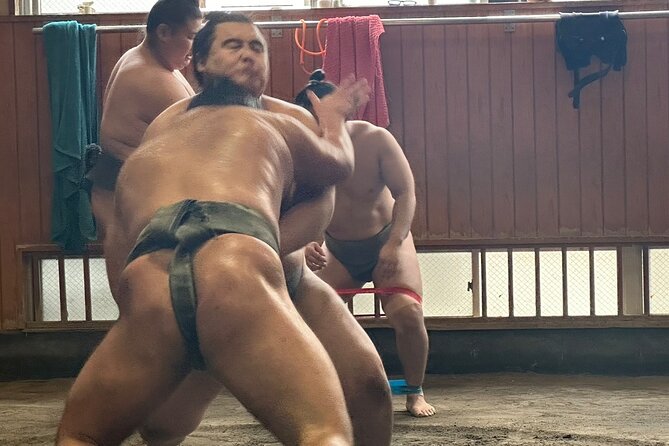
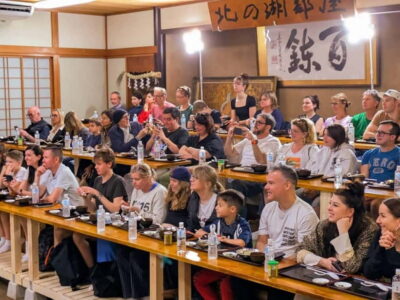
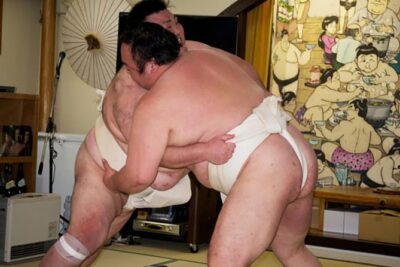
The compact room is also what makes the viewing special. You are not watching from the distant upper tier of an arena. You can hear the wrestlers’ footwork, breathing, shouts, and the heavy sound of bodies meeting. That closeness gives the practice a physical quality that photographs cannot capture.
At the same time, a small room has limited sightlines. The group size is capped at 20, but additional Japanese fan clubs or other groups may occasionally arrive. One morning became crowded, with some people joining after practice had begun. The guide worked to keep the booked group seated comfortably, but you should still expect a tight arrangement rather than personal space.
What you actually see during the 90-minute session
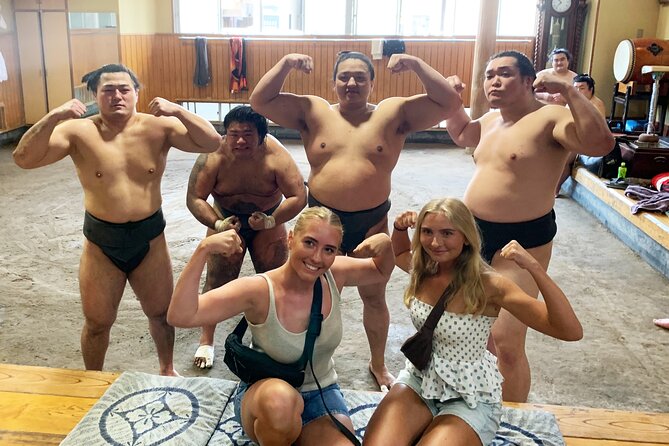
The practice usually moves from preparation to bouts. Early exercises include stretching and movements that prepare the wrestlers for contact. These moments can look repetitive, but they show the care taken before the hard work begins.
Next, younger wrestlers face one another. Their bouts let you see how the stable trains developing athletes. The session then builds toward bouts involving stronger and more experienced wrestlers. The change in scale and force is striking, even if you know little about sumo.
Your guide can explain what you are seeing and answer questions about the sport. Several guides have been praised for clear English and friendly help. Naomi, in particular, has been singled out for answering more than 20 questions before and after practice. Another guide has been heard speaking English, French, and Japanese.
A useful fact sheet explains sumo terms, training details, and background information. That small handout matters because the practice is conducted in Japanese, and there may not be a running English commentary. You are not expected to understand every call or movement on your own, but you do need to pay attention and save questions for suitable moments.
This is not a lesson with constant narration. The best guide knows when to let the room remain quiet. You should expect periods of simply watching. That is a strength if you want an authentic look at the routine, but a weakness if you booked it expecting a fully guided performance.
A completely different kind of day out in Tokyo:
- Mt Fuji and Hakone 1-Day Bus Tour Return by Bullet Train
★ 5.0 · 26,383 reviews - 1-Day Tokyo Bus Tour
★ 5.0 · 14,250 reviews - Tokyo: TOKYO SKYTREE® Admission ticket
★ 4.5 · 11,192 reviews - Tokyo: teamLab Planets TOKYO Digital Art Museum Entry Ticket
★ 4.6 · 9,779 reviews
The photo with the wrestlers
A commemorative photograph with the sumo wrestlers is included after the practice. It provides a clear ending to the morning and gives you something tangible to remember the visit.
The photo session is not the main attraction, and the practice should be your reason for booking. Still, it is a fun extra, especially for families and teenagers. The close contact also helps the morning feel more personal than a distant tournament seat.
Be respectful during this part. You are entering a working stable, and the wrestlers have just completed a serious training session. Follow the guide’s directions and the stable’s rules rather than treating the photo as a chance for a long personal encounter.
What the guide adds to the experience
The guide is most useful in three ways. First, you get help reaching a private-feeling location without worrying about language problems. Second, you receive context while watching the training. Third, you have someone who can answer the questions that naturally come up once you see the sport at close range.
The strongest comments about this experience focus on guide quality. Naomi is praised for warmth and patience, while other guides are described as polite, efficient, and fluent in English. One guide reportedly handled English, French, and Japanese during the morning.
That support is valuable even if you already know the basic rules. Sumo has layers of ritual, rank, terminology, and training customs that are easy to miss from the stands. A guide can point out the difference between warm-up exercises and practice bouts, explain why the wrestlers train in sequence, and help you understand what makes a clash technically strong.
Do not expect the guide to translate every word spoken in the room. The stable is a place for observation first. You will get more from the visit if you watch the athletes and ask focused questions during appropriate pauses.
How the price compares with the experience
The price is $98.53 per person. That is not a budget morning activity, especially since the visit lasts about 1.5 to 2 hours and does not include a full sightseeing tour, meal, or tournament ticket.
The value comes from access. A stable is not normally open to casual spectators, and this booking combines entry, an English guide, a fact sheet, help with the station-to-stable route, and a photo with the wrestlers. If you tried to watch sumo only at a formal event, you would see the public version of the sport, not this close look at daily preparation.
I would consider the price fair for someone who sees sumo as a priority in Tokyo. It is less convincing if you are only mildly curious or if you dislike sitting quietly for a long period. The cost also feels harder to justify when extra groups make the room crowded or when the morning’s practice is shorter than you expected.
Think of it as a specialist cultural experience rather than a general city tour. You are paying for access to a working tradition and for help understanding what you see. That is a good deal for a sports fan, a family with interested teenagers, or anyone planning to attend a sumo tournament later.
Combining the stable with Asakusa and Ryogoku
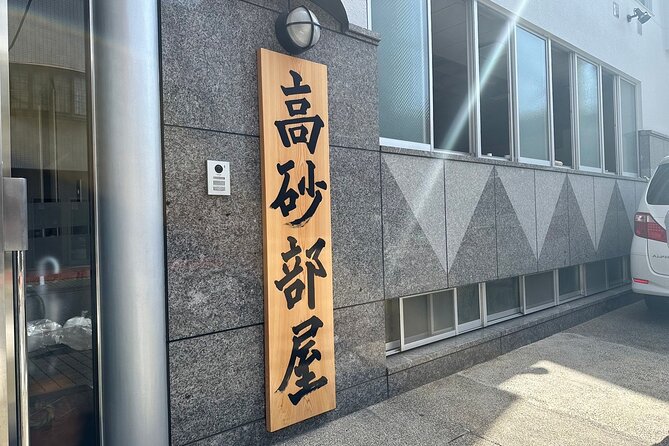
The tour ends at Takasago Stable at 2-chōme-30-1 Ishiwara in Sumida City. You are dismissed there, and the guide shows you how to reach your next destination.
This makes the morning easy to combine with nearby sightseeing. You can continue through the Ryogoku area or head toward Asakusa after the practice. The experience itself does not include a guided Asakusa visit, so treat that as your own add-on rather than part of the scheduled tour.
An early finish also leaves useful time for other Tokyo plans. Still, do not book a fixed morning appointment immediately afterward. The stated duration is approximate, and the walk, seating arrangements, crowding, and final photo can affect when you are free.
Who will enjoy this sumo experience most
I would recommend it most strongly to:
- People who want to see authentic Japanese sport rather than a staged cultural show
- Sports fans interested in training, discipline, and athletic technique
- Families with teenagers who can sit quietly and follow instructions
- First-time sumo viewers who want basic terms and customs explained
- Visitors planning to attend a formal tournament and wanting useful background first
You do not need a background in sumo to appreciate the session. The guide and fact sheet provide enough context to follow the main action.
I would hesitate to recommend it to anyone who needs comfortable chairs, dislikes early starts, or wants a lively tour with constant movement. The stable is traditional and compact. Your comfort depends partly on accepting the room as it is.
The activity is near public transportation, and most people can participate. The supplied information does not provide detailed accessibility arrangements, so contact the operator before booking if you need specific seating or mobility support.
Booking, cancellation, and useful morning advice
Confirmation is provided at booking, and the ticket is mobile, so you can keep it on your phone. Cancel at least 24 hours before the local start time for a full refund. Cancellations or changes made within 24 hours are not accepted for a refund.
Wear clothing that allows you to sit comfortably. Arrive early, find the A3 exit, and save the guide’s contact details. Keep your phone quiet inside the stable and follow instructions about photos and conversation.
The experience has a 4.6 rating from 22 reviews, with the strongest praise aimed at the guides, the close view, the serious practice, and the friendly organization. The weaker experiences center on confusion at the meeting point, uncomfortable seating, and crowding. Those are not minor details, but they are manageable if you arrive early and book with realistic expectations.
Should you book the Tokyo sumo morning practice?
Book it if you want to see sumo as a demanding daily craft, not simply as a tournament spectacle. The close range, pounding impact, guide support, and wrestler photo create a memorable morning, and the chance to continue to Asakusa afterward adds flexibility.
Skip it if you want a polished show, guaranteed comfort, or nonstop explanation. This is quiet, traditional, and sometimes crowded. For the right person, that is exactly why it works.
FAQ
Where does the sumo morning practice tour begin?
It begins near Ryogoku Station at 1-chōme-4-29 Yokoami, Sumida City, Tokyo. The meeting time is before the published 8:00 a.m. start, with the group leaving the station area at about 7:45 a.m.
Where does the tour end?
The tour ends at Takasago Stable at 2-chōme-30-1 Ishiwara, Sumida City, Tokyo. The guide shows you how to reach your next destination after dismissal.
How long does the experience last?
The scheduled experience lasts about 1 hour 30 minutes, with the overall duration listed as approximately 1.5 to 2 hours.
Is an English guide included?
Yes. An English-speaking guide accompanies the group from the meeting point to the stable, explains the practice, and answers questions about sumo.
Can I take a photo with the wrestlers?
Yes. A commemorative photo with the sumo wrestlers is included after the training session.
How many people can join the tour?
The maximum group size is 20 people. The stable may occasionally become more crowded if Japanese fan clubs or another group arrives.
Can I cancel for a full refund?
Yes, if you cancel at least 24 hours before the experience’s local start time. Cancellations or changes made less than 24 hours before the start are not refunded.
Just added around Tokyo
- Tokyo Shibuya Walking tour With A Guide★ 4.4 · 22 reviews
- Tokyo’s Authentic and Finest Taiko Drumming Workshop★ 5.0 · 22 reviews
- Private Tokyo Local Food and Drink Tour with a Bar Hopping Master★ 5.0 · 22 reviews
- Nikko Toshogu, Kegon waterfall, Lake Chuzenji One Day Pvt. Tour★ 5.0 · 22 reviews
- Private Departure Transfer : Central Tokyo City to Haneda Airport★ 4.5 · 22 reviews
- Mt. Fuji and Hakone Private Tour with English Speaking Driver★ 5.0 · 22 reviews
- Private Tour with a Local Guide – Learn about daily life in Japan★ 5.0 · 22 reviews
- Private Tokyo Early Morning Tour with English-Speaking Guide★ 5.0 · 22 reviews
Sumo Experiences, compared.
Tokyo Shinjuku Sumo Show & Experience with Photo
Read our review →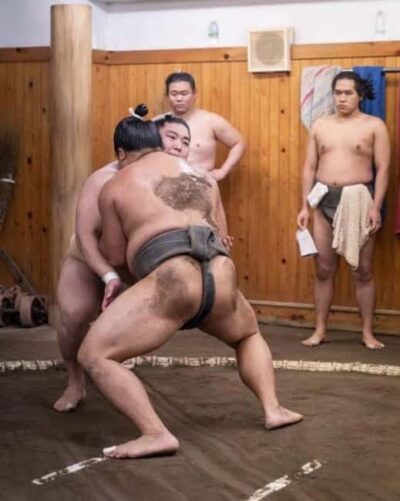
Sumo Show & Experience w/ Optional Kimono & Hot Pot
Read our review →
Authentic Sumo Experience in Tokyo: Enter the Sanctuary
Read our review →
Luxury Sumo Show Experience & Japanese cuisine & Drink
Read our review →Browse the lists this tour appears in