
Reviewed · OSAKA TOURS
Osaka Sushi Miso soup Adventure: A Journey of Exotic Flavors
Sushi tastes better when you make it. This three-hour Osaka cooking class with Chef Yuki combines hands-on sushi practice, homemade miso soup, and a friendly look at everyday Japanese food. I especially like the small groups, limited to six people, and the useful methods for marinating tuna and curing salmon with kombu.
I also like that you do far more than shape a few rolls. You prepare Nigiri, Hosomaki, Tamagoyaki, dashi broth, and miso soup, with Chef Yuki explaining the steps in English. The main consideration is location: the class is outside central Osaka near Nukata Station, so you need to allow about 30 minutes from Namba, plus a five-minute walk.
In This Review
- Key points to know before booking
- Why this class is more than a sushi lesson
- Getting from Namba to Nukata
- Starting with rice, dashi, and Japanese basics
- Tuna zuke and kombu-jime salmon
- Making Nigiri with your own hands
- Hosomaki and the challenge of neat rolls
- Tamagoyaki, dashi, and homemade miso soup
- Chef Yuki’s personal teaching style
- Price and value at $96 per person
- Who will enjoy this Osaka cooking class
- FAQ
- Where is the sushi class held?
- How do I reach the class from Namba?
- How long does the experience last?
- Is the class taught in English?
- How many people are in the group?
- What food will I make?
- Are ingredients included?
- Can I cancel the booking?
- Should you book Chef Yuki’s sushi class?
Key points to know before booking
- Chef Yuki teaches practical home cooking: Her lessons cover rice, fish preparation, dashi, miso soup, sushi, and omelet.
- Tuna zuke and kombu-jime salmon are especially useful: These traditional methods help keep prepared fish fresh for three to four days.
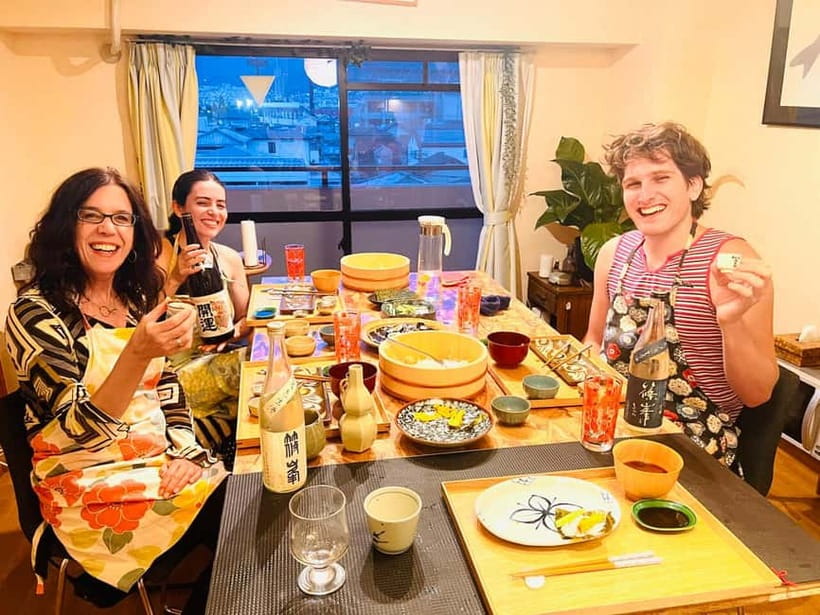
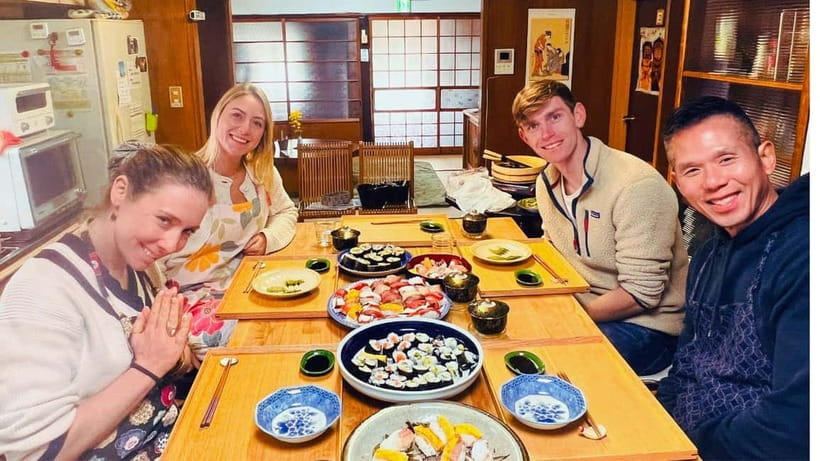
- The class feels personal: Groups are capped at six, and some sessions have had only one to four participants.
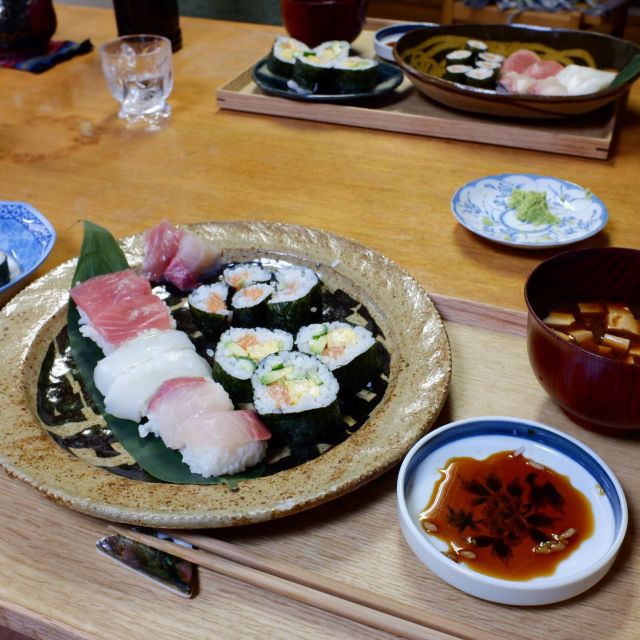
- You make several kinds of sushi: Expect Nigiri and Hosomaki, along with Tamagoyaki and other Japanese dishes.
- Nukata is easy to reach, but not central: The Kintetsu Nara Line takes about 30 minutes from Osaka Namba Station.
- The food comes with Osaka advice: Chef Yuki also shares cooking tips, local pointers, and details from her own life.
Why this class is more than a sushi lesson
Many sushi classes focus on the fun part: rolling rice and fish into neat shapes. This one gives you a better sense of what supports the sushi, including properly prepared rice, dashi broth, seasoning, and fish treatments.
That matters because sushi at home often fails before the rolling begins. The rice may be too soft, too cool, or poorly seasoned. The fish may be cut without much thought. Here, Chef Yuki takes you through the building blocks first, so the finished food makes sense rather than feeling like a craft project.
Her training also gives the class a traditional foundation. She learned from a sushi master with more than 40 years of experience, then brings those methods into a setting designed for home cooks. You are not simply watching a professional work quickly behind a counter. You are handling the ingredients yourself and asking questions as you go.
The class is taught in English, and the small format helps. With six people or fewer, you should have a fair chance to see demonstrations and get help with tricky steps. Some sessions have been even smaller, with one guest or a group of four. That can make a major difference when you are learning how to press Nigiri rice or use a square pan for Tamagoyaki.
A few more Osaka experiences worth weighing up
- Osaka Go Karting Tour with Funny Costume
★ 5.0 · 2,658 reviews - Osaka Castle: Museum and Tower Entry Ticket
★ 4.5 · 2,380 reviews - Osaka: Shinsekai Food Tour with 13-15 Dishes at 5 Eateries
★ 4.8 · 2,204 reviews
Getting from Namba to Nukata
The class meets at 4-19 Nukata-cho, in a white building near Nukata Station. From Osaka Namba Station, take the Kintetsu Nara Line toward Kintetsu Nara. The journey takes about 30 minutes and costs ¥430, according to the directions provided for the class.
From Nukata Station, allow about five minutes on foot. The directions point you northeast along Route 308 toward the white building. You should arrive 10 minutes early, since this is a small class and late arrivals could interrupt the opening instructions.
The location is the one clear tradeoff. If you are spending the day around Dotonbori, Osaka Castle, or Umeda, Nukata adds transport time. On the other hand, the route is simple, and the short trip takes you away from the busiest tourist zones. The class is held directly at the cooking location, and several participants have been met near the station or at a nearby convenience store. If you want that assistance, contact Chef Yuki ahead of time rather than relying on an unplanned pickup.
I would schedule this activity when you want a slower afternoon, not when you have a tight chain of sightseeing appointments. Three hours in the class, plus the train ride, makes it a substantial part of your day.
Starting with rice, dashi, and Japanese basics
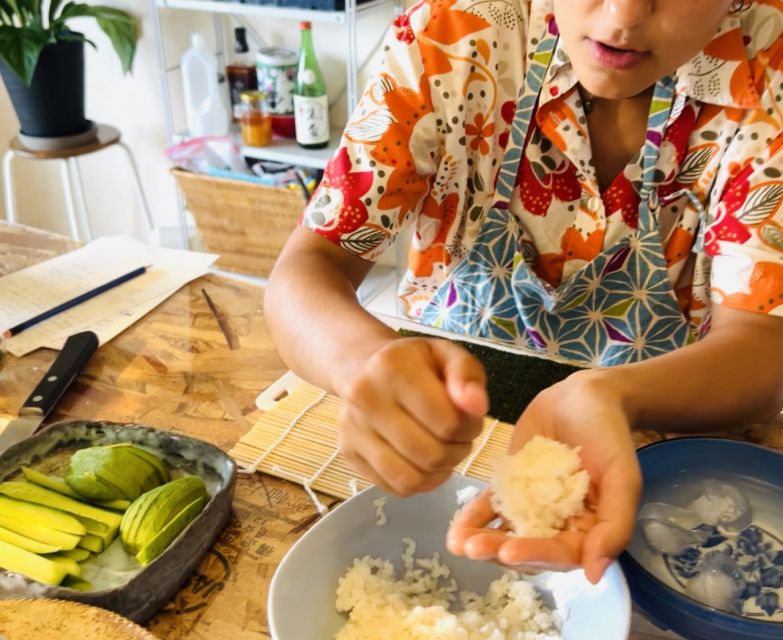
The exact order of the class may vary, but the teaching begins with the foundations of Japanese cooking. You learn how sushi rice should be selected and prepared, including the traditional way of treating the rice in a pot.
This is one of the class’s most useful parts. Rice looks simple, but its texture controls the whole sushi experience. If it is too wet, Nigiri collapses and Hosomaki becomes heavy. If it is too dry, the sushi feels loose and harsh. Chef Yuki explains how to prepare it properly rather than handing you a bowl of ready-made rice.
You also work with dashi broth, the savory base used in many Japanese dishes. The broth gives miso soup its character and helps you understand why Japanese cooking can taste full without relying on heavy sauces. Basic tasks such as preparing wasabi paste and making dashi give the lesson useful context.
For me, this is the difference between learning a recipe and learning a method. You leave with a better idea of how Japanese cooks build flavor, even when you are not making sushi.
Tuna zuke and kombu-jime salmon
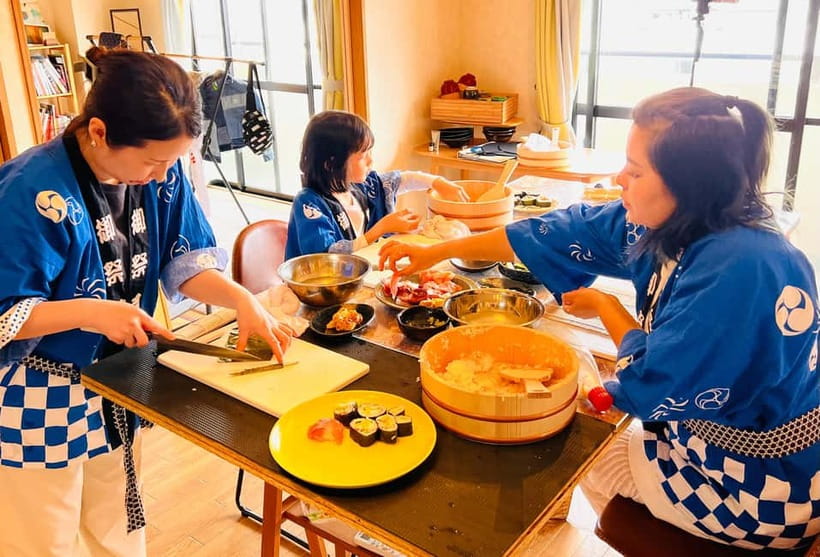
The fish treatments are the most distinctive part of the course. Tuna zuke uses a soy-based marinade to season the tuna before it becomes a sushi topping. The method adds flavor and gives the fish a different texture from plain sliced tuna.
Kombu-jime salmon uses kelp to cure the salmon. This is a traditional technique that brings extra savory flavor while helping preserve the fish. Chef Yuki presents both methods as practical choices for home cooks, especially outside Japan, where finding fish suitable for raw sushi can be more difficult.
The course explains that these preparations can keep the fish fresh for three to four days. That does not mean you should ignore normal food-safety rules, but it does make the techniques useful for planning a meal at home. You can prepare the fish ahead rather than trying to make every part of a sushi dinner at the last minute.
I like this focus because it avoids the usual promise that you will recreate a professional sushi bar overnight. Instead, you learn two techniques that can fit into an ordinary kitchen. The result is more flavor and a little more flexibility.
A completely different kind of day out in Osaka:
- Osaka Food Tour: 13 Dishes at 5 Local Eateries
★ 5.0 · 2,149 reviews - Hungry Osaka Street Food Tour:15 Tastings & 3 Drinks with a Local
★ 5.0 · 1,727 reviews - Osaka: teamLab Botanical Garden Entry Ticket
★ 4.5 · 1,710 reviews - Osaka: Tea Ceremony Experience
★ 4.9 · 1,426 reviews
Making Nigiri with your own hands
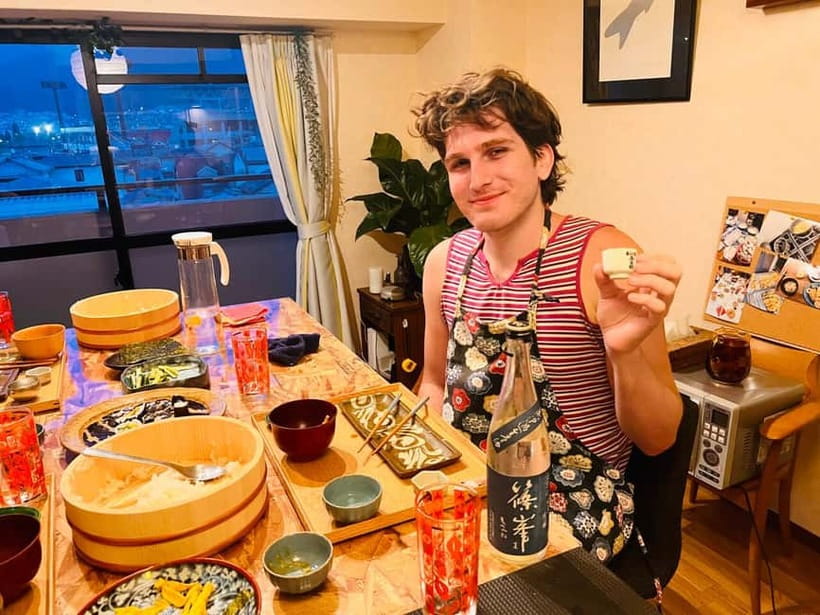
Nigiri looks spare: a small mound of rice topped with fish. It is also one of the harder forms to make well, because there is nowhere to hide a poor shape or badly handled rice.
Chef Yuki guides you through the balance between pressing firmly enough to hold the rice together and gently enough to keep it light. You also learn how the fish sits on the rice and how the topping and rice should work as one bite.
This is a hands-on lesson, not a demonstration where you watch a chef make everything. Beginners can ask for help at each stage, while people who already know basic sushi can use the class to improve their handling and preparation. One participant with previous experience particularly valued the explanation of rice preparation and the careful treatment of each step.
Do not expect to produce identical restaurant pieces immediately. The point is to understand the technique and gain confidence. Your first Nigiri may look homemade, which is perfectly honest. It should still taste good.
Hosomaki and the challenge of neat rolls
Hosomaki are thin rolls with a single main filling. They are smaller and more delicate than the oversized rolls often served outside Japan, so they require a lighter touch.
You learn how to spread rice across the nori, place the filling, and roll the sheet without crushing it. The amount of rice matters. Too much rice makes a thick roll that does not close well. Too little leaves gaps and makes slicing difficult.
This part is particularly friendly for beginners because the steps are clear, but it still rewards care. You can see improvement from one roll to the next. It is also the kind of skill you can repeat at home with fairly simple equipment.
The class covers several sushi styles, not just one. That variety keeps the three hours active and gives you more options for a future meal. If you want an elaborate professional sushi apprenticeship, this is not that. If you want a solid introduction that leaves you able to make dinner for friends, it is a better fit.
Tamagoyaki, dashi, and homemade miso soup
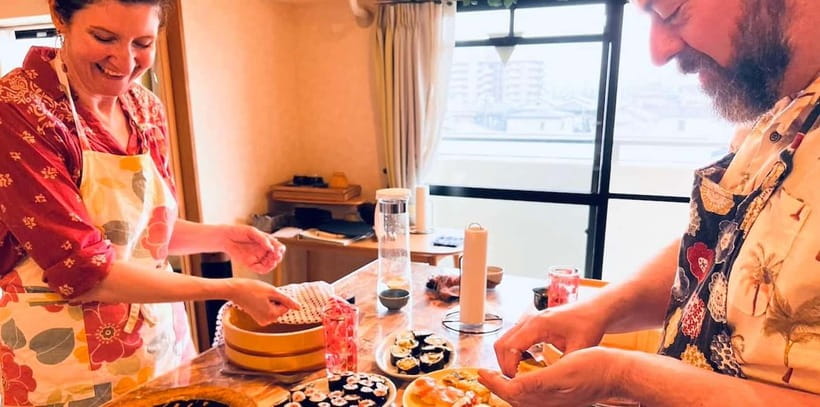
Tamagoyaki is the Japanese rolled omelet often served with sushi. It is made in a square pan, with thin layers of egg cooked and rolled one after another.
The technique takes coordination. You need to cook each layer without drying it out, then roll it neatly before adding the next layer. The shape becomes more familiar as you work, and Chef Yuki can show you how to handle the pan and timing.
The omelet gives the class a welcome change from fish and rice. It also demonstrates how a common Japanese side dish depends on small details, including seasoning and temperature.
Miso soup brings the meal together. You prepare it from scratch with homemade dashi rather than simply dissolving instant miso in hot water. This helps you taste the role of the broth, then add miso carefully so its flavor remains clear.
Several people have particularly enjoyed the finished miso soup, with one describing it as the best they had in Japan. That is a high compliment, though you should treat it as personal enthusiasm rather than a promise. What I can say from the class structure is that the soup receives real attention, not just a quick mention beside the sushi.
At the end, you sit down and eat the dishes you prepared together. This shared meal gives the lesson a natural finish. It also lets you compare the balance of rice, fish, broth, and omelet while the instructions are still fresh.
Chef Yuki’s personal teaching style
Chef Yuki has more than a decade of culinary experience and teaches in an open, personal way. The class is held at her cooking location, and some participants have described being welcomed into her home or apartment.
That setting can feel much warmer than a large commercial kitchen. You get local conversation alongside the cooking, including details about her life, Japanese food, and Osaka. She also shares tips that go beyond the formal recipes, which is useful if you want to understand how the dishes fit into daily life.
The class works well for questions. Participants have asked about cooking methods, ingredients, and local food, and Chef Yuki has been praised for explaining each stage clearly. She also provides recipes afterward, allowing you to repeat the dishes when you return home.
Families may find the small format helpful. A baby has been accommodated in the class when arranged in advance. A vegetarian participant also received suitable help, though you should tell Chef Yuki about dietary needs before you arrive, rather than assuming changes will be possible on the day.
Price and value at $96 per person
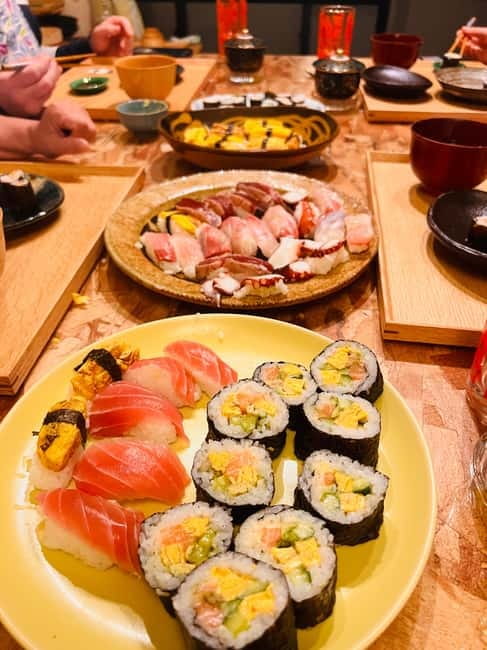
At $96 per person, this is not a cheap meal. You are paying for a three-hour class, ingredients, instruction in English, a small group, and a meal made during the lesson.
The value depends on how you use it. If you only want to eat sushi, Osaka offers cheaper choices. If you want a guided lesson that teaches methods you can repeat at home, the price is more reasonable. The tuna zuke and kombu-jime salmon techniques are especially useful because they help you plan ahead and work with fish when excellent raw ingredients are not easy to find.
The small group also improves the value. A class of six gives you more direct attention than a large workshop, and some dates may feel almost private. One person attended alone and received a highly personal session. That kind of attention is hard to price into a basic restaurant meal.
Recipes sent after the class add practical value. You can use the lesson again rather than leaving Japan with only photographs and a full stomach. One participant also bought Chef Yuki’s cookbook, but the provided experience includes recipe follow-up, not the book itself.
The booking terms are helpful for a changing Japan itinerary. You can reserve and pay later, and cancellation is free up to 24 hours in advance for a full refund. Check the available start time before booking, since the activity lasts three hours and exact times depend on availability.
Who will enjoy this Osaka cooking class
I would recommend it most strongly to:
- First-time sushi makers who want patient instruction
- Couples and friends who prefer an active food experience
- Home cooks who want practical Japanese recipes
- People interested in dashi, miso, and rice preparation, not just rolling sushi
- Families with a baby, after confirming arrangements in advance
- Vegetarians who contact Chef Yuki before the class
- Repeat visitors who want a quieter side of Osaka
It is also a good choice after a busy morning of sightseeing. The class offers a seated meal and a slower pace, though you still spend time preparing food.
I would think twice if your Osaka schedule is packed tightly around the city center. Nukata is easy to reach, but it is not next door to Namba. You should also avoid booking it if you want a polished restaurant meal with no participation. Here, uneven rolls and imperfect omelets are part of the lesson.
FAQ
Where is the sushi class held?
The class is held at 4-19 Nukata-cho, Osaka, in a white building near Nukata Station.
How do I reach the class from Namba?
Take the Kintetsu Nara Line from Osaka Namba Station toward Kintetsu Nara. Get off at Nukata Station. The train ride takes about 30 minutes and costs ¥430, followed by a walk of about five minutes.
How long does the experience last?
The class lasts three hours.
Is the class taught in English?
Yes. English instruction is provided.
How many people are in the group?
The group is limited to six participants.
What food will I make?
You will make Nigiri Sushi, tuna zuke, kombu-jime salmon, Hosomaki, Tamagoyaki, and miso soup. The class also covers dashi broth, sushi rice, and wasabi paste.
Are ingredients included?
Yes. Fresh ingredients and traditional seasonings are included.
Can I cancel the booking?
You can cancel up to 24 hours in advance for a full refund. The reserve-now, pay-later option is also available.
Should you book Chef Yuki’s sushi class?
Book it if you want to understand Japanese food from the inside out, not just eat another sushi dinner. The small group, English instruction, personal teaching, and broad menu make this a useful introduction for beginners and a worthwhile refresher for home cooks.
The best reason to choose it is the practical detail. You learn how to treat rice, build dashi, prepare miso soup, roll Hosomaki, shape Nigiri, cook Tamagoyaki, and use tuna zuke and kombu-jime salmon at home. Allow extra time for the trip to Nukata, tell Chef Yuki about dietary or family needs in advance, and arrive early. With those points in mind, $96 buys you skills, a meal, and a friendly connection to Osaka food culture.
Just added around Osaka
- Osaka Japanese Cooking And Matcha Class near Osaka Castle★ 5.0 · 22 reviews
- Osaka: Mino Forest Walk and Giant Waterfall with Local Lunch★ 5.0 · 22 reviews
- Ramen-Making Experience in the Osaka Castle Area with Souvenir★ 5.0 · 22 reviews
- Himeji Castle and Akashi Kaikyo Bridge Walking Tour from Osaka★ 4.5 · 22 reviews
- Osaka Morning Tour: Shitennoji Temple, Shinsekai &Doutonbori★ 5.0 · 23 reviews
- Nostalgic Osaka walk, totally different from Dotonbori★ 5.0 · 23 reviews
- Osaka Dotonbori Daytime Food Tour★ 5.0 · 24 reviews
- Osaka Private Half-Day Tour with a Local – Secrets & Highlights★ 5.0 · 24 reviews
Osaka Tours, compared.

Shinsekai Food Tour with 13-15 Dishes at 5 Eateries
Read our review →
Osaka Food Tour: 13 Dishes at 5 Local Eateries
Read our review →
Hungry Osaka Street Food Tour:15 Tastings & 3 Drinks with a Local
Read our review →
Browse the lists this tour appears in