

Reviewed · CASTLE TOURS
Ramen-Making Experience in the Osaka Castle Area with Souvenir
Make noodles, then eat your homework. This two-hour ramen-making class near Osaka Castle gives you hands-on work from flour to finished bowl, with English-speaking staff guiding each step. I like the small maximum of eight people and the choice of tonkotsu, shoyu, or miso soup. The main consideration is the $85.39 price, which is fair for a full meal and souvenir, but high if you only want a quick cooking demonstration.
I also like that this is not limited to expert cooks. Families, beginners, and serious ramen fans can all take part, and the morning or late-afternoon times make it easier to fit around Osaka sightseeing. You should allow extra time to find the studio, since the meeting point is in a neighborhood setting rather than at Osaka Castle itself.
In This Review
- Key points at a glance
- Why this Osaka ramen class is worth your time
- Finding the studio near Osaka Castle
- Step one: turning ramen flour into fresh noodles
- Step two: preparing the chicken chashu
- Step three: picking between tonkotsu, shoyu, and miso
- A clean kitchen and a playful Japanese setting
- English-speaking staff make the difference
- What the $85.39 price includes in practical terms
- Who should book this class
- Timing, cancellation, and small details to know
- Should you book the Osaka ramen class?
- FAQ
- Where does the ramen-making experience take place?
- How long does the class last?
- How close is the studio to Osaka Castle?
- Which train stations are near the studio?
- Which ramen soup bases can I choose?
- Is the class suitable for beginners and families?
- How many people can join the class?
- Can I cancel for a full refund?
Key points at a glance

- Make noodles by hand: You work with Japanese wheat flour made for ramen and create fresh, chewy noodles.
- Choose your soup: Pick tonkotsu, shoyu, or miso, with each base drawn from recipes associated with well-known ramen shops.
- Prepare chicken chashu: You simmer chicken in an original broth and make your own tender topping.
- Small class size: The maximum is eight people, giving you a better chance to receive direct help.
- Near Osaka Castle: The studio is about a 20-minute walk from the castle and close to three train stations.
- Take home a souvenir: The class ends with a keepsake, along with your freshly made bowl of ramen.
Why this Osaka ramen class is worth your time
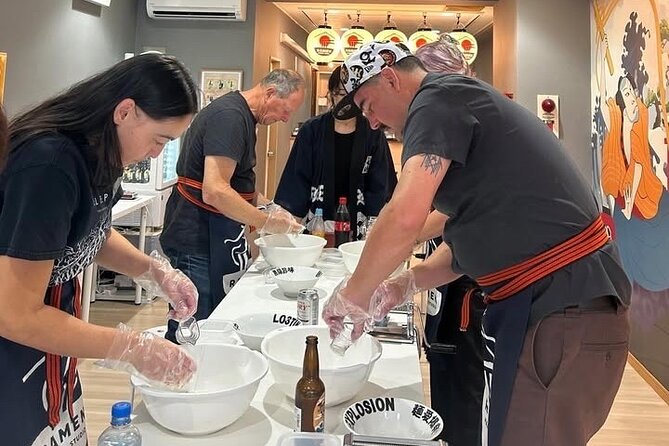
Osaka is packed with food choices, from takoyaki stands to department-store basements loaded with beautifully arranged meals. A ramen class gives you something different: you do not just eat a Japanese dish, you learn how several parts of it come together.
I like the practical nature of this experience. You make the noodles, prepare the topping, choose the soup, and then eat the result. That makes the $85.39 fee easier to justify than a simple restaurant meal, especially if you value a memorable activity and a souvenir as part of the price.
The class lasts about two hours, long enough to feel involved without taking up an entire day. You can choose a morning or late-afternoon session, which works well if you want to visit Osaka Castle before class or pair the activity with dinner plans elsewhere.
The small group limit also matters. With no more than eight people, you should have a reasonable chance to ask questions and get help with the hands-on work. This is particularly useful when handling dough, since noodle texture can depend on pressure, timing, and technique.
More Castle Tours in Osaka
- Osaka Castle: Museum and Tower Entry Ticket
★ 4.5 · 2,380 reviews - Ultimate Osaka Walking Tour: Castle, Dotonbori & Hidden Gems
★ 5.0 · 862 reviews - Osaka Castle Walking Tour and Castle Tower Admission
★ 5.0 · 561 reviews
Finding the studio near Osaka Castle
The studio is located at Japan, 530-0044 Osaka, Kita Ward, Higashitenma, 1-chōme4, at Higashitenma Heights. It is within walking distance of Osaka Castle, though the stated walking time is about 20 minutes, so do not expect to step out of the castle grounds and walk straight into class.
You have three nearby rail options:
- Tenmabashi Station, Exit 13, about 10 minutes on foot
- Minamimorimachi Station, Exit 6, about 10 minutes on foot
- Osaka Temmangu Station, Exit 7, about five minutes on foot
That last option is the shortest walk, while the three-station choice gives you flexibility from different parts of Osaka. Umeda Sky Building and Namba are both about 20 to 30 minutes away by train, so the class can fit into a wider sightseeing day.
I would use the full address and station exit information rather than relying only on the phrase near Osaka Castle. The studio is in Higashitenma, and the location may feel more residential and local than the castle area itself. That is part of the appeal, but it also means you should check your route before setting out.
The experience begins and ends at the same meeting point. A mobile ticket is provided, and confirmation comes at booking, so you can keep the details on your phone.
Step one: turning ramen flour into fresh noodles
The noodle-making section is the heart of the class. You use Japanese wheat flour specially made for ramen, then work it into your own batch of noodles under instruction.
Fresh ramen noodles have a different character from dried noodles or prepackaged instant noodles. They can be chewy and springy, and the texture changes how the soup feels in your mouth. That is why this part is more than a flour exercise. You are learning one of the main features that separates a handmade bowl from a basic convenience meal.
The instructions are given in English, which removes much of the guesswork for international visitors. The strongest praise for this class focuses on clear explanations, friendly teaching, and the chance to stay active rather than simply watching someone cook.
You should expect to work with your hands. If you prefer a polished demonstration with no mess, this may not be your ideal food activity. If you like making something from basic ingredients, the noodle section gives you the most satisfying sense of progress.
The class is open to all skill levels. Beginners can follow the guided process, while experienced cooks may enjoy the chance to compare Japanese ramen methods with their own kitchen habits.
Step two: preparing the chicken chashu
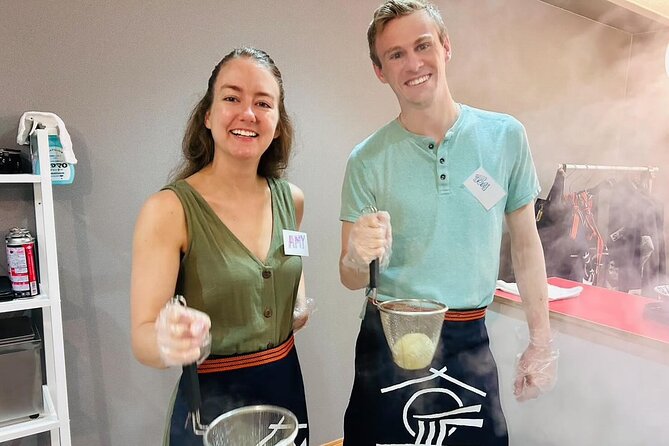
The topping is chicken chashu, prepared by simmering chicken in the studio’s original broth. Chashu is often associated with pork, so the use of chicken gives this class its own angle and may suit people who prefer poultry.
The goal is tender, juicy meat with enough flavor to hold its place beside the noodles and soup. You are not just placing a ready-made slice on top of your bowl. You take part in preparing it, which adds another useful cooking skill to the session.
This part also shows why the experience is more substantial than a quick noodle workshop. The bowl includes several components, and you learn how each one contributes to the final taste.
The exact cooking times and methods are not detailed in the available information, so you should not expect a full professional ramen-shop apprenticeship in two hours. You will, however, get guided practice with an important topping and see how it works with the soup you select.
More Ramen Tours in Osaka
- Osaka: Five Must-See Highlights Walking Tour & Ramen Lunch
★ 4.7 · 411 reviews - Osaka: Ramen and Gyoza Cooking Class in Dotonbori
★ 5.0 · 378 reviews - Ramen and Gyoza Cooking Class in Osaka
★ 5.0 · 202 reviews - Walking Tour of Osaka’s 5 Must-See Sights, with Ramen for Lunch
★ 5.0 · 158 reviews
Step three: picking between tonkotsu, shoyu, and miso
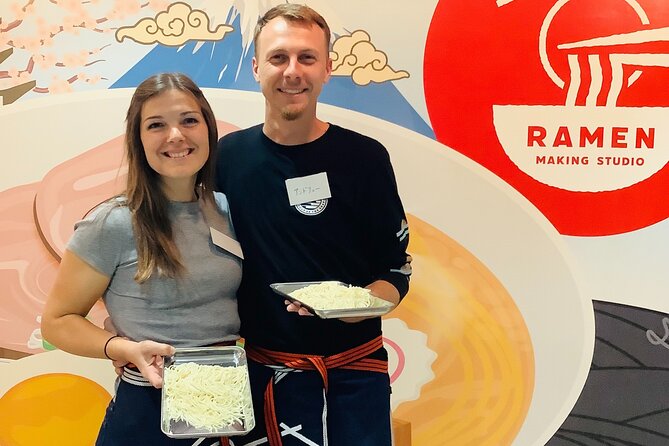
You choose one of three soup bases: tonkotsu, shoyu, or miso. That choice lets you shape the bowl around your own taste.
Tonkotsu is generally associated with a creamy, pork-bone style broth. Shoyu is soy-sauce based and usually brings a more savory, direct flavor. Miso adds a fuller, fermented character. The class describes its soup recipes as being based on secret recipes from well-known ramen shops, giving the cooking lesson a connection to established ramen traditions.
I like having the choice because it keeps the class from feeling one-size-fits-all. If your family or group has different preferences, each person can select a favorite style rather than eating the same soup.
The soup choice is also a good reason to think about what you normally order in a ramen restaurant. If you already know you prefer miso, choose it. If you are unsure, ask the English-speaking staff for guidance. They are there to answer questions in real time, and that personal help is one of the class’s strongest features.
Keep in mind that the experience teaches a complete bowl, not every possible ramen style. You will learn the selected base and the studio’s approach rather than a broad survey of regional ramen across Japan.
A clean kitchen and a playful Japanese setting
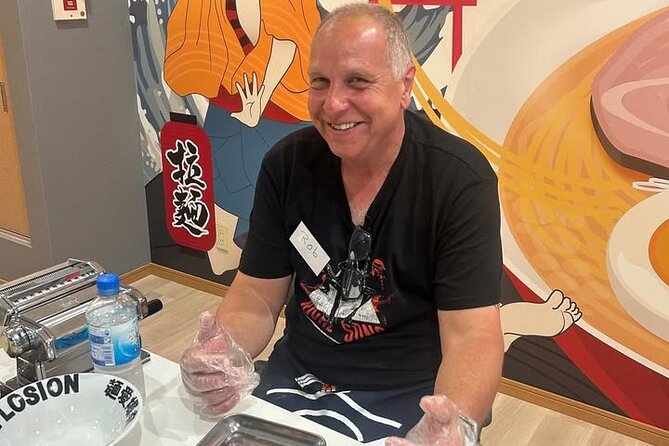
The studio is designed to be part cooking school and part photo setting. The walls feature ramen and Japanese motifs, and the entrance has a glass door made more than 100 years ago with a technique that is no longer used.
That door is an unusual detail. It gives the venue a small piece of craftsmanship to look at before or after cooking, and the staff introduce other objects connected with Japanese culture during the visit.
The kitchen is described as spotlessly clean, an important point when you are handling food. The setting also helps families and first-time cooks feel comfortable. You get a structured activity, but the decorative surroundings keep it from feeling like a plain classroom.
I would bring a phone or camera if you enjoy food photographs, since the walls and entrance are designed for memorable pictures. Staff may take photos and videos during the class for social media or advertising. If you do not want your image used, tell the staff before the experience begins.
English-speaking staff make the difference
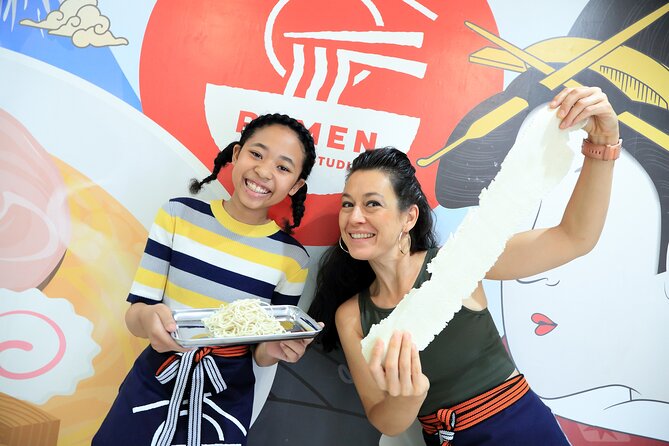
A ramen class can become confusing if instructions are limited to gestures. Here, the staff speak English well and explain the process as you work. That allows you to ask why a step matters, not just copy the motion in front of you.
The staff are repeatedly praised for being friendly, professional, kind, and fun. That combination is important. You want enough interaction to feel supported, but not so much that the class turns into a nonstop performance.
The best fit is a teacher who lets you work while stepping in at the right moment. The feedback on this class points to that balance, with clear instruction and plenty of hands-on time.
You should still remember that staff quality can vary from one session to another. No individual instructor names are provided, so you cannot request a particular teacher. What you can expect is an English-speaking team and a class built for direct participation.
What the $85.39 price includes in practical terms
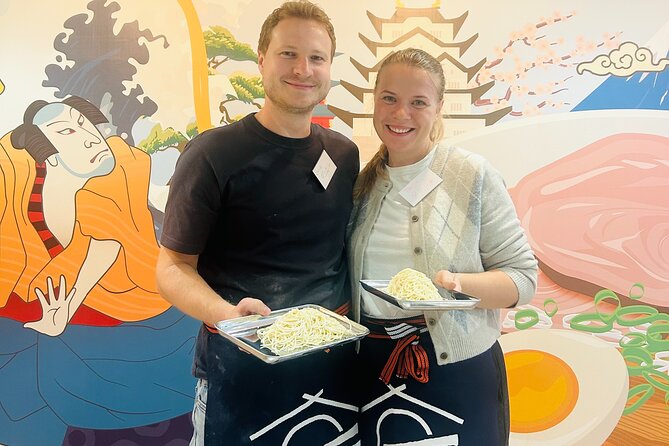
At $85.39 per person, this is not a bargain meal. You can find inexpensive ramen in Osaka for far less. The value comes from combining food, instruction, a small group, a full cooking process, and a souvenir.
I would consider the cost reasonable if you want a cultural activity that produces lunch or dinner at the end. It is also a strong choice for a family or couple looking for something more memorable than another restaurant stop.
The price is harder to defend if you are mainly interested in tasting ramen or watching a chef work. In that case, a ramen shop gives you more food for less money. This class makes sense when the making is as important to you as the eating.
The experience has had more than 10 bookings in the most recent month and carries a five-star rating from 22 published ratings, with 100 percent recommending it. Those figures suggest steady interest and strong satisfaction, but they should not replace your own judgment about the price and the hands-on format.
Who should book this class
I would recommend it for:
- Families looking for a food activity suitable for different ages and skill levels
- Couples who want to make a meal together
- First-time visitors who want a practical introduction to ramen
- Home cooks interested in fresh noodles and soup choices
- Anyone staying near Osaka Castle, Umeda, or central Osaka with two hours to spare
It may be less suitable if you dislike cooking, have a very tight schedule, or want a quiet meal without instruction. You should also consider the short walk from the stations and the need to reach a specific neighborhood address.
The class is family-friendly and open to beginners, but the supplied information does not specify a minimum age, dietary substitutions, or allergy arrangements. If those details affect your booking, ask the provider before paying.
Timing, cancellation, and small details to know
Morning and late-afternoon classes are available, giving you useful choice around castle visits and evening plans. The activity lasts approximately two hours and returns you to the same meeting point.
Free cancellation is available if you cancel at least 24 hours before the local start time. Cancellations or changes made less than 24 hours ahead are not accepted for a refund.
The mobile ticket is convenient, and booking confirmation is supplied at the time of booking. Public transport is close, with three stations within roughly five to ten minutes on foot.
Remember to mention your photo preference before the class starts. Staff photos and videos may be used on social media or in advertising, so this is worth handling at the door rather than after the cooking begins.
Should you book the Osaka ramen class?
Book it if you want to make a complete bowl from scratch, learn from English-speaking staff, and leave with both a meal and a souvenir. The small group, three soup choices, clean kitchen, and friendly instruction give it real value for people who prefer doing over watching.
Skip it if your main goal is simply an inexpensive bowl of ramen or if your Osaka schedule cannot spare two hours. For everyone else, especially families and curious cooks, this is a practical and enjoyable way to put food culture into your own hands.
FAQ
Where does the ramen-making experience take place?
It takes place at Japan, 530-0044 Osaka, Kita Ward, Higashitenma, 1-chōme4, Higashitenma Heights.
How long does the class last?
The experience lasts approximately two hours.
How close is the studio to Osaka Castle?
The studio is about a 20-minute walk from Osaka Castle.
Which train stations are near the studio?
Tenmabashi Station Exit 13 and Minamimorimachi Station Exit 6 are about 10 minutes away on foot. Osaka Temmangu Station Exit 7 is about five minutes away.
Which ramen soup bases can I choose?
You can choose tonkotsu, shoyu, or miso soup.
Is the class suitable for beginners and families?
Yes. The class is family-friendly and open to all skill levels.
How many people can join the class?
The maximum group size is eight travelers.
Can I cancel for a full refund?
Yes. You can cancel for a full refund up to 24 hours before the experience start time. Changes or cancellations made less than 24 hours before the start are not accepted for a refund.
Just added around Osaka
- Osaka Japanese Cooking And Matcha Class near Osaka Castle★ 5.0 · 22 reviews
- Osaka Sushi Miso soup Adventure: A Journey of Exotic Flavors★ 5.0 · 22 reviews
- Osaka: Mino Forest Walk and Giant Waterfall with Local Lunch★ 5.0 · 22 reviews
- Himeji Castle and Akashi Kaikyo Bridge Walking Tour from Osaka★ 4.5 · 22 reviews
- Osaka Morning Tour: Shitennoji Temple, Shinsekai &Doutonbori★ 5.0 · 23 reviews
- Nostalgic Osaka walk, totally different from Dotonbori★ 5.0 · 23 reviews
- Osaka Dotonbori Daytime Food Tour★ 5.0 · 24 reviews
- Osaka Private Half-Day Tour with a Local – Secrets & Highlights★ 5.0 · 24 reviews
Castle Tours, compared.

Tokyo Castle & Imperial PalaceーShogun Walking Tour
Read our review →
Nijo-jo Castle and Ninomaru Palace Guided Tour
Read our review →
Ultimate Osaka Walking Tour: Castle, Dotonbori & Hidden Gems
Read our review →Tokyo Castle & Imperial PalaceーShogun Walking Tour
Read our review →
Nijo Castle, Kiyomizu & Fushimi Inari Guided Tour
Read our review →
Osaka Castle Walking Tour and Castle Tower Admission
Read our review →
Imperial Palace East Garden and Edo Castle Walking Tour in Tokyo
Read our review →Browse the lists this tour appears in