
Reviewed · CASTLE TOURS
Kyoto: Nijo-jo Castle and Ninomaru Palace Guided Tour
History gets louder inside Nijo Castle. I like the clear English guiding and the chance to see details in Ninomaru Palace that are easy to miss alone. I also like the short, focused one-hour format, which leaves time to explore the gardens afterward. The main drawback is that the $16 tour does not include castle admission, and the extra fee must be paid in cash.
This is not a tour built around grand battlefield ruins. Nijo Castle was a political home and working base for the shogun in Kyoto. Guides such as Miki, Ai, Kaoru, Ayu, and Don have been praised for explaining room functions, artwork, court politics, Samurai customs, and the daily life of the Tokugawa household in friendly, easy-to-follow English.
In This Review
- Key points before you book
- Why Nijo Castle matters in Kyoto
- Meeting at the East Main Gate
- The East Main Gate and the first line of defense
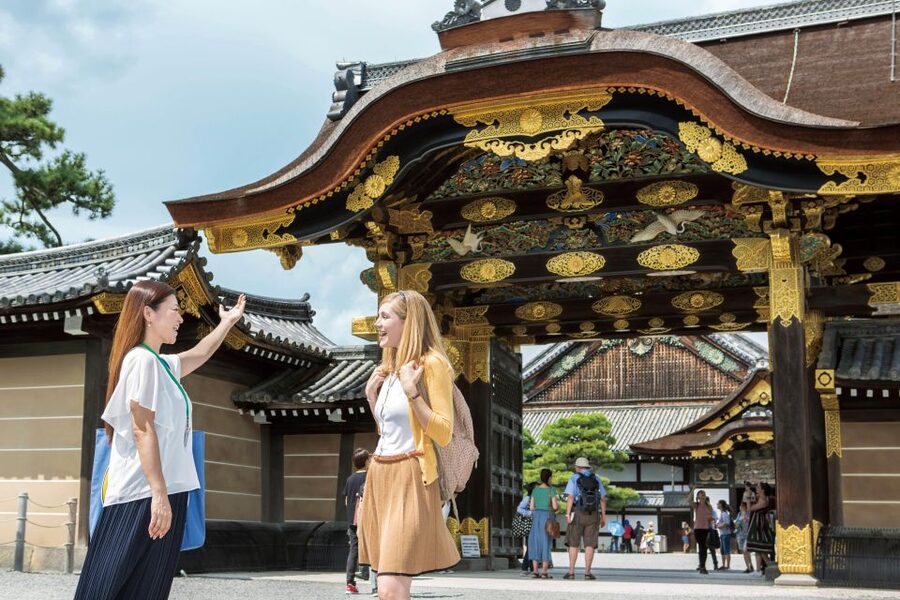
- Kara-mon Gate, the decorated entrance
- Ninomaru Palace, where the shogun worked
- Special access beyond the public route
- Ninomaru Garden after the palace
- What the guide adds to the visit
- Price, admission, and overall value
- Families, solo visitors, and summer planning
- Who should book this one-hour experience?
- Should you book Nijo Castle with a guide?
- FAQ
- Is admission to Nijo Castle included in the tour price?
- How long does the guided tour last?
- What language is the tour conducted in?
- Where do I meet the guide?
- Can children join for free?
- Can I take photos inside Ninomaru Palace?
Key points before you book
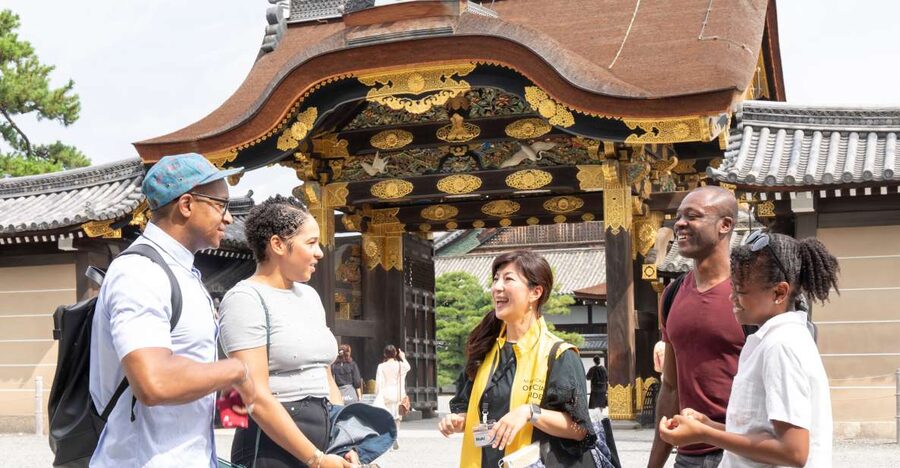
- The palace is the real prize: Ninomaru Palace preserves the shogun’s residence and office, with decorated rooms and carefully planned spaces.
- You may enter guide-only areas: The tour can include two additional sections normally closed to general visitors, including parts of the shogun’s private quarters.
- The guide adds meaning: Symbolism in murals, political power, room design, court customs, and palace life become much easier to understand.
- The tour lasts one hour: It covers the East Main Gate, Kara-mon Gate, Ninomaru Palace, and Ninomaru Garden at a steady pace.
- Admission costs extra: Bring cash for the castle entrance fee. One review puts it at 1,300 yen.
- Summer can be hard: The palace has no air conditioning, and water and photography are not allowed inside.
Why Nijo Castle matters in Kyoto
Nijo Castle was built in 1603 as the Kyoto residence of Tokugawa Ieyasu, the first shogun of the Edo Period. That date gives the visit real weight. This was not simply a defensive building. It was a place where military power met the imperial court, and where the shogun could display authority in Japan’s ancient capital.
The Tokugawa Shogunate ended in 1867. After that, the castle became an imperial palace before being given to Kyoto City and opened as a historic site. The buildings survived this change in purpose unusually well, making Nijo Castle one of the clearest places to see Japan’s feudal-era architecture.
The site is divided into three parts: the Honmaru, or main defensive circle; the Ninomaru, or second defensive circle; and the gardens around both areas. This tour concentrates on the East Main Gate, Kara-mon Gate, Ninomaru Palace, and Ninomaru Garden.
That focus makes sense for a one-hour visit. The Ninomaru section contains the most accessible combination of architecture, decoration, ceremony, and political history. If you tried to cover every corner of the grounds with a guide in only an hour, the explanations would become rushed.
More Castle Tours in Kyoto
- Kyoto: Nijo Castle, Kiyomizu & Fushimi Inari Guided Tour
★ 4.7 · 700 reviews - Kyoto: Imperial Palace & Nijo Castle Guided Walking Tour
★ 4.7 · 453 reviews - Kyoto: Nijo Castle World Heritage Guided Tour with Admission
★ 5.0 · 128 reviews
Meeting at the East Main Gate
You enter through the East Main Gate and go to the reception area beside the General Reception, on the left after entering. The meeting point is the Nijo Castle Tour Ticket Booth area, with exact details supplied after booking.
Arrive early. You cannot join once the tour has started, and the castle grounds are large enough that a last-minute search for the meeting area can cause trouble. The stated coordinates are 35.012586265298516, 135.75085333862305.
The tour itself is in English only. That matters because the value depends heavily on understanding the guide’s explanation of political titles, room use, Japanese history, and artistic symbols. The English guides have generally been praised for speaking clearly, keeping groups together, and answering questions.
Some guides receive especially warm approval. Miki is noted for her energy and ability to explain history even in very hot weather. Kaoru is praised for humor and expressive delivery. Ai has been described as friendly and precise, while Don is remembered for keeping the tour both educational and fun. Names and guide styles vary by departure, so you should not book expecting one particular person.
The East Main Gate and the first line of defense
The East Main Gate begins the story by showing how the castle controlled movement. You are not just walking through an old entrance. You are passing through the first formal point in a carefully arranged system of defense and ceremony.
A guide can help you read the castle as a political machine. The castle had walls and defensive circles, but its design also communicated status. Where you entered, which gate you used, and which rooms you reached all mattered.
This is one place where the tour earns its fee. Architectural details can look attractive without explaining themselves. With a guide, the gates become part of the story of how authority was presented and protected.
Kara-mon Gate, the decorated entrance
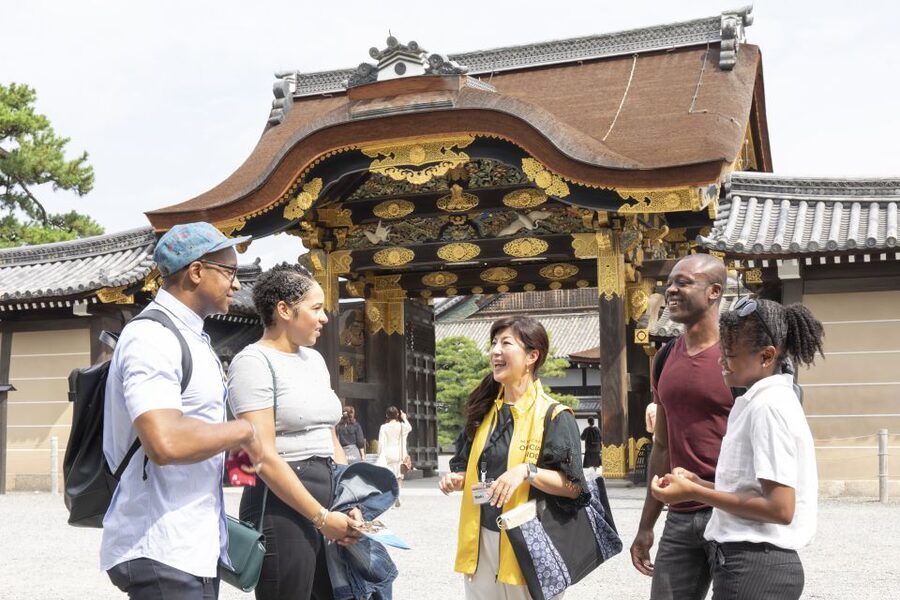
The Kara-mon Gate leads into the Ninomaru section and is one of the most ornate parts of the route. Its decoration offers a quick lesson in how architecture could express rank and power.
Your guide may point out carved symbols, animal figures, and decorative details that you would likely pass without a second look. One particularly memorable explanation involves the relationship between palace carvings and familiar modern Japanese pop-culture imagery. Another touches on the symbolism of dragons and tigers.
The gate is also a useful transition. Outside, you can study the structure from several angles. Inside, the route changes from formal approach to palace life. The contrast helps you understand that Nijo Castle was designed not only to keep enemies out, but also to impress political visitors.
A completely different kind of day out in Kyoto:
- PERFECT KYOTO 1-Day Bus Tour
★ 5.0 · 13,518 reviews - Kyoto: Fushimi Inari, Kinkakuji, Bamboo Grove 1 Day Bus Tour
★ 4.8 · 4,316 reviews - Kyoto: Tea Ceremony in a Traditional Tea House in Kiyomizu
★ 4.9 · 3,519 reviews - Kyoto Geisha Walking Tour: Gion District & Hidden Gems
★ 4.7 · 3,273 reviews
Ninomaru Palace, where the shogun worked
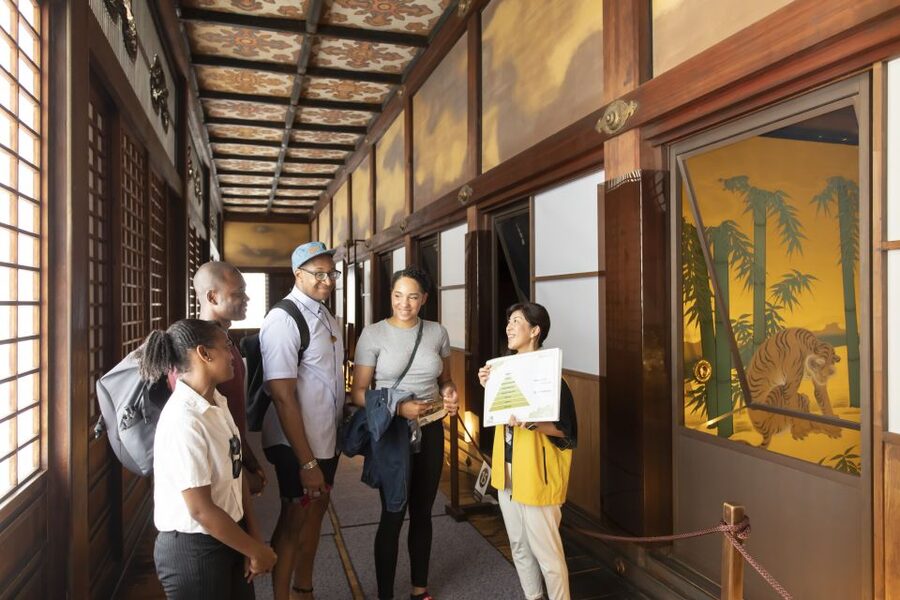
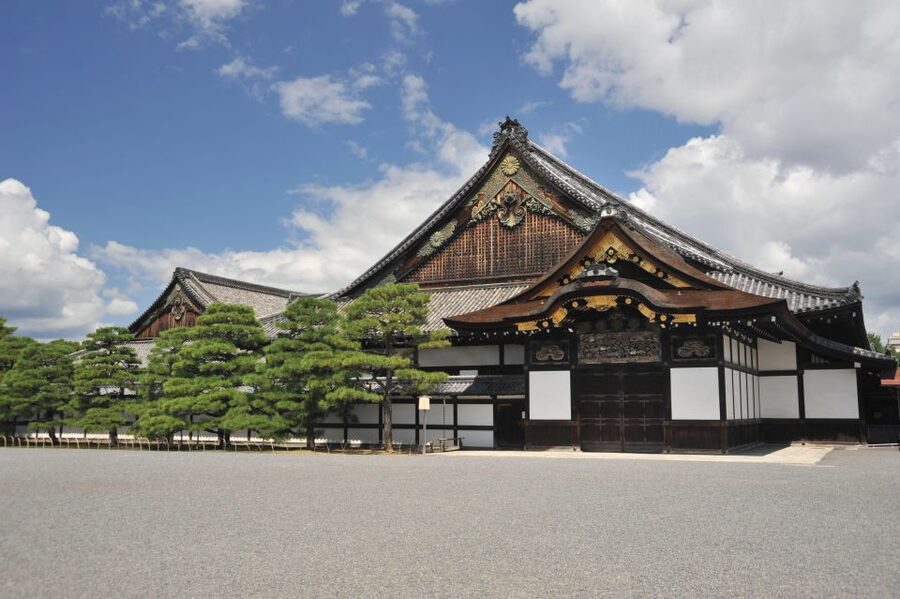
Ninomaru Palace is the centerpiece of this experience. It served as the shogun’s residence and office during visits to Kyoto, and it remains intact.
Inside, you move through a sequence of rooms with different purposes and levels of formality. The guide explains what each room was used for, who could enter, and how the arrangement reflected the shogun’s position. That context is far more useful than simply hearing that the palace is old or beautiful.
The painted panels and murals deserve close attention. Guides explain why particular animals, plants, and scenes appear in certain rooms, and how the artwork helped communicate rank. You might hear about the famous tigers, including details that make their unusual appearance more understandable to modern eyes.
The palace also opens a window onto routine life. Explanations can include meal preparation, the risks of poisoning, the movement of servants, and the way a shogun’s household operated. These small details make the building feel practical rather than frozen behind glass.
The floorboards are another famous feature. Their sound is connected with palace security, allowing movement to be heard. Your guide puts that detail into the larger setting of a residence where privacy and protection were constant concerns.
Photography is not allowed inside the palace. Water is also not allowed inside, and there is no air conditioning. In Kyoto’s summer heat, this is more than a minor inconvenience. Wear light clothing, drink before entering, and take the heat seriously. Several guides have been praised for watching the group’s comfort, but they cannot cool the building.
Special access beyond the public route
The strongest reason to choose this guided visit instead of walking through alone is the possibility of entering areas normally unavailable to the public. The experience includes exclusive access to part of the castle, and several people describe seeing two additional spaces connected with the shogun’s private quarters.
The exact restricted areas may depend on the operating arrangements that day, so you should not treat this as a guarantee of one named room. Still, the added access gives the tour a genuine advantage. You are not only paying for someone to point at the same objects you could see by yourself.
This access also changes the feel of the visit. Public rooms show official ceremony. More private sections help you picture the household behind that ceremony. The difference between public authority and private routine is one of the most useful themes in the castle.
Ninomaru Garden after the palace
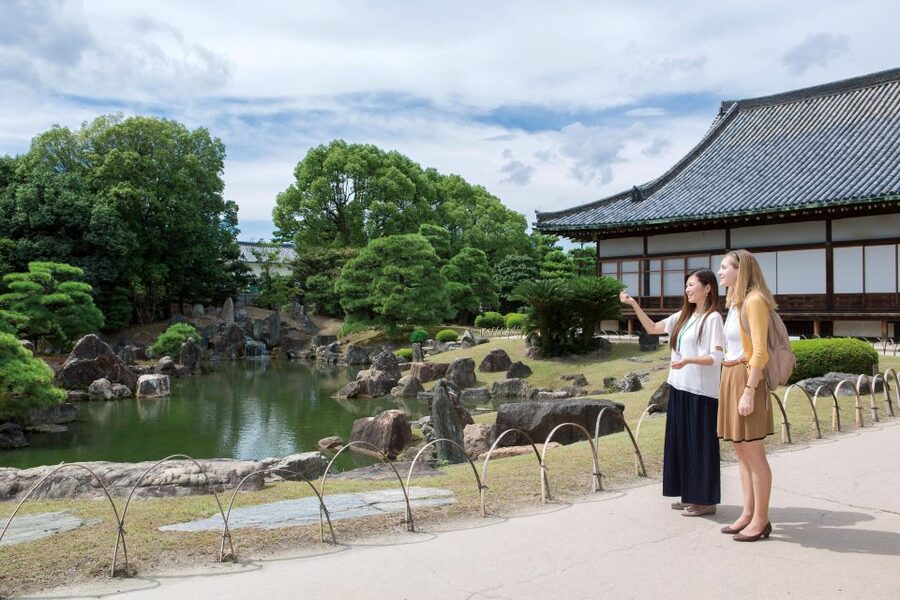
The tour includes Ninomaru Garden, where the pace becomes easier after the indoor palace visit. The garden encircles the formal architecture with a quieter setting and helps you see how buildings and outdoor spaces were meant to work together.
The garden is not simply an attractive ending. It gives you room to process the palace. After hearing about audiences, political strategy, formal rank, and household routines, you can look back at the buildings and understand that the setting was carefully composed.
One advantage of the one-hour format is that you can continue exploring on your own afterward. A short guided route gives you the main explanations, then lets you linger in the garden or visit other parts of the grounds at your own speed.
If you prefer a long, slow historical tour, one hour may feel brief. If you have a full Kyoto schedule, though, this is a sensible compromise. You get the key palace context without giving up half a day.
What the guide adds to the visit
The most praised part of this experience is the quality of the English explanation. Guides have been described as friendly, expressive, calm, and easy to hear. They explain political history without turning every stop into a lecture.
That balance matters at Nijo Castle. Without context, you can see ornate gates, painted screens, broad tatami rooms, and gardens. With context, you begin to understand why one room was more important than another, why certain paintings appear where they do, and how power was arranged inside the building.
Questions are welcome, and many guides make time for them. If you are curious about Samurai customs, the shogun’s schedule, imperial and military authority, or the meaning of the artwork, ask. The best value comes from treating the tour as a conversation rather than simply following the group.
The tour also uses earphones for paid participants. This is useful when the palace is crowded or when you are standing a short distance from the guide. Children do not receive earphones unless they have an adult ticket, so families should plan around that rule.
Price, admission, and overall value
The tour costs $16 per person, which is a modest price for an English explanation and possible access to restricted areas. But you must add the castle admission fee, paid separately in cash on site. One price cited for admission is 1,300 yen.
That extra charge is the main value question. If you only want to walk through the grounds and look at the buildings, you may prefer to pay admission and explore alone. The castle is rewarding without a guide, especially if you enjoy moving at your own pace.
I think the tour makes better financial sense if Nijo Castle is important to your Kyoto plans. The guide turns decorative details into evidence of political life, and the special access can take you beyond the standard route. For a short visit, that added meaning is worth more than the low tour price alone suggests.
The operator could make the purchase simpler by including admission, but the separate payment is clear enough if you prepare cash. Budget for both costs rather than treating the advertised tour price as the full expense.
Families, solo visitors, and summer planning
Each paid adult or child can bring one child aged 0 to 12 free. The child must stay with an adult during the tour. If you bring more than one child, each additional child needs an adult ticket.
Families should think about the earphone rule. Earphones are supplied only to paid participants, so a young child may not hear every explanation as clearly. The free-child arrangement is still useful, especially for families trying to keep Kyoto costs under control.
Solo visitors can also benefit. A guide has been praised for taking photos for a person traveling alone, and a small group can make it easier to ask questions. Group size can vary, but some departures have been notably intimate, with only four people.
Summer requires extra care. The palace has no air conditioning, and a visit during a heat wave can be uncomfortable. Bring water for before and after the indoor portion, take advantage of rest areas afterward, and choose a cooler time if the available schedule allows it.
The castle also closes for the Ninomaru Palace closure on every Tuesday in July, August, December, and January, as well as from December 26 through January 3. Check the date before paying for transportation or arranging a tight schedule.
Who should book this one-hour experience?
I would choose this tour if you want historical context but do not want a long formal lecture. It suits first-time visitors to Kyoto, people interested in the Tokugawa period, and anyone who likes architecture but wants help reading symbolism and room design.
It is also a good match if you have only a limited amount of time. The route covers the castle’s major highlights in one hour, then leaves you free to continue alone.
You may skip it if you already know Nijo Castle well, prefer complete independence, or want to photograph the palace interiors. Photography is not allowed inside, and the guide’s pace may not suit someone who wants to stop at every garden view.
Should you book Nijo Castle with a guide?
Yes, if you want to understand what you are seeing. The strongest parts are the clear English explanations, the discussion of palace life and artwork, and the chance to enter areas not normally open to the public.
Allow extra money for admission, arrive early at the East Main Gate, and plan for heat if you visit in summer. At $16 plus the entrance fee, this is a good-value add-on for a major Kyoto sight, especially when you want more than a quick walk through an impressive old building.
FAQ
Is admission to Nijo Castle included in the tour price?
No. The castle admission fee is separate and must be paid in cash on site. One review states that the admission cost is 1,300 yen.
How long does the guided tour last?
The guided portion lasts 60 minutes. It includes the East Main Gate, Kara-mon Gate, Ninomaru Palace, and Ninomaru Garden.
What language is the tour conducted in?
The tour is conducted only in English, with a live English-speaking guide.
Where do I meet the guide?
Enter through the East Main Gate and go to the reception area beside the General Reception, on the left after entering. The meeting area is connected with the Nijo Castle Tour Ticket Booth, and full details are provided in the booking confirmation.
Can children join for free?
Each paid participant can bring one child aged 0 to 12 free of charge. The child must be accompanied by an adult. Additional children must purchase adult tickets.
Can I take photos inside Ninomaru Palace?
No. Photography is not allowed inside the palace. Water is also not allowed inside, and the building does not have air conditioning.
Just added around Kyoto
- Kyoto: Private Customizable Day Trip by Car★ 5.0 · 38 reviews
- Kyoto: Gion Night Walking Tour with Geisha Insight★ 5.0 · 39 reviews
- Kyoto: Full Day Bike Tour★ 4.9 · 39 reviews
- Private Japanese Calligraphy in Kyoto – Learn Shodō with a Master★ 5.0 · 39 reviews
- Kyoto: Gion Evening Walk with Hidden Gems, Geisha & Sake★ 5.0 · 41 reviews
- Experience a tea ceremony in an authentic tearoom, in Kyoto!★ 4.5 · 41 reviews
- Kyoto Private Photo Shoot & Tour by SnapKyoto★ 5.0 · 41 reviews
- The Way of Tea: Kyoto Crafts, Hidden Temples & Wabi-Sabi Walk★ 5.0 · 41 reviews
Castle Tours, compared.
Tokyo Castle & Imperial PalaceーShogun Walking Tour
Read our review →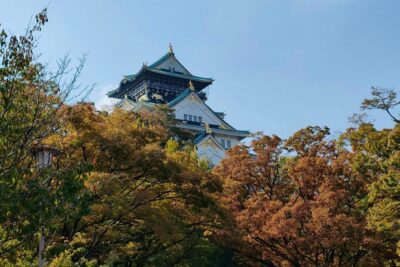
Ultimate Osaka Walking Tour: Castle, Dotonbori & Hidden Gems
Read our review →Tokyo Castle & Imperial PalaceーShogun Walking Tour
Read our review →
Nijo Castle, Kiyomizu & Fushimi Inari Guided Tour
Read our review →
Osaka Castle Walking Tour and Castle Tower Admission
Read our review →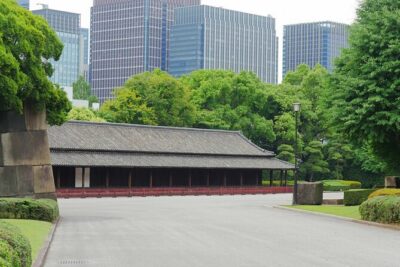
Imperial Palace East Garden and Edo Castle Walking Tour in Tokyo
Read our review →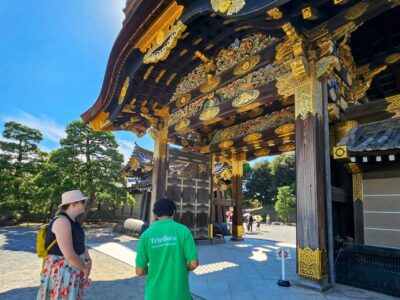
Imperial Palace & Nijo Castle Guided Walking Tour
Read our review →Browse the lists this tour appears in