

Reviewed · CASTLE TOURS
Tokyo Castle & Imperial PalaceーShogun Walking Tour
History gets real when you walk it. This two-hour Tokyo tour connects Edo Castle’s samurai defenses with the modern Imperial Palace, using moats, gates, gardens, and stone walls to explain how Tokyo grew around Japan’s rulers. I like the small group size, limited to 10 people, and I like the relaxed pace, which leaves room for questions and photographs. The main drawback is that much of the route is outdoors, and the palace grounds are large enough to feel tiring in hot, wet, or cold weather.
At $23 per person, this is a modestly priced way to add meaning to a site you could otherwise pass through without much context. Guides such as Anju, Fuma, Yuka, Tomo, Keiko, and Koyo have been praised for clear explanations, friendly conversation, and good pacing. Just remember that the tour is English only, with no Japanese-language support.
In This Review
- Key details before you book
- Why Edo Castle matters in modern Tokyo
- Meeting at Wadakura Fountain Park
- Sakurada Tatsumi Yagura: a brief first look
- Ote-Mon Gate and the logic of castle defenses
- Tokyo Imperial Palace: linking rulers across time
- Ninomaru Garden and the calmer side of Tokyo
- Edo Castle ruins and a palace that no longer exists
- Imperial Palace East Gardens and the final twenty minutes
- What the two-hour pace feels like
- English, guide quality, and the human side
- Is $23 good value?
- Who should book this walk?
- Final verdict: should you book it?
- FAQ
- How long is the Tokyo Castle and Imperial Palace tour?
- How much does the tour cost?
- What language is the tour conducted in?
- How many people can join the group?
- Where is the meeting point?
- How do I identify the guide?
- Which locations are included?
- Can I take photographs?
- Is there a security check?
- Is the tour wheelchair accessible?
Key details before you book
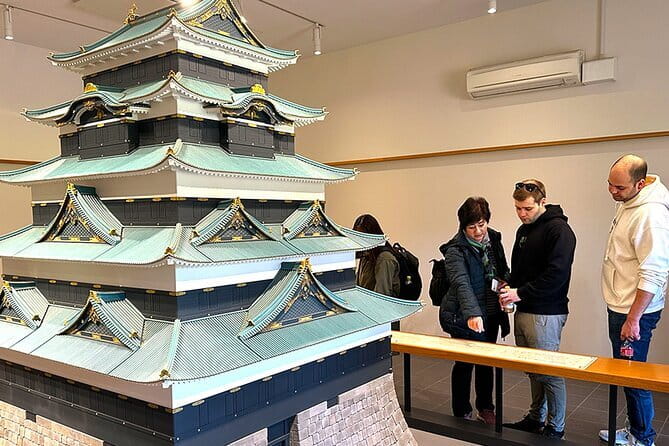
- Edo Castle was once Japan’s largest castle: You will see how its moats, gates, towers, and stone defenses protected the shogun.
- The Imperial Palace sits on a much older power center: The walk links the present-day imperial residence with the political world of samurai-era Tokyo.
- A small group changes the experience: With up to 10 people, it is easier to hear the guide and ask questions.
- Ninomaru Garden gives the tour a quiet turn: Koi, carefully tended trees, and seasonal planting offer a peaceful break from the city.
- The route is made for walkers and photographers: Expect around two hours outside, with slopes and some sections requiring you to walk on foot.
- The price covers interpretation, not just entry: The gardens may not require a large admission fee, so the value comes mainly from the guide’s stories and explanations.
Why Edo Castle matters in modern Tokyo
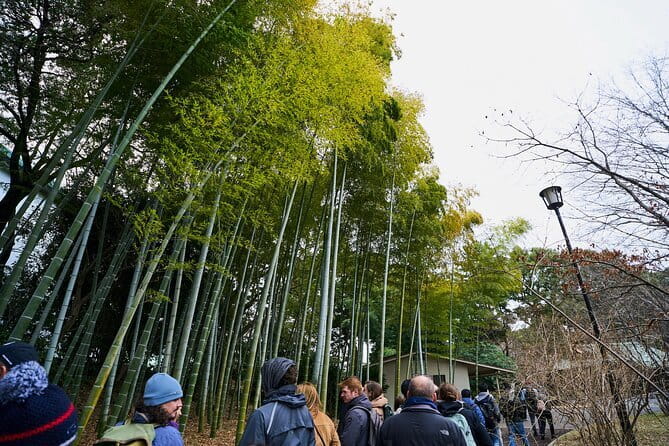
Tokyo can feel like a city built for speed, but the Imperial Palace grounds slow the pace. Beneath the trimmed trees and broad open spaces is the former Edo Castle, the center of political power during the long period when the shogun governed Japan.
The castle itself is gone in large part, but its footprint remains. Moats, gates, fortified stone walls, watchtowers, and carefully placed approaches show how a castle could protect both a ruler and an entire government. You are not simply looking at old masonry. You are seeing a defense system designed to make direct access difficult.
Your guide’s job is to connect these pieces. Without explanation, a moat can look like a pleasant strip of water and a gate can look like a handsome old entrance. With the right story, you begin to notice the layers of protection and the way the castle controlled movement.
The tour also places the shogun within Japan’s long imperial tradition. The experience presents the imperial system as a 2,600-year tradition and asks how it survived political change, military rule, modernization, and the transition from Edo to present-day Tokyo. That broader view keeps the tour from becoming only a samurai photo walk.
More Castle Tours in Tokyo
- Tokyo Castle & Imperial PalaceーShogun Walking Tour
★ 5.0 · 724 reviews - Imperial Palace East Garden and Edo Castle Walking Tour in Tokyo
★ 5.0 · 510 reviews - Tokyo Castle, Imperial Palace, Shogun & Garden Walking Tour
★ 5.0 · 211 reviews
Meeting at Wadakura Fountain Park
The meeting point is in front of Starbucks Coffee Kōkyo Gaien Wadakura Fountain Park Store at 3-1 Kōkyo Gaien, Chiyoda City. Look for a guide holding a sign marked Local Guide Stars.
This is a useful starting place because you begin near the palace district rather than spending part of the tour finding the grounds. Still, Tokyo’s central areas can be confusing, so allow time to reach the meeting point. Have the map link ready and check your starting time before setting out.
The tour returns to the same Starbucks location. That makes the end simple, especially if you plan to continue sightseeing around Marunouchi or Tokyo Station.
Sakurada Tatsumi Yagura: a brief first look

The first stop is Sakurada Tatsumi Yagura, a former corner watchtower associated with the castle’s defensive network. The scheduled visit is short, about five minutes, so think of it as an introduction rather than a full stop.
This is where the tour begins to show the difference between a decorative palace garden and a fortified seat of government. The tower, surrounding walls, and open views help you picture how guards monitored approaches to the castle.
Bring your camera, but listen closely during this stop. The visual subject is compact, while the historical explanation gives it weight. If you arrive early, this is also a good place to settle into the group and meet the guide.
Ote-Mon Gate and the logic of castle defenses
Ote-Mon Gate receives more time, about 15 minutes, and it is one of the most useful stops for understanding Edo Castle. This was a major entrance, but the route into a Japanese castle was rarely a straight walk through an open doorway.
Your guide explains how defenses were layered. Moats slowed movement. Massive stone walls controlled the approach. Gates and turns made it harder for an enemy to move directly toward the center. One particularly useful point made on this route is that the castle’s strength came from the arrangement of many parts, not from a single dramatic tower.
The gate also helps explain the shogun’s authority. Edo Castle was not only a military site. It was the administrative heart of a government that maintained a long period of peace during the samurai era. You will get more from the view if you think of the gate as an entrance to a working political machine, not merely a relic.
More Walking Tours in Tokyo
- Tokyo Tsukiji Fish Market Food and Culture Walking Tour
★ 5.0 · 3,184 reviews - Tokyo: Imperial Palace and Shogun Historical Walking Tour
★ 5.0 · 2,251 reviews - Tokyo: Shinjuku Local Bar and Izakaya Guided Walking Tour
★ 4.9 · 1,794 reviews - Tokyo: Tsukiji Fish Market Food and Walking tour
★ 5.0 · 1,724 reviews
Tokyo Imperial Palace: linking rulers across time
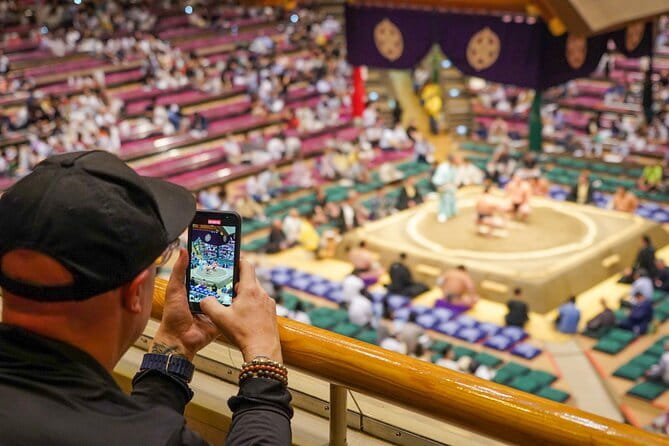
At the Tokyo Imperial Palace, the tour shifts from castle remains to the continuing imperial institution. The palace is the residence of Japan’s emperor, and the grounds show how an old center of power still functions in a modern capital.
Access is limited to the grounds included in the tour. This is not a promise of entry into private palace buildings or a chance to see every part of the imperial residence. The value lies in the setting, the historical links, and the guide’s explanation of how the palace relates to Edo Castle.
You will spend about 20 minutes here. The guide may discuss the development of Tokyo, the role of the shogun, and the imperial family’s place in Japan’s story. The best guides on this experience are praised for bringing the past into the present rather than treating history as a list of dates.
Anju, Fuma, Tomo, Yuuka, and others have been singled out for clear speaking, patience, warmth, and an ability to answer questions. Your exact guide is not guaranteed, but the repeated praise for friendly communication matters on an English-language tour. Historical information is far easier to follow when you feel comfortable asking for clarification.
Ninomaru Garden and the calmer side of Tokyo
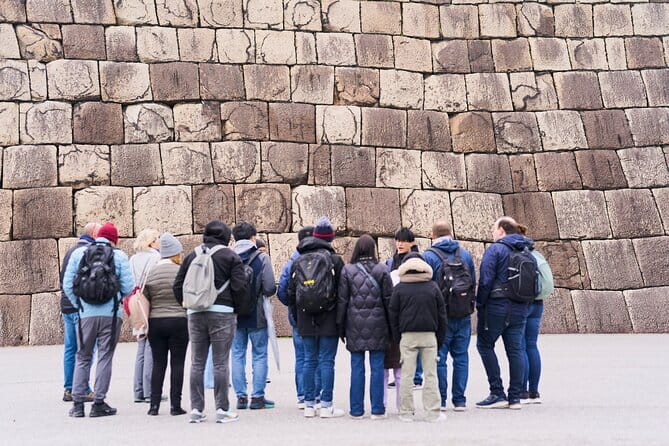
Ninomaru Garden is the tour’s most peaceful section. The visit lasts about 15 minutes, though the garden may feel like the part you want to linger in.
Expect carefully maintained paths, seasonal plants, old trees, and water with special koi. The garden also includes trees from different parts of Japan, giving the walk a small sense of the country’s varied plant life. It is a good place to take photographs, but the guide’s comments help you notice details you could easily pass without seeing.
This stop balances the military story. After hearing about walls, gates, and defense, you get a look at the controlled beauty expected around a powerful residence. The garden is not only a break from the city. It shows another side of elite life in Japan, where design, nature, and ceremony were closely connected.
The route is described as calm rather than rushed. One guide has even used small quizzes to keep the group involved without turning the visit into a classroom. That approach should suit you if you like learning in short pieces while continuing to walk.
Edo Castle ruins and a palace that no longer exists
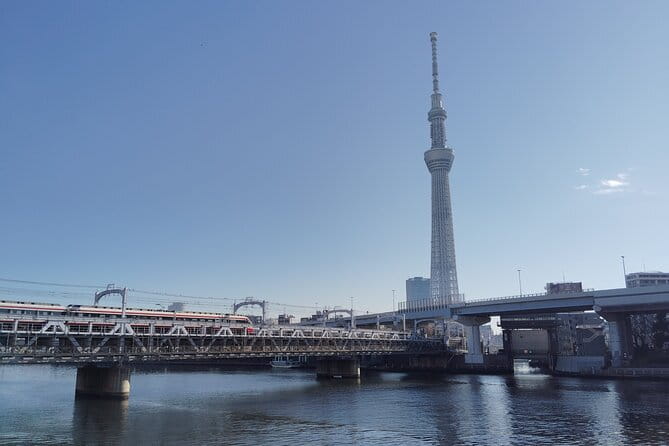
The Edo Castle ruins receive around 10 minutes. The word ruins can sound grander than what you may see. The main castle buildings no longer dominate the grounds, so this section depends heavily on the guide’s ability to help you reconstruct the past.
You will learn how large the castle complex was and how its defenses worked together. A miniature structure of the former palace is included, giving you a more concrete idea of the buildings that once occupied the site.
This is one reason a guided walk offers more value than a solo stroll. The surviving stones do not explain themselves. A guide can point out where a major structure once stood, describe the former scale of the compound, and show how the present gardens fit into the older castle plan.
If you are expecting a complete castle with interiors, rooms, and tall wooden buildings, adjust your expectations. This is an archaeological and historical experience, not a visit to a fully reconstructed fortress.
Imperial Palace East Gardens and the final twenty minutes
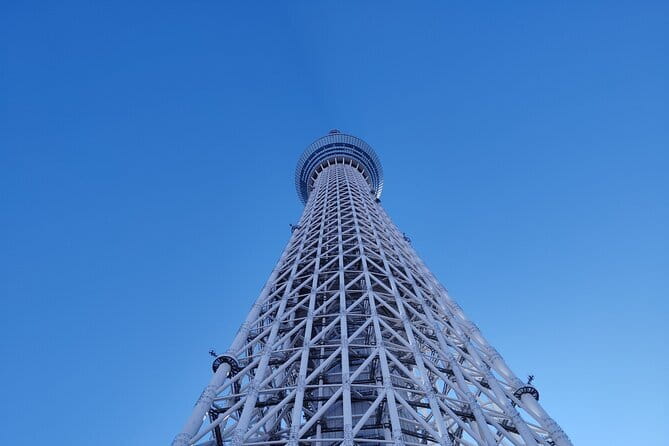
The Imperial Palace East Gardens are given about 20 minutes, making them one of the longer stops. The garden combines open space, castle remains, trees, ponds, and carefully arranged views. It is also where the tour’s two main subjects come together: Japan’s imperial household and the earlier shogunal government.
The guide may point out special koi and trees from across Japan, along with features that connect the garden to the former palace. These details reward a slower pace. You can take photographs, ask questions, and compare the quiet garden with the enormous city just beyond the walls.
The East Gardens are free to enter, according to the information provided for this activity. That means the $23 cost should be judged mainly as a guiding fee. If you are comfortable reading signs and researching Edo Castle on your own, you may prefer to visit independently. If you want the defenses, imperial system, and gardens explained in one compact walk, the price is reasonable.
What the two-hour pace feels like
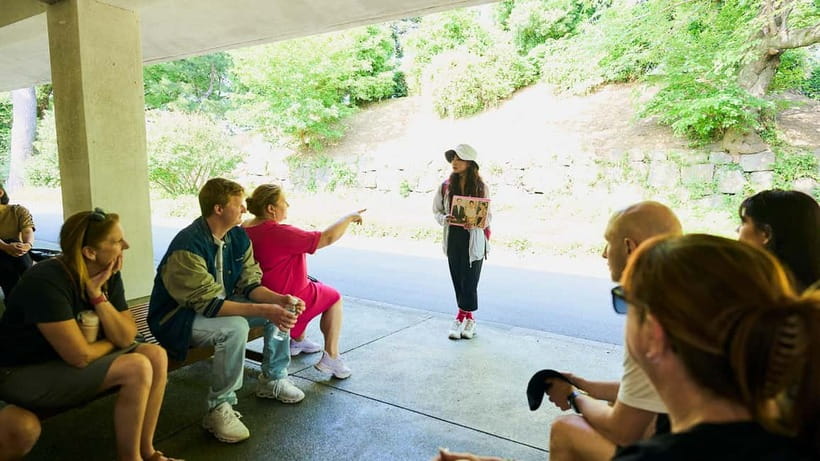
Two hours is long enough to cover the main highlights without taking over your day. It is short enough to fit before lunch, after a morning visit to another Tokyo district, or between plans near Tokyo Station.
The route includes repeated walking between stops, with much of the experience outside. Wear comfortable shoes and dress for the forecast. Tokyo’s weather can change the mood of a garden walk quickly, and there is no reason to make an otherwise pleasant tour harder than it needs to be.
The group limit of 10 is a real advantage. A guide can usually keep the group together more easily than a large coach-tour crowd, and you have a better chance of asking about a particular wall, tree, or imperial custom. The pace has been praised as relaxed, with enough time for photographs and conversation.
There are some slopes and sections where you need to walk or go down on foot. Wheelchairs are available for use within the Imperial Palace grounds, but not every part of the route will be equally easy. If mobility is a concern, ask the operator about the current route before booking.
English, guide quality, and the human side
This experience depends on the guide. The stones and gardens are worth seeing, but the meaning comes through the explanations.
The strongest guide descriptions emphasize clear English, warmth, humor, and patience. Anju is praised for cheerful storytelling and for connecting the Edo period with the present. Fuma is described as passionate, entertaining, and generous with historical details. Tomo is praised for an interactive style and a steady pace. Keiko has been noted for patience and helpful conversation, while guides such as Koyo, Kazuki, Mai, Nana, Ai, and Kosei have also received strong praise for friendly presentations.
A few guides are university students or young local hosts. That is not a weakness here. Several people valued the energy and personal perspective they brought to the walk. Kosei, for example, was appreciated for having lived abroad and for comparing Japanese customs with international culture.
You should book this only if you can follow an English explanation for two hours. There is no Japanese-language support, and the tour is not designed as a silent photo walk.
Is $23 good value?
At $23, the tour sits in an appealing middle ground. You are not paying for an expensive private guide, but you are getting more than a basic entrance visit.
The strongest value comes from three things:
- The small group makes questions practical.
- The guide explains castle defenses that are easy to miss.
- The tour connects samurai history with the modern imperial household.
The weaker point is that the gardens may be accessible without a large admission cost. If your only goal is to see flowers, ponds, and palace walls, you can save money by visiting alone. You are paying for interpretation, structure, and company.
For a first visit to Tokyo, I think the price is fair. It gives you a clear historical foundation in only two hours and leaves the rest of your day open.
Who should book this walk?
I would recommend it to you if you enjoy Japanese history, samurai culture, architecture, gardens, or the political story behind Tokyo. It is also a smart choice if you watched Shōgun and want a clearer understanding of the era without treating television drama as a history lesson.
Families with older children may appreciate the short stops and visual subjects. Solo visitors can easily join a friendly international group, and photography fans will find plenty to frame.
You may want to skip it if you dislike outdoor walking, need extensive indoor shelter, or expect access to private palace interiors. It is also less suitable if you want a full-day historical tour with long museum visits.
Final verdict: should you book it?
Book this tour if you want the Imperial Palace grounds to make sense. The castle walls, gates, gardens, and ruins are attractive on their own, but the guide shows how they fit into the rise of Edo, the samurai government, Tokyo’s development, and Japan’s continuing imperial system.
The best reason to choose it is not a single monument. It is the connection between the visible remains and the stories behind them. At $23, with a maximum of 10 people and a two-hour commitment, this is a useful, friendly introduction to one of Tokyo’s most important historic areas.
FAQ
How long is the Tokyo Castle and Imperial Palace tour?
The tour lasts two hours.
How much does the tour cost?
The listed price is $23 per person.
What language is the tour conducted in?
The tour is conducted in English only. Japanese-language support is not available.
How many people can join the group?
The group is limited to a maximum of 10 participants.
Where is the meeting point?
Meet in front of Starbucks Coffee Kōkyo Gaien Wadakura Fountain Park Store at 3-1 Kōkyo Gaien, Chiyoda City, Tokyo.
How do I identify the guide?
The guide will hold a sign that says Local Guide Stars.
Which locations are included?
The route includes Sakurada Tatsumi Yagura, Ote-Mon Gate, Tokyo Imperial Palace, Ninomaru Garden, Edo Castle ruins, and the Imperial Palace East Gardens.
Can I take photographs?
Yes. Photography is encouraged throughout the scenic areas.
Is there a security check?
Yes. You will pass through a security check when entering the Imperial Palace. Do not bring knives or alcohol.
Is the tour wheelchair accessible?
Wheelchairs are available and can be used within the Imperial Palace grounds. Some slopes and sections still require walking or going down on foot.
Just added around Tokyo
- Tokyo 6hr Instagram Highlights Private Tour with Licensed Guide★ 5.0 · 38 reviews
- Tokyo Small Group Tour with Guide★ 4.5 · 38 reviews
- Tokyo Sumo Experience with Live Show & Audience Challenge★ 5.0 · 38 reviews
- Japanese Food Cooking Class in Asakusa, Tokyo★ 5.0 · 39 reviews
- Very popular in Harajuku♡Animal petting zoo★ 4.6 · 39 reviews
- Ramen Making from Scratch with Tokyo Mom(Vegan Option Available)★ 5.0 · 39 reviews
- Tokyo JDM Night: 600hp C63s AMG Edition 1 (Private)★ 4.9 · 39 reviews
- Tokyo: Kimono Rental inside Shinjuku Gyoen National Garden★ 4.9 · 39 reviews
Castle Tours, compared.
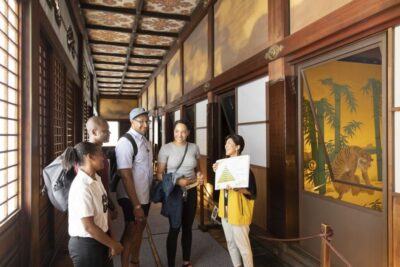
Nijo-jo Castle and Ninomaru Palace Guided Tour
Read our review →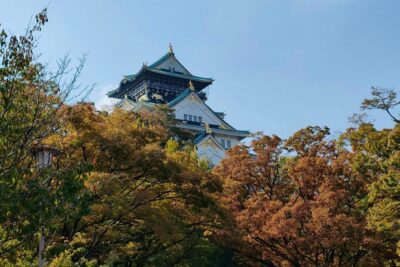
Ultimate Osaka Walking Tour: Castle, Dotonbori & Hidden Gems
Read our review →
Tokyo Castle & Imperial PalaceーShogun Walking Tour
Read our review →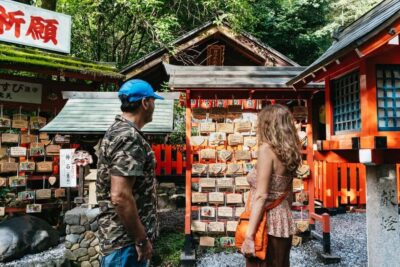
Nijo Castle, Kiyomizu & Fushimi Inari Guided Tour
Read our review →
Osaka Castle Walking Tour and Castle Tower Admission
Read our review →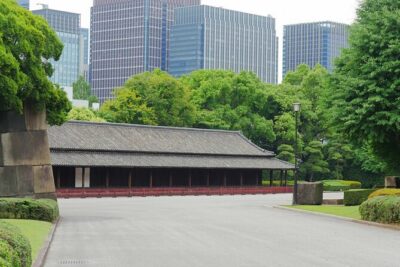
Imperial Palace East Garden and Edo Castle Walking Tour in Tokyo
Read our review →
Imperial Palace & Nijo Castle Guided Walking Tour
Read our review →Browse the lists this tour appears in