

Reviewed · CASTLE TOURS
Tokyo Castle, Imperial Palace, Shogun & Garden Walking Tour
Tokyo’s past is hiding in plain sight. This two-hour walk through the Imperial Palace’s East Gardens brings Edo Castle ruins, samurai-era stories, gardens, and modern Tokyo into one easy route. I like the small-group format, with a stated limit of 10 travelers in one section of the tour details and 15 in another, and I like that guides such as Mika, Natsumi, Lakki, and Nicolas use maps, photos, and historical stories to make the stone walls easier to understand.
The price is $31.84 per person, which is fair if you want context and company rather than a quick garden stroll. The main caution is simple: you do not enter the Emperor’s palace itself, and much of old Edo Castle is gone, so anyone expecting grand palace rooms may feel let down.
In This Review
- Key points to know before you book
- What this Imperial Palace walk is really about
- Meeting at Wadakura Fountain Park
- Ōtemon Gate and the old castle defenses
- Edo Castle ruins and the missing palace
- Ninomaru Garden and the calmer side of Tokyo
- How the guides shape the experience
- Maps, photos, and stories instead of palace rooms
- Is two hours enough?
- Price, group size, and what you receive
- Weather, comfort, and practical planning
- Who will enjoy this tour most?
- Should you book the Imperial Palace walking tour?
- FAQ
- How long does the Tokyo Imperial Palace walking tour last?
- What is the price of the tour?
- Where does the tour begin?
- Where does the tour end?
- Does the tour enter the Imperial Palace itself?
- What sites are included during the walk?
- How large is the tour group?
- What happens if bad weather cancels the tour?
Key points to know before you book
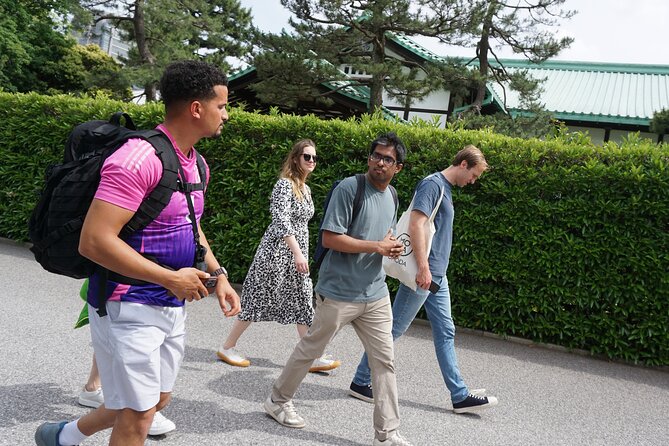
- Ōtemon Gate begins the story: You enter through the former castle’s grand main gate and learn how the site was protected.
- Edo Castle is mostly ruins today: Stone foundations, walls, gardens, and guardhouse remains replace the castle buildings that once stood here.
- Guiding adds real value: Maps, images, and explanations help you picture the castle and understand the shogun and emperor’s changing roles.
- The East Gardens are the scenic heart: Expect greenery, koi, quiet paths, and several good places for photographs.
- The walk is gentle but outdoors: Summer heat, winter cold, and rain can affect your comfort.
- The meeting point is easy to reach: The tour begins at Starbucks Coffee in Wadakura Fountain Park and returns there.
What this Imperial Palace walk is really about
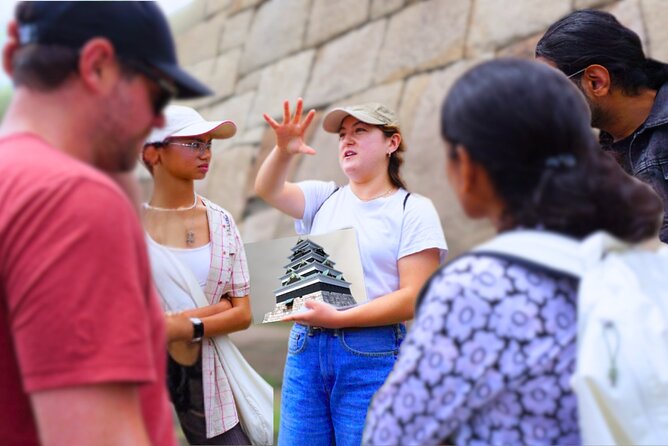
The tour title promises Tokyo Castle, the Imperial Palace, shoguns, and gardens. That is broadly accurate, but it helps to understand the emphasis before you reserve it. This is not a palace interior tour. It is a guided walk through the East Gardens, the former Edo Castle grounds, and surviving pieces of the old fortress.
That distinction matters. Japan’s Imperial Palace is still the home of the Emperor and imperial family, and the Inner Palace is not open to the public. You will not walk through reception rooms or see the private residence. The accessible portion offers gardens, stonework, foundations, defensive features, and historical sites instead.
I think the experience works best as an outdoor history lesson. Without a guide, you might see handsome walls and broad lawns but miss the reason the walls were built, how the castle operated, and why the site became the center of power in Japan.
The strongest part is the connection between eras. Guides explain Edo period rule, the samurai government, the shoguns, the emperors, and the rise of modern Tokyo. That gives the gardens a purpose beyond being a pleasant green space.
More Castle Tours in Tokyo
- Tokyo Castle & Imperial PalaceーShogun Walking Tour
★ 4.7 · 1,068 reviews - Tokyo Castle & Imperial PalaceーShogun Walking Tour
★ 5.0 · 724 reviews - Imperial Palace East Garden and Edo Castle Walking Tour in Tokyo
★ 5.0 · 510 reviews
Meeting at Wadakura Fountain Park
The starting point is Starbucks Coffee in Wadakura Fountain Park, at 3-1 Kōkyogaien in Chiyoda City. The location is near public transportation, and the park gives you a recognizable place to meet before the walk begins.
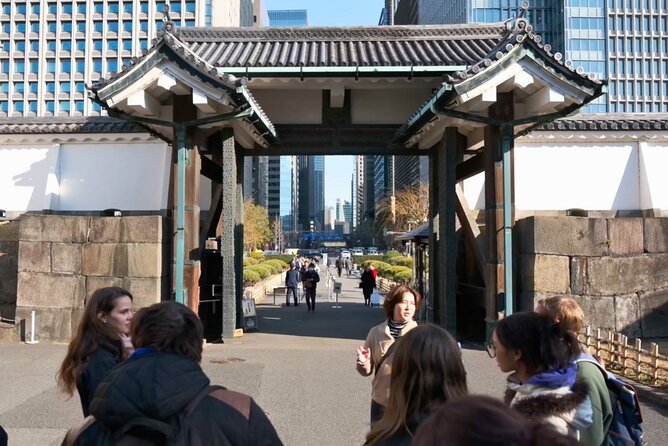
From there, the guide leads the group toward Ōtemon Gate, the main entrance to the former castle grounds. This is useful in a large central area where the palace grounds can feel confusing. You do not need to work out the route alone or guess which gate leads toward the East Gardens.
Arrive ready to walk outdoors for about two hours. There is no dress code, and tattoos are welcome. Comfortable shoes make sense, since the route includes garden paths and historic ground rather than a short visit beside the street.
The group size is described in two ways: one part of the information gives a maximum of 15 people, while the additional details state a maximum of 10. Either figure suggests a fairly personal walk compared with a large coach tour, but I would confirm the exact group limit when booking if that detail matters to you.
Ōtemon Gate and the old castle defenses
Ōtemon Gate is the right place to begin because it establishes the scale and purpose of Edo Castle. This was not simply a pretty residence. It was a fortified seat of political power, designed with gates, walls, guard positions, and controlled approaches.
Your guide explains the gate and the surrounding defenses as you enter. One particularly enjoyable thread from the tour is the practical side of castle design, including how a stronghold might respond to a siege. You get details about defensive planning rather than only a list of dates and names.
The guardhouse ruins add another layer. They are modest remains, but they help you picture the people who watched the entrance and managed movement through the castle complex. This is one of those places where a guide’s explanation changes what you notice.
The physical remains can be underwhelming if you expect a complete Japanese castle. The buildings are not reconstructed in full, and the site does not offer a grand castle interior. I would set your expectations toward foundations, walls, gates, and stories.
Edo Castle ruins and the missing palace

The East Gardens occupy part of the former Edo Castle site. The castle was damaged and destroyed over time, including major fires, and the grand structures were not fully rebuilt. In many places, the most visible evidence is a stone base or foundation.
That absence is the central strength and weakness of the tour. If you enjoy historical reconstruction, the missing buildings invite questions. Your guide can use maps and images to show how the original castle was arranged, helping you imagine a complex that is no longer physically present.
If you want dramatic architecture, the site may feel thin. One visitor specifically expected access to the palace and found only gardens, wooden guardhouses, and the stone base of the former palace. The operator clarified that the Inner Palace is closed to the public, so this is not a surprise you want to discover after arriving.
I would treat the ruined foundations as an outline. The guide supplies the walls, towers, rooms, and political drama with words and visual aids. Without that added context, the visit could be a quiet walk with attractive scenery but little sense of the castle’s former importance.
More Walking Tours in Tokyo
- Tokyo Tsukiji Fish Market Food and Culture Walking Tour
★ 5.0 · 3,184 reviews - Tokyo: Imperial Palace and Shogun Historical Walking Tour
★ 5.0 · 2,251 reviews - Tokyo: Shinjuku Local Bar and Izakaya Guided Walking Tour
★ 4.9 · 1,794 reviews - Tokyo: Tsukiji Fish Market Food and Walking tour
★ 5.0 · 1,724 reviews
Ninomaru Garden and the calmer side of Tokyo
Ninomaru Garden is where the tour shifts from military power to carefully shaped beauty. The gardens provide a calm break from Tokyo’s fast pace, with green paths, ponds, and koi. Seasonal changes can affect the view, with cherry blossoms making the setting especially appealing in spring.
This is also the part of the walk that works well for photographs. Guides point out good angles and may take pictures for members of the group. You should ask if you want a group photo or a better shot of the garden rather than assuming the guide will notice.
The gardens are not only decoration. Their placement within the former castle grounds shows how power, ceremony, defense, and daily life shared the same complex. A good guide links the planting, water, walls, and open spaces to the larger story.
The experience is especially pleasant on a sunny winter morning or a mild day. Rain does not necessarily ruin it, as Lakki and Natsumi were praised for keeping the walk engaging in wet conditions, but your comfort will depend on suitable clothing. The tour requires good weather and may be canceled if conditions are poor, with a new date or full refund offered.
How the guides shape the experience
The guide is the main reason to choose this tour instead of walking through the East Gardens on your own. The site supplies the remains, but the guide supplies the timeline, explanations, and links between Japanese history and the ground beneath your feet.
Mika has been praised for engaging young people with historical references and for answering questions clearly. That makes the tour a reasonable option for families with older children and teenagers, especially if your children enjoy stories about samurai, shoguns, and castles.
Natsumi is repeatedly described as friendly, clear in English, and enthusiastic about Japanese history. She has also shared suggestions for local restaurants and shrines, which can make the tour useful beyond the two-hour route.
Lakki is known for his focus on shogun history and for keeping the walk lively, even in the rain. Nicolas has been praised for explaining the eras, gardens, and grounds while drawing attention to small details such as the koi.
Guide quality can vary, as it can on any group activity. One person found the guide difficult to understand and felt the historical explanations were not strong enough. That is a minority concern within the supplied rating picture, but it is worth keeping in mind if clear English delivery is essential for you.
Maps, photos, and stories instead of palace rooms
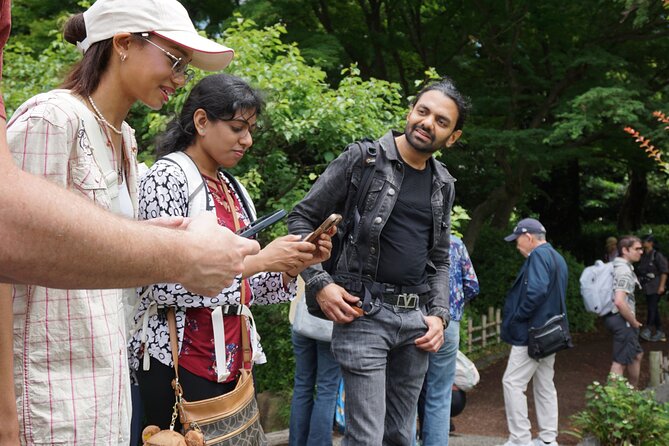
The best guides appear to use maps and historical images to fill in what no longer exists. This is important at Edo Castle because a bare foundation does not automatically reveal the shape of the former building or its place in the castle complex.
You may hear how the shogunate and imperial institution interacted, how the site became a center of leadership, and how old Edo developed into modern Tokyo. These are not separate facts. Together, they explain why the Imperial Palace grounds matter even when the original castle is gone.
The tour also offers a useful correction to a common assumption. The Imperial Palace is not the same thing as a public European-style royal palace. You can visit selected grounds, but the main imperial buildings remain restricted.
I like that the tour does not pretend otherwise. Still, the title could lead some people to expect access to the palace itself. Read the description carefully and book it for the East Gardens and Edo Castle history, not for an interior visit.
Is two hours enough?
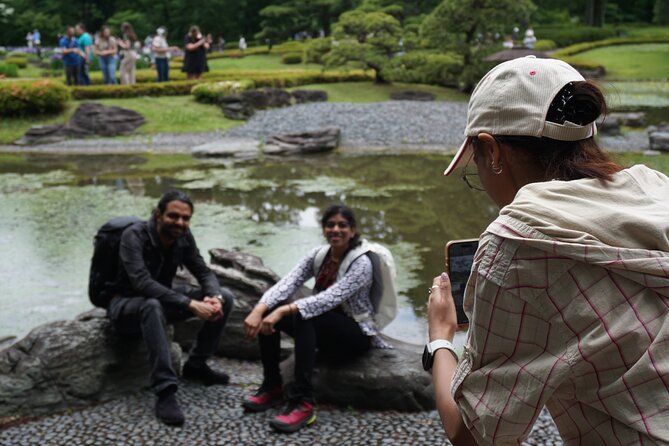
Two hours is enough for a focused introduction. You can enter the grounds, see Ōtemon Gate and guardhouse remains, explore the former castle area, spend time in Ninomaru Garden, and ask questions without committing half a day.
The short duration also makes this easy to fit into a Tokyo itinerary. You might schedule it on a morning before another Chiyoda-area activity, or use it as a gentle break from busier districts. The return to the original meeting point simplifies planning.
The tradeoff is depth. At two hours, the guide must choose the key points, and the tour cannot cover every part of the enormous palace grounds. If you want a long architectural study or an all-day history program, this walk will feel limited.
Pace appears to be one of its strengths. Several descriptions emphasize time for questions and photographs rather than a rushed march. That matters in a garden, where stopping to look is part of the pleasure.
Price, group size, and what you receive
At $31.84 per person, this sits in the reasonable range for a short guided city walk. You are paying for a local guide, route-finding, historical interpretation, and a small group, not for admission to a palace interior.
Admission to the gardens is listed as free. That means the tour’s value depends almost entirely on the guide. If you enjoy learning how a place fits into Japan’s past, the price is easier to justify. If you mainly want to stroll through greenery and take pictures, you can visit the free gardens without paying for a tour.
I would particularly recommend the tour for a first visit to the palace grounds if you do not want to research Edo Castle beforehand. It gives you a working framework, and you can return later on your own to revisit the gardens at your own pace.
The high overall rating and 99 percent recommendation figure suggest strong satisfaction, but I would not let those numbers erase the site’s limitations. The experience is not a spectacular castle visit. It is a pleasant, guided interpretation of a place where history is often visible only in fragments.
Weather, comfort, and practical planning
Plan for sun, cold, or rain. The walk is outside, and the grounds can be uncomfortable in summer heat or winter cold if you are unprepared. The experience provider says good weather is required and offers either another date or a full refund if poor weather causes cancellation.
The meeting point is near public transportation, but you should still allow enough time to find Starbucks in Wadakura Fountain Park. The tour ends where it starts, which is convenient for your next stop and avoids a final navigation problem.
Most people can take part, and no special dress code applies. Since the walk includes gardens, gates, walls, and historic remains, practical walking clothes are more important than formal attire.
Bring a phone for photographs, and consider asking the guide about the best photo spots. The garden scenery, koi, stonework, and gate provide more visual variety than the missing castle buildings might suggest.
Who will enjoy this tour most?
I would choose this experience if you want historical context without spending an entire day in a museum. It is a good match for adults interested in Japanese political history, families with school-age children or teenagers, and first-time visitors who want help finding their way through a large site.
It also suits a second visit to Tokyo. One person who joined on a return trip found the guide excellent but questioned making the palace grounds a first-time priority because so little of the original castle remains. I think that is sound advice: first-time visitors may prefer Tokyo’s more visually dramatic sights, while returning visitors can appreciate the quieter historical setting.
The tour is less suitable if your main goal is to see the Emperor’s residence, enter palace rooms, or photograph a fully restored castle. You will not get those things here.
Should you book the Imperial Palace walking tour?
Book it if you want the East Gardens, Edo Castle ruins, samurai and shogun stories, and a guide who can turn foundations into a meaningful historical site. The $31.84 price is sensible when the guide is clear, engaging, and able to use maps and images well.
Skip it if you only want grand palace architecture or if you are happy exploring free gardens without explanation. Before booking, remember the key fact: this is an outdoor walk through the former castle grounds, not an entrance to the Inner Palace.
For most people, I would call it a worthwhile two-hour introduction, especially early in a Tokyo stay. It helps you understand one of the city’s most important sites, keeps the route easy, and leaves enough time for the rest of your day.
FAQ
How long does the Tokyo Imperial Palace walking tour last?
The tour lasts approximately two hours.
What is the price of the tour?
The listed price is $31.84 per person.
Where does the tour begin?
It begins at Starbucks Coffee in Wadakura Fountain Park, at 3-1 Kōkyogaien, Chiyoda City, Tokyo 100-0002, Japan.
Where does the tour end?
The activity ends back at the meeting point in Wadakura Fountain Park.
Does the tour enter the Imperial Palace itself?
No. The Inner Palace is not open to the public. The tour focuses on the East Gardens and the former Edo Castle grounds.
What sites are included during the walk?
The route includes Ōtemon Gate, guardhouse ruins, Edo Castle remains, and Ninomaru Garden.
How large is the tour group?
The information gives two limits: a maximum of 15 people in the main description and a maximum of 10 in the additional details. Confirm the exact group size when booking if this is important to you.
What happens if bad weather cancels the tour?
If the activity is canceled because of poor weather, you will be offered a different date or a full refund. You can also cancel at least 24 hours before the start time for a full refund. Cancellations within 24 hours are not refunded.
Just added around Tokyo
- Tokyo 6hr Instagram Highlights Private Tour with Licensed Guide★ 5.0 · 38 reviews
- Tokyo Small Group Tour with Guide★ 4.5 · 38 reviews
- Tokyo Sumo Experience with Live Show & Audience Challenge★ 5.0 · 38 reviews
- Japanese Food Cooking Class in Asakusa, Tokyo★ 5.0 · 39 reviews
- Very popular in Harajuku♡Animal petting zoo★ 4.6 · 39 reviews
- Ramen Making from Scratch with Tokyo Mom(Vegan Option Available)★ 5.0 · 39 reviews
- Tokyo: Kimono Rental inside Shinjuku Gyoen National Garden★ 4.9 · 39 reviews
- Tokyo JDM Night: 600hp C63s AMG Edition 1 (Private)★ 4.9 · 39 reviews
Castle Tours, compared.

Tokyo Castle & Imperial PalaceーShogun Walking Tour
Read our review →
Nijo-jo Castle and Ninomaru Palace Guided Tour
Read our review →
Ultimate Osaka Walking Tour: Castle, Dotonbori & Hidden Gems
Read our review →Tokyo Castle & Imperial PalaceーShogun Walking Tour
Read our review →
Nijo Castle, Kiyomizu & Fushimi Inari Guided Tour
Read our review →
Osaka Castle Walking Tour and Castle Tower Admission
Read our review →
Imperial Palace East Garden and Edo Castle Walking Tour in Tokyo
Read our review →Browse the lists this tour appears in