
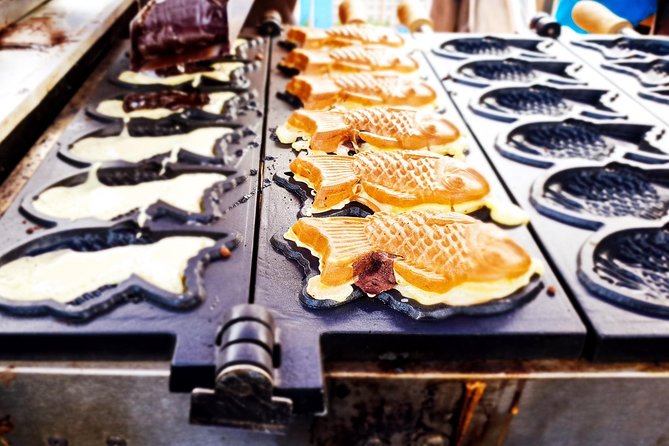
Reviewed · FOOD & DRINK
Osaka Dotonbori Daytime Food Tour
Osaka eats with both hands. This three-hour walk links Dotonbori, Namba, and local food stops with a guide who can help you make sense of Osaka’s famous street-food scene. I like the efficient mix of food, neighborhood history, and practical dining advice. I also like that the group is capped at 10 people, which should make narrow lanes and small restaurants easier to manage.
The main drawback is the price: $209 per person is a serious sum for four food stops, one drink, dessert, and three hours of guiding. Transportation, extra food, and gratuity cost more, so this makes the most sense if you value a small-group introduction and want to avoid wasting your first Osaka meal on a crowded tourist restaurant.
In This Review
- Five useful things to know before booking
- Why this Osaka food walk makes sense
- Meeting the guide beneath the Glico sign
- Dotonbori: neon, canal views, and better food choices
- Four food stops, one drink, and a Japanese dessert
- Hozenji Yokocho and its quiet Buddha
- Sennichimae Doguyasuji and the tools behind Osaka food
- Kuromon Market and the daytime food scene
- Misono Building and Osaka’s local side
- Is $209 a fair price?
- Who should book this Dotonbori tour?
- Practical details before you go
- Should you book the Osaka Dotonbori Daytime Food Tour?
- FAQ
- How long is the Osaka Dotonbori food tour?
- What time does the tour start?
- Where does the tour begin?
- Where does the tour end?
- How many people can join the tour?
- What food and drinks are included?
- Is hotel pickup included?
- Can people with dietary restrictions join?
- Can I cancel for a full refund?
Five useful things to know before booking
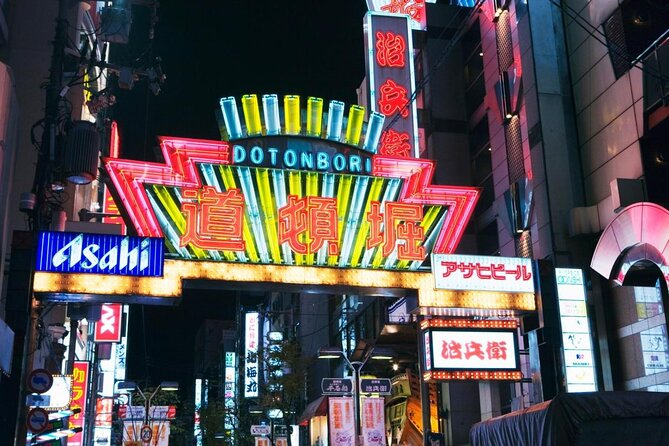
- Four food stops in three hours: You sample several Osaka specialties without spending half a day planning where to eat.
- Starts at 11 a.m. by the Glico sign: The meeting point is easy to identify, but Dotonbori can be very crowded.
- Small groups of up to 10: A practical limit for busy streets, market lanes, and tucked-away eating spots.
- Food may include takoyaki and local specialties: Exact dishes can change with season, availability, restaurant schedules, and holidays.
- The route reaches Hozenji Yokocho, Kuromon Market, and Doguyasuji: You get more than the neon canal view.
- Dietary needs can be accommodated: Vegetarian, vegan, pescetarian, shellfish-free, and pork-free options are listed, but you should state your needs when booking.
Why this Osaka food walk makes sense
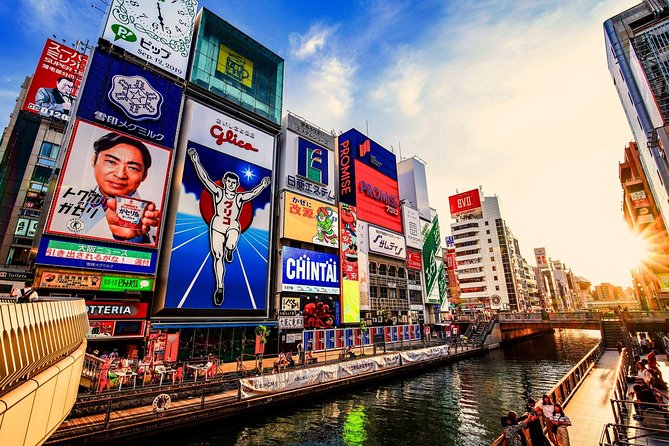
Osaka is often called Japan’s Kitchen, and Dotonbori is its loudest dining room. Giant signs, glowing restaurant fronts, animated food displays, and the famous Glico running man make the area fun to photograph. They also make it easy to choose a restaurant because its food looks good on a billboard.
That is exactly where a guide can help. The tour is designed to steer you away from places with long tourist lines and toward smaller restaurants and market stops that are harder to identify on your own. You still see the famous sights, but food is the main reason for the walk.
I especially like the balance between eating and orientation. A guide such as Ron, Russ, Natsumi, Chiyoe, Miki, or Kevin may add stories about local customs, shrines, baseball, restaurant culture, or neighborhood history as you move between stops. The quality of the outing depends partly on who leads your group, but the names associated with the experience suggest an emphasis on conversation rather than simply handing you a plate and moving on.
This is not a long restaurant crawl. Three hours gives you a useful first look, but it does not cover every corner of Namba or provide a full day of meals. Think of it as a guided lunch with a neighborhood walk attached.
More Food Tours in Osaka
- Osaka: Shinsekai Food Tour with 13-15 Dishes at 5 Eateries
★ 4.8 · 2,204 reviews - Osaka Food Tour: 13 Dishes at 5 Local Eateries
★ 5.0 · 2,149 reviews - Hungry Osaka Street Food Tour:15 Tastings & 3 Drinks with a Local
★ 5.0 · 1,727 reviews
Meeting the guide beneath the Glico sign
The tour begins at 11 a.m. outside Starbucks Coffee at Tsutaya Ebisubashi, 1-8-19 Dotonbori, Chuo Ward. The starting area is close to the famous Dotombori Glico Sign, so you should allow extra time to find the exact Starbucks and not rely only on spotting the running man.
The Glico sign offers a quick lesson in how advertising became part of Osaka’s public identity. The story centers on Fortunato Catalon, a Filipino sprinter whose image inspired the famous running figure and the company behind it. This is a small opening stop, listed at about five minutes, but it gives you a useful way to read the signs and symbols around the canal.
Dotonbori is similar to Tokyo’s Shibuya in one important way: it is a place where crowds, lights, sound, and commercial energy all meet. You will have good photo opportunities, but you will also need to stay alert in the busy streets. Keep your phone and wallet secure, stay close enough to hear the guide, and wear shoes suited to several hours of walking.
Dotonbori: neon, canal views, and better food choices
The Dotonbori portion is more than a photo stop. It shows you why Osaka’s food reputation can be both exciting and confusing. The large signs point toward famous dishes, but the most visible restaurant is not always the best choice for a short visit.
A local guide can explain how to look beyond the signs and avoid spending valuable time in a line. That matters in Dotonbori, where a queue can eat up a large part of a three-hour experience. You may also get advice about restaurants to try later in your stay, which is one of the practical benefits of taking the tour early in your Osaka visit.
The route then moves through Minami, the broad entertainment and shopping area centered on Namba. This is where the tour’s food focus becomes more useful. Instead of treating Namba as a shopping district you pass through quickly, you get a food-based introduction to its smaller streets and eating customs.
The route is not fixed in the sense of a museum tour. Restaurant schedules, public holidays, weather, and ingredient availability can lead to substitutions. That flexibility is sensible, but it means you should not book expecting one exact dish at one exact restaurant.
Four food stops, one drink, and a Japanese dessert
The package includes local dishes at four food stops, one drink, and a traditional Japanese dessert. That sounds generous for three hours, though the price means you should judge the tour by the guidance and access as much as by the amount of food.
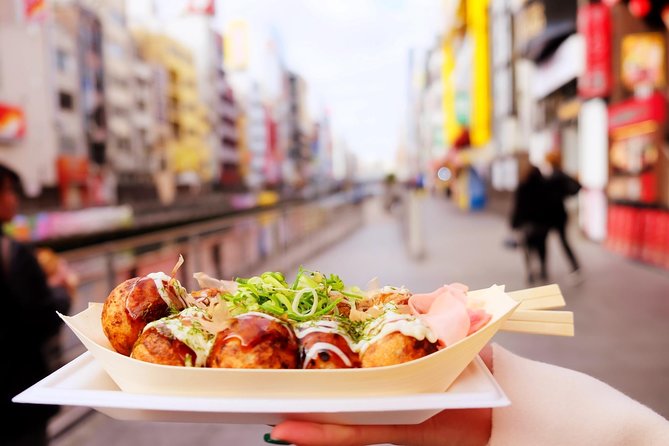
Takoyaki is one of the dishes praised most strongly by people who took the experience. These hot, round octopus-filled snacks are closely tied to Osaka, and the tour can be a good place to try them with context instead of simply buying a serving from the nearest stand. Be careful with the first bite, since freshly cooked takoyaki can be very hot inside.
You may also visit small market shops, izakaya-style places, or casual food counters. The exact selection changes, but the route is meant to show several kinds of Osaka eating, not just one plate repeated four times. One food stop may feel like street food, while another may give you a more traditional or local setting.
The included drink is useful, but it is only one drink. Additional drinks and food are available at your own expense. If you have a large appetite, budget for extra purchases rather than assuming four samples will replace lunch completely.
The sweet course adds a pleasant finish. A traditional Japanese dessert or Japanese cakes have featured in the experience, giving you a chance to try something different from the usual Western-style pastry. The dessert is also a reminder that Japanese food culture is not only about savory snacks and noodles.
A completely different kind of day out in Osaka:
- Osaka Go Karting Tour with Funny Costume
★ 5.0 · 2,658 reviews - Osaka Castle: Museum and Tower Entry Ticket
★ 4.5 · 2,380 reviews - Osaka: teamLab Botanical Garden Entry Ticket
★ 4.5 · 1,710 reviews - Osaka: Tea Ceremony Experience
★ 4.9 · 1,426 reviews
Hozenji Yokocho and its quiet Buddha
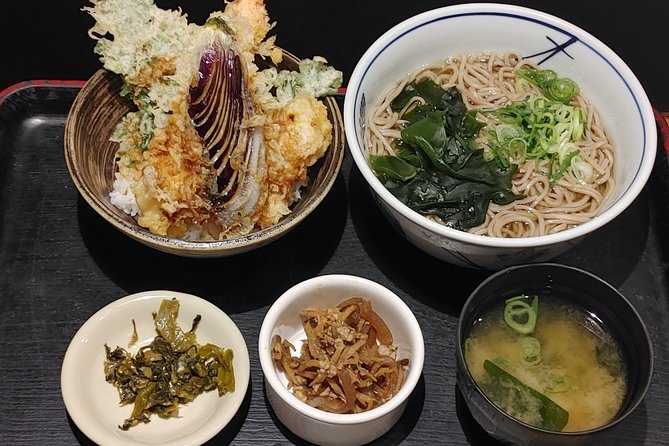
Hozenji Yokocho changes the mood. After the bright signs of Dotonbori, its narrow lanes offer a calmer look at old-style Osaka dining streets. This is the sort of place that is easy to miss if you stay only on the main canal road.
A small Buddha statue at Hozenji is one of the route’s memorable cultural details. The statue is associated with water, and its mossy appearance comes from visitors pouring water over it. Your guide may explain the custom and point out the nearby lanes and shrines.
I like this stop because it keeps the tour from becoming a simple snack hunt. You get a short cultural pause between meals, and the narrow streets make the neighborhood feel different from the huge signs and chain restaurants nearby. The tradeoff is that the lanes are tight, so a group of 10 must move carefully and avoid blocking people who live or work there.
Sennichimae Doguyasuji and the tools behind Osaka food
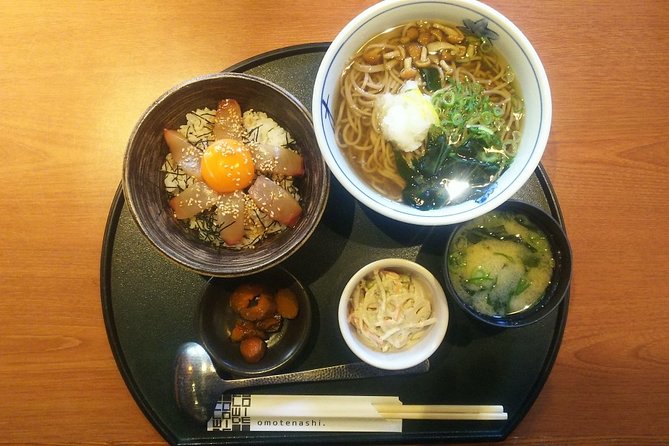
Sennichimae Doguyasuji Shotengai is known for shops connected to cooking and restaurant supplies. Even if you are not shopping for professional kitchen equipment, it helps explain how Osaka’s food culture works behind the scenes.
This kind of stop is valuable because it shifts your attention from what appears on your plate to the tools, displays, and food-service traditions that support the city’s restaurants. You might find unusual kitchen goods, restaurant signs, or items that make practical souvenirs.
The shopping arcade also gives your guide room to explain local eating customs and answer questions. If you are planning to cook in Japan, shop for food-related gifts, or simply enjoy unusual stores, this may be one of the most useful parts of the walk.
Kuromon Market and the daytime food scene
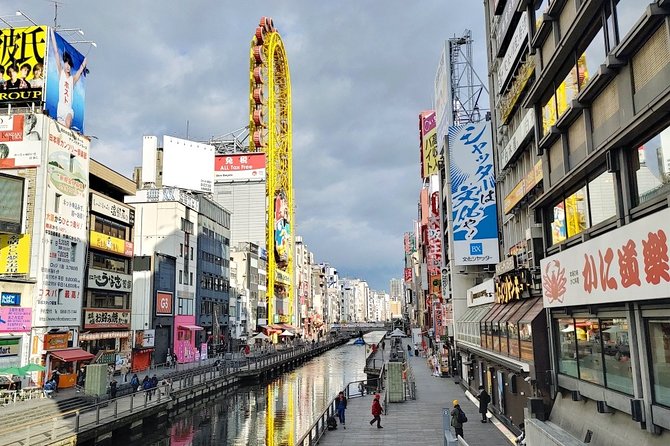
Kuromon Market adds a strong daytime market setting to the route. It is a natural place to see ingredients, small food sellers, and the everyday side of Osaka’s culinary identity.
Market conditions change, so you should expect some variation in what is open and what is available. The tour’s food substitutions policy matters here. Weather, holidays, and individual shop schedules can affect the route, but the guide can adjust the stops rather than leave you without food.
Kuromon is also a good place to ask questions. You can ask your guide what to buy later, where to eat in another part of Osaka, or which dishes are worth seeking out during the rest of your trip. The strongest part of this experience may be the advice you carry with you after the final stop.
Misono Building and Osaka’s local side
The Misono Building provides another look at Namba beyond the polished restaurant facades. Its inclusion suggests a route that values older, less obvious corners of the district rather than only the most photographed street.
The food and culture here may feel more informal than a standard sightseeing stop. Past participants have appreciated guides who explain local stories while walking, including the famous tale of baseball fans throwing a KFC statue into the river after a championship celebration. That story gives you a sense of Osaka’s sports passion and playful public culture.
You may also pass shrines or other small sights along the way. These short stops are not full temple visits, but they help connect the food to the neighborhoods where people eat, shop, celebrate, and pray.
Is $209 a fair price?
At $209 per person, this is not a bargain food walk. You receive four food stops, one drink, dessert, an English-speaking local guide, and roughly three hours of access to places that can be difficult to judge on your own.
The value improves if you are visiting Osaka for a short time, dislike researching restaurants, or want a small group rather than a large bus-style outing. It also improves if the guide gives strong restaurant suggestions for later meals. Guides such as Kevin and Chiyoe have been praised for making the food and cultural explanation feel personal, particularly when group sizes are small.
The value is weaker if your main goal is simply to eat as much as possible. You can spend far less on takoyaki, market snacks, and a drink if you choose places yourself. You are paying for guidance, stories, route planning, and the chance to avoid poor choices and long lines.
Hotel pickup is not included, though it can be arranged for an extra charge. You also pay for transport, extra food, drinks beyond the included one, and gratuity. Since the start and end points are both in central Osaka, getting to the meeting point should be part of your planning.
Who should book this Dotonbori tour?
I would choose this experience for a first day in Osaka. It helps you get your bearings in Dotonbori and Namba, introduces food you may not recognize, and gives you ideas for meals later in the trip.
It also suits solo visitors and couples who want company without joining a very large group. Single participants are accepted, and the maximum group size is 10. Families can join too, but children must be accompanied by an adult, and passport information copies are required for children age 10 and above.
The tour is friendly to vegetarian, vegan, pescetarian, shellfish-free, and pork-free diets. Still, food changes are possible, so tell the operator about your needs before the walk rather than waiting until you arrive.
You should have a moderate level of fitness. The route involves walking through busy areas and narrow lanes for about three hours. If you want a slow, seated lunch with little walking, this is not the right format.
The current rating is 4.8 from 24 ratings, with 96 percent recommending it. The most praised qualities are consistent: guides who make the tour personal, food explanations mixed with local history, informal conversation, and access to places that are easy to overlook.
Practical details before you go
The mobile ticket is convenient, and confirmation is provided when you book. The tour starts at 11 a.m. and ends in the Sennichimae area, Chuo Ward, Osaka, rather than returning to the starting Starbucks.
Book early if your Osaka dates are fixed. The experience is booked an average of 42 days ahead, although same-day booking is available. Same-day availability should not be treated as a guarantee, particularly if you need a specific dietary arrangement.
Free cancellation is available up to 24 hours before the local start time. Cancellations or changes inside that period are not refunded or accepted. Poor weather or failure to reach the minimum number of participants can lead to a new date, another experience, or a full refund.
Should you book the Osaka Dotonbori Daytime Food Tour?
Book it if you want a fast, guided introduction to Osaka food and would rather spend your limited time eating than comparing restaurant queues. The mix of takoyaki, market food, dessert, Dotonbori photos, Hozenji’s Buddha, and local stories gives you more than a standard street-snack stop.
Skip it if $209 feels high for a three-hour lunch or if you prefer choosing every restaurant yourself. For the right visitor, the best value is not the quantity of food. It is the shortcut to better choices, the small group, and the guide’s advice for the rest of your Osaka stay.
FAQ
How long is the Osaka Dotonbori food tour?
The tour lasts approximately three hours.
What time does the tour start?
It starts at 11 a.m.
Where does the tour begin?
The meeting point is Starbucks Coffee at Tsutaya Ebisubashi, 1-8-19 Dotonbori, Chuo Ward, Osaka, 542-0071, Japan.
Where does the tour end?
The tour ends in the Sennichimae area of Chuo Ward, Osaka.
How many people can join the tour?
The maximum group size is 10 participants.
What food and drinks are included?
The tour includes local dishes at four food stops, one drink, and a traditional Japanese dessert.
Is hotel pickup included?
No. Hotel pickup is not included, but it can be arranged for an additional charge.
Can people with dietary restrictions join?
Vegetarian, vegan, pescetarian, shellfish-free, and pork-free options are listed as available. Food can change based on season and availability, so provide your dietary requirements when booking.
Can I cancel for a full refund?
Yes, if you cancel at least 24 hours before the experience start time. Cancellations made less than 24 hours before the start are not refunded.
Just added around Osaka
- Osaka Japanese Cooking And Matcha Class near Osaka Castle★ 5.0 · 22 reviews
- Osaka Sushi Miso soup Adventure: A Journey of Exotic Flavors★ 5.0 · 22 reviews
- Osaka: Mino Forest Walk and Giant Waterfall with Local Lunch★ 5.0 · 22 reviews
- Ramen-Making Experience in the Osaka Castle Area with Souvenir★ 5.0 · 22 reviews
- Himeji Castle and Akashi Kaikyo Bridge Walking Tour from Osaka★ 4.5 · 22 reviews
- Osaka Morning Tour: Shitennoji Temple, Shinsekai &Doutonbori★ 5.0 · 23 reviews
- Nostalgic Osaka walk, totally different from Dotonbori★ 5.0 · 23 reviews
- Osaka Private Half-Day Tour with a Local – Secrets & Highlights★ 5.0 · 24 reviews
Food & Drink, compared.
Shinjuku Food Tour (13 Dishes at 4 Local Eateries)
Read our review →
Tokyo Tsukiji Fish Market Food and Culture Walking Tour
Read our review →
Shinsekai Food Tour with 13-15 Dishes at 5 Eateries
Read our review →
Osaka Food Tour: 13 Dishes at 5 Local Eateries
Read our review →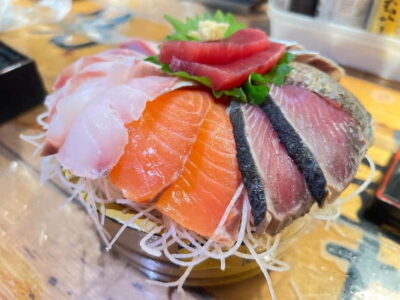
Shinjuku Food Tour (15 Dishes and 4 Eateries)
Read our review →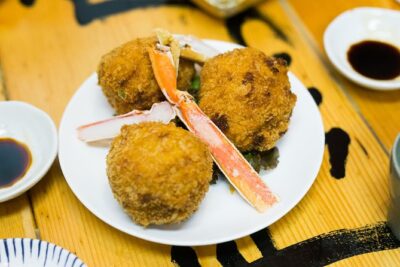
Best of Shinjuku: Izakaya Food Tour (4 Stops, 14+ Tastings)
Read our review →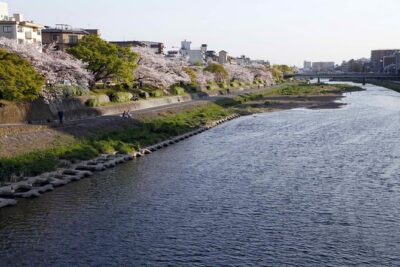
Kyoto Night Foodie Tour in Gion (9+ dishes + 6 Sake tastings)
Read our review →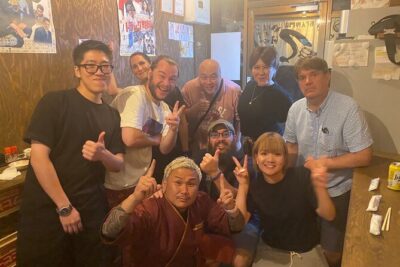
Hungry Osaka Street Food Tour:15 Tastings & 3 Drinks with a Local
Read our review →Browse the lists this tour appears in