
Reviewed · GO-KARTS
Official Japan Go-Kart Shibuya / Tokyo Tower (IDP Required)
Tokyo becomes a moving postcard. This guided go-kart tour lets you see major sights from street level, with Tokyo Tower and Shibuya Crossing as the big rewards. I like the small convoy format, and I like that the staff take photos along the way. The main catch is serious: you need the correct physical driving documents, or you cannot ride and will not receive a refund.
You start in Kanda and return there after roughly two and a half to three hours. The group is kept small, with a stated maximum of 15 people and a usual cap of 10. I would treat this as a sightseeing drive, not a race. Traffic, signals, and city streets set the pace.
In This Review
- Five things to know before you book
- What this Tokyo go-kart tour is really like
- The document rule is the most important part
- Leaving Kanda for Tokyo’s major sights
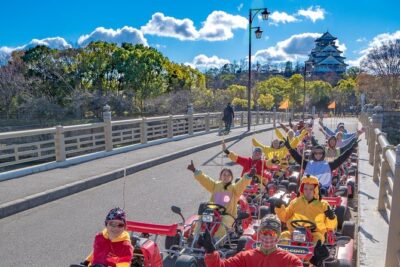
- The Imperial Palace brings a calmer stretch
- Shibuya Crossing is the headline moment
- Roppongi adds nightlife and city lights
- Tokyo Tower is the visual high point
- Tokyo Station closes the city loop
- How much value do you get for $145.35?
- Safety, comfort, and the small practical rules
- Who will enjoy this most?
- Should you book the JAPANKART ride?
- FAQ
- Where does the tour start?
- Where does the tour end?
- How long does the experience last?
- Is the go-kart rental included?
- What documents do I need?
- Are digital copies of the documents accepted?
- What if my license is from Switzerland, Germany, France, Taiwan, Belgium, or Monaco?
- How large is the group?
- What happens if the weather is bad?
Five things to know before you book
- Bring the original documents: You need your home-country driving license, passport, and an accepted physical International Driving Permit.
- The route covers a lot of Tokyo: Expect views of the Imperial Palace, Shibuya Crossing, Roppongi, Tokyo Tower, and Tokyo Station.
- It is a guided road tour: You follow the lead driver in a small convoy, so you do not need to navigate alone.
- The best moments may come after dark: Night views of Tokyo Tower and the city lights received especially warm praise.
- Dress for driving, not fashion photos: Long skirts, high heels, and sandals are not permitted.
- Weather can change the plan: Heavy rain or thunderstorms may shorten or cancel the ride.
What this Tokyo go-kart tour is really like
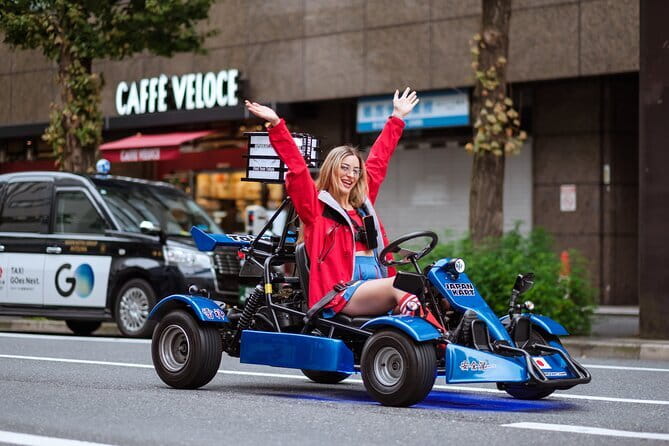
This is a road-going sightseeing experience, not a kart track session. You sit in a go-kart, follow the guide through Tokyo, and take in the city at street level. The appeal is simple: instead of viewing Tokyo through a bus window or walking one neighborhood, you connect several famous areas in one moving trip.
The route begins at JAPANKART’s Kanda branch in Chiyoda City. You need to arrive 15 minutes before your booked time. That early arrival matters because the staff must check your documents, prepare you for the kart, and explain the driving rules.
The rental kart is included in the price, so you do not have to arrange a separate vehicle. The team also asks you to watch an instructional video in your confirmation email. I would watch it before arriving, not while rushing through check-in.
The experience has earned a 4.9 rating from 84 ratings, with 98 percent recommending it. The strongest praise centers on three things: friendly staff, a feeling of safety, and the unusual chance to drive on Tokyo’s public roads. Several people also appreciated the free photos taken during the outing.
More go-kart sessions in Tokyo:
- Flagship 2-Hours Official Street Go-Kart Tour – Tokyo Bay Shop
★ 5.0 · 4,974 reviews - Official Street Go-Kart in Shibuya
★ 5.0 · 3,435 reviews - Official Street Go-Kart Tour – Akihabara
★ 5.0 · 1,578 reviews
The document rule is the most important part
You cannot treat the driving paperwork as a minor detail. Japan requires an accepted physical document at the time of driving, and a photograph or digital copy is not enough.
For most participants, the required set is:
- Your valid driving license from your home country
- A physical International Driving Permit issued under the 1949 Geneva Convention
- Your passport
The IDP must be a booklet. A paper printout, A4 sheet, unofficial permit, or digital copy will not be accepted. Japan does not accept IDPs issued under the 1968 Vienna Convention for this purpose.
There is a special rule for licenses from Switzerland, Germany, France, Taiwan, Belgium, and Monaco. In those cases, you need your own driving license plus a Japanese translation issued through the Japan Automobile Federation, also known as JAF. You do not use the standard IDP route for these licenses.
This requirement has caused real disappointment for people who arrived with only a photo of their permit. The operator cannot make an exception because the document rule comes from Japanese road law. If you forget the license, permit, passport, or required translation, the tour is canceled for you without a refund.
My advice is blunt: check the exact document rules before paying. If your country issues different types of international permits, confirm that yours follows the 1949 Geneva format. Some online companies sell unofficial documents that look convincing but have no legal value in Japan.
Leaving Kanda for Tokyo’s major sights
Kanda is a practical starting point in central Tokyo, and the activity begins and ends at the same branch. You do not need to worry about finding your way back from a distant neighborhood.
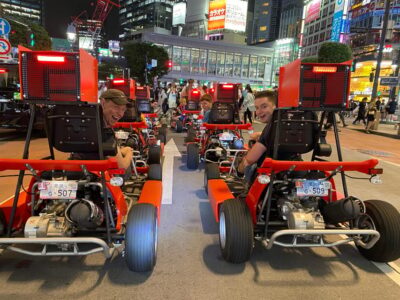
Once the safety briefing is complete, you follow the guide in a small convoy. This takes away the stress of reading a map while driving in an unfamiliar city. You still need to pay attention and follow road rules, but you are not asked to plan the route yourself.
The small group helps. A convoy of around 10 people feels more manageable than a large procession. The official maximum is 15, and kart availability can sometimes require the operator to adjust bookings. That is worth keeping in mind if you are arranging several activities around this one.
The ride is often described as exciting, but the pace depends on traffic. One playful description compared it to a slower version of a movie car chase, which is a fair way to understand the mood. You get the fun of being on the road, but this is not a speed contest and there is no racing.
The Imperial Palace brings a calmer stretch
The Imperial Palace is one of the first major landmarks on the route. It occupies the former site of Edo Castle and remains the primary residence of Japan’s emperor. Moats, stone walls, gardens, and traditional architecture give this part of the drive a different feel from the neon districts.
From a go-kart, you get an outside view rather than a full palace visit. The itinerary does not include entry into the grounds, and the drive-by format means you should not expect a long historical stop. Still, it provides useful contrast. Tokyo is not only signs, towers, and crowds. The palace area shows the older structure beneath the modern capital.
I like this part of the route because it breaks up the faster urban scenery. If your main goal is to tour the palace gardens, you will need a separate visit on another day. This experience gives you a glimpse, not a complete palace tour.
A few more Tokyo experiences worth weighing up
- Mt Fuji and Hakone 1-Day Bus Tour Return by Bullet Train
★ 5.0 · 26,383 reviews - 1-Day Tokyo Bus Tour
★ 5.0 · 14,250 reviews - Tokyo: TOKYO SKYTREE® Admission ticket
★ 4.5 · 11,192 reviews - Tokyo: teamLab Planets TOKYO Digital Art Museum Entry Ticket
★ 4.6 · 9,779 reviews
Shibuya Crossing is the headline moment

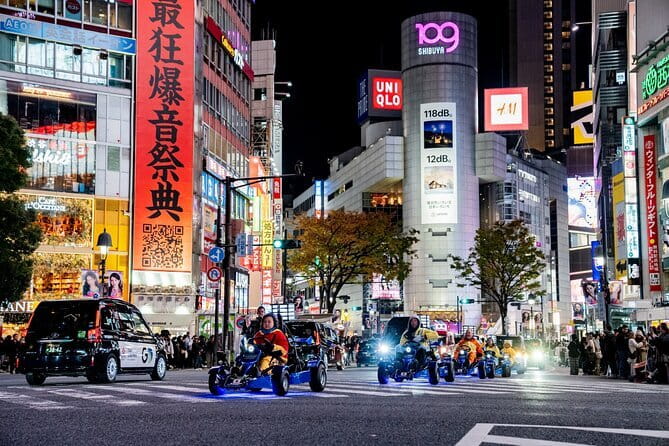
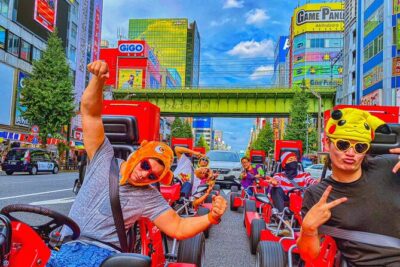
Shibuya Crossing is the sight most people picture when they imagine modern Tokyo. When the lights change, pedestrians move across the intersection from several directions, surrounded by giant screens, shops, and city noise.
Seeing it from a go-kart adds a small dose of theater. You are not simply standing at the usual viewing point and watching the crossing. You become part of the traffic flow around one of Tokyo’s best-known urban scenes.
That said, you should keep your expectations practical. The kart does not give you a private viewing platform, and the crossing is still governed by ordinary road conditions. Traffic can affect your position and timing. The reward is the street-level feeling, not a guaranteed perfect photograph at the exact center of the action.
Several people particularly enjoyed driving through this area and said the experience felt like sightseeing rather than racing. I agree with that distinction. The pleasure is in moving through Tokyo’s streets in a way most visitors cannot arrange on their own.
Roppongi adds nightlife and city lights
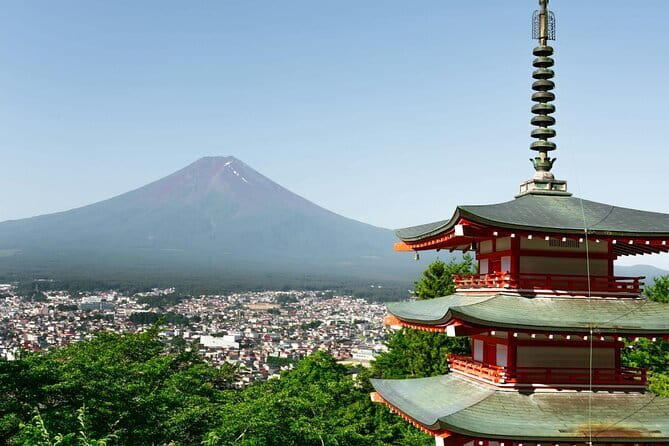
Roppongi brings another side of Tokyo into the route. It is known for bars, clubs, international food, stylish shops, and evening activity. During the day, the district also offers the Mori Art Museum and other cultural stops, though this tour does not include admission to them.
From the kart, Roppongi is mainly an urban scene viewed from the road. You get the glow of the district and a sense of its nightlife character. It is not a museum visit or a food tour, so I would not book this ride specifically for Roppongi.
The district works well as part of the larger route because the experience keeps changing. The Imperial Palace gives you history and open space. Shibuya gives you spectacle. Roppongi gives you city lights and nightlife energy.
Tokyo Tower is the visual high point
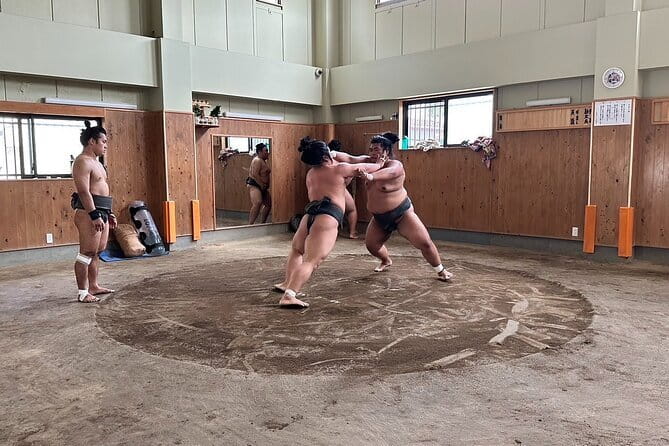
Tokyo Tower is the clearest landmark on the route. At 333 meters, it is painted orange and white and was designed in a form that recalls the Eiffel Tower. Its observation decks offer wide views across the capital, although admission is not included in this experience.
The tour lists about 10 minutes at Tokyo Tower. That is enough to pause, take photos, and enjoy the sight from outside, but not enough for a full visit to the observation decks. If you want to go up the tower, plan that separately and check how it fits with the tour timing.
Nighttime appears to be especially rewarding here. Several people singled out Tokyo Tower after dark as a highlight, when the illuminated structure rises above the surrounding streets. I would choose an evening departure if your schedule allows, especially if you want photos with Tokyo’s lights behind you.
Tokyo Station closes the city loop
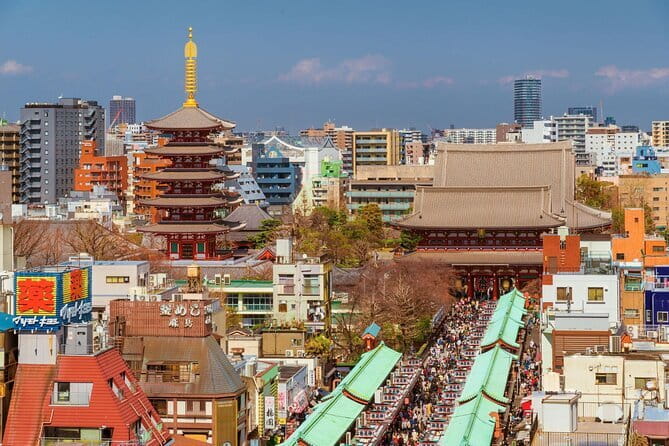
Tokyo Station offers a final change of mood. Opened in 1914, its red-brick facade is a reminder that Tokyo’s central railway district has older architectural layers beneath the glass towers.
The station is still a huge transport hub, with shops and restaurants inside. This tour gives you an exterior look and a drive through the surrounding area, not time to explore the interior maze.
That limitation is easy to accept because Tokyo Station is one of several stops rather than the sole purpose of the trip. You get a broad city sampler in one outing. If the station interests you, return on foot or by train later, when you can spend time inside without a convoy schedule.
How much value do you get for $145.35?
At $145.35 per person, this is not a cheap way to move around Tokyo. You could reach most of these areas by train for far less. The price makes sense only if you value the activity itself, the kart rental, the guided convoy, and the novelty of driving on the city streets.
You are paying for more than transport. The operator prepares the karts, provides the route, gives instructions, manages the group, and takes photos during the ride. Several people said the start-to-finish experience gave them more than two hours of driving, and some received the photos at no extra charge.
I would compare it to a special evening activity, not a sightseeing pass. For a birthday, first visit, or memorable night in Tokyo, the cost may feel reasonable. For a strict budget or a person mainly interested in museum interiors and detailed historical visits, the train will give you better value.
The experience also covers a lot of ground in one session. That saves planning time, though it does not replace returning to the places you like best. Think of it as a broad introduction to central Tokyo, with a memorable vehicle attached.
Safety, comfort, and the small practical rules
The staff receive strong praise for clear explanations, kindness, and attention to safety. People in their early 50s have enjoyed the experience, and families have described feeling looked after. That suggests the activity is not aimed only at young thrill seekers.
You still need to be comfortable driving in city traffic. The tour uses public roads, so you will encounter ordinary traffic and must follow the guide and Japanese road rules. I would not choose this as your first-ever experience behind the wheel.
Wear practical clothing. Long skirts, high heels, and sandals are prohibited. Closed, comfortable shoes and clothes that allow you to sit and operate the kart are the sensible choice. Alcohol before the tour is prohibited, so save the celebratory drink until afterward.
Tokyo weather can change the plan. The activity requires good conditions, and heavy rain or thunderstorms can lead to a cancellation or a shortened ride. One outing during typhoon season was cut short by severe weather, even though the staff handled the situation well.
You can cancel for a full refund up to 24 hours before the start time. Within 24 hours, the amount is not refunded, and changes are not accepted. Bad-weather cancellations qualify for either a full refund or a rescheduled date, depending on availability.
Who will enjoy this most?
I would recommend it to you if you:
- Want a memorable way to see several Tokyo districts
- Enjoy driving and are comfortable on public roads
- Have all required documents in physical form
- Like city lights, photography, and unusual sightseeing
- Prefer a guided small group to navigating alone
- Are willing to pay for an activity rather than cheap transportation
I would think twice if you dislike traffic, want a fast race, or prefer long visits inside each landmark. The tour gives you a moving view of Tokyo, not deep time at the Imperial Palace, Tokyo Tower, or Tokyo Station.
It also may not suit you if your schedule is tight. The ride lasts about two and a half to three hours, and you need to arrive early. Build in extra time around it, especially if you are traveling across Tokyo to reach Kanda.
Should you book the JAPANKART ride?
I would book this tour if you have the legal paperwork ready and want one memorable burst of Tokyo sightseeing. The combination of Shibuya Crossing, Tokyo Tower, the Imperial Palace, Roppongi, and Tokyo Station gives you a strong city overview, while the kart turns ordinary transfers into the main event.
The staff’s friendly approach, safety focus, and free photos add real value. I would choose an evening departure for the best chance of enjoying Tokyo Tower and the city lights.
I would skip it if you are uncertain about your IDP, hoping to use a digital copy, or looking for a conventional guided tour with long stops. Check the documents first, dress for the kart, and treat the ride as a guided urban adventure rather than a race. If that sounds like your kind of Tokyo memory, the price can be justified.
FAQ
Where does the tour start?
The tour starts at the JAPANKART Kanda Branch in Kanda, Chiyoda City, Tokyo. The address is 42 Kanda Higashimatsushitacho, 2nd floor, Tokyo 101-0042.
Where does the tour end?
The activity ends back at the same meeting point.
How long does the experience last?
The tour lasts approximately two hours and 30 minutes to three hours.
Is the go-kart rental included?
Yes. The go-kart rental is included in the tour price.
What documents do I need?
You must bring your home-country driving license, passport, and a physical International Driving Permit issued in the 1949 Geneva Convention format. The IDP must be a booklet, not a paper or A4 document.
Are digital copies of the documents accepted?
No. You must bring the physical documents. Photos or digital copies of an International Driving Permit are not accepted.
What if my license is from Switzerland, Germany, France, Taiwan, Belgium, or Monaco?
You need your own driving license and a Japanese translation issued by the Japan Automobile Federation. The listed information specifies this translation route for these licenses.
How large is the group?
The group is capped at 10 people in the main tour description, while the additional information gives a maximum of 15 travelers. Kart availability may require the operator to adjust bookings.
What happens if the weather is bad?
The tour may be canceled or shortened because it requires good weather. If the operator cancels due to poor weather, you can receive a full refund or request another date, depending on availability.
Just added around Tokyo
- Tokyo 6hr Instagram Highlights Private Tour with Licensed Guide★ 5.0 · 38 reviews
- Tokyo Small Group Tour with Guide★ 4.5 · 38 reviews
- Tokyo Sumo Experience with Live Show & Audience Challenge★ 5.0 · 38 reviews
- Japanese Food Cooking Class in Asakusa, Tokyo★ 5.0 · 39 reviews
- Very popular in Harajuku♡Animal petting zoo★ 4.6 · 39 reviews
- Ramen Making from Scratch with Tokyo Mom(Vegan Option Available)★ 5.0 · 39 reviews
- Tokyo JDM Night: 600hp C63s AMG Edition 1 (Private)★ 4.9 · 39 reviews
- Tokyo: Kimono Rental inside Shinjuku Gyoen National Garden★ 4.9 · 39 reviews
Go-Karts, compared.
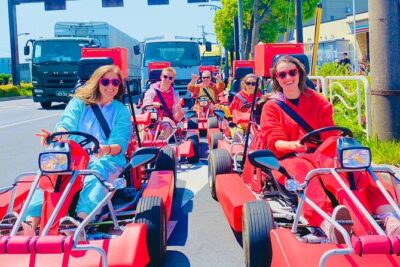
Flagship 2-Hours Official Street Go-Kart Tour – Tokyo Bay Shop
Read our review →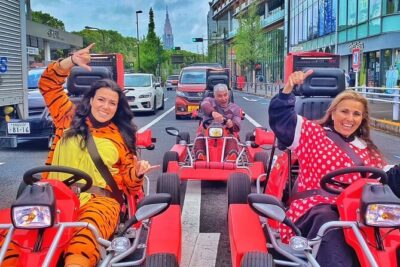
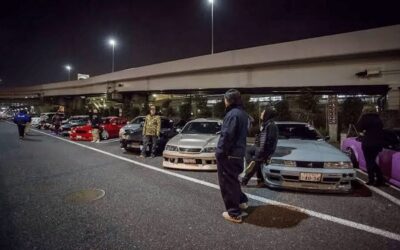
FAST&FURIOUS EXPERIENCE Tokyo Car Club membership
Read our review →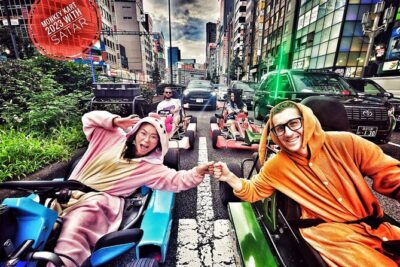
Tokyo Go Kart: Asakusa, Skytree, and Akihabara **IDP MUST**
Read our review →
Shibuya Official Street Go-Kart in Shibuya Annex
Read our review →Browse the lists this tour appears in