
Reviewed · JAPAN
Open-air theater “Tao- no-Oka” Drum TAO Live performance
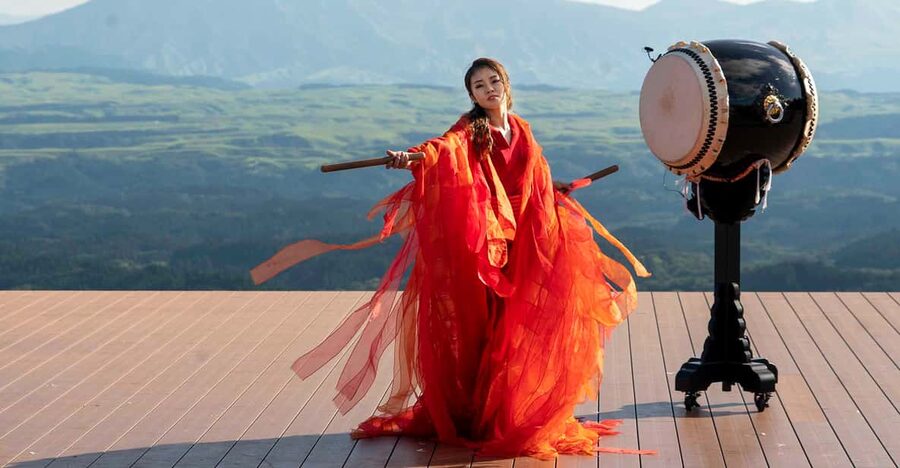
Drums sound better above the clouds. I like TAO-no-Oka’s mountain setting and the force of Drum TAO’s wadaiko, flute, shamisen, dance, and acrobatics. The main drawback is the changeable weather at 1,036 meters, plus limited food and drink at the venue.
This $30 performance offers more than a seat in a theater. You get entry to TAO House and a live Japanese taiko show on a stage high in Aso-Kuju National Park. I also like that a rainy day does not automatically end the outing, though the indoor version has limited seating and takes place upstairs without an elevator.
In This Review
- Key points to know before you go
- Why TAO-no-Oka is worth the trip
- Arriving at the white reception building
- Exploring TAO House before the show
- Taking your seat at the Skyward Stage
- How the mountain weather can change the performance
- Judging the $30 price
- Who will enjoy Drum TAO most
- A practical plan for your visit
- Should you book TAO-no-Oka?
- FAQ
- Where is TAO-no-Oka located?
- How much does the performance cost?
- What does the ticket include?
- Is hotel transportation included?
- Where should I go when I arrive?
- What happens if it rains?
- Where is the indoor performance held?
- How many people can attend the indoor performance?
- Can I bring food or drinks?
- Can I take photos or videos?
Key points to know before you go
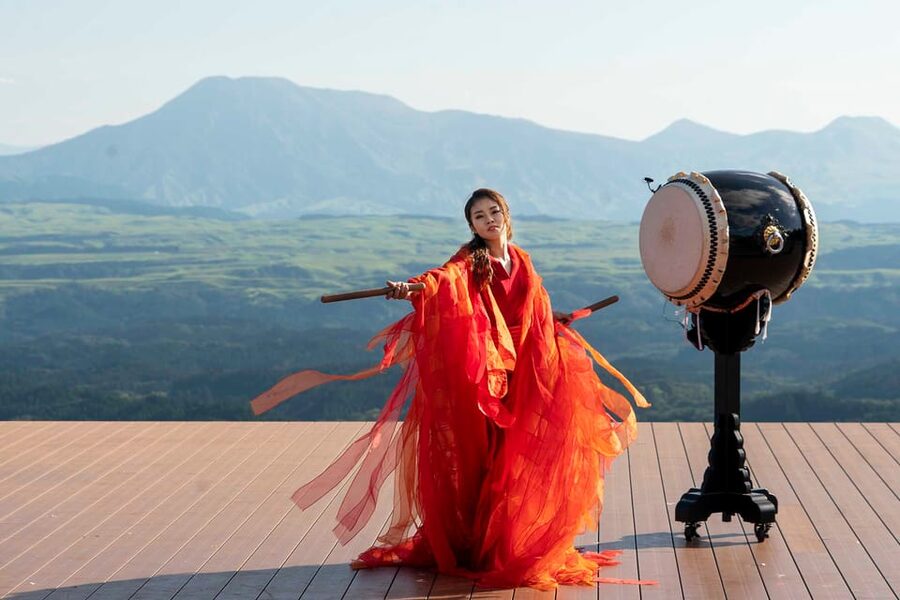
- The Skyward Stage sits at 1,036 meters, with views toward the Kuju mountains, Aso, and the surrounding countryside.
- Drum TAO mixes wadaiko with several art forms, including shinobue flutes, shamisen, koto, chanting, dance, and acrobatics.
- TAO House is part of the visit, with costumes by designer Junko Koshino, a video theater, cafe, shop, and indoor performance space.
- Rain and wind can change the show location, with an indoor performance offered if the outdoor theater is judged unsafe.
- Food and drink choices are limited, so plan ahead. Items bought at TAO House may be consumed at your seat.
- The performance is in Japanese, and photography and video recording are not allowed during the show.
Why TAO-no-Oka is worth the trip
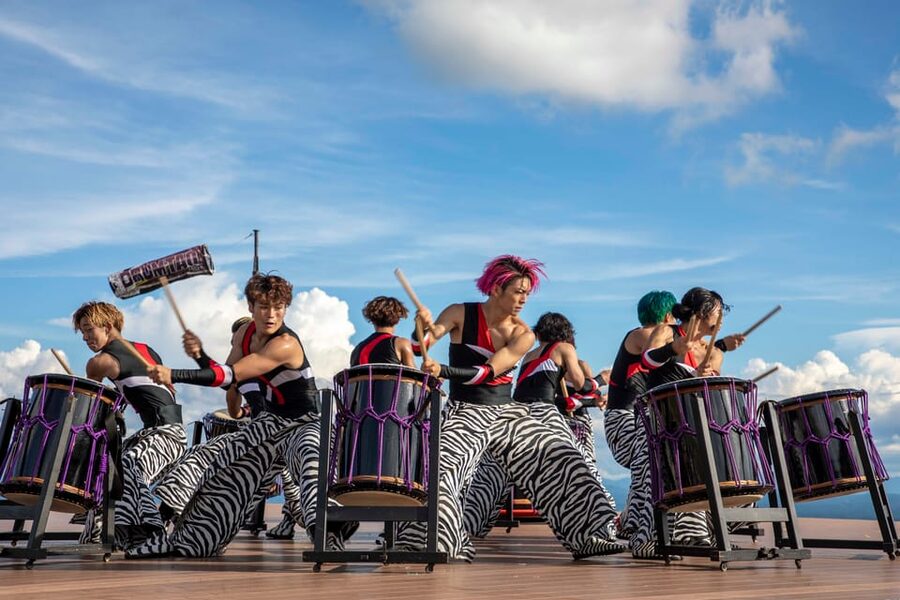
TAO-no-Oka is the performance and arts complex created by Drum TAO, an internationally known Japanese drumming and dance group based in Oita since 1995. The facility opened in 2020, giving the group a permanent home in the mountains of Kyushu.
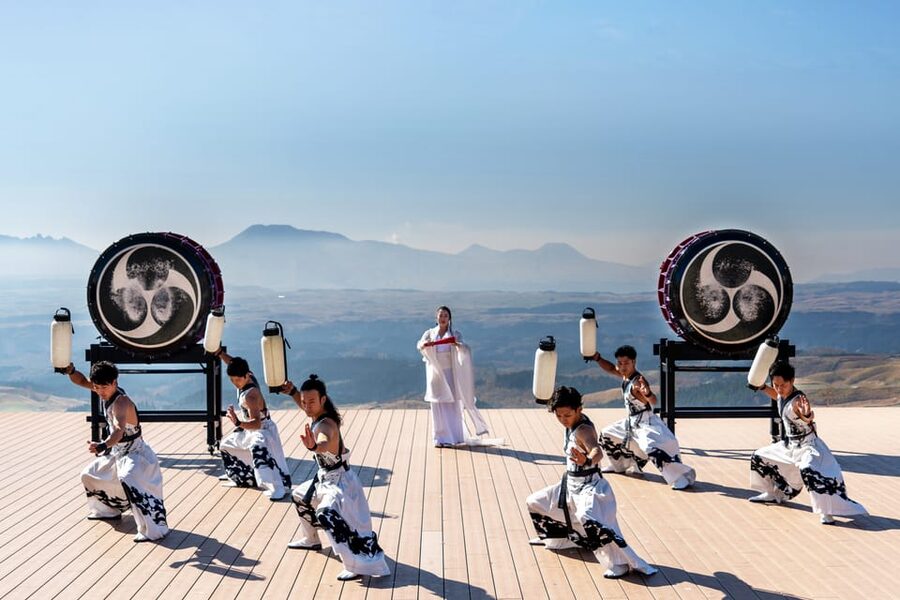
The setting is the first thing you notice. The theater looks out across bucolic countryside framed by the Kuju mountains and Aso, an active volcano. You are not entering a dark urban auditorium with a painted backdrop. The sky, ridgelines, and open air become part of the scene.
That matters because Drum TAO’s performance is built for impact. The large wadaiko drums produce a physical sound that you feel as much as hear. Against the mountain views, the show has a sense of scale that a conventional indoor venue would struggle to match.
I would not treat this as a quiet cultural lecture or a formal introduction to Japanese instruments. Drum TAO presents a polished, high-energy production. The musicians and dancers use powerful movement, bold costumes, fast changes, and theatrical staging. It is Japanese traditional performance presented with the drive of a modern stage show.
The result should suit you if you want culture with plenty of movement and volume. If you prefer a small, intimate concert or a detailed explanation of each instrument, this may feel more like spectacle than instruction. That is not a flaw, but it helps set the right expectation.
Other Japan experiences people book alongside this one:
- Mt Fuji and Hakone 1-Day Bus Tour Return by Bullet Train
★ 5.0 · 26,383 reviews - 1-Day Tokyo Bus Tour
★ 5.0 · 14,250 reviews - PERFECT KYOTO 1-Day Bus Tour
★ 5.0 · 13,518 reviews
Arriving at the white reception building
Plan to reach the site at least 30 minutes before the live show. Your first stop is the reception in the white building on the grounds. This early arrival gives you time to check in, find your seat, and look around before the performance begins.
The venue is not simply a stage with a ticket booth. Your admission includes entry to TAO House, the complex’s visitor area. Since the show itself is the main event, I would still allow enough time to arrive without rushing rather than spending the whole pre-show period browsing.
Transportation is not included. Hotel pickup and drop-off are also not provided, so you need to arrange your own way to TAO-no-Oka in the Kyushu region. The information provided does not give a travel time, shuttle schedule, or public transport plan, so check your route carefully before booking.
That point matters more here than it would for a central city theater. TAO-no-Oka sits high in Aso-Kuju National Park, and the remote mountain setting is part of its appeal. It also means you should not assume that reaching the site will be as simple as walking from a station or hotel.
Exploring TAO House before the show
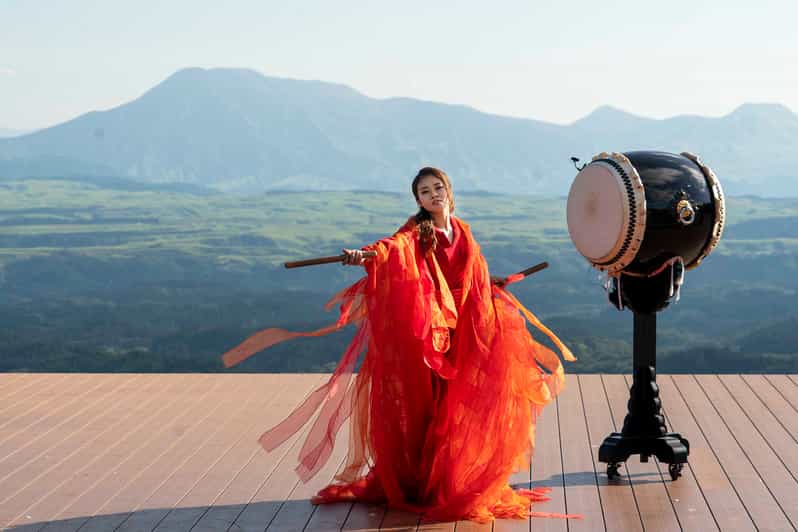
TAO House gives the visit some extra depth. The complex includes an exhibition of Drum TAO stage costumes created by Junko Koshino, a cafe, a video theater, a shop, and an intimate indoor live performance space.
The costume display is a useful way to see the visual side of the group’s work. Drum TAO is not only about percussion. Its shows combine sound, movement, clothing, lighting, and carefully staged physical performance. The costumes help you notice that this is a full production rather than a basic drum recital.
The video theater can also help you understand the group’s wider style before you sit down for the main show. You may find it especially useful if you do not know Drum TAO already or if you want more context than the live performance itself provides.
The shop sells TAO merchandise, and the venue has some appealing souvenirs. A visit to TAO House also helps fill the time before the performance, though you should keep an eye on the start time and be ready to move to the theater when asked.
Food and drink require some planning. The cafe is part of TAO House, but the available information warns that the venue offers little food and very little to drink. You cannot bring outside food or beverages into the performance area. Items purchased at TAO House are allowed at your seat, including during the show.
I would eat before arriving if you need a full meal, and I would not count on the venue for a wide choice of refreshments. This is a practical issue, especially if you are visiting with children or have a long journey to the site.
Taking your seat at the Skyward Stage
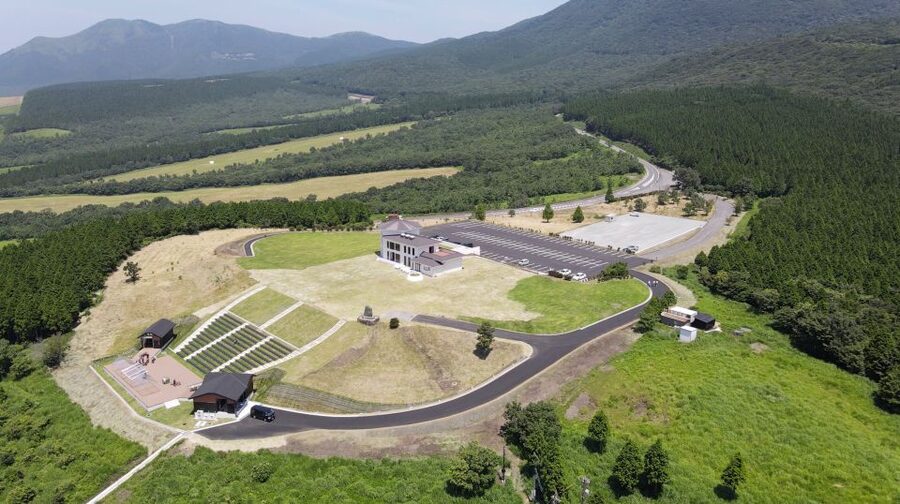
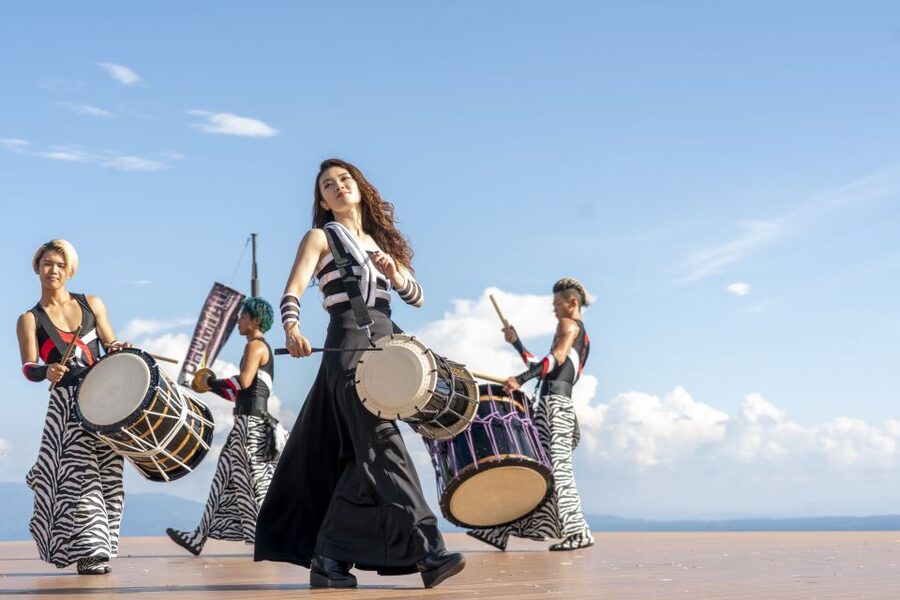
The outdoor theater is called the Skyward Stage for good reason. It is set high in the Aso-Kuju National Park and opens toward the mountains and countryside. The view is not a small bonus between acts. It is one of the central reasons to choose this performance.
The open-air design changes how the show feels. Drum sounds carry into a large natural setting, while the performers work against a backdrop of mountains and open sky. The setting gives the performance a ceremonial quality without making it slow or solemn.
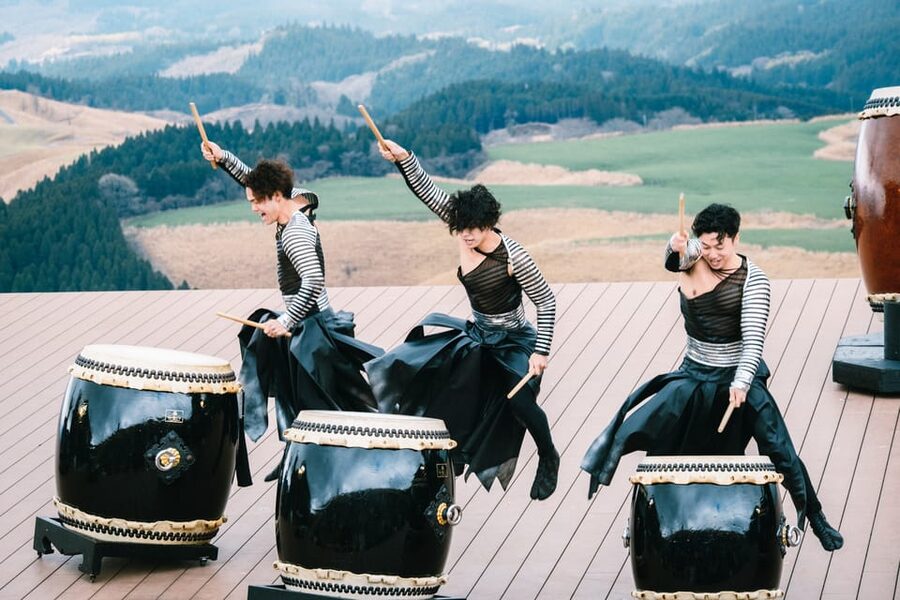
You will see wadaiko drums at the center of the show, supported by shinobue flutes, shamisen three-stringed lutes, koto zithers, chants, dance, and acrobatics. This range keeps the performance from becoming one long sequence of identical drumbeats.
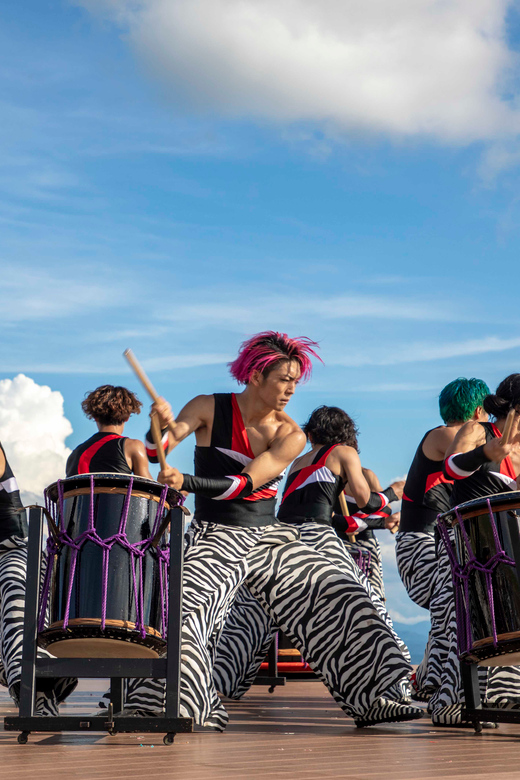
The group’s style is flamboyant and physical. Expect high energy rather than a restrained chamber performance. The combination of rhythm, athletic movement, and theatrical presentation is designed to hold attention from the grandstand.
There is also a simple practical rule: no photography or video recording during the performance. That may disappoint anyone hoping to capture the mountain view with the performers, but it keeps phones from distracting people around you and lets the show remain a shared live event.
A completely different kind of day out in Japan:
- Tokyo: TOKYO SKYTREE® Admission ticket
★ 4.5 · 11,192 reviews - Tokyo: teamLab Planets TOKYO Digital Art Museum Entry Ticket
★ 4.6 · 9,779 reviews - Mt Fuji & Hakone Cruise, Drum Show Bullet Train 1 Day from Tokyo
★ 4.0 · 7,413 reviews - Tokyo: Sumo Show Experience with Chicken Hot Pot and a Photo
★ 4.8 · 6,678 reviews
How the mountain weather can change the performance
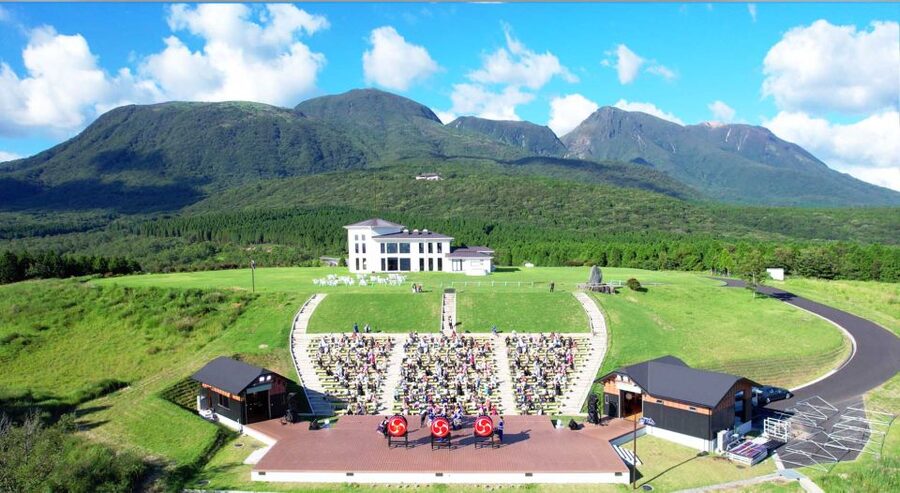
TAO-no-Oka’s altitude brings a real tradeoff. At 1,036 meters, weather can shift, temperatures can vary, and wind may be noticeable even when conditions seem mild elsewhere in Kyushu.
Bring a jacket. This advice is important even if the forecast looks pleasant. An outdoor theater gives you little shelter from cool air and wind, and you will enjoy the show more if you are dressed for the mountain rather than the valley.
Rain does not always mean cancellation. If rain or wind makes the outdoor performance unsafe, the show moves indoors instead. The organizers hold a special indoor performance in the hall on the second floor.
The indoor option protects your day from a complete washout, but it is not identical to the Skyward Stage. You lose the wide mountain view and the feeling of drums sounding into the open air. The hall also has no elevator or escalator, so the stairs may be a concern for anyone who cannot comfortably reach the second floor.
Indoor attendance is limited to 53 people, including eight standing places, and access is first come, first served at the time of reservation. That makes the weather plan more complicated than simply switching every ticket into an indoor seat. If the mountain weather looks unsettled, ask about the current arrangement before you arrive.
Judging the $30 price
At $30 per person, this is a fair price for a specialized cultural performance, especially because admission includes TAO House as well as the live show. You are paying for a theatrical production in an unusual setting, not just a short demonstration of taiko technique.
The value depends on what you want from the outing. If you already plan to visit the Aso-Kuju area, the performance adds a memorable cultural stop to your day. The mountain setting, the scale of the drumming, and the extra exhibits make the ticket feel more worthwhile than a standard indoor concert admission.
If you are traveling a long distance only for the show, transportation and food become part of the real cost. Since hotel transfers are not included and refreshments are limited, you need to budget for getting there and eating elsewhere or bringing your plans together around the visit.
The price also works well for people who want a clear, self-contained activity. You get a defined arrival point, a pre-show visitor area, a scheduled performance, and an end back at the meeting point. The outing does not require you to understand Japanese to appreciate its visual and musical force, though the listed language is Japanese.
Who will enjoy Drum TAO most
I would recommend this performance to several kinds of visitors.
Music lovers will appreciate the range of instruments and the enormous presence of wadaiko. The show offers more than repeated drum patterns, with flutes, string instruments, voices, and movement shaping the production.
Families and mixed-age groups may like the direct energy of the show. It does not depend on long spoken explanations, and the combination of rhythm, costumes, dance, and acrobatics gives different people something to watch.
Visitors interested in contemporary Japanese culture will see how traditional instruments can be used in a modern stage production. Drum TAO’s work respects the visual and musical power of Japanese performance while presenting it in a dramatic international style.
Photographers will enjoy the setting before and after the show, but not during it. Since recording is prohibited during the performance, you should come ready to watch rather than document every moment.
I would be more cautious about recommending it to anyone who needs a guaranteed outdoor show, a large choice of meals, or easy indoor access. The weather policy is sensible, but the indoor alternative has limited capacity and requires stairs.
Pets are not allowed, except for assistance dogs. Smoking is also prohibited on the site.
A practical plan for your visit
I would organize the outing this way:
- Arrange transport to TAO-no-Oka before the day of the show.
- Check the forecast, then bring a jacket regardless.
- Arrive at the white reception building 30 minutes before showtime.
- Allow time for TAO House, including the costume exhibit, video theater, cafe, and shop.
- Buy any needed drink or snack at TAO House, since outside food and beverages are prohibited.
- Confirm where the performance will be held if rain or strong wind is a concern.
- Keep phones and cameras away once the show begins.
- Return to the meeting point after the activity ends.
The order of your visit may vary, but these steps remove the main sources of stress. The biggest mistake would be arriving late, underdressed, hungry, and expecting an indoor city theater.
Booking is flexible in two useful ways. You can reserve now and pay later, and cancellation is available up to 24 hours in advance for a full refund. Those terms help if your Kyushu plans depend on weather or changing transport arrangements, though you should still confirm the current conditions before setting out.
Should you book TAO-no-Oka?
Book it if you want a powerful Japanese performance in a setting that is almost impossible to separate from the show itself. The strongest reasons are the mountain views, Drum TAO’s forceful wadaiko, and the mix of traditional instruments with dance and acrobatics.
Think twice if you need plentiful food, easy transport, guaranteed outdoor seating, or step-free access to the rainy-day hall. For most people who can handle those practical limits, the $30 ticket offers a memorable and distinctive stop in Kyushu.
FAQ
Where is TAO-no-Oka located?
TAO-no-Oka is in Taketa, in the Kyushu region of Japan, within the Aso-Kuju National Park area.
How much does the performance cost?
The listed price is $30 per person.
What does the ticket include?
The ticket includes entry to TAO House and a live Japanese taiko drum performance.
Is hotel transportation included?
No. Hotel pickup and drop-off are not included.
Where should I go when I arrive?
Visit the reception in the white building on the site at least 30 minutes before the live show.
What happens if it rains?
If rain or wind makes the outdoor show unsafe, the performance is held indoors instead.
Where is the indoor performance held?
The indoor show takes place in the hall on the second floor. There are no elevators or escalators.
How many people can attend the indoor performance?
The indoor performance can accommodate up to 53 people, including eight standing places, on a first-come, first-served basis at the time of reservation.
Can I bring food or drinks?
Outside food and drinks are prohibited. Items bought at TAO House may be consumed at your seat during the performance.
Can I take photos or videos?
No. Photography and video recording are not allowed during the performance.
Just added around Japan
- Kanazawa private half day/Photoshoot by professional photographer★ 5.0 · 38 reviews
- Osaka Food Tour with 10 Classic Japanese Tastings & Drinks★ 5.0 · 38 reviews
- Osaka: Highlights & Hidden Gems Private Walking Tour★ 4.7 · 38 reviews
- Tokyo Small Group Tour with Guide★ 4.5 · 38 reviews
- Tokyo 6hr Instagram Highlights Private Tour with Licensed Guide★ 5.0 · 38 reviews
- From Tokyo: Kamakura Private Customize Tour by Luxury Van★ 4.6 · 38 reviews
- Tokyo Sumo Experience with Live Show & Audience Challenge★ 5.0 · 38 reviews
- Kyoto: Private Customizable Day Trip by Car★ 5.0 · 38 reviews