
Reviewed · JDM CAR CULTURE TOURS
Tokyo: Daikoku JDM Car Meet & Night Car Culture Tour
Tokyo’s car scene comes alive after dark. This 3 to 4 hour outing links Daikoku Parking Area in Yokohama with A PIT Autobacs, Tatsumi Parking Area, and dramatic highway views. I especially like the small-group format and the chance to ride in a selected JDM, sedan, or performance van while guides such as Michael, Mori, Karim, and Sasha explain the cars and local culture. The main catch is simple: the car meet changes every night, and weather or police closures can affect what you see.
The tour begins in Shibuya and returns there, which makes it easy to fit into a Tokyo stay. I also like that this is not just a drive straight to Daikoku. The route includes the Rainbow Bridge, Odaiba, Tokyo Tower, Tokyo Skytree, Haneda Airport tunnels, and the Yokohama skyline. If you expect a nonstop parade of movie-style street racing, though, you may find the real scene calmer and less predictable.
In This Review
- Key points to know before booking
- Why Daikoku works best as a guided night out
- Starting in Shibuya and choosing your ride
- A PIT Autobacs: the best first stop for car fans
- Tatsumi Parking Area and Tokyo’s expressway culture
- Rainbow Bridge, Odaiba, and Tokyo after dark
- The Wangan drive to Daikoku Parking Area
- One hour at Daikoku: what you may actually see
- Returning through Yokohama and central Tokyo
- Who will enjoy this most
- Is $99.49 good value?
- Should you book the Daikoku night tour?
- FAQ
- Where does the tour begin?
- Where does the tour end?
- How long does the tour last?
- How much does the experience cost?
- What vehicles can I choose from?
- How large is the group?
- Does every tour visit Daikoku?
- Can I request a specific car at the meet?
- What happens if bad weather cancels the tour?
Key points to know before booking
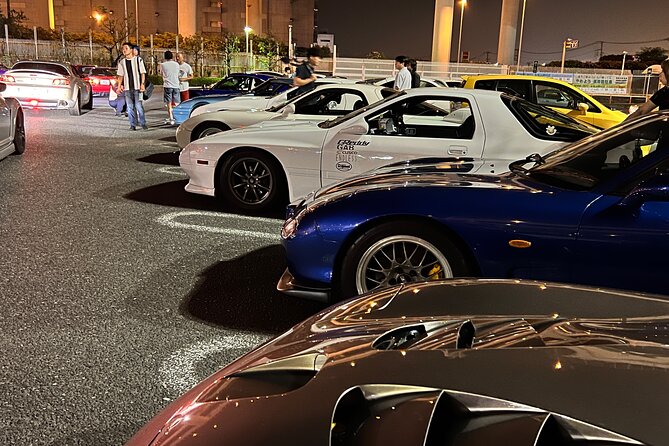
- Daikoku is the main event: You get about an hour at Yokohama’s famous car gathering point, where JDM, European, American, classic, modern, and highly modified cars may appear.
- A PIT Autobacs adds substance: This flagship automotive store is a fun stop for parts, accessories, car goods, and browsing even when the meet is quiet.
- The drive is part of the tour: Rainbow Bridge, Tokyo Tower, Tokyo Skytree, Haneda, Yokohama Bay Bridge, and Minatomirai provide views you cannot get from a train.
- Saturday usually offers the best odds: Weekend nights can bring a larger turnout, but no specific car or crowd size is promised.
- Your guide matters: Michael, Mori, Karim, and Sasha are praised for friendly conversation, car expertise, and safe driving.
- Vehicle choice affects comfort: JDM legend cars are appealing to enthusiasts, while the premium sedan and performance van make more sense for families or groups.
Why Daikoku works best as a guided night out
Daikoku Parking Area is not a normal sightseeing stop. It sits beside Yokohama’s expressway network and is known as a gathering place for car owners. Getting there on your own is awkward, and the activity at the lot is never fixed. That makes a guide useful, not just for transport but for helping you understand what you are seeing.
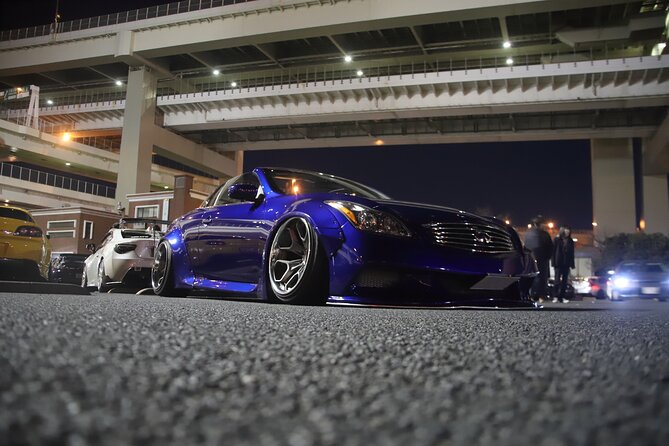
You may find tuned Japanese sports cars, older classics, luxury vehicles, European performance cars, and even American models. The mix is part of the appeal. This is Japanese car culture, but it is not limited to cars built in Japan.
The tone is generally relaxed. Some people arrive to show a car, some stop during a highway loop, and some simply look around. You are not promised a particular Skyline, RX-7, Supra, or other famous model. Social media can create the impression that Daikoku is always packed with spectacular cars. In reality, the turnout depends on the night, weather, time, and local conditions.
That unpredictability is worth understanding before you pay. If you want a guaranteed photograph with one specific model, this is the wrong activity. If you enjoy the possibility of seeing something unusual while talking cars with an enthusiast, it makes much more sense.
More JDM car culture tours in Tokyo:
- GT-R35 800hp Club Membership – secret underground car meet
★ 4.8 · 998 reviews - Tokyo: Daikoku JDM Car Meet & Night Car Culture Tour
★ 4.8 · 626 reviews - Secret Car Meet: R34 Skyline Car Club Membership
★ 4.8 · 494 reviews
Starting in Shibuya and choosing your ride
The meeting point is on Dōgenzaka in Shibuya, at 2-chōme 29-8, near public transportation and a short distance from Shibuya Crossing. Allow extra time to arrive, especially during after-work traffic. A late taxi or crowded road can make a tight meeting schedule stressful.
The price is $99.49 per person. That is a fair price for several hours of transport, a guide, multiple stops, and a return to central Tokyo. You are not paying only for admission to Daikoku, which is free. You are paying to reach an inconvenient location, avoid arranging transport yourself, and get context during the drive and at each stop.
Vehicle selection is important. The available categories include a JDM Legend car, a Performance Van, and a Premium Sports Sedan. The exact vehicle depends on the option you reserve and availability. The sedan offers comfort and room for conversation, while the van is the practical choice for families and groups.
Groups of four or five should book the small-group Performance Van option. The operator has two luxury vans with comfortable space for five and a maximum capacity of six. For larger bookings, up to 10 people can join, but the group may be split during the road portions.
Families can request a booster seat. Small folding strollers may fit in the sedan and van, depending on size. If you select an RX-7, pay attention to the seating note: the rear seat is best for people under 170 centimeters with a slim build, and the front is recommended for those under 185 centimeters.
A PIT Autobacs: the best first stop for car fans
The first scheduled stop is A PIT Autobacs in Koto. The ride there takes about 25 minutes, followed by roughly 25 minutes in the store.
This is Autobacs’ flagship location, and it gives you a useful look at car culture beyond the parking lot. You can browse automotive parts, accessories, merchandise, and related goods. Even if you are not planning to buy anything, the store helps explain how much attention Japanese drivers give to customizing and maintaining their cars.
It is also a good warm-up for the meet. You can look at products, ask your guide about modifications, and get into the mood before heading onto the expressways. Some cars connected with the wider scene may also be seen around the store, though specific sightings are not guaranteed.
The limitation is time. About 25 minutes is enough for a look around, but not for a slow shopping trip. If you find something you want to study or purchase, you may need to keep moving so the rest of the route stays on schedule.
On some days, A PIT Autobacs is replaced by Umihotaru or Gaienmae. The exact weekday route can change, but Daikoku remains part of the experience.
Tatsumi Parking Area and Tokyo’s expressway culture
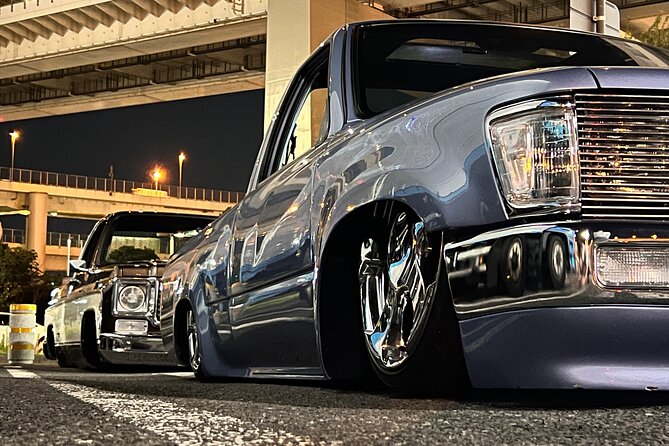
The next stop is Tatsumi No. 1 Parking Area, reached by a quick ride of about 10 minutes. The planned stop lasts around 15 minutes.
Tatsumi is smaller than Daikoku, but it has its own role in Tokyo’s car culture. Enthusiasts often pause here while making loops on the metropolitan expressway system. It is less about a huge gathering and more about seeing how these parking areas function as casual meeting points.
Do not expect the same crowd size as Daikoku. On a rainy evening, the stop may be brief. That is not necessarily a problem. Tatsumi gives you another setting and another chance to see cars without pretending every parking area is a major show.
The highway ride between stops is part of the fun. Your guide can point out how the C1 Loop and Wangan routes connect different parts of Tokyo and Yokohama. The experience is a moving tour, so you see the city from the road rather than from a subway platform or observation deck.
A few more Tokyo experiences worth weighing up
- Tokyo Night Foodie Tour in Shinjuku – Seasonal Sushi, Wagyu Beef
★ 5.0 · 1,161 reviews - Tokyo After 5: Authentic Japanese Food & Drink Night Tour
★ 4.5 · 560 reviews - Tokyo: Samurai Entertainment Night Show in Kanda Shrine
★ 4.6 · 417 reviews - The Dark Side of Tokyo – Night Walking Tour Shinjuku Kabukicho
★ 4.5 · 297 reviews
Rainbow Bridge, Odaiba, and Tokyo after dark
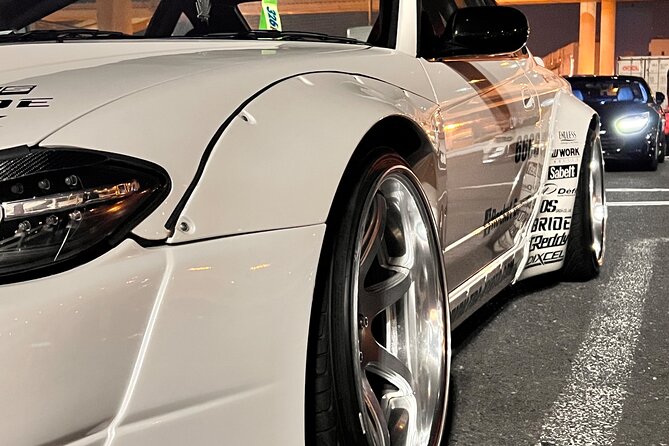
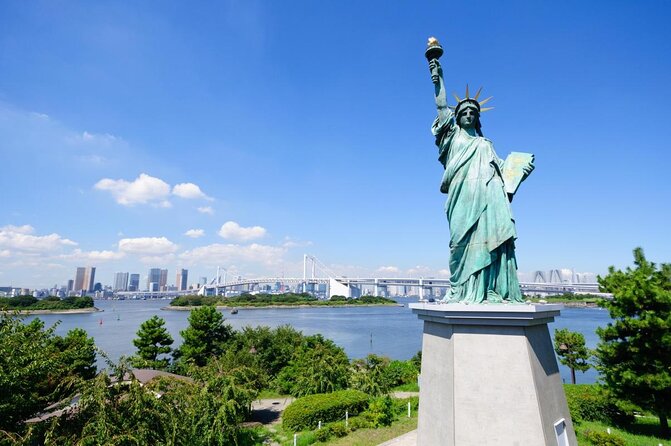
The route crosses the Tokyo Rainbow Bridge, with views toward Odaiba, the man-made island filled with homes, shopping, and leisure attractions. From the car, you may see the unusual Fuji TV building and the lights around the waterfront.
This is one of the tour’s strongest features for anyone who is only partly interested in cars. The views arrive naturally as part of the drive, rather than as a separate sightseeing stop. You are seeing Tokyo at street level and highway level, with bridges, towers, ramps, and port areas passing by the windows.
The return crossing from the Odaiba side gives another angle on Tokyo’s skyline. The changing direction matters because the city looks different on the way back. You may also see Tokyo Tower from the C1 Loop, which is a memorable night view even if you have already visited the tower itself.
The route can include views of Tokyo Skytree along the Furukawa Line. At another point, the vehicle passes through tunnels beneath Haneda Airport’s runways. If timing and conditions are right, you may see aircraft taxiing above as you enter the tunnels.
These moments are not staged photo stops. You are looking through the vehicle while moving, so photography may be difficult. Still, they help make the tour feel like a broad Tokyo and Yokohama night drive, not a single-purpose car pickup.
The Wangan drive to Daikoku Parking Area
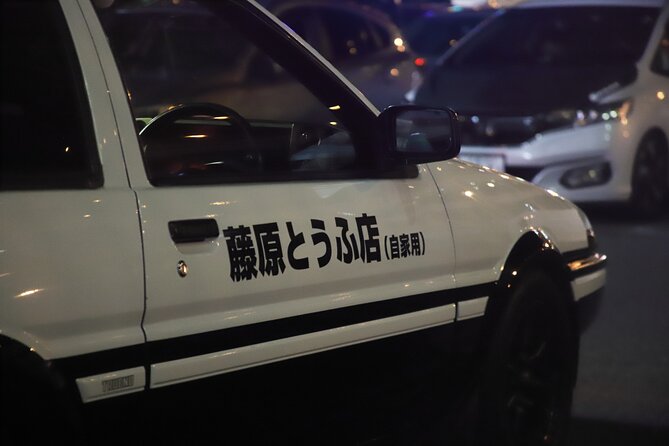
The ride to Daikoku takes about 40 minutes and follows the Wangan Highway, a long straight expressway linking Tokyo and Yokohama. The guide fills the ride with conversation about cars, engineering, local routes, and Japanese car culture.
The drive is a major part of the experience, especially in a performance-oriented vehicle. Some people enjoy the sense of power and acceleration, but safety remains important. The most positive accounts repeatedly praise the guides for delivering an exciting ride while driving carefully, including during poor conditions such as the first snowfall of the season.
You should not book this expecting illegal racing or a staged street-racing show. The route has cultural meaning because of its place in car lore, but the actual outing is a guided road trip. The real pleasure is the combination of roads, machines, views, and conversation.
Before reaching the parking area, the route offers a view of Yokohama Bay Bridge and the Yokohama skyline. You may also see cruise ships in the port. That approach helps build anticipation, with the city lights and industrial waterfront setting the scene.
One hour at Daikoku: what you may actually see
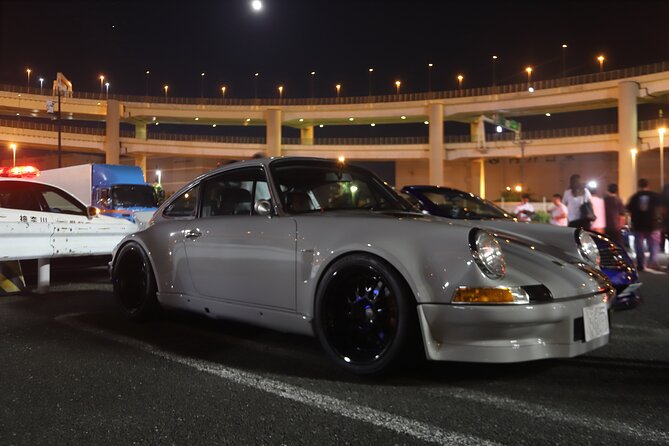
The planned visit at Daikoku lasts about 60 minutes, including the ride and stop time shown for this part of the route. That gives you enough time to walk around, examine cars, take photographs, and talk with your guide without turning the visit into a rushed five-minute pause.
The collection can include Japanese performance cars, classic models, newer sports cars, luxury vehicles, European cars, and American cars that are less common in Japan. The variety is often more interesting than a single theme. You may see polished show cars beside ordinary enthusiast vehicles, each reflecting a different owner and style.
Your guide is especially useful here. Michael is praised for car and engineering knowledge, while Mori, Karim, and Sasha are described as warm, easy to talk with, and passionate about the subject. A strong guide can explain what makes a modification notable, place a model in context, and help your family or non-car companion feel included.
Conditions can change fast. Daikoku may be quiet on one night and crowded on another. Police have also closed the area during a large gathering, which can end the stop early or change the mood. That can feel disappointing if you expected a fixed show, but it is also a reminder that this is a working parking area, not a permanent attraction built for tourists.
Weather matters too. The tour requires good weather, and poor conditions can lead to a different date or a full refund. Rain may reduce the number of cars and make it less pleasant to stand outside. Saturday night is generally the strongest choice if your schedule allows, but even then, the operator cannot guarantee a particular turnout.
Returning through Yokohama and central Tokyo
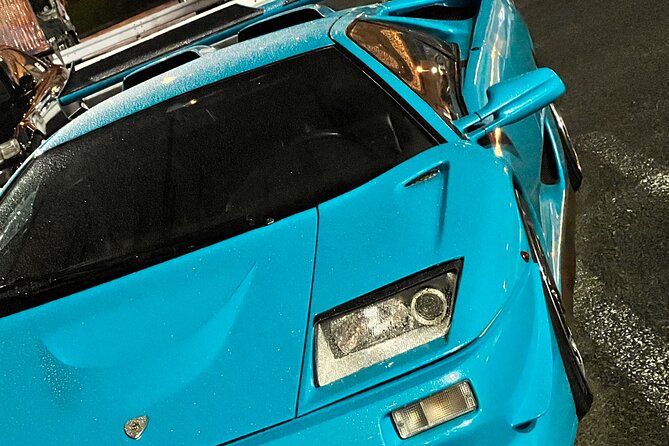
The return trip includes views of Yokohama’s Minatomirai area, the port, and the city skyline. You then cross the Rainbow Bridge again and continue toward Shibuya, with possible views of Tokyo Tower from the expressway.
The ride back takes about 45 minutes according to the route timing. After several hours of looking at cars, that drive gives you time to chat with the guide and compare the stops. The tour finishes at the original Shibuya meeting point.
One useful detail appears in the practical experience of the operator: a guest staying in Yokohama was dropped near the hotel because it was close to the company’s base. Do not assume that is included for every booking, but it is worth asking before the tour if your accommodation is outside central Tokyo.
Who will enjoy this most
This is an easy choice for a serious JDM fan, especially if you want more than a museum visit. Teenagers, young adults, parents, and car-focused families have all found the mix of driving and real-world car culture appealing.
It also works for someone who only wants a different view of Tokyo. The bridges, expressways, waterfront, skyline, and airport tunnels give you sights that trains do not provide. You do not need to identify every engine or know the difference between every trim level to enjoy the night.
The tour is less suitable if you dislike sitting in a vehicle for long stretches, want a guaranteed show, or prefer a quiet evening with little conversation. The guides are passionate, and car talk is a central part of the outing. One less enthusiastic participant may feel that the tour is too focused on vehicles, even though the route includes plenty of city scenery.
Is $99.49 good value?
At $99.49, I consider this good value for the right audience. Daikoku itself is free, but reaching it independently is inconvenient, and the tour adds three other car-related locations plus a substantial night drive.
You also receive the guide’s time, vehicle costs, highway travel, and explanations. The small-group approach makes the price easier to justify than a large coach excursion. A private option is available if you want more control over the pace and conversation.
The value drops if your only goal is to see a specific car. No operator can control which owners arrive, how long they stay, or whether police close the lot. Think of the price as payment for access to the route and culture, not a ticket to a guaranteed automobile exhibition.
Free cancellation is available up to 24 hours before the start time. Cancellations within 24 hours are not refunded, and changes inside that window are not accepted. Check the weather forecast and meeting time carefully before committing.
Should you book the Daikoku night tour?
Book it if you like cars, want to see Tokyo from the expressway, and are happy with an unscripted evening. The strongest reasons are the guide quality, the comfortable vehicle choices, the extra stops at A PIT and Tatsumi, and the chance to combine Tokyo views with a real enthusiast gathering.
Choose a Saturday night when possible, arrive early in Shibuya, and keep your expectations grounded. You may see an extraordinary mix of cars, or a quieter group than hoped. Either way, the best version of this tour is not a staged spectacle. It is a safe, informed ride into a part of Tokyo and Yokohama that is difficult to reach on your own.
FAQ
Where does the tour begin?
The meeting point is at Dōgenzaka 2-chōme 29-8 in Shibuya, Tokyo, near public transportation.
Where does the tour end?
The experience returns to the original meeting point in Shibuya.
How long does the tour last?
The tour lasts approximately 3 to 4 hours.
How much does the experience cost?
The listed price is $99.49 per person.
What vehicles can I choose from?
Available options include a JDM Legend car, Performance Van, or Premium Sports Sedan, based on the selection you book.
How large is the group?
The maximum group size is 10 people. The luxury vans are comfortable for five and can carry up to six, so larger groups may be split during road portions.
Does every tour visit Daikoku?
Yes. The weekday route may substitute Umihotaru or Gaienmae for A PIT Autobacs or Tatsumi, but all experiences visit Daikoku.
Can I request a specific car at the meet?
Specific car sightings cannot be guaranteed. The cars present depend on the night, weather, and other changing conditions.
What happens if bad weather cancels the tour?
If poor weather causes cancellation, you will be offered a different date or a full refund. You can also cancel for a full refund up to 24 hours before the experience starts.
Just added around Tokyo
- Tokyo Small Group Tour with Guide★ 4.5 · 38 reviews
- Tokyo 6hr Instagram Highlights Private Tour with Licensed Guide★ 5.0 · 38 reviews
- Tokyo Sumo Experience with Live Show & Audience Challenge★ 5.0 · 38 reviews
- Very popular in Harajuku♡Animal petting zoo★ 4.6 · 39 reviews
- Japanese Food Cooking Class in Asakusa, Tokyo★ 5.0 · 39 reviews
- Ramen Making from Scratch with Tokyo Mom(Vegan Option Available)★ 5.0 · 39 reviews
- Tokyo: Kimono Rental inside Shinjuku Gyoen National Garden★ 4.9 · 39 reviews
- Tokyo JDM Night: 600hp C63s AMG Edition 1 (Private)★ 4.9 · 39 reviews
JDM Car Culture Tours, compared.
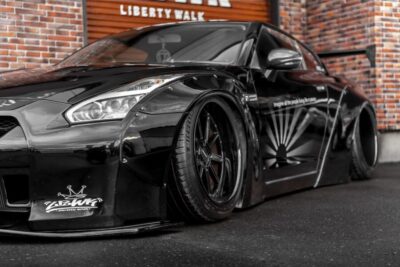
GT-R35 800hp Club Membership – secret underground car meet
Read our review →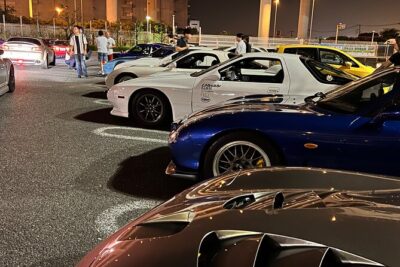
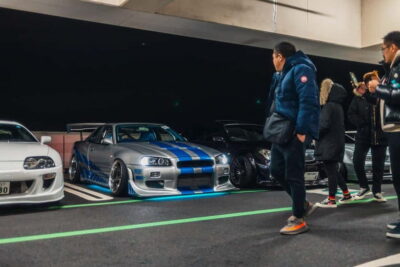
Secret Car Meet: R34 Skyline Car Club Membership
Read our review →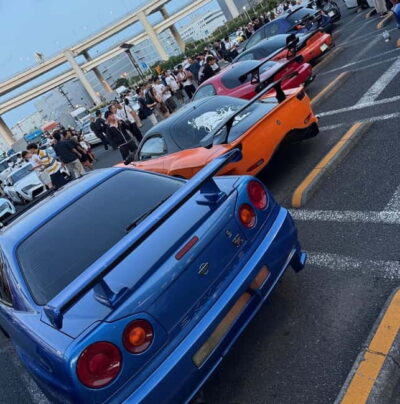
EVO, WRX, Skyline – JDM Night Run to Daikoku Car Meet
Read our review →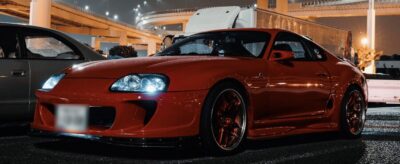
Tokyo Drift: Daikoku PA Supreme Car Experience 大黒PA
Read our review →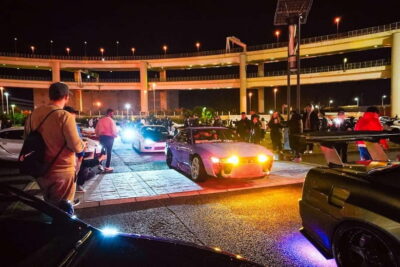
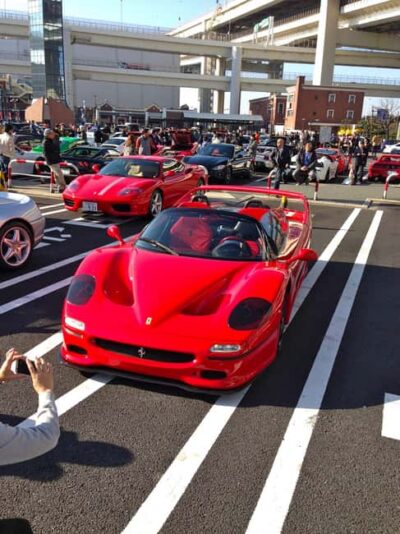
Go Daikoku PA Fast & Furious 3 Sports Car Meetup
Read our review →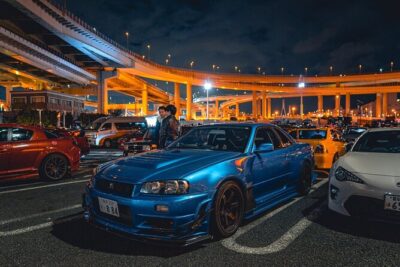
Browse the lists this tour appears in