
Reviewed · GO-KARTS
Tokyo: Premium Go-Kart Tour with Tower & Shibuya Crossing
Tokyo traffic becomes your sightseeing route. This 75 to 105-minute go-kart tour takes you past Tokyo Tower, through Roppongi, along Omotesando, and into the famous Shibuya Crossing. I like the open-air view and the way an English-speaking guide keeps the group together, while the included photos mean you can enjoy the ride instead of fumbling with a phone.
I also like the small-group format, limited to eight people, and the cheerful costume option. The main catch is serious: you need the correct hard-copy driving permit before you leave home. Rain can also force a reschedule, and the petrol fumes from the kart ahead may bother you.
In This Review
- The ride in a nutshell
- What this Tokyo go-kart tour feels like
- Getting ready at the starting point
- Roppongi puts you into central Tokyo
- Tokyo Tower supplies the big photo moment
- Shibuya Crossing is the main event
- Omotesando adds a stylish change of pace
- Daytime or evening: choose your mood
- The guide makes or breaks the ride
- What the $116 price really buys
- The license rules are not optional
- Who should book this experience?
- Should you book the Tokyo go-kart tour?
- FAQ
- How long does the Tokyo go-kart tour last?
- What sights are included on the route?
- Is an English-speaking guide included?
- How many people are in each group?
- What driving permit do I need?
- Can I wear a costume?
- What happens if it rains?
The ride in a nutshell

- Shibuya Crossing from the driver’s seat: See one of Tokyo’s best-known intersections while sitting only a few inches above the road.
- Tokyo Tower photo stop: The tower gives your guide a strong backdrop for the included pictures.
- A guide-led city route: You follow an English-speaking instructor through Roppongi, Omotesando, and other central districts.
- Costumes add comic relief: Choose from cute outfits if you want your group photos to look less like ordinary sightseeing shots.
- Small groups keep things manageable: With no more than eight participants, the guide can watch the line and check on drivers.
- A real legal requirement: Japan accepts only certain licenses and permits, with no soft-copy shortcuts.
What this Tokyo go-kart tour feels like
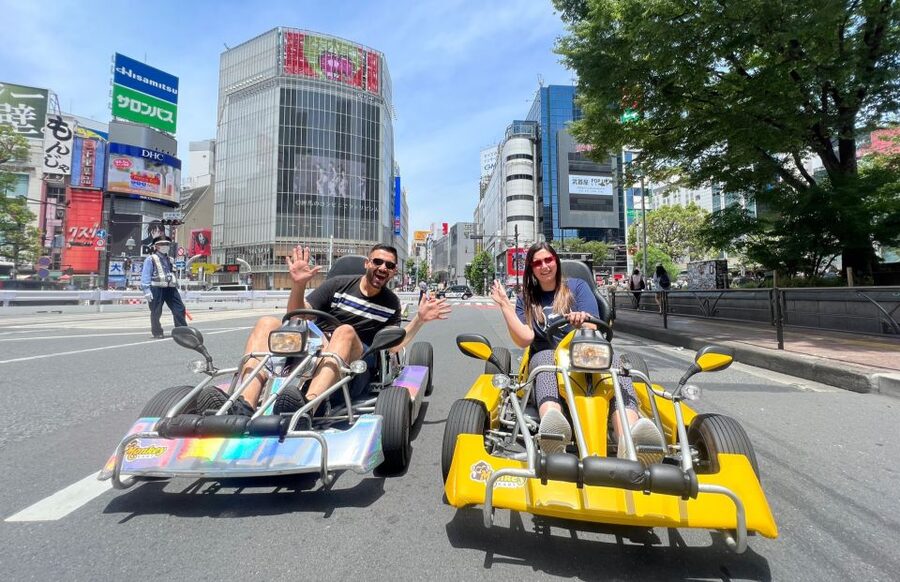
This is not a quiet way to see Tokyo. You are not tucked behind a bus window or walking in a neat line behind a flag. You are low to the pavement, exposed to the city air, and moving through ordinary traffic with a guide at the front.
That low seating position changes your sense of speed. Even speeds that are modest by car standards can feel quick when the road is close to your elbows. One participant described the tunnel section as especially fast, while another reported reaching around 50 kilometers per hour. The exact pace depends on traffic, road conditions, and the guide, but you should expect an active ride rather than a gentle sightseeing circuit.
The route is limited to eight people. That matters in Tokyo, where a large group could easily become awkward at lights and intersections. Your guide leads the route, controls the pace, and uses hand signals to help the group stay together. Guides such as Gus, Ren, Yumi, Shin, Rafael, Pancho, and Andres have been praised for clear instructions, safety checks, photo skills, and friendly conversation.
The experience is built around fun, but it is not presented as a race. You drive behind the instructor, follow the rules of the road, and keep your attention on traffic. The best approach is to treat the kart as your unusual sightseeing vehicle, not as a chance to recreate a video game.
More go-kart sessions in Tokyo:
- Flagship 2-Hours Official Street Go-Kart Tour – Tokyo Bay Shop
★ 5.0 · 4,974 reviews - Official Street Go-Kart in Shibuya
★ 5.0 · 3,435 reviews - Official Street Go-Kart Tour – Akihabara
★ 5.0 · 1,578 reviews
Getting ready at the starting point
Your meeting point can change according to the option you book, so check the exact location carefully. At the start, staff welcome you, explain the kart controls, and give a safety briefing before you head onto public roads.
That briefing is important, especially if you have never driven a go-kart in traffic. One guide, Andreas, was praised for explaining hand signals clearly. Another guide, Ren, helped nervous first-time drivers feel at ease. You will want to listen closely, since the group depends on everyone responding to the same signals and keeping formation.
Costumes are included, not rented as a separate extra. The available outfits add a playful touch to the ride, with some people choosing character-style costumes for family photos. This is optional, and you can skip it if you prefer a more ordinary appearance.
You also receive a go-kart, petrol, an instructor, photos, one hard-copy photo, and an action-camera or Insta360 mount. An action camera itself is not included, so bring your own only if you want that extra footage. A Bluetooth speaker is also excluded.
Wear clothes that are comfortable for sitting low and riding outside. The supplied information does not specify protective clothing or seasonal gear, so plan for Tokyo’s weather rather than assuming the costume will keep you warm or dry.
Roppongi puts you into central Tokyo
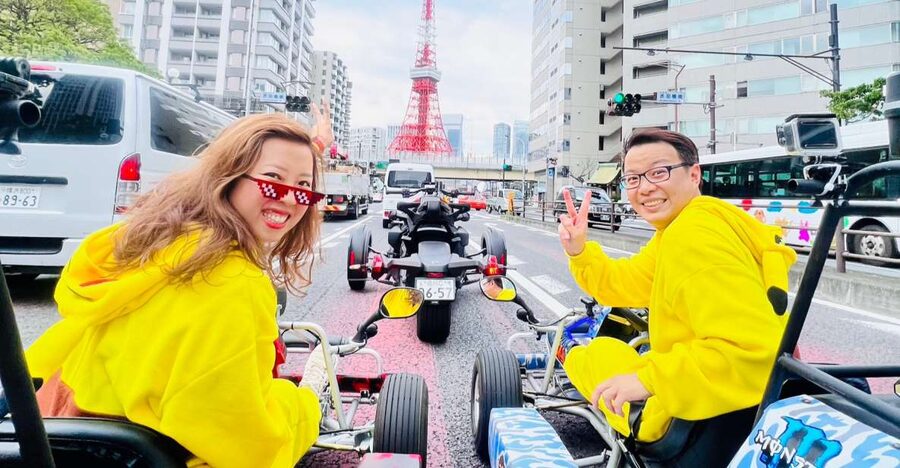
Roppongi is one of the first major districts named on the route. It is a useful opening section because it places you in central Tokyo quickly, with city traffic and tall buildings around you.
From a kart, you notice the street at a different height. Cars feel larger, traffic lights feel more immediate, and pedestrians are close enough to wave. Several people on the tour have enjoyed the friendly reactions from sidewalks, buses, taxis, and other cars. You may find yourself waving back between traffic signals.
This part of the tour is less about stopping for a formal attraction and more about getting a feel for Tokyo as a working city. You are seeing the streets in motion, not just collecting landmark photos. Your guide may share brief facts while the group is stopped at lights, as Shin did for one group, but the activity remains a driving tour first.
The drawback is that traffic can affect the rhythm. A stop at a red light may give you a chance to look around, but it also means the tour cannot move at a perfectly steady pace. You need to accept a little waiting, merging, and concentration as part of the experience.
Tokyo Tower supplies the big photo moment
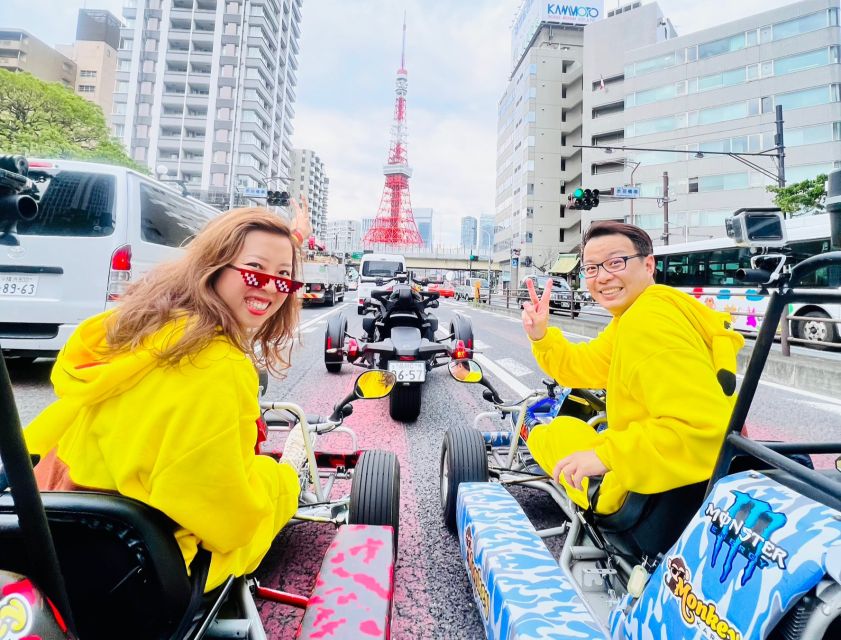
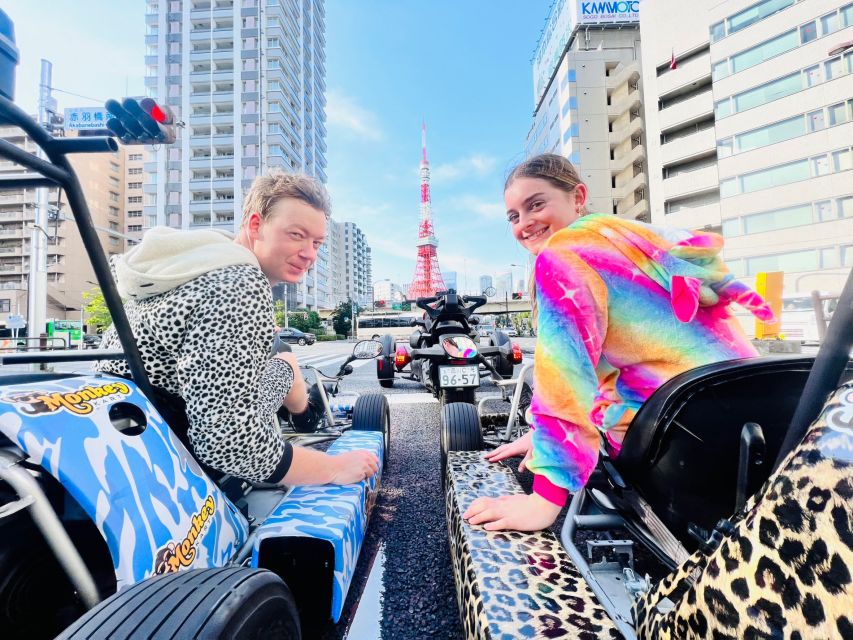
Passing Tokyo Tower is one of the strongest visual points on the route. The red and white tower gives the guide a clear target and creates a memorable background for group photos.
This is where the included photography earns its keep. You are unlikely to take good pictures while driving, and stopping to handle a camera would distract from the road. The guide can focus on timing and composition while you focus on driving and enjoying the view.
The photo service is not merely a small extra. It changes the feel of the tour. You can dress up, pass a famous landmark, and leave with a record of the moment instead of relying on a rushed selfie. Photos are shared after the ride by AirDrop or email, and the package also includes one hard-copy photo.
Do not expect a full professional portrait session at every landmark. The available information promises photos at key locations, not a fixed number of images or a private photographer. Still, guides such as Gus and Lewis have been praised for taking many pictures, while Yumi was noted for combining photo skills with a warm manner.
A few more Tokyo experiences worth weighing up
- Mt Fuji and Hakone 1-Day Bus Tour Return by Bullet Train
★ 5.0 · 26,383 reviews - 1-Day Tokyo Bus Tour
★ 5.0 · 14,250 reviews - Tokyo: TOKYO SKYTREE® Admission ticket
★ 4.5 · 11,192 reviews - Tokyo: teamLab Planets TOKYO Digital Art Museum Entry Ticket
★ 4.6 · 9,779 reviews
Shibuya Crossing is the main event
For most people, Shibuya Crossing is the reason to book. The intersection is famous for the wave of pedestrians that crosses in several directions when the lights change. Experiencing it from a go-kart gives you a view few normal tours can match.
You are not simply looking at the crossing from a nearby observation point. You are part of the street scene, following the guide across the intersection with the city watching from the sidewalks. The effect is especially strong after dark, when Tokyo’s signs and building lights make the ride feel more theatrical.
The crossing can also feel intense. You are managing the kart, watching the guide, following traffic signals, and taking in a large crowd at once. If you dislike driving in busy city traffic, this may be the section that tests you most. The safety briefing and small group help, but they do not remove the need to pay attention.
Bookers can often choose an option focused on Shibuya Crossing, and the meeting point or exact route may vary by selection. Check the duration as well: the activity is listed at 75 to 105 minutes, so longer versions can provide a broader loop around Tokyo.
Omotesando adds a stylish change of pace
Omotesando brings a different mood to the route. Its broad, fashionable avenues contrast with the concentrated spectacle of Shibuya Crossing.
This is a good stretch for simply looking around. You can see Tokyo’s polished side while moving through the city rather than stopping in one district. The open kart keeps you connected to street sounds, traffic, and passing buildings.
Do not expect a walking tour with long explanations at every stop. The instructor’s main job is to lead safely. Guides may share information while waiting at lights, but the value here is the moving view and the feeling of linking several districts in one ride.
That distinction helps you choose. If you want detailed architecture commentary, this is not the best fit. If you want a lively route that covers central Tokyo in a short time, it works well.
Daytime or evening: choose your mood
An evening departure can make the tour feel more dramatic. Tokyo’s lights, Shibuya’s screens, and the illuminated city create the setting for the strongest photos and the biggest sense of occasion.
Night rides may also make the speed feel more pronounced. One participant described the evening route as unbelievable, while others enjoyed the feeling of moving through the city after dark. You should still dress for the weather and remember that the kart is open to the air.
Daytime gives you clearer views of the streets and buildings. It may suit you if you want to see details rather than chase the glow of Tokyo at night. The best choice depends on your priorities: night for atmosphere, day for visibility.
Rain is a real planning issue. The operator may reschedule the activity when conditions are poor. A flexible cancellation policy allows a full refund when you cancel at least 24 hours ahead, and some bookings can be moved after rain affects the original time. Do not leave the permit or the booking until the last minute, though. A weather change is easier to manage when your schedule has some room.
The guide makes or breaks the ride
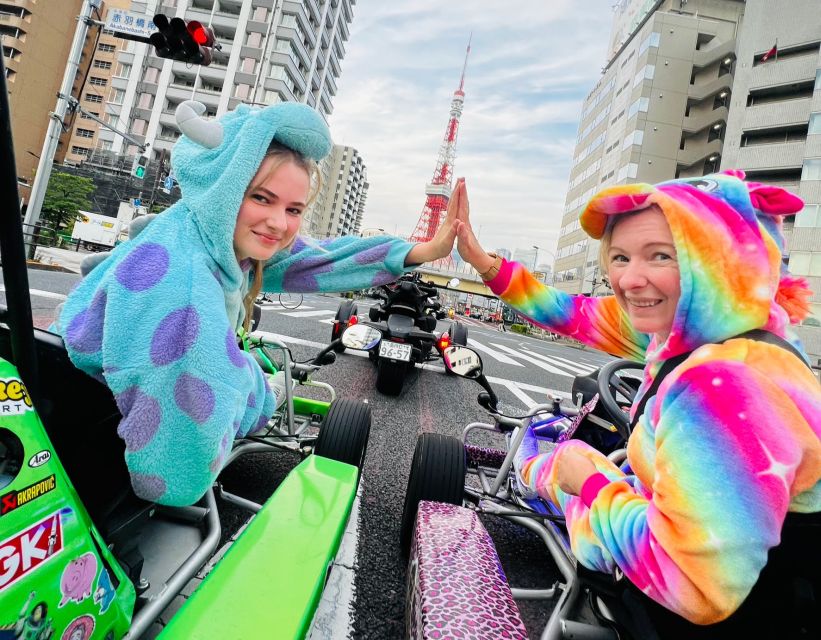
A guided go-kart tour depends heavily on the person at the front. The instructor sets the pace, explains signals, watches the group, and often handles the photography.
The strongest guide comments focus on four things: clear safety instructions, calm traffic management, useful facts, and frequent checks on the group. Gus was praised for being thoughtful and safety-minded. Rafael was described as personable, while Pancho kept groups together and helped drivers feel secure. Yumi and Ren were also praised for friendly service and strong pictures.
One useful detail is that guides sometimes time red lights so the group can gather at key points. That helps keep the line from breaking up and gives you short pauses to hear information or pose for photographs.
The service may not always run perfectly on the clock. One participant reported a delay of about an hour. That appears to be an isolated complaint within a very positive set of feedback, but it is still practical advice: avoid scheduling an important dinner, show, or train connection immediately after the ride.
What the $116 price really buys
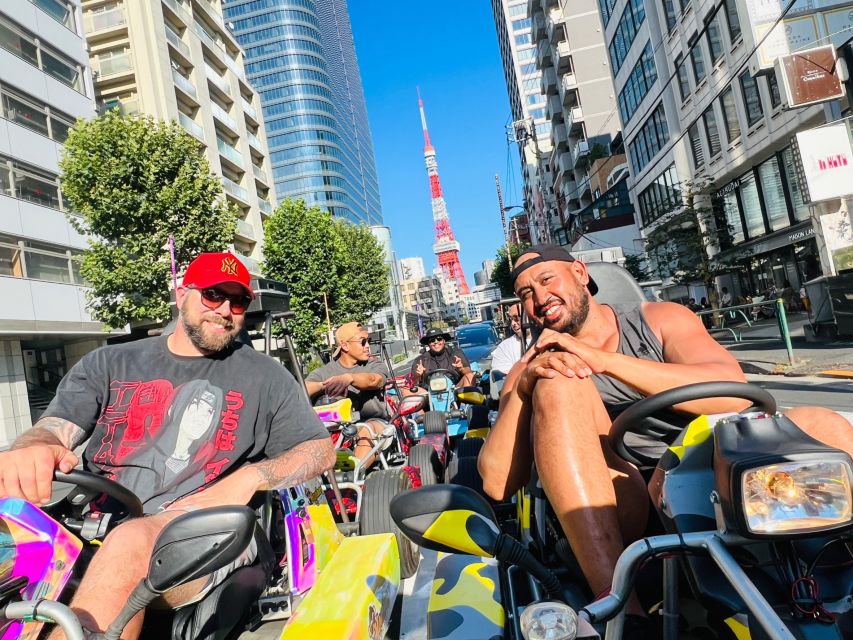
At $116 per person, this is not a cheap way to move around Tokyo. You are paying for a guided public-road activity, not just a kart rental.
The value comes from the package:
- Go-kart and petrol
- English-speaking instructor
- Safety briefing and guided route
- Costume choice
- Photos sent by AirDrop or email
- One hard-copy photo
- Mount for an action camera or Insta360
- Small group capped at eight participants
The included photo service is especially useful because you cannot safely photograph yourself while driving. The costume option also adds something that a standard city tour does not provide.
The price makes more sense if you want an experience, not a checklist of sights. You could see Tokyo Tower, Omotesando, Roppongi, and Shibuya by other means, but this tour combines them with the novelty of driving. If you care only about museum time, neighborhood walks, or detailed commentary, spend the money elsewhere.
Remember that your own action camera and Bluetooth speaker are not included. You also need to secure the correct permit at your own expense before arriving in Japan.
The license rules are not optional
This is the most important practical point. Every driver must carry a hard-copy paper booklet of a 1949 Geneva Convention International Driving Permit issued by an official agency in their country, such as AAA, AA, CAA, or another approved organization.
A digital file, phone image, or online copy is not valid. A 1968 Vienna Convention permit is not recognized, and permits issued by FIA, IDA, or IAA are also not accepted under the stated rules.
Drivers from France, Switzerland, Taiwan, Germany, Monaco, and Belgium need a Japanese translation of their local license. The physical translation can be obtained through the Japan Automobile Federation, known as JAF.
The information also warns that permits from Indonesia, Pakistan, Saudi Arabia, Mexico, Brazil, Costa Rica, Colombia, Kuwait, Qatar, and some other countries may not be accepted. Check whether your country issues the required 1949 permit before booking. Bring your passport and international driver’s license, and note that drivers must be over 18.
If you arrive without the right document, having a normal license or a digital permit will not solve the problem. This is the one detail that can turn an exciting booking into a very expensive disappointment.
Who should book this experience?
I would recommend it to couples, friends, families with young adults, and first-time visitors who want a memorable introduction to Tokyo’s main districts. It also suits people who enjoy driving and do not mind a little exposure to traffic, weather, and city noise.
It can work well for a group of friends because the costumes and photos give you a shared joke to carry through the rest of the trip. Solo participants can also have a good time. One person who booked alone described the experience as feeling almost private.
I would think twice if you are pregnant, do not have a valid driving license, or feel uneasy driving in busy urban traffic. The ride can be exhilarating, but it is not a passive sightseeing activity. You need to stay alert and follow instructions.
Should you book the Tokyo go-kart tour?
Book it if you want Tokyo to feel like an event rather than a list of stops. The strongest reasons are the low street-level view, the Shibuya Crossing route, the Tokyo Tower photos, and the guides who are repeatedly praised for safety and clear instruction.
Before paying, confirm three things: your license meets Japan’s exact rules, you can handle a 75 to 105-minute outdoor ride, and your schedule allows for a possible weather change or delay. Choose the longer route if you want more of the city, and consider an evening time for the most dramatic lights.
At $116, it is a splurge. But for the right person, the kart, guide, costumes, fuel, and photo package turn a familiar sightseeing route into one of the trip’s most memorable activities. Just bring the correct paper permit. Tokyo has plenty of surprises, and an invalid license should not be one of them.
FAQ
How long does the Tokyo go-kart tour last?
The experience lasts between 75 and 105 minutes. Available start times depend on the option selected.
What sights are included on the route?
The route includes areas such as Roppongi, Shibuya Crossing, and Omotesando, with a pass by Tokyo Tower. The exact meeting point and route may vary by booking option.
Is an English-speaking guide included?
Yes. An English-speaking instructor leads the group, gives the safety briefing, and manages the route.
How many people are in each group?
The activity is limited to eight participants, making it a small-group tour.
What driving permit do I need?
You need a hard-copy paper booklet of a 1949 Geneva Convention International Driving Permit issued by an official agency in your country, or another license approved under Japanese law. Soft copies and 1968 Vienna Convention permits are not valid.
Can I wear a costume?
Yes. Costumes are included and available as an optional part of the experience.
What happens if it rains?
The tour may be rescheduled because of rain. You can also cancel up to 24 hours in advance for a full refund under the stated cancellation policy.
Just added around Tokyo
- Tokyo 6hr Instagram Highlights Private Tour with Licensed Guide★ 5.0 · 38 reviews
- Tokyo Small Group Tour with Guide★ 4.5 · 38 reviews
- Tokyo Sumo Experience with Live Show & Audience Challenge★ 5.0 · 38 reviews
- Very popular in Harajuku♡Animal petting zoo★ 4.6 · 39 reviews
- Japanese Food Cooking Class in Asakusa, Tokyo★ 5.0 · 39 reviews
- Ramen Making from Scratch with Tokyo Mom(Vegan Option Available)★ 5.0 · 39 reviews
- Tokyo: Kimono Rental inside Shinjuku Gyoen National Garden★ 4.9 · 39 reviews
- Tokyo JDM Night: 600hp C63s AMG Edition 1 (Private)★ 4.9 · 39 reviews
Go-Karts, compared.
Flagship 2-Hours Official Street Go-Kart Tour – Tokyo Bay Shop
Read our review →
FAST&FURIOUS EXPERIENCE Tokyo Car Club membership
Read our review →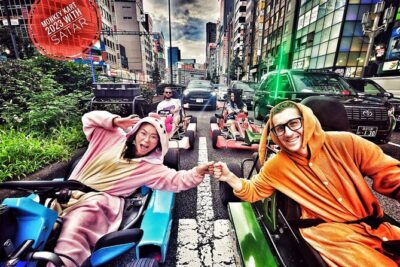
Tokyo Go Kart: Asakusa, Skytree, and Akihabara **IDP MUST**
Read our review →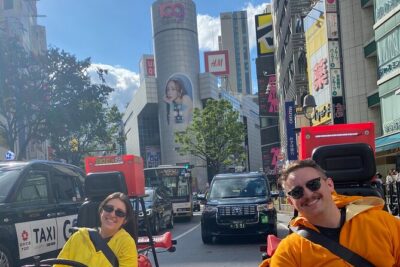
Shibuya Official Street Go-Kart in Shibuya Annex
Read our review →Browse the lists this tour appears in