Reviewed · TOKYO TOURS
Tokyo : Yanaka and Nezu-Old Traditional Town Cultural Experience
Old Tokyo still has quiet corners. This small-group walk through Yanaka and Nezu trades neon streets for shrine gates, old wooden houses, temple gardens, and a local shopping street. I like the slower pace and the chance to see buildings from the Meiji, Taishō, and Shōwa periods without rushing from one major sight to the next.
I also like the practical guidance. Sui, the guide named in several bookings, explains shrine and temple etiquette, suggests places to eat, and shares details that are easy to miss in a guidebook. The main consideration is that this is a walking tour with several stops, and the final shopping-street visit is brief, so you may want to return to Yanaka Ginza afterward on your own.
In This Review
- Key points at a glance
- Why Yanaka is a smart change of pace
- Nezu Shrine and the etiquette of worship
- Tennoji Temple and a brief quiet pause
- Yanaka’s Meiji, Taishō, and Shōwa-era streets
- Nezu’s residential lanes and everyday Tokyo
- Yanaka Cemetery and the old cedar tree
- Yuyake Dandan and the view toward Yanaka Ginza
- Ueno Sakuragi Atari’s wooden shop houses
- Yanaka Ginza’s snacks, sweets, and souvenirs
- What the $39.41 price gives you
- Who should book this Yanaka walk?
- Should you book it?
- FAQ
- How long does the Yanaka and Nezu tour last?
- How much does the tour cost?
- How many people can join the tour?
- Where does the tour begin?
- Where does the tour end?
- Is admission to Nezu Shrine included?
- Is admission to Tennoji Temple included?
- Is admission to Ueno Sakuragi Atari included?
- Can I cancel for a full refund?
- Is the tour suitable for most people?
Key points at a glance
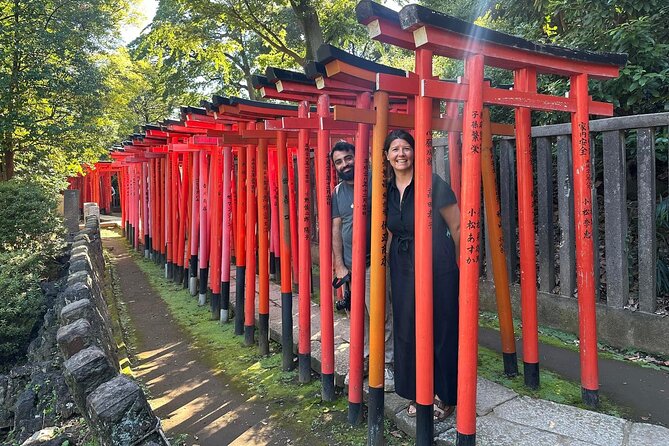
- Nezu Shrine’s torii-lined path: Learn how to pray, write a wish, and receive a fortune at one of Tokyo’s most picturesque shrines.
- A quieter side of Tokyo: Yanaka, Nezu, and Sendagi offer old homes, small shops, temples, and streets far removed from Tokyo’s tallest towers.
- A guide who adds useful context: Sui is praised for her friendly manner, clear English, food suggestions, and explanations of Japanese religious customs.
- Nine people maximum: The small group keeps the walk personal and makes it easier to ask questions.
- Old buildings with new uses: See a bathhouse turned into an art gallery and wooden houses converted into shops.
- Yanaka Ginza finale: Finish among local snacks, Japanese sweets, souvenirs, and the famous sunset-stairway view.
Why Yanaka is a smart change of pace
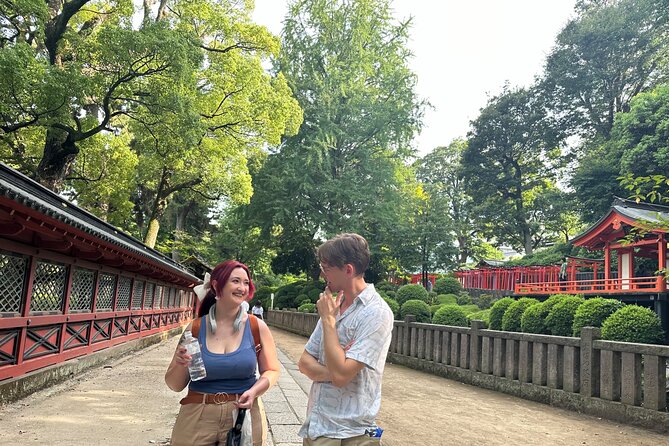
Tokyo can wear you out. You can spend a morning crossing giant stations, dodging crowds, and staring upward at signs. Yanaka gives you a different rhythm. The streets are more residential, the buildings are lower, and the route connects religious sites with everyday places where people shop, live, and walk to work.
The tour lasts about three and a half hours, long enough to create a clear sense of the area without taking up an entire day. A group limit of nine matters here. Yanaka is best appreciated at walking speed, and a very large group would make narrow streets and small shops less pleasant.
I especially like that the route is not built around one grand monument. Instead, it shows you how old Tokyo survives in fragments: a temple with a bronze Buddha, a cemetery lined with important graves, a century-old cedar, a former bathhouse, and old houses now used as shops. The result is less a checklist and more a neighborhood walk with historical signposts.
The meeting point is Nippori Station, at 2 Chome-19 Nishinippori, in Arakawa City. Since Nippori is a useful transport point for the Yanaka area, you should allow time to find the exact meeting spot before the scheduled start.
A few more Tokyo experiences worth weighing up
- Mt Fuji and Hakone 1-Day Bus Tour Return by Bullet Train
★ 5.0 · 26,383 reviews - 1-Day Tokyo Bus Tour
★ 5.0 · 14,250 reviews - Tokyo: TOKYO SKYTREE® Admission ticket
★ 4.5 · 11,192 reviews
Nezu Shrine and the etiquette of worship
The tour opens with about 30 minutes at Nezu Shrine, one of the strongest stops on the route. Its torii-lined pathway gives you the sort of visual scene many people associate with Japan, but the guide adds something more useful than a photo opportunity.
You learn about Japanese religious traditions and how to behave at a shrine. The tour specifically includes instruction on how to pray, how to write a wish, and how to use the fortune-telling tradition. For a first visit to Japan, this guidance can make the experience feel less awkward and more meaningful.
The admission cost is free, which is typical of the tour’s sightseeing stops. You are not paying for entry tickets here. You are paying for the explanation, the route, and the chance to ask questions while you are standing in the place itself.
Thirty minutes should give you time to look around and take photographs without turning the visit into a rushed stop. Still, this is a guided introduction rather than an extended shrine study. If Nezu Shrine becomes your favorite place on the walk, plan to revisit it later.
Tennoji Temple and a brief quiet pause
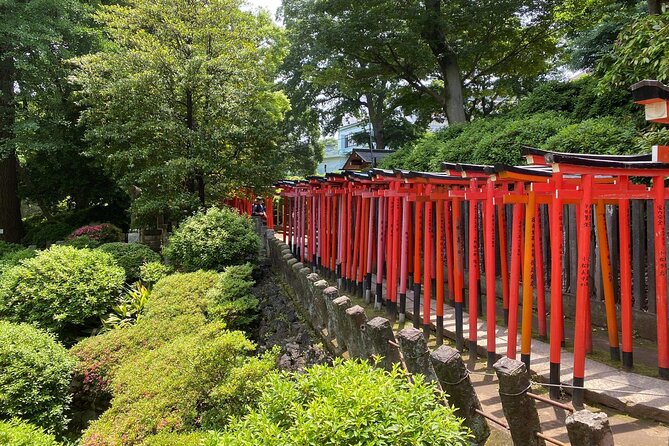
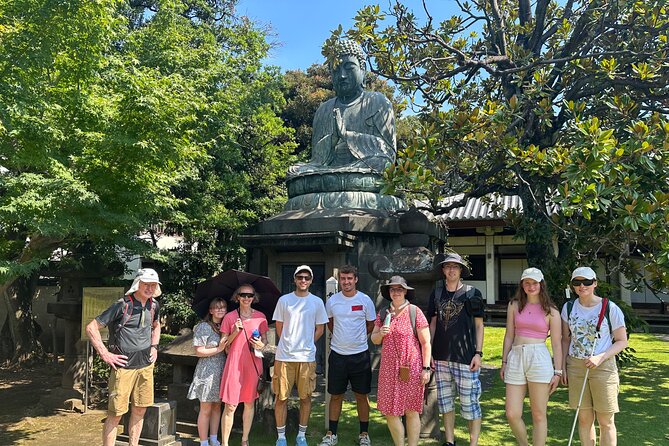
Next comes Tennoji Temple, one of the oldest temples in the Yanaka area. The stop lasts about five minutes, so think of it as a short pause rather than a full temple visit.
The main feature is a large bronze seated Buddha. You also get a look at the surrounding garden, which provides a calm contrast to the busy station areas elsewhere in Tokyo. The short timing may suit you if you want variety, but it could feel too quick if you prefer lingering at religious sites.
That contrast is part of the tour’s character. Some places receive a proper explanation, while others appear as brief points along a longer neighborhood walk. The guide helps connect the stops so you understand how temples, shrines, homes, and shops fit into the old district.
Yanaka’s Meiji, Taishō, and Shōwa-era streets
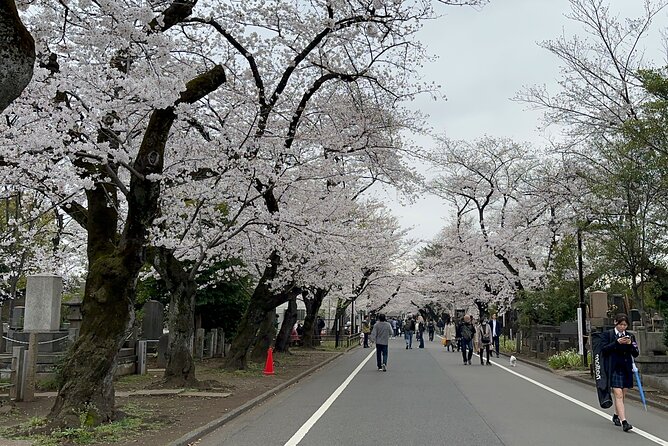
The main neighborhood portion lasts about 50 minutes. In Yanaka District, you see surviving buildings and streets linked to the Meiji, Taishō, and Shōwa periods. The value here is visual and local. You are not walking through a recreated historical village. You are seeing an older part of Tokyo as it exists now.
The route passes traditional small shops that have been handed down through generations. These businesses help explain why Yanaka feels different from districts designed around department stores and office towers. The guide can point out details in the buildings and answer questions as you walk.
This is also a good section for practical recommendations. Sui is praised for suggesting places to eat and for explaining local customs in a relaxed way. If you want to ask about Japanese desserts, regional food, or other places to visit in Tokyo, this is the kind of small group where that conversation is possible.
The drawback is simple: an old neighborhood walk does not deliver a major attraction every few minutes. You need to enjoy streets, façades, small storefronts, and ordinary city life. If your idea of sightseeing requires large interiors or famous monuments, this tour may feel modest.
A completely different kind of day out in Tokyo:
- Tokyo: teamLab Planets TOKYO Digital Art Museum Entry Ticket
★ 4.6 · 9,779 reviews - Mt Fuji & Hakone Cruise, Drum Show Bullet Train 1 Day from Tokyo
★ 4.0 · 7,413 reviews - Tokyo: Sumo Show Experience with Chicken Hot Pot and a Photo
★ 4.8 · 6,678 reviews - Tokyo: Shinjuku Food Tour (13 Dishes at 4 Local Eateries)
★ 5.0 · 6,603 reviews
Nezu’s residential lanes and everyday Tokyo
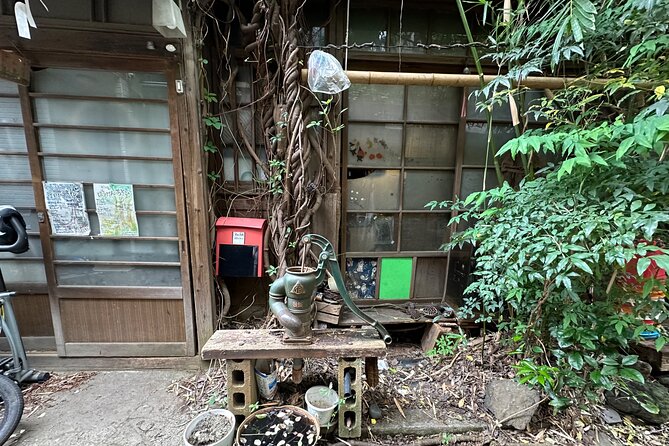
The walk continues through Nezu, with about 30 minutes in a local residential area. You see a mix of old and new houses and shops, along with the details of a neighborhood that still functions as a place to live.
This part of the experience is valuable because it puts the temples and historic structures into context. Tokyo’s past is not confined to museums. It appears in the relationship between an older house, a newer building, a small shop, and a narrow street.
The guide’s role matters most here. A residential lane can look like simply a pleasant walk if nobody explains what you are seeing. With local direction, you can pay attention to changes in architecture and the way the district has retained an older character.
Keep your expectations sensible. The description does not promise entry into private homes or shops, so expect to view the streets from public areas. It is a walking introduction to the neighborhood, not a hands-on craft workshop.
Yanaka Cemetery and the old cedar tree
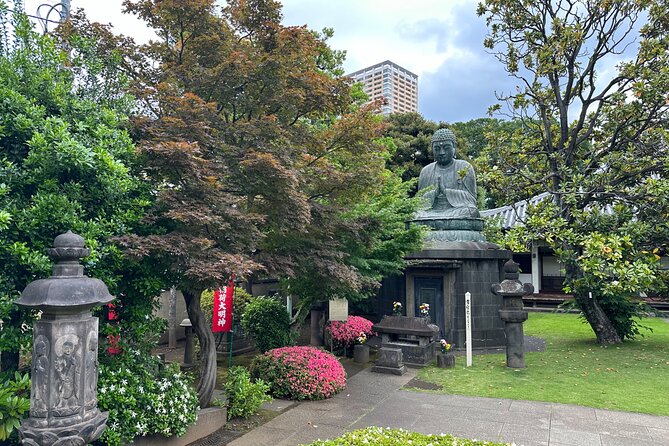
About 20 minutes are set aside for Yanaka Cemetery, one of Tokyo’s largest and most scenic cemeteries. Important figures are buried here, and the site adds a more reflective mood to the tour.
A cemetery may not be on every visitor’s must-see list, but it makes sense on this route. Yanaka is known for its concentration of temples and long-established neighborhoods, and the cemetery helps show the area’s connection to Tokyo’s past. You get space to slow down and take in the setting rather than simply moving from one shop to another.
The route also passes a 100-year-old Himalayan cedar tree. It is a small detail, but it fits the tour well. These passing sights are part of what you are paying to notice. On your own, you might walk past the tree without knowing why it matters.
Be respectful in the cemetery. This is an active place of remembrance, not just a scenic shortcut. The tour’s calm pace should help set the right tone.
Yuyake Dandan and the view toward Yanaka Ginza
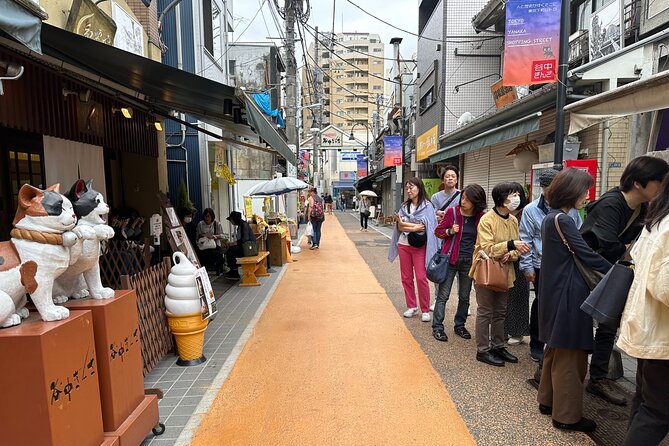
The stop at Yuyake Dandan, or Sunset Staircase, lasts about two minutes. It is a quick photo stop with a view toward Yanaka Ginza and the surrounding street scene.
The timing is short, but the staircase is a natural transition. After the quieter cemetery and residential lanes, you reach a recognizable viewpoint above the shopping street. If the light is good, this can be one of the most memorable photographs of the walk.
Do not treat the two minutes as your only chance to enjoy it. You can decide to return later, especially if you want more time for photographs. The tour gives you orientation, then moves on.
The route also passes a 200-year-old bathhouse that has been converted into an art gallery. You do not appear to have a dedicated gallery visit, but seeing this reuse of an old building gives you another example of Yanaka’s balance between preservation and modern life.
Ueno Sakuragi Atari’s wooden shop houses
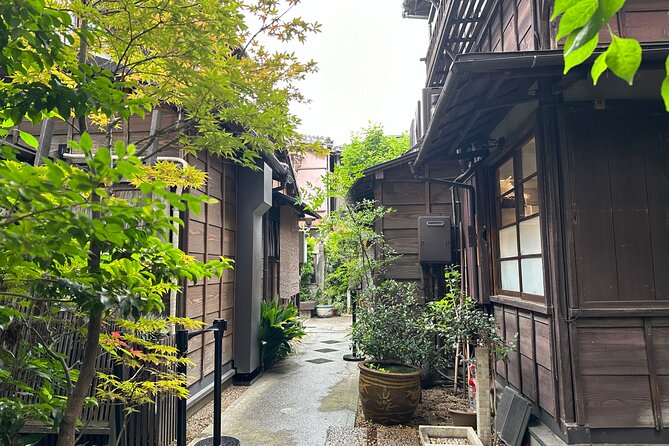
At Ueno Sakuragi Atari, you spend about 15 minutes exploring wooden houses that have been converted into shops. This is one of the clearest examples of the tour’s theme: old structures are not merely preserved behind glass. They continue to serve a purpose.
The stop includes admission, unlike the free shrine, temple, cemetery, and neighborhood visits. That included entry adds a little value to the $39.41 price, though the stay is still fairly short.
I would pay attention to the building design here as much as the shops themselves. The tour is showing you how traditional spaces can be adapted without erasing their older form. It is a useful counterpoint to the idea that historic Tokyo survives only in temples.
Yanaka Ginza’s snacks, sweets, and souvenirs
The formal route ends at Yanaka Ginza Shopping Street, an old local shopping street. The guide introduces popular street foods, Japanese desserts, and souvenir options, then gives you a chance to choose what you want to eat or buy.
The scheduled time is about 10 minutes, which is not enough for a leisurely browse. I would treat this as an introduction and return afterward if you want to sample several foods or shop carefully. The guide’s recommendations can help you get started, but the best part may be wandering at your own speed once the tour is over.
This final stop also makes the tour useful early in a Tokyo trip. You get food ideas, neighborhood orientation, and a list of places that may be worth revisiting. One booking used the walk on the first day in Japan, and the guide’s information helped shape the rest of that visit.
There is a small logistical point to confirm before booking. The activity information says the experience ends back at the meeting point, while the walking schedule describes Yanaka Ginza as the ending point. Ask the provider how the return to Nippori Station is handled so you know exactly where the guided portion finishes.
What the $39.41 price gives you
At $39.41 per person, this is a reasonable price for a 3.5-hour guided neighborhood walk, especially if you value cultural explanation over paid attractions. Nearly every stop has free admission, so the cost is mainly for the guide’s time, route planning, translation, etiquette instruction, and local suggestions.
The small group improves the value. A maximum of nine people is intimate enough for questions and conversation, while still keeping the cost below that of a private tour. Group discounts are available, which may help families or parties booking together.
You should not book it expecting a meal, a long shopping session, or entry to every building. The tour introduces food and shopping rather than including a full food tasting program. Its strongest value is helping you understand an area that is easy to miss if you focus only on Tokyo’s famous districts.
Who should book this Yanaka walk?
I would recommend it to first-time visitors who want a softer introduction to Tokyo, especially anyone interested in temples, shrines, architecture, neighborhood life, and food suggestions. It also suits repeat visitors who have already seen major sights such as central Tokyo and want a slower morning or afternoon.
The walk is a good fit for people who enjoy asking questions. Sui is repeatedly praised for being friendly, engaging, and clear in English. Her explanations of temple and shrine etiquette are particularly useful if Japanese religious customs are new to you.
You may want to skip it if you dislike walking, prefer large headline attractions, or want a tour built around tastings and shopping time. The schedule moves through many small sights, and some stops are very short. The experience rewards curiosity more than speed.
Free cancellation is available when you cancel at least 24 hours before the start time. The activity is near public transportation, service animals are allowed, and most people can participate according to the provided information.
Should you book it?
Book this tour if you want to see old Tokyo through ordinary streets, religious sites, and local businesses, not just famous city icons. The best features are the small group, the calm pace, Nezu Shrine’s practical etiquette lesson, and Sui’s food and neighborhood advice.
Before booking, confirm the ending point and make room in your schedule to stay around Yanaka Ginza after the guided walk. At $39.41, this is a sound choice for cultural context and local orientation, but it is not a bargain if you only want quick photographs. For the right kind of visitor, it gives you a better feel for Tokyo than another rushed stop in a crowded sightseeing district.
FAQ
How long does the Yanaka and Nezu tour last?
The experience lasts approximately 3 hours and 30 minutes.
How much does the tour cost?
The listed price is $39.41 per person.
How many people can join the tour?
The activity has a maximum group size of nine travelers.
Where does the tour begin?
The meeting point is Nippori Station at 2 Chome-19 Nishinippori, Arakawa City, Tokyo 116-0013, Japan.
Where does the tour end?
The activity information says it ends back at the meeting point, while the route description identifies Yanaka Ginza as the final sightseeing stop. Confirm the exact end arrangement with the provider.
Is admission to Nezu Shrine included?
Yes. Admission to Nezu Shrine is listed as free.
Is admission to Tennoji Temple included?
Yes. Admission to Tennoji Temple is listed as free.
Is admission to Ueno Sakuragi Atari included?
Yes. Admission to Ueno Sakuragi Atari is included.
Can I cancel for a full refund?
Yes, if you cancel at least 24 hours before the experience start time. Cancellations made less than 24 hours in advance are not refunded.
Is the tour suitable for most people?
The provided information says most people can participate. The tour is near public transportation, and service animals are allowed.
Just added around Tokyo
- Tokyo Shibuya Walking tour With A Guide★ 4.4 · 22 reviews
- Tokyo’s Authentic and Finest Taiko Drumming Workshop★ 5.0 · 22 reviews
- Tokyo: Visit Sumo Morning Practice with English Guide★ 4.5 · 22 reviews
- Private Tokyo Local Food and Drink Tour with a Bar Hopping Master★ 5.0 · 22 reviews
- Nikko Toshogu, Kegon waterfall, Lake Chuzenji One Day Pvt. Tour★ 5.0 · 22 reviews
- Private Departure Transfer : Central Tokyo City to Haneda Airport★ 4.5 · 22 reviews
- Mt. Fuji and Hakone Private Tour with English Speaking Driver★ 5.0 · 22 reviews
- Private Tour with a Local Guide – Learn about daily life in Japan★ 5.0 · 22 reviews
Tokyo Tours, compared.
Mt Fuji and Hakone 1-Day Bus Tour Return by Bullet Train
Read our review →


teamLab Planets TOKYO Digital Art Museum Entry Ticket
Read our review →
Mt Fuji & Hakone Cruise, Drum Show Bullet Train 1 Day from Tokyo
Read our review →
Shinjuku Food Tour (13 Dishes at 4 Local Eateries)
Read our review →
Tokyo Mt Fuji 5th St & Hakone Cruise Bus Tour w/Bullet Train
Read our review →