
Reviewed · TEMPLE & SHRINE TOURS
Day Tour to Miyazaki Takachiho Gorge & Shrine depart from Fukuoka
Takachiho is worth the long road. This full-day outing links Takachiho Gorge with four striking sites tied to Japanese mythology, so you get nature, Shinto tradition, and countryside views in one packed day. I especially like the comfortable air-conditioned vehicle and the chance to hear the stories behind places that can feel mysterious without context. The main catch is simple: Fukuoka is far from Takachiho, and traffic can leave you with less quiet time than you hoped for.
I also like that the tour removes a difficult transport puzzle. You do not need to piece together trains, buses, and rural connections, and guides such as Emi, Helen, Mao, Sun, Thomas, and Ame have been praised for clear instructions, history, humor, and help with photos. Still, this is a long day with plenty of stairs, steep slopes, and walking, so it is not a good match if you need an easy-paced or highly accessible outing.
In This Review
- Key points before you book
- Why this Kyushu day trip is different
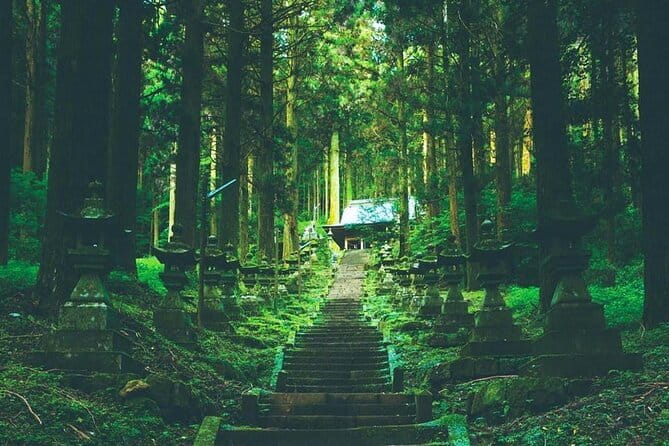
- Kamishikimi Kumanoimasu Shrine and its cedar forest
- Amanoiwato Shrine and the story of Amaterasu
- Amanoyasukawara, the sacred cave
- Four hours at Takachiho Gorge, the day’s big payoff
- The long ride from Fukuoka
- Guides, language, and the human side
- Price, meals, and what the $99.40 covers
- Who should book this full-day outing?
- Should you book the Takachiho tour?
- FAQ
- How long does the tour last?
- Where does the tour begin?
- Where does the tour end?
- Is hotel pickup and drop-off included?
- What sites are included?
- Is food included?
- Are admission tickets included?
- Is the tour suitable for people with mobility issues?
- How many people can join the tour?
- Can I cancel for a full refund?
- What happens if bad weather cancels the tour?
Key points before you book
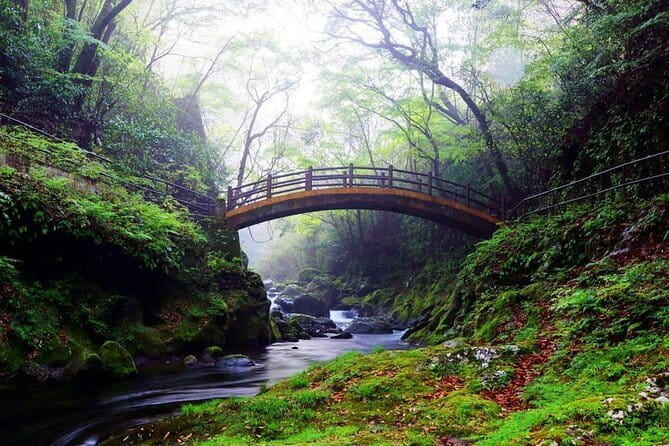
- Takachiho Gorge is the visual prize: Expect dramatic volcanic cliffs, green water, and Manai Falls, one of Japan’s top 100 waterfalls.
- The mythology is the thread: Kamishikimi Kumanoimasu, Amanoiwato, and Amanoyasukawara connect the scenery to Shinto stories about the sun goddess Amaterasu.
- The road trip is part of the bargain: The advertised day lasts about 9 to 10 hours, but some departures can feel closer to 11 hours, with roughly 5 to 7 hours spent on the bus.
- Walking is more serious than the short descriptions suggest: Stairs, uphill and downhill paths, and steep sections appear at the shrines and gorge.
- Food is not included: Plan for an imperfect meal schedule, since several people found the day too full for a proper sit-down lunch.
- The group may be large: The vehicle can carry up to 46 people, which affects how much personal attention and quiet time you get at each stop.
Why this Kyushu day trip is different
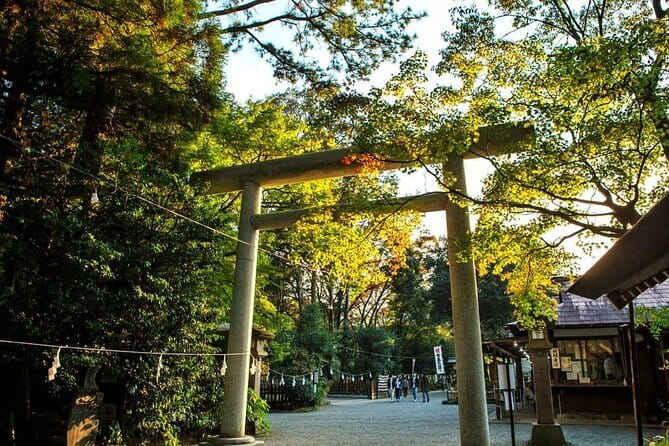
This is not simply a waterfall excursion. The route moves through a part of Kyushu where volcanic scenery and Japanese creation stories sit side by side. The shrines are not decorative pauses between attractions. They give the gorge a cultural setting and help explain why caves, ravines, rocks, forests, and waterfalls carry such meaning in Shinto practice.
I like this combination because it gives you more than photographs. A guide can explain the story of Amaterasu, the sun goddess, and the role of Amanoiwato in Japanese mythology. You also get practical help with shrine etiquette, meeting times, and the route through each site.
The tradeoff is pace. You are covering remote sites from a city base, not spending a relaxed weekend in Takachiho. If you want long pauses for sketching, a leisurely lunch, or repeated walks along the gorge, this schedule may feel tight. If your goal is to see the major places in one day without driving, the format makes much more sense.
The tour begins at 8:00 a.m. outside the Lawson Oriental Hotel Fukuoka Store near Hakata Station. Hotel pickup and drop-off are not included, so you need to reach the meeting point on time. Late arrivals and no-shows are not refunded.
More temple & shrine tours in Japan:
- Kyoto: Fushimi Inari, Kinkakuji, Bamboo Grove 1 Day Bus Tour
★ 4.8 · 4,316 reviews - Kyoto: Tea Ceremony in a Traditional Tea House in Kiyomizu
★ 4.9 · 3,519 reviews - Kyoto: Tea Ceremony Ju-An at Jotokuji Temple
★ 4.9 · 3,207 reviews
Kamishikimi Kumanoimasu Shrine and its cedar forest
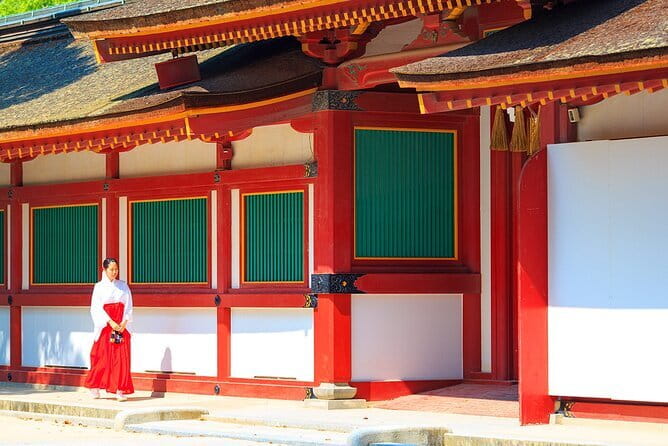
The first major stop is Kamishikimi Kumanoimasu Shrine in Takamori, Kumamoto Prefecture. It is described as a quiet, mystical Shinto site set among old cedar trees, and the forest setting is a large part of its appeal. You are not arriving at a city temple surrounded by shops and crowds. The mood is more hushed and enclosed.
The scheduled time here is about three hours, giving this stop more room than the shorter shrine visits later in the day. You can expect a forest approach, shrine buildings, and a setting that rewards slow looking rather than a quick checklist photograph. The cedar trees help you understand why natural places carry spiritual weight in Japan.
This is also where the tour’s physical demands begin to become clear. The exact amount of climbing can vary, but the day includes stairs and sloped paths. I would wear shoes with a secure grip and avoid assuming that free admission means effortless access.
A guide adds real value here. The site’s atmosphere is easy to appreciate, but the myths and customs may not be obvious on your own. Guides have been praised for explaining the stories before arrival and clarifying how long you have at each stop. In a large group, stay close enough to hear the introduction, then use your free time thoughtfully.
Amanoiwato Shrine and the story of Amaterasu
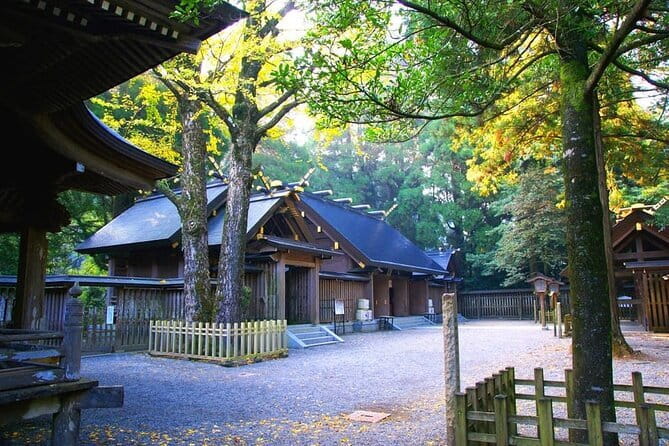
Amanoiwato Shrine in Takachiho is linked to one of Japan’s best-known myths. It honors Amaterasu, the sun goddess, and the site is associated with the story of her hiding away. That story gives the shrine more weight than its physical size alone might suggest.
You have about one hour here. That is enough to see the main area and listen to the guide, but it is not generous if you want to linger over every detail or move slowly because of mobility concerns. Ame was praised for explaining the mythology in clear English, while other guides have helped visitors understand shrine etiquette and the meaning behind the locations.
This stop works best if you arrive ready to listen. The guide’s explanation is not filler during a long drive. It provides the cultural key for the rest of the route. You may find the site more affecting once you understand why Amaterasu’s absence matters in the story.
The schedule can feel crowded, especially when the guide is speaking in two languages. Information may come quickly, and you may need to focus during the introduction rather than expect repeated explanations at every point. If you prefer independent exploration, the guide normally gives a return time so you can walk at your own pace within the allotted window.
Amanoyasukawara, the sacred cave
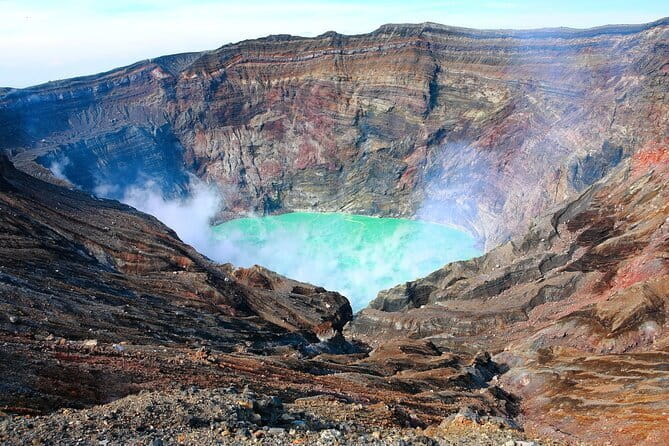
The route continues to Amanoyasukawara, a sacred cave near Amanoiwato Shrine. Japanese mythology places the gods here as they discussed how to bring Amaterasu out of hiding. It is a small but important setting in the story, and the walk to it adds another natural element to the shrine experience.
The scheduled visit lasts about one hour and 20 minutes. Expect more walking and uneven effort rather than a quick roadside stop. Several people specifically warned about stairs, slopes, and strenuous hiking on this part of the day. If you have a recent injury, limited balance, or difficulty with hills, you should take this warning seriously before booking.
The cave and its surroundings may be among the most atmospheric parts of the route. I like the way this stop connects a physical place to a living religious tradition, rather than presenting mythology as something locked in a museum case. The setting also gives the day a slower, more reflective counterpoint to the dramatic gorge.
That said, the pace can be hard on anyone who wants to pause often. One useful strategy is to save some energy for the gorge, which many people consider the day’s main event. Comfortable shoes, water, and a realistic view of your walking ability matter more here than a stylish outfit.
A few more Japan experiences worth weighing up
- Mt. Aso & Takachiho Gorge Tour with Optional Boat Ride
★ 4.7 · 222 reviews - Fukuoka: Takachiho Gorge & Scenic Railway One Day Tour
★ 4.8 · 178 reviews - Private Fukuoka Tour with a Local, Highlights & Hidden Gems 100% Personalised
★ 5.0 · 143 reviews - Fukuoka Your Way: 100% Customisable Private Tour with Local Guide
★ 5.0 · 83 reviews
Four hours at Takachiho Gorge, the day’s big payoff
Takachiho Gorge is the strongest reason to choose this excursion. Its steep volcanic walls rise above emerald-green water, and Manai Falls drops into the gorge below. The waterfall is recognized among Japan’s top 100 waterfalls, but the wider setting is what makes the stop memorable: dark rock, narrow water, and sheer cliffs create a sharp contrast with the forested shrine grounds.
The itinerary assigns about four hours to the gorge, which sounds generous. In practice, traffic, group movement, seasonal crowding, and the timing of earlier stops can affect how much of that period you truly enjoy at a relaxed pace. Some people wanted more time here, while others felt the total schedule provided enough room for photographs and sightseeing.
You should expect walking along the gorge area, with uphill and downhill sections and many steps. The best views may require effort, so do not assume you can simply step off the bus and see everything from one easy viewpoint. If you want to take your time, keep an eye on the return time and do not spend all your energy at the first overlook.
Photography is a strong part of the experience. Sun was praised for offering to take pictures for the group and finding attractive spots, a practical kindness when you are traveling without a companion. Other guides have also been described as attentive and careful, though the level of personal help can vary with group size.
The gorge is also where the tour’s design creates its clearest compromise. The day includes several religious sites because they explain the area’s mythology, but every extra stop competes with gorge time. If you care most about scenery, you may wish the route cut one shrine. If you care about Japanese spirituality and mythology, the full mix is the point.
The long ride from Fukuoka
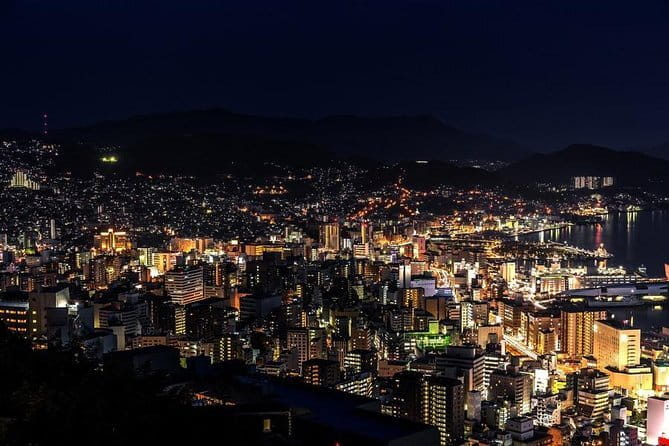
The transport is comfortable, but the distance is not small. The advertised duration is around 9 to 10 hours including travel, while some people experienced a day closer to 11 hours. Reports of roughly five to seven hours on the bus are a useful planning guide, especially when traffic or weather slows the route.
This is not a criticism of the destination. Takachiho is remote, and that remoteness helps preserve the feeling of getting beyond the city. But you should be honest about what you are buying: a long-distance sightseeing day, not four uninterrupted hours beside a waterfall.
The air-conditioned vehicle is a major benefit. You can rest between stops instead of driving on unfamiliar roads or managing rural public transport. The vehicle is also useful after the shrines, when the stairs and slopes begin to catch up with you.
The maximum group size is 46 people. That is a significant number for narrow paths and shrine visits. Good guides such as Mao have been praised for managing different walking abilities while letting people explore independently, but a large group can still make explanations feel rushed and limit one-to-one attention.
Guides, language, and the human side
The guide can shape this tour more than any other single feature. Emi was praised for historical facts and for helping with a special proposal at Takachiho Gorge. Helen received repeated praise for being careful, friendly, and attentive. Mao was appreciated for explaining the sites while allowing people with different physical abilities to set their own pace.
Sun was singled out for clear briefings before each stop and for taking photographs. Thomas brought humor and kept the day moving despite rain. Ame was praised for clear English and strong explanations of the mythology. These details matter because the itinerary has many moving parts, and a calm guide makes meeting points and time limits easier to handle.
The experience can be less satisfying when guiding is rushed, especially if two languages are being used. One person also felt the commentary was unhelpful. I would treat guide quality as a variable rather than a guarantee, even though the overall score of 4.5 from 61 ratings is encouraging.
Price, meals, and what the $99.40 covers
At $99.40 per person, I see this as a practical value if you are based in Fukuoka and want to reach Takachiho without arranging the journey yourself. The price includes the air-conditioned vehicle and guide, and ice cream is included from July through September.
Admission tickets to the listed sites are free. Food and drinks are not included, and the meal schedule deserves attention. Some people found places to buy food and use facilities, while others felt there was no proper lunch break. Bring something to eat or buy food when the opportunity appears instead of counting on a relaxed restaurant meal.
The value depends on your priorities. For a first look at remote Kyushu, the combination of transport, guiding, and several major sites is strong. For a slow cultural day with long meals and quiet contemplation, it is less convincing.
Free cancellation is available if you cancel at least 24 hours before the start time. Poor weather can lead to cancellation, with a choice of another date or a full refund. The operator can also cancel for extreme weather or unforeseen events.
Who should book this full-day outing?
I would recommend it to you if you have more than a few days in Fukuoka, want to see a very different side of Kyushu, and prefer not to drive. It suits people who enjoy a full schedule, dramatic scenery, Japanese mythology, and guided context.
You should think twice if you dislike long bus rides, need a generous lunch break, or prefer to spend most of a day in one place. I would also avoid it if stairs and steep paths are a serious problem. The physical demands should be treated as a central booking issue, not a minor footnote.
Rain does not necessarily ruin the day. One guide helped keep the mood cheerful during wet weather, and the gorge and shrines can still be striking under changing conditions. Still, the operator requires good weather and may cancel if conditions become unsafe.
Should you book the Takachiho tour?
Book it if access is your main concern. For $99.40, you get a straightforward way to connect Fukuoka with Takachiho Gorge, Amanoiwato, Amanoyasukawara, and Kamishikimi Kumanoimasu Shrine in one demanding day.
I would book with three expectations: the road is long, the walking is real, and the schedule may feel full. In return, you get one of Kyushu’s most impressive natural sights, a meaningful introduction to Shinto mythology, and guides who can make the stories, etiquette, and logistics easier to follow. If that balance sounds right, this is a strong day trip. If you want the gorge to receive nearly all your attention, seek a slower Takachiho plan instead.
FAQ
How long does the tour last?
The advertised duration is approximately 9 to 10 hours, including travel time. Some departures may last closer to 11 hours because of traffic, weather, or road conditions.
Where does the tour begin?
It begins at 8:00 a.m. at the LAWSON Oriental Hotel Fukuoka Store, 4-23 Hakataekichūōgai, Hakata Ward, Fukuoka.
Where does the tour end?
The tour ends back at the original meeting point.
Is hotel pickup and drop-off included?
No. Hotel pickup and drop-off are not included, so you must reach the listed meeting point yourself.
What sites are included?
The route includes Kamishikimi Kumanoimasu Shrine, Amanoiwato Shrine, Amanoyasukawara Shrine, and Takachiho Gorge.
Is food included?
No. Food and drinks are not included. Ice cream is included from July through September.
Are admission tickets included?
Admission tickets are listed as free for the four scheduled stops.
Is the tour suitable for people with mobility issues?
The tour includes many stairs, steep slopes, and uphill and downhill walking. It may not be suitable for people with mobility issues.
How many people can join the tour?
The activity can have a maximum of 46 travelers.
Can I cancel for a full refund?
You can cancel at least 24 hours before the experience start time for a full refund. Cancellations or changes made less than 24 hours before the start time are not refunded or accepted.
What happens if bad weather cancels the tour?
If poor or extreme weather causes cancellation, you can choose another date or request a full refund.
Just added around Japan
- Osaka Food Tour with 10 Classic Japanese Tastings & Drinks★ 5.0 · 38 reviews
- Kanazawa private half day/Photoshoot by professional photographer★ 5.0 · 38 reviews
- Osaka: Highlights & Hidden Gems Private Walking Tour★ 4.7 · 38 reviews
- Tokyo Small Group Tour with Guide★ 4.5 · 38 reviews
- Tokyo 6hr Instagram Highlights Private Tour with Licensed Guide★ 5.0 · 38 reviews
- From Tokyo: Kamakura Private Customize Tour by Luxury Van★ 4.6 · 38 reviews
- Tokyo Sumo Experience with Live Show & Audience Challenge★ 5.0 · 38 reviews
- Kyoto: Private Customizable Day Trip by Car★ 5.0 · 38 reviews
Temple & Shrine Tours, compared.
Fushimi Inari, Kinkakuji, Bamboo Grove 1 Day Bus Tour
Read our review →
Tea Ceremony in a Traditional Tea House in Kiyomizu
Read our review →
Meiji Shrine, Asakusa, Skytree Bus Tour and Cruise
Read our review →
Fushimi Inari Hidden Hiking Tour (Private Option Available)
Read our review →
Osaka/Kyoto:Kinkakuji,Arashiyama,FushimiInariShrine,NaraPark
Read our review →
Asakusa Walking Tour with Sensoji Temple Visit
Read our review →
Nikko: Kegon Falls, Lake Chuzenji & Toshogu Temple
Read our review →Browse the lists this tour appears in