
Reviewed · TRAIN EXPERIENCES
From Tokyo 1-Day Kyoto English-guided Tour by Bullet Train
Kyoto waits at the end of a very fast train. This day trip makes Kyoto possible when your Japan schedule is based in Tokyo, pairing a round-trip Shinkansen ride with three famous sights and English guidance. I like the careful handoffs at both stations, and I like that lunch is included rather than leaving you to hunt for food during a tight afternoon.
The main catch is time. You spend about four hours and forty minutes on the train, leaving only part of the day for Kyoto. Crowds and traffic can make the sightseeing feel rushed, especially at Kiyomizu-dera.
In This Review
- Key points before you book
- Why this Kyoto day trip makes sense from Tokyo
- Meeting the train at Tokyo Station
- Lunch at Miyako Hotel Kyoto Hachijo
- Fushimi Inari and the famous orange gates
- Sanjusangen-do and its thousand Kannon figures
- Kiyomizu-dera and Kyoto from the hillside
- What the guide system is really like
- The long return to Tokyo
- Who should book this tour?
- Should you book the Tokyo to Kyoto bullet train tour?
- FAQ
- How long is the tour?
- How long does the Shinkansen ride take?
- Is lunch included?
- What kind of lunch is served?
- Can I request a vegetarian meal?
- Which Kyoto sights are included?
- Are train and sightseeing tickets included?
- Can I bring large luggage?
Key points before you book
- The Shinkansen is a major part of the experience: The ride between Tokyo and Kyoto takes about two hours and twenty minutes each way.
- Station escorts reduce stress: Staff guide you to the correct platform in Tokyo, meet you in Kyoto, and help with the return journey.
- The Kyoto visit covers three major sites: Fushimi Inari Taisha, Sanjusangen-do Hall, and Kiyomizu-dera Temple.
- Lunch is served near Kyoto Station: The Miyako Hotel Kyoto Hachijo provides a Western-style meal, with a 2025 semi-buffet format and a vegetarian request option.
- The schedule is tight: The listed visits last about 30 minutes at Fushimi Inari, 30 minutes at Sanjusangen-do, and 1 hour 10 minutes at Kiyomizu-dera.
- First class may be worth considering: The Green Car costs more, but the train ride is one of the longest parts of this day.
Why this Kyoto day trip makes sense from Tokyo
Kyoto deserves several days. Its temples, gardens, lanes, and neighborhoods reward slow wandering, not a quick dash from one landmark to the next. Still, not everyone can spare an overnight stay, and this tour gives you a workable first taste without asking you to manage Japan’s rail system alone.
At $452.45 per person, the price is high for a day excursion. You are paying for a round-trip Nozomi Shinkansen ticket, station assistance, a coach tour, entrance fees, lunch, and a licensed English guide. A separate trip planned on your own might cost less, but you would need to arrange train tickets, navigate two enormous stations, reach several Kyoto sights, and keep an eye on the return train.
That convenience matters most if you are visiting Japan for the first time. Tokyo Station can be confusing, and the tour staff walk you to the train car door. In Kyoto, another English-speaking staff member waits on the platform and escorts you to lunch. At the end, staff help get you back to Kyoto Station for the Nozomi to Tokyo.
The tradeoff is freedom. You are joining a group that can reach up to 40 people, and the exact order of stops may change because of traffic or crowd conditions. This is a guided highlights tour, not a relaxed day in Kyoto.
A few more Tokyo experiences worth weighing up
- Mt Fuji and Hakone 1-Day Bus Tour Return by Bullet Train
★ 5.0 · 26,383 reviews - Mt Fuji & Hakone Cruise, Drum Show Bullet Train 1 Day from Tokyo
★ 4.0 · 7,413 reviews - Tokyo Mt Fuji 5th St & Hakone Cruise Bus Tour w/Bullet Train
★ 4.4 · 5,024 reviews
Meeting the train at Tokyo Station
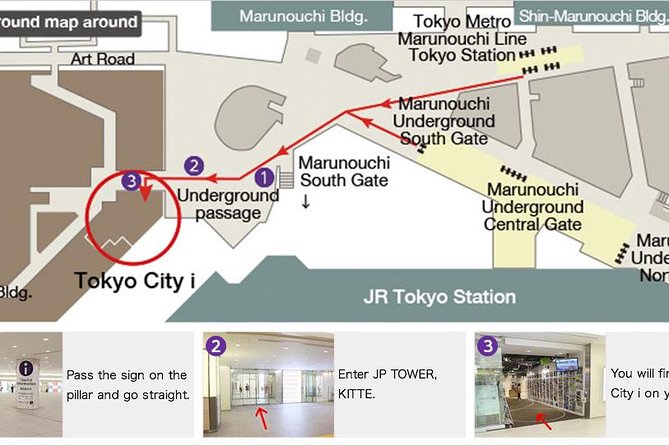
Your morning begins at 9:20 a.m. at Tokyo City i, in the KITTE building near Tokyo Station. Arrive with enough time to find the meeting point. One low-rated experience came from someone who had trouble locating the tour office, so do not treat the station area as a place to arrive at the last second.
An English-speaking tour conductor takes you to the Shinkansen. The conductor does not ride with the group, but staff provide the information you need for the journey and remain until you board. That arrangement sounds simple, yet it is one of the tour’s most useful features. You can enjoy the train instead of worrying about the platform, car number, or transfer instructions.
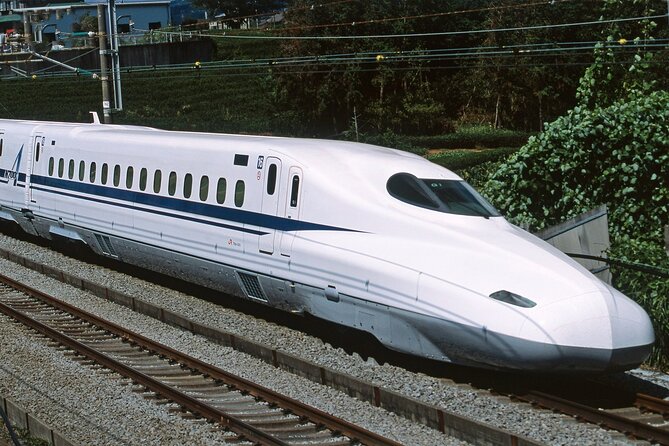
The train ride takes around two hours and twenty minutes. On a clear day, look out for Mt. Fuji from the window. The mountain view is weather dependent, so consider it a bonus rather than a promise.
The tour offers a standard ticket or a first-class option. Since the train is a large part of your day, the Green Car upgrade can make sense if your budget allows. You will still spend the same amount of time onboard, but a more comfortable seat can matter during a long day that ends between roughly 8:30 and 9:30 p.m.
Seats may not be designated, so check the final ticket details carefully. Large luggage also needs thought. A bag whose combined height, width, and length exceeds 160 centimeters cannot be brought onto the Shinkansen under the tour rules. Use a luggage delivery service separately if you need to move a large suitcase.
Lunch at Miyako Hotel Kyoto Hachijo
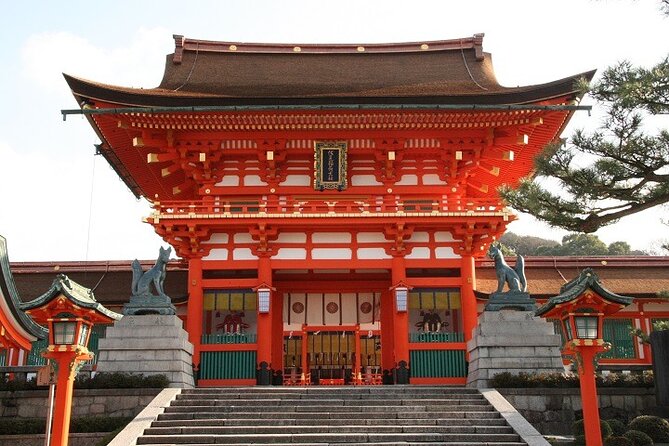
A local English-speaking staff member meets you on the Kyoto Station platform. You then walk to the Miyako Hotel Kyoto Hachijo, where lunch is served in a hotel restaurant.
In 2025, lunch is a Western-style semi-buffet. The main dish can be changed to a vegetarian option if you request it when booking. Same-day changes are not accepted. For 2026, the meal is scheduled to become a vegetarian-friendly Western-style set menu.
The meal is a practical choice. You get seated food soon after arriving, and the hotel’s location near the station keeps the tour moving. Several people particularly enjoyed the meal, including the buffet selection and desserts.
Do not book this expecting a traditional Kyoto dining experience. It is a comfortable hotel lunch, not a small restaurant tucked into an old lane. One person found the food good but wished it felt more local. I see the logic: an elegant hotel restaurant is efficient for a group, but it gives you less contact with everyday Kyoto food culture.
After lunch, an English-speaking staff member escorts you to the JTB Sunrise Tours Desk at Kyoto Avanti. You may wait there while other participants join the afternoon group. This is one place where the day can lose momentum. If another morning tour is feeding into your group, you may sit around after lunch before the coach departs.
Fushimi Inari and the famous orange gates
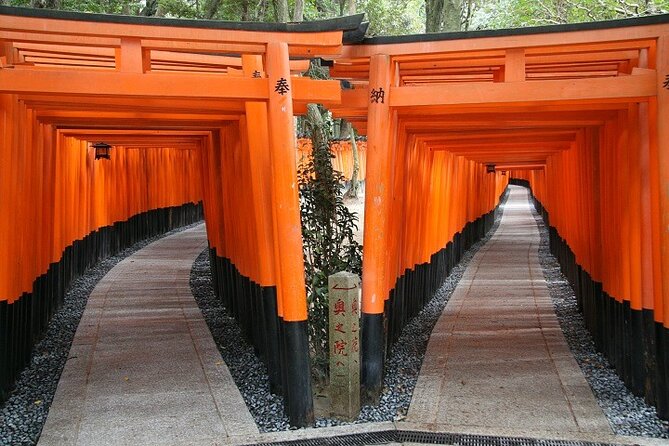
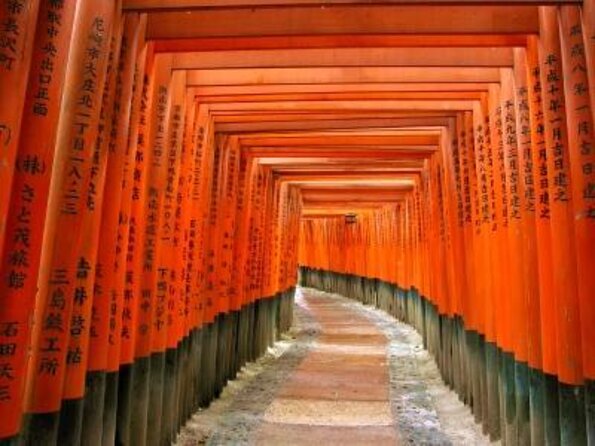
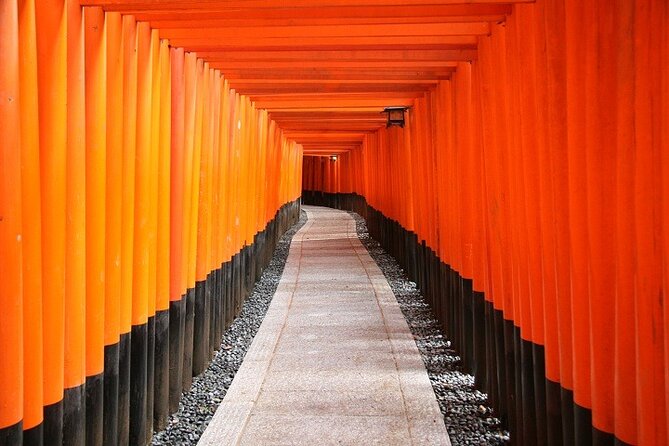
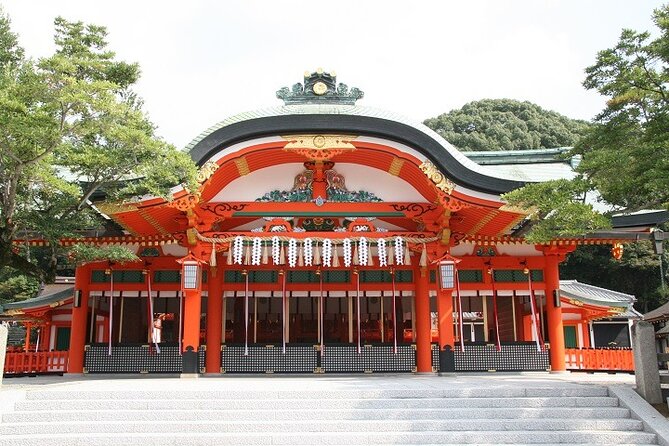
The first sightseeing stop is Fushimi Inari Taisha, the head shrine of about 40,000 Inari shrines across Japan. The shrine is associated with Inari, a deity connected with rice, prosperity, and business, and its rows of orange-red torii gates are among Kyoto’s most recognizable sights.
The visit is scheduled for about 30 minutes, including the walk from the coach parking area. That is enough to see the lower shrine area and walk beneath part of the Senbon Torii, but not enough for a long climb up Mt. Inari.
This timing is the first sign that the tour offers a sample rather than a full visit. You may have only a short window for photos before returning to the coach. If you want to hike through the gates for a quieter experience, you need to visit Fushimi Inari independently on another day.
Crowds can also shape the stop. Fushimi Inari is popular, and the entrance area may feel packed. Stay close to the guide and note the meeting instructions before wandering toward the gates. The bright colors and repeating arches make this a memorable stop even when your route is short.
A completely different kind of day out in Tokyo:
- 1-Day Tokyo Bus Tour
★ 5.0 · 14,250 reviews - Tokyo: TOKYO SKYTREE® Admission ticket
★ 4.5 · 11,192 reviews - Tokyo: teamLab Planets TOKYO Digital Art Museum Entry Ticket
★ 4.6 · 9,779 reviews - Tokyo: Sumo Show Experience with Chicken Hot Pot and a Photo
★ 4.8 · 6,678 reviews
Sanjusangen-do and its thousand Kannon figures
Next comes Sanjusangen-do, a Buddhist temple famous for its long wooden hall. The building is described as the world’s longest wooden structure, and inside you find 1,001 life-size statues of Kannon, the Buddhist figure associated with compassion.
The colossal Thousand-Armed Kannon is the central focus, flanked by rows of statues and other Buddhist figures. The scale is difficult to grasp from photographs, partly because photography is not allowed inside the temple. This is a place to put the phone away and let the repetition, symmetry, and quiet do the work.
The visit lasts about 30 minutes. That may feel short, but the interior is concentrated and the guide’s explanation gives the stop useful context. Guides such as Yumi have been praised for explaining the religious and historical background clearly, while other guides have added details about Buddhism and archery.
Sanjusangen-do is a good counterpoint to Fushimi Inari. One is open-air and visually dramatic; the other is controlled, solemn, and focused on art and devotion. If you prefer quiet interiors to photo stops, this may be your favorite part of the afternoon.
Kiyomizu-dera and Kyoto from the hillside
The final temple is Kiyomizu-dera, one of Kyoto’s best-known World Heritage sites. Set on a hillside, it gives you wide views over the city, and the approach along the historic shopping lane is part of the fun.
The scheduled stop lasts about 1 hour and 10 minutes, longer than the other two. That extra time helps, but it still goes quickly. You need to walk up the shopping street, reach the temple, hear the guide’s explanation, take in the view, and return to the meeting point.
The shopping lane adds color and practical appeal. You may find snacks, souvenirs, and small gifts on the way up, but browsing takes time away from the temple itself. Decide early if your priority is shopping, photographs, or the temple grounds.
Crowding is the biggest problem here. On busy days, the approach can be so full that walking becomes slow. Some departures have reached Kiyomizu-dera late in the afternoon, around 5 p.m., leaving little time before the group must return for the train. Rain can also change the feel of the stop, and wet stone paths and packed walkways make the short visit harder.
Still, the hillside setting gives Kiyomizu-dera a payoff the other sites do not. The Kyoto view helps you understand the city’s scale, and the temple’s wooden architecture makes a strong final image before you head back to the station.
What the guide system is really like
This is not a tour with one guide beside you from Tokyo to Tokyo. It uses several handoffs. A Tokyo escort gets you onto the train, a Kyoto staff member meets you on arrival, another person may take you to the afternoon tour desk, and the city guide leads the temple visits.
That can feel like a tag team, but it serves a purpose. You are not left to guess where to go at either major station. Guides named Tammy, Yumi, KC, Momo, and Yamamoto have received warm praise for their organization, energy, humor, and cultural explanations.
English ability can vary by guide. Most of the feedback about the guiding is positive, but one person found a guide difficult to understand and wanted more detail at the temples. If historical explanation is your top priority, pay attention during each briefing and ask questions while the group is together.
The group may include up to 40 people. That is a reasonable size for a coach tour, but it affects movement at crowded shrines. The guide may need to gather everyone repeatedly, and a slow group can reduce your time at the actual temple.
The long return to Tokyo
After Kiyomizu-dera, the coach returns you to Kyoto Station. The exact timing depends on traffic, and Kyoto roads can be slow. Do not assume that the scheduled sightseeing time will remain unchanged if congestion builds.
You board the Nozomi Shinkansen back to Tokyo. The return journey takes about two hours and twenty minutes, and the tour ends at Shin-Yokohama, Shinagawa, or Tokyo Station. The approximate arrival window is 8:30 to 9:30 p.m., so plan a light evening.
This late finish is not a small detail. You will have started in the morning, walked through three major sites, dealt with crowds, and spent most of five hours on trains. The bullet train makes the distance manageable, but it does not make the day short.
Who should book this tour?
I would choose this trip if you have limited time in Japan and Kyoto is a priority. It is especially useful for first-time visitors who want station help, a reserved plan, lunch, and an English-speaking guide. Families with older children may also appreciate the structure, although anyone under 18 needs written parental permission, and those under 15 or not yet in middle school must be accompanied by a parent or guardian.
This tour suits people who want to see the major icons and can accept a quick pace. It is less suitable if you want quiet temple time, long walks through Fushimi Inari, local food, or the freedom to change plans.
Children up to age five may join free, but they receive no Shinkansen or bus seat and no lunch. If you need those, book the child rate.
The cancellation rule is friendly if your plans change early: cancel at least 24 hours before the start time for a full refund. Later cancellations and changes are not accepted.
Should you book the Tokyo to Kyoto bullet train tour?
Book it if the alternative is missing Kyoto altogether. The train ride is exciting, the station support is reassuring, lunch is convenient, and the three sites give you a clear introduction to Kyoto. The guides can add the cultural background that a rushed self-guided visit might lack.
Skip it if you can spend two or more nights in Kyoto. You will save the exhausting same-day return, avoid the worst time pressure, and see each site with more patience.
At $452.45, this is a premium solution to a difficult scheduling problem. It is not the best-value way to explore Kyoto in depth, but it is a well-organized way to fit Kyoto into a Tokyo-based itinerary. Go in expecting a brisk highlights tour, not a full day in the city, and the experience is much easier to appreciate.
FAQ
How long is the tour?
The experience lasts approximately 12 hours. The listed start time is 9:20 a.m., with an approximate return between 8:30 and 9:30 p.m.
How long does the Shinkansen ride take?
The bullet train takes about two hours and twenty minutes each way between Tokyo and Kyoto.
Is lunch included?
Yes. Lunch is included at the Miyako Hotel Kyoto Hachijo near Kyoto Station.
What kind of lunch is served?
In 2025, lunch is a Western-style semi-buffet. In 2026, the meal is scheduled to be a vegetarian-friendly Western-style set menu.
Can I request a vegetarian meal?
For the 2025 meal, request a vegetarian main dish when booking. Same-day changes are not accepted. The 2026 meal is scheduled to be vegetarian-friendly.
Which Kyoto sights are included?
The tour visits Fushimi Inari Taisha, Sanjusangen-do Temple, and Kiyomizu-dera Temple.
Are train and sightseeing tickets included?
Yes. The price includes round-trip bullet train fare, the afternoon Kyoto sightseeing tour, the licensed English guide interpreter, lunch, and the listed entrance fees.
Can I bring large luggage?
Luggage whose combined height, width, and length exceeds 160 centimeters cannot be brought onto the Shinkansen. You need to arrange a delivery service separately for oversized luggage.
Just added around Tokyo
- Tokyo Small Group Tour with Guide★ 4.5 · 38 reviews
- Tokyo 6hr Instagram Highlights Private Tour with Licensed Guide★ 5.0 · 38 reviews
- Tokyo Sumo Experience with Live Show & Audience Challenge★ 5.0 · 38 reviews
- Very popular in Harajuku♡Animal petting zoo★ 4.6 · 39 reviews
- Japanese Food Cooking Class in Asakusa, Tokyo★ 5.0 · 39 reviews
- Ramen Making from Scratch with Tokyo Mom(Vegan Option Available)★ 5.0 · 39 reviews
- Tokyo: Kimono Rental inside Shinjuku Gyoen National Garden★ 4.9 · 39 reviews
- Tokyo JDM Night: 600hp C63s AMG Edition 1 (Private)★ 4.9 · 39 reviews
Train Experiences, compared.
Mt Fuji and Hakone 1-Day Bus Tour Return by Bullet Train
Read our review →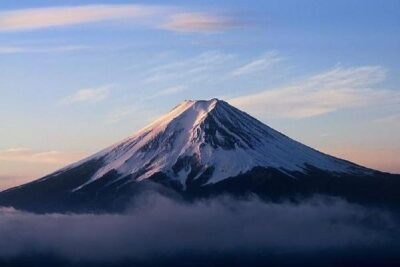
Mt Fuji & Hakone Cruise, Drum Show Bullet Train 1 Day from Tokyo
Read our review →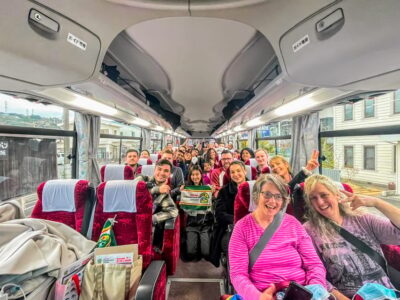
Tokyo Mt Fuji 5th St & Hakone Cruise Bus Tour w/Bullet Train
Read our review →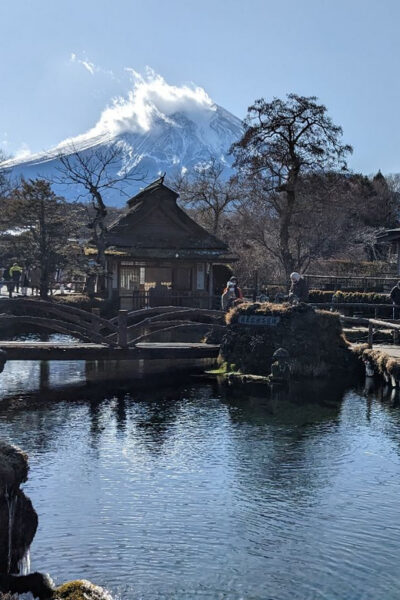
Mt. Fuji & Hakone Tour w/ Return by Bullet Train
Read our review →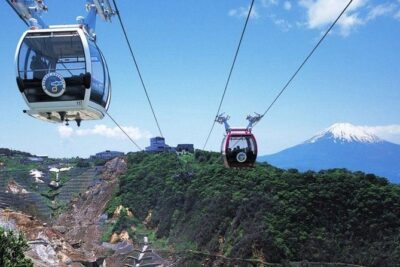
Mt. Fuji and Hakone Day Trip From Tokyo with Bullet Train Option
Read our review →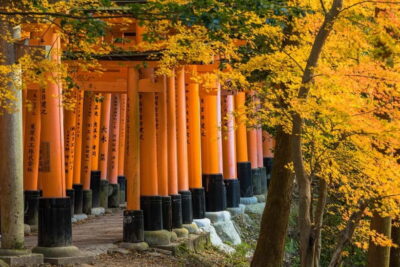
Sagano Romantic Train & Arashiyama, Kiyomizudera, Fushimi Inari Taisha Day Tour
Read our review →Browse the lists this tour appears in