Reviewed · HALF-DAY
Half Day Sightseeing Tour in Tokyo
Tokyo rewards a head start. This morning coach tour gives you a useful first look at the city, linking Meiji Jingu Shrine and Asakusa without making you decode several train lines before breakfast. I like the air-conditioned bus, the English-speaking guide, and the chance to see major districts such as Harajuku, Akihabara, and Ueno along the way.
I also like the calm walk through Meiji Shrine and the matcha stop near Senso-ji. The main catch is important: the tour ends in Asakusa, not at Ginza or Shinjuku, and the Imperial Palace visit may amount to a bridge, moat, or gate rather than a walk through the palace grounds.
In This Review
- Key points to know before booking
- What this half-day Tokyo tour actually does
- Meiji Jingu: the morning’s best walk
- Harajuku, Akihabara, and Ueno from the coach
- The Imperial Palace stop: know what you will see
- Asakusa and the matcha stop
- Senso-ji and the tour’s important ending point
- Guides, audio, and the large-group experience
- Is $94.84 a fair price?
- Who will enjoy this Tokyo coach tour?
- Should you book the Half Day Sightseeing Tour in Tokyo?
- FAQ
- How long does the Tokyo half-day sightseeing tour last?
- Where can I board the tour?
- Where does the tour finish?
- Is Senso-ji included?
- Is a guide included?
- Is matcha included?
- Can I cancel for a refund?
Key points to know before booking
- The morning route ends at Senso-ji in Asakusa, so plan your afternoon from there rather than expecting a return trip.
- Meiji Jingu is the strongest sightseeing stop, with a peaceful forest setting and about 50 minutes to look around.
- The Imperial Palace stop is limited and changeable, often focused on the outer area, bridge, moat, or gate.
- You see Tokyo from the road, including Harajuku, Akihabara, Ueno, the National Diet Building, and Kappabashi.
- Uji matcha or matcha gelato is included, adding a small Japanese food experience near Asakusa.
- The tour suits first-time visitors who value convenience, but independent explorers may find the price high for the amount of time spent off the bus.
What this half-day Tokyo tour actually does
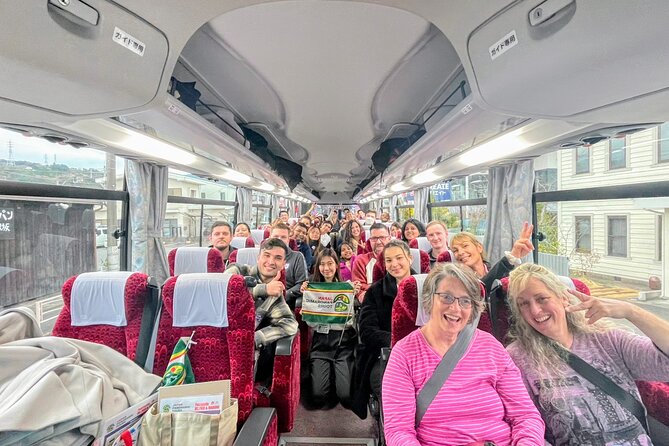
This is a compact sightseeing circuit, not a deep visit to every attraction. You board a deluxe, air-conditioned coach in the morning, see a few central Tokyo districts from the road, stop at Meiji Jingu, pause around the Imperial Palace, and finish in Asakusa.
The advertised duration is about three to four hours. Several detailed experiences put the actual outing closer to three hours, so I would treat it as a fast orientation tour rather than a full morning of long visits.
The route is designed for efficiency. Tokyo is spread across a huge urban area, and the bus lets you cover western Tokyo, the central palace district, and old Asakusa in one sweep. That convenience has a trade-off: some sightseeing happens through the coach windows, and the stop times are short.
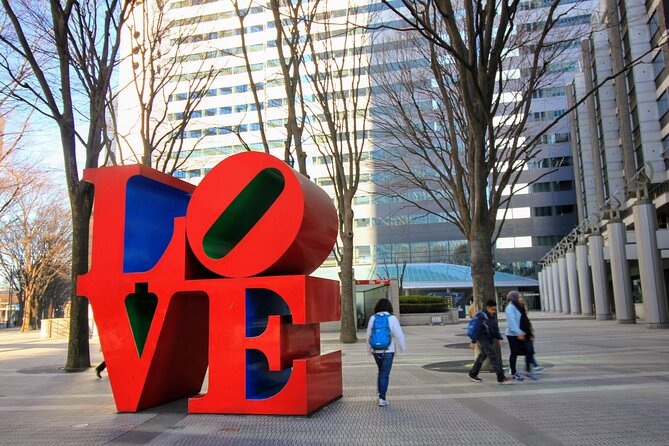
You can choose pickup at Matsuya Ginza at 7:20 a.m. or the Robert Indiana LOVE sculpture in Shinjuku at 7:50 a.m. The LOVE sculpture is the meeting point for the Shinjuku departure. Arrive early, since late arrivals cannot join the group partway through.
The group can reach 43 people. That is a sizeable party, so expect head counts, clear instructions, and a set pace. A good guide can make this work well. Guides named in particularly positive feedback include Lisa, Ayaka, Hiro, Yasushi, Tsubasa, Aiko, Mao, Yuki, Elven, Levin, and others. The strongest comments repeatedly praise guides for humor, organization, warmth, and clear English.
A few more Tokyo experiences worth weighing up
- Half-day Tokyo Afternoon Tour by Hato Bus
★ 4.0 · 269 reviews - Tokyo: A Half-Day Trip Bus Tour in the Morning
★ 4.6 · 236 reviews - Half-day Tokyo Morning Tour by Hato Bus
★ 4.0 · 220 reviews
Meiji Jingu: the morning’s best walk
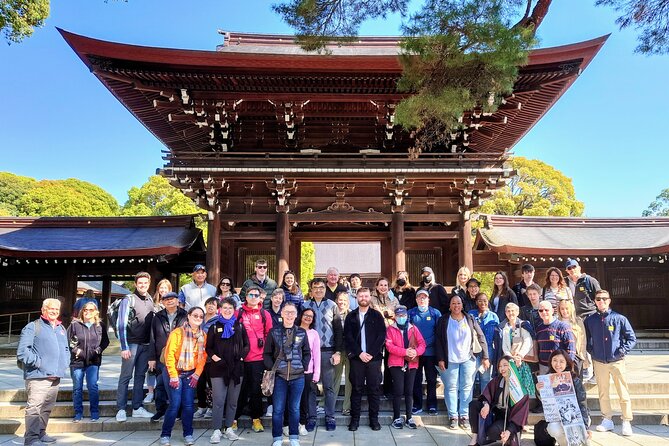
Meiji Jingu is the first major stop and usually the most rewarding one. Built in 1920 for Emperor Meiji and Empress Shoken, the Shinto shrine sits within a broad wooded area that feels far removed from Tokyo’s traffic and towers.
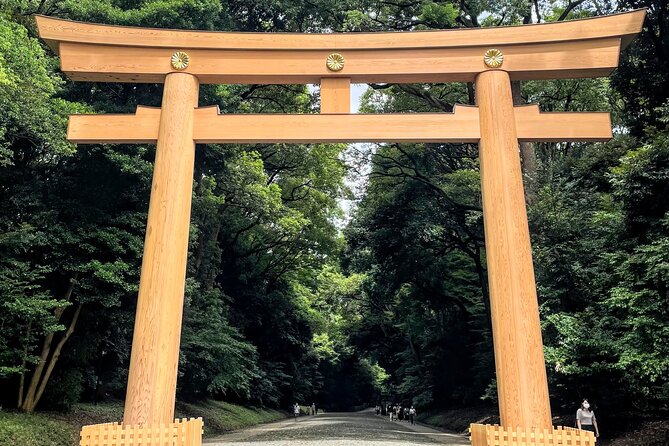
You get roughly 50 minutes here. That is enough for a meaningful walk, though not enough to wander every path at a leisurely pace. You will pass beneath a large torii gate and follow the approach through trees toward the shrine buildings.
The guide may point out the sake barrels and wine barrels displayed along the approach. The sake barrels are a familiar offering at Japanese shrines, while the wine barrels reflect the imperial couple’s links with Western culture. One guide also explained that the large torii was donated by Taiwan, a detail that gives the entrance more context than a quick photograph alone.
This is a place where a guide adds real value. Meiji Jingu has customs that may not be obvious at first glance. You can watch people purify themselves, make a short offering, and pray in the traditional Shinto manner. The tour does not promise a private ceremony or special access, but it gives you enough time to see the setting and ask basic questions.
Wear shoes you can walk in. The approach is not a bus-door-to-shrine arrangement, and the tour information specifically warns against booking if you cannot manage long distances. In hot weather, the shaded setting helps, but you will still be walking outdoors.
Harajuku, Akihabara, and Ueno from the coach
Between the main stops, the bus passes several famous parts of Tokyo. These are drive-by views, not extended visits, so keep your expectations in check.
Harajuku is introduced as a center of youth fashion and Japanese pop culture. You may see the streets and surrounding commercial area, but this tour does not give you time to shop or explore Takeshita Street on foot.
The coach also passes Akihabara, known for anime, games, electronics, and maid cafes. If you want to browse shops or spend time with Tokyo’s otaku culture, save Akihabara for another outing. Here, it is part of the city tour’s moving panorama.
Ueno Park and the Ameyoko market area are also on the route. Ueno is known for its seasonal cherry blossoms and autumn leaves, while Ameyoko is a busy market street. Again, you should see these places as an introduction, not as included walking stops.
The bus may also pass Kappabashi, the district known for kitchen tools, Japanese dishes, knives, and remarkably realistic plastic food displays. That is a useful sight for anyone interested in Japanese cooking or restaurant culture, but you will need to return independently if you want to shop.
One benefit of the drive is simple: you can cover a lot of ground without changing trains. One drawback is that the guide may spend much of the ride managing a large group, counting people, and announcing the next stop. Some people praised guides such as Aiko and Levin for adding history and cultural explanation during the drive. Others felt there was too much automated audio and not enough commentary.
The experience provides multilingual audio guidance in English, French, Italian, Spanish, German, Portuguese, and Ukrainian. That helps if you prefer recorded explanations, though the quality of the live commentary can depend on your guide and where you sit. One person found it hard to hear from the rear of the bus and had a much better experience after moving forward.
The Imperial Palace stop: know what you will see
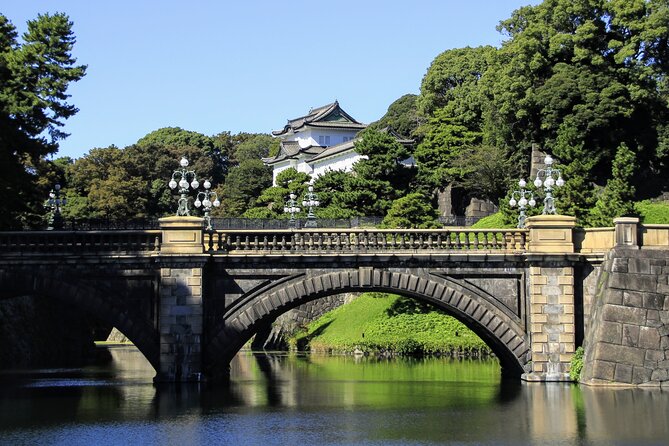
The Imperial Palace is the tour’s most misunderstood stop. It occupies the former site of Edo Castle and remains the residence of Japan’s imperial family. The grounds include moats, bridges, gardens, and historic structures, but a standard sightseeing bus does not take you through the private palace area.
The tour allows about 50 minutes for the palace stop, though the exact visit can change. The description says the group may visit either the East Garden or another available area, depending on conditions. In practice, access and timing can mean that you see the outer approach, a gate, a bridge, or the moat.
That can still make a pleasant photo stop. The wide open space and traditional stonework offer a sharp contrast to Tokyo’s dense commercial districts. One guide explained the symbolism of a samurai statue and the position of the horse’s raised leg, adding an interesting detail to what could otherwise be a quick photograph.
But I would not book this tour specifically for a palace garden visit. If the gardens are closed or the route is adjusted, you may get only an exterior view. Weather, traffic, operating conditions, and closures can change the schedule, and no refund is offered for those changes. The operator may substitute another place or provide a small gift instead.
This is the stop where the tour’s short format shows its limits. You are not getting a slow stroll through the palace complex. You are getting a guided introduction to one of Tokyo’s central landmarks, with the possibility of a brief walk in an accessible section.
A completely different kind of day out in Tokyo:
- Mt Fuji and Hakone 1-Day Bus Tour Return by Bullet Train
★ 5.0 · 26,383 reviews - 1-Day Tokyo Bus Tour
★ 5.0 · 14,250 reviews - Tokyo: TOKYO SKYTREE® Admission ticket
★ 4.5 · 11,192 reviews - Tokyo: teamLab Planets TOKYO Digital Art Museum Entry Ticket
★ 4.6 · 9,779 reviews
Asakusa and the matcha stop
The tour then heads east to Asakusa, Tokyo’s old temple district. This is where the outing becomes more distinctly Japanese in feel, with traditional religious buildings, souvenir shops, street food, and the long Nakamise shopping avenue.
A matcha experience is included. You receive Uji matcha made with first-flush tea from Kyoto, served as a drink or matcha gelato. The description emphasizes a mild, less bitter style, which may appeal if you are new to powdered green tea.
The matcha stop is close to Senso-ji, so it fits naturally into the Asakusa visit. It is not a full tea ceremony, cooking class, or extended food tour. Think of it as a tasting break and a chance to try a familiar Japanese flavor in a different form.
People had mixed views of the matcha stop. Some enjoyed having a small included treat and a choice between hot or cold matcha. Others felt that one drink did not justify the overall price. Your reaction will depend on how much you value convenience and a guided introduction.
The matcha shop is scheduled to close on May 9, with matcha souvenirs provided instead. That detail is worth noting if your visit falls on that date.
Senso-ji and the tour’s important ending point
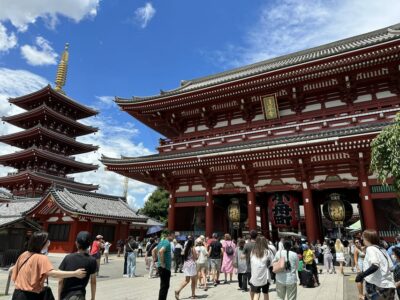
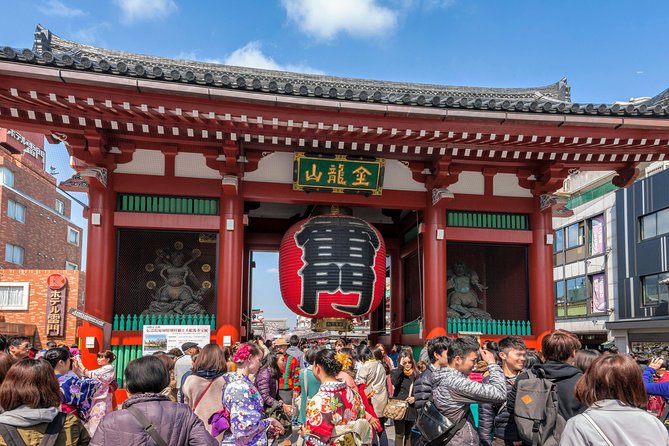
Senso-ji is Tokyo’s oldest and most famous Buddhist temple, and it is the final sightseeing area. The red Kaminari-mon Gate, with its huge lantern, is one of the city’s essential photographs. From there, Nakamise Avenue leads toward the temple with rows of shops selling snacks, crafts, clothing, and small souvenirs.
The listed stop at Senso-ji is only about 10 minutes, but the tour ends here. That means you can stay on your own after the group finishes and explore more of Asakusa at your own pace.
This ending is a genuine advantage if you want to spend the afternoon in Asakusa. You can visit the temple grounds, browse Nakamise, find lunch, or continue to nearby attractions without returning west. It is also easy to continue your day from this part of Tokyo using public transportation.
It is a serious disadvantage if you expect a round trip. The wording about pickup can be confusing, especially if you read it quickly as pickup and drop-off. The tour picks you up in Ginza or Shinjuku, but it does not return you there. Several dissatisfied participants were surprised to finish across the city from their morning departure.
Plan for Asakusa from the start. Bring a route plan for your next destination, and do not schedule a tight appointment back in Ginza immediately after the tour.
Guides, audio, and the large-group experience
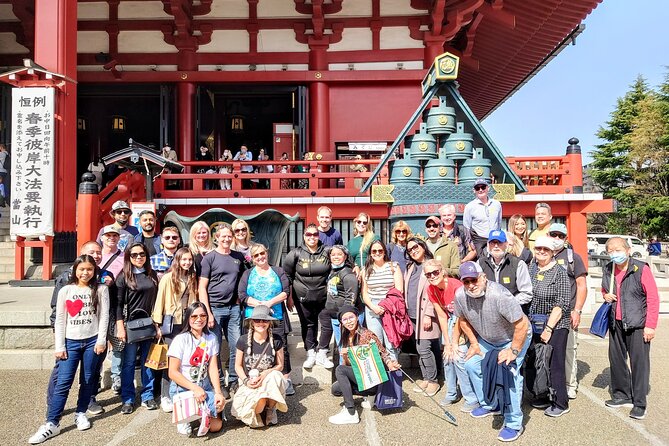
The guide can make or break this kind of fast city tour. The most praised guides were described as friendly, funny, organized, and able to explain Japanese culture in clear English. Ayaka was praised for cultural detail and humor. Hiro was especially attentive to a person who had difficulty walking. Yuki was noted for her calm leadership of a large group, and Elven and Levin received strong praise for history and clear explanations.
The operator provides a professional English-speaking guide, along with recorded audio in several languages. That is useful for mixed-language groups, but it does not guarantee constant live narration.
A group of up to 43 people requires discipline. The guide has to count heads, gather people at each stop, and keep the coach moving through Tokyo traffic. If you sit near the front, you may hear the guide more clearly. If you need extra time at sites or prefer to set your own pace, a small private tour or independent visit may suit you better.
Wi-Fi is available on the bus, another practical touch for checking maps, messages, or your next destination. It does not change the basic nature of the tour, which is a shared coach outing with a fixed schedule.
Is $94.84 a fair price?
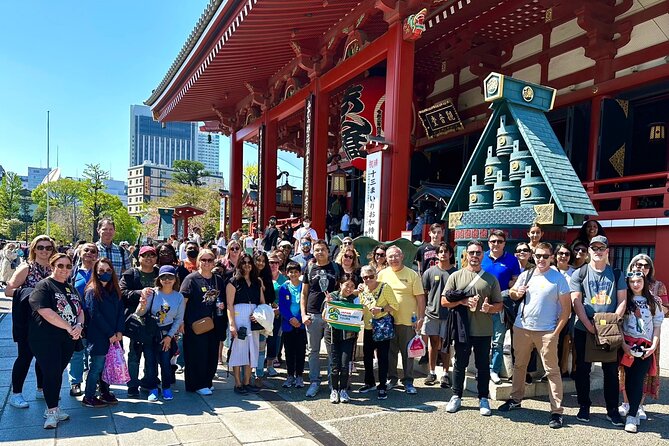
At $94.84 per person, this is not a cheap way to visit Meiji Jingu and Asakusa. Both places are accessible independently, and the core attractions do not require an expensive admission ticket.
You are paying for transport between far-flung districts, an English-speaking guide, multilingual audio, bus Wi-Fi, organized timing, and the matcha drink or gelato. For a first morning in Tokyo, that package can be worthwhile. You avoid working out the route, transfers, and stop order, and you get a broad view of the city quickly.
The value drops if you mainly want long visits at two or three locations. Much of the route is viewed from the bus, the palace stop can be limited, and the matcha portion is brief. Several people felt they could have seen the sites independently for less money.
I would compare the price with your priorities. If your time is short, you are nervous about Tokyo’s size, or you want a guide to explain basic shrine and temple customs, the fee buys ease. If you already understand the train system and enjoy building your own day, spend the money on meals, shopping, or a longer visit at Meiji Jingu and Asakusa.
Who will enjoy this Tokyo coach tour?
I would recommend it to a first-time Tokyo visitor who wants a quick orientation and prefers a bus to several train changes. It also works well for people who want an early finish and plan to spend the afternoon in Asakusa.
The air-conditioned vehicle is helpful in hot weather, and the fixed schedule removes some of the stress of crossing a very large city. The guide support can be valuable if you want explanations of shrine etiquette, imperial sites, and the difference between Buddhist and Shinto places.
I would hesitate to recommend it to anyone with limited mobility because the tour warns that substantial walking is involved. I would also hesitate if your main goal is the Imperial Palace interior or East Garden. Access is not guaranteed, and the stop may be limited to the outer area.
The tour is less suitable for repeat visitors who already know central Tokyo. You may find the drive-by stops frustrating, especially if you want time in Akihabara, Ueno, Harajuku, or Kappabashi.
Should you book the Half Day Sightseeing Tour in Tokyo?
Book it if you want a guided city sampler, comfortable transport, and a straightforward morning ending at Senso-ji. Meiji Jingu, the coach route, and Asakusa make a sensible first look at Tokyo, and an excellent guide can add plenty of warmth and useful context.
Skip it if you expect a return to Ginza or Shinjuku, a full palace tour, or extended walking time at every landmark. For the best value, choose this experience when convenience matters more than independence, then treat Asakusa as the beginning of your own afternoon rather than the final stop of your day.
FAQ
How long does the Tokyo half-day sightseeing tour last?
The tour lasts approximately three to four hours, though some experiences have finished in about three hours.
Where can I board the tour?
You can board at Matsuya Ginza at 7:20 a.m. or at the Robert Indiana LOVE sculpture in Shinjuku at 7:50 a.m.
Where does the tour finish?
The tour finishes at Senso-ji Temple in Asakusa. There is no extra drop-off service back to Ginza or Shinjuku.
Is Senso-ji included?
Yes. Senso-ji is the final sightseeing area, and you can continue exploring Asakusa independently after the group portion ends.
Is a guide included?
Yes. A professional English-speaking guide accompanies the tour. Multilingual audio guidance is also available in English, French, Italian, Spanish, German, Portuguese, and Ukrainian.
Is matcha included?
Yes. The tour includes either a matcha drink or matcha gelato. The matcha uses first-flush tea from Uji, Kyoto. On May 9, when the matcha store is closed, souvenirs are provided instead.
Can I cancel for a refund?
You can cancel at least 24 hours before the experience start time for a full refund. Cancellations or changes made less than 24 hours before the start time are not accepted for a refund.
Just added around Tokyo
- Tokyo 6hr Instagram Highlights Private Tour with Licensed Guide★ 5.0 · 38 reviews
- Tokyo Small Group Tour with Guide★ 4.5 · 38 reviews
- Tokyo Sumo Experience with Live Show & Audience Challenge★ 5.0 · 38 reviews
- Japanese Food Cooking Class in Asakusa, Tokyo★ 5.0 · 39 reviews
- Very popular in Harajuku♡Animal petting zoo★ 4.6 · 39 reviews
- Ramen Making from Scratch with Tokyo Mom(Vegan Option Available)★ 5.0 · 39 reviews
- Tokyo JDM Night: 600hp C63s AMG Edition 1 (Private)★ 4.9 · 39 reviews
- Tokyo: Kimono Rental inside Shinjuku Gyoen National Garden★ 4.9 · 39 reviews
Half-Day, compared.
Nara Half Day Trip Walking Tour (Private Option Available)
Read our review →
Kyoto Arashiyama Bamboo forest & Garden Half-Day Walking Tour
Read our review →
![[Miyako Island/Half Day] Sea Turtle Snorkeling](https://7.thejapaneseguide.com/wp-content/uploads/miyako-island-half-day-sea-turtle-snorkeling-400x267.jpg)
Miyajima Half-day Trip Historical Walking Tour
Read our review →

Naha, Okinawa: Kerama Islands Half-Day Whale Watching Tour
Read our review →