
Reviewed · MOUNT FUJI TOURS
Mt Fuji & Hakone Cruise, Drum Show Bus 1 Day from Tokyo
Fuji rewards patience. This long day from Tokyo packs Mt. Fuji’s 5th Station, a Lake Ashi cruise, the Mt. Komagatake Ropeway, lunch, and a Japanese drum performance into one organized trip. I especially like the air-conditioned round-trip bus, which saves you from piecing together trains, buses, and boats, and I like the mix of big sights and small cultural touches, especially the wadaiko performance. The main drawback is simple: you spend a lot of the day on the road, and cloudy weather can take away the view you came to see.
This is a useful choice if you have only one free day outside Tokyo. Guides such as Nao, Hiro, Joe, Miko, Marie, and Toshi have been praised for being warm, entertaining, and helpful, with Joe and Hiro earning especially strong approval for their clear explanations. Still, the tour runs on a tight schedule, and some stops can feel rushed. The $122.55 price is fair for the included transport and admissions, but its value falls quickly if weather closes Mt. Fuji’s access road and the Hakone rides.
In This Review
- Key points before you book
- Why this bus tour works from Tokyo
- Mt. Fuji 5th Station at 2,300 meters
- Lunch, Japanese food, and a taiko performance
- Lake Ashi and the Sorakaze cruise
- Riding the Komagatake Ropeway
- The guide can make or break the day
- Timing, traffic, and the long return to Tokyo
- Is $122.55 a fair price?
- Who should book this day trip?
- Final verdict: book it for coverage, not certainty
- FAQ
- Where does the tour depart from?
- How long does the tour last?
- Is lunch included?
- Can I request a special meal?
- What happens if Mt. Fuji is hidden by clouds?
- Can I cancel the tour?
Key points before you book
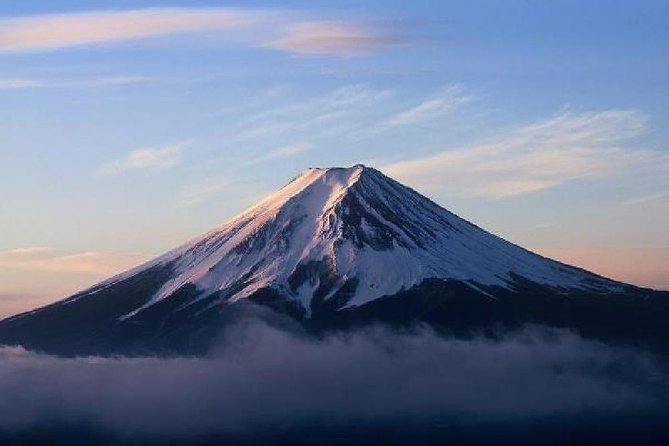
- Mt. Fuji 5th Station reaches 2,300 meters, but access usually runs from late April through November.
- Lake Ashi’s Sorakaze cruise lasts about 15 minutes, offering a quick view of the crater lake and surrounding peaks.
- The Komagatake Ropeway ride and summit visit take about 50 minutes, including time near Hakone Shrine Mototsumiya.
- The lunch option includes a Japanese meal and taiko drum show, with vegetarian, Muslim-friendly, and Indian thali meals available.
- The full day lasts about 12 hours and 35 minutes, with departure at 8:10 a.m. and return to Shinjuku between 6 p.m. and 9 p.m.
- Weather and traffic can change the day, and no refund is given if the main sights are replaced by alternatives.
Why this bus tour works from Tokyo
Mt. Fuji and Hakone look close on a map, but reaching both by public transport in a single day takes planning. You would need to line up regional trains, buses, a boat, and a ropeway, then keep an eye on return connections. This tour handles the long transfers by coach and gives you a guide to keep the day moving.
The bus leaves from the JTB Sunrise Tours Sales Office near Shinjuku Station’s west side at 8:10 a.m. You need to arrive early. A late arrival means your booking can be canceled, and the bus will not wait for a last-minute dash through Shinjuku.
The coach is air-conditioned and heated, though the exact vehicle depends on group size. The maximum group size is 44 people. That is not a tiny group, but it is manageable for a major day trip. The value comes from having one vehicle carry you between widely separated sights rather than spending your day studying timetables.
The tradeoff is time. This is not a leisurely mountain outing. It is a high-coverage day, built for seeing several famous places in one run. You will spend long stretches looking out the bus window, listening to the guide, or resting after an early start.
More Boat Tours in Tokyo
- Mt Fuji & Hakone Cruise, Drum Show Bullet Train 1 Day from Tokyo
★ 4.0 · 7,413 reviews - Tokyo Mt Fuji 5th St & Hakone Cruise Bus Tour w/Bullet Train
★ 4.4 · 5,024 reviews - Tokyo: Meiji Shrine, Asakusa, Skytree Bus Tour and Cruise
★ 4.7 · 1,986 reviews
Mt. Fuji 5th Station at 2,300 meters
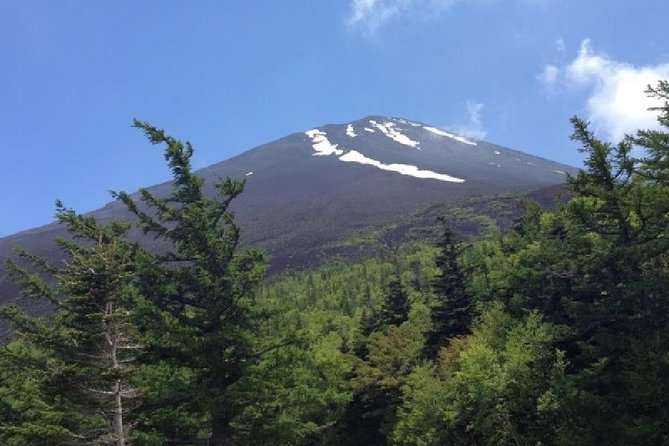
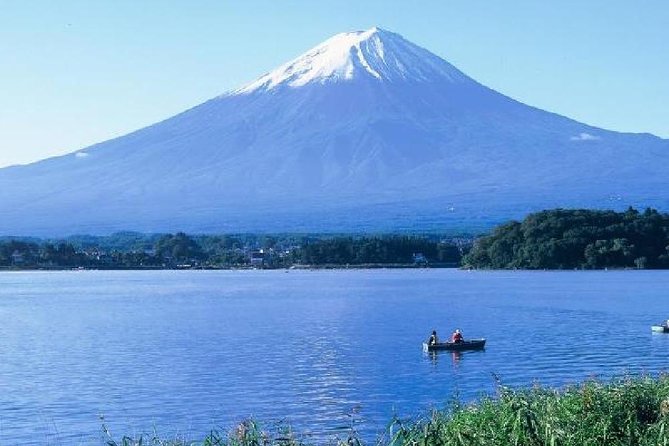
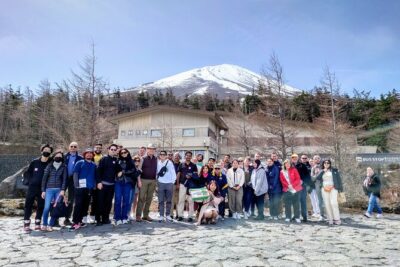
The first major stop is Mt. Fuji’s 5th Station, reached by the Fuji Subaru Line when the road is open. At 2,300 meters, this is high enough to feel distinctly cooler than Tokyo. Even in summer, temperatures can fall to around 14 degrees Celsius during the day. In winter, the reference temperature is around minus 5 degrees.
The stop gives you a chance to look toward the upper slopes, browse souvenir shops, and see torii gates and shrines connected to Fuji’s spiritual importance. The mountain has long been treated as a boundary between the ordinary world and the heavens, and the shrine setting helps explain why Fuji is more than a scenic backdrop.
The scheduled stop is about 30 minutes, although actual time can change with traffic, road conditions, and the day’s schedule. Some outings have felt closer to ten minutes at the site, leaving only enough time for a quick photograph and a look around. If the road is open and the sky is clear, use your time carefully. Take the view first, then shop.
The biggest warning is visibility. Mt. Fuji can disappear behind cloud, mist, snow, or rain. The tour continues even if you cannot see the mountain, and there is no refund for poor weather. That policy matters because Fuji is the emotional center of the day, even though the itinerary includes several other stops.
From roughly December to early April, snow, ice, and road closures commonly prevent access to the 5th Station. The tour may then visit the 4th Station, if conditions allow, or switch to places such as Fujisan Museum, Lake Kawaguchi Oishi Park, the Fujisan World Heritage Center, Itchiku Kubota Art Museum, or Oshino Hakkai.
Bring a warm layer even if Tokyo feels mild. The temperature change is real, and the open mountain setting can make the stop feel colder than the thermometer suggests.
Lunch, Japanese food, and a taiko performance
If you choose the lunch option, the group stops at Fuji Zakura Hotel for about 50 minutes. The meal is Japanese-style and includes tea or coffee. Several meal choices are available if requested during booking: vegetarian, Muslim-friendly, and Indian thali.
The vegetarian and Indian thali meals do not use meat or fish. The Muslim-friendly meal avoids pork and alcohol, but it is not halal certified. The operator cannot provide allergy-friendly or gluten-free meals, so you should book the no-lunch option if those restrictions apply.
The lunch stop also includes a wadaiko performance. Japanese taiko drums bring a welcome burst of energy after the morning drive, and this is one of the tour’s most praised additions. The performance is presented by the Social Welfare Corporation Fugakukai, which uses artistic work as part of social independence training and creative activity.
The drum show is not guaranteed. A late arrival caused by traffic, a change in the lunch venue, or facility circumstances can prevent the performance. It will not be held on February 28, 2026, and there is no partial refund if it does not take place.
I would choose the lunch option unless you have a clear dietary reason not to. The food has been called tasty, and the combination of meal and performance makes this stop feel like more than a highway break.
If you choose no lunch, prepare food before departure. There are no cafés, restaurants, or other food outlets near the lunch-break area. The wording of the option can be easy to misunderstand, so do not assume you can simply buy lunch there.
Lake Ashi and the Sorakaze cruise
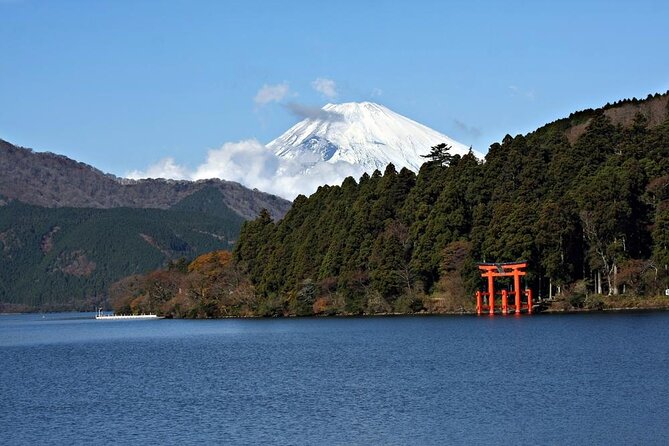
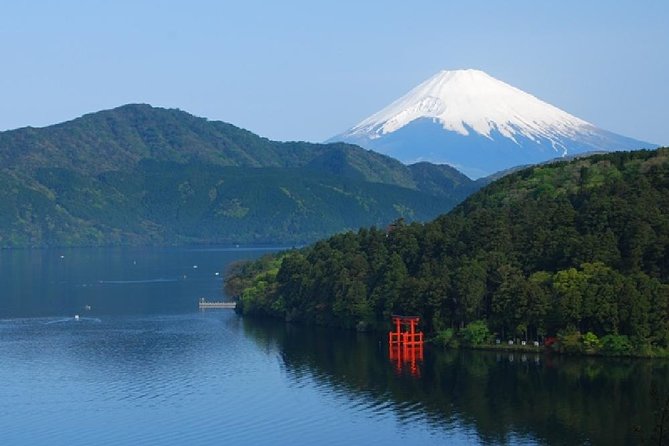
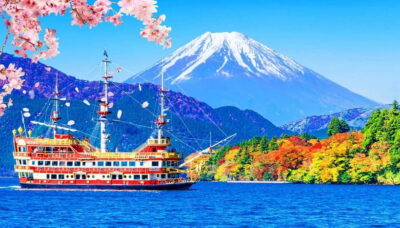
After lunch, the bus heads to Lake Ashi in Hakone. The lake fills an old volcanic crater formed by a major eruption around 3,000 years ago. Its setting is one of the day’s prettiest changes of pace: after the bus ride and the busy mountain stop, you get open water, wooded slopes, and distant peaks.
The scheduled cruise uses the Sorakaze, a boat designed to give passengers the feeling of being in a floating green park. The ride is about 15 minutes. That is enough for a short rest and some photographs, but not enough for an extended boat trip.
Bring your camera outside if the weather is clear, but keep expectations sensible. Mt. Fuji is not guaranteed to appear from the lake, and the view can vanish behind cloud just as easily as it does from the 5th Station. The cruise itself remains pleasant, but it is brief.
One practical weakness is the limited explanation during the boat ride. You may be left to enjoy the scenery without much narration about the lake or the mountains. The main guide provides information during the broader tour, but the cruise is not presented as a detailed guided sightseeing ride.
If the Lake Ashi cruise is suspended because of weather or access problems, the itinerary can change to another boat ride, such as the Lake Kawaguchi Appare Sightseeing Boat, the Swan Lake Cruise Ship on Lake Yamanaka, or the Hakone Pirate Ship. Other substitutes include museums, shrines, aquariums, castles, and additional ropeways.
More ways to see Mount Fuji:
- Mt Fuji and Hakone 1-Day Bus Tour Return by Bullet Train
★ 5.0 · 26,383 reviews - From Tokyo: Mount Fuji Full-Day Sightseeing Trip
★ 4.5 · 4,970 reviews - Tokyo: Mt. Fuji Tour, Hakone Ropeway, Owakudani, Lake Ashi
★ 4.7 · 4,002 reviews - Tokyo:Mt.Fuji,Kawaguchiko Oishi Park,Arakurayama Sengen Park
★ 4.4 · 2,682 reviews
Riding the Komagatake Ropeway
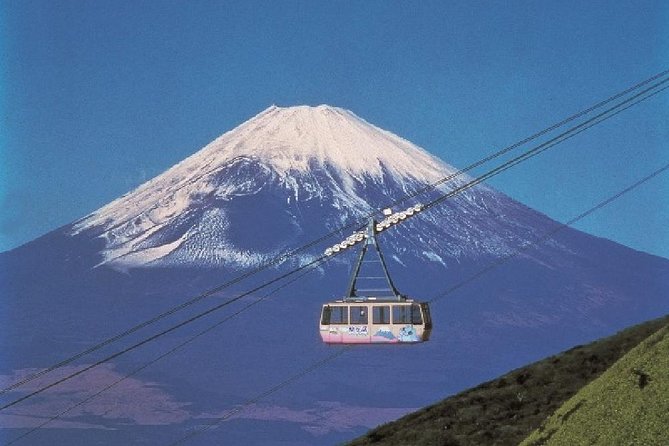
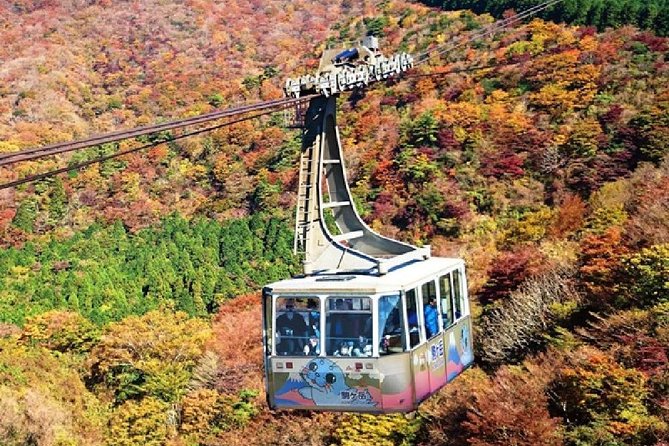
The next major experience is the Hakone Komagatake Ropeway. The cableway carries you upward to the summit of Mt. Komagatake, where Hakone Shrine Mototsumiya, the original shrine, sits near the mountaintop.
The ride and summit visit are scheduled for about 50 minutes. From above, you can look across Lake Ashi and, on a clear day, toward Mt. Fuji, the Izu Peninsula, and the Izu Islands. This is the point where the tour tries to give you a broad view of the Hakone area rather than a single famous photograph.
Some people love this part. Others find the ride and short summit visit less rewarding than expected, especially in poor weather. If the clouds close in, the ropeway can feel like a costly trip upward with little to see. The tour can replace it with the Hakone Ropeway, Mt. Fuji Panoramic Ropeway, Hakone Jukkokutoge Panoramic Cable Car, or other attractions if operations stop.
At the summit, expect some walking on exposed paths. The tour is not built around a strenuous hike, and one positive feature is that you do not need to be a serious walker to take part. Still, wear shoes suitable for uneven outdoor surfaces and bring that warm layer.
The ropeway is also a place where the schedule can feel compressed. You are covering Fuji, Hakone, a lake cruise, lunch, and a mountain summit in one day. Enjoy the view, take your photographs, and do not spend the whole stop looking for the perfect angle.
The guide can make or break the day
The tour includes a licensed English guide interpreter. This matters most during the long bus stretches, when a silent transfer would make the day feel much longer.
The strongest guide feedback has been specific. Nao was praised for helping the group understand how to catch trains after the tour. Hiro received praise for clear guidance and a calm approach. Joe was repeatedly described as engaging and helpful, while Miko was credited with keeping the day lively. Marie was praised for explaining local culture, and Toshi for practical help and clear information.
That said, guide quality can vary. One poor experience involved a guide who read from notes in a monotone and did not engage with the group. You should think of the guide as an important part of the product, not a minor extra. A good guide turns traffic delays into useful context. A weak one makes the long drives feel even longer.
Multilingual GPS audio guides may be available on Shinjuku departures in Chinese, Spanish, Italian, Thai, and French. You must request one in advance, and supplies are limited. Same-day requests are not accepted, and technical problems or weak signals do not qualify for a refund.
Timing, traffic, and the long return to Tokyo
The advertised duration is about 12 hours and 35 minutes. The tour begins at 8:10 a.m. and usually reaches Shinjuku between 6 p.m. and 9 p.m. That is a wide arrival window, and it is not decorative fine print. Tokyo-area traffic, mountain roads, crowds, and weather can all stretch the day.
The return may end at Shinjuku Station West or, if booked in advance, Odawara Station. The Odawara stop only operates when someone has reserved that drop-off option. From Shinjuku, you make your own way onward.
Do not schedule a tight evening reservation, airport transfer, or theater ticket after this tour. The day is too dependent on road conditions. The bus is convenient, but convenience does not mean punctuality.
Some departures use other vehicles depending on group size, including a mid-size bus, small bus, or hired car. The usual maximum is 44 people, so you should be prepared for a group setting rather than private touring.
Is $122.55 a fair price?
At $122.55 per person, the tour is not a bargain-basement outing, but the price includes round-trip bus transport, a licensed English guide, the Lake Ashi cruise, the Komagatake Ropeway, and other listed admissions. Add the lunch and taiko performance, and the cost becomes easier to justify.
The value is strongest for a first visit to Tokyo when you want to see Fuji and Hakone without managing several transport systems. It is also useful for people who prefer a guide, need an organized day, or have limited time in Japan.
The value is weaker if your main goal is a long visit at Mt. Fuji 5th Station. You may get only a short window there. It is also weaker if you are paying mainly for a clear Fuji photograph and your travel date has a high chance of cloud, snow, or rain.
This is a sightseeing sampler, not a deep mountain visit. You pay for coverage, transport, and simplicity.
Who should book this day trip?
I would recommend it to first-time Japan visitors, families, older adults who prefer not to change trains, and anyone with only one spare day from Tokyo. It also suits people who want a gentle amount of walking and a mix of nature, transport experiences, food, and culture.
I would hesitate if you dislike long bus rides, want flexible time at each stop, or need a guaranteed view of Mt. Fuji. Independent visitors who enjoy arranging trains and choosing their own pace may find the fixed schedule restrictive.
The weather issue deserves special attention. If the 5th Station, cruise, or ropeway cannot operate, the operator substitutes museums, parks, shrines, aquariums, boats, castles, and other sights. That keeps the day moving, but it may not replace the experiences you most wanted. Refunds are not issued simply because weather changes the plan.
Final verdict: book it for coverage, not certainty
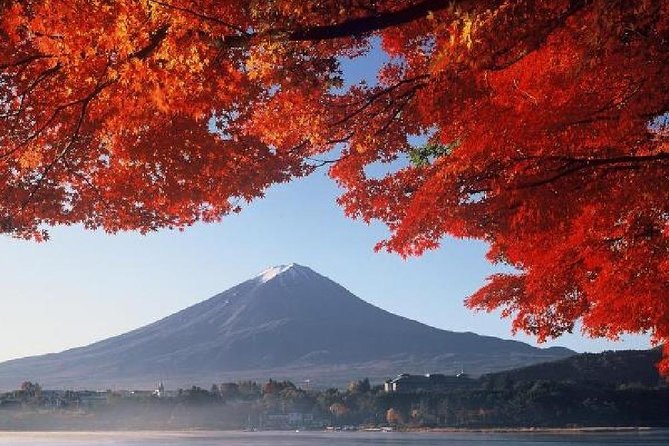
This is a well-planned way to see several Fuji and Hakone highlights in one demanding day. The best parts are the comfortable bus, the capable guides, the Japanese lunch, and the lively taiko show. The scenery can be wonderful, especially during cherry blossom season or under clear skies.
Book it if you value convenience and want a broad introduction to the area. Choose the lunch option unless dietary restrictions prevent it, request an audio guide early if needed, pack food for the no-lunch version, and bring warm clothing. Most important, keep the evening free and accept that Mt. Fuji may hide behind clouds.
FAQ
Where does the tour depart from?
The tour starts at the JTB Sunrise Tours Sales Office at 2-chōme-2-2 Nishishinjuku, Shinjuku City, Tokyo. The scheduled departure time is 8:10 a.m.
How long does the tour last?
The tour lasts approximately 12 hours and 35 minutes. Arrival back at Shinjuku is expected between 6 p.m. and 9 p.m., depending on traffic and conditions.
Is lunch included?
Lunch is included only when you select the with-lunch option. The meal is Japanese-style and includes tea or coffee. The no-lunch option does not provide access to nearby cafés or restaurants during the lunch break, so you should prepare food in advance.
Can I request a special meal?
Vegetarian, Muslim-friendly, and Indian thali meals are available when requested during booking. The Muslim-friendly meal does not contain pork or alcohol, but it is not halal certified. Allergy-friendly and gluten-free meals are not available.
What happens if Mt. Fuji is hidden by clouds?
The tour continues, and no refund is issued because Mt. Fuji is not visible. If the Fuji Subaru Line is closed or conditions prevent visits to the 4th or 5th Station, the tour may use alternative sites such as a Fuji museum, Lake Kawaguchi Oishi Park, the Fujisan World Heritage Center, Itchiku Kubota Art Museum, or Oshino Hakkai.
Can I cancel the tour?
You can cancel at least 24 hours before the experience start time for a full refund. Cancellations or changes made less than 24 hours before departure are not accepted for a refund.
Just added around Tokyo
- Tokyo Small Group Tour with Guide★ 4.5 · 38 reviews
- Tokyo 6hr Instagram Highlights Private Tour with Licensed Guide★ 5.0 · 38 reviews
- Tokyo Sumo Experience with Live Show & Audience Challenge★ 5.0 · 38 reviews
- Very popular in Harajuku♡Animal petting zoo★ 4.6 · 39 reviews
- Japanese Food Cooking Class in Asakusa, Tokyo★ 5.0 · 39 reviews
- Ramen Making from Scratch with Tokyo Mom(Vegan Option Available)★ 5.0 · 39 reviews
- Tokyo: Kimono Rental inside Shinjuku Gyoen National Garden★ 4.9 · 39 reviews
- Tokyo JDM Night: 600hp C63s AMG Edition 1 (Private)★ 4.9 · 39 reviews
Mount Fuji Tours, compared.
Mt Fuji and Hakone 1-Day Bus Tour Return by Bullet Train
Read our review →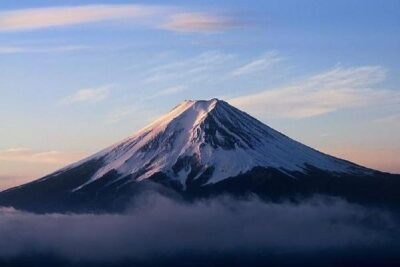
Mt Fuji & Hakone Cruise, Drum Show Bullet Train 1 Day from Tokyo
Read our review →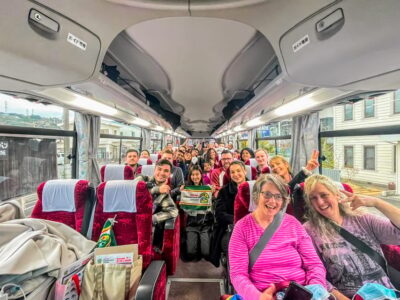
Tokyo Mt Fuji 5th St & Hakone Cruise Bus Tour w/Bullet Train
Read our review →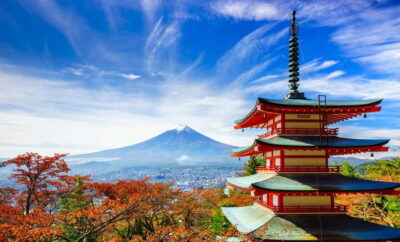
Mt. Fuji Tour, Hakone Ropeway, Owakudani, Lake Ashi
Read our review →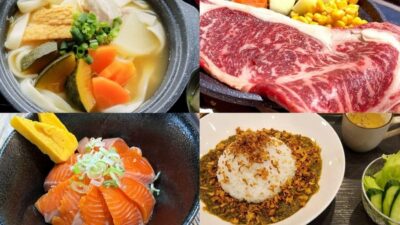
Mt.Fuji,Kawaguchiko Oishi Park,Arakurayama Sengen Park
Read our review →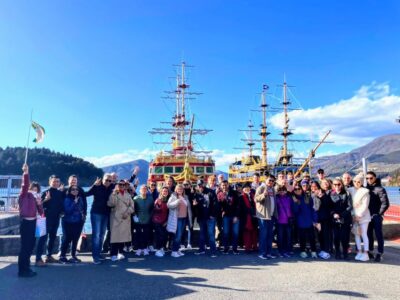
Mt. Fuji 5th Station & Hakone Cruise 1-Day Bus Tour
Read our review →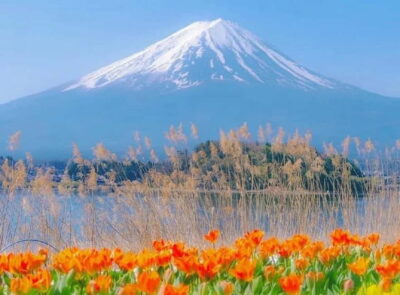
Mt Fuji Top 5 Spots Day Tour: Arakurayama Park,Oshino Hakkai
Read our review →Browse the lists this tour appears in