
Reviewed · MOUNT FUJI TOURS
Mt Fuji Top 5 Spots Day Tour: Arakurayama Park,Oshino Hakkai
Fuji looks best from several angles. This 10-hour day trip from Tokyo packs in Arakurayama Park, Chureito Pagoda, Oshino Hakkai, Kawaguchiko, and several of the mountain’s most photographed viewpoints. For $53 per person, I like the way it removes the fuss of train changes, local buses, parking, and route planning. I also like the guide support, especially for solo visitors who want someone to take photos and explain what they are seeing.
The main drawback is the long day and the heavy reliance on weather and traffic. Clouds can hide Mount Fuji at every stop, while weekend congestion may delay your return to Tokyo. You also need to bring money for food, drinks, and personal purchases, since lunch is not included.
In This Review
- The five things worth knowing first
- Why this Fuji tour works from Tokyo
- Arakurayama Sengen Park and the 397-step climb
- Hikawa Clock Shop and the Stairway to Heaven
- Oshino Hakkai, clear springs and a village pause
- Lawson Kawaguchiko and the quick modern photo
- Oishi Park and the changing seasonal finale
- What the guides add to a busy day
- The real cost of the $53 price
- Traffic, weather, and the long return to Tokyo
- Who should book this day trip?
- Should you book the Mt Fuji Top 5 Spots tour?
- FAQ
- How long does the Mount Fuji tour last?
- Where can I meet the tour?
- Is lunch included?
- What languages are available?
- Will I definitely see Mount Fuji?
- Can the tour return later than planned?
- What should I bring?
The five things worth knowing first
- 397 steps lead to the classic Fuji view: Arakurayama Sengen Park gives you the famous pagoda, mountain, and Fujiyoshida town composition, but the climb takes effort.
- Oshino Hakkai adds more than photo stops: Its eight clear spring ponds and quiet village streets provide a calmer break from the busier viewpoints.
- The schedule changes with the season: Oishi Park is used in summer, while the Maple Corridor or cherry blossom areas may replace it in autumn or spring.
- The Lawson stop is brief and crowded: You get a familiar Japanese street scene with Fuji behind it, but only about 20 minutes.
- The guide can make the day easier: Guides such as Anna, Sawaki, Linda, Peter, Sia, and others have been praised for clear instructions, local facts, humor, and taking photos.
- A clear view is never guaranteed: Even a perfectly planned Fuji tour cannot control clouds, rain, haze, or snow conditions.
Why this Fuji tour works from Tokyo
Getting from Tokyo to the Fuji Five Lakes area can be awkward if you do it independently. You may need to combine a highway bus or train with local transport, then work out how to connect widely separated sights. This trip puts you in an air-conditioned tourist vehicle and covers tolls, fuel, and parking.
The day begins at 8:00 AM at the Marunouchi South Exit of JR Tokyo Station, or at 8:30 AM near Tokyo Mode Gakuen. The exact meeting point depends on the option you book. Arrive at least 15 minutes early. The vehicle will not wait for late arrivals, and there is no refund for a no-show or missed departure.
The first transfer takes about two and a half hours. That is a significant part of the day, but it is also the price of seeing Fuji from Tokyo without arranging the transport yourself. Guides use Chinese, English, and Japanese, and the shared group includes people from different countries.
The transport is one of the strongest practical reasons to book. You can sit back, watch the city give way to smaller towns, and save your energy for the sightseeing. The tradeoff is that this is not a private tour. Meeting times are firm, and a large mixed-language group can move more slowly than a couple traveling alone.
More ways to see Mount Fuji:
- Mt Fuji and Hakone 1-Day Bus Tour Return by Bullet Train
★ 5.0 · 26,383 reviews - Mt Fuji & Hakone Cruise, Drum Show Bullet Train 1 Day from Tokyo
★ 4.0 · 7,413 reviews - Tokyo Mt Fuji 5th St & Hakone Cruise Bus Tour w/Bullet Train
★ 4.4 · 5,024 reviews
Arakurayama Sengen Park and the 397-step climb
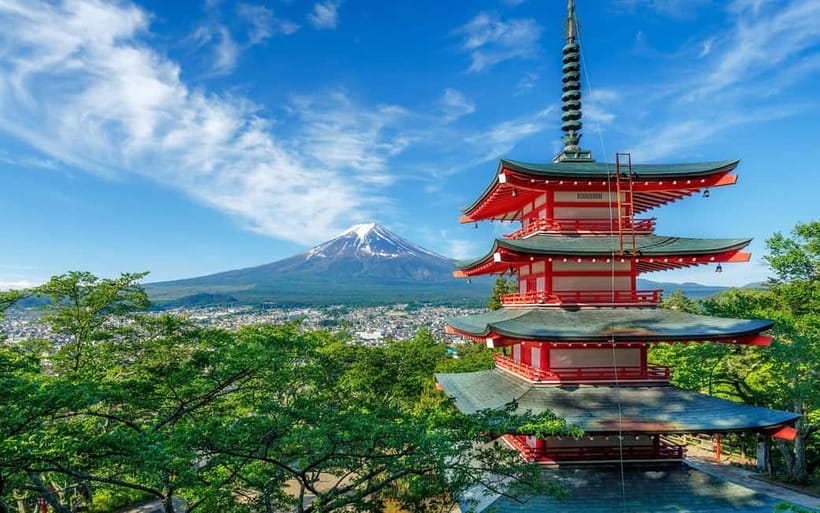
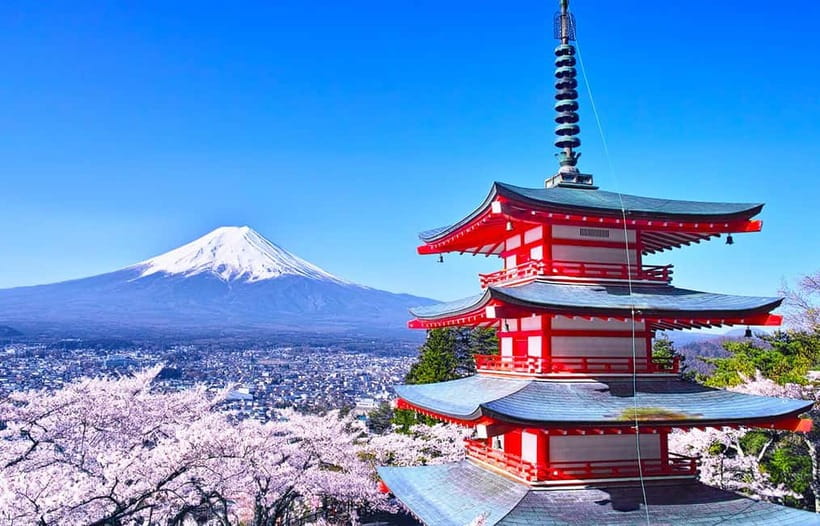
Arakurayama Sengen Park is the visual centerpiece. From the hillside, Mount Fuji rises behind the red Chureito Pagoda, with Fujiyoshida’s streets spread below. In spring, cherry blossoms frame the view. Autumn brings colored leaves, while winter can offer a crisp snow-covered summit.
You reach the main viewpoint by climbing 397 steps. The route also includes Arakura Fuji Sengen Shrine, with roughly 15 minutes set aside for a photo stop and a look around. The pagoda itself receives about 10 minutes of free time in the listed schedule, while the wider park visit is around an hour.
I would treat the timing as enough for photographs and a quick look, not a slow park visit. The climb is manageable for many people, but comfortable shoes matter. If you have children, older relatives, or anyone who dislikes stairs, keep the pace steady and do not spend all your time at the first photo platform.
This stop is popular for good reason, but it can also be crowded. The famous composition is familiar from calendars and social media, so the experience is more about seeing that view in person than finding an untouched corner. Your guide may help with photos, which is useful if you are traveling alone or as a couple.
Clear weather matters most here. If clouds cover Fuji, the pagoda and town remain attractive, but the famous three-part view loses its main subject.
Hikawa Clock Shop and the Stairway to Heaven
The Hikawa Clock Shop stop is shorter and more unusual. You walk along a quiet town street toward a view of Mount Fuji, with the traditional Japanese buildings creating a strong sense of depth. The shop has become a popular photo point because the road appears to lead directly toward the mountain.
You get about 20 minutes here. That is enough to take pictures and enjoy the contrast between ordinary neighborhood life and Japan’s most famous peak. It is also a good reminder that Fuji views are not limited to formal parks and lakefront platforms.
The stop depends heavily on visibility. If the mountain is hidden, the street scene still has character, but the photograph will not have the effect you probably came for. Be careful around the road and follow your guide’s instructions. This is a public town setting, not a closed attraction.
Oshino Hakkai, clear springs and a village pause
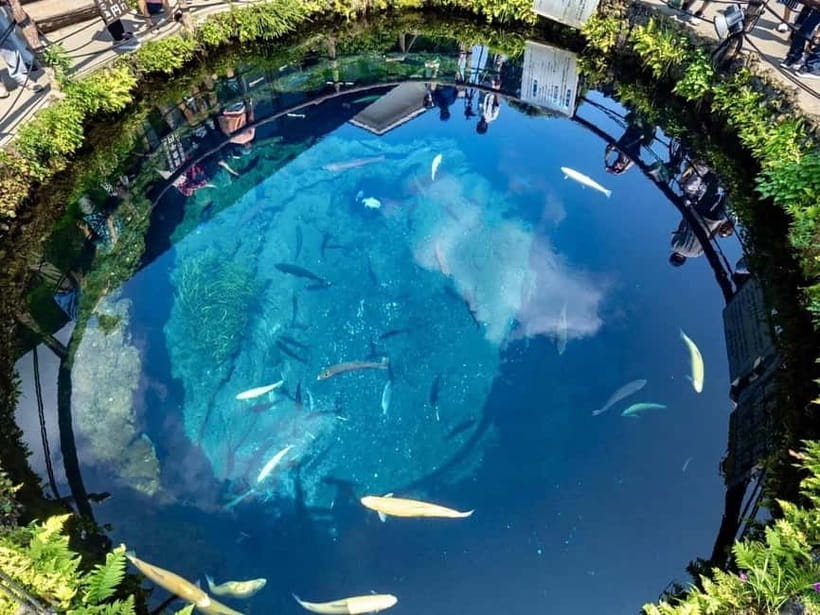
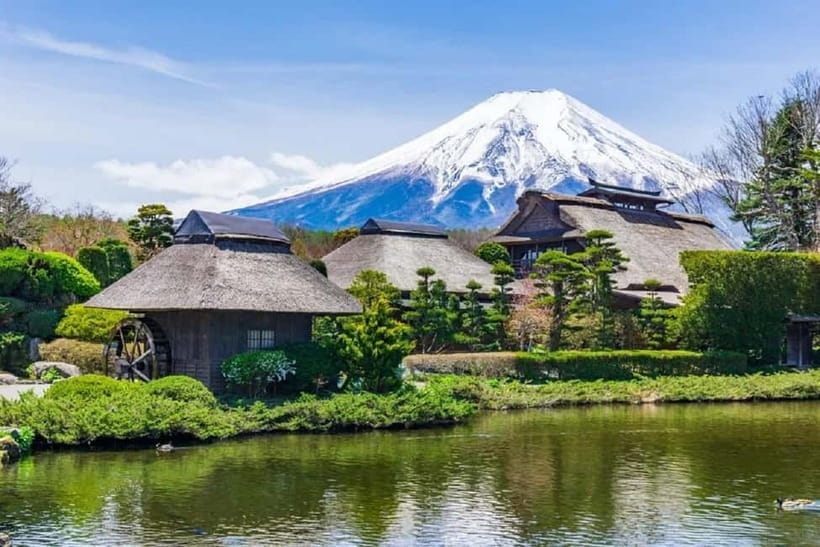
Oshino Hakkai gives the tour a different rhythm. The area is known for eight clear springs fed by melted snow from Mount Fuji. Water, small ponds, traditional buildings, village paths, and views of the mountain make this the most relaxed stop of the day.
The visit lasts about 90 minutes, including a guided tour and free time. You can walk between the springs, look at the water, browse small shops, and take photographs. The setting is more than a quick Fuji backdrop. It gives you a closer look at a rural community shaped by the mountain and its water.
This is also the most practical place to think about lunch. The tour information says food is not included, although the schedule includes about 45 minutes at a local restaurant or lunch stop. You may bring your own food, buy something at the attractions, or follow your guide’s restaurant suggestion. Do not assume a meal is covered in the $53 price.
Bring cash. Some scenic spots, restaurants, and shops may accept cash only. Oshino Hakkai also has souvenir stalls, so you will have chances to buy snacks or small gifts, but purchases are your responsibility and the shops are independent of the tour operator.
The village can feel busy during peak periods. Still, the springs make this a worthwhile stop even if Fuji is partly obscured. You get water, local scenery, and a break from the steady stream of lookout points.
A few more Tokyo experiences worth weighing up
- 1-Day Tokyo Bus Tour
★ 5.0 · 14,250 reviews - Tokyo: TOKYO SKYTREE® Admission ticket
★ 4.5 · 11,192 reviews - Tokyo: teamLab Planets TOKYO Digital Art Museum Entry Ticket
★ 4.6 · 9,779 reviews - Tokyo: Sumo Show Experience with Chicken Hot Pot and a Photo
★ 4.8 · 6,678 reviews
Lawson Kawaguchiko and the quick modern photo
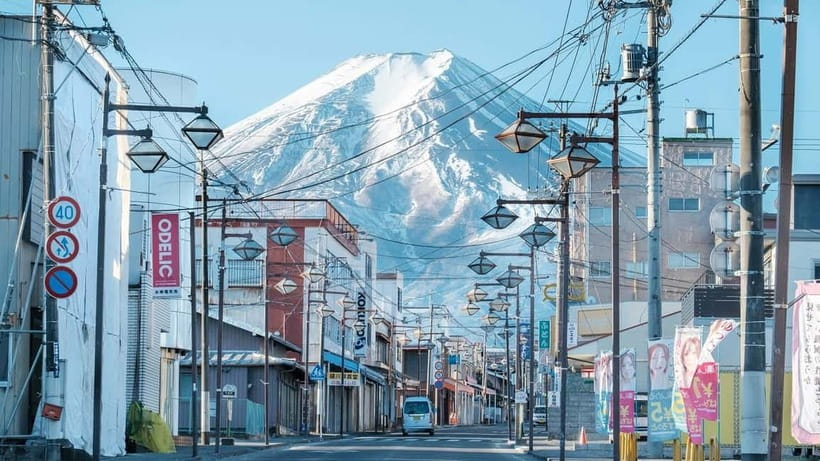
The Lawson convenience store near Kawaguchiko Station is one of the tour’s shortest stops, around 20 minutes. From the right position, you can photograph the familiar blue and white store with Mount Fuji behind it. It is a simple image, but it captures a very Japanese mix of everyday convenience and monumental scenery.
This stop is about the photograph rather than a long visit. You may have time to buy a drink or snack, but do not count on a full shopping break. Pay attention when crossing the street. The site is near an active road, and getting the picture is not worth taking a safety risk.
The view can disappear under clouds, especially later in the day. That is why the tour includes several different Fuji viewpoints. If one fails, another may work.
Oishi Park and the changing seasonal finale
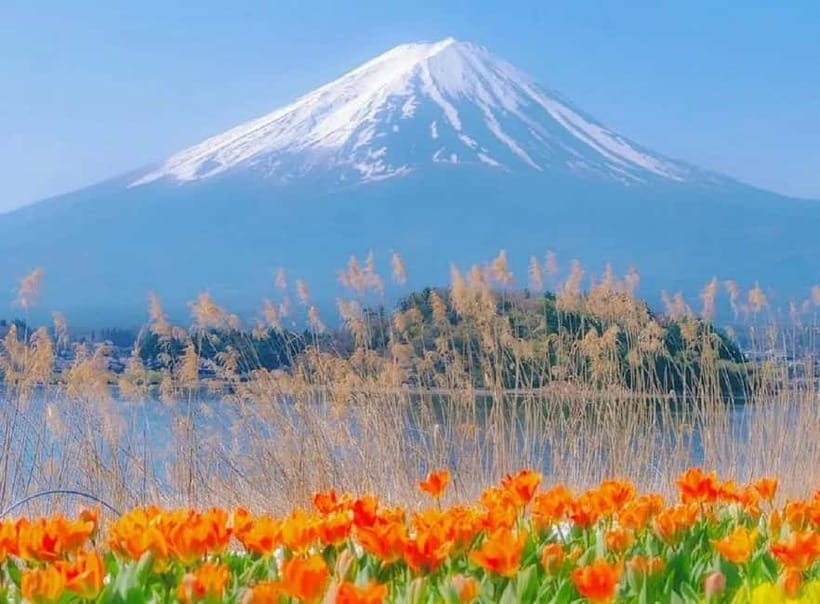
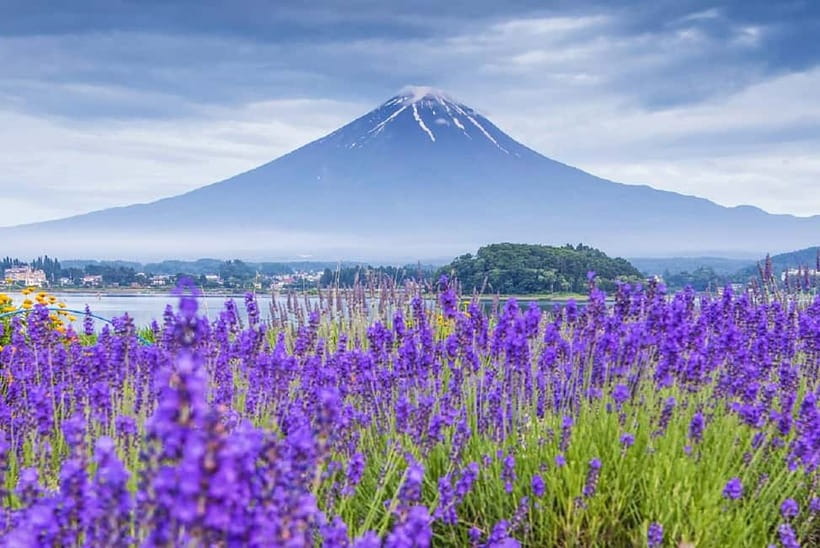
Oishi Park near Lake Kawaguchi is scheduled for about 50 minutes and gives you a broad, open view of Fuji. The park is especially appealing when seasonal plants add color to the foreground.
In summer, lavender fields provide a purple frame for the mountain. The Kawaguchiko Herb Festival is associated with the June to October period mentioned for this experience. In autumn, red kochia grass can add a warm foreground to photographs.
The park also offers time for sightseeing and shopping. After several short photo stops, the 50-minute visit feels generous enough to slow down, enjoy the view, and take a few final pictures.
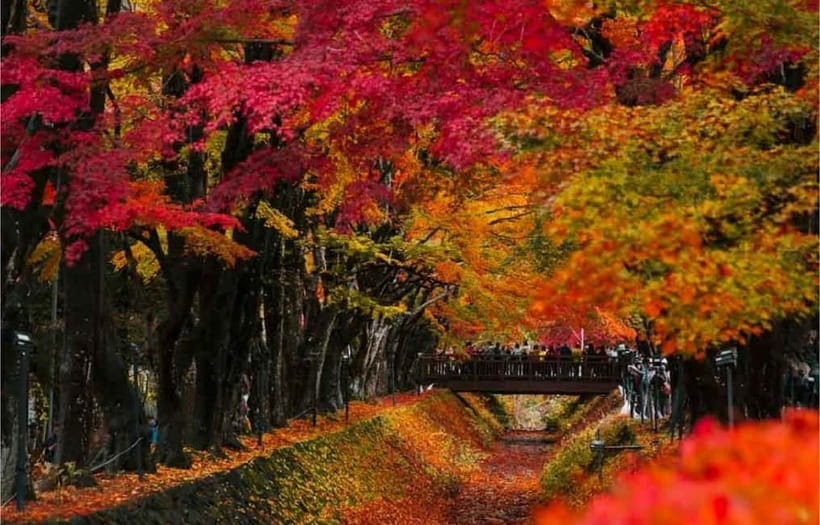
The seasonal schedule needs careful attention. Around late October to November 20, the tour may replace Oishi Park with the Kawaguchiko Maple Corridor. During this period, red maple leaves, Lake Kawaguchi, and a snow-capped Fuji can create a stronger autumn scene than the summer park.
In spring, around April 5 to 14, the Kawaguchiko Cherry Blossom Festival may replace Oishi Park. The schedule can change by year, so check the exact option and date before booking. These substitutions are not extra stops. They are seasonal alternatives, so you should not expect both Oishi Park and the Maple Corridor or cherry blossom area on the same outing.
What the guides add to a busy day
A guide matters on a tour with this many stops. The best guides keep people moving without making the day feel like a military exercise. They also explain what makes each location worth your time, rather than simply pointing toward a photo platform.
Anna received repeated praise for her kindness, clear explanations, help with photos, and ability to keep a large group organized. Sawaki was noted for his humor, small games during the longer drives, and useful facts about Japan. Linda was appreciated for her energy, patience, and careful meeting instructions.
Peter was praised for keeping the schedule smooth and giving people enough time at the stops. Sia, Tom, Olivia, Erina, Mila, David, Liu, Karen, and other guides were also singled out for being friendly, helpful, and well organized. The names are not a guarantee of who will lead your departure, but they show the level of guide involvement you can reasonably hope for.
Several useful details come through in the experience. Guides may take photographs for solo visitors, help with restaurant choices, explain where to find stamps, and assist when a personal problem arises. They also need to repeat instructions in multiple languages, which can make explanations shorter than on a private English-only tour.
The real cost of the $53 price
At $53, this is strong value if you want several Fuji viewpoints in one day. The price includes the air-conditioned vehicle, driver, multilingual guide, pickup and drop-off at one of two designated points, highway tolls, parking, fuel, and applicable overtime costs for the driver and guide.
You are paying for convenience and coverage. A private car, fuel, tolls, parking, and a dedicated guide would cost far more. Public transport could be cheaper in theory, but reaching all these stops in one day would be harder and less flexible.
The price does not include lunch, water, drinks, souvenirs, or other personal expenses. Add a food budget and carry cash. If you are careful with spending, the tour remains a low-cost way to see an expensive-to-reach region.
The main value question is your tolerance for structure. You get many famous sights without navigation worries, but you do not control how long you stay at each one. A photographer who wants an hour at one shrine may find the schedule too tight. Someone visiting Tokyo for a short time may find the same schedule ideal.
Traffic, weather, and the long return to Tokyo
The return drive begins around 4:20 PM, with drop-off expected around 6:30 PM at Tokyo Station or Tokyo Mode Gakuen. Treat 6:30 PM as an estimate, not a promise.
Traffic can delay the return, particularly on Japanese weekends, holidays, and peak seasonal dates. Bad weather can also change the order of stops, shorten sightseeing time, or lead to cancellations. Do not schedule a flight, evening train, theater performance, or expensive dinner immediately after the advertised return time.
The day is long, but the stops break it up. You will have a long morning transfer, several walks, a stair climb, a village visit, lunch time, and another drive home. Rest well before the trip and bring water. The shared vehicle helps, but ten hours is still ten hours.
Fuji visibility is the central gamble. The tour can take you to all the correct places, but it cannot guarantee a clear peak. Winter often offers sharp views when the air is clear, while spring, summer, and autumn add flowers or leaves but may also bring cloud cover. Book this for the range of places, not only one perfect photograph.
Who should book this day trip?
I would recommend it to first-time Fuji visitors staying in Tokyo, especially if you want the famous views without renting a car or learning the regional bus network. It also suits solo visitors, couples, families with older children, and anyone who values a guide who can take pictures and keep the day on track.
It works well for a short Japan visit because it combines iconic scenery with a rural village, a shrine, a pagoda, a lake area, and everyday Japanese streets. You see more than a single observation deck.
I would think twice if you dislike group schedules, stairs, long coach rides, or busy photo spots. Independent visitors who already plan to stay around Kawaguchiko may prefer a slower visit with more time at one or two locations. And if Fuji itself is your only goal, check the forecast carefully, since a cloudy day can soften the payoff.
Should you book the Mt Fuji Top 5 Spots tour?
Book it if you want maximum Fuji coverage for a modest price and can accept a full, structured day. The mix of Arakurayama Park, Oshino Hakkai, Hikawa Clock Shop, Lawson, and a seasonal Kawaguchiko stop gives you a useful range of views and settings.
Pack water, cash, comfortable shoes, and food or a lunch budget. Arrive early, keep your phone available for the driver and guide details sent the night before, and leave your evening open in case traffic intervenes. If the weather is clear, this can be one of the easiest ways to collect memorable Fuji views in a single day. If clouds arrive, the springs, village streets, shrine, and seasonal parks still give the outing substance.
FAQ
How long does the Mount Fuji tour last?
The tour lasts about 10 hours. It starts in Tokyo at 8:00 AM or 8:30 AM, depending on the selected meeting point, and the planned return is around 6:30 PM.
Where can I meet the tour?
You can meet at the Marunouchi South Exit of JR Tokyo Station or at Tokyo Mode Gakuen. The exact meeting point depends on the option booked.
Is lunch included?
No. You need to bring food, buy lunch at one of the attractions, or eat at a restaurant recommended by the guide. The schedule includes time for a local restaurant or lunch stop, but the meal itself is not included.
What languages are available?
Live guide support is available in Chinese, English, and Japanese. Since this is a shared group tour, explanations may be given in several languages.
Will I definitely see Mount Fuji?
No. Fuji visibility depends on weather conditions. Clouds and other weather may block the mountain at some or all of the viewpoints.
Can the tour return later than planned?
Yes. Traffic, bad weather, weekends, and peak seasons can delay the return. The schedule may be shortened, changed, or canceled in difficult conditions, so avoid booking other transport or fixed plans after the tour.
What should I bring?
Bring comfortable shoes, water, and cash. Cash may be needed at some scenic spots, restaurants, and other places.
Just added around Tokyo
- Tokyo 6hr Instagram Highlights Private Tour with Licensed Guide★ 5.0 · 38 reviews
- Tokyo Small Group Tour with Guide★ 4.5 · 38 reviews
- Tokyo Sumo Experience with Live Show & Audience Challenge★ 5.0 · 38 reviews
- Japanese Food Cooking Class in Asakusa, Tokyo★ 5.0 · 39 reviews
- Very popular in Harajuku♡Animal petting zoo★ 4.6 · 39 reviews
- Ramen Making from Scratch with Tokyo Mom(Vegan Option Available)★ 5.0 · 39 reviews
- Tokyo JDM Night: 600hp C63s AMG Edition 1 (Private)★ 4.9 · 39 reviews
- Tokyo: Kimono Rental inside Shinjuku Gyoen National Garden★ 4.9 · 39 reviews
Mount Fuji Tours, compared.
Mt Fuji and Hakone 1-Day Bus Tour Return by Bullet Train
Read our review →
Mt Fuji & Hakone Cruise, Drum Show Bullet Train 1 Day from Tokyo
Read our review →
Tokyo Mt Fuji 5th St & Hakone Cruise Bus Tour w/Bullet Train
Read our review →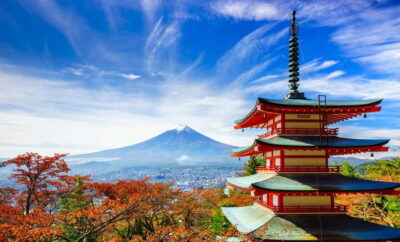
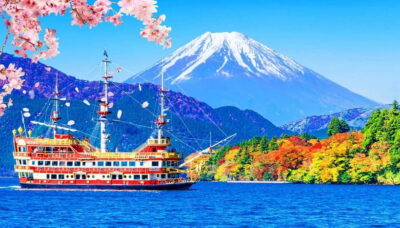
Mt. Fuji Tour, Hakone Ropeway, Owakudani, Lake Ashi
Read our review →
Mt.Fuji,Kawaguchiko Oishi Park,Arakurayama Sengen Park
Read our review →
Mt. Fuji 5th Station & Hakone Cruise 1-Day Bus Tour
Read our review →
Private Tour to Mt. Fuji and Hakone (Fully Licenced Operator)
Read our review →Browse the lists this tour appears in