Reviewed · TOKYO TOURS
Premium 14-Piece Sushi & Cultural Discovery with Chef Interaction
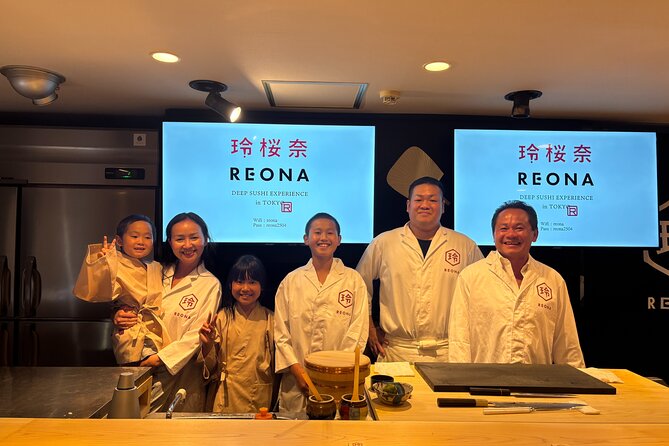
Sushi becomes more interesting at the chef’s counter. This two-hour experience in central Tokyo combines a 14-piece premium sushi course with direct chef interaction, demonstrations, ingredient comparisons, and a short look behind the counter. I especially like the small maximum group size of five and the chance to see techniques such as searing, simmering, marinating, and wrapping while you eat. The main drawback is the price, $171.73 per person, and drinks are extra.
I also like that the tasting explains differences you can actually notice, including sushi rice preparation and freshly grated wasabi compared with standard paste. This is not just a meal served in front of you. It is a compact lesson in how tools, ingredients, and small chef decisions shape the final bite. Families should note that children receive a separate meal in the Kids’ Room rather than the adult sushi course.
In This Review
- Key points at a glance
- What you are really buying for $171.73
- Starting in Kanda Surugadai
- Taking your seat at the exclusive counter
- How the 14-piece sushi course works
- The comparisons that make the meal educational
- Meeting the chef at work
- Stepping behind the counter
- What the Tokyo area adds
- Drinks, children, and dietary limits
- Who will enjoy this most
- Should you book this sushi experience?
- FAQ
- Where does the sushi experience start?
- Where does the experience end?
- How long does the experience last?
- How many people can join?
- Is an English-speaking guide included?
- What food is included?
- Are drinks included?
- Can children sit at the sushi counter?
- Can the experience accommodate food allergies?
Key points at a glance
- Fourteen pieces with a purpose: The premium course gives you a full meal while each tasting comparison helps explain what you are eating.
- A front-row sushi lesson: You sit at an exclusive chef’s counter and watch professional techniques up close.
- Rare ingredient comparisons: Rice preparation, wasabi, and premium versus standard ingredients are presented side by side.
- Small group setting: A maximum of five people keeps the session intimate and makes it easier to interact with the chef.
- Behind-the-counter access: You can step into the chef’s workspace and take photos at the end.
- Family arrangements differ: Children receive a kid-friendly meal and use a separate room or child-designated seat, not the adult counter course.
What you are really buying for $171.73
At first glance, $171.73 is a serious price for two hours and a single meal. You are not paying only for fourteen pieces of sushi. The fee also covers a professional English-speaking guide, chef demonstrations, cultural explanation, comparison tastings, and access behind the counter.
That added instruction matters if you are curious about sushi beyond the usual restaurant experience. A normal meal may leave you wondering why one piece tastes better than another. Here, the session is designed to show you the reasons: rice preparation, ingredient quality, wasabi, and handling all enter the conversation.
I would call the value strongest for first-time visitors who want a clear introduction to Edomae-style sushi without committing to a long formal class. You receive food, interpretation, and access in one sitting. If you already know sushi well and mainly want a quiet meal, the price may feel high.
The high rating of 4.9 from 57 ratings and a 98 percent recommendation rate suggest that the format is working for most people. One especially useful point is that even a person who did not usually enjoy fish found the dishes worthwhile and enjoyed the educational side. That makes this a reasonable choice for a mixed group, although anyone who strongly dislikes seafood may still prefer a different food tour.
A few more Tokyo experiences worth weighing up
- Mt Fuji and Hakone 1-Day Bus Tour Return by Bullet Train
★ 5.0 · 26,383 reviews - 1-Day Tokyo Bus Tour
★ 5.0 · 14,250 reviews - Tokyo: TOKYO SKYTREE® Admission ticket
★ 4.5 · 11,192 reviews
Starting in Kanda Surugadai
The meeting point is 3-chōme-3-6 Kanda Surugadai, Chiyoda City, Tokyo 101-0062. The activity returns to this same point, so you do not need to plan a complicated end-of-tour transfer.
The area places you near several central Tokyo districts named in the schedule: Ochanomizu, Akihabara, Kanda, and the Kanda Jimbocho bookstore area. These labels help put the experience in context, but the main event is the restaurant session rather than a sightseeing walk through each neighborhood.
Because the experience is listed near public transportation, reaching the start should be manageable. Still, I would allow extra time in Tokyo. Kanda and the surrounding districts contain several stations and busy roads, and a mobile ticket is easiest to use when you are not rushing.
The session lasts about two hours, although the standard course can run as long as two and a half hours. That longer window matters if you have a tightly timed train, museum booking, or dinner reservation afterward. I would leave a reasonable cushion.
Taking your seat at the exclusive counter
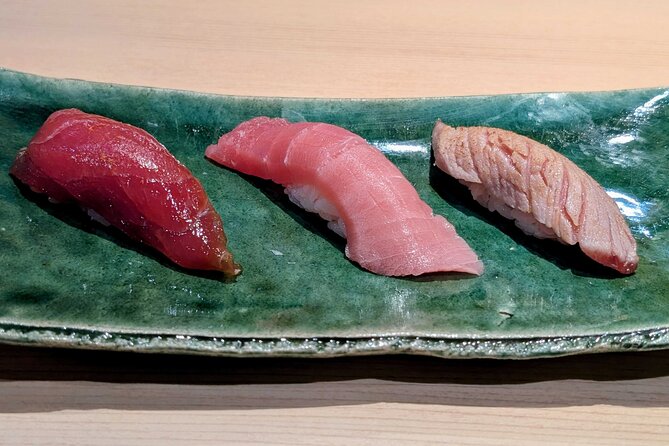
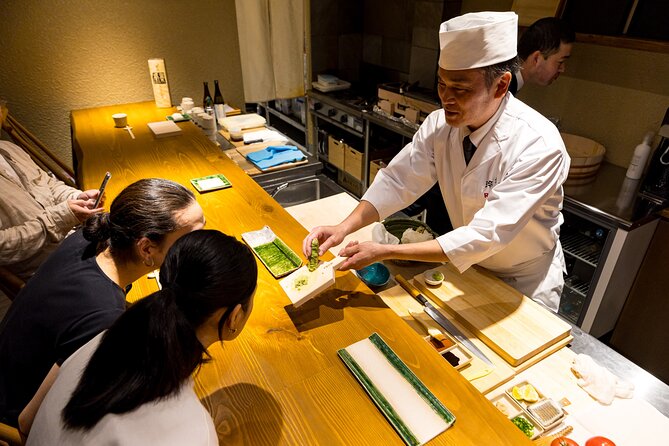
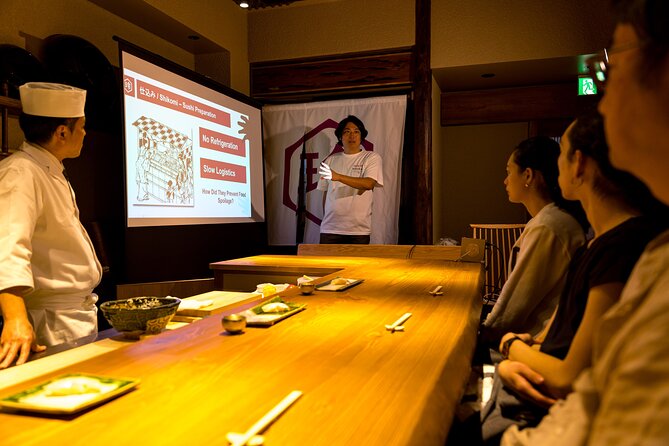
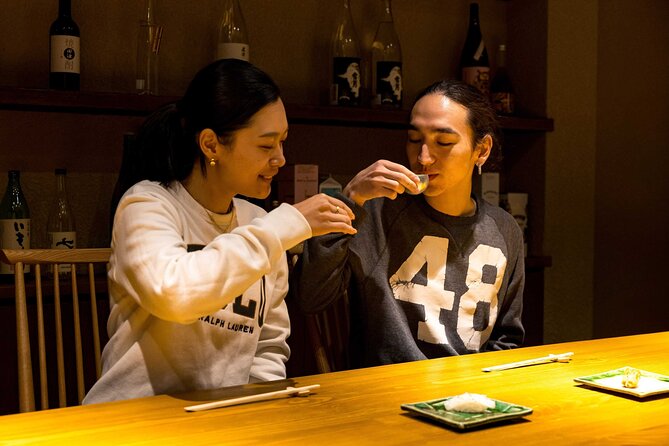
An English-speaking guide welcomes you at the restaurant and introduces the session. You are seated at the chef’s counter, where the cooking and preparation happen within clear view.
This seating is the heart of the experience. Sushi is often associated with quiet ceremony, but the counter gives you a chance to watch the work rather than simply receive the finished pieces. The chef can explain what is happening as techniques are performed, and the guide helps connect those actions to Japanese food traditions.
The group limit is five people. That is small enough to keep the setting personal and should make it easier to hear the explanation and ask questions. It also means this is not a large, anonymous food demonstration.
The tone appears friendly rather than stiff. The strongest praise centers on the welcoming manner of the staff and the use of visual aids and videos to explain sushi history and technique. Those tools are useful because some preparation steps happen quickly. A short visual explanation can make the details easier to follow than spoken commentary alone.
How the 14-piece sushi course works
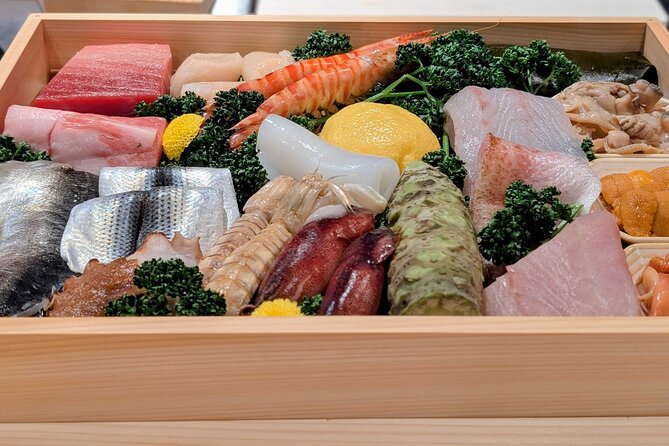
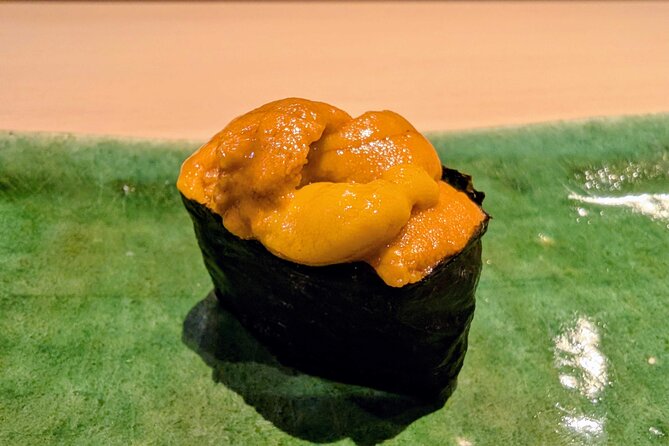
The meal includes fourteen pieces of premium omakase sushi. Omakase means the chef makes the choices, so you should expect the course to follow the restaurant’s selection rather than a menu where you pick every item.
The benefit is variety and discovery. You can focus on the taste and the explanation instead of trying to build the perfect order. The course also makes sure the educational part does not leave you hungry. Fourteen pieces provide a substantial tasting for most people, though the experience is still presented as a guided sushi course rather than an all-you-can-eat meal.
The chef demonstrates several Edomae techniques, including simmering, searing, marinating, and wrapping. These methods show that sushi is not simply raw fish placed on rice. Preparation can change texture, aroma, saltiness, and the way a topping works with the rice.
A seared topping, for example, can introduce a different aroma and surface texture. Marinating can change both seasoning and firmness. Simmering shows another side of Japanese preparation, while wrapping highlights the careful handwork that goes into presenting sushi.
The exact pieces are not specified, so you should not book this expecting particular fish. The value is in the course structure, the comparison tasting, and the chef interaction rather than a promised list of ingredients.
A completely different kind of day out in Tokyo:
- Tokyo: teamLab Planets TOKYO Digital Art Museum Entry Ticket
★ 4.6 · 9,779 reviews - Mt Fuji & Hakone Cruise, Drum Show Bullet Train 1 Day from Tokyo
★ 4.0 · 7,413 reviews - Tokyo: Sumo Show Experience with Chicken Hot Pot and a Photo
★ 4.8 · 6,678 reviews - Tokyo: Shinjuku Food Tour (13 Dishes at 4 Local Eateries)
★ 5.0 · 6,603 reviews
The comparisons that make the meal educational
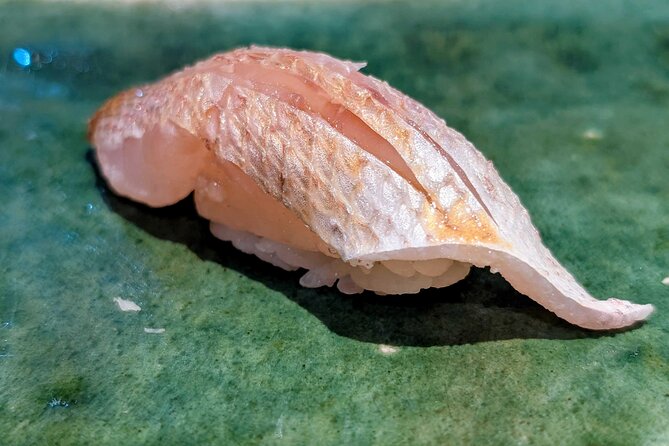
The most useful part for many people may be the side-by-side comparisons. You can see how premium and standard ingredients differ, then taste those differences instead of hearing only a general claim about quality.
Rice receives special attention. Sushi rice can vary in seasoning, texture, and preparation, and those details affect the whole bite. Since rice is the base of every piece, even a small change can alter the balance between topping and seasoning.
The wasabi comparison is another practical lesson. You can taste authentic freshly grated wasabi beside standard paste. This helps explain why the word wasabi can cover very different experiences. Freshly grated wasabi is presented as part of the comparison, not simply as a condiment placed on the side.
You also learn about sushi tools and equipment. This is a useful cultural detail because the chef’s work depends on more than knives and fresh ingredients. The explanation connects the visible tools to the precision of the craft.
I like this teaching method because it gives you something to notice during future meals. Afterward, you may pay closer attention to rice texture, the amount of seasoning, the effect of a marinade, or the sharpness of wasabi. That is a better souvenir than a quick photograph alone.
Meeting the chef at work
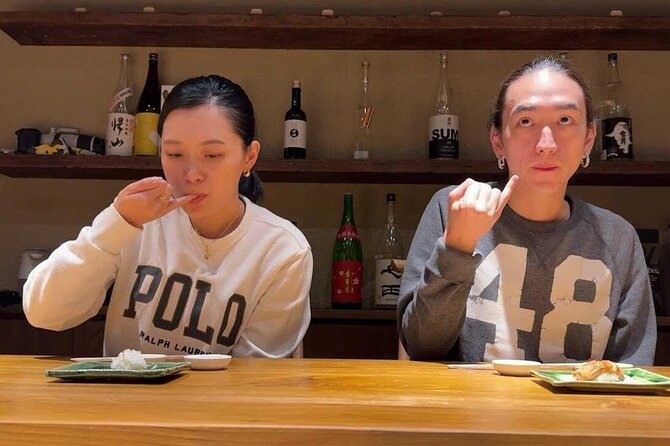
The chef interaction is not a separate classroom lecture. It is built into the meal. You watch the chef prepare sushi, see techniques demonstrated, and receive practical tips along the way.
That setup works well for visitors who learn by watching. You see the timing and hand movements as the food is made, then eat the result soon afterward. The connection between technique and taste is immediate.
It also gives the experience a human element. Sushi counters can feel formal, especially if you are unsure when to speak or how to behave. The guide helps frame the session, while the chef’s demonstrations give you a natural reason to ask questions and pay attention.
The provided information does not name the guide or chefs, so you should not expect a particular person by name. What is clear is that the guide speaks English and supports the cultural explanation while the chefs handle the demonstrations.
Stepping behind the counter
Near the end, you can visit the chef’s workspace behind the sushi counter and take photos. This is a small feature, but it gives the experience a satisfying finish.
You see the area from the chef’s side rather than only from your seat. For anyone interested in restaurant craft, that change in viewpoint can make the earlier explanations more concrete. It also gives you a record of the meal beyond photographs of individual sushi pieces.
Photography is specifically included as an opportunity, but normal restaurant courtesy still matters. Follow the staff’s direction about where to stand and when to take pictures. The visit is short, so treat it as a final look rather than an extended kitchen tour.
What the Tokyo area adds
The experience is connected with Chiyoda, Kanda, Ochanomizu, Akihabara, and the Kanda Jimbocho bookstore area. These are useful neighborhoods to pair with the meal on your own, especially if you want to fill the rest of the day with central Tokyo stops.
Akihabara is known for its electronics and pop culture associations, while Kanda and Ochanomizu offer a different urban feel. Kanda Jimbocho is associated with bookstores, making it a natural place to continue if you enjoy browsing rather than racing between major sights.
The activity itself does not promise a guided neighborhood walk. I would treat these area names as location context, not as a full sightseeing itinerary. Plan your own before-and-after stops separately, and use the restaurant meeting point as your fixed anchor.
Drinks, children, and dietary limits
Beverages are not included. You can order sake pairings chosen to complement the sushi, or choose soft drinks after arriving at the restaurant. Since alcohol costs extra, include that in your budget if the sake option interests you.
The sake pairing can add another layer to the tasting, especially if you want to compare how a drink changes the flavor of sushi. It is optional, so you can keep the price closer to the advertised per-person cost by skipping it.
Families have access to a Kids’ Room for children up to 12 years old. The room is child-friendly, but childcare is not provided, so an adult remains responsible for the child.
The child plan includes a kid-friendly meal, not the fourteen-piece sushi course. Children sit in the Kids’ Room or in a child-designated seat rather than at the adult sushi counter. If your child wants the full sushi course and counter seating, the reservation must be made under the adult plan.
Dietary restrictions require careful attention. The experience cannot accommodate allergies or dietary restrictions involving rice, soy, or seafood. That limitation is significant because all three are central to sushi. Anyone affected should choose another meal experience rather than hope adjustments can be made on arrival.
Service animals are allowed, and the location is near public transportation. Confirmation arrives when you book, and the mobile ticket makes the entry process simple.
Who will enjoy this most
I would recommend this experience to you if you want a small, structured introduction to sushi and prefer learning while eating. It fits first-time Tokyo visitors, food-focused couples, solo diners who like guided interaction, and small groups seeking something more personal than a standard restaurant meal.
It is also a good choice for mixed-interest groups. One person can enjoy the fish, another can focus on the tools and traditions, and someone less fond of seafood may still find the demonstrations and comparisons worthwhile. The positive account from a self-described non-fish lover supports that possibility, though it is not a guarantee.
You should think twice if you want a long neighborhood tour, a bargain meal, or complete control over the menu. The course is chef-selected, the duration is fixed, and the cost rises if you add sake.
Free cancellation is available if you cancel at least 24 hours before the start time. Changes or cancellations inside that window are not accepted for a refund, and cut-off times use Tokyo local time.
Should you book this sushi experience?
Book it if you want to understand what makes sushi good, not simply eat sushi in Tokyo. The small group, counter seating, chef demonstrations, premium comparisons, and fourteen-piece course give you plenty to do in two hours.
The price is easier to justify when you value instruction and access as much as the food. I would book it early, since it is commonly reserved about 39 days ahead. Choose the adult plan for the full counter course, budget separately for drinks, and avoid it if rice, soy, or seafood restrictions apply.
For a food-curious visitor, this offers a clear look at sushi craft without demanding a full day. You leave with a meal, a better sense of technique, and a sharper eye for the details that often disappear in an ordinary dining room.
FAQ
Where does the sushi experience start?
It starts at 3-chōme-3-6 Kanda Surugadai, Chiyoda City, Tokyo 101-0062, Japan.
Where does the experience end?
The activity ends back at the meeting point.
How long does the experience last?
The standard experience lasts about two hours. The course may take up to two and a half hours.
How many people can join?
The maximum group size is five travelers.
Is an English-speaking guide included?
Yes. A professional English-speaking guide welcomes you and supports the session.
What food is included?
The adult plan includes a 14-piece premium omakase sushi course, along with ingredient and technique comparison tastings.
Are drinks included?
No. You can order sake pairings or soft drinks after arriving at the restaurant.
Can children sit at the sushi counter?
Children booked under the child plan sit in the Kids’ Room or in a child-designated seat. They receive a kid-friendly meal, not the adult sushi course. To sit at the counter and receive the full 14-piece course, a child must be booked under the adult plan.
Can the experience accommodate food allergies?
It cannot accommodate allergies or dietary restrictions involving rice, soy, or seafood.
Just added around Tokyo
- Tokyo 6hr Instagram Highlights Private Tour with Licensed Guide★ 5.0 · 38 reviews
- Tokyo Small Group Tour with Guide★ 4.5 · 38 reviews
- Tokyo Sumo Experience with Live Show & Audience Challenge★ 5.0 · 38 reviews
- Japanese Food Cooking Class in Asakusa, Tokyo★ 5.0 · 39 reviews
- Very popular in Harajuku♡Animal petting zoo★ 4.6 · 39 reviews
- Ramen Making from Scratch with Tokyo Mom(Vegan Option Available)★ 5.0 · 39 reviews
- Tokyo JDM Night: 600hp C63s AMG Edition 1 (Private)★ 4.9 · 39 reviews
- Tokyo: Kimono Rental inside Shinjuku Gyoen National Garden★ 4.9 · 39 reviews
Tokyo Tours, compared.

Mt Fuji and Hakone 1-Day Bus Tour Return by Bullet Train
Read our review →


teamLab Planets TOKYO Digital Art Museum Entry Ticket
Read our review →
Mt Fuji & Hakone Cruise, Drum Show Bullet Train 1 Day from Tokyo
Read our review →
Shinjuku Food Tour (13 Dishes at 4 Local Eateries)
Read our review →
Tokyo Mt Fuji 5th St & Hakone Cruise Bus Tour w/Bullet Train
Read our review →