Reviewed · TOKYO TOURS
Tokyo Asakusa Rickshaw Tour
See old Tokyo at street level. This private rickshaw tour gives you a pleasant way to reach Asakusa’s shrines, temple lanes, retro streets, and riverside views without spending the whole day on foot. I like the personal route planning, and I like how guides such as Koko, Kei, Micchy, Taisei, and Yusuke add local stories, humor, and excellent photo help.
The main consideration is space. A rickshaw is only 29.1 inches, or 74 centimeters, wide, so two adults sit snugly. Short tours also cannot cover every stop, and the ride is canceled in poor weather.
In This Review
- Key points to know before booking
- Why a rickshaw works so well in Asakusa
- Meeting at Asakusa Station
- Edo streets and the old face of Tokyo
- A raccoon street and Asakusa’s quirky side
- Sensoji, Asakusa Shrine, and the limits of the rickshaw
- Ushijima Shrine and the three-gate question
- Honryuin Matsuchiyama Shoden and the mystery of the radishes
- Imado Shrine and its beckoning cats
- Sumida River, cherry trees, and Tokyo Skytree
- Asahi Beer and Tokyo’s modern edge
- Asakusa’s entertainment district and Rokku Street
- What the different ride lengths really mean
- Price, comfort, and family details
- The guides make the difference
- Who should book this Asakusa ride?
- Should you book it?
- FAQ
- Where does the Tokyo Asakusa Rickshaw Tour start?
- Where does the tour finish?
- How long does the rickshaw tour last?
- Can children ride in the rickshaw?
- Can two adults share one rickshaw?
- What happens if the weather is poor?
Key points to know before booking
- A private ride with your own guide: Only your group takes part, and you can discuss which parts of Asakusa interest you most.
- The best views come from the Sumida River: You get a clear photo angle toward Tokyo Skytree, especially around Sumida Park and the river crossings.
- Shrines provide the cultural heart of the ride: Ushijima Shrine, Imado Shrine, and Asakusa Shrine each reveal a different side of local religious life.
- The route mixes old and new Tokyo: Edo-period facades, raccoon statues, old entertainment streets, and the Asahi Beer Headquarters may all appear.
- Short rides offer an overview, not the full district: The 30-minute option is useful for orientation, while longer rides allow more temples, back streets, and stops.
- Fit and family details matter: Each rickshaw holds up to two adults, with young children sitting on an adult’s lap under the stated age rules.
Why a rickshaw works so well in Asakusa
Asakusa is compact enough to explore on foot, but its sights are spread across busy shopping lanes, quiet temple grounds, old entertainment streets, and the Sumida River waterfront. A rickshaw lets you cover more ground while keeping your eyes up.
You sit higher than you would in a car. That gives you a better look at wooden facades, shrine gates, shop signs, tree-lined lanes, and the changing rhythm of the neighborhood. You also have a guide close by, ready to explain what you are seeing instead of leaving you to puzzle over every building.
I especially like this format for a first morning or afternoon in Tokyo. You get your bearings quickly, learn which corners deserve a later visit, and avoid using your limited energy on long walks between sights.
The experience is private, not a large shared outing. That matters because you can ask questions, adjust the pace, and tell the guide what you care about. A family might focus on the cat statues at Imado Shrine. A history-minded visitor might prefer Edo-era streets and old theaters. A first-time Tokyo visitor might want the main temple approach and the Skytree view.
A few more Tokyo experiences worth weighing up
- Mt Fuji and Hakone 1-Day Bus Tour Return by Bullet Train
★ 5.0 · 26,383 reviews - 1-Day Tokyo Bus Tour
★ 5.0 · 14,250 reviews - Tokyo: TOKYO SKYTREE® Admission ticket
★ 4.5 · 11,192 reviews
Meeting at Asakusa Station
You make your own way to 1-chome-1-4 Asakusa, near Asakusa Station. The ride begins outside the station area, where you meet the guide and board the rickshaw.
Confirmation arrives when you book, and the starting point is near public transportation. English and Japanese-speaking guides are available, subject to availability, so select your preferred language when booking.
The ride ends near Kan’non-dori at 1-chome-2-11 Asakusa, although you can discuss a different finish with the guide. A drop-off somewhere other than the rickshaw stand may cost extra, payable on the day.
Allow a little time to find the meeting point. Asakusa has several train and subway connections, and station exits can place you on different sides of the neighborhood. Keep the meeting address handy on your phone.
Edo streets and the old face of Tokyo
One of the first pleasures is simply moving through the older parts of Asakusa. Some lanes retain store fronts and housing facades that recall the Edo period, when Tokyo was still called Edo.
The point is not that every building is untouched. Asakusa has modern businesses and plenty of city traffic. The appeal comes from the mix: traditional forms beside newer construction, small shrines near commercial streets, and quiet residential stretches only minutes from major sights.
A guide can point out details that are easy to miss from a train or tour bus. You might notice a narrow approach to a temple, a local architectural feature, or a street that once played a bigger role in the district’s daily life.
The rickshaw is also useful here because it can move through areas that feel too spread out for a quick walking visit. You are not rushing from one major monument to the next. You are watching the neighborhood change block by block.
A raccoon street and Asakusa’s quirky side
The route may include a curious street decorated with raccoon figurines. The theme is playful, and statues appear every few meters.
This is exactly the sort of stop that gives the ride character. Tokyo has famous temples and towers, but it also has odd little local touches that make a neighborhood memorable. The raccoon street is a quick photo stop and a reminder that Asakusa is not only solemn religious buildings.
Your route depends on the time option and your interests, so this street is not guaranteed on every short ride. Ask about it at the start if it sounds like your kind of stop.
A completely different kind of day out in Tokyo:
- Tokyo: teamLab Planets TOKYO Digital Art Museum Entry Ticket
★ 4.6 · 9,779 reviews - Mt Fuji & Hakone Cruise, Drum Show Bullet Train 1 Day from Tokyo
★ 4.0 · 7,413 reviews - Tokyo: Sumo Show Experience with Chicken Hot Pot and a Photo
★ 4.8 · 6,678 reviews - Tokyo: Shinjuku Food Tour (13 Dishes at 4 Local Eateries)
★ 5.0 · 6,603 reviews
Sensoji, Asakusa Shrine, and the limits of the rickshaw
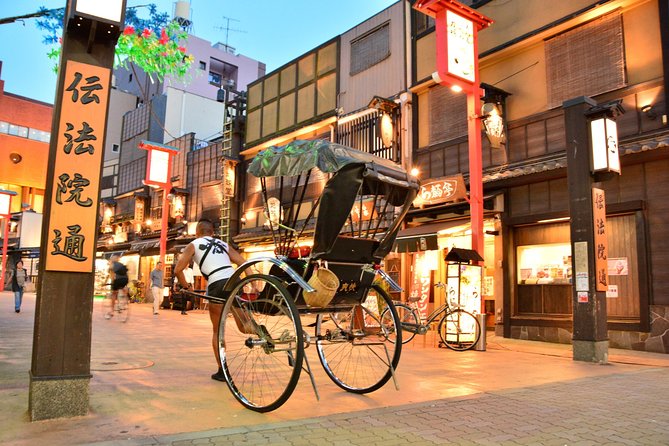
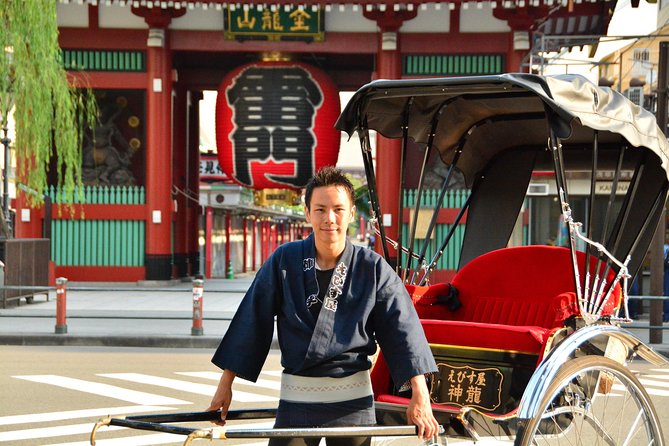
The colorful gate leading toward Sensoji Temple is one of Asakusa’s best-known scenes. It opens onto the approach to Sensoji and Asakusa Shrine, where the visual shift from city street to sacred precinct is immediate.
The rickshaw cannot ride through the Sensoji and Asakusa Temple area. That includes the temple buildings, temple grounds, and Nakamise shopping street. Your guide can take you to the area, but you will need to see the temple precinct on foot.
That restriction is worth knowing before you book. It is not a flaw in the tour, but it changes how you should picture the experience. The rickshaw is a way to connect the sights around the temple, not a vehicle for moving through the central temple grounds.
Asakusa Shrine sits on the Sensoji grounds and offers a useful lesson in how Buddhism and Shinto coexist in Japan. Your guide can explain the difference between the two traditions and how they share this famous religious setting.
If you have not visited Sensoji before, consider returning after the ride. The tour gives you context and a route through the wider area, while a later walk lets you spend time with the temple approach, shops, and buildings at your own speed.
Ushijima Shrine and the three-gate question
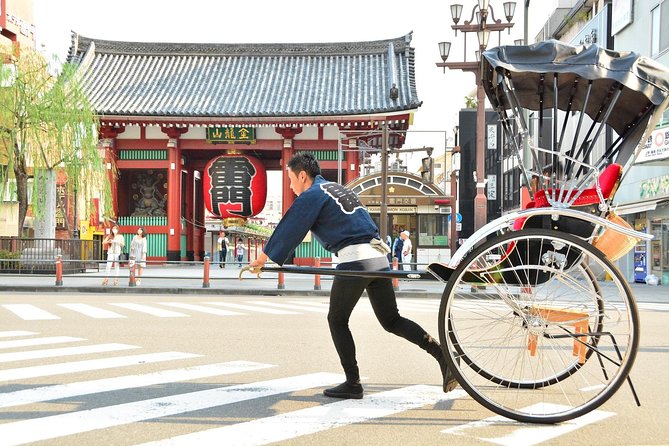
Ushijima Shrine is one of the more rewarding stops because it encourages you to look closely. It is a Shinto shrine with an unusual gate containing three entrances rather than the more familiar single opening.
The guide explains why the gate has this form, turning a quick photo stop into a short cultural lesson. You also get a calmer shrine setting away from the most crowded parts of central Asakusa.
A typical stop here lasts about 15 minutes, and admission is not included. In practical terms, that means you should expect to admire the site from the outside and follow the guide’s explanation rather than plan on a separate ticketed visit.
Honryuin Matsuchiyama Shoden and the mystery of the radishes
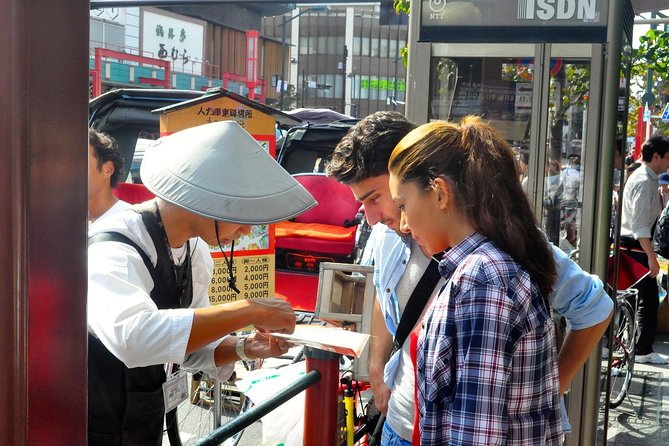
Honryuin Matsuchiyama Shoden is a Buddhist temple connected with Sensoji. Its most memorable detail is the presence of radishes, both at the temple and painted on its lanterns.
This kind of symbol can be hard to understand without help. The guide explains why the radish appears so often, giving you a small but meaningful piece of Buddhist tradition rather than just another temple photograph.
The temple stop is listed at about 15 minutes, with no admission ticket included. It works best for people who enjoy learning the meaning behind visual details. If you are mainly chasing major landmarks, you may find the stop less essential than the Skytree view or Sensoji approach.
Imado Shrine and its beckoning cats
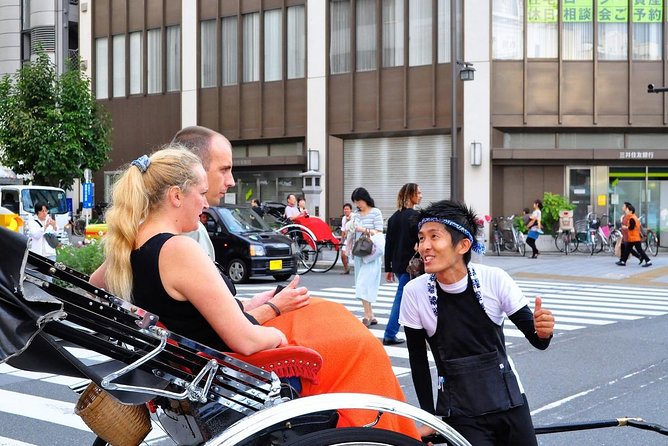
Imado Shrine brings a lighter theme to the religious portion of the route. It features cat figurines, especially manekineko, the familiar beckoning cat associated with good fortune.
The many cat images make this a strong stop for children and anyone who likes Japanese folk symbols. It also gives the ride a nice change of mood after the more formal temple and shrine visits.
The stop lasts about 15 minutes, and admission is not included. You may want to ask your guide about the meaning of the cat figures and how this shrine fits into the wider character of Asakusa.
Sumida River, cherry trees, and Tokyo Skytree
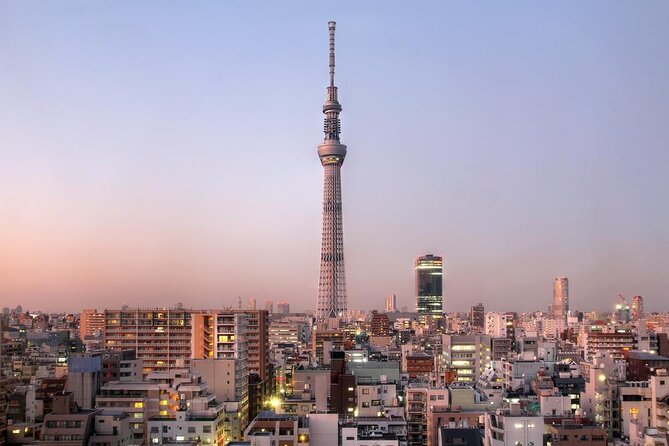
The river section is one of the tour’s strongest visual moments. From across the Sumida River, you get a clear view of Tokyo Skytree, with the water helping separate the tower from the surrounding buildings.
Sumida Park runs along the river and offers a place to pause. In spring, maple and cherry trees add seasonal color, while the park gives you a break from the hard surfaces and crowds of central Tokyo.
This is a good place for photos, and guides often help with pictures. Yusuke, for example, was praised for taking especially nice photos while also including himself in some of them. Taisei was also singled out for being good with a camera.
The riverfront changes with the season. Cherry blossoms are the obvious draw in spring, but the view remains worthwhile outside blossom season because of the Skytree, the open water, and the contrast between old Asakusa and Tokyo’s modern skyline.
Asahi Beer and Tokyo’s modern edge
Across the river, the Asahi Beer Headquarters provides a sharp contrast to the temples and older streets. Its recognizable golden flame sculpture makes it easy to spot.
This stop helps explain why the tour works as more than a traditional sightseeing ride. You are not being shown a preserved old quarter sealed away from modern life. You are seeing religious buildings, parks, businesses, towers, and commercial streets sharing the same urban space.
The Asahi building is mainly a visual landmark during this tour. Food and drinks are not included, so do not treat the ride as a tasting experience.
Asakusa’s entertainment district and Rokku Street
Asakusa was once one of Tokyo’s major entertainment centers. The tour may pass a venue that remains tied to comedy and stage shows, then continue toward Rokku Street.
Before the war, Rokku was a major cinema and theater district. Today, it forms part of Asakusa’s retro quarter, where the older entertainment identity still shapes the streets.
This portion is valuable because it adds social history to the temple visits. Asakusa was not only a place for worship. It was also a place for movies, comedy, theaters, food, and nightlife.
The exact order and number of these stops depend on your tour length. A 30-minute ride will not offer the same coverage as a two or three-hour outing. If old Tokyo entertainment history matters to you, ask the guide to include Rokku and the former cinema area.
What the different ride lengths really mean
The advertised duration ranges from about 30 minutes to three hours. That is a wide spread, and the choice affects the experience more than the price alone.
A 30-minute ride is best for a quick introduction, a few photos, and a taste of the rickshaw format. It will not cover every shrine, park, entertainment street, and temple listed for the wider route.
Around 45 minutes to an hour gives you a more useful neighborhood overview. You can see several key areas, stop for photos, and still keep the outing easy to fit into a busy Tokyo schedule.
Two or three hours make sense if you want a slower pace and more stops. You have time for the three featured religious sites, river views, older streets, and less famous corners. Longer rides also give you more room to ask questions and adjust the route.
Tell the guide your priorities before setting off. The experience is customizable, but not every listed landmark can fit into a short ride.
Price, comfort, and family details
The listed price is $42.90 per person. For a short 30-minute ride, that is not the cheapest way to cover a small area. You are paying for a private vehicle, a local driver-guide, personal explanations, and the novelty of being carried through the streets.
The value improves for a longer ride, especially if you want a personal introduction to Asakusa rather than a simple transfer between sights. Group discounts may be available, and the private format means you are not sharing the ride with unrelated parties.
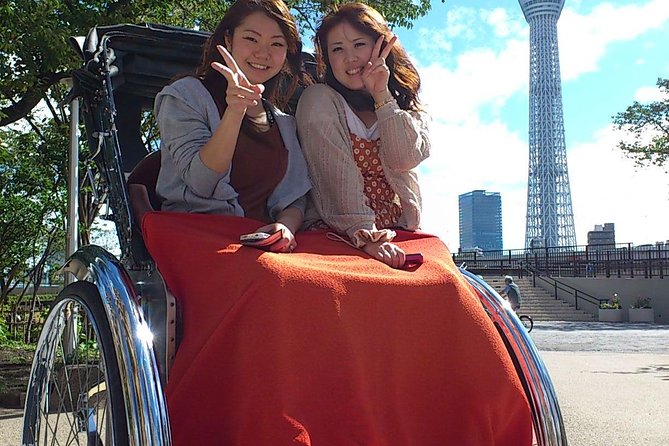
Each rickshaw holds a maximum of two adults. The seat is 74 centimeters wide, so two adults can fit but may find it snug. If you prefer more room, book separate rickshaws. If both passengers do not fit comfortably, an extra rickshaw may be needed, and it might not be available with an English-speaking guide unless reserved ahead of time.
Children aged five and under may ride free when seated on an adult’s lap. Up to two young children can ride with two adults, but if a child uses one of the two seats, that child must be booked as an adult. Adult pricing applies from age six.
The ride can be comfortable in changing conditions. Guides have used rugs and seat warmers in cold weather, and protective cover helped keep people dry during rain. Still, the operator requires good weather and may cancel in poor conditions.
The guides make the difference
The vehicle is memorable, but the guide determines how good the experience feels. Strong guides add context, humor, route advice, and photo help without making the ride feel like a school lesson.
Koko is praised for being friendly, fit, polite, attentive, and good at finding less obvious sights. Kei is described as courteous and easy to talk with. Micchy brings years of rickshaw experience and a personal approach.
Taisei is known for high energy, cultural explanations, and photography. BUCHI is a good choice for a lively style, while Takumi is noted for fluent English, patience, humor, and useful recommendations around Asakusa.
Guide assignment depends on availability, so you cannot assume you will receive a particular person. You can, however, state your preferred language when booking and tell the guide what you want from the ride.
Who should book this Asakusa ride?
I would recommend it to first-time visitors who want a fast orientation, families who need to cover ground without constant walking, and couples looking for a memorable photo experience.
It also suits anyone interested in local customs but unsure how to interpret shrines, temple symbols, and neighborhood details. The explanations about the three-part shrine gate, Buddhist radishes, and beckoning cats give the ride more substance than a simple sightseeing loop.
You may want to skip it if you dislike tight seating, prefer independent walking, or want to spend most of your time inside Sensoji itself. The rickshaw cannot enter the temple grounds or Nakamise shopping street, and the listed attractions are not all possible on shorter options.
Should you book it?
Book this tour if you want a personal, good-humored introduction to Asakusa with strong photo stops and a mix of temples, shrines, old streets, river views, and modern Tokyo.
Choose at least 45 minutes if you want more than a quick taste. Pick a longer option if Ushijima Shrine, Honryuin Matsuchiyama Shoden, Imado Shrine, Rokku Street, and Sumida Park all matter to you.
The $42.90 starting price is fair for the private format, though the ride offers its best value when you use the custom route and guide access. For two adults concerned about space, reserve separate rickshaws in advance. Free cancellation is available up to 24 hours before the start time, but poor weather can also lead to a date change or full refund.
FAQ
Where does the Tokyo Asakusa Rickshaw Tour start?
The meeting point is at 1-chome-1-4 Asakusa, Taito City, Tokyo 111-0032, Japan, outside the Asakusa Station area.
Where does the tour finish?
The stated finish is near Kan’non-dōri at 1-chome-2-11 Asakusa, Taito City, Tokyo 111-0032, Japan. You can discuss a different finishing location with your guide, and an extra drop-off fee may apply.
How long does the rickshaw tour last?
Available options range from about 30 minutes to three hours. Shorter tours cannot include every listed landmark, so ask about the route before departure.
Can children ride in the rickshaw?
Children aged five and under may ride free when seated on an adult’s lap. A child aged five or under using one of the two seats must be booked as an adult. Children aged six and over pay the adult price.
Can two adults share one rickshaw?
Yes. Each rickshaw holds up to two adults, but it is only 74 centimeters wide. Separate rickshaws may be more comfortable, especially for larger passengers, and should be booked in advance.
What happens if the weather is poor?
The experience requires good weather. If the operator cancels because of poor conditions, you will be offered another date or a full refund. You can cancel for a full refund up to 24 hours before the start time.
Just added around Tokyo
- Tokyo Small Group Tour with Guide★ 4.5 · 38 reviews
- Tokyo 6hr Instagram Highlights Private Tour with Licensed Guide★ 5.0 · 38 reviews
- Tokyo Sumo Experience with Live Show & Audience Challenge★ 5.0 · 38 reviews
- Very popular in Harajuku♡Animal petting zoo★ 4.6 · 39 reviews
- Japanese Food Cooking Class in Asakusa, Tokyo★ 5.0 · 39 reviews
- Ramen Making from Scratch with Tokyo Mom(Vegan Option Available)★ 5.0 · 39 reviews
- Tokyo: Kimono Rental inside Shinjuku Gyoen National Garden★ 4.9 · 39 reviews
- Tokyo JDM Night: 600hp C63s AMG Edition 1 (Private)★ 4.9 · 39 reviews
Tokyo Tours, compared.
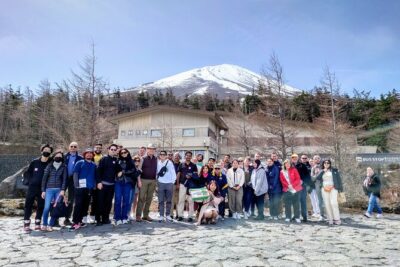
Mt Fuji and Hakone 1-Day Bus Tour Return by Bullet Train
Read our review →
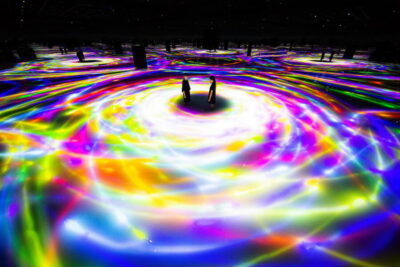
teamLab Planets TOKYO Digital Art Museum Entry Ticket
Read our review →
Mt Fuji & Hakone Cruise, Drum Show Bullet Train 1 Day from Tokyo
Read our review →
Shinjuku Food Tour (13 Dishes at 4 Local Eateries)
Read our review →
Tokyo Mt Fuji 5th St & Hakone Cruise Bus Tour w/Bullet Train
Read our review →