
Reviewed · MOUNT FUJI TOURS
Tokyo: Full-Day Tour of the Six Majestic Spots of Mt Fuji
Fuji rewards an early start. This full-day trip from Tokyo packs six very different viewpoints into one outing, from Hirano Beach’s morning reflections to the red pagoda at Arakurayama Sengen Park. I like the range of scenery, and I like that the $45 price includes transport, a driver, and a guide. The tradeoff is a long day with traffic, crowds, and no guarantee that Mount Fuji will appear through the clouds.
The strongest moments depend on weather and timing. You get the best chance of Fuji reflected on Lake Yamanaka in the morning, while the flower displays at Oishi Park change by month. Guide quality also matters: Agnes, Tim, Sakuragi, Will, and other guides have been praised for being friendly, helpful, and clear, but commentary can be limited on small groups, and one person found the bus speakers too loud.
In This Review
- Key points to know before booking
- Why this Fuji day trip works from Tokyo
- Hirano Beach and the morning mirror
- Higashikawa Clock Shop and the Sky Ladder street
- Arakurayama Sengen Park and the famous pagoda climb
- Oshino Hakkai and eight clear springs
- Lawson convenience store and the modern Fuji photo
- Oishi Park and flowers by Lake Kawaguchi
- Guides, transport, and the pace of the day
- Food, luggage, and practical preparation
- Who should book this $45 Fuji tour?
- My verdict on the six-stop route
- FAQ
- How much does the Mount Fuji day tour cost?
- What is included in the tour price?
- Are food and drinks included?
- Does the tour include hotel pickup and drop-off?
- When is the best time to see the reflection at Hirano Beach?
- Can I see Mount Fuji in every season?
- Which languages are available?
- Is the tour wheelchair accessible?
- Can I bring luggage?
- Can I cancel for a full refund?
Key points to know before booking
- Hirano Beach is the early-morning prize: The lake reflection and resident swans are most photogenic before the day’s light and wind change the water.
- Six stops give you variety: You move from lakeside nature to a quiet street, a pagoda, mountain springs, a convenience store, and flower fields.
- The $45 price is strong value: Air-conditioned transport, a driver, and a guide are included, while meals and entry-related personal costs are not.
- Weather controls the Fuji experience: Cloud can hide the mountain all day, but the surrounding villages, springs, parks, and flowers still offer a worthwhile outing.
- Expect a multilingual group setting: English and Chinese are offered, but small groups may have a driver-guide with limited English commentary.
- Leave room in your schedule: Traffic or weather can change the order and may make a same-day flight, Shinkansen, or evening booking risky.
Why this Fuji day trip works from Tokyo
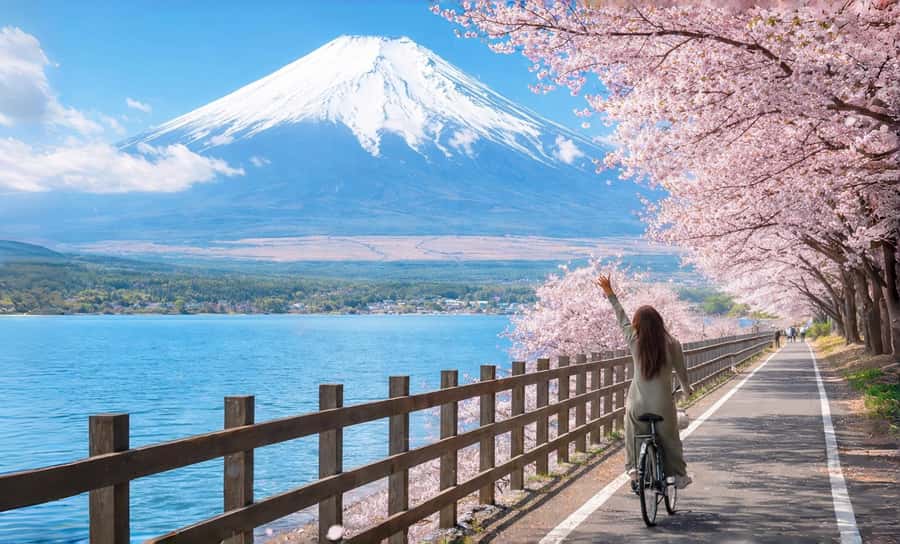
Mount Fuji is close enough to tempt you from Tokyo, but far enough away that transport can become a headache. This tour solves that problem with an air-conditioned vehicle and a fixed route through the Fuji Five Lakes area and nearby sights. You do not need to work out several train and bus connections, and you can use the day to focus on views and photos.
The route also avoids making the mountain the only attraction. That matters because Fuji is famously shy. On a clear day, the mountain ties the whole trip together. On a cloudy day, you still have traditional buildings, clear springs, seasonal flowers, a pagoda, and several distinct Fuji-area towns to enjoy.
At $45 per person, the value is easy to see if you want a broad introduction rather than a slow visit to one lake. The price includes transportation, the guide, and the driver. You pay separately for food, drinks, personal purchases, and insurance. It is a practical deal, though the low price also means this is not a private tour with a custom pace.
More ways to see Mount Fuji:
- Mt Fuji and Hakone 1-Day Bus Tour Return by Bullet Train
★ 5.0 · 26,383 reviews - Mt Fuji & Hakone Cruise, Drum Show Bullet Train 1 Day from Tokyo
★ 4.0 · 7,413 reviews - Tokyo Mt Fuji 5th St & Hakone Cruise Bus Tour w/Bullet Train
★ 4.4 · 5,024 reviews
Hirano Beach and the morning mirror
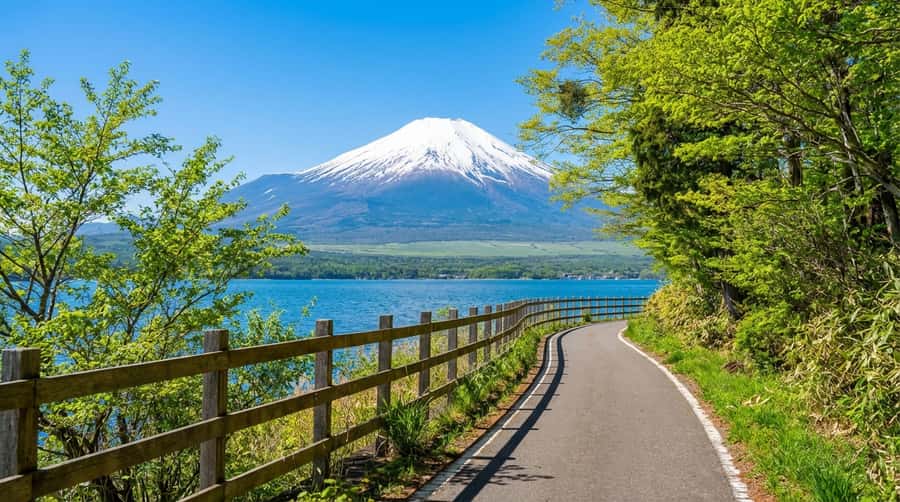
The day’s most time-sensitive stop is Hirano Beach, on the northeastern side of Lake Yamanaka. This is a gravel shore, not a polished resort promenade, and that is part of its appeal. You get open water, a clear sightline toward Fuji, and resident swans that add movement to the scene.
The signature photograph is Fuji reflected on the lake. The reflection is most likely in the morning, before wind, boat activity, or changing light breaks up the surface. If this image is your main reason for booking, choose the earliest departure available and treat the timing as important, not optional.
The swans give you something to watch even if the summit is hidden. You may get close views of them along the shore, but this is still a nature stop, so keep your distance and avoid treating the birds like trained performers.
Bring comfortable shoes because the shore is gravel. Give yourself a few minutes to enjoy the setting rather than rushing through a photo. The stop can be quiet and atmospheric, but conditions are never guaranteed. Cloud, haze, and wind can erase the famous reflection.
Higashikawa Clock Shop and the Sky Ladder street
The Higashikawa Clock Shop stop is built around a visual trick. A straight, quiet road points toward Mount Fuji, creating the feeling that the street climbs directly toward the mountain. The clock shop gives the view a recognizable foreground and turns an ordinary town road into a carefully framed photograph.
This is a good pause between the larger parks. You are not looking for a long museum visit or a major monument. You are looking for alignment, distance, and a calm Japanese streetscape. The road’s simplicity is the point.
The view works best when Fuji is visible, but the stop can still be pleasant if clouds cover the peak. Take care with photography and remain aware of traffic and local residents. The road is a real part of town, not a closed film set.
Arakurayama Sengen Park and the famous pagoda climb

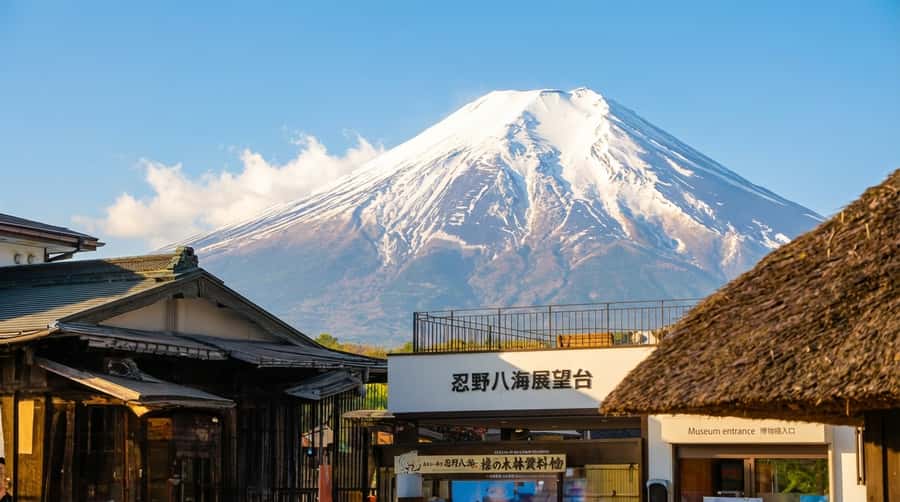
Arakurayama Sengen Park delivers the image most associated with Fuji day trips: a red five-story pagoda, Mount Fuji behind it, and seasonal color around the frame. In spring, cherry blossoms can soften the view. In autumn, red and gold leaves change the mood.
The park sits a short walk from Shimoyoshida Station, but the pagoda viewpoint requires climbing stone steps. This is the one major physical challenge on the route, so plan for a slower pace if stairs are difficult. The pagoda view is not suitable for wheelchair users, and the tour is listed as unsuitable for wheelchair users overall despite other stops being accessible.
The climb is worthwhile for people who want the classic composition, but it is also the stop most likely to feel crowded. Photographers often gather at the upper viewpoint, especially during blossom and autumn foliage periods. You may need patience to find a clear position for a picture.
Afterward, the village below offers a chance to pause for coffee. That small break helps balance the climb and gives you a less hurried look at the area. Guides have also helped people with photos at this stop, which is useful when you want the full group in the frame.
A few more Tokyo experiences worth weighing up
- From Tokyo: Mount Fuji Full-Day Sightseeing Trip
★ 4.5 · 4,970 reviews - Mount Fuji Full-Day Private Tour from Tokyo (Customizable)
★ 4.9 · 1,470 reviews - Tokyo Private Full-Day Tour by Car or Van
★ 5.0 · 684 reviews - From Tokyo: Must-Visit Mount Fuji Highlight Full-Day Tour
★ 4.7 · 532 reviews
Oshino Hakkai and eight clear springs
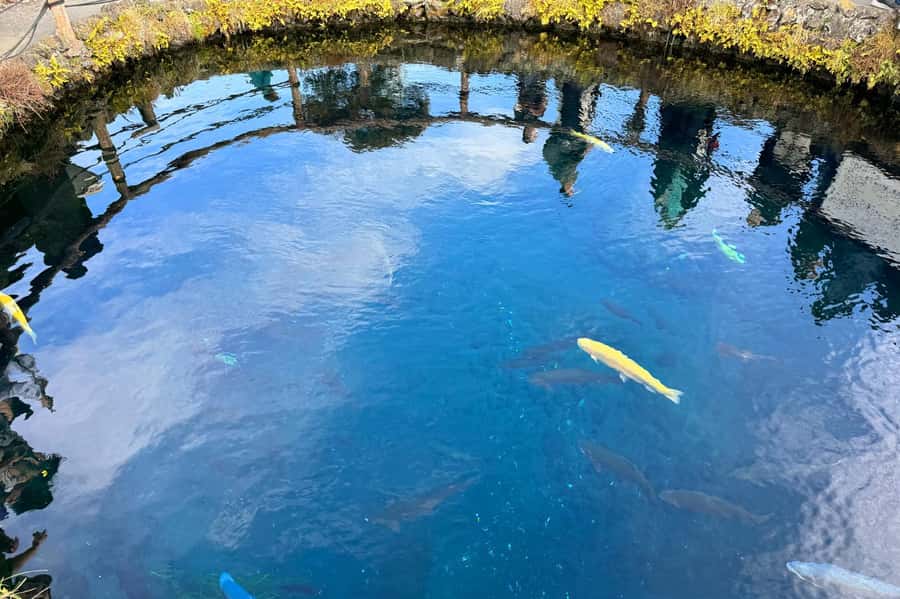
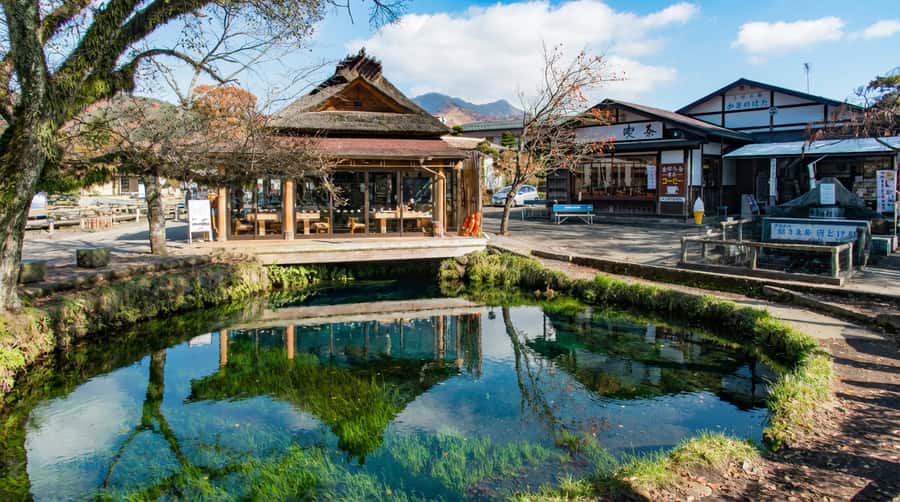
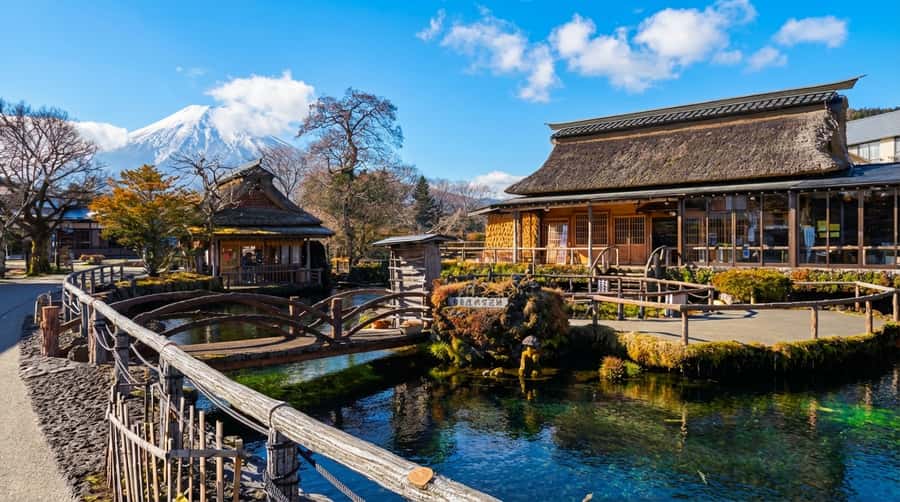
Oshino Hakkai shifts the focus from distant views to water. The site has eight springs fed by snowmelt from Mount Fuji, with clear pools, wooden bridges, and traditional thatched-roof buildings. The turquoise water is the main attraction, but the village setting gives the stop more character than a simple viewpoint.
This is one of the best places to see how Fuji shapes the surrounding communities. The mountain is not just a summit for photographs. Its snow and underground water support the springs, while the old-style buildings and paths create a lived-in setting around them.
You can expect a popular stop, particularly in peak seasons. The pools and bridges are compact, so crowding can affect how long you spend at each point. Keep your expectations realistic: this is a short sightseeing visit within a larger day, not an extended village stay.
Oshino Hakkai remains valuable when Fuji is hidden. The springs are the attraction in their own right. Look closely at the water, walk the bridges, and take time with the details of the traditional structures instead of treating the place only as a backdrop.
Lawson convenience store and the modern Fuji photo
The Lawson stop is a funny but useful contrast to the pagoda and springs. The store has become famous because its simple frontage and Fuji-facing view produce a striking modern Japanese photograph. It is a familiar convenience store turned into a social-media landmark.
You can grab a quick snack or drink here, though food and drinks are not included in the tour price. The visit is usually brief, so do not expect a long shopping stop. The appeal is the easy photo: a recognizable store, a clean street view, and Fuji in the distance when the weather cooperates.
This stop also shows how modern Japan and old Japan sit side by side on the same day. A traditional village, a historic-looking pagoda, and a convenience store may sound like an odd mix, but together they give the route a wider sense of place.
Use care when taking photographs. The store continues to serve local customers, so avoid blocking the entrance or roadway. If clouds cover Fuji, you can still enjoy the novelty of the location, but the photo loses its main point.
Oishi Park and flowers by Lake Kawaguchi
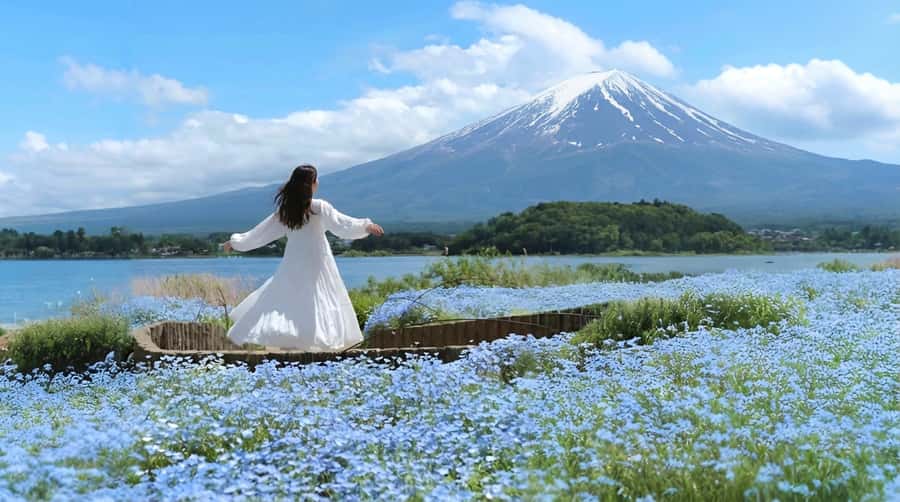
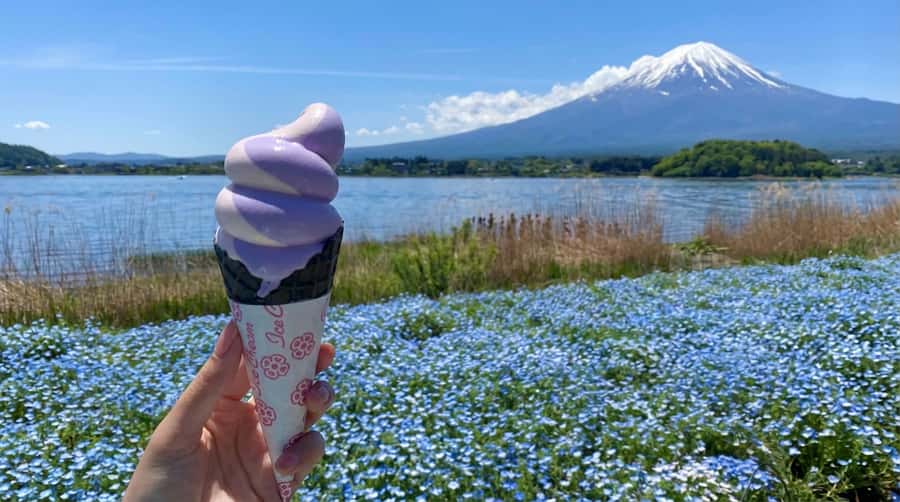
Oishi Park, beside Lake Kawaguchi, is the route’s most season-dependent stop. Flower beds change through the year, giving you a different view depending on your travel month.
- April brings tulips, daffodils, and rapeseed flowers.
- May is known for moss phlox.
- June and July bring lavender and the Kawaguchiko Herb Festival.
- August through October feature begonias.
- November brings scarlet maple leaves.
Flower timing can shift slightly, so check current conditions before you go. A calendar promise is not the same as a field in peak bloom. Even outside the best period, the lakeside setting and Fuji view can make the stop worthwhile.
Oishi Park is a good place to slow down after several quick photo stops. You can compare the flowers with the mountain, walk through the planted areas, and take wider pictures that include the lake and surrounding hills. The park is also one of the more accessible locations on the route.
If Fuji is covered, the flowers still give you a reason to stay. That makes Oishi Park a safer stop than one that relies entirely on a clear summit.
Guides, transport, and the pace of the day
The tour uses an air-conditioned vehicle with a driver and guide. A clean, punctual bus and friendly staff have been important strengths for many people, while one report noted that the air conditioning did not work properly. Conditions can vary, so bring a light layer and water for comfort outside the vehicle, remembering that eating and drinking are not allowed onboard.
On small daily groups, the driver may also act as the guide. English commentary can then be limited, and there is no commentary while the vehicle is moving. International groups may receive multilingual service rather than a single-language presentation, with Chinese and English listed as available languages.
Several guides have earned specific praise. Tim was described as energetic, helpful, and attentive, including support when someone became seriously unwell and needed medicine. Agnes helped make the day enjoyable and suggested an authentic lunch and a kimono experience. Sakuragi was praised for clear explanations in both English and Chinese, while Will was noted for his kindness.
That said, the guide experience may not be identical on every departure. One person found some explanations hard to understand, and another found the speaker volume uncomfortable. If you are sensitive to loud audio, sit farther from the speakers and tell the guide early.
The schedule is full. You will see six places, but you will not have the unhurried time that you would get by staying around Lake Kawaguchi for several nights. Traffic can also force changes on weekends and holidays. Attractions may close early or be replaced if weather creates a problem.
Food, luggage, and practical preparation
Meals are not included, so plan to buy food during a stop or bring your own for outside the vehicle. Since eating and drinking in the vehicle are prohibited, do not count on a moving lunch break.
Wear comfortable clothes and shoes. Gravel at Hirano Beach and stone steps at Arakurayama make footwear more important than fashion. If you carry luggage, tell the operator in advance because extra payment may apply.
The meeting point depends on the option you book, and the activity ends back at that meeting point. You cannot change the meeting point on the departure day, so check it carefully before setting out from your hotel.
Arrive early. No-shows and late arrivals do not qualify for refunds. I would not pair this tour with a same-day flight, Shinkansen, or evening activity because traffic and weather can alter the timing.
Cancellation is flexible up to 24 hours before departure for a full refund. Personal travel and accident insurance are not included, so arrange your own cover if you want it.
Who should book this $45 Fuji tour?
I recommend it most to you if this is your first Fuji-area visit from Tokyo and you want many classic sights in one day. It suits photographers, first-time visitors, and people who prefer a planned route to independent transfers. It is also a good escape from Tokyo’s summer heat, as one August outing proved, even when clouds blocked the mountain.
You should think twice if your main goal is a long, quiet stay beside one lake. The schedule is broad rather than leisurely. You also need to accept that Fuji may remain hidden all day. One outing reached every scenic stop but never produced a clear mountain view, yet the springs, village, and parks still gave the day purpose.
The tour is not suitable for pregnant people, people with high blood pressure, people over 70, or wheelchair users according to the supplied restrictions. Arakurayama’s pagoda steps are the clearest physical concern.
My verdict on the six-stop route
I like this tour because it gives you more than one chance at Fuji and more than one way to enjoy the region. Hirano Beach offers the best early reflection chance, Arakurayama supplies the famous pagoda frame, Oshino Hakkai adds water and village atmosphere, and Oishi Park gives the day color even when the mountain disappears.
The $45 cost is compelling for included transport, a driver, and a guide. Just book it for the range of places, not for a guaranteed postcard. Choose a morning departure, check the flower conditions, wear good shoes, and keep your evening free. If that sounds right, this is an efficient and good-value introduction to Mount Fuji from Tokyo.
FAQ
How much does the Mount Fuji day tour cost?
The tour costs $45 per person.
What is included in the tour price?
Transportation in an air-conditioned vehicle, a tour guide, and a driver are included.
Are food and drinks included?
No. Food, drinks, and personal expenses are not included.
Does the tour include hotel pickup and drop-off?
No. The tour begins and ends at the assigned meeting point, which may vary depending on the option booked.
When is the best time to see the reflection at Hirano Beach?
A morning departure is recommended because the Mount Fuji reflection at Hirano Beach is only possible in the morning.
Can I see Mount Fuji in every season?
Fuji views depend on weather and visibility. Clouds can hide the mountain, and the itinerary may change if weather affects an attraction.
Which languages are available?
English and Chinese are listed as available languages. Small groups may have a driver who also serves as the guide, with limited English commentary.
Is the tour wheelchair accessible?
The tour is listed as unsuitable for wheelchair users. All stops are described as wheelchair-accessible except the pagoda steps at Arakurayama Sengen Park, so confirm your needs before booking.
Can I bring luggage?
You must inform the operator in advance if you plan to bring luggage. An extra payment may be required.
Can I cancel for a full refund?
You can cancel up to 24 hours in advance for a full refund. No refunds are provided for no-shows or late arrivals.
Just added around Tokyo
- Tokyo Small Group Tour with Guide★ 4.5 · 38 reviews
- Tokyo 6hr Instagram Highlights Private Tour with Licensed Guide★ 5.0 · 38 reviews
- Tokyo Sumo Experience with Live Show & Audience Challenge★ 5.0 · 38 reviews
- Very popular in Harajuku♡Animal petting zoo★ 4.6 · 39 reviews
- Japanese Food Cooking Class in Asakusa, Tokyo★ 5.0 · 39 reviews
- Ramen Making from Scratch with Tokyo Mom(Vegan Option Available)★ 5.0 · 39 reviews
- Tokyo: Kimono Rental inside Shinjuku Gyoen National Garden★ 4.9 · 39 reviews
- Tokyo JDM Night: 600hp C63s AMG Edition 1 (Private)★ 4.9 · 39 reviews
Mount Fuji Tours, compared.
Mt Fuji and Hakone 1-Day Bus Tour Return by Bullet Train
Read our review →
Mt Fuji & Hakone Cruise, Drum Show Bullet Train 1 Day from Tokyo
Read our review →
Tokyo Mt Fuji 5th St & Hakone Cruise Bus Tour w/Bullet Train
Read our review →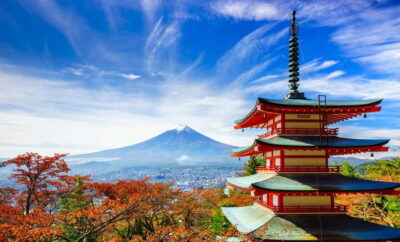
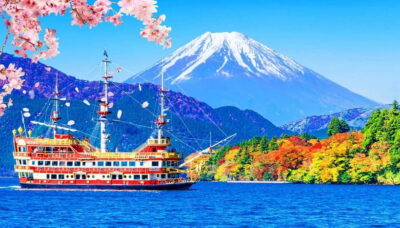
Mt. Fuji Tour, Hakone Ropeway, Owakudani, Lake Ashi
Read our review →
Mt.Fuji,Kawaguchiko Oishi Park,Arakurayama Sengen Park
Read our review →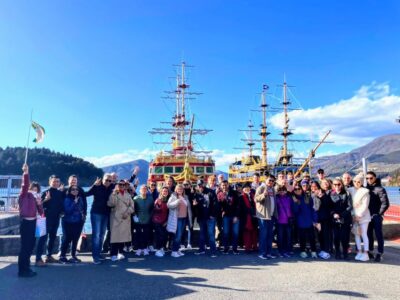
Mt. Fuji 5th Station & Hakone Cruise 1-Day Bus Tour
Read our review →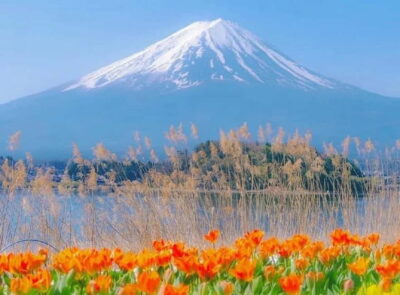
Mt Fuji Top 5 Spots Day Tour: Arakurayama Park,Oshino Hakkai
Read our review →Browse the lists this tour appears in