Reviewed · FULL-DAY
Tokyo to Kyoto 1-Full Day Private Guided Tour
Kyoto in one day is a tall order. This private trip makes the squeeze worthwhile by pairing a planned route with a guide who can help you move between far-flung sights. I especially like the chance to see Kyoto’s Golden Pavilion and Fushimi Inari Shrine in one packed day, plus the personal attention of a tour limited to your own group. The main concern is cost: the advertised $490 covers the tour service, but major expenses such as trains and local transport are extra.
I also like the guide support at Tokyo and Kyoto stations. Guides such as Ahmed, Midori, Mini, Yuka, Yukari, and Kazz have helped families buy train tickets, find platforms, handle language questions, take photos, and keep the day on schedule. You must, however, read the payment details closely and confirm every extra charge before booking.
In This Review
- At a Glance: What This Kyoto Day Includes
- Why This Tour Works for a One-Day Kyoto Visit
- Starting the Day on the Tokyo to Kyoto Bullet Train
- Bamboo Forest, Nonomiya Shrine, and Tenryu-ji Garden
- Kinkaku-ji and Kyoto’s Golden Pavilion
- Nishiki Market, Kyoto’s Food Street
- Pontocho Alley in Twenty Minutes
- Gion and the Old Wooden Streets
- Fushimi Inari and the Red Torii Path
- The Real Price: What $490 Does and Does Not Buy
- What Guide Quality Adds to the Day
- Who Should Book This Day Trip?
- Booking Advice Before You Commit
- Should You Book the Tokyo to Kyoto Private Tour?
- FAQ
- How long does the tour last?
- How many people can join the private tour?
- Is transportation included in the $490 price?
- How much do the bullet train tickets cost?
- Is a private car available in Kyoto?
- Is lunch included?
- Are entrance fees included?
- Can I cancel for a full refund?
- What happens if bad weather cancels the tour?
At a Glance: What This Kyoto Day Includes
- Six major Kyoto stops: Bamboo Forest, Kinkaku-ji, Nishiki Market, Pontocho, Gion, and Fushimi Inari.
- A private group format: Only your party participates, with a maximum group size of 10.
- Nine hours of sightseeing: The schedule is full and favors famous temples, shrines, and old districts over a relaxed pace.
- Bullet train coordination: The guide can arrange and manage transportation, but your Tokyo to Kyoto and return tickets are not included.
- Optional private vehicle: Local transportation is listed at ¥100,000 per booking for up to five people, with a separate arrangement noted for larger groups.
- Strong guide experiences: Personal service, historical explanation, station help, and patience with slower walkers are recurring strengths.
Why This Tour Works for a One-Day Kyoto Visit
Kyoto is not a simple side trip from Tokyo. The bullet train ride takes roughly two hours and 15 minutes each way, before you add station time, local transfers, and the journey between Kyoto’s sights. That leaves a narrow window for sightseeing.
This outing is built for the person who has only one day and wants to see the famous places without designing a route from scratch. You get a guide, transportation planning, and a private schedule. That can save real time in a city where the Bamboo Forest lies in western Kyoto, Fushimi Inari is in the south, and Nishiki Market and Gion sit closer to the center.
The trade-off is clear. You are sampling Kyoto, not getting to know it slowly. The schedule may include about an hour at each major stop, with only 20 minutes in Pontocho. You will see a lot, but you will not have long stretches for lingering, shopping, or quiet temple time.
The private format helps. Your guide can answer questions, adjust the walking rhythm, and keep your party together without waiting for strangers. Families have particularly appreciated guides who helped children and slower walkers stay comfortable while still protecting the schedule.
A few more Tokyo experiences worth weighing up
- From Tokyo: Mount Fuji Full-Day Sightseeing Trip
★ 4.5 · 4,970 reviews - Mount Fuji Full-Day Private Tour from Tokyo (Customizable)
★ 4.9 · 1,470 reviews - Tokyo Private Full-Day Tour by Car or Van
★ 5.0 · 684 reviews
Starting the Day on the Tokyo to Kyoto Bullet Train
The train is the backbone of the outing. Bullet train tickets from Tokyo to Kyoto and back are not included, and the stated cost is about ¥28,000 per person, depending on the ticket selected. For a family or group of several people, this expense can quickly exceed the headline tour price.
A guide may meet you at Tokyo Station or another agreed point, depending on the arrangement. Some parties have been helped with ticket purchases, platform directions, and the transfer to Kyoto. This support is useful if you have just arrived in Japan or do not yet feel comfortable with the station system.
You need to settle the pickup question early. The published information lists a Tokyo pickup guide charge of ¥60,000 in cash, in the case of Tokyo Station pickup. It also lists local transportation at ¥100,000 in cash for up to five people. Because the wording and reported arrangements have not always been clear, ask for a written total covering the guide, vehicle, train tickets, station pickup, entrance fees, and lunch before your cancellation deadline.
That detail is not nitpicking. Several people booked the tour believing private meant transportation was included. Here, private means the tour is only for your group. It does not mean the train, car, or all local transport is part of the $490 price.
Bamboo Forest, Nonomiya Shrine, and Tenryu-ji Garden
The first Kyoto stop is the Bamboo Forest area, with time also set aside for Nonomiya Shrine and the garden at Tenryu-ji Temple. The tall bamboo is the visual star, but the nearby shrine and temple garden give the stop more substance than a quick photo visit.
You can expect about one hour here. That is enough to walk through the bamboo and see nearby cultural sights, but not enough for a slow exploration of the wider Arashiyama area. The bamboo path is free according to the tour details, while Tenryu-ji or other nearby sites may have their own admission rules, so ask your guide what is covered.
This is one of the busiest and most photographed parts of the route. A guide adds value by explaining the religious setting and directing you through the area without wasting time. Yuka was praised for giving background on statues, gates, and buildings, while also helping with photos and food choices. That kind of practical help matters here, where it is easy to spend too long looking for the right path or picture.
If bamboo is your top priority, tell the guide at the start. The one-hour block is efficient, not leisurely.
Kinkaku-ji and Kyoto’s Golden Pavilion
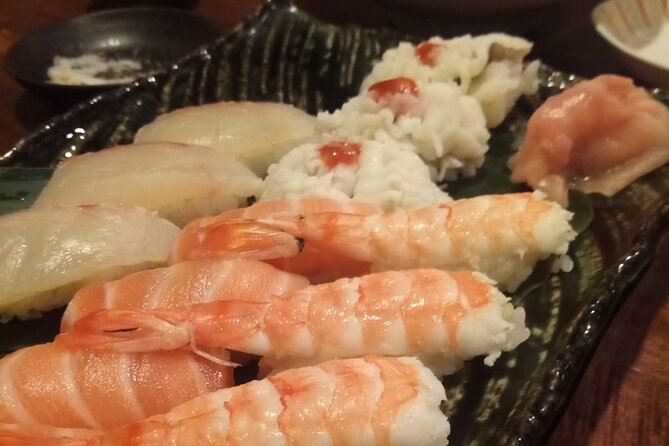
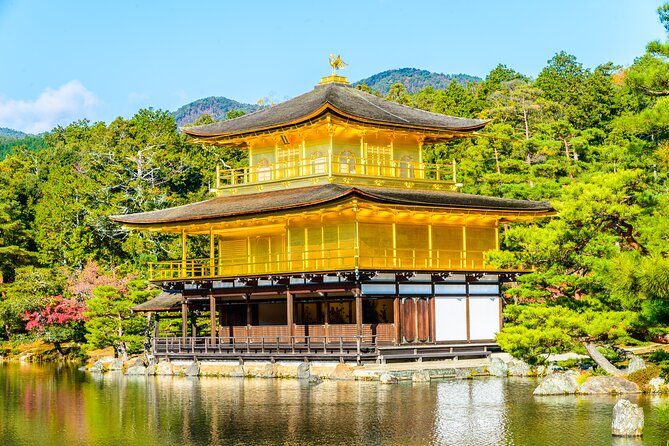
Kinkaku-ji, also called the Golden Pavilion, is the most instantly recognizable sight on this route. The gold-covered building reflects across a pond, with carefully arranged gardens around it. You follow a set path rather than wander freely through the grounds, making the visit easy to manage within the planned hour.
Admission is not included. The stated itinerary gives one hour here, which should allow you to see the pavilion, walk through the garden route, and hear an explanation from your guide. It is a visual stop first, so your enjoyment depends less on long temple exploration and more on the setting, design, and history your guide adds.
This stop also reveals the limits of a single day. Kinkaku-ji is not near Nishiki Market or Fushimi Inari, so the value comes from having someone organize the order and transport. Without that planning, you could lose a large part of the day moving across town.
Ahmed, Kazz, Midori, and other guides have been praised for giving context without talking endlessly. That balance is useful at a place like Kinkaku-ji. You need enough information to understand what you are seeing, but also enough quiet time to enjoy the reflection and gardens.
A completely different kind of day out in Tokyo:
- Mt Fuji and Hakone 1-Day Bus Tour Return by Bullet Train
★ 5.0 · 26,383 reviews - 1-Day Tokyo Bus Tour
★ 5.0 · 14,250 reviews - Tokyo: TOKYO SKYTREE® Admission ticket
★ 4.5 · 11,192 reviews - Tokyo: teamLab Planets TOKYO Digital Art Museum Entry Ticket
★ 4.6 · 9,779 reviews
Nishiki Market, Kyoto’s Food Street
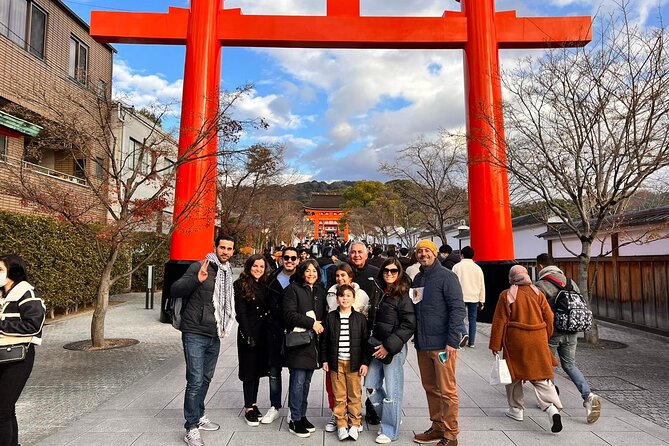
Nishiki Market is the most local-feeling stop on the schedule. This five-block market is known as Kyoto’s Kitchen and contains more than 100 stalls and shops. It is a good change of pace after temple grounds and formal gardens.
You have about one hour here. That gives you time to browse, sample food, and perhaps buy a small edible souvenir, but it is not a full food tour. Lunch is not included, so this is a natural place to ask your guide for help choosing something suitable for your group.
Several guides have helped with restaurant suggestions and dietary needs. That service can make a real difference if you do not read Japanese menus or want something beyond the most obvious snack. One guide was also praised for translating at shops, which is the sort of small assistance that turns a crowded market into a less stressful experience.
Keep your expectations practical. Nishiki is a working market and a popular sightseeing area, not a quiet village lane. It can feel crowded, and your time may pass quickly if you stop at every food stall. Decide before arriving if you care most about tasting, shopping, or simply walking through.
Pontocho Alley in Twenty Minutes
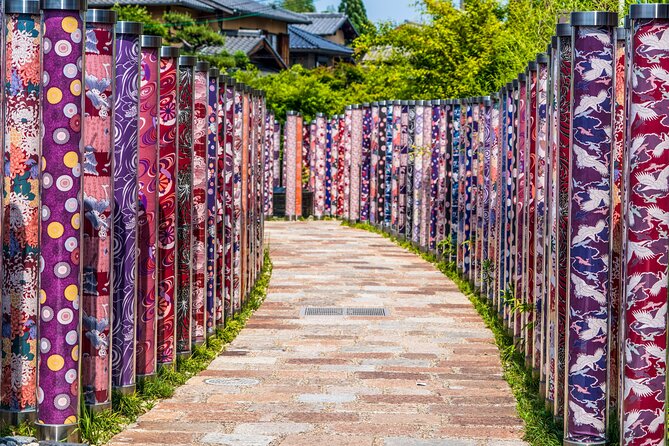
Pontocho receives only about 20 minutes, but that short stop makes sense as a quick look at one of Kyoto’s atmospheric old entertainment districts. The narrow lane runs parallel to the Kamogawa River and is lined with traditional wooden buildings, restaurants, and evening businesses.
You will not have time for a full meal or much browsing here. Think of Pontocho as a short walk and photo stop between larger sights. The alley is particularly associated with nighttime dining, so a daytime visit gives you the architecture and mood but not the full evening character.
This is one place where a private tour can adapt. If your group cares more about Pontocho than another stop, you can ask what changes are possible. Still, the published route gives this district the least time, so do not book expecting an extended evening in Kyoto.
Gion and the Old Wooden Streets
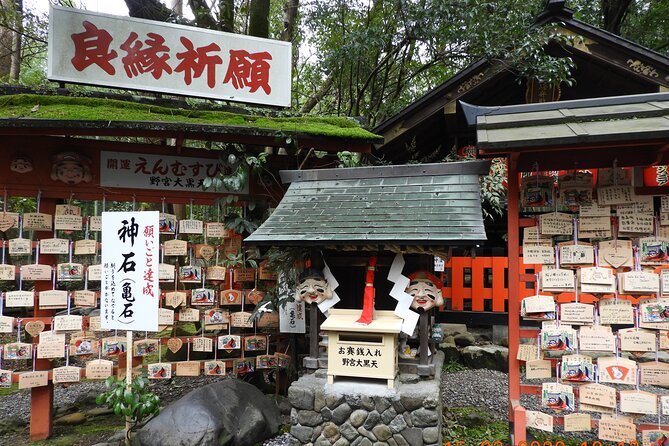
Gion offers a closer look at Kyoto’s traditional wooden townhouses, narrow lanes, teahouses, and geisha culture. You have about an hour to walk through the district, with admission not included for any paid attraction.
The best part of a guided Gion walk is the explanation of custom and etiquette. A guide can help you understand the difference between seeing a historic neighborhood and treating it like a film set. You should be respectful, avoid blocking entrances, and never assume that a person in traditional dress wants a photograph.
This stop is also a good test of your guide’s style. The strongest guides on this tour have been praised for stories, local detail, patience, and a friendly manner. Others have received criticism for offering little explanation. Since guide quality can shape the whole day, you may ask if a particular guide, such as Midori, Yuka, Ahmed, or Yukari, is available, though availability is not guaranteed.
Fushimi Inari and the Red Torii Path
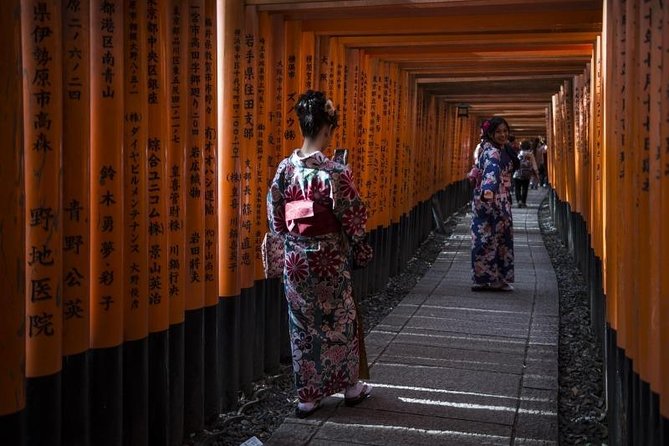
Fushimi Inari-taisha is the grand finale for many people. Its thousands of orange-red torii gates form tunnels up a wooded hillside, creating one of Japan’s most memorable walks. The shrine is dedicated to Inari, associated with rice, business, and prosperity.
The planned visit lasts about an hour, and admission is not included. You can see the lower shrine area and walk into the torii paths, but one hour is not enough to complete the entire mountain route. If you want to climb far beyond the main gates, tell your guide early and accept that another stop may need to be shortened.
This is a physically active stop, with stairs and uphill sections. The pace can be adjusted in a private group, and one guide was specifically praised for staying aware of a party member with a knee problem. Even so, you should be honest about walking limits before the day begins.
Fushimi Inari is a strong final stop because it feels different from Kinkaku-ji and Gion. Instead of a single building or street, you get a long sequence of gates, forest, and shrine buildings. It is also a place where a guide can explain the small fox figures and other details you might otherwise pass without noticing.
The Real Price: What $490 Does and Does Not Buy
The advertised price is $490 per group of up to 10 people, which looks attractive when divided among a large party. That figure covers guiding services, tour management, and transportation arrangement. It does not cover the actual transportation costs.
Budget for the following:
- Round-trip bullet train tickets at about ¥28,000 per person, depending on your ticket choice.
- Local transportation listed at ¥100,000 in cash for up to five people.
- A separate Tokyo pickup guide charge listed at ¥60,000 in cash for Tokyo Station pickup.
- Lunch.
- Entrance fees where required.
- Gratuities, which are appreciated but not required.
The arithmetic changes the value calculation. A couple could find the total very expensive once train tickets, car service, admission, food, and possible pickup fees are added. A group of eight or ten can divide the private guiding fee and vehicle cost more effectively, although the train tickets still apply per person.
There is another option worth asking about: one group of four used public transportation instead of a private car and found it easy with the guide’s help. That may lower the total cost, but you should confirm exactly what transport the guide will use and how much time it adds.
The private car is valuable if your priority is efficiency, comfort, or reduced walking between distant districts. It is not automatically good value for every budget. If you are comfortable with Japanese rail and city transport, ask for a public transportation version before paying for the vehicle.
What Guide Quality Adds to the Day
Guide performance appears to be the biggest swing factor. The best experiences involve guides who explain the meaning of temples and shrines, manage the clock, help with tickets, recommend food, translate at shops, and take photos.
Ahmed received especially strong praise for historical explanations, patience, and calm organization. He helped some parties at stations and took charge when another guide failed to appear. Midori was praised for adapting to family needs, arranging an authentic local meal, and taking good photos. Yuka was singled out for local knowledge, translation, photographs, and detailed explanations.
That does not mean every guide will deliver the same experience. One poor experience described a guide as unfriendly and uninformative. If personal storytelling is important to you, send your interests in advance and ask how the guide will handle the schedule.
A good guide can turn a rushed checklist into a coherent day. You learn why the sites matter, not just where to stand for a picture. The strongest guides also know when to stop talking and let you enjoy the setting.
Who Should Book This Day Trip?
I would consider this tour if you:
- Have only one free day for Kyoto while staying in Tokyo.
- Want the major sights without planning a complex route.
- Are traveling with a family or private group.
- Value station assistance and a guide who can help with language questions.
- Prefer a car and driver for speed and comfort.
- Are willing to pay for convenience after confirming the full price.
I would hesitate if you:
- Have two or more days available for Kyoto.
- Want quiet temple visits, long meals, or extended shopping.
- Are working with a tight budget.
- Expect transportation to be included in the $490 price.
- Dislike a fast schedule with several one-hour stops.
- Want to hike the full Fushimi Inari mountain route.
Kyoto deserves more than a day, but a well-managed day can still give you a useful first look. The trip is especially sensible at the beginning or end of a Japan visit, when you want a strong overview rather than a slow, neighborhood-by-neighborhood stay.
Booking Advice Before You Commit
Ask for a complete written cost breakdown. Confirm the bullet train fare, local vehicle fee, Tokyo pickup fee, guide arrangements, entrance fees, and whether public transportation is possible.
Also clarify the contradictory admission wording. The general information refers to entrance fees as included, while individual stops say admission is not included. Do not rely on a broad heading. Ask specifically about Kinkaku-ji, Gion attractions, and Fushimi Inari before booking.
The experience is confirmed at booking, has a mobile ticket, and is near public transportation. Most people can participate, but the route includes walking and stairs. Free cancellation is available up to 24 hours before the start time. Changes made within 24 hours are not accepted, and poor weather may lead to a new date or a full refund.
Should You Book the Tokyo to Kyoto Private Tour?
Book it if your main goal is to see Kyoto’s famous sights in one tightly organized day and you value personal help more than low cost. The guide support, private format, station assistance, and efficient route can be worth a great deal when you are new to Japan or traveling with family.
Skip it if you can stay overnight in Kyoto or prefer to explore at your own pace. The real price is much higher than $490 once transport and admissions are added, and the schedule leaves little room for wandering.
My practical verdict: a strong convenience tour with a weak headline price. Get the full cost in writing, consider public transportation, request a guide with a good fit for your group, and book only if the time saved matters more to you than the extra yen.
FAQ
How long does the tour last?
The experience lasts approximately nine hours.
How many people can join the private tour?
The tour is private for your group and allows up to 10 people.
Is transportation included in the $490 price?
No. The tour includes transportation arrangement, but transportation costs are listed separately. Bullet train tickets and local transportation are not included.
How much do the bullet train tickets cost?
Round-trip bullet train tickets from Tokyo to Kyoto are listed at about ¥28,000 per person, depending on the ticket selected.
Is a private car available in Kyoto?
Yes. Local transportation is listed at ¥100,000 in cash for up to five people. Confirm the exact arrangement and cost before booking.
Is lunch included?
No. Lunch is not included.
Are entrance fees included?
The tour information is inconsistent. Some general details refer to entrance fees as included, while the individual stops identify admission as not included. Confirm each site directly before booking.
Can I cancel for a full refund?
You can cancel up to 24 hours before the experience start time for a full refund. Cancellations or changes made less than 24 hours before the start time are not accepted for a refund.
What happens if bad weather cancels the tour?
If poor weather causes cancellation, you will be offered another date or a full refund.
Just added around Tokyo
- Tokyo 6hr Instagram Highlights Private Tour with Licensed Guide★ 5.0 · 38 reviews
- Tokyo Small Group Tour with Guide★ 4.5 · 38 reviews
- Tokyo Sumo Experience with Live Show & Audience Challenge★ 5.0 · 38 reviews
- Japanese Food Cooking Class in Asakusa, Tokyo★ 5.0 · 39 reviews
- Very popular in Harajuku♡Animal petting zoo★ 4.6 · 39 reviews
- Ramen Making from Scratch with Tokyo Mom(Vegan Option Available)★ 5.0 · 39 reviews
- Tokyo JDM Night: 600hp C63s AMG Edition 1 (Private)★ 4.9 · 39 reviews
- Tokyo: Kimono Rental inside Shinjuku Gyoen National Garden★ 4.9 · 39 reviews
Full-Day, compared.
Mount Fuji Full-Day Private Tour from Tokyo (Customizable)
Read our review →
Hiroshima / Miyajima Full-day Private Tour with Government Licensed Guide
Read our review →

5 Top Highlights of Kyoto Full Day Bike Tour (E-bike option)
Read our review →
Full Day Biking Tour Exploring the Best of Kyoto
Read our review →