Reviewed · TOKYO TOURS
Tokyo: True Crime And Ghost Stories Tour
Tokyo has a darker side worth seeing. This three-hour walking tour links Kabukicho, Toyama Park, Golden Gai, and Aoyama Cemetery through stories of organized crime, wartime atrocities, murder, prostitution, and Japanese ghost lore. I like the unusual route and the way it connects shocking events to the city’s neighborhoods, rather than treating Tokyo as only neon signs, temples, and shopping streets.
I also like the guide, John, whose humor and dramatic storytelling give the evening plenty of energy. He brings historical context to difficult subjects and answers questions about Japan beyond the tour topic. The main drawback is clear: you walk quite a bit, some subjects are grim, and the adult humor may not suit everyone.
In This Review
- Key points before you book
- Starting beneath the Hanazono Shrine gate
- Kabukicho: crime behind the neon
- Toyama Park and the weight of Unit 731
- Aoyama Cemetery after dark
- John’s storytelling style
- Walking demands and practical planning
- Is $35 a fair price?
- Who should book this walk?
- Should you book the Tokyo True Crime and Ghost Stories Tour?
- FAQ
- How long does the Tokyo True Crime and Ghost Stories Tour last?
- How much does the tour cost?
- Where does the tour start?
- Where does the tour finish?
- Which places are included?
- What language is the tour in?
- Is transportation included?
- Is dinner included?
- Is the tour suitable for children?
- Is the tour wheelchair accessible?
Key points before you book
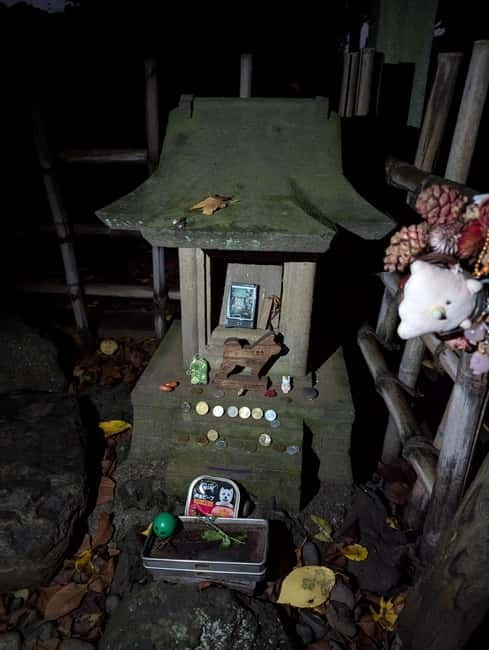
- Kabukicho begins the story: Learn about gang conflicts, murders, love disputes, and Tokyo’s quasi-legal sex industry in Japan’s largest red light district.
- Toyama Park carries serious wartime history: The tour discusses Unit 731 and human experimentation, making this more than a standard ghost walk.
- Aoyama Cemetery supplies the atmosphere: Expect Japanese ghost stories in one of Tokyo’s largest cemeteries, with a stop at Hachiko’s grave.
- John is the main attraction: His theatrical delivery, jokes, and wide knowledge receive the strongest praise.
- This is an adult walking tour: It is not suitable for children under 14, people with limited fitness, or anyone easily upset by graphic subjects.
- The price is reasonable: At $35 per person, you pay mainly for a focused guide and three hours of storytelling. Add about 200 yen for transport.
Starting beneath the Hanazono Shrine gate
The tour starts at Hanazono Shrine, just in front of the stairs leading toward the main shrine building. The shrine sits inside Shinjuku, close to Golden Gai, so you begin in a place where old religious Tokyo meets the city’s late-night entertainment zone.
Look for John, described as a thin, bald white man. Check your email or the GetYourGuide app before setting out, since the meeting instructions include extra details. This matters in Shinjuku, where a short walk can take you past several similar-looking entrances and crowded streets.
The opening setting does useful work. You are not dropped into a lecture hall or taken straight to a cemetery. You meet near a working shrine, then move quickly into the area known for bars, clubs, love hotels, and organized crime. That contrast helps frame the tour’s main idea: Tokyo’s polished public image sits beside some far rougher corners.
Golden Gai is nearby and forms part of the early route. With its tiny bars and narrow lanes, it is one of the city’s best-known drinking districts. You should not expect a bar crawl or dinner stop. The tour uses the area as a setting and a reference point, not as a place where food and drinks are included.
A few more Tokyo experiences worth weighing up
- Mt Fuji and Hakone 1-Day Bus Tour Return by Bullet Train
★ 5.0 · 26,383 reviews - 1-Day Tokyo Bus Tour
★ 5.0 · 14,250 reviews - Tokyo: TOKYO SKYTREE® Admission ticket
★ 4.5 · 11,192 reviews
Kabukicho: crime behind the neon
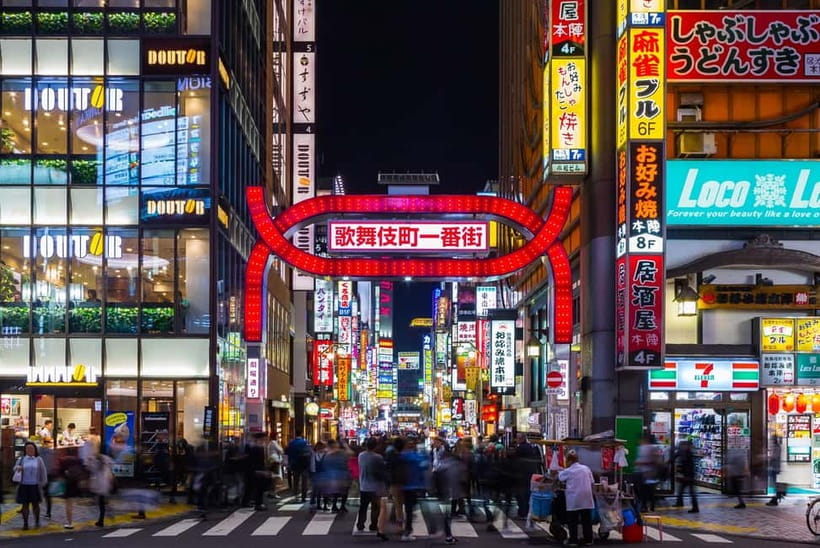
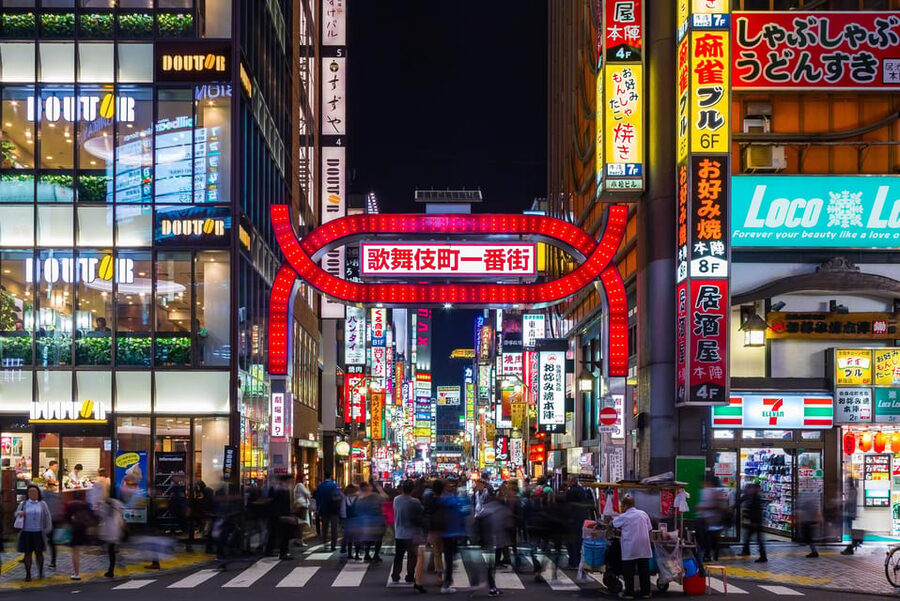
The first major section takes place in Shinjuku’s Kabukicho district and lasts about 45 minutes. This is the most urban and visually striking part of the walk. Neon, signs, narrow side streets, restaurants, clubs, and entertainment businesses create a busy backdrop for stories about gang wars, shocking murders, jilted lovers, and the local sex trade.
John’s role here is not simply to point at buildings. He explains how the district functions and discusses the gray areas around Tokyo’s quasi-legal sex industry. You get a look at girl and boy clubs, love hotels, and the ways adult entertainment operates in the neighborhood. The subject matter is direct, so you should be ready for references to prostitution, sex, violence, and murder.
I like this stop because the stories are tied to a place you can actually see. Kabukicho can seem like a wall of bright signs and restaurants when you visit on your own. With a guide, the streets become a setting for social and criminal history. You gain a better sense of how nightlife, business, policing, and organized crime overlap.
The tone is intentionally irreverent. John uses jokes and occasional adult language to keep the mood from becoming relentlessly bleak. That works well for people who enjoy crime documentaries and dark comedy, but it will not please everyone. If you want a solemn memorial-style walk, this is not that.
The group may also pause for questions and side stories. Several parts of the tour are built around John’s ability to respond rather than recite a fixed script. That is useful if you already know something about Japanese crime or wartime history and want to ask for more context.
Toyama Park and the weight of Unit 731
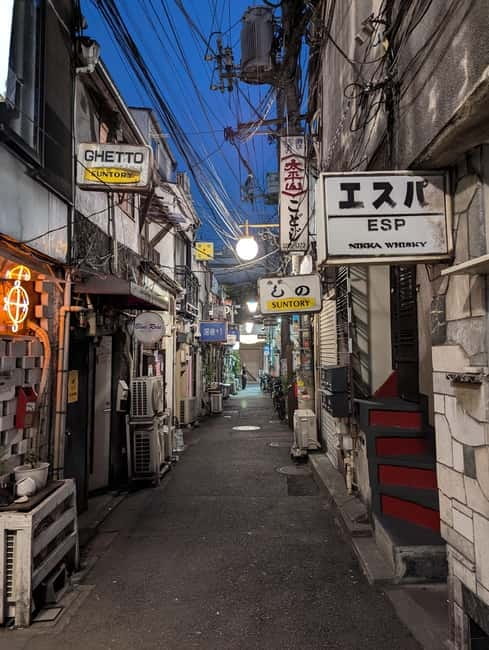
The route then leaves Kabukicho and continues toward Toyama Park. The supplied timing lists a further guided section of about 30 minutes, and the walk between locations is a real part of the experience. This is not a series of nearby attractions with long rest breaks.
Toyama Park is presented as Tokyo’s mini-Auschwitz, a phrase that signals the severity of the subject rather than a literal comparison of the two sites. Here, John discusses the ghosts associated with victims of Unit 731 and the group’s human experimentation during wartime. The material involves crimes against humanity and war crimes, not just sensational murder stories.
This is the section where the tour becomes most historically serious. It asks you to think about the parts of Japan’s wartime past that are often left out of a casual sightseeing program. The subject can be disturbing, and the tour’s jokes may feel more uncomfortable here than in Kabukicho. Still, the change in tone gives the walk more substance.
I appreciate that the experience places true crime beside state violence and wartime abuse. Those subjects are very different, and they should not be treated as the same kind of entertainment. The tour’s value comes from giving you a route through several forms of darkness, while John supplies historical framing and room for questions.
You should not come expecting a museum visit, exhibits, or an indoor presentation. There are no entry fees along the route, and Toyama Park is experienced as an outdoor stop. The focus is on the place, the history, and the stories John tells there.
Aoyama Cemetery after dark
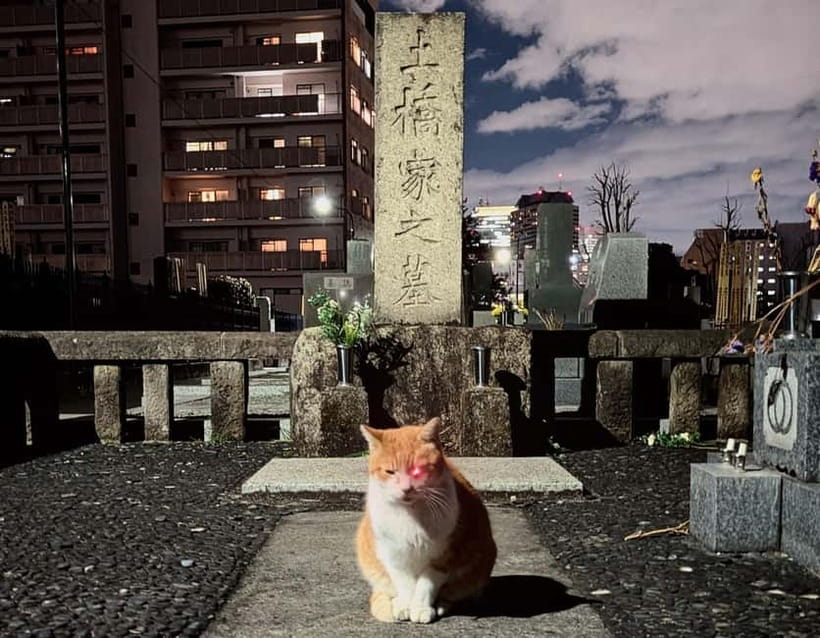
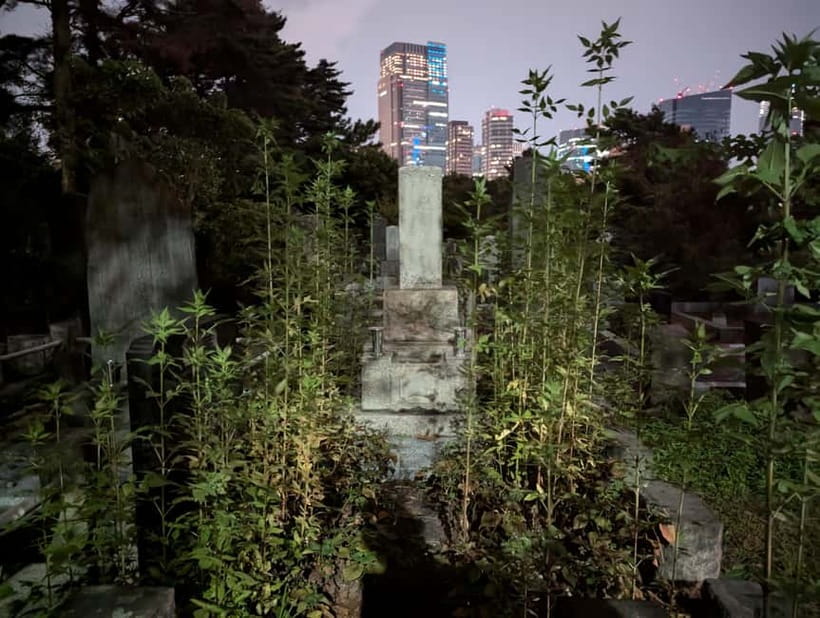
The final major stop is Aoyama Cemetery, described as Tokyo’s largest cemetery. Its broad, quiet setting makes a sharp contrast with Kabukicho. After the noise and commercial energy of Shinjuku, the cemetery offers space, darkness, and a natural stage for traditional Japanese ghost stories.
The itinerary gives this section about 45 minutes. Depending on the starting time and season, you may arrive with little daylight or after dark. One useful tip comes from the practical side of the experience: if you would like to see the cemetery itself clearly, an earlier start could be better. A later visit adds atmosphere, but it also means you may miss the shape and scale of the grounds.
John’s ghost stories draw on Japanese folklore and urban legends. Expect dramatic delivery rather than a claim that every tale is proven fact. His acting is a major part of the entertainment. He is known for changing his voice, building suspense, and then cutting the tension with a silly joke.
The cemetery stop also includes the grave of Hachiko, Japan’s famous loyal dog. This gives the final section a gentler note. Hachiko’s story is familiar to many people who visit Tokyo, but seeing the grave within the cemetery adds a personal detail to a place otherwise associated with death and fear.
Aoyama Cemetery can be windy and dark, so sensible shoes and a light layer are useful. The tour description does not promise a long sit-down break, so do not treat this as an easy evening stroll. You need to stay on your feet and follow the group through the grounds.
A completely different kind of day out in Tokyo:
- Tokyo: teamLab Planets TOKYO Digital Art Museum Entry Ticket
★ 4.6 · 9,779 reviews - Mt Fuji & Hakone Cruise, Drum Show Bullet Train 1 Day from Tokyo
★ 4.0 · 7,413 reviews - Tokyo: Sumo Show Experience with Chicken Hot Pot and a Photo
★ 4.8 · 6,678 reviews - Tokyo: Shinjuku Food Tour (13 Dishes at 4 Local Eateries)
★ 5.0 · 6,603 reviews
John’s storytelling style
The strongest reason to choose this tour is John. The material is unusual, but a subject like this can quickly become a list of names and grisly facts without a good storyteller. John brings theatrical timing, jokes, side stories, and a clear interest in Japanese history.
His style is quirky. That is part of the appeal and also something to consider. He may use dark or dirty humor, adult language, and deliberately exaggerated delivery. If you enjoy a guide who acts out stories and does not speak in a formal museum voice, you will probably have a good time.
John also appears to be helpful beyond the scheduled script. He has helped people find their trains after the tour and answered wider questions about Japan. That can be especially useful when the walk ends at Aoyama-Itchome Station, away from the starting point in Shinjuku.
The tour is offered in English. A private group option is available, which may suit couples, families with older teenagers, or friends who want more time for questions. The age limit remains important: children under 14 are not suitable for this experience.
Walking demands and practical planning
Plan for three hours of walking, not three hours of standing in one neighborhood. The route links Shinjuku, Toyama Park, and Aoyama Cemetery, and the description specifically warns that you will walk quite a bit. People with a low level of fitness are advised not to book, and wheelchair users are excluded.
Wear comfortable shoes. Tokyo’s streets can be tiring even before you add a long evening route, and one person specifically found the heat and humidity challenging before the storytelling made the time pass quickly. In warmer months, arrive rested and carry water.
You may need about 200 yen for transportation fees. The tour itself has no entry charges, and dinner is not included. Plan to eat before or after, especially since the route begins near many food options but does not stop for a meal.
The end point is Aoyama-Itchome Station, not Hanazono Shrine. That is convenient for continuing your evening, but it means you should know where you are going afterward. John may help with train directions, but you should still check your hotel route in advance.
The tour can be booked with free cancellation up to 24 hours before the start, and you can reserve now and pay later. Starting times vary, so check the available schedule. If you want the cemetery in fading daylight, choose the earliest practical time. If atmosphere matters more than seeing the grounds, a later start may suit you.
Is $35 a fair price?
At $35 per person, this is fairly priced for a three-hour, guide-led walk with no attraction admissions. You are paying for research, storytelling, route planning, and access to a subject that is difficult to explore on your own without spending hours finding reliable background material.
The value depends on your interests. If you love true crime, ghost stories, Japanese folklore, organized crime, or wartime history, the price is easy to justify. You get several different themes in one evening, and the route shows you parts of Tokyo that are not usually included in a first-time sightseeing plan.
If you want famous landmarks, food tastings, or a gentle introduction to Tokyo, the value is weaker. There is no dinner, no museum entrance, and no transport included beyond the guided route. You are buying an interpretation of the city, not a package of attractions.
The high rating of 4.9 out of 5 from 163 ratings reflects a very consistent response to John’s delivery. The praise centers on his storytelling, humor, historical background, and ability to keep people engaged for the full three hours. That consistency matters because the guide is the core of the experience.
Who should book this walk?
I would recommend it to adults and older teenagers who enjoy crime documentaries, paranormal stories, unusual history, and city walks with a sharp edge. It is also a good choice if you have already seen Tokyo’s temples, shopping districts, and major viewpoints and want a different angle.
The tour suits people who like to ask questions. John’s wider knowledge of Japan means you can move beyond the prepared stories and talk about history, society, or local customs. It also suits small groups, especially if you choose the private option and want a more personal pace.
I would skip it if graphic subjects make you uncomfortable, if you dislike adult jokes, or if you need a gentle, accessible route. The material includes murder, prostitution, human experimentation, war crimes, and ghosts. The humor softens the experience for many people, but it does not remove the difficult content.
Should you book the Tokyo True Crime and Ghost Stories Tour?
Book it if you want to see Tokyo through stories that are unsettling, funny, and historically serious. John’s passion and theatrical style are the clearest strengths, while the route gives you a useful contrast between Kabukicho’s nightlife, Toyama Park’s wartime associations, and Aoyama Cemetery’s quiet folklore.
I would choose an earlier start if seeing the cemetery matters to you, wear good shoes, and leave room in your evening for the 200-yen transport cost and your trip home. For the right audience, this is a memorable three hours that reveals a Tokyo most standard tours avoid.
FAQ
How long does the Tokyo True Crime and Ghost Stories Tour last?
The tour lasts three hours.
How much does the tour cost?
The listed price is $35 per person.
Where does the tour start?
It starts at Hanazono Shrine in Shinjuku, in front of the stairs leading to the main shrine building. The meeting point is inside the shrine grounds near Golden Gai.
Where does the tour finish?
The tour finishes at Aoyama-Itchome Station.
Which places are included?
The route includes Kabukicho, Toyama Park, Golden Gai, and Aoyama Cemetery. It also includes a visit to Hachiko’s grave.
What language is the tour in?
The tour is conducted in English.
Is transportation included?
Transportation fees are not included. You should allow about 200 yen for transport.
Is dinner included?
No. Dinner is not part of the tour.
Is the tour suitable for children?
No. Children under 14 are not suitable for this tour because of the adult themes, language, and discussion of crime, sex, violence, and war crimes.
Is the tour wheelchair accessible?
No. Wheelchair users are not suitable for this route, and the tour is also not recommended for people with a low level of fitness.
Just added around Tokyo
- Tokyo 6hr Instagram Highlights Private Tour with Licensed Guide★ 5.0 · 38 reviews
- Tokyo Small Group Tour with Guide★ 4.5 · 38 reviews
- Tokyo Sumo Experience with Live Show & Audience Challenge★ 5.0 · 38 reviews
- Japanese Food Cooking Class in Asakusa, Tokyo★ 5.0 · 39 reviews
- Very popular in Harajuku♡Animal petting zoo★ 4.6 · 39 reviews
- Ramen Making from Scratch with Tokyo Mom(Vegan Option Available)★ 5.0 · 39 reviews
- Tokyo JDM Night: 600hp C63s AMG Edition 1 (Private)★ 4.9 · 39 reviews
- Tokyo: Kimono Rental inside Shinjuku Gyoen National Garden★ 4.9 · 39 reviews
Tokyo Tours, compared.
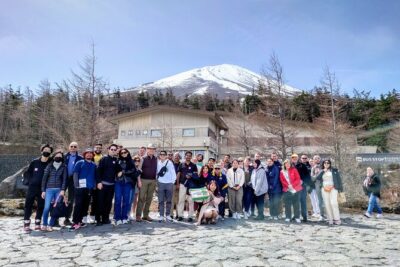
Mt Fuji and Hakone 1-Day Bus Tour Return by Bullet Train
Read our review →

teamLab Planets TOKYO Digital Art Museum Entry Ticket
Read our review →
Mt Fuji & Hakone Cruise, Drum Show Bullet Train 1 Day from Tokyo
Read our review →
Shinjuku Food Tour (13 Dishes at 4 Local Eateries)
Read our review →
Tokyo Mt Fuji 5th St & Hakone Cruise Bus Tour w/Bullet Train
Read our review →