
Reviewed · JAPAN
Visit Gunkanjima Island (Battleship Island) in Nagasaki
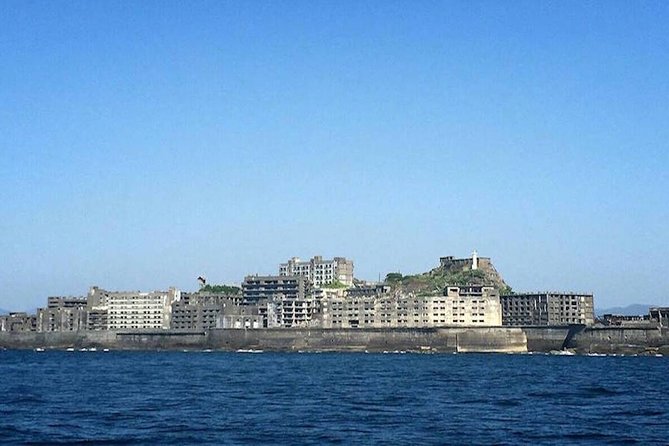
The strangest skyline in Japan waits offshore. Gunkanjima, also called Battleship Island, is a compact, crumbling former coal-mining town about 20 kilometers from Nagasaki Port. This tour combines the boat ride, island admission, and Gunkanjima Digital Museum, making it a simple way to reach a place you cannot visit independently.
I especially like the Digital Museum, which gives you useful background before the boat leaves, and the chance to see the island from several angles before walking onto its restricted viewing area. The main drawback is important: English support can be limited, and rough seas may prevent you from landing at all.
The tour costs $71.85 per person and takes about three hours in its basic description, though the published schedule requires more time if you use the museum before boarding. It is a good match for curious visitors who enjoy industrial history, unusual places, and a little travel uncertainty.
In This Review
- Key points to know before you book
- Why Gunkanjima feels unlike anywhere else in Japan
- Starting at the Digital Museum near Nagasaki Port
- The boat ride to Battleship Island
- Walking the three viewing areas on Gunkanjima
- What happens if the island landing is canceled
- English support and the audio guide question
- Is the $71.85 price good value?
- Practical preparation for the three-hour experience
- Who will enjoy Gunkanjima most?
- Should you book this Gunkanjima tour?
- FAQ
- Where does the Gunkanjima tour start?
- Where does the tour finish?
- How long does the tour take?
- Is the Gunkanjima entrance fee included?
- Is the boat fare included?
- Are hotel pickup and drop-off included?
- Is an English-speaking guide included?
- Can the tour be canceled because of weather?
- What should I wear and bring?
- Is there an extra fee to board the ship?
Key points to know before you book
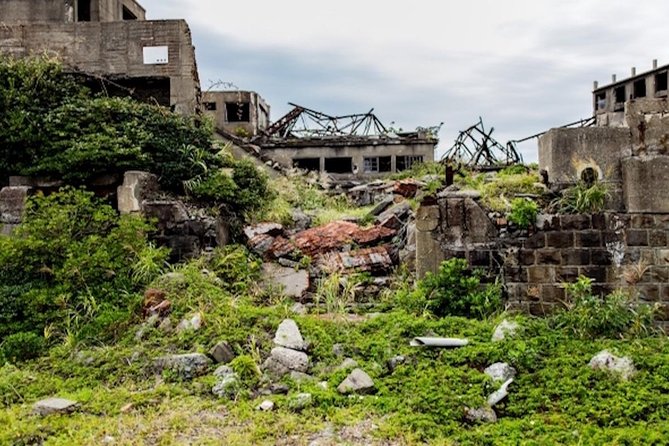
- Gunkanjima was once home to more than 5,000 people on an island only about 480 meters long and 150 meters wide.
- The Digital Museum is not just a waiting room. Allow about an hour to see its displays before boarding.
- Landing depends on the sea. High waves can cancel the shore visit and replace it with a boat trip around the island or a museum-based alternative.
- English service is inconsistent. You may receive printed material, and an audio guide may be rented locally, but a live English-speaking guide is not guaranteed.
- Flat shoes are required. High heels, umbrellas, and parasols are not allowed.
- The $71.85 price includes the cruise and museum admission, but you still pay a small Nagasaki City boarding fee and any audio guide or food costs.
Why Gunkanjima feels unlike anywhere else in Japan
Gunkanjima was built around coal. From the late nineteenth century until 1974, people lived and worked on this tiny island beside the mine. At its peak, more than 5,000 residents occupied an area smaller than many city parks.
That density shaped every part of daily life. The island had homes, schools, a gym, a pool, and other facilities needed for a permanent community. Concrete apartment blocks pressed against one another, creating the battleship-like outline that gave Gunkanjima its nickname.
Then the mine closed. The population disappeared, and the island was left empty. Nature and weather began working on the buildings, but this is not a preserved open-air town where you can wander freely. You follow a controlled route along designated viewing platforms because the structures are unsafe.
That tension is the heart of the visit. You see a place that once functioned as a complete community, yet you are allowed to enter only a small part of it. The restricted access can feel frustrating, but it also makes the island feel more real. You are looking at a fragile industrial site, not a theme park dressed up as one.
Gunkanjima also gained wider attention as a filming location associated with the James Bond movie Skyfall. The film connection may draw you in, but the island’s coal-mining story is the reason the visit has lasting value.
A few more Japan experiences worth weighing up
- Nagasaki: Private Walking Tour with a Local
★ 4.7 · 79 reviews - Nagasaki Full-Day Private Tour with Government-Licensed Guide
★ 5.0 · 66 reviews - Nagasaki Half-Day Private Tour with Government-Licensed Guide
★ 5.0 · 53 reviews
Starting at the Digital Museum near Nagasaki Port
The meeting point is the Gunkanjima Digital Museum at 5-6 Matsugaemachi, Nagasaki. The museum visit is included, and I strongly recommend treating it as part of the main experience rather than an optional extra.
The published schedule allows roughly one hour at the museum, around noon to 1 p.m., followed by boarding at about 1:20 p.m. The museum can also be visited again after the boat trip, with one re-entry allowed using the pass you receive.
This timing matters. If you arrive just before boarding, you may miss the displays that explain how the mine operated and how people lived on the island. The museum helps you identify the buildings and understand why a seemingly small concrete ruin once required schools, recreation spaces, housing, and work areas.
Digital displays and virtual reality material are particularly useful when the sea prevents a landing. In that situation, the museum gives you a fuller sense of the island than a simple boat circuit can provide.
The museum is also where you can get your bearings on the practical rules. You will sign a pledge before boarding, and the operator sends this document by email after booking. You can bring a printed copy if possible, or complete it at the meeting point.
The boat ride to Battleship Island
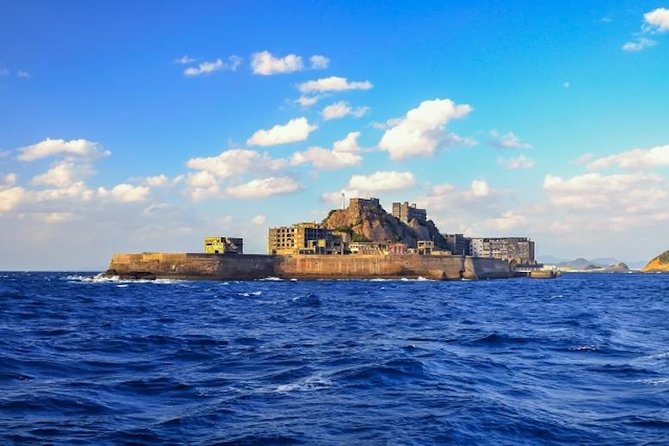
The cruise is included in the $71.85 cost, and the boat is your only route to Gunkanjima. The ride gives you an important first view of the island, since the concrete blocks look different from each side.
Some boats are described as modern and comfortable, but your seat can affect the experience. Boarding is first come, first served, so arriving around 1 p.m. gives you a better chance of choosing a comfortable position. Do not assume every seat has a clear ocean view.
The boat commentary is usually in Japanese. English information may come through a printed folder, radio guide, or rental audio device, but the exact level of English help can vary. If the operator offers an English audio guide on the day, it may be worth paying the extra fee. Otherwise, read the English material before the boat reaches the island so you can match the information to what you see.
On a favorable day, staff may direct you to different areas of the boat for better views as Gunkanjima approaches. A slow pass around the island lets you photograph the apartment blocks, seawalls, and industrial remains before the landing.
The sea is not a minor detail here. High waves can stop the boat from docking, even when the weather in central Nagasaki looks fine. Motion sickness medication may be useful if you are sensitive to rough water, though the operator has provided motion-sickness candy on some departures.
Bring a raincoat rather than an umbrella. Umbrellas and parasols are not allowed on the boat, while raincoats can be bought at reception or onboard for 200 yen. A hat, sunscreen, and water protection are sensible in bright weather because the viewing areas offer little shade.
Walking the three viewing areas on Gunkanjima
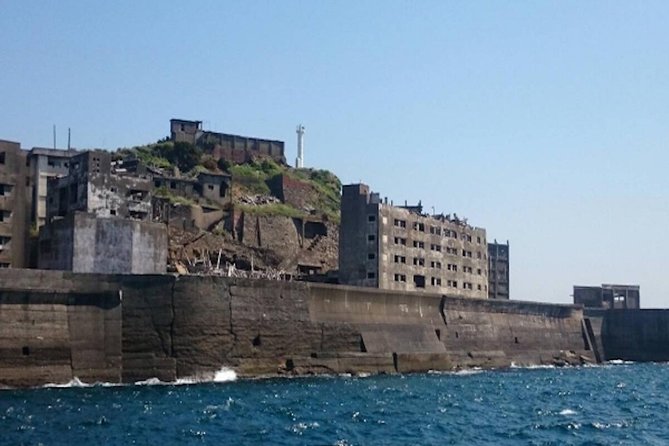
If conditions allow a landing, you will not roam across the whole island. The route uses designated walkways and three viewing areas. The movement is controlled, and the visit can feel quite short because the island is both dangerous and tightly managed.
That limitation is worth understanding before you go. You are not entering abandoned apartments or climbing through the ruins. You are observing the island from safe platforms while the guide points out buildings and explains their former uses.
From these viewpoints, the scale becomes clearer. The island is only 480 meters long and 150 meters wide, yet it once held thousands of residents. Schools, housing, recreation facilities, and industrial buildings had to fit within that narrow space.
You might see the remains of apartment blocks that once held families close to the mine. Concrete construction helped the buildings survive after abandonment, but storms, salt, and neglect have left walls and openings in a fragile state. The attraction is not polished. Broken structures and restricted zones are part of the honest experience.
The island’s appearance can bring up difficult questions about industrial work and the people who lived there. The tour focuses on Gunkanjima’s development as part of Nagasaki’s coal and industrial economy. If you want a fuller understanding of every historical issue connected with the island, plan to read more before or after your visit, since the English material provided may be brief.
Photographers will appreciate the boat circuit as much as the landing. Once ashore, you have limited time and fixed sightlines. From the water, you can frame the entire island and compare its outer walls, buildings, and industrial remains from several directions.
A completely different kind of day out in Japan:
- Mt Fuji and Hakone 1-Day Bus Tour Return by Bullet Train
★ 5.0 · 26,383 reviews - 1-Day Tokyo Bus Tour
★ 5.0 · 14,250 reviews - PERFECT KYOTO 1-Day Bus Tour
★ 5.0 · 13,518 reviews - Tokyo: TOKYO SKYTREE® Admission ticket
★ 4.5 · 11,192 reviews
What happens if the island landing is canceled
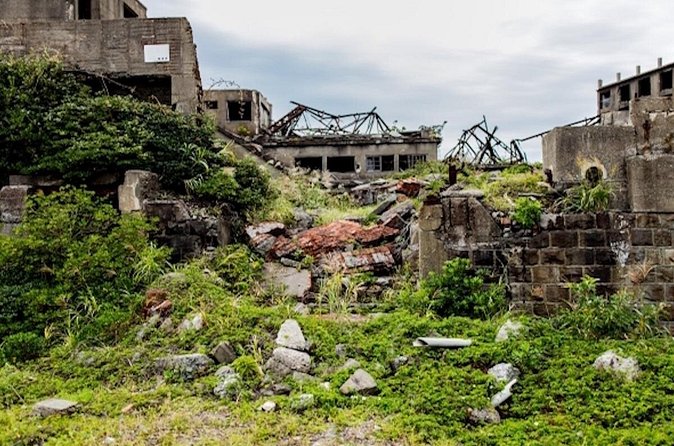
A landing is never guaranteed. The operator states that the tour may be canceled or changed to a boat trip around the island if weather is poor or waves exceed the permitted height. Even a departure with calm conditions in Nagasaki can face rough water offshore.
If the ship cannot land, you may receive an alternative gift, and you can use the museum to make the most of the day. The museum’s virtual reality displays are especially useful in this case because they show areas you cannot safely enter in person.
A boat-only trip is not the same as stepping onto Gunkanjima. If landing is the main reason you are booking, keep your schedule flexible and avoid placing the tour on the final few hours of your Nagasaki stay.
The cancellation policy also rewards planning ahead. Cancel at least six full days before the start time for a full refund. Cancellations two to six days before the tour receive a 50 percent refund, while cancellations less than two full days before departure are not refunded. If the operator cancels for poor weather, you are offered another date or a full refund.
English support and the audio guide question
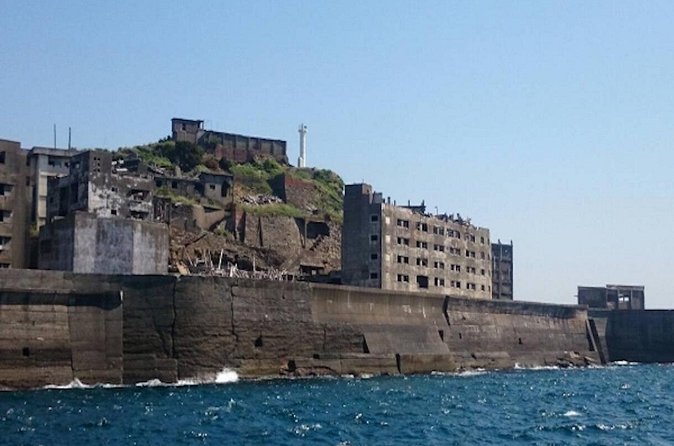
This is the area where expectations matter most. Some departures have had no live English-speaking guide, leaving international visitors with an English folder or printed information. Other departures have used radio guides or staff assistance to help English speakers follow along.
I would not book this tour assuming that every spoken explanation will be translated. Ask about the English audio guide when you arrive, and budget for the extra local rental fee if clear commentary is important to you.
The Digital Museum is easier to appreciate independently because visual displays and virtual reality material carry much of the story. The boat and island portion depends more heavily on the guide’s commentary. You can still enjoy the architecture without Japanese, but you may miss details about particular buildings and the wider role of Nagasaki’s coal and industrial growth.
Staff assistance has generally been described as courteous and helpful, especially when seating, weather, or audio reception creates problems. That matters on a tour where the conditions can change quickly and the schedule is tightly managed.
Is the $71.85 price good value?
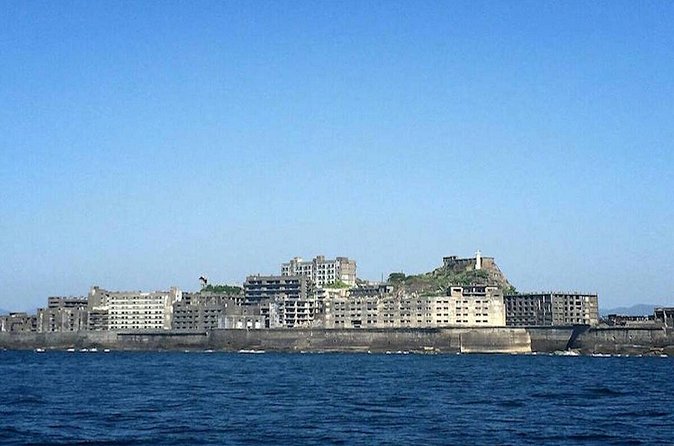
At $71.85 per person, the package is reasonably priced for a boat-only-access site. The cost includes the cruise, Gunkanjima admission, and Digital Museum admission, plus local assistance. You are paying for transport, site access, and a structured visit without having to arrange the boat separately.
There are a few extra costs to note. You must pay an additional Nagasaki City boarding fee of 310 yen per adult, or 150 yen for youth and children. Food and drinks are not included, and an English audio guide costs extra if available.
The value depends on your priorities. If you want a guaranteed long walk through the ruins, this is not the right product because the route is short and controlled. If you value the boat approach, the museum, and the chance of landing on a rare industrial heritage site, the package makes practical sense.
The small group limit is listed as a maximum of 10 people, which can make local assistance easier than on a large coach excursion. Still, the ship itself may carry more people, and your seat is assigned on a first-come basis rather than reserved for you.
Practical preparation for the three-hour experience
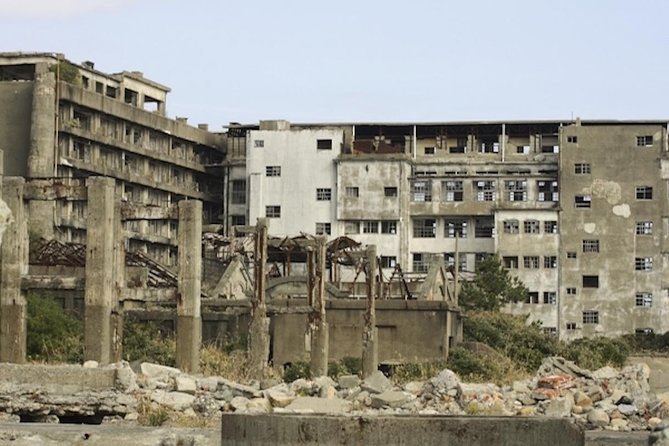
The meeting point is near public transportation, but hotel pickup and return are not included. You finish back at the same meeting point, so plan your Nagasaki sightseeing around that location.
Wear flat, secure shoes. High heels are not allowed ashore, and the walkways can be exposed to wind and rain. Bring a raincoat, sunscreen, and a hat. Leave your umbrella and parasol behind.
Arrive early enough to see the museum and reach the ship around 1 p.m. Boarding begins around 1:20 p.m., and early arrival improves your chance of a comfortable seat. The published information also says the full program must be completed by 5 p.m., so the actual time commitment may be longer than the three-hour estimate suggests.
Keep your email available after booking. Confirmation is sent within 48 hours, subject to availability, and weather-related changes are communicated by email. Most people can participate, but sea conditions and the fixed walking route should be part of your decision.
Who will enjoy Gunkanjima most?
I would choose this tour if you like industrial archaeology, abandoned places, unusual photographs, or the history of how a small resource site supported a huge population. It also suits anyone who wants a memorable addition to a Nagasaki itinerary without planning a complicated boat transfer.
The tour is less suitable if you need guaranteed English narration, dislike boats, or want unrestricted access to derelict buildings. It is also a poor choice for a rigid schedule because landing depends on the waves.
Families and older visitors may appreciate the organized route, though the operator says only flat shoes are permitted and the island’s viewing paths are exposed. The activity is open to most people, but you should be comfortable with a boat journey and limited outdoor walking.
Should you book this Gunkanjima tour?
Book it if you accept the conditions and want to see one of Japan’s most unusual former mining communities. The museum adds real value, the cruise is included, and a successful landing gives you a rare look at a tightly controlled heritage site.
Before paying, make three decisions. Confirm that you can handle a boat trip, accept that English commentary may be limited, and leave room in your schedule in case the sea cancels the landing. If those points work for you, the $71.85 package is a sensible way to experience Gunkanjima from Nagasaki.
FAQ
Where does the Gunkanjima tour start?
The tour starts at the Gunkanjima Digital Museum, located at 5-6 Matsugaemachi, Nagasaki, 850-0921, Japan.
Where does the tour finish?
The activity ends back at the Gunkanjima Digital Museum meeting point.
How long does the tour take?
The experience is listed as approximately three hours, but the published schedule includes a museum visit around noon, boarding around 1:20 p.m., and completion by 5 p.m. Allow extra time beyond the basic estimate.
Is the Gunkanjima entrance fee included?
Yes. Admission to Gunkanjima Island and the Gunkanjima Digital Museum is included.
Is the boat fare included?
Yes. The cruise fare is included in the package price.
Are hotel pickup and drop-off included?
No. You must make your own way to the meeting point, and the tour ends there.
Is an English-speaking guide included?
A live English-speaking guide is not guaranteed. English printed information or a radio guide may be provided, and an audio guide may be available to rent locally for an additional fee.
Can the tour be canceled because of weather?
Yes. Poor weather or waves above the permitted height can prevent the boat from landing or cancel the tour. You may be offered a boat trip around the island, an alternative gift, another date, or a full refund, depending on the situation.
What should I wear and bring?
Wear flat shoes because high heels are not allowed ashore. Bring a raincoat, hat, sunscreen, and other sun protection. Umbrellas and parasols are not allowed on the boat.
Is there an extra fee to board the ship?
Yes. You must pay an additional 310 yen per adult, or 150 yen for youth and children, for the Nagasaki City boarding fee.
Just added around Japan
- Kanazawa private half day/Photoshoot by professional photographer★ 5.0 · 38 reviews
- Osaka Food Tour with 10 Classic Japanese Tastings & Drinks★ 5.0 · 38 reviews
- Osaka: Highlights & Hidden Gems Private Walking Tour★ 4.7 · 38 reviews
- Tokyo Small Group Tour with Guide★ 4.5 · 38 reviews
- Tokyo 6hr Instagram Highlights Private Tour with Licensed Guide★ 5.0 · 38 reviews
- From Tokyo: Kamakura Private Customize Tour by Luxury Van★ 4.6 · 38 reviews
- Tokyo Sumo Experience with Live Show & Audience Challenge★ 5.0 · 38 reviews
- Kyoto: Private Customizable Day Trip by Car★ 5.0 · 38 reviews