
Reviewed · GOVERNMENT-LICENSED GUIDE TOURS
Nagasaki Full-Day Private Tour with Government-Licensed Guide
Nagasaki rewards a slower look. This six-hour private tour lets you shape the day around your interests, with a licensed local English-speaking guide and a choice of three or four major sights. I like the freedom to combine the Peace Park with the Atomic Bomb Museum, or pair historic temples with Glover Garden and the views from Mount Inasa. I also like the use of trams and buses, which gives you a practical glimpse of daily life in Nagasaki rather than keeping you sealed inside a private vehicle. The main drawback is that transportation, meals, and most entrance fees cost extra, and three or four stops can feel rushed if you choose places that need serious time.
This is a tour for people who want context, not just photographs. Guides such as Hiro, Mei, Yoko, Yoshi, Yoshiko, Minnie, and Norah have helped visitors adjust plans on the day, explain difficult subjects with care, and add local touches such as Chinese food, a small soba restaurant, or even help finding anime gifts. Because you walk to public transport and between sights, comfortable shoes are essential.
In This Review
- Key points to know before booking
- A private Nagasaki day built around your interests
- Peace Park and the Atomic Bomb Museum
- Mount Inasa for Nagasaki from above
- Dejima, Glover Garden, and Nagasaki’s foreign connections
- Chinese temples, Confucius, and the old temple district
- Bridges, slopes, museums, and smaller additions
- Getting around by tram, bus, and your own feet
- What the $155.22 price really buys
- The guides make or break the day
- Who should book this Nagasaki tour?
- FAQ
- How long does the Nagasaki private tour last?
- How many attractions can I visit?
- Is hotel pickup included?
- Is transportation included?
- Are admission tickets included?
- Is the tour private?
Key points to know before booking
- Choose only three or four sites: The long menu of attractions gives you control, but you cannot realistically see everything in six hours.
- The guide meets you on foot: Hotel pickup is offered within a designated Nagasaki area, but this is not a private-car pickup.
- Public transport is part of the experience: Trams and buses keep costs down and let you move through the city as residents do.
- The Peace Park and Atomic Bomb Museum need emotional space: These are powerful stops, and rushing them would weaken the experience.
- Mount Inasa adds a welcome change of pace: The ropeway access and city-and-ocean views provide a visual break from museums and memorials.
- The price buys flexibility: At $155.22 per person, the value is strongest for couples, families, or small groups who want tailored guidance.
A private Nagasaki day built around your interests
The best feature here is control. You select three or four places from a wide list, then your guide works out the order and transport. You might build a serious day around the Peace Park, the Atomic Bomb Museum, Urakami Cathedral, and the Twenty-Six Christian Martyrs Monument. Or you could choose Glover Garden, Oura Church, Dejima, and Mount Inasa for a wider look at Nagasaki’s international connections.
The tour lasts about six hours. That sounds generous until you include walking, waiting for trams or buses, meals if you stop to eat, and the time needed at each attraction. The suggested stop times range from 15 to 30 minutes, but those figures are better treated as rough planning markers than strict limits.
A private format matters most when your group has different priorities. A family can ask for shorter explanations and interactive questions. A couple interested in religious history can spend more time around Oura Church and the Christian Martyrs Monument. Someone visiting Nagasaki for the first time can ask the guide to recommend a sensible mix instead of trying to squeeze every famous name into one day.
The guide can also adjust the day as you go. Yoko is described as meeting a solo visitor on time, quickly identifying the sights they wanted, and using a picture book to confirm places. That sort of quick communication is useful when names are unfamiliar or your plans change after seeing the city.
More licensed guide tours in Japan:
- Tokyo 6hr Private Tour with Government-Licensed Guide
★ 5.0 · 3,902 reviews - Tokyo 4hr Private Tour with Government-Licensed Guide
★ 5.0 · 1,394 reviews - Kyoto 6hr Private Tour with Government-Licensed Guide
★ 5.0 · 1,369 reviews
Peace Park and the Atomic Bomb Museum
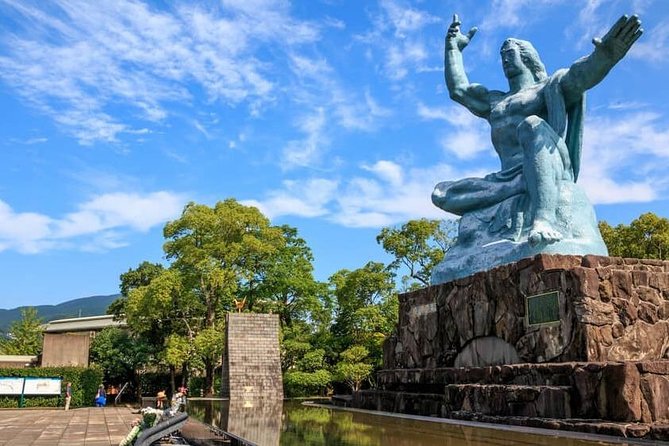
Nagasaki Peace Park is the natural starting point for a serious visit. It commemorates the atomic bombing of August 9, 1945, which destroyed a large part of the city and killed many people. The park itself is free, open, and quieter than a conventional sightseeing stop, giving you room to think rather than simply move from one display to the next.
The Atomic Bomb Museum, located near the hypocenter, documents the destruction and Nagasaki’s recovery. It is an important stop, but it is not light entertainment. I would allow more time here than the basic 30-minute suggestion if this is one of your main reasons for visiting.
A guide is particularly useful in this part of town. The subject includes military history, civilian suffering, the physical effects of the bomb, and the wider meaning of Nagasaki for Japan and the world. A good guide can help place what you see in context without turning the visit into a lecture.
The practical limitation is clear: choosing both Peace Park and the museum may use a large share of your six hours. That is not a problem if these are your priorities. It is a problem if you also expect to fit in several temples, churches, and a mountain viewpoint.
Urakami Cathedral adds another layer to this area. The present red-brick Catholic church has a tragic past connected to the bombing, while also remaining a working place of worship. The combination of cathedral, Peace Park, and museum creates a thoughtful route focused on Nagasaki’s wartime past and religious life.
Mount Inasa for Nagasaki from above
Mount Inasa rises 333 meters near the city center. From the observation deck, you can look across Nagasaki and toward the ocean. The summit can be reached by ropeway, bus, or car, though this experience does not include a private vehicle and transportation fees are separate.
The ropeway is part of the appeal. One visitor particularly enjoyed riding the gondola and seeing the city from above. I would choose Mount Inasa when you need a visual pause after the museum district, or when photographs and broad views matter as much as monuments.
The stop is listed at about 15 minutes, which is brief for a mountain viewpoint. If you want time for photographs, the ropeway, and a relaxed look from the top, ask your guide how much of the schedule it will use. Weather can also affect the payoff, and the tour information does not promise clear conditions.
Mount Inasa works best as one of three or four carefully selected stops, not as an extra squeezed into an already full plan. It pairs well with Dejima or Glover Garden, giving your day both a city panorama and a closer look at Nagasaki’s past.
Dejima, Glover Garden, and Nagasaki’s foreign connections
Dejima was a man-made island in Nagasaki’s port, created in 1636 to separate Portuguese residents from the Japanese population and control missionary activity. Later, the site became associated with Dutch trade during Japan’s long period of restricted foreign contact.
This is one of the most useful stops if you want to understand why Nagasaki developed such a different character from many Japanese cities. It connects the port, international trade, foreign merchants, and the movement of ideas into Japan. Entrance fees are not included.
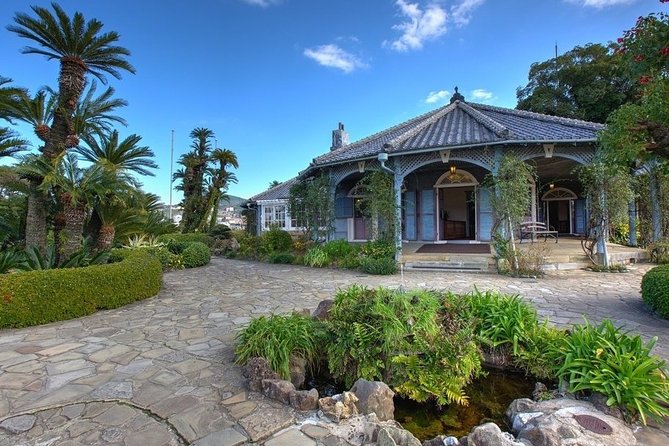
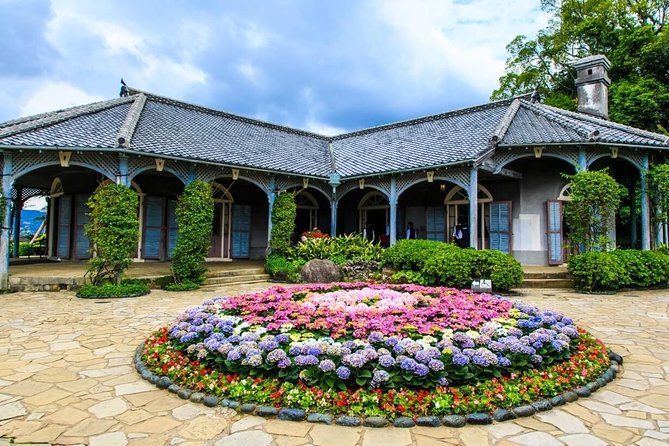
Glover Garden is an open-air museum on the hillside where Western merchants lived after Nagasaki opened to foreign trade. Its restored residences and related buildings help you picture the foreign settlement rather than merely read about it.
The hill setting brings attractive views, but it also means slopes and walking. The tour is not a private-car outing, so you should be ready for movement between neighborhoods and public transport. Glover Garden and Oura Church can be paired efficiently because both are connected with Nagasaki’s former foreign community.
Oura Church was built in 1864 by a French missionary for foreign merchants. Its European style and religious history make it one of the city’s most distinctive buildings. It is another paid stop, and the suggested time may be too short if you want to study the building and understand its connection to Nagasaki’s hidden Christian past.
A few more Japan experiences worth weighing up
- From Tokyo: Mount Fuji Full-Day Sightseeing Trip
★ 4.5 · 4,970 reviews - Mount Fuji Full-Day Private Tour from Tokyo (Customizable)
★ 4.9 · 1,470 reviews - Hiroshima / Miyajima Full-day Private Tour with Government Licensed Guide
★ 5.0 · 1,298 reviews - Tokyo Private Full-Day Tour by Car or Van
★ 5.0 · 684 reviews
Chinese temples, Confucius, and the old temple district
Sofukuji Temple was built in 1629 for Nagasaki’s Chinese residents and follows the Obaku school of Zen Buddhism. Its Chinese architectural character gives you a different visual and cultural experience from the city’s Christian churches and Western-style buildings.
Kofukuji Temple is another major Chinese-founded temple and the oldest of its kind in Nagasaki. It sits in the Teramachi, or Temple Town, district, and is linked with the beginnings of the Obaku school in Japan. The program lists Kofukuji more than once, so treat it as one possible site, not several separate stops.
These temples are best for you if architecture, religious history, and the Chinese influence on Nagasaki interest you. They also create a calmer counterpoint to the Atomic Bomb Museum. Admission is not included, and temple visits can easily run beyond the suggested 30 minutes if you enjoy details.
The Nagasaki Confucius Shrine adds yet another Chinese connection. Built in 1893 by Nagasaki’s Chinese community, it is one of only a small number of shrines dedicated to Confucius in Japan. The attraction list uses both Nagasaki Gokoku Shrine and Nagasaki Confucius Shrine in places, so confirm the exact site with your guide when planning.
This is a good example of where a private guide helps. Several names in the menu are similar or repeated, and a local guide can clarify what you are actually visiting before you spend time and admission money.
Bridges, slopes, museums, and smaller additions
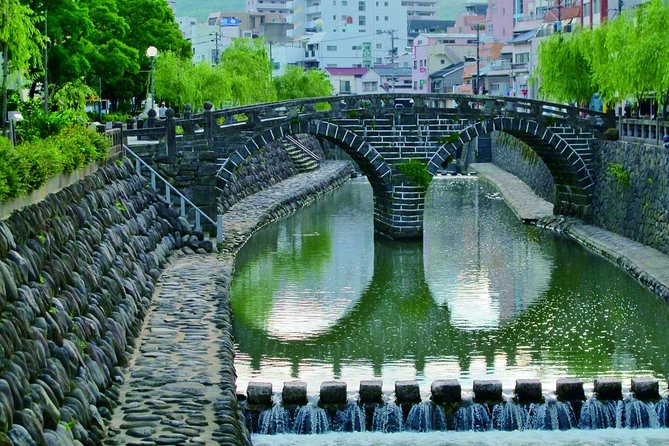
Meganebashi, or Spectacles Bridge, is the most notable of the stone bridges crossing the Nakashima River. Its name comes from the shape formed by the bridge and its reflection. It is a straightforward photo stop and can be a pleasant choice when you want something outdoors and central.
The Dutch Slope is a stone-paved hillside street where foreign traders lived after the port opened to overseas commerce in 1859. It is less about one grand building and more about seeing how the city’s hills shaped foreign settlement and movement.
The Nagasaki Museum of History and Culture focuses on the city’s role as one of Japan’s main international gateways. It is a sensible alternative if you want broader cultural context but do not want a day devoted only to wartime memory.
The Nagasaki Prefectural Art Museum occupies a modern complex by the port. Choose it if you want architecture and art to balance the historical sites. Its 30-minute suggestion makes it easier to fit into a mixed day, though admission is extra.
The Twenty-Six Christian Martyrs Monument and adjacent museum commemorate the Christians executed in Nagasaki on February 5, 1597. This is a meaningful choice for anyone interested in the early Christian community and the religious pressures that shaped the city.
The Nagasaki Lantern Festival appears among the possible stops, although the description also refers to Nagasaki Kunchi, the annual Suwa Shrine festival held October 7 to 9. Those are different cultural events, so I would confirm exactly what is available on your date before choosing this option. The festival-related entry is listed as a short stop and may not represent a full event visit outside festival dates.
Getting around by tram, bus, and your own feet
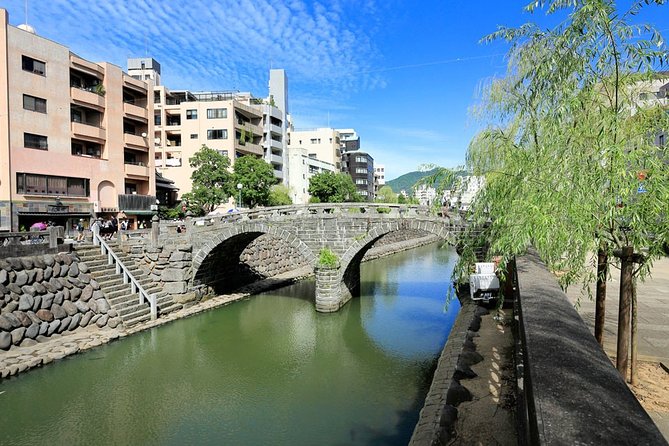
This is a walking and public transport tour. The guide meets you on foot within the designated Nagasaki area, and a private vehicle is not included. Transportation fares are also separate, so budget for tram or bus costs in addition to the tour price.
That arrangement has real advantages. One guide described riding buses and trams among local residents as one of the most enjoyable parts of the day. You see how Nagasaki works, and you avoid paying for a vehicle you may not need in a compact urban area.
The tradeoff is pace. Nagasaki is hilly, several attractions are spread across different districts, and waiting for public transport takes time. Tell your guide early if anyone in your group needs a slower walking pace or shorter uphill sections, then choose sites that fit those limits.
Lunch is not included. A small soba restaurant was one memorable part of a day for one visitor, while another guide shared Chinese food with a pair of visitors. You can ask for local food suggestions, but the meal itself is your responsibility and will use part of the six-hour schedule.
What the $155.22 price really buys
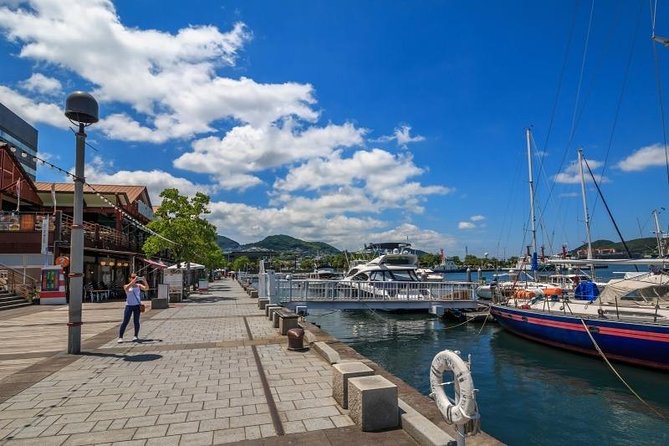
At $155.22 per person, this is not a bargain sightseeing bus. You are paying for a private day, an English-speaking licensed guide, and the ability to shape the route around your party. The price makes better sense when split among several people, especially if everyone wants the same kind of day.
The value is strongest for a first visit, a family group, or anyone who wants help handling a serious subject in English. It is also useful for a short stay when you need to make good choices quickly.
Remember the extras: public transport, entrance fees, lunch, and personal spending. Guide entry fees are covered only for sights included in the designated attraction list. You cannot combine separate tour groups, so this is a genuine private activity rather than a semi-private outing.
The 97 percent recommendation rate and 4.9 rating from 66 reviews point to consistently strong satisfaction, especially with guide flexibility, kindness, punctuality, and local explanation. One entry was marked one star despite describing a positive day, so the rating record contains at least one clear mismatch. That does not erase the overall pattern, but it is worth noting for a fair assessment.
The guides make or break the day
The strongest praise goes to the people leading the tours. Hiro introduced Nagasaki’s culture, past, and food, while Mei used trams to make a family’s customized route easy to manage. Yoko was praised for arriving on time, making a quick plan, and using visual aids to identify requested sights.
Yoshiko added unexpected elements and helped make a private day feel personal. Minnie was praised for steering the day toward the places her group cared about, while Norah helped with an unusual request for anime character gifts. These details suggest a service that can extend beyond prepared commentary.
Families may appreciate the use of quizzes and questions. Mei used questions about Japan and Nagasaki with a child, turning the day into something more active than simply listening.
Guide quality can vary from person to person, as it does with any human-led tour. Still, the repeated emphasis on kindness, preparation, flexibility, and local pride is a strong reason to choose this format over a rigid group excursion.
Who should book this Nagasaki tour?
I would book it if you want to see Nagasaki through a particular lens and do not want to waste time sorting out the city alone. It suits couples, families, solo visitors, and small groups who value conversation and can agree on three or four priorities.
It is especially good for a first visit with limited time, a family that needs a flexible pace, or anyone who wants careful explanation at the Peace Park and Atomic Bomb Museum. It also suits visitors who want to connect several themes, such as Chinese influence, foreign trade, Christianity, and wartime memory.
I would think twice if you want a relaxed day with long museum visits, a private car, or a fixed all-inclusive price. Six hours and three or four stops require choices, and extra fees can raise the final cost.
Book this tour when flexibility and personal guidance matter more to you than the lowest price. Before the day begins, choose your top two priorities, identify one backup, and ask about transport time and entrance costs. With that small amount of planning, you can build a thoughtful Nagasaki day that feels personal rather than hurried.
FAQ
How long does the Nagasaki private tour last?
The tour lasts approximately six hours.
How many attractions can I visit?
The tour includes a customizable choice of three or four sites from the designated attraction list.
Is hotel pickup included?
Pickup is offered on foot within a designated area of Nagasaki. This is not private-vehicle pickup.
Is transportation included?
No. The experience uses walking and public transportation, and transportation fees are not included.
Are admission tickets included?
Most entrance fees are not included. Guide entry fees are covered only for attractions listed in the designated What to Expect section.
Is the tour private?
Yes. Only your group participates, and separate tour groups cannot be combined.
Just added around Japan
- Kanazawa private half day/Photoshoot by professional photographer★ 5.0 · 38 reviews
- Osaka Food Tour with 10 Classic Japanese Tastings & Drinks★ 5.0 · 38 reviews
- Tokyo 6hr Instagram Highlights Private Tour with Licensed Guide★ 5.0 · 38 reviews
- Osaka: Highlights & Hidden Gems Private Walking Tour★ 4.7 · 38 reviews
- Tokyo Small Group Tour with Guide★ 4.5 · 38 reviews
- From Tokyo: Kamakura Private Customize Tour by Luxury Van★ 4.6 · 38 reviews
- Tokyo Sumo Experience with Live Show & Audience Challenge★ 5.0 · 38 reviews
- Kyoto: Private Customizable Day Trip by Car★ 5.0 · 38 reviews
Government-Licensed Guide Tours, compared.
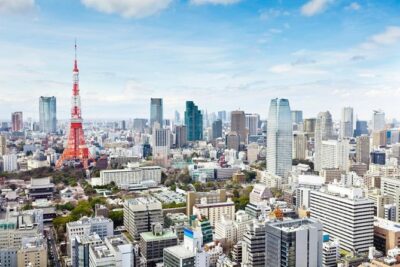
Tokyo 6hr Private Tour with Government-Licensed Guide
Read our review →
Tokyo 4hr Private Tour with Government-Licensed Guide
Read our review →
Kyoto 6hr Private Tour with Government-Licensed Guide
Read our review →
Hiroshima / Miyajima Full-day Private Tour with Government Licensed Guide
Read our review →
Kyoto 4hr Private Tour with Government-Licensed Guide
Read our review →
Hiroshima City 4hr Private Walking Tour with Licensed Guide
Read our review →
Private Kyoto Tour with Licensed Guide & Vehicle (Max 15 persons)
Read our review →Browse the lists this tour appears in