
Reviewed · GOVERNMENT-LICENSED GUIDE TOURS
Nagasaki Half-Day Private Tour with Government-Licensed Guide
Nagasaki rewards a flexible plan. This four-hour private tour lets you choose the sights that matter most, then explore them with a government-licensed local guide rather than a fixed group itinerary. I like the personal format and the chance to move at your own pace, especially at emotional places such as the Peace Park and Atomic Bomb Museum. I also like that guides can share local memories, not just dates and names.
The main drawback is transportation. This is a walking and public transport tour, with no private vehicle included. The $122.20 per-person price can be good value for a small group, but you still pay for trams, taxis, and admission tickets. Confirm your meeting point and transport plan before you set out.
In This Review
- Key points before you book
- Why a private guide works so well in Nagasaki
- Meeting your guide and getting around
- The Peace Park, Hypocenter, and Atomic Bomb Museum
- Mount Inasa for the city view
- Glover Garden, Oura Church, and Dutch Slope
- Dejima and Nagasaki’s international story
- Sofukuji, Kofukuji, and the Chinese connection
- Confucius Shrine and the Twenty-Six Martyrs
- Meganebashi and the city center
- What the guides add
- Is $122.20 per person good value?
- Who should book this Nagasaki tour?
- Should you book it?
- FAQ
- How long does the Nagasaki private tour last?
- How many sights can I choose?
- Is hotel pickup included?
- Is transportation included in the price?
- Is a private vehicle included?
- Are admission fees included?
- Is lunch included?
- Will I be part of a large group?
- Can I cancel for a full refund?
Key points before you book
- Choose only two or three sights: Four hours goes quickly, so your guide helps build a focused plan instead of racing through 16 possible stops.
- Meet on foot: Hotel pickup is offered within a designated Nagasaki area, but this means your guide walks to meet you. It is not a private-car pickup.
- Local stories are the strongest feature: Guides including Yoshi, Hiromi, Noriko, Norah, and Toru have been praised for personal insight into Nagasaki and its past.
- Public transport is part of the day: Trams, walking, and possibly taxis connect the city’s main districts. Transport costs are extra.
- The subject matter can be heavy: The Peace Park, Ground Zero, and Atomic Bomb Museum call for time and attention, not a quick photo stop.
- You keep the afternoon: The half-day format gives you a useful introduction while leaving time for lunch and independent sightseeing.
Why a private guide works so well in Nagasaki
Nagasaki is not one simple sightseeing zone. The Peace Park and Atomic Bomb Museum are in the northern part of the city, while Glover Garden, Oura Church, Dutch Slope, and the Confucian Temple sit farther south near the old foreign settlement. Dejima and Meganebashi are in other central areas.
A fixed group tour may try to cover too much ground. This experience takes a better approach: you choose two or three priorities, and your guide shapes the morning around them. If the atomic bombing is your main reason for coming, you can give the Peace Park, Hypocenter, and museum the time they deserve. If you are more interested in trade and religion, you can focus on Dejima, Glover Garden, Oura Church, and the Chinese-founded temples.
I like this arrangement for first-time visitors who have only one day in Nagasaki. A local guide can explain how the city’s international trade, Christian history, Chinese community, and wartime story fit together. You leave with a clearer map in your head, which makes the rest of your visit easier.
The private format also helps families and small groups. Guides have adjusted plans for children, arranged food stops, taught origami, and helped groups manage rainy weather. Those touches matter more than a long list of sights.
More licensed guide tours in Japan:
- Tokyo 6hr Private Tour with Government-Licensed Guide
★ 5.0 · 3,902 reviews - Tokyo 4hr Private Tour with Government-Licensed Guide
★ 5.0 · 1,394 reviews - Kyoto 6hr Private Tour with Government-Licensed Guide
★ 5.0 · 1,369 reviews
Meeting your guide and getting around
The tour begins in the morning, with your guide coming to meet you on foot within the designated part of Nagasaki. Several visitors have also met guides at Nagasaki Station or the cruise terminal, so you should confirm the exact location after booking.
Do not read hotel pickup as chauffeur service. No private vehicle is included. You may walk, use Nagasaki’s public transport, or arrange taxis, but fares are your responsibility. One guide warned a group about rain and explained likely taxi costs, while another helped a small party move around the city by taxi when that made sense.
This is a practical strength, not just a limitation. Riding the tram gives you a feel for daily Nagasaki, and walking lets your guide point out details you would pass in a bus. Still, four hours is short. A distant observation deck, a northern peace site, and several southern attractions may be too much for one morning.
Wear comfortable shoes. Nagasaki has hills, slopes, and streets that are easier on foot than by vehicle. If rain is forecast, ask about the transport plan in advance and bring suitable clothing.
The Peace Park, Hypocenter, and Atomic Bomb Museum
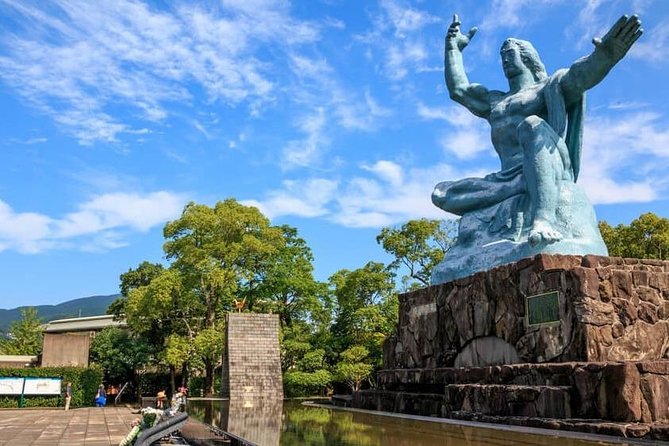
For many people, the northern peace sites are the heart of a Nagasaki visit. The Peace Park commemorates the atomic bombing of August 9, 1945. It is designed as a quiet place for reflection, with space to pause rather than simply pass through.
Nearby Ground Zero, also called the Hypocenter, marks the location of the explosion. Seeing the park and the actual hypocenter together gives the history a physical setting. Your guide can help explain what happened to the city and how Nagasaki rebuilt itself afterward.
The Atomic Bomb Museum provides the fuller account. Its exhibits document the bombing, the destruction, and the city’s recovery. A 15-minute listing is shown for this stop, but you should understand that this is only a brief visit if taken literally. The museum deserves longer if it is important to you.
I would choose this group of sites as one of your two or three selections, not add them as an afterthought. The subject is solemn, and rushing through it can leave you with fragments rather than understanding. Several guides have been praised for handling the material with care, including Yoshi, who shared family ties to the city, and Toru, whose personal connection to the 1945 bombing made the visit especially affecting.
Personal testimony can add meaning, but it should never replace the museum’s evidence. A good guide helps you listen, look, and think without turning the experience into a performance.
Mount Inasa for the city view
Mount Inasa rises 333 meters near central Nagasaki. The observation deck offers broad views over the city and port, and the mountain is especially known for its night views. The summit can be reached by ropeway, bus, or car.
The tour description allows only about 15 minutes here, so this is best treated as a quick orientation stop. You can see how Nagasaki wraps around its waterways and hills, then use that view to understand the city’s layout. If you want a relaxed visit, ask your guide if the timing can be adjusted or plan to return later.
The observation deck is a strong choice for anyone who wants scenery to balance the heavier historical sites. It also works well at the beginning of a tour, since the city view helps you understand the distances between the districts you may visit.
Keep in mind that admission and transport are not included. The listing says the admission ticket is free, but reaching the summit may still involve a ropeway, bus, car, or taxi cost.
A few more Japan experiences worth weighing up
- Nara Half Day Trip Walking Tour (Private Option Available)
★ 5.0 · 937 reviews - Kyoto Arashiyama Bamboo forest & Garden Half-Day Walking Tour
★ 5.0 · 413 reviews - Kanazawa Half Day Tour (Private Guide)
★ 5.0 · 361 reviews - [Miyako Island/Half Day] Sea Turtle Snorkeling
★ 5.0 · 337 reviews
Glover Garden, Oura Church, and Dutch Slope
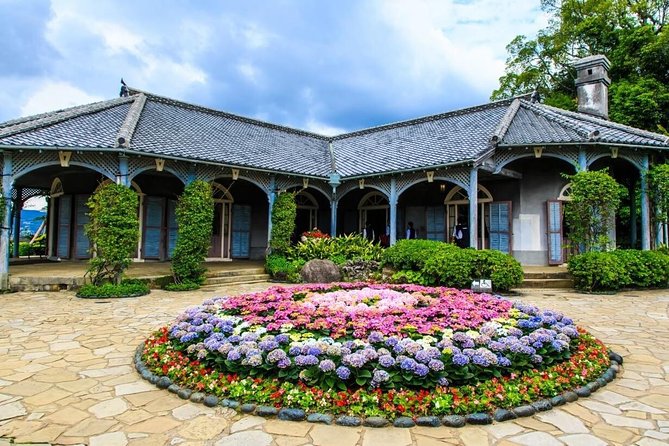
The southern hillside around Glover Garden tells the story of Nagasaki’s opening to foreign trade. Glover Garden is an open-air museum with former foreign residents’ mansions and related buildings. It occupies the hill where Western merchants lived after the port opened to foreign trade.
The setting is one of the most attractive parts of the tour, but the slopes are real. Give yourself time for uphill walking, uneven streets, and views over the port. Admission is not included.
Oura Church, also listed as Oura Catholic Church, was built in 1864 by a French missionary for foreign merchants. It connects Nagasaki’s international past with the city’s long and difficult Christian story. Since the same church appears twice in the possible stops, treat those entries as one attraction, not two separate visits.
Dutch Slope is a stone-paved hillside street where foreign traders lived after 1859. It is free to visit and can be seen while walking between nearby sights. The slope is not a major indoor attraction, but it gives you a better sense of the old foreign settlement than a quick drive-by would.
For this district, I would pair Glover Garden with Oura Church and Dutch Slope. That makes a coherent half-day theme: foreign merchants, Western architecture, and Christian history. Trying to combine this area with all the northern peace sites would leave little time at either end.
Dejima and Nagasaki’s international story
Dejima began as a man-made island built in 1636 to separate Portuguese residents from the Japanese population and control missionary activity. Later, the Dutch used the site during Japan’s period of restricted foreign contact.
Dejima is valuable because it shows that Japan was not cut off from the outside world in a simple way. Nagasaki remained a controlled point of contact, and goods, ideas, and people passed through it under strict rules. The recreated and preserved setting helps make that arrangement easier to picture.
Admission is extra. With only four hours, Dejima works best for visitors who care about trade, early international exchange, and Nagasaki’s role as a gateway. You may want to combine it with the Museum of History and Culture rather than with the Peace Park.
Sofukuji, Kofukuji, and the Chinese connection
Sofukuji is an Obaku Zen temple built in 1629 for Nagasaki’s Chinese residents. Its Chinese-style architectural details set it apart from many Japanese temples and point to the city’s long Chinese connection.
Kofukuji is the oldest and one of the most important Chinese-founded temples in Nagasaki. It sits in Teramachi, the city’s temple district, and is linked to the development of the Obaku school of Zen Buddhism.
These temples reward a slower visit with a guide who can explain what you are seeing. Without context, the architectural differences may be easy to miss. With context, they become evidence of the city’s international character.
Both require admission fees. Their hillside or temple-district locations also add walking time, so choose one or both only if religious architecture and Chinese influence rank high on your list.
Confucius Shrine and the Twenty-Six Martyrs
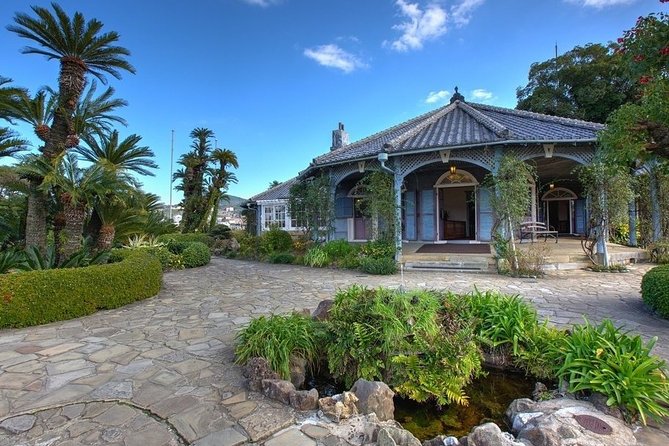
The Nagasaki Confucius Shrine was built in 1893 by Nagasaki’s Chinese community. It is one of only a small number of Confucius shrines in Japan and includes a Chinese museum devoted to successive generations.
This is a useful stop if you want to see how Chinese culture shaped Nagasaki beyond trade alone. Admission is extra, and the shrine fits naturally with Sofukuji or Kofukuji.
The Twenty-Six Christian Martyrs Monument and adjacent museum commemorate the Christians executed in Nagasaki on February 5, 1597. The stop is allotted 30 minutes, longer than most other listed attractions, and that makes sense. It gives you a direct link to the persecution of Christians before the later foreign merchants and the construction of Oura Church.
You could build a religion-focused route around the martyrs’ monument, Oura Church, and one Chinese-founded temple. That combination offers a more thoughtful picture of Nagasaki than a checklist of unrelated landmarks.
Meganebashi and the city center
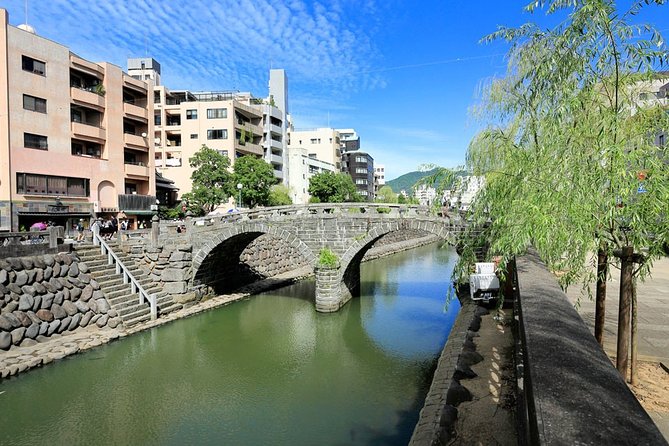
Meganebashi, or Spectacles Bridge, is the most notable of several stone bridges over the Nakashima River. Its name comes from the reflection of the two arches, which can resemble spectacles.
The bridge is free and takes little time to see, making it a good addition while walking through central Nagasaki. It is not a substitute for a major museum or memorial, but it gives the tour a lighter pause between more serious or information-heavy stops.
A guide can also use the river and nearby streets to help you understand the old commercial center. This is one reason walking tours can be more useful than a vehicle loop. You see how the city connects at street level.
What the guides add
The clearest strength of this experience is the guide. Yoshi appears repeatedly as a flexible and warm host who communicates before the tour, asks what you want to see, and adjusts the route to the weather and your pace. Hiromi has helped families plan around children and has explained local customs and history in clear English.
Noriko, also called Norah, has been praised for careful preparation. She helped with transport information, weather advice, restaurant suggestions, vegan dining, and further places to visit after the tour. That kind of help can be especially useful if Nagasaki is one stop in a larger Japan trip.
Other guides have offered personal memories of growing up in Nagasaki, stories about grandparents, and family connections to wartime history. You should not assume you will receive the same story from every guide, but the agency’s local guide pool is clearly central to the experience.
One caution is communication. A small number of visitors have found an individual guide difficult to hear or understand and felt that visual materials looked worn. Most of the feedback is strongly positive, with a 4.9 rating from 53 reviews and a 98 percent recommendation rate, but clear communication still matters. Tell the agency your language needs and preferred pace before the day begins.
Is $122.20 per person good value?
At $122.20 per person, this is not the cheapest way to see Nagasaki. You pay separately for transport, entrance fees, lunch, and personal expenses. The guide’s entry fees are covered only at sights listed among the expected stops, so confirm the details for your chosen route.
The value improves for a small group. One family found the cost comparable to a ship excursion for three people while gaining a custom route and avoiding the crowd around tour buses. That comparison is useful for cruise passengers, though the lack of a private vehicle means you need to budget both time and local transport.
You are paying for planning, interpretation, and flexibility. If you already know Nagasaki well and only want to photograph a few free sites, the price may feel high. If you have one morning and want help fitting the right places together, it can be money well spent.
The free cancellation policy allows a full refund when you cancel at least 24 hours before the start time. Changes or cancellations inside that window are not accepted for a refund.
Who should book this Nagasaki tour?
I would recommend it to first-time visitors, families, cruise passengers, and anyone with a short stay. It is also a good choice if you want to focus on peace history, Christian heritage, Chinese influence, or the city’s foreign trading past without spending a full day in a large group.
It suits people who like to walk and are comfortable using public transport. It is less suitable if you need a private vehicle, dislike hills, or want to visit many paid attractions at a leisurely pace.
Before booking, decide your top three priorities. A strong plan might be Peace Park, the Hypocenter, and the Atomic Bomb Museum. Another could be Dejima, Glover Garden, and Oura Church. A third might link Sofukuji, Kofukuji, and the Confucius Shrine.
Should you book it?
Book this tour if you want a local person to shape a short, serious, and flexible introduction to Nagasaki. The strongest reason to choose it is not the number of possible stops. It is the chance to spend meaningful time at two or three places with a guide who can connect public history to local life.
I would confirm the guide, meeting point, walking plan, and expected transport costs before paying. Ask for a route that matches your interests rather than accepting every listed stop. With that preparation, this private half-day tour offers a thoughtful first look at a city that deserves more than a hurried bus ride.
FAQ
How long does the Nagasaki private tour last?
The tour lasts approximately four hours and takes place in the morning.
How many sights can I choose?
The tour includes a customizable itinerary built around two or three sites from the available list.
Is hotel pickup included?
A guide can meet you on foot within a designated area of Nagasaki. This is not private vehicle pickup.
Is transportation included in the price?
No. Transportation fees are not included. The experience uses walking and public transport, and taxis may also be arranged at your own expense.
Is a private vehicle included?
No private vehicle is included with the tour.
Are admission fees included?
Entrance fees are generally not included. Guide entry fees are covered only for sights listed under the expected stops.
Is lunch included?
No. Lunch and other personal expenses are not included.
Will I be part of a large group?
No. This is a private activity, and only your own group participates. Multiple tour groups cannot be combined.
Can I cancel for a full refund?
Yes. You can cancel at least 24 hours before the local start time for a full refund. Cancellations or changes made less than 24 hours before the start time are not refunded or accepted.
Just added around Japan
- Kanazawa private half day/Photoshoot by professional photographer★ 5.0 · 38 reviews
- Osaka Food Tour with 10 Classic Japanese Tastings & Drinks★ 5.0 · 38 reviews
- Osaka: Highlights & Hidden Gems Private Walking Tour★ 4.7 · 38 reviews
- Tokyo Small Group Tour with Guide★ 4.5 · 38 reviews
- Tokyo 6hr Instagram Highlights Private Tour with Licensed Guide★ 5.0 · 38 reviews
- From Tokyo: Kamakura Private Customize Tour by Luxury Van★ 4.6 · 38 reviews
- Tokyo Sumo Experience with Live Show & Audience Challenge★ 5.0 · 38 reviews
- Kyoto: Private Customizable Day Trip by Car★ 5.0 · 38 reviews
Government-Licensed Guide Tours, compared.
Tokyo 6hr Private Tour with Government-Licensed Guide
Read our review →
Tokyo 4hr Private Tour with Government-Licensed Guide
Read our review →
Kyoto 6hr Private Tour with Government-Licensed Guide
Read our review →
Hiroshima / Miyajima Full-day Private Tour with Government Licensed Guide
Read our review →
Kyoto 4hr Private Tour with Government-Licensed Guide
Read our review →
Hiroshima City 4hr Private Walking Tour with Licensed Guide
Read our review →
Private Kyoto Tour with Licensed Guide & Vehicle (Max 15 persons)
Read our review →Browse the lists this tour appears in