
Reviewed · FOOD & DRINK
Best of Shibuya Food Tour
Neon makes dinner more fun. This three-hour walk shows you Shibuya beyond the crossing, with side-street restaurants, regional Japanese dishes, and a basement food hall that is easy to miss on your own. I like the generous amount of food and the chance to eat in places chosen by a local rather than defaulting to tourist restaurants. The main drawback is the $217 price, which may feel high if your group receives only average food stops or if you already feel comfortable finding Tokyo restaurants yourself.
The tour also earns points for its small maximum of 10 people, included drink, dessert, and family-friendly setup. Guides such as Jacob, Alex, Saika, Sandra, Jane, and Melissa have been praised for explaining Japanese customs and adjusting the pace for families. Still, meeting at a wall mural beside Hachiko can be confusing, so arrive early and use the exact meeting instructions.
In This Review
- Key points to know before booking
- Starting beside Hachiko at 4 p.m.
- Hachiko, Myth of Tomorrow, and the first local context
- Center-gai: Shibuya’s food streets at ground level
- Shibuya Crossing, with food instead of just a photograph
- Five food stops and what you may eat
- Sushi
- Ramen
- Okonomiyaki and regional dishes
- Yakitori
- Dessert and the included drink
- Mega Don Quijote and Nonbeiyokocho
- Tokyu Food Show: ending beneath the station
- Is $217 per person good value?
- Dietary needs, families, and group comfort
- Who should book this Shibuya food walk?
- Should you book the Best of Shibuya Food Tour?
- FAQ
- How long does the Best of Shibuya Food Tour last?
- Where does the tour begin?
- Where does the tour end?
- What food and drink are included?
- Is the tour suitable for children?
- Can dietary restrictions be accommodated?
Key points to know before booking
- Five food stops in three hours: Expect a steady progression of Japanese dishes, potentially including sushi, ramen, okonomiyaki, yakitori, gyoza, and dessert.
- Shibuya after the main sights: The route links Hachiko Square, Center-gai, Shibuya Crossing, Nonbeiyokocho, and Tokyu Food Show.
- A very filling evening: Several people found the portions generous, so arrive hungry and avoid a large late lunch.
- Small-group format: The tour accepts a maximum of 10 people, making it easier to ask questions and keep together in crowded streets.
- Guides make the difference: Strong guides have added cultural context, food advice, and restaurant recommendations. The quality of the evening can depend on who leads your group.
- Price needs careful thought: At $217 per person, you are paying for food, one drink, guiding, and the convenience of a planned route, not simply a meal.
Starting beside Hachiko at 4 p.m.
The meeting point is in front of the Hachiko wall mural, outside Shibuya Station at the Hachiko Exit. The listed address is Hachikō Family, 2 Chome-1 Dogenzaka, Shibuya. This is close to the famous Hachiko statue and the station’s best-known gathering area.
I would not cut this arrival close. Shibuya Station is large, and the meeting instructions point to a mural rather than a shop or easily recognized café. One person had trouble locating the wall from a taxi, so bring the mobile ticket, check the station exit before you go, and allow extra time to get oriented.
The guide begins with a short introduction to Hachiko and the area. This is not a long sightseeing stop, but it gives the tour a useful starting point. You learn a little about the neighborhood, local customs, and why this corner of Tokyo matters before moving into the food portion.
The start time is listed as 4 p.m., although the description also refers to an afternoon departure. Confirm your selected time when booking. The walk finishes at Tokyu Department Store’s basement food area under the station, so you do not return to the exact starting wall.
More Food Tours in Tokyo
- Tokyo: Shinjuku Food Tour (13 Dishes at 4 Local Eateries)
★ 5.0 · 6,603 reviews - Tokyo Tsukiji Fish Market Food and Culture Walking Tour
★ 5.0 · 3,184 reviews - Tokyo: Shinjuku Food Tour (15 Dishes and 4 Eateries)
★ 4.9 · 2,033 reviews
Hachiko, Myth of Tomorrow, and the first local context
After meeting at Hachiko, the group makes brief stops at the Hachiko area and the Myth of Tomorrow mural. These are short pauses, but they help frame Shibuya as more than a shopping and nightlife district.
The Myth of Tomorrow is especially useful for families because the guide can explain the artwork and connect it to Japanese culture in a simple way. The tour is suitable for children, but children must be accompanied by an adult. Children aged 10 and above require a copy of passport information, and children receive chicken skewers instead of beef.
Do not expect a museum-style art talk or a long history lesson here. The value is in seeing familiar places with someone who can explain what you are looking at. Guides such as Jacob and Alex have been praised for adding broader background on Tokyo and Japan, while Saika and Sandra have been singled out for helping families feel comfortable along the route.
Center-gai: Shibuya’s food streets at ground level
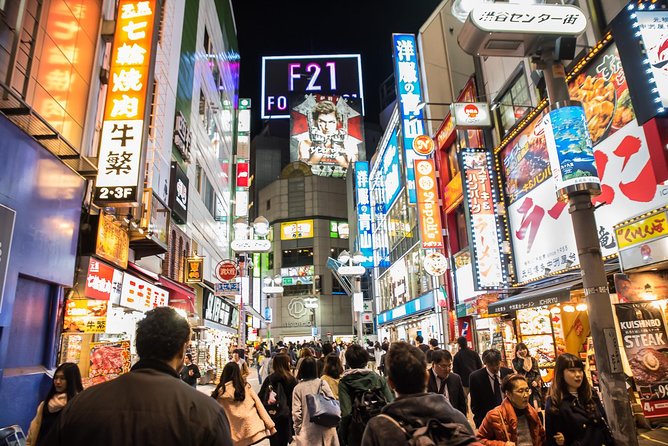
Center-gai brings you into one of Shibuya’s best-known pedestrian areas. The tour uses this district as a bridge between famous Tokyo sights and smaller eating places tucked into side streets.
Here, you might begin trying seasonal dishes or regional specialties. Possible foods listed for the route include Hiroshima-style okonomiyaki, sushi, Wagyu beef yakitori, and dessert. The exact menu can change, so treat those dishes as examples rather than a guaranteed checklist.
This part is valuable because the guide handles the decisions. You do not have to study menus, guess at ordering customs, or wonder which narrow entrance leads to a worthwhile restaurant. The tradeoff is that the places are not presented as luxury dining rooms. One experience included ramen, nigiri sushi, a vegetable-and-egg dish with bacon, chicken wings, gyoza, and cucumber, while another group found the restaurants ordinary.
That difference matters. This is a food-and-neighborhood tour, not a high-end tasting menu. If you want premium sushi or carefully matched courses, $217 may be hard to justify. If you want a broad introduction without spending an evening decoding Tokyo’s restaurant scene, the organized route has more appeal.
Shibuya Crossing, with food instead of just a photograph
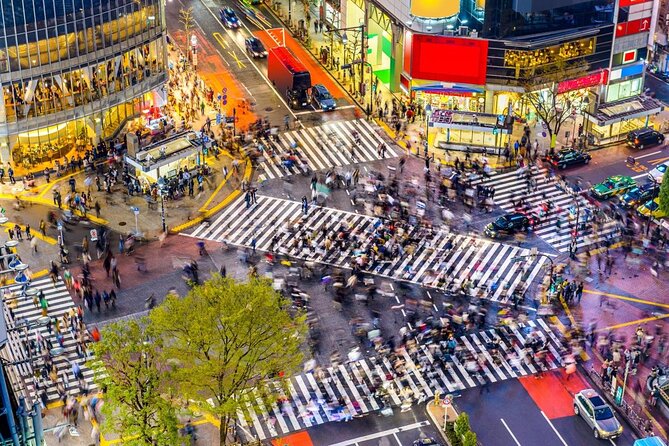
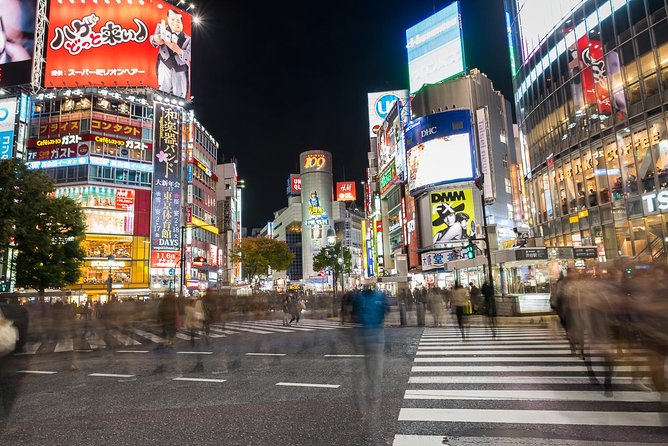
The famous crossing appears as a quick stop, not the main event. You get a chance to see the intersection within the flow of the walking route, then move on to eating areas most people never reach after taking their photos.
Several guides have also shown their groups a view of the crossing from above. That is not listed as a guaranteed stop, so do not book solely for that perspective, but it can be a useful extra when the route and timing allow it.
The best reason to include Shibuya Crossing is practical: it connects the headline sight to the less obvious streets behind it. You get the image you expected from Shibuya, then spend the evening doing something more personal than standing at the intersection with a camera.
A completely different kind of day out in Tokyo:
- Mt Fuji and Hakone 1-Day Bus Tour Return by Bullet Train
★ 5.0 · 26,383 reviews - 1-Day Tokyo Bus Tour
★ 5.0 · 14,250 reviews - Tokyo: TOKYO SKYTREE® Admission ticket
★ 4.5 · 11,192 reviews - Tokyo: teamLab Planets TOKYO Digital Art Museum Entry Ticket
★ 4.6 · 9,779 reviews
Five food stops and what you may eat
The food is the heart of the experience. Five stops are included, along with dessert and one drink. The route may feature dishes from different parts of Japan, which gives you more range than a single restaurant meal.
Sushi
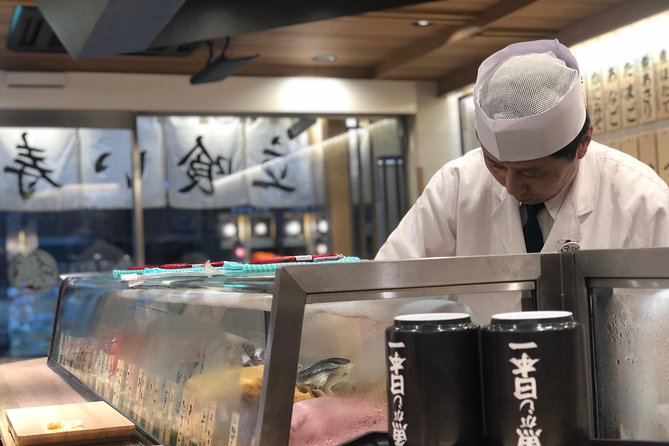
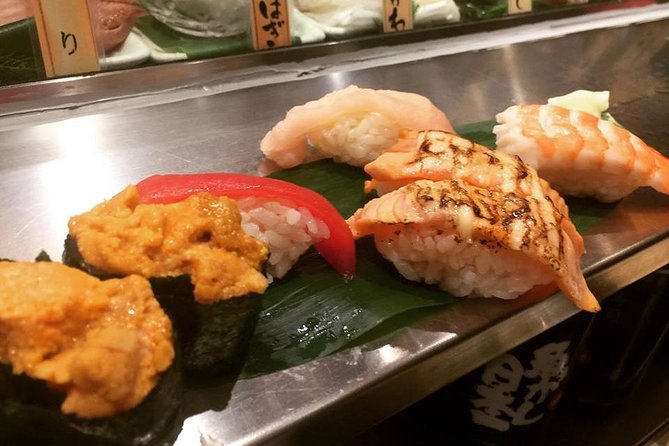
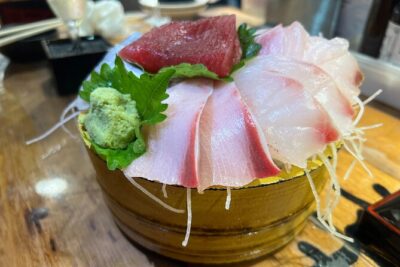
Fresh sushi is one of the most praised parts of the experience. The menu may include several pieces of nigiri, and one description referred to eight pieces. Sushi is a good early or middle course because it lets the guide explain ingredients, ordering habits, and regional differences without asking you to commit to a full restaurant meal.
The quality can vary. Some people found the sushi excellent, while others felt the overall menu was not strong enough for the price. If sushi is your main reason for booking, remember that the exact restaurant and menu can change.
Ramen
Ramen has also been a highlight, especially for people who appreciated guidance on seasoning the bowl. A guide may show you how to adjust the flavor, rather than simply placing the bowl in front of you.
This is one of the more useful parts of the evening for first-time visitors. Ramen shops can have fast service and unfamiliar ordering systems. Having someone explain the food makes the stop less stressful. On the other hand, a full bowl is substantial, and you may still have several stops ahead.
Okonomiyaki and regional dishes
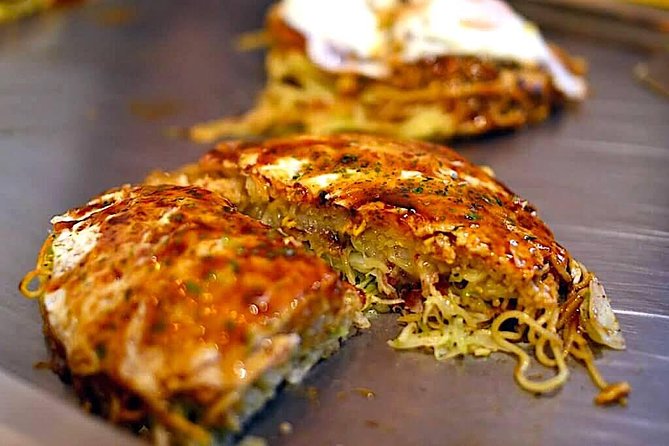
Hiroshima-style okonomiyaki is listed as a possible dish. This savory specialty is different from the more familiar pancake-like versions found elsewhere in Japan, and its inclusion gives the tour a regional angle.
You may also receive smaller dishes such as gyoza, chicken wings, cucumber, or a vegetable-and-egg preparation. The point is variety. You are sampling several styles rather than sitting down for one long meal.
Yakitori
Yakitori adds a casual, street-level feel. The tour description mentions Wagyu beef skewers, while children receive chicken skewers instead. Because substitutions can occur, your exact skewer selection is not guaranteed.
This is a good stop for anyone who wants to try Japanese grilled food in a relaxed setting. It also helps explain why arriving hungry matters. By the time the skewers arrive, you may already have eaten sushi or ramen.
Dessert and the included drink
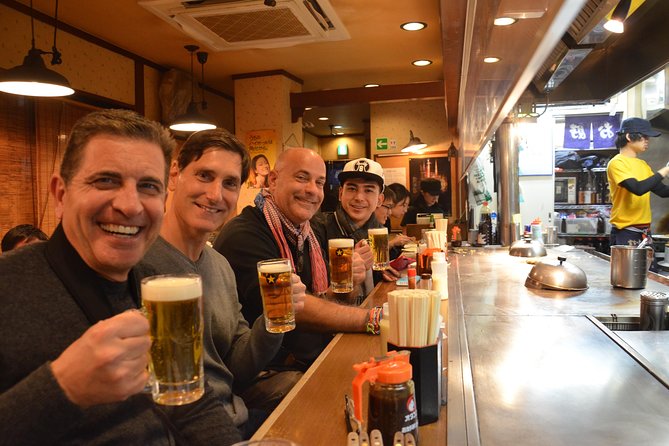
Dessert is included, as is one drink. The drink may help you toast the evening and gives the group a natural pause to talk.
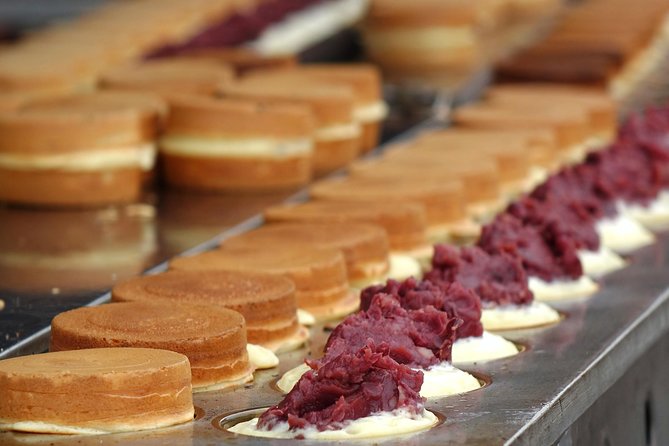
Do not read too much into the word dessert. A specific sweet is not promised, and this is not a dedicated pastry tour. It is a pleasant finish to a meal that already covers a lot of ground.
Mega Don Quijote and Nonbeiyokocho
The route passes Mega Don Quijote Shibuya and Nonbeiyokocho. These are not necessarily long food stops, but they help you see the contrast between Shibuya’s bright retail streets and its narrow drinking lanes.
Mega Don Quijote is useful context for the neighborhood’s late-night shopping culture. Nonbeiyokocho offers a more intimate look at the small-scale side of Shibuya, with compact establishments and a very different feel from the wide streets around the crossing.
The route moves through busy areas, tight lanes, and station surroundings. You should have a moderate level of physical fitness and be comfortable walking for roughly three hours. The group is capped at 10, but Shibuya itself remains crowded, so wear shoes that handle pavement well and keep your phone and ticket easy to reach.
One especially good feature is the guide’s ability to adjust the pace. Jane was praised for walking at the speed of the slowest person in the group, and Sandra helped a family with young children plan restroom breaks. Those details matter more than they may sound, particularly when children or older adults are joining you.
Tokyu Food Show: ending beneath the station
The tour ends at Tokyu Department Store’s basement level beneath the station, listed as Tokyu Department Store Honten, 2-chōme-24-1 Dōgenzaka. This is a practical finish because the area is full of food displays and packaged specialties.
The depachika, or underground department-store food hall, is one of the tour’s most useful stops for understanding Japanese food culture. You can wander among carefully displayed sweets, prepared foods, and other items sold for takeaway or gifts.
The tour does not include transportation costs, hotel pickup, or hotel drop-off. You will need to make your own way to Hachiko and continue from the end point afterward. Since both points are in central Shibuya, the arrangement is straightforward, but the tour is not a door-to-door activity.
Is $217 per person good value?
At $217, this is an expensive three-hour food walk. The price includes a local guide, five food stops, dessert, and one drink. It does not include every food or drink you may want beyond those inclusions, transportation, or hotel transfers.
The value is strongest when you want guidance. A good guide can help you find side-street restaurants, explain customs, translate the food experience, and keep the evening moving. Guides named in strong feedback, including Jacob, Alex, Melissa, Jane, Saika, Sandra, and Ray, were praised for their warmth, cultural explanations, food advice, and personal recommendations.
The value is weaker if you judge the tour only by restaurant quality or food volume. Some people finished very full and felt the food exceeded expectations. Others enjoyed the ramen and sushi but considered the overall experience overpriced, especially when the venues seemed ordinary or nearly empty.
I would compare the price with your own travel style. If you usually spend freely on meals and like a planned introduction on your first night, the convenience may be worth it. If you are happy to explore Shibuya’s restaurants independently, $217 buys a lot of individual meals in Tokyo and may not feel like good value.
Dietary needs, families, and group comfort
The tour is listed as vegan and vegetarian-friendly, but you should communicate dietary restrictions when booking. One guide successfully arranged non-pork choices for a couple with that restriction, which suggests some flexibility, though no specific replacement menu is promised.
The experience is family-friendly, and children have enjoyed the food and sightseeing. Keep in mind the passport-copy rule for children 10 and above, the chicken substitution for their skewers, and the need for an accompanying adult.
The minimum drinking age is 21. Since one drink is included, anyone below that age should not expect an alcoholic beverage. Restaurant schedules, holidays, weather, and other conditions can lead to substitutions, so keep your expectations flexible.
The maximum group size of 10 is a real plus. It is small enough for questions and conversation without the stiffness of a private tour. A karaoke after-party is also available, but it is an optional addition rather than part of the three-hour food walk.
Who should book this Shibuya food walk?
I would recommend it to first-time Tokyo visitors who want an easy introduction to Japanese food and Shibuya’s side streets. It suits people who prefer tasting several dishes, asking questions, and letting a local handle the restaurant choices.
It also works well for families, couples, and solo visitors who like meeting a small group. Booking it early in your Tokyo stay could help because the guides may offer restaurant suggestions for later meals.
I would hesitate if you need a fixed menu, premium dining, or a quiet sit-down evening. The food stops can change, the quality may feel uneven, and the price is high for a short tour. It is also a poor fit if you dislike walking, crowded streets, or eating several courses in quick succession.
Should you book the Best of Shibuya Food Tour?
Book it if you want variety, local guidance, and a very full evening without spending time choosing restaurants. The strongest part is the combination of food and neighborhood context, especially when you get a guide such as Jacob, Alex, Jane, Saika, Sandra, Melissa, or Ray who brings the streets and customs to life.
Skip it if you expect every stop to feel special enough to justify a luxury-food price. With a 4.8 rating from 612 reviews and 96 percent recommendation, the experience has a strong record, but the lower scores point to a real concern: food quality and value are not identical for every group.
My practical call: book this for your first or second night in Tokyo if the price fits your budget, you eat broadly, and you arrive early at the Hachiko mural. Go hungry, tell the guide about dietary needs, and treat the menu as flexible. That is the best way to get what this tour does well: a guided taste of Shibuya that goes beyond the crossing.
FAQ
How long does the Best of Shibuya Food Tour last?
The tour lasts approximately three hours.
Where does the tour begin?
It begins at 4 p.m. in front of the Hachiko wall mural outside Shibuya Station at the Hachiko Exit. The listed address is Hachikō Family, 2 Chome-1 Dogenzaka, Shibuya, Tokyo.
Where does the tour end?
It ends at Tokyu Department Store’s basement food area under the station, listed as Tokyu Department Store Honten, 2-chōme-24-1 Dōgenzaka, Shibuya.
What food and drink are included?
The tour includes five food stops, dessert, and one drink. Possible dishes include Hiroshima-style okonomiyaki, sushi, Wagyu beef yakitori, ramen, and other Japanese specialties, but substitutions may occur.
Is the tour suitable for children?
Yes. It is family-friendly, but children must be accompanied by an adult. Children aged 10 and above require a copy of passport information, and children receive chicken skewers instead of beef.
Can dietary restrictions be accommodated?
The tour is listed as vegan and vegetarian-friendly. Some other restrictions may be accommodated, but substitutions are not guaranteed, so provide your dietary information when booking.
Just added around Tokyo
- Tokyo 6hr Instagram Highlights Private Tour with Licensed Guide★ 5.0 · 38 reviews
- Tokyo Small Group Tour with Guide★ 4.5 · 38 reviews
- Tokyo Sumo Experience with Live Show & Audience Challenge★ 5.0 · 38 reviews
- Japanese Food Cooking Class in Asakusa, Tokyo★ 5.0 · 39 reviews
- Very popular in Harajuku♡Animal petting zoo★ 4.6 · 39 reviews
- Ramen Making from Scratch with Tokyo Mom(Vegan Option Available)★ 5.0 · 39 reviews
- Tokyo JDM Night: 600hp C63s AMG Edition 1 (Private)★ 4.9 · 39 reviews
- Tokyo: Kimono Rental inside Shinjuku Gyoen National Garden★ 4.9 · 39 reviews
Food & Drink, compared.
Shinjuku Food Tour (13 Dishes at 4 Local Eateries)
Read our review →
Tokyo Tsukiji Fish Market Food and Culture Walking Tour
Read our review →
Shinsekai Food Tour with 13-15 Dishes at 5 Eateries
Read our review →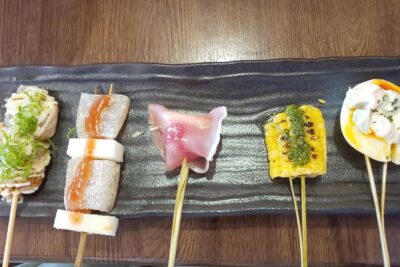
Osaka Food Tour: 13 Dishes at 5 Local Eateries
Read our review →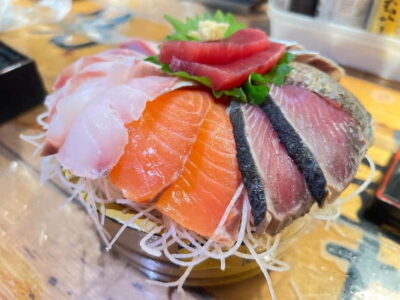
Shinjuku Food Tour (15 Dishes and 4 Eateries)
Read our review →
Best of Shinjuku: Izakaya Food Tour (4 Stops, 14+ Tastings)
Read our review →
Kyoto Night Foodie Tour in Gion (9+ dishes + 6 Sake tastings)
Read our review →
Hungry Osaka Street Food Tour:15 Tastings & 3 Drinks with a Local
Read our review →Browse the lists this tour appears in