
Reviewed · FOOD & DRINK
Flavors of Japan Food Tour in Tokyo
Food is Tokyo’s best introduction. This three-hour walk through Nihonbashi turns Japanese cuisine into a hands-on lesson, with tastings of wagashi, dashi, tamagoyaki, fish cakes, eel sushi, pickles, green tea, and more. I especially like the focus on regional ingredients and the chance to eat at seven food stops rather than simply sit down for one meal.
I also like the small group size, capped at 10 people, and the included Washoku lunch with choices such as soba, tempura, sashimi, grilled fish, chicken, or sukiyaki. The main consideration is the price, $209 per person, which is a serious sum for three hours, though the food, guide, and cultural context make it more useful than an ordinary lunch.
In This Review
- Key things to know before you book
- Why Nihonbashi makes a smart food-tour base
- The first tastings: building Japanese flavor from the basics
- Wagashi and the careful art of Japanese sweets
- A 300-year-old knife shop and Japan’s specialist food culture
- Green tea, regional snacks, and the move toward lunch
- The Washoku lunch is more than a final meal
- Depachika: a useful finish for food shopping
- What the three-hour format feels like
- Who will get the most from this food walk?
- Is $209 a fair price?
- Should you book the Flavors of Japan Food Tour?
- FAQ
- Where does the tour begin?
- What time does the tour start?
- How long does the food tour last?
- How many people can join the tour?
- Is lunch included?
- What food and drinks are included?
- Can vegetarians and vegans join?
- Can I cancel for a refund?
Key things to know before you book
- Nine shops and food stops: The route introduces different Japanese regions, ingredients, and cooking traditions around Nihonbashi.
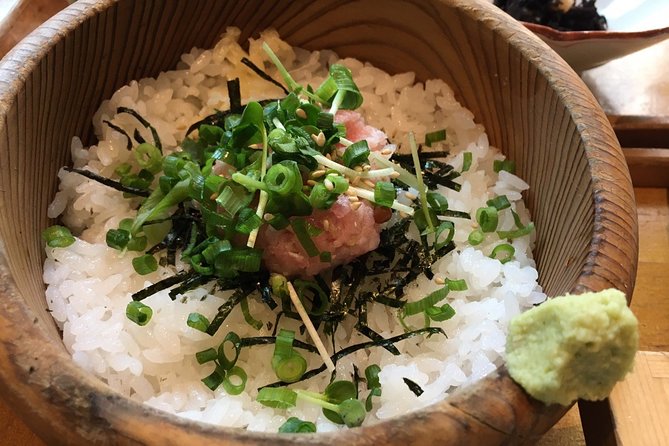
- A full Japanese lunch is included: You choose from several set meals, including soba, tempura, sashimi, grilled fish, chicken, and sukiyaki.
- The route includes special food shops: You visit a 300-year-old knife shop, Japan’s oldest fruit ship, and a distinctive tea shop.
- Small group format: The maximum is 10 people, so the guide can explain unfamiliar foods and answer questions.
- Nihonbashi provides the setting: The walk includes COREDO Muromachi, Fukutoku Shrine, Nihonbashi Bridge, and an underground Depachika market.
- Dietary needs are considered: Vegetarian, vegan, and pescetarian options are available, with lunch choice made during booking.
Why Nihonbashi makes a smart food-tour base
Nihonbashi is a good place to study Japanese food because it connects old commercial traditions with modern Tokyo shopping centers. The tour begins around COREDO Muromachi, where polished retail buildings sit close to shrines, bridges, long-running shops, and department-store food halls.
You meet at the Starbucks in the Nihombashi Suruga Building. The meeting point is easy to identify, but pay attention to the time shown on your confirmation. The tour information gives 10:30 a.m. as the start time, while one route description mentions meeting at 10 a.m. That small discrepancy is worth checking before you leave your hotel.
From there, you walk between shops instead of being driven from one restaurant to another. That matters. You get a better sense of how Japanese food fits into daily life, from small specialist counters to beautifully arranged department-store displays.
The guide speaks English and explains what you are tasting, where it comes from, and how it is used. This is particularly useful in Japan, where a small piece of food may involve a regional ingredient, a seasonal custom, or a preparation method that is not obvious from its appearance.
More Food Tours in Tokyo
- Tokyo: Shinjuku Food Tour (13 Dishes at 4 Local Eateries)
★ 5.0 · 6,603 reviews - Tokyo Tsukiji Fish Market Food and Culture Walking Tour
★ 5.0 · 3,184 reviews - Tokyo: Shinjuku Food Tour (15 Dishes and 4 Eateries)
★ 4.9 · 2,033 reviews
The first tastings: building Japanese flavor from the basics
One of the tour’s strongest ideas is that Japanese food is not just sushi and ramen. You sample the quieter building blocks behind many familiar dishes, including dashi, pickled vegetables, regional snacks, and tamagoyaki.
Dashi is especially important. This soup stock forms the base of many Japanese dishes, and tasting it on its own helps you understand why Japanese cooking often tastes clean, savory, and layered without relying on heavy sauces. The point is not simply to try another sample. You learn how a basic stock can shape noodles, soups, simmered foods, and other dishes.
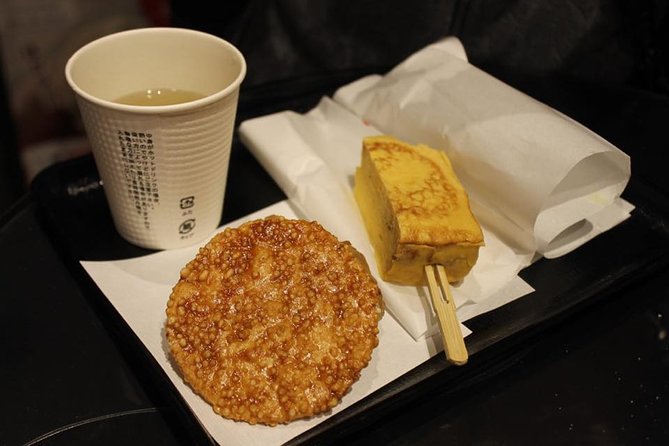
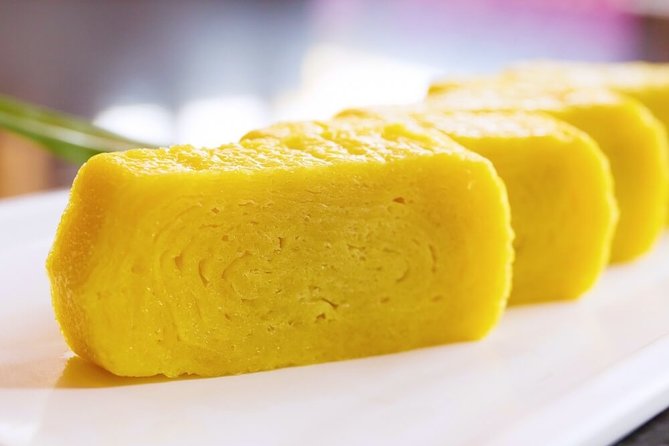
Tamagoyaki, the rolled egg dish, offers a different lesson. Its soft layers and gentle sweetness show how technique can matter as much as the ingredient itself. You also try fish cakes from Kagoshima, giving the walk a regional focus rather than limiting it to Tokyo specialties.
Other samples include satsuma imo, or fried sweet potatoes, and tsukemono, Japanese pickled vegetables. These foods add contrast to the tasting: sweet and crisp, salty and sour, soft and savory. Because the portions are spread across several stops, you can pay attention to each flavor without filling up too early.
Wagashi and the careful art of Japanese sweets
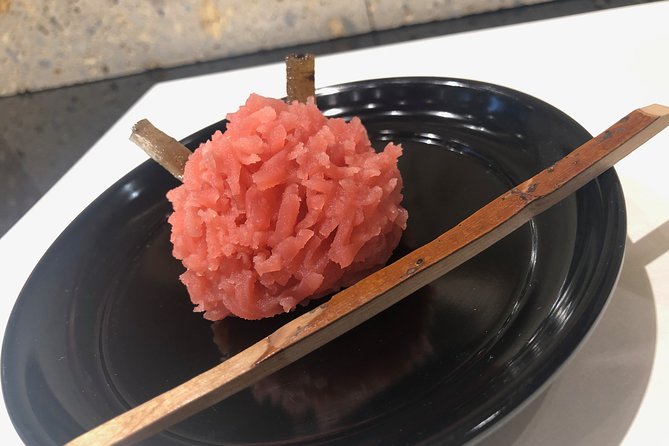
The wagashi stop gives the tour one of its most visual moments. These traditional Japanese sweets are made with attention to shape, color, texture, and season. You see how they are made and taste artistic wagashi as part of the route.
Wagashi are useful for understanding a side of Japanese food culture that many first-time visitors miss. They are not simply sugary snacks. Their appearance, ingredients, and presentation often matter as much as sweetness. The tour lets you see the craft before eating the finished sweet.
The exact sweets may change, since shops and seasonal offerings can vary. That is a small uncertainty, but it is also part of the appeal. You are not being promised one fixed plate that must look the same every day.
If you prefer savory food, do not worry that the tour turns into a dessert crawl. Wagashi are one part of a broader progression that includes soup stock, vegetables, seafood, tea, and a full lunch.
A 300-year-old knife shop and Japan’s specialist food culture
The knife-shop visit adds a practical side to the food lesson. A 300-year-old shop reflects the importance of tools in Japanese cooking, where slicing, trimming, and presentation can all affect the final dish.
You may not be shopping for a knife, and no purchase is required. Still, this stop helps explain why Japanese cuisine can look so precise. A chef’s tools are part of the working culture behind sashimi, vegetables, fish, and decorative food preparation.
The tour also visits what is described as Japan’s oldest fruit ship, along with a unique tea shop. These specialist businesses show how Japanese food culture gives individual ingredients their own place and identity. Fruit, tea, knives, sweets, and stock are not treated as background details. Each has a shop, a method, and often a long commercial tradition.
Keep in mind that the route can change because of restaurant schedules, public holidays, weather, or other unexpected conditions. Substitutions may be made, so you should see the experience as a guided food walk rather than a guaranteed checklist of every shop.
A completely different kind of day out in Tokyo:
- Mt Fuji and Hakone 1-Day Bus Tour Return by Bullet Train
★ 5.0 · 26,383 reviews - 1-Day Tokyo Bus Tour
★ 5.0 · 14,250 reviews - Tokyo: TOKYO SKYTREE® Admission ticket
★ 4.5 · 11,192 reviews - Tokyo: teamLab Planets TOKYO Digital Art Museum Entry Ticket
★ 4.6 · 9,779 reviews
Green tea, regional snacks, and the move toward lunch
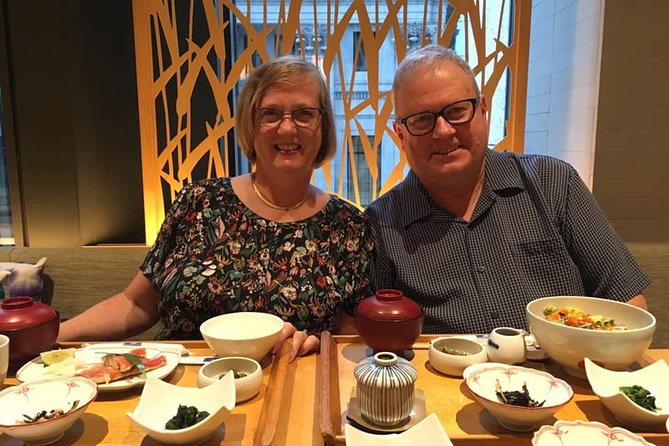
Green tea appears as both a tasting and a cultural thread. The tea shop is not just a chance to have a drink. It gives your guide a way to discuss how tea fits with sweets, meals, and Japanese hospitality.
The regional approach is one of the tour’s best features. You sample food connected with different parts of Japan, including Kagoshima fish cakes and regional snacks, while remaining in central Tokyo. That saves you from trying to visit several distant regions during one trip.
The route is also paced around tasting, not a long lecture. You move between stops, sample a small item, hear the explanation, and continue. For people who learn best by eating, this is much more effective than a standard cultural talk.
The one drink included is useful, but additional drinks and food cost extra. Since the tour already includes many samples and lunch, most people should not need to buy much during the walk. Still, do not assume every drink you want is covered.
The Washoku lunch is more than a final meal
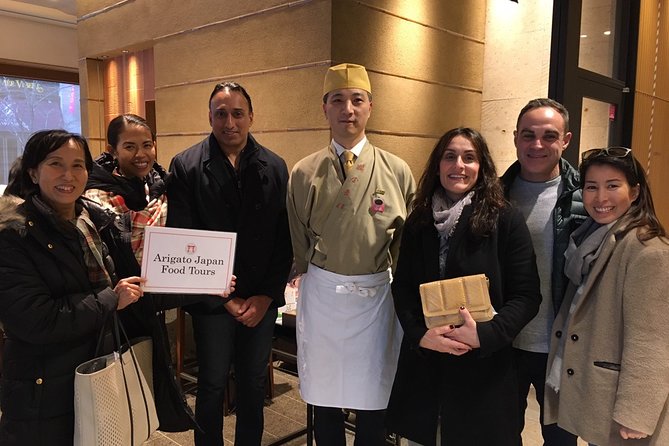
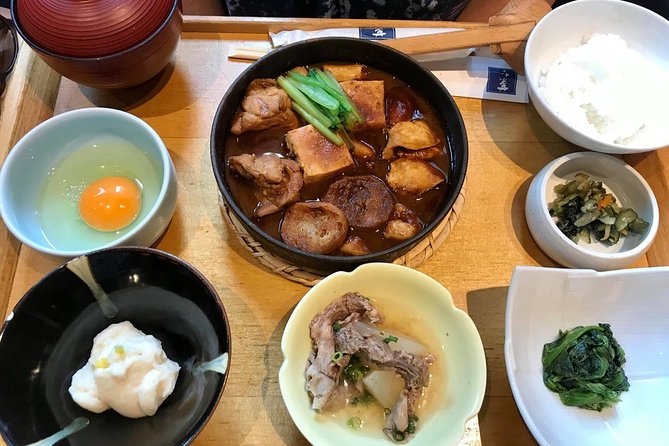
The last tasting is a full Washoku lunch with the guide and group. Washoku refers to traditional Japanese food culture, with attention to balance, seasonality, preparation, and presentation.
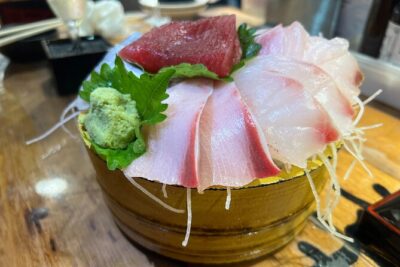
Your lunch choice may include a soba set, tempura, sashimi, grilled fish, chicken, or sukiyaki. This range makes the tour easier to recommend to mixed groups. One person can choose noodles, another seafood, and someone else a cooked meat dish.
Lunch also gives you time to connect the earlier tastings. Dashi may now taste familiar. Pickles make more sense beside a larger meal. Tea, sweets, fish, and careful preparation no longer feel like separate subjects.
You choose lunch when booking, so check the available choice carefully if you have dietary needs. The tour is listed as friendly to vegetarian, vegan, and pescetarian diets, but you should still state your requirements clearly in advance.
The lunch is a genuine value point in a $209 experience. If you paid separately for a similar meal, then added seven tastings, a guide, and visits to specialist shops, the price would be easier to justify. If you mainly want a large lunch, this is not the right purchase. You are paying for the food education and the range of samples as much as the meal itself.
Depachika: a useful finish for food shopping
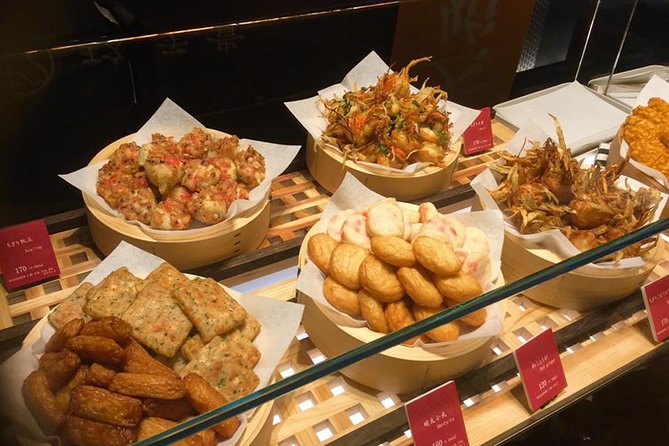
After lunch, the guide takes you to a Depachika, the food market found below a Japanese department store. This is a good final stop because you can see how prepared food, sweets, snacks, gifts, and regional products are presented for everyday shoppers.
The guide points you toward good after-lunch snacks, then the organized tour ends and you are free to continue exploring on your own. That gives the experience a useful second life. You can buy something for later, compare regional foods, or simply browse without the pressure of keeping up with a group.
The endpoint is in the Nihonbashi area, rather than back at your starting point. Plan your afternoon accordingly. Nihonbashi is also near public transportation, which makes it practical to continue sightseeing from there.
What the three-hour format feels like
Three hours is long enough to cover a lot, but short enough to fit into a busy Tokyo schedule. You will be walking between stops, standing in shops, tasting several foods, and eating lunch. Wear comfortable shoes and avoid arriving hungry enough to rush the early samples.
The group limit of 10 is a real advantage. Food questions often come quickly: Is this sweet or savory? Is there fish in the stock? How should this be eaten? A small group gives the guide more room to respond than a large coach tour.
The experience is family-friendly, although children must be accompanied by an adult. Children age 10 and above require a copy of passport information, according to the tour details. The minimum drinking age is 21, though the food focus means alcohol is not central to the outing.
The tour is described as suitable for rainy days, but poor weather can still cause cancellation because some of the route is outdoors. If weather disrupts the experience, you are offered another date or a full refund.
Who will get the most from this food walk?
I would recommend this tour most strongly to first-time visitors who want a framework for Japanese food. It gives you vocabulary, flavor references, and enough cultural background to make later restaurant visits less intimidating.
It also suits people who enjoy variety. In one morning, you can try soup stock, sweets, tea, pickles, egg, seafood, eel sushi, fish cakes, and a proper lunch. That range is hard to reproduce on your own unless you already know where to go.
The tour is a good choice for families, couples, and small groups with mixed tastes. Vegetarian, vegan, and pescetarian diners have options, and the lunch menu offers several styles of Japanese food.
I would hesitate if you dislike walking, prefer a large meal with little explanation, or have a strict allergy that requires extensive control over every tasting. The route changes when shops or restaurants are unavailable, and some samples may not suit every diet.
Is $209 a fair price?
At $209 per person, this is not a budget food tour. The price includes a local English-speaking guide, regional tastings at seven food stops, one drink, and a Japanese lunch. You also receive access to shops and food traditions that might be difficult to find alone.
The value depends on how you travel. If you enjoy wandering into shops and ordering by instinct, you may prefer to spend $209 across several independent meals. If you want a short, organized introduction that removes the guesswork, the cost is more defensible.
The excellent 4.8 rating from 39 reviews and 92 percent recommendation suggest strong satisfaction, especially with the amount learned and eaten in a compact period. One especially useful reaction described the experience as seeing and eating enough for a day, while feeling more comfortable with Japanese menus afterward. That is the practical result you should expect to seek: not just a full stomach, but better confidence for the rest of your Japan trip.
Should you book the Flavors of Japan Food Tour?
Book it if you want a guided introduction to Japanese cuisine, enjoy trying small regional foods, and value a full lunch with cultural explanation. The mix of wagashi, dashi, tea, specialist shops, seafood, pickles, and Washoku gives you far more range than a single restaurant meal.
Skip it if $209 feels too high for three hours, or if you want a very casual snack walk without a set itinerary. For everyone else, this is a well-focused way to begin eating in Tokyo, especially early in a trip when you are still learning what belongs on the menu.
Free cancellation is available up to 24 hours before the start time. Since the meeting information lists both 10 a.m. and 10:30 a.m. in different places, confirm your exact time before setting out.
FAQ
Where does the tour begin?
It begins at Starbucks Coffee in the Nihombashi Suruga Building, located between COREDO Muromachi 1 and COREDO Muromachi 2 in Nihonbashi.
What time does the tour start?
The meeting point information gives a 10:30 a.m. start time. Another route description mentions meeting at 10 a.m., so confirm the exact time shown with your booking.
How long does the food tour last?
The experience lasts approximately three hours.
How many people can join the tour?
The maximum group size is 10 people.
Is lunch included?
Yes. A local Japanese Washoku lunch is included, with choices such as soba, tempura, sashimi, grilled fish, chicken, or sukiyaki.
What food and drinks are included?
The tour includes regional food tastings, one drink, and a local Japanese lunch. Additional drinks or food are not included.
Can vegetarians and vegans join?
Yes. Vegetarian, vegan, and pescetarian options are available. Your lunch choice is made during booking.
Can I cancel for a refund?
Yes. You can cancel at least 24 hours before the start time for a full refund. Changes or cancellations made less than 24 hours in advance are not accepted.
Just added around Tokyo
- Tokyo 6hr Instagram Highlights Private Tour with Licensed Guide★ 5.0 · 38 reviews
- Tokyo Small Group Tour with Guide★ 4.5 · 38 reviews
- Tokyo Sumo Experience with Live Show & Audience Challenge★ 5.0 · 38 reviews
- Japanese Food Cooking Class in Asakusa, Tokyo★ 5.0 · 39 reviews
- Very popular in Harajuku♡Animal petting zoo★ 4.6 · 39 reviews
- Ramen Making from Scratch with Tokyo Mom(Vegan Option Available)★ 5.0 · 39 reviews
- Tokyo JDM Night: 600hp C63s AMG Edition 1 (Private)★ 4.9 · 39 reviews
- Tokyo: Kimono Rental inside Shinjuku Gyoen National Garden★ 4.9 · 39 reviews
Food & Drink, compared.
Shinjuku Food Tour (13 Dishes at 4 Local Eateries)
Read our review →
Tokyo Tsukiji Fish Market Food and Culture Walking Tour
Read our review →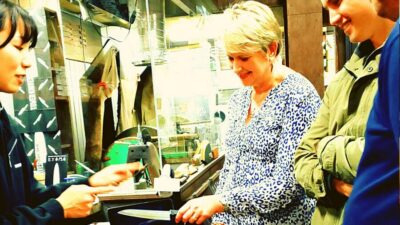
Shinsekai Food Tour with 13-15 Dishes at 5 Eateries
Read our review →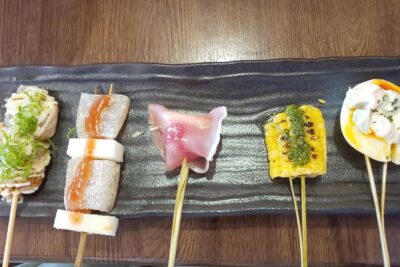
Osaka Food Tour: 13 Dishes at 5 Local Eateries
Read our review →
Shinjuku Food Tour (15 Dishes and 4 Eateries)
Read our review →
Best of Shinjuku: Izakaya Food Tour (4 Stops, 14+ Tastings)
Read our review →
Kyoto Night Foodie Tour in Gion (9+ dishes + 6 Sake tastings)
Read our review →
Hungry Osaka Street Food Tour:15 Tastings & 3 Drinks with a Local
Read our review →Browse the lists this tour appears in