
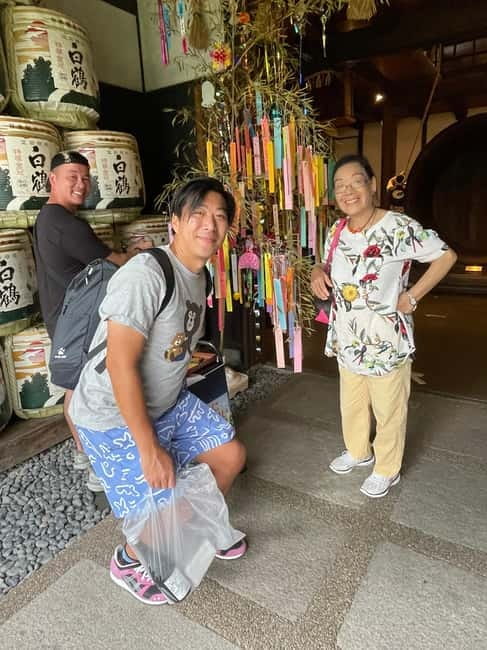
Reviewed · SAKE TASTING
Kobe: Guided Sake Breweries Tour with Tastings
Sake tastes better where it is made. This three-and-a-half-hour walk through Kobe’s Nada district pairs brewery visits with generous tastings, clear explanations, and a welcome stop for fresh tofu. I especially like the chance to compare small traditional producers with Japan’s largest sake brewery, and I like that the tour includes local food rather than treating sake as a stand-alone drink. The main thing to consider is the walking: you cover about 4 kilometers, often between stops, so comfortable shoes are essential and this is not a good fit if you want a seated tasting afternoon.
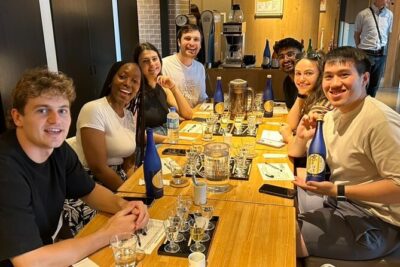
The small group, limited to 10 people, helps keep the experience friendly and practical. Guides such as Hiro, Romi, Aya, Aki, and Hiroman have been praised for their humor, warmth, and ability to explain sake in English. Just remember to eat before you arrive. With several tastings in a short period, you may finish pleasantly tipsy.
In This Review
- What makes this Kobe sake tour worth your time
- Why Nada is Kobe’s sake quarter
- Kobe Shushinkan and the Fukuju approach
- Fresh tofu at Okage Tofu-an
- Hakutsuru: a large brewery with an old brewhouse
- Kiku-Masamune and the kimoto method
- What you actually learn about sake
- The guides make or break the afternoon
- Price, pace, and overall value
- Who should book this sake walk?
- FAQ
- Where does the Kobe sake tour begin?
- Where does the tour finish?
- How many breweries will I visit?
- Is the tofu tasting available every day?
- Is the tour suitable for people under 20 or pregnant women?
- What should I bring?
- Should you book the Kobe sake breweries tour?
What makes this Kobe sake tour worth your time
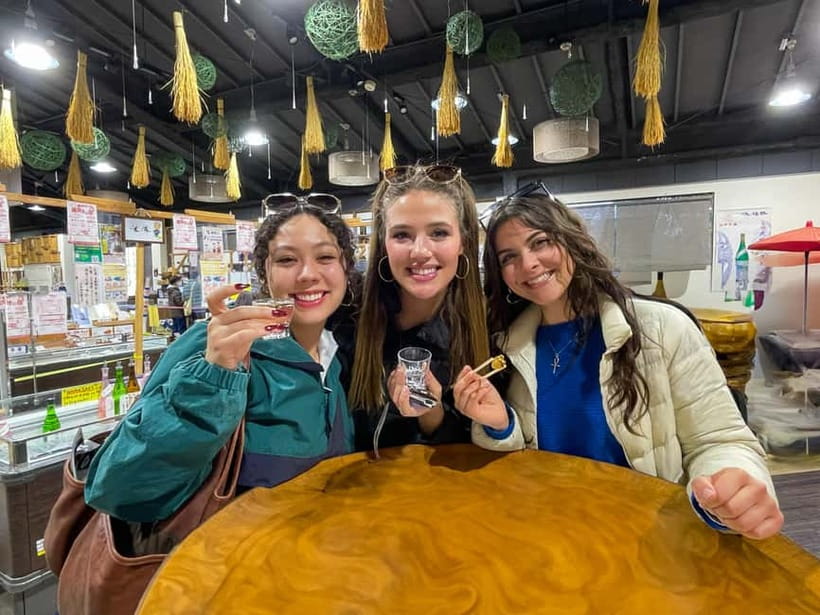
- Four centuries of brewing tradition: Nada has been one of Japan’s leading sake-producing districts, with more than 26 breweries in the area.
- A useful range of stops: You may visit three or four locations, including Kobe Shushinkan, Hakutsuru, and Kiku-Masamune.
- Sake beyond the basic pour: Tastings introduce different types and styles, helping you compare flavor, method, and brewery character.
- A local food break: Okage Tofu-an offers fresh tofu and, when timing allows, just-made ganmodoki fritters.
- A walk through working Kobe: The route links museums, tasting rooms, shops, and historic brewery buildings rather than keeping you in one visitor center.
- Good support for first-time drinkers: The guide explains the brewing process and answers questions in English without assuming you already know sake.
Why Nada is Kobe’s sake quarter
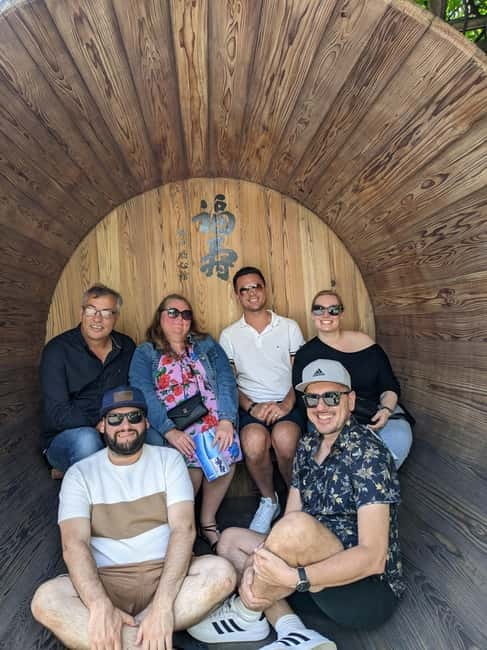
Kobe’s Nada district is an excellent place to learn about sake because the breweries are close together. Instead of spending a whole day chasing isolated producers, you walk from one stop to the next through an area shaped by brewing.
The district is home to more than 26 breweries, and the tour uses that concentration well. The exact route can change because of closing days or weather, but the plan usually includes three or four brewery-related locations. That variety matters. Sake can seem like one broad category when you first encounter it, yet different rice, water, polishing, fermentation methods, and storage choices can produce very different drinks.
You meet at Ishiyagawa Station on the Hanshin Line at 1 p.m. Look for staff wearing a KampaiSakeTours name tag. From there, the first walk takes about 20 minutes. This opening stretch is useful because it gives your guide time to explain the neighborhood and set the scene before the first tasting begins.
The tour ends at Uozaki Station around 4:30 p.m. That start and finish are practical if you are staying in Kobe or coming from Osaka by train. You do not need a hotel transfer, but you do need to manage your own way to Ishiyagawa and home from Uozaki.
More sake tastings in Japan:
- Kyoto Night Foodie Tour in Gion (9+ dishes + 6 Sake tastings)
★ 5.0 · 1,762 reviews - 1-Day Snow Monkeys, Zenko-ji Temple & Sake in Nagano
★ 5.0 · 1,020 reviews - 3-Hour Kyoto Insider Sake Brewery Tour with Tastings & Pairings
★ 5.0 · 917 reviews
Kobe Shushinkan and the Fukuju approach
The first brewery stop is Kobe Shushinkan, a producer that has used the Fukuju name since its founding in 1751. The brewery focuses on handcrafted production and places weight on good ingredients, brewer skill, and time.
For you, this is a helpful first tasting because the guide can introduce sake as a crafted drink rather than simply a Japanese version of wine or beer. You will sample sake and learn about how it is made, with the explanation matched to what is in your glass.
The visit lasts about 40 minutes. That is long enough for an introduction without using up the entire afternoon. If your guide is Hiro, Romi, or another member of the team, expect the tone to be relaxed and conversational. Several guides have been praised for explaining difficult points in plain English, and some have added humor, costumes, or small accessories to make the lesson more lively.
Kobe Shushinkan also gives the tour an early sense of place. The Fukuju name is tied to the idea of creating moments of happiness for drinkers, brewers, and the surrounding community. You are not just tasting a product from a shelf. You are seeing how a brewery presents its work and its connection to the area.
Fresh tofu at Okage Tofu-an
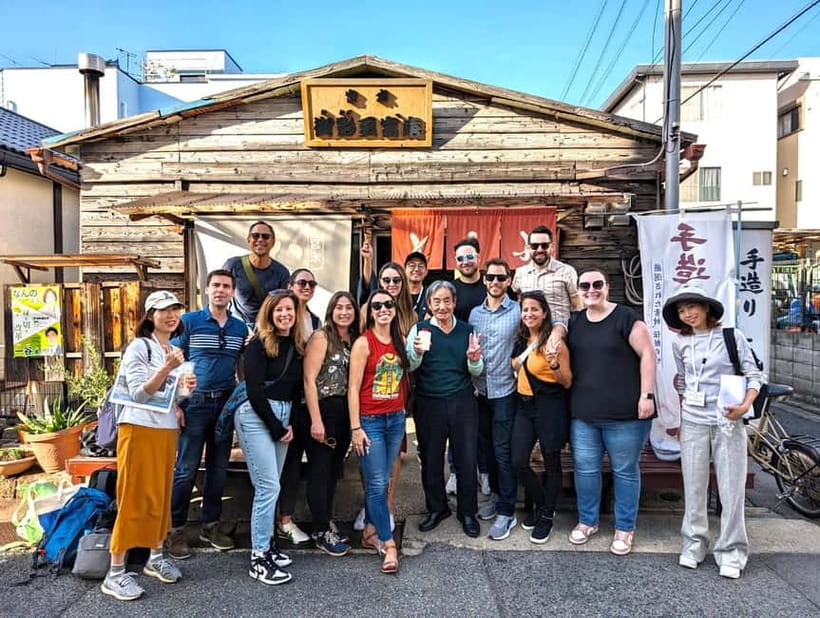
After about 10 minutes on foot, you reach Okage Tofu-an, a tofu shop that has been making fresh tofu each morning for more than 60 years. This is a short stop, around 15 minutes, but it adds welcome balance to the alcohol.
The shop’s connection to the breweries is simple and important: both tofu and sake depend on pure water. The tofu is made in the traditional way and is described as delicate, clean, and full of flavor. If the timing is right, you may also try freshly made ganmodoki, a tofu and vegetable fritter served straight from the kitchen.
This stop is one of the tour’s best touches because it connects everyday Japanese food with the same local conditions that support sake production. It also gives you something to eat between tastings, although it is not a full meal.
There is one firm limitation. Okage Tofu-an is closed on Sundays and public holidays, so the tour will skip the stop and tofu tasting on those days. You should still eat before joining, as the included snacks do not replace lunch.
Hakutsuru: a large brewery with an old brewhouse
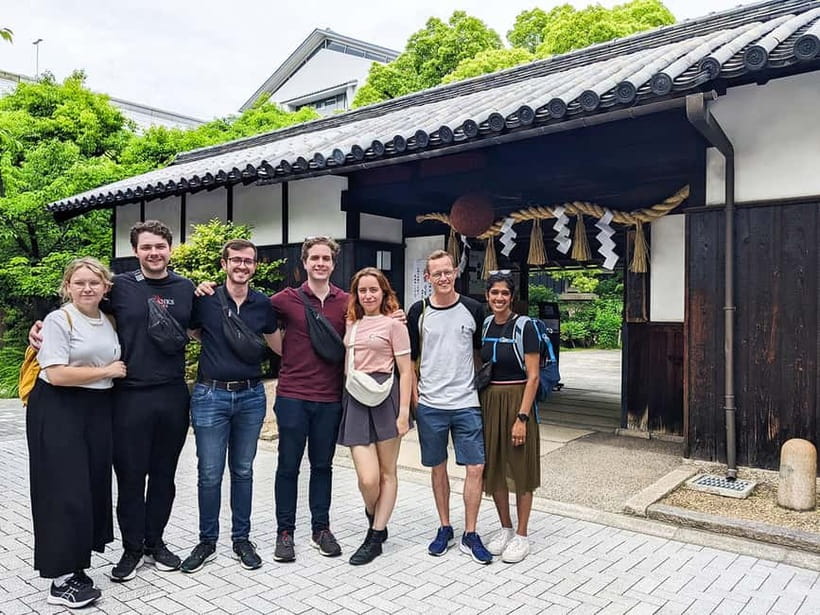
The next walk takes about 10 minutes and leads to the Hakutsuru Sake Brewery Museum. Hakutsuru is Japan’s largest brewery, but the museum uses an old sake brewhouse preserved in its original form.
That contrast is useful. You can see traditional tools and methods while learning about a company that operates on a much larger scale. The museum aims to show the long practice of sake making and the care behind the craft. It gives you a visual frame for the process your guide has already started explaining.
Plan on about an hour here, making it the longest stop of the afternoon. There is a tasting corner and a shop in the same building. You can try more sake and buy bottles or souvenirs without making a separate shopping trip.
This is also where the tour may feel more commercial. A large brewery museum has a polished visitor setup, and the shop naturally encourages purchases. That is not a flaw, but you should know the experience mixes education with retail. The advantage is choice and convenience. If you find a bottle you like, you can buy it immediately.
Bring a backpack rather than a flimsy shopping bag. The tour advises this for good reason: the local sake makes tempting souvenirs, and bottles can become awkward to carry during the remaining walk.
A few more Japan experiences worth weighing up
- Tokyo Bar Hopping Tour in Shinjuku (All-You-Can-Drink + Dinner)
★ 5.0 · 3,587 reviews - Best of Shinjuku: Izakaya Food Tour (4 Stops, 14+ Tastings)
★ 5.0 · 1,863 reviews - Tokyo: Shinjuku Local Bar and Izakaya Guided Walking Tour
★ 4.9 · 1,794 reviews - Shibuya Meltdown Nightlife Tour: All-You-Can-Drink Bar Hopping
★ 5.0 · 1,058 reviews
Kiku-Masamune and the kimoto method
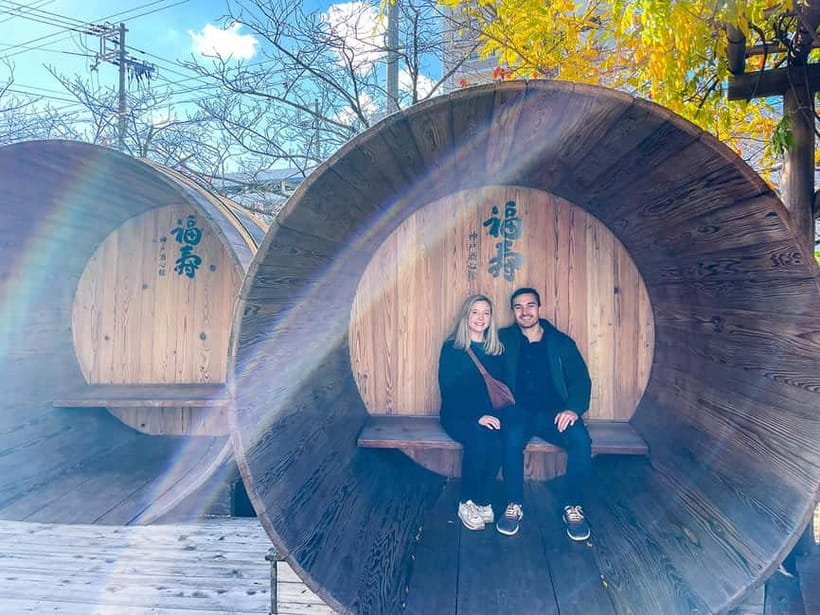
Another 10-minute walk brings you to the Kiku-Masamune Shuzo Kinenkan. Kiku-Masamune dates from 1625 and is known for retaining the traditional kimoto method of yeast preparation.
The museum displays wooden sake-making tools, which helps make the brewing process less abstract. You see the equipment and methods that shaped sake production before modern machinery took over much of the work. Your guide can then connect those objects to the styles you have tasted.
The stop lasts around 30 minutes. It is shorter than Hakutsuru, but the focus is more concentrated. You get a closer look at traditional production and the physical tools used by brewers.
A tasting in front of the Japanese garden provides a quieter pause near the end of the route. The setting is part of the appeal, but the useful point is comparison. After tasting at Kobe Shushinkan and Hakutsuru, you can think about how a brewery’s methods and identity affect the drink.
The final walk to Uozaki Station takes about 10 minutes. If the route includes a fourth brewery rather than one of the listed stops, the order and timing may shift. Brewery closing days and weather can change the plan, so treat the named locations as a strong guide rather than a fixed promise.
What you actually learn about sake
The tour is not only a sequence of samples. You learn the basics of how sake is made, how traditional methods differ, and why bottles can taste so unlike one another.
Your guide explains the brewing process as you move through the district. At the breweries, the museums and displays provide the physical evidence. At the tasting counters, you can put the lesson to work by comparing different types.
That structure is especially helpful if you are new to sake. You do not need to memorize technical terms before arriving. Instead, you can ask direct questions: Why does one sake taste lighter? What makes another fuller or sweeter? What role does the brewing method play?
People who already enjoy wine can also get value from the tour. One Japanese participant with a wine background found the comparison useful because the sake showed its own delicate differences and complexity. The guide can help you make those comparisons without pretending sake and wine are the same thing.
The tasting is generous enough that you may notice your palate changing as the afternoon goes on. This is why eating first matters. If you want to spit during tasting for professional evaluation, contact the operator in advance. The normal experience is designed for drinking, not formal sommelier-style assessment.
The guides make or break the afternoon
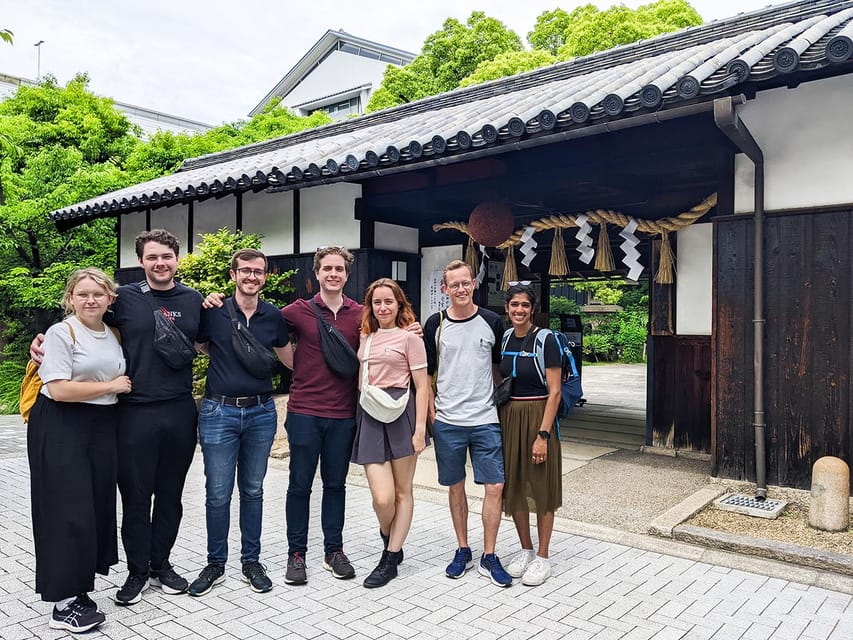
The strongest part of this experience is the guiding. Sake museums can explain equipment, but a good guide turns a display into a story you can follow.
Hiro has been praised for energy, humor, and strong preparation. Romi has been described as warm, generous, considerate, and entertaining. Fuma, Aya, Aki, and Hiroman have also led groups, with particular praise for clear English and broad knowledge of Kobe and sake.
Do not assume you will receive one specific guide unless the booking clearly confirms it. The important point is the team’s style: friendly, informed, and willing to answer questions. One tour included a private tasting area and a chance to speak directly with a master brewer, but you should treat that as a possible bonus rather than a guaranteed part of every departure.
The small-group limit of 10 people helps here. You have a better chance to hear explanations, ask questions, and stay together on the streets. It also makes the tasting feel more social than a large bus excursion.
Price, pace, and overall value
At $106 per person, this is not the cheapest way to drink sake in Kobe. You could visit some brewery museums independently and pay separately for selected tastings. The tour earns its price through the guide, the linked route, the range of stops, included sake, and the tofu and snack break.
The 210-minute duration is well judged for a half-day activity. You get enough time to visit several producers without turning the entire day into a single subject. The walking also gives your body and palate a break between samples.
The value is strongest if you want context. Buying a bottle on your own is easy. Understanding why one brewery uses the kimoto method, seeing old wooden tools, tasting across several producers, and asking questions in English is harder to arrange independently.
The value is weaker if you dislike walking, do not drink alcohol, or prefer a slow meal with one or two carefully chosen pours. Pregnant women and people under 20 should not book this activity. The tour is built around alcohol, and the route is active.
Weather can affect the experience because you spend much of the afternoon outside. On one particularly rainy outing, the operator arranged a car between breweries, but you should not count on that as standard. Comfortable shoes remain the safest choice, and a backpack is useful for purchases.
Tourists carrying a passport can be exempt from tax on brewery purchases over JPY 5,500. Ask at the point of purchase about the current procedure and keep your passport with you if you plan to use that benefit.
Who should book this sake walk?
I would recommend it first to curious drinkers who want a clear introduction to Japanese sake. You will get more from the afternoon if you enjoy asking questions, comparing flavors, and learning how a local product fits into Kobe’s identity.
It also suits couples, friends, and solo visitors who like small-group activities. The guides bring enough humor to keep the technical parts moving, while the compact group gives you room to talk with other people.
Food-focused visitors should also consider it. The tofu stop is brief, but it is a thoughtful addition, especially when you want to see something made locally rather than move from one alcohol counter to the next.
I would be cautious if you have mobility limits. The tour covers roughly 4 kilometers on foot, and the route can change. Wheelchair users and anyone bringing a stroller should tell the operator when booking so arrangements can be discussed.
FAQ
Where does the Kobe sake tour begin?
It begins at Ishiyagawa Station on the Hanshin Line at 1 p.m. Staff will wear a name tag with the KampaiSakeTours logo.
Where does the tour finish?
The tour finishes at Uozaki Station on the Hanshin Line at about 4:30 p.m.
How many breweries will I visit?
The tour visits three to four locations. The breweries can change because of regular closing days or weather conditions.
Is the tofu tasting available every day?
No. Okage Tofu-an is closed on Sundays and public holidays, so the tour will skip that stop and tofu tasting on those days.
Is the tour suitable for people under 20 or pregnant women?
No. The experience is not suitable for people under 20 or pregnant women.
What should I bring?
Wear comfortable shoes because the tour includes about 4 kilometers of walking. A backpack is also recommended if you plan to buy bottles or other souvenirs.
Should you book the Kobe sake breweries tour?
Book it if you want more than a quick drink. The mix of historic breweries, museum displays, varied tastings, fresh tofu, and an English-speaking guide gives you a solid picture of Nada’s sake culture in one afternoon.
Skip it if you want a full meal, minimal walking, or a quiet tasting with careful control over how much you drink. For most adults who enjoy local food and drink, though, $106 is fair value for a small-group route that would take real effort to organize on your own. Eat first, wear good shoes, bring a backpack, and leave room in your afternoon for a bottle you did not expect to buy.
More Food Tours in Japan
- Tokyo: Shinjuku Food Tour (13 Dishes at 4 Local Eateries)
★ 5.0 · 6,603 reviews - Tokyo Tsukiji Fish Market Food and Culture Walking Tour
★ 5.0 · 3,184 reviews - Osaka: Shinsekai Food Tour with 13-15 Dishes at 5 Eateries
★ 4.8 · 2,204 reviews - Osaka Food Tour: 13 Dishes at 5 Local Eateries
★ 5.0 · 2,149 reviews
More Breweries in Japan
- Arashiyama Bamboo, Temple, Monkeys, or Secret Sake Brewery
★ 4.8 · 886 reviews - Kyoto: Insider Sake Brewery Tour with Sake and Food Pairing
★ 5.0 · 704 reviews - Kyoto Sake Brewery & Tasting Walking Tour
★ 5.0 · 623 reviews - KOBE Sake Tasting Tour at Breweries (tasting fee included)
★ 5.0 · 154 reviews
Just added around Japan
- Kanazawa private half day/Photoshoot by professional photographer★ 5.0 · 38 reviews
- Osaka Food Tour with 10 Classic Japanese Tastings & Drinks★ 5.0 · 38 reviews
- Osaka: Highlights & Hidden Gems Private Walking Tour★ 4.7 · 38 reviews
- Tokyo Small Group Tour with Guide★ 4.5 · 38 reviews
- Tokyo 6hr Instagram Highlights Private Tour with Licensed Guide★ 5.0 · 38 reviews
- From Tokyo: Kamakura Private Customize Tour by Luxury Van★ 4.6 · 38 reviews
- Tokyo Sumo Experience with Live Show & Audience Challenge★ 5.0 · 38 reviews
- Kyoto: Private Customizable Day Trip by Car★ 5.0 · 38 reviews
Sake Tasting, compared.
Kyoto Night Foodie Tour in Gion (9+ dishes + 6 Sake tastings)
Read our review →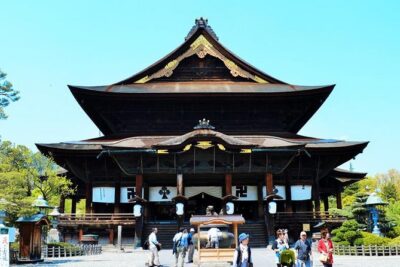
1-Day Snow Monkeys, Zenko-ji Temple & Sake in Nagano
Read our review →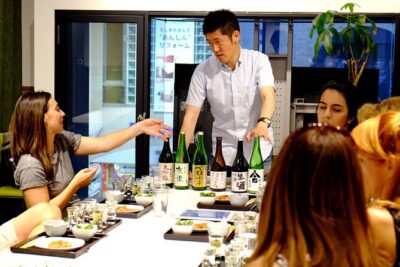
3-Hour Kyoto Insider Sake Brewery Tour with Tastings & Pairings
Read our review →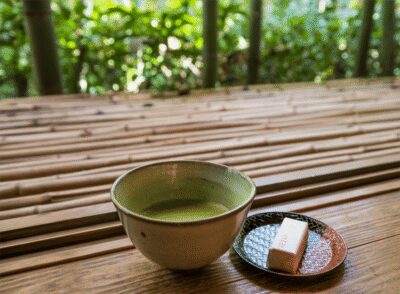
Arashiyama Bamboo, Temple, Monkeys, or Secret Sake Brewery
Read our review →

Insider Sake Brewery Tour with Sake and Food Pairing
Read our review →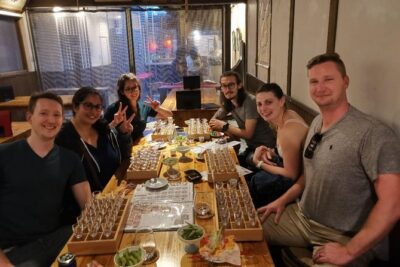
1.5-Hour Kyoto Insider Sake Experience with 7 Tastings & Pairings
Read our review →Browse the lists this tour appears in