Reviewed · ARASHIYAMA & BAMBOO GROVE TOURS
Arashiyama Bamboo, Temple, Monkeys, or Secret Sake Brewery
Arashiyama rewards walkers with patience. This five-hour Kyoto tour links the famous bamboo grove with quieter gardens, a Zen temple, the Katsura River, and Iwatayama Monkey Park. I especially like the private Okochi Sanso Garden, where your entry includes green tea, and the way the route mixes major sights with useful local guidance from guides such as Karim, Tom, Francis, Toru, and Alice.
I also like the choice at the end: follow the classic route to the monkey park, or choose a less touristy lunch and sake tasting at Tanzan Brewery. The catch is simple: this is a real walking tour, not a sightseeing bus. The steep 15 to 20 minute climb to the monkeys can be tiring, especially in Kyoto’s summer heat, and the tour needs at least two people to operate.
In This Review
- Key points to know before booking
- Why this Arashiyama tour works well
- Starting at Saga-Arashiyama Station
- Bamboo Forest: beautiful, crowded, and worth seeing
- Nonomiya Shrine and the basics of shrine etiquette
- Okochi Sanso Garden: the tour’s quiet highlight
- Tenryuji Temple and its koi pond
- Arashiyama Shopping Street and Kimono Forest
- Togetsukyo Bridge and the Katsura River
- Iwatayama Monkey Park: the demanding finale
- Option B: train ride, local lunch, and Tanzan Brewery
- Guides, group size, and the human side
- Who should book this experience?
- Should you book the Arashiyama walking tour?
- FAQ
- Where does the Arashiyama tour meet?
- How long does the tour last?
- Is the tour a bus tour?
- What tickets are included?
- Is lunch included?
- Can I choose between the monkey park and the sake brewery?
- What languages are available?
- Does the tour operate in bad weather?
- Can a solo person book the tour?
Key points to know before booking
- The bamboo grove comes early: You reach Arashiyama’s best-known sight near the start, before the full route unfolds.
- Okochi Sanso includes tea: The private garden offers a calm rest stop and a complimentary drink in its former tea house.
- The monkey park requires effort: Expect a steep hike to the top, followed by Kyoto views and macaques in a hillside setting.
- You get a meaningful choice: Option A continues across the shopping street, Kimono Forest, Togetsukyo Bridge, and the monkeys. Option B adds a short train ride, a local lunch, and sake tasting.
- Guides add the value: The strongest part of the experience is the cultural explanation, practical pacing, food advice, and help with shrine and temple customs.
- Plan for weather: The tour runs rain or shine, so comfortable shoes, water, sun protection, and a rain layer matter.
Why this Arashiyama tour works well
Arashiyama is easy to visit on your own, but it is also easy to reduce it to three photographs: bamboo, bridge, and monkey. This tour gives those sights a useful frame. Your guide explains how to behave at a shrine, what you are seeing at a Buddhist temple, and where to pause for food or photos.
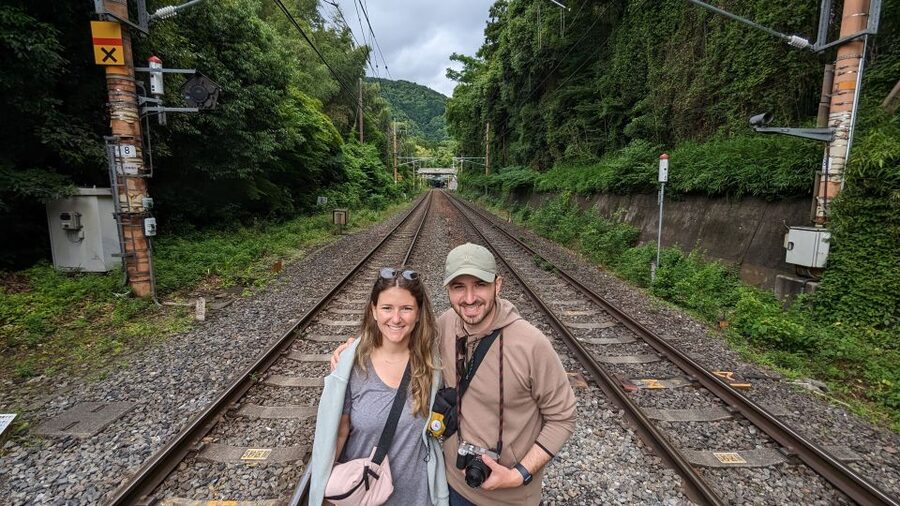
The meeting point is convenient. At JR Saga-Arashiyama Station, pass through the gates, turn right, go downstairs, and look beside the map and vending machines on the north side. Your guide wears a red polo shirt or jacket marked JTA, for Japan Tour Adventure.
You should arrive 15 minutes early. This matters because a late arrival is treated as a no-show, with no refund. The tour can be shared or private, and the usual group size may reach 12, although smaller groups are possible. Several recent outings had only four or five people, which makes it much easier to ask questions and keep a comfortable pace.
The advertised cost is $87 per person. That is not a bargain-basement walking tour, but it includes entrance fees for Okochi Sanso, Tenryuji Temple, and Monkey Park, plus green tea and souvenir photos. If you visited each paid sight separately and arranged the route yourself, you might spend less in guide fees but more time sorting out directions, tickets, and cultural context. The value is strongest if you want one organized morning covering several Arashiyama highlights.
Lunch is not included. Additional drinks and souvenirs are also your responsibility. Bring cash, especially if you plan to snack, buy food, or use small local shops along the way.
More Food Tours in Kyoto
- Kyoto Night Foodie Tour in Gion (9+ dishes + 6 Sake tastings)
★ 5.0 · 1,762 reviews - 3-Hour Kyoto Insider Sake Brewery Tour with Tastings & Pairings
★ 5.0 · 917 reviews - Kyoto: Insider Sake Brewery Tour with Sake and Food Pairing
★ 5.0 · 704 reviews
Starting at Saga-Arashiyama Station
The tour begins on foot from the station, with about 15 minutes of walking before the first major stop. This is a useful way to get oriented because Arashiyama is spread across roads, temple grounds, river paths, and wooded slopes.
You are not being driven between attractions. The walking route is part of the experience, but it also sets the physical tone for the day. If your group includes children, older family members, or anyone with mobility limits, consider the private option and discuss the pace before booking. The monkey park hike is the main challenge, but the full morning also involves a good deal of standing and walking.
Bamboo Forest: beautiful, crowded, and worth seeing
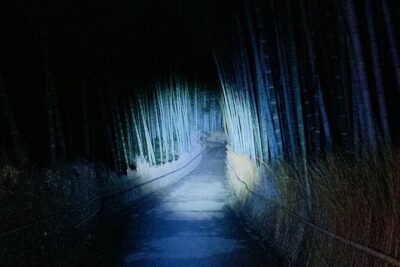
The Arashiyama Bamboo Forest is the obvious headline attraction. Tall bamboo rises on both sides of the path, turning an ordinary walk into something visually striking. Looking straight up gives you the best sense of scale, with green stalks filtering the sky overhead.
The scheduled visit lasts about 25 minutes. That is enough for photographs and a guided introduction, but do not expect to wander every path in the area. The grove is one of Kyoto’s most popular stops, so your guide’s help is useful for finding good photo positions and keeping the group moving without rushing.
This is also where a guide can prevent the experience from becoming a quick photo stop. Francis, Karim, Toru, and other guides are praised for explaining the cultural setting and pointing out details that are easy to miss. You will get more from the grove if you listen for context rather than only waiting for an empty stretch of path.
Nonomiya Shrine and the basics of shrine etiquette
A short walk brings you to Nonomiya Shrine, a compact but important stop near the bamboo grove. The visit lasts about 15 minutes and includes time for sightseeing and photographs.
This is a good place to learn the difference between shrine and temple customs. Several guides have helped visitors understand how to pray, and that small lesson can make later visits across Japan feel less awkward. You can ask questions as you go instead of trying to decode every ritual from a sign.
The stop is brief, so it will not satisfy anyone seeking a long historical lecture. Its strength is practical orientation. You see a sacred site, learn how to approach it respectfully, and continue before the morning loses momentum.
More Sake Tastings in Kyoto
- Kyoto Sake Brewery & Tasting Walking Tour
★ 5.0 · 623 reviews - 1.5-Hour Kyoto Insider Sake Experience with 7 Tastings & Pairings
★ 5.0 · 297 reviews - Kyoto: Insider Sake Experience with 7 Tastings and Snacks
★ 5.0 · 266 reviews - Private Tea Ceremony and Sake Tasting in Kyoto Samurai House
★ 5.0 · 163 reviews
Okochi Sanso Garden: the tour’s quiet highlight
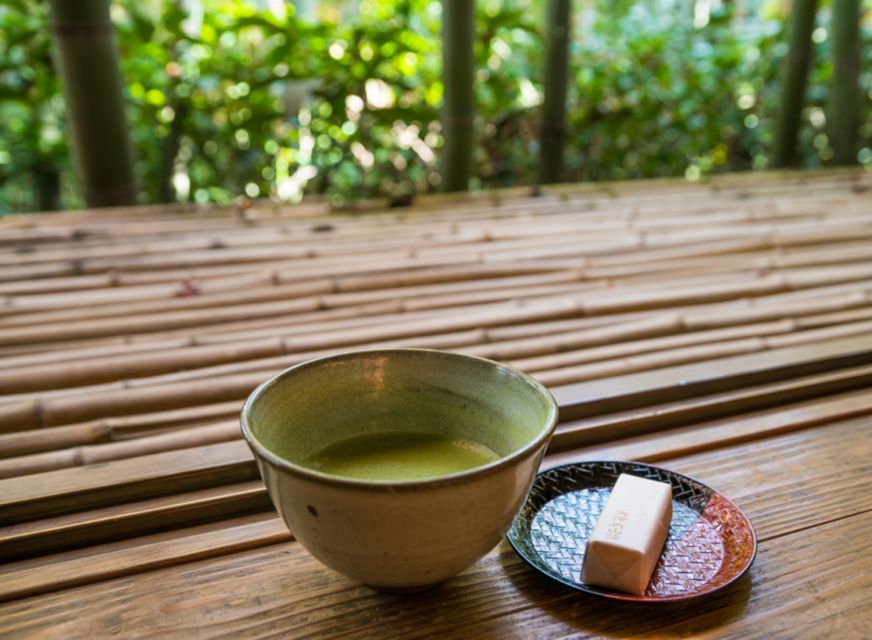
For me, Okochi Sanso Garden is one of the best reasons to book this particular route. The private garden offers a change of pace after the bamboo grove and shrine. You walk through carefully maintained grounds, pause for scenic views, and spend time in the former tea house rest area.
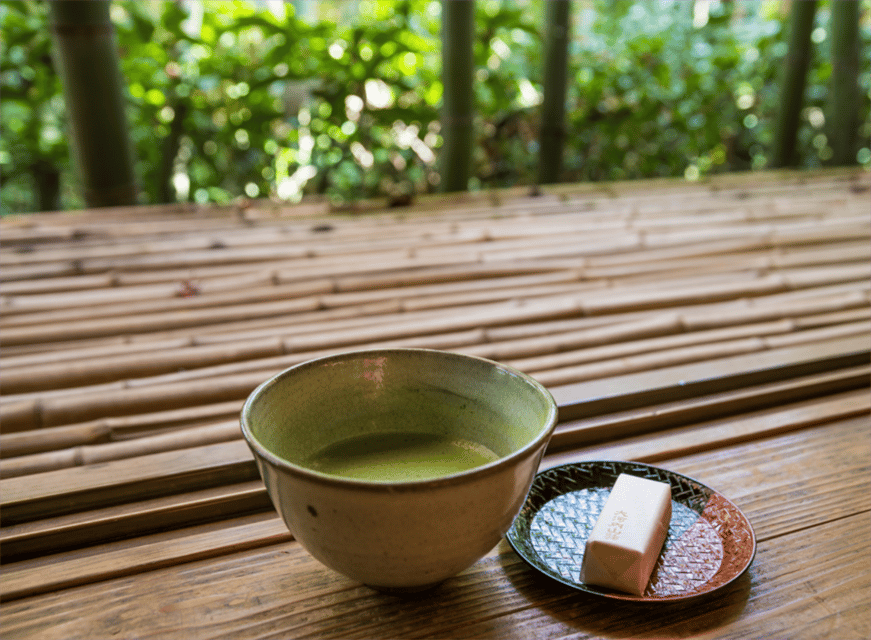
Your admission includes green tea or another included beverage at the drink bar. That small detail matters. Kyoto sightseeing can become a parade of temples and photographs, so a seated drink in a peaceful garden gives your eyes and feet a break.
The scheduled visit lasts about 40 minutes, making it one of the longer stops. Guides can point out the garden’s design and help you enjoy it at a slower pace. You get free time for photographs rather than following the guide every second.
There is an entry fee here, and it is included in the tour price. For a visitor who wants more than the public bamboo path, this is a strong part of the package. It feels calmer and more personal, though anyone focused only on the most famous sights might see the stop as an optional luxury.
Tenryuji Temple and its koi pond
Tenryuji Temple follows after another short walk. You have about 30 minutes to explore the grounds, with some guided explanation and some self-guided time.
The temple is a Zen Buddhist site, and the garden setting helps connect the architecture with the natural surroundings. The koi pond is an easy detail to enjoy, especially if you need a slower moment after walking. Guides have also explained the temple’s religious and historical meaning, including details that help visitors understand why the grounds matter beyond their appearance.
This stop is not simply a pass by the gate. Admission is included, and you have time for sightseeing and photographs. Still, 30 minutes is not enough for every corner of a large temple complex. If Tenryuji is your main priority, you may want to return independently after the tour.
The balance works well for a first visit. You see the key grounds, learn how Zen spaces differ from shrines, and continue toward the commercial streets and river.
Arashiyama Shopping Street and Kimono Forest
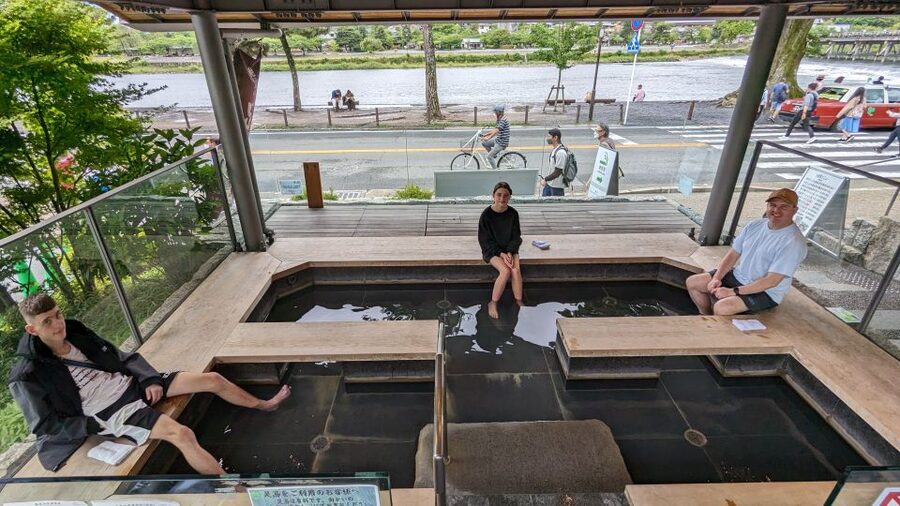
The route then shifts from quiet religious sites to Arashiyama’s shopping area. You have about 30 minutes for a guided walk, shopping, and a taste of regional food.
Lunch is not included, but the guide can suggest places to eat and point out useful snack stops. Alice was especially praised for practical advice about buying water, finding facilities, and choosing food. Other guides have stopped for items such as doughnuts, coffee, matcha, and gifts.
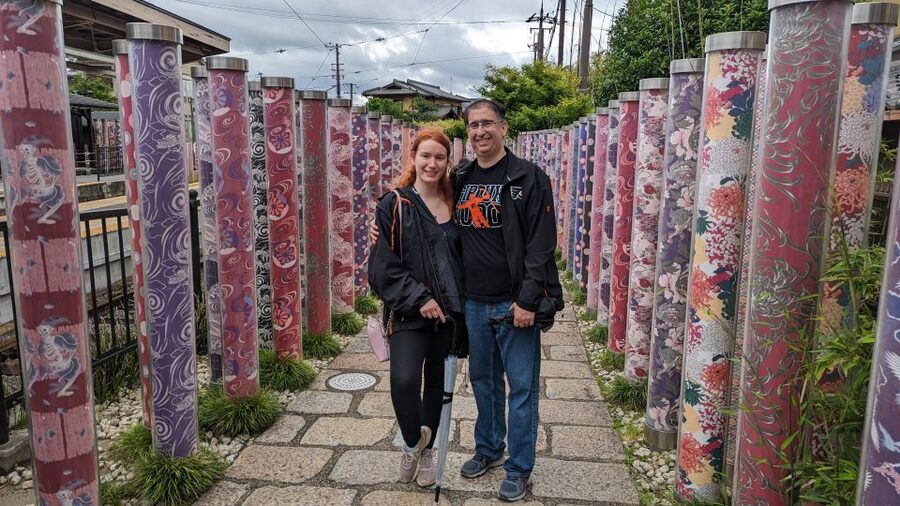
The Kimono Forest provides a colorful pause near the station area. Its patterned columns make an easy photo stop, and the visit lasts about 10 minutes. This section is more commercial than the temple and garden portions, so expectations matter. You are not getting a long food tour or a set meal. You are getting time to browse, taste something, and ask for local suggestions.
That flexibility suits families and mixed-age groups. One person can shop while another grabs a snack, and the guide can help the group regroup.
Togetsukyo Bridge and the Katsura River
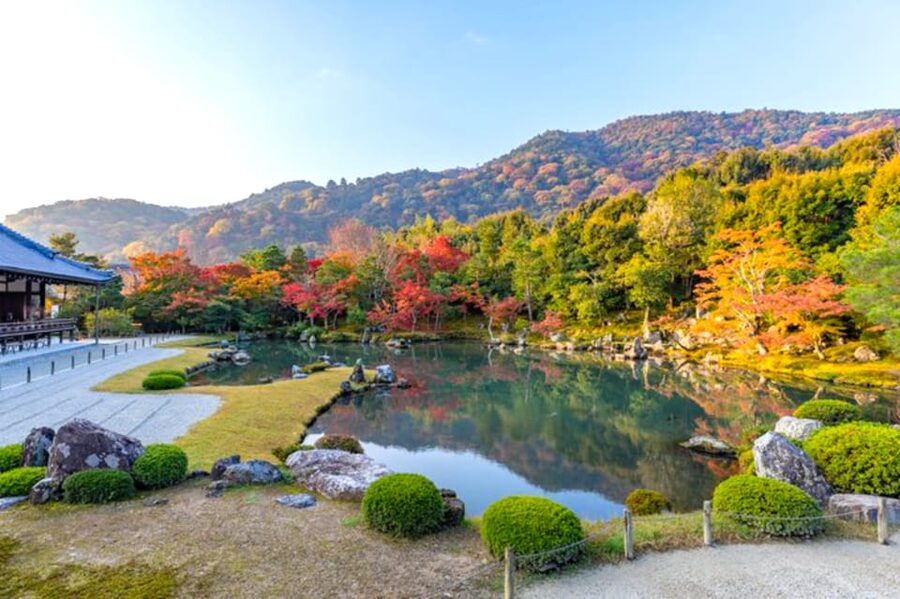
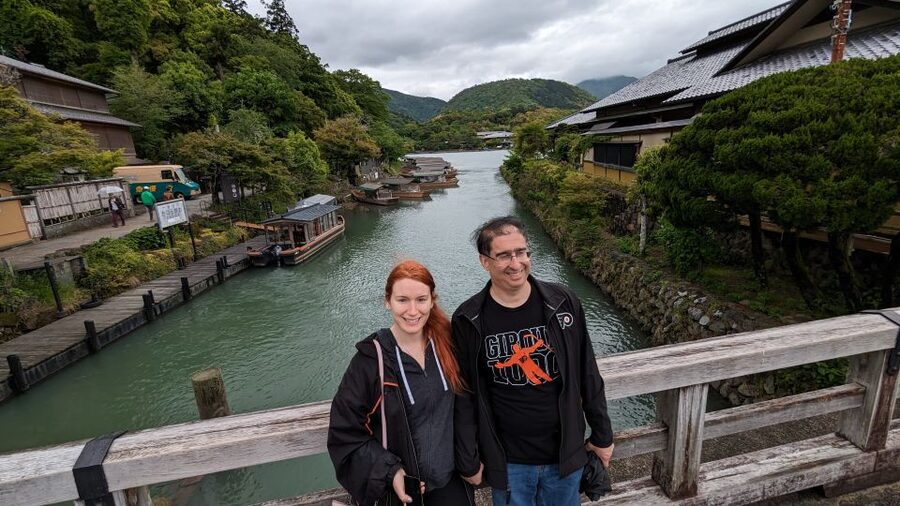
Togetsukyo Bridge is a short stop, about five minutes, but it connects several parts of the district and gives you a classic Arashiyama view. The river, wooded hills, and bridge create the broad scenic setting that photographs often reduce to a postcard.
The tour also takes you toward Arashiyama Park and its hilltop viewpoints. The climb rewards you with broad views over the Katsura River and the surrounding area. This is one of the places where a walking guide helps with timing and direction, since you are not simply being dropped at a viewpoint.
Do not expect a long stop at every overlook. The morning has a full schedule, and the route keeps moving. Your guide should still allow time for photos, and the strongest accounts of the experience praise guides for adjusting the pace and making room for rests.
Iwatayama Monkey Park: the demanding finale
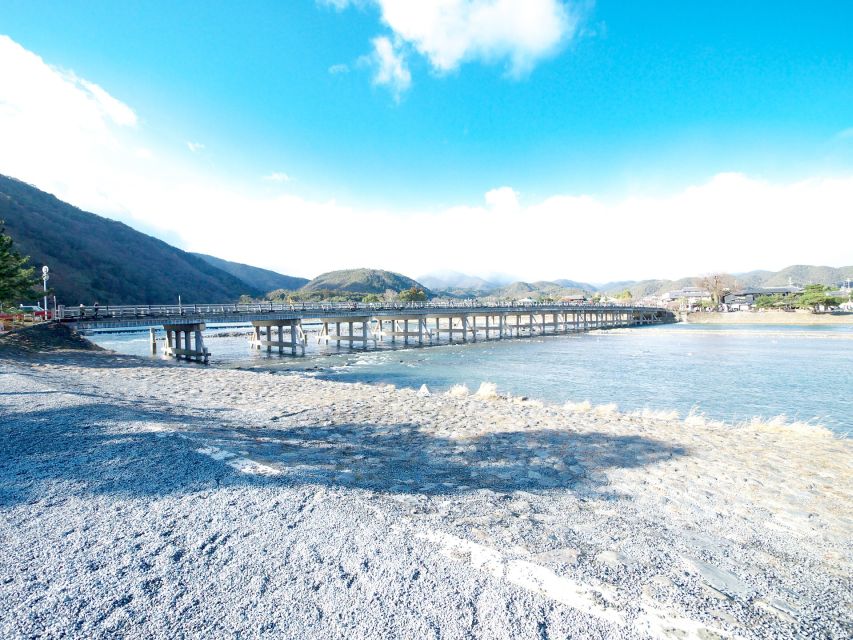
The monkey park is the physical climax of Option A. From the lower entrance, the path climbs steeply for about 15 to 20 minutes. It is not a technical hike, but it is enough to test you after several hours on foot.
Wear comfortable shoes with a good grip. Sandals and stiff travel shoes will make the climb less pleasant. In summer, temperatures around 39 degrees Celsius have made this part hard work, even for fit walkers. Several guides have handled heat well by adding shade, drink, and rest breaks, but you should still bring water and sun protection.
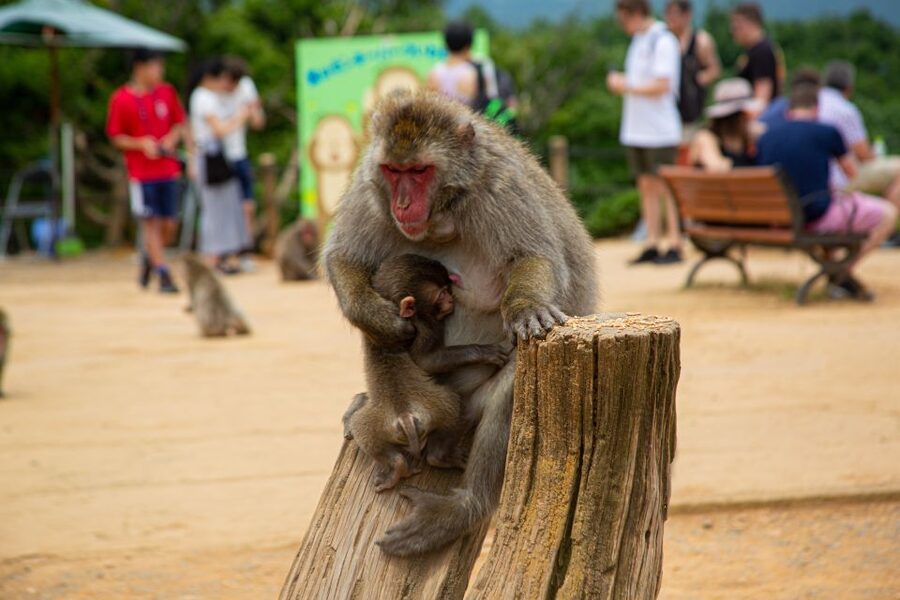
At the top, you can see Japanese macaques in their own hillside setting and enjoy one of Kyoto’s best city views. The combination is memorable: monkeys nearby, the city spread below, and the Katsura River visible in the distance.
The tour officially ends at the monkey park. Your guide gives you a ticket and instructions, then you can take the hike at your own pace and leave whenever you are ready. The stated drop-off points are Iwatayama Monkey Park and JR Saga-Arashiyama Station, but you should listen carefully to the guide’s instructions about where the official tour finishes.
This arrangement is useful if you want freedom at the end. You can spend more time with the macaques or head back down without keeping the group waiting. It also means you should not expect a guided return through every final section.
Option B: train ride, local lunch, and Tanzan Brewery
If you choose Option B, the day changes direction after the earlier Arashiyama sights. You return to the station for a short train ride through the mountains, then eat lunch in an area described as local and free of the usual tourist crowds.
Lunch is at your own cost, but the setting is the point. This option gives you a chance to see a less polished side of the region and eat among local residents. The route then continues to Tanzan Brewery, where sake tasting is included.
This is the better choice if food, drink, and local atmosphere matter more to you than seeing macaques. You lose the monkey park and its hilltop view, but you gain a more unusual regional experience. Ask about the exact option available when booking, since the two versions are not interchangeable once the day is underway.
The title’s secret brewery promise is not just a marketing flourish. It reflects a genuine fork in the experience: nature and monkeys on one side, a mountain train, lunch, and sake on the other.
Guides, group size, and the human side
The guides are the strongest part of this tour. Karim is praised for energy, photography tips, food advice, and an easy way with questions. Tom is repeatedly described as funny, attentive, and well versed in Kyoto’s history and culture. Francis is valued for clear English, organization, and friendly conversation, while Toru is known for careful explanations and a strong respect for Kyoto’s natural and religious sites.
Alice has been particularly good at reading a group’s needs. That matters when someone is hot, tired, traveling with children, or simply wants more time for a photo. A good guide can turn a five-hour walk from an endurance test into a relaxed day with regular pauses.
English is the language you can count on for a shared tour. French, German, and Spanish may be available, and some guides speak several languages, but you should contact the provider before booking if language is important. A specific non-English language is not guaranteed.
Who should book this experience?
I would choose this tour if you want to see Arashiyama’s main sights in one organized outing and prefer conversation over independent research. It suits first-time Kyoto visitors, families with active teenagers, couples who want photos and cultural explanation, and anyone who would like help with shrine etiquette, food choices, and route planning.
I would think twice if you have mobility issues, dislike hills, or want a slow visit to every temple. The park climb is steep, the tour runs rain or shine, and summer heat can be serious. Someone seeking a quiet bamboo walk should also visit independently at a less crowded time rather than join a full morning route.
Single participants can book, but the tour requires at least two people to operate. A solo booking may be canceled, moved, or refunded if that minimum is not met.
Should you book the Arashiyama walking tour?
Book it if you want a full half-day of Kyoto scenery, culture, and practical help, and you are comfortable walking. The included garden, temple, and monkey park tickets make the $87 price reasonable for a guided route, especially when the group is small.
Choose Option A for the classic Arashiyama day: bamboo, gardens, Tenryuji, bridge views, and macaques. Choose Option B if a local lunch and sake tasting sound more appealing than the monkey park hike.
I would not book it for an effortless sightseeing day. I would book it for a well-paced introduction to Arashiyama, with a guide who can help you notice more, stop when needed, and turn a crowded famous district into a more meaningful part of your Kyoto visit.
FAQ
Where does the Arashiyama tour meet?
Meet by the map on the north side of JR Saga-Arashiyama Station, down the stairs beside the vending machines. After leaving the train gates, turn right and go downstairs. Look for a guide wearing a red polo shirt or jacket with the JTA company logo.
How long does the tour last?
The tour lasts five hours, or 330 minutes. Starting times vary, so check availability for the date you want.
Is the tour a bus tour?
No. This is a walking tour. The route includes several walks between sights and a steep 15 to 20 minute hike to the top of Iwatayama Monkey Park.
What tickets are included?
Admission to Okochi Sanso Garden, Tenryuji Temple, and Iwatayama Monkey Park is included. Green tea and souvenir photos are also included.
Is lunch included?
No. Lunch is not included. Option B includes a local lunch stop, but you pay for the meal yourself. Additional drinks and souvenirs are also not included.
Can I choose between the monkey park and the sake brewery?
Yes. Option A includes the shopping street, Kimono Forest, Togetsukyo Bridge, and Iwatayama Monkey Park. Option B includes a short train ride, lunch among locals, and sake tasting at Tanzan Brewery.
What languages are available?
English is available. French, German, and Spanish may be possible with certain guides, but a specific language other than English is not guaranteed on a shared tour. Contact the provider before booking to confirm.
Does the tour operate in bad weather?
Yes. The tour runs rain or shine. Bring suitable clothing and footwear for the conditions.
Can a solo person book the tour?
Yes, but the tour requires a minimum of two participants to operate. A solo booking may be canceled, rescheduled, or refunded if the minimum is not reached.
More Arashiyama & Bamboo Grove Tours
- Osaka/Kyoto:Kinkakuji,Arashiyama,FushimiInariShrine,NaraPark
★ 4.1 · 1,596 reviews - Kyoto/Osaka: Nara, Fushimi Inari Taisha, Arashiyama Bus Tour
★ 4.7 · 1,275 reviews - Kyoto Arashiyama Walking Tour: Bamboo, Monkeys, Gardens & Secrets
★ 5.0 · 1,216 reviews - Kyoto: Arashiyama Bamboo Forest, Monkeys, Matcha & Temple Tour
★ 5.0 · 759 reviews
More Temple & Shrine Tours in Kyoto
- Kyoto: Fushimi Inari, Kinkakuji, Bamboo Grove 1 Day Bus Tour
★ 4.8 · 4,316 reviews - Kyoto: Tea Ceremony in a Traditional Tea House in Kiyomizu
★ 4.9 · 3,519 reviews - Kyoto: Tea Ceremony Ju-An at Jotokuji Temple
★ 4.9 · 3,207 reviews - Fushimi Inari Hidden Hiking Tour (Private Option Available)
★ 5.0 · 1,750 reviews
Just added around Kyoto
- Kyoto: Gion Night Walking Tour with Geisha Insight★ 5.0 · 39 reviews
- Kyoto: Private Customizable Day Trip by Car★ 5.0 · 38 reviews
- Kyoto: Full Day Bike Tour★ 4.9 · 39 reviews
- Private Japanese Calligraphy in Kyoto – Learn Shodō with a Master★ 5.0 · 39 reviews
- Kyoto: Gion Evening Walk with Hidden Gems, Geisha & Sake★ 5.0 · 41 reviews
- Experience a tea ceremony in an authentic tearoom, in Kyoto!★ 4.5 · 41 reviews
- Kyoto Private Photo Shoot & Tour by SnapKyoto★ 5.0 · 41 reviews
- The Way of Tea: Kyoto Crafts, Hidden Temples & Wabi-Sabi Walk★ 5.0 · 41 reviews
Arashiyama & Bamboo Grove Tours, compared.
Fushimi Inari, Kinkakuji, Bamboo Grove 1 Day Bus Tour
Read our review →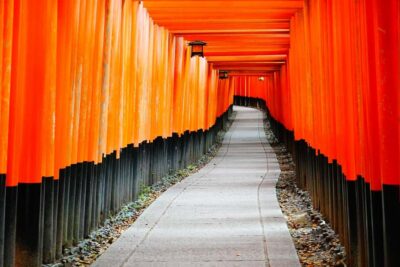
Osaka/Kyoto:Kinkakuji,Arashiyama,FushimiInariShrine,NaraPark
Read our review →
Kyoto/Osaka: Nara, Fushimi Inari Taisha, Arashiyama Bus Tour
Read our review →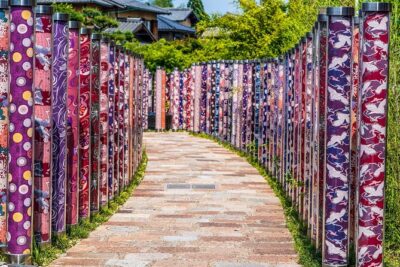
Kyoto Arashiyama Walking Tour: Bamboo, Monkeys, Gardens & Secrets
Read our review →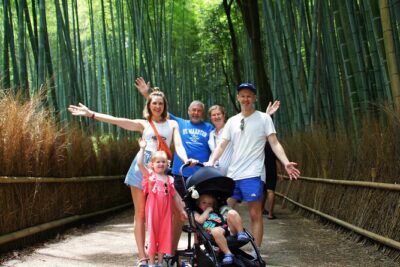
Arashiyama Bamboo Forest, Monkeys, Matcha & Temple Tour
Read our review →
Osaka/Kyoto: Arashiyama, Nara & Fushimi Inari Shrine w/Lunch
Read our review →
Nijo, Kinkaku-ji, Arashiyama, Kiyomizu & Fushimi Inari
Read our review →