
Reviewed · TEMPLE & SHRINE TOURS
Naha: Guided E-Bike Tour of the 12 Zodiac Temples
Shuri rewards curious cyclists. This three-hour ride takes you beyond Naha’s main streets and into the quieter corners of Shuri, where temples, shrines, old gates, sacred trees, and a miracle spring sit close together but can be easy to miss. I especially like the small group of five or fewer and the excellent electric bikes, which take much of the sting out of Shuri’s hills.
I also like the helmet intercom system. Your guide can explain a gate or temple while you ride, and the group can stay in touch without shouting across traffic. The main consideration is simple: you need to ride a bicycle confidently, and you will be cycling outdoors in Okinawa’s sun. Sandals are not allowed, and this is not a sightseeing ride for anyone who cannot manage a bike.
In This Review
- Quick takeaways from the three-hour ride
- Why an e-bike is the right way to see Shuri
- Starting near Makishi Station
- Shuri Kannon Temple and views from the red temple
- Ankokuji Temple and the old gate
- Shureimon Gate, Okinawa’s classic photo stop
- Daruma Temple and bright red prayer figures
- Seikoji Temple, Jizo statues, and a quiet pause
- Saki Kasahigawa, the spring from the forest
- Sogenji Temple and the former royal mausoleum
- What the guides add to the experience
- Is $95 a fair price?
- Who should book this ride?
- My verdict: book it for the side streets
- FAQ
- How long does the Naha zodiac temple e-bike tour last?
- Where does the tour start and finish?
- What is included in the tour price?
- Are meals and drinks included?
- What languages are available?
- How many people can join the group?
- Do I need to know how to ride a bicycle?
- What should I wear and bring?
- Can I make offerings at the temples and shrines?
- What happens in bad weather?
Quick takeaways from the three-hour ride
- Quiet Shuri streets: The route leaves the main tourist paths and uses backstreets that are difficult to find on your own.
- Electric help on the hills: The e-bikes make Shuri’s slopes manageable, though you still need basic cycling skills and traffic awareness.
- Six meaningful stops: Shuri Kannon Temple, Ankokuji Temple, Shureimon Gate, Daruma Temple, Seikoji Temple, Saki Kasahigawa spring, and Sogenji Temple form the cultural heart of the ride.
- Best guide support: Guides such as Maki, Maria, Hiro, Reiji, Jojo, and Tiny have been praised for clear explanations, friendly care, and attention to safety.
- Useful communication gear: Helmets include speakers and microphones, so you can hear instructions and stories while riding.
- Convenient start: The shop is a five-minute walk from Monorail Makishi Station, beside the post office, and the tour returns to the same place.
Why an e-bike is the right way to see Shuri
Shuri is not flat. That matters more than it might sound when you are planning a three-hour ride. The electric bicycle gives you assistance on the hills, so you can spend your energy looking at tiled roofs, temple gates, and old trees instead of fighting every slope.
You still need to know how to ride, brake, steer, and handle normal road conditions. The e-bike is help, not a chauffeur. Several guides have been praised for explaining traffic movement, checking that riders were comfortable, and making sure everyone stayed hydrated.
The route also has a pleasant rhythm. You ride for a stretch, stop at a temple or shrine, hear the local story, and then continue. That pattern keeps the active part from becoming tiring. It also gives you time to look properly instead of racing from one photo stop to the next.
The small group size is a real advantage. With no more than five participants, the guide can adjust the pace and answer questions. One pair even received suggestions for extra sights when time remained at the end, while another group appreciated how the guide accommodated different levels of cycling ability.
More temple & shrine tours:
- Kyoto: Fushimi Inari, Kinkakuji, Bamboo Grove 1 Day Bus Tour
★ 4.8 · 4,316 reviews - Kyoto: Tea Ceremony in a Traditional Tea House in Kiyomizu
★ 4.9 · 3,519 reviews - Kyoto: Tea Ceremony Ju-An at Jotokuji Temple
★ 4.9 · 3,207 reviews
Starting near Makishi Station
You meet at the bike shop in the Daisho Building, a five-minute walk from Monorail Makishi Station. The shop is next to the post office, which gives you a practical landmark when finding the starting point.
The first step is fitting your electric bicycle and helmet. The helmet has an intercom system, allowing the guide to speak to you as the group moves through the streets. That is more useful than it may sound in a city ride. You can receive directions without stopping every few minutes, and the guide can point out details while everyone remains together.
Wear comfortable clothing and proper shoes. Bring water, sunscreen, and a hat, since the tour is outdoors and Okinawa can be hot. Flip-flops and sandals are not permitted, so choose closed, secure footwear that will stay comfortable while pedaling.
Meals, drinks, temple offerings, and shrine donations are not included. You may want a little cash if you plan to make an offering or collect a goshuin, a temple or shrine stamp, since one participant enjoyed collecting these during the ride.
Shuri Kannon Temple and views from the red temple
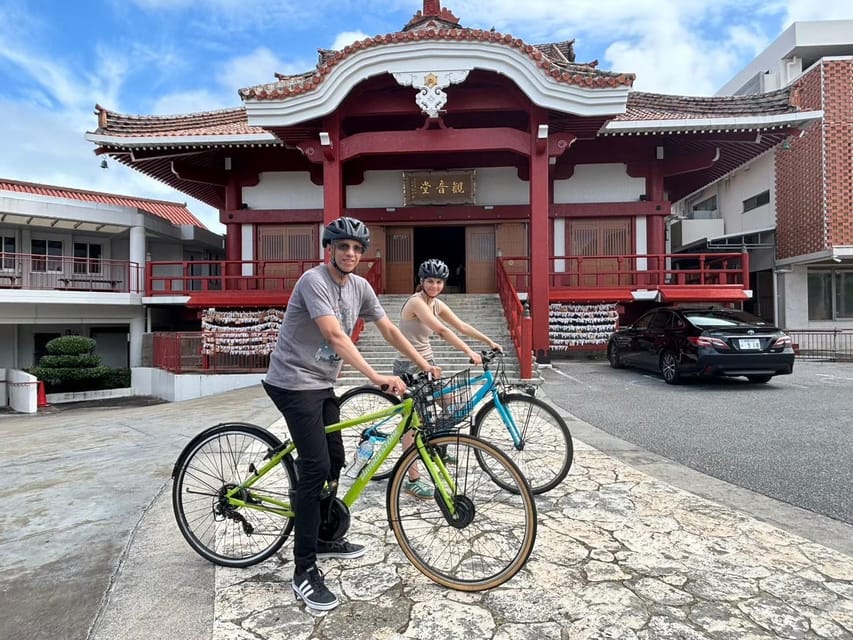
Shuri Kannon Temple is one of the early highlights. It served as a guardian temple during the Ryukyu Kingdom, and the bright red structure gives the stop a strong visual presence.
Look closely at the carvings and decorations rather than treating the temple as a quick photo background. The guide can explain the local customs and the role these religious sites played in the Shuri area. The temple also offers views across Shuri, giving you a useful sense of the district you are exploring by bicycle.
This stop sets the tone for the ride. You are not only checking off famous buildings. You are learning how Buddhist and Shinto practices appear in Okinawa, and how temples fit into the former royal center of the island.
Ankokuji Temple and the old gate
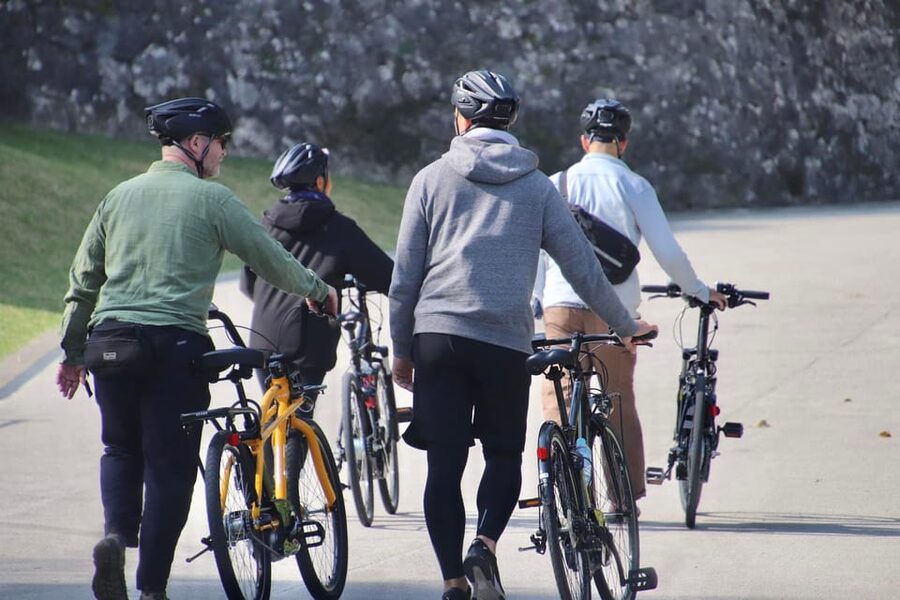
The next stop, Ankokuji Temple, is shorter, listed at about five minutes, but it adds a different mood. Here you see a traditional gate, older houses, and a large gajumaru tree.
The gajumaru is one of Okinawa’s most recognizable trees, with thick, spreading roots and a presence that makes even a brief stop memorable. The traditional houses help you picture how the side streets of Shuri differ from the broad roads and larger attractions.
This is where the guide earns the price of the tour. Finding a temple entrance on your own is one thing. Understanding why the gate, tree, and nearby homes matter is another. The stop is brief, so listen closely and use your camera quickly.
More bike tours:
- Afternoon Adventure: Okinawa Local Cycling with Spectacular Views
★ 5.0 · 92 reviews - Hidden Kyoto E-Biking tour
★ 5.0 · 1,843 reviews - Tokyo Guided Small-Group Biking Tour
★ 5.0 · 1,250 reviews - Bike Tour Exploring North Kyoto plus Lunch
★ 5.0 · 1,087 reviews
Shureimon Gate, Okinawa’s classic photo stop
Shureimon Gate is the most familiar landmark on the route. Its bright red design has become a symbol of Okinawa, and it is the natural place for a photo with your bicycle.
The bike adds something useful to the picture. Instead of taking another standard gate photograph, you get an image that records how you explored Shuri. The stop also gives you a break between the quieter temple visits and the next set of smaller religious sites.
Do not expect this to feel like an isolated monument. Shureimon is a major symbol of Okinawa, so it has a more prominent role than the side-street temples. That contrast is part of the appeal. The tour combines a well-known landmark with places you could easily pass without noticing.
Daruma Temple and bright red prayer figures

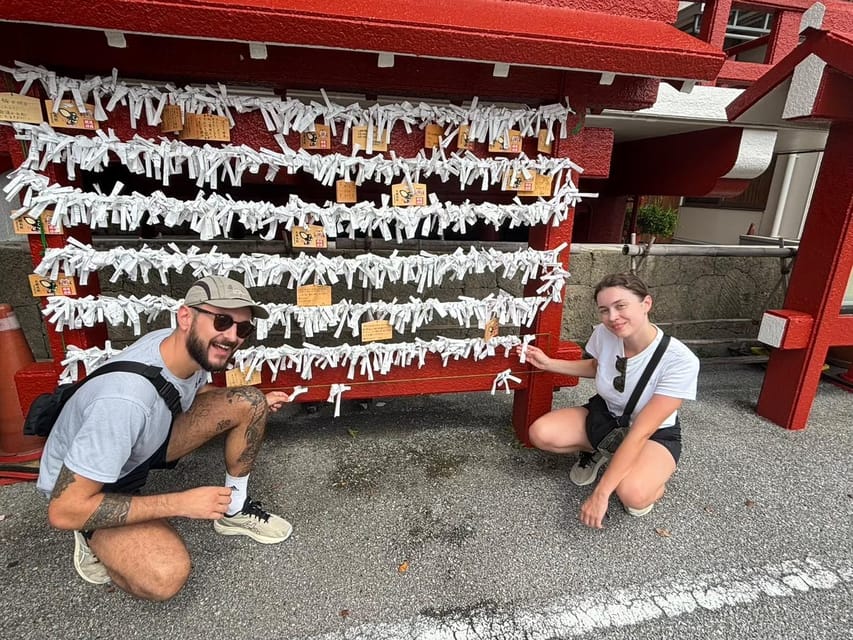
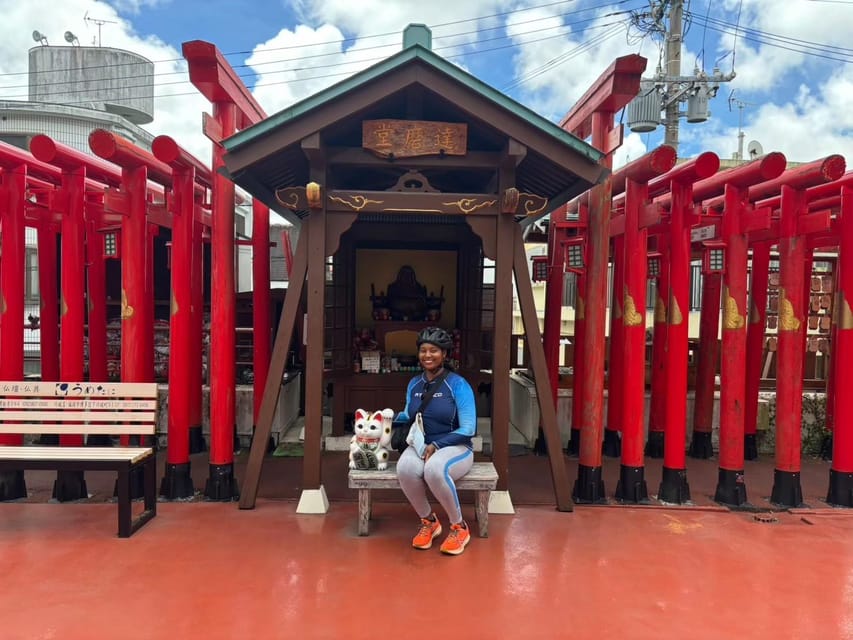
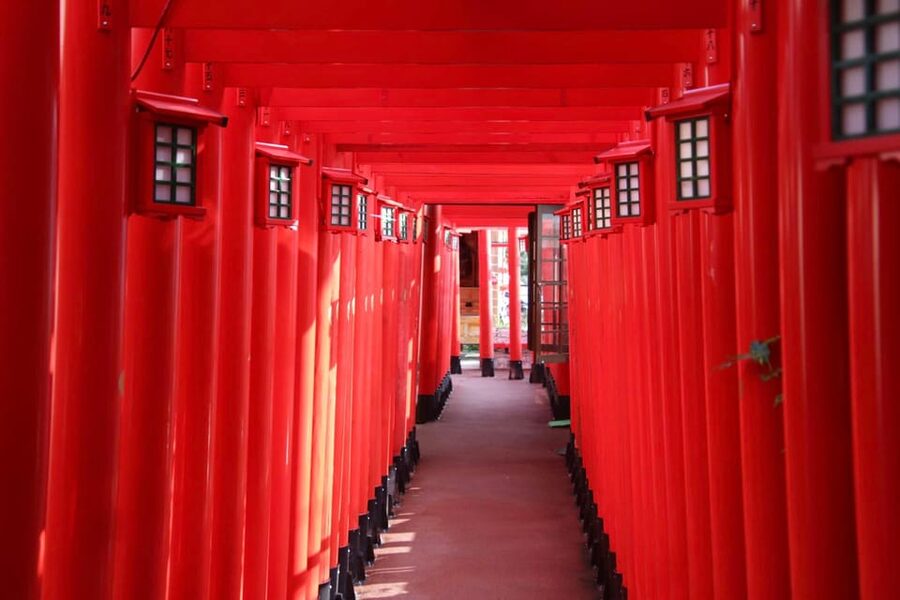
Daruma Temple is known for prayers connected with health and pregnancy. The striking red daruma dolls and red torii gate make this one of the most colorful stops.
The visual details are easy to remember, but the guide’s explanation gives them a better setting. You learn that temples and shrines can serve very specific hopes and needs, not just general worship or sightseeing.
The scheduled visit lasts about 20 minutes, giving you more time here than at Ankokuji. That should allow you to look at the dolls, notice the gate, and ask questions about the customs. As with all the religious sites, offerings are optional and not included in the tour price.
Seikoji Temple, Jizo statues, and a quiet pause
Seikoji Temple changes the pace again. It is described as peaceful, with a sacred atmosphere, Jizo statues, and a modern building.
The Jizo figures provide a chance to see how older religious symbols sit alongside newer construction. This is a calmer stop, and it works well after the brighter Daruma Temple. You are encouraged to notice the atmosphere as much as the architecture.
The planned visit is about 10 minutes. That is enough for an introduction and a look around, but not a long, unhurried temple visit. If you prefer spending half an hour at each site, this tour may feel brisk. If you like variety and want a broad introduction to Shuri’s religious places, the pacing is sensible.
Saki Kasahigawa, the spring from the forest
Saki Kasahigawa is described as a miracle spring flowing from the deep forest. The flowing water connects the modern city ride with older local beliefs and the natural sources that shaped sacred places.
This is one of the route’s more unusual stops. It is not simply another gate or building. You get a moment to feel the age of the place through the water itself and to consider why springs often become important in local tradition.
The supplied schedule does not give a separate visit time for the spring, so expect it to be part of the ride’s broader sequence rather than a long stop. That makes the guide’s explanation especially helpful. Without context, a spring can be easy to pass by. With context, it becomes part of Shuri’s spiritual map.
Sogenji Temple and the former royal mausoleum
The final major stop is Sogenji Temple, a former royal mausoleum. The setting includes a gate, a large gajumaru tree, and a park with noticeably clean, calm air.
It is a fitting ending. After several compact temple visits and the busy photo moment at Shureimon Gate, Sogenji offers space to slow down. The former royal connection also brings the route back to the larger story of Shuri and the Ryukyu Kingdom.
The stop is less about dramatic decoration and more about place and atmosphere. I would take a few quiet minutes here before returning to the shop. The route then ends at the same building where you started, making it easy to continue with your Naha plans.
What the guides add to the experience
The guide is central to the value of this tour. The temples and shrines are attractive, but many are tucked into side streets and are not obvious from the main routes. A guide gives you the confidence to reach them and explains what you are seeing once you arrive.
The strongest guide qualities reported across the experience are friendly service, clear English, careful cycling support, and enthusiasm for Okinawan culture. Maki has been praised for shaping the ride around her small group, taking photographs, and explaining local customs. Maria has been singled out for her professionalism, warmth, strong English, and helpful suggestions at the end.
Hiro was praised for sharing his excitement about the area and checking that riders were comfortable and hydrated. Reiji explained the history of each stop in detail, while Jojo received high marks for energy and for using the helmet microphone system well. Tiny was also praised for telling stories about the area in good English.
Guides may vary by date, and the tour is offered in English, Chinese, and Japanese. You should confirm your preferred language when booking.
Is $95 a fair price?
At $95 per person, this is not the cheapest way to look around Naha. The price includes the electric bicycle, helmet, intercom system, and a three-hour guided route. Meals and drinks are extra.
I think the value is strongest if you want access to lesser-known religious sites and need help with Shuri’s hills. Renting a bicycle alone could cost less, but it would not provide the local explanation, traffic guidance, temple context, or route planning. You would also need to find the tucked-away gates and shrines yourself.
The small group improves the value. A guide handling five or fewer people can offer more personal attention than a large coach tour. If your group is already comfortable navigating Naha and mainly wants to see Shureimon Gate, you may not need to pay for a guided ride. If you want the backstreets and the meaning behind the places, the cost is easier to justify.
Who should book this ride?
This tour suits you if you enjoy active sightseeing but do not want a hard workout. The electric assistance helps with hills, and the regular stops create a manageable pace.
It is especially good for:
- First-time visitors who want an introduction to Shuri beyond its best-known gate
- People interested in Buddhist and Shinto customs in Okinawa
- Couples or small groups who value a personal guide
- Visitors who want photographs with both famous and lesser-known sites
- Cyclists who want a practical way to cover several temples in three hours
It is not suitable if you cannot ride a bicycle. It may also be a poor choice if you dislike sun, outdoor activity, or riding near traffic. Comfortable shoes, suitable cycling clothes, water, sunscreen, and a hat will make a real difference.
The tour does not allow smoking, and severe weather can change the plan. If the chance of precipitation rises above 70 percent, or conditions become dangerous, the operator may alter the route and contact you the day before.
My verdict: book it for the side streets
I would book this tour if I wanted a compact, active introduction to Shuri and did not want to spend time working out the route myself. Its best feature is not simply the e-bike. It is the combination of local stories, small temples, quiet streets, and a guide who can make sense of places that might otherwise look like quick stops.
Book it if you can ride confidently and want more than the standard Naha sights. Skip it if you want a slow temple meditation, a food tour, or a completely vehicle-free experience. For most capable cyclists, the $95 price buys a useful three hours of access, context, and gentle hill assistance.
FAQ
How long does the Naha zodiac temple e-bike tour last?
The tour lasts three hours, including the ride between stops and the visits to temples, shrines, gates, and the spring.
Where does the tour start and finish?
It starts and ends at Daisho Building, at the bike shop next to the post office. The shop is about a five-minute walk from Monorail Makishi Station.
What is included in the tour price?
The price includes an electric bicycle, a helmet, and a guided tour using a helmet intercom system.
Are meals and drinks included?
No. Meals and drinks are not included, so bring water or plan to obtain your own refreshments.
What languages are available?
The tour is offered in English, Chinese, and Japanese.
How many people can join the group?
The tour is limited to five participants, making it a small-group experience.
Do I need to know how to ride a bicycle?
Yes. People who cannot ride a bike are not suitable for this tour. The electric assistance helps with hills, but you still need basic cycling ability.
What should I wear and bring?
Wear comfortable clothing and shoes suitable for cycling. Bring water, sunscreen, and a hat. Sandals and flip-flops are not allowed.
Can I make offerings at the temples and shrines?
You can make offerings if you wish, but offering money is not included in the tour price.
What happens in bad weather?
If the precipitation probability exceeds 70 percent or severe weather is expected, the operator may change the plans. You should be contacted the day before in that situation.
More E-Bike Tours
- Tokyo Top Highlights 3h Guided E-bike Tour
★ 5.0 · 714 reviews - 3h Tokyo E-Bike Tour: Hidden Gems, and Local Life with guide
★ 5.0 · 670 reviews - 5 Top Highlights of Kyoto Full Day Bike Tour (E-bike option)
★ 5.0 · 511 reviews - Tokyo: 3-Hour Bike or E-Bike City Highlights Tour
★ 4.8 · 435 reviews
Just added around Naha
- Original Street Kart Experience in Naha, Okinawa★ 4.9 · 39 reviews
- Karate History Tour in Okinawa★ 5.0 · 42 reviews
- Kerama Half-Day Snorkeling Tour★ 3.8 · 44 reviews
- From Naha Scuba Diving Trip in Kerama(for certified divers)★ 5.0 · 46 reviews
- Okinawa HIP-HOP BUS A Course Tour | Churaumi Aqualium,Kori Island★ 4.5 · 51 reviews
- Naha Bar Hopping Tour in Okinawa★ 5.0 · 51 reviews
- From Naha: Whale Watching with Pickup and English Guide★ 4.0 · 52 reviews
- Okinawa HIP-HOP BUS B – 1 Course Tour (Okinawa Churaumi Aquarium)★ 5.0 · 66 reviews
Temple & Shrine Tours, compared.

Fushimi Inari, Kinkakuji, Bamboo Grove 1 Day Bus Tour
Read our review →
Tea Ceremony in a Traditional Tea House in Kiyomizu
Read our review →
Meiji Shrine, Asakusa, Skytree Bus Tour and Cruise
Read our review →
Fushimi Inari Hidden Hiking Tour (Private Option Available)
Read our review →
Osaka/Kyoto:Kinkakuji,Arashiyama,FushimiInariShrine,NaraPark
Read our review →
Asakusa Walking Tour with Sensoji Temple Visit
Read our review →
Nikko: Kegon Falls, Lake Chuzenji & Toshogu Temple
Read our review →Browse the lists this tour appears in