
Reviewed · MARTIAL ARTS EXPERIENCES
Karate History Tour in Okinawa
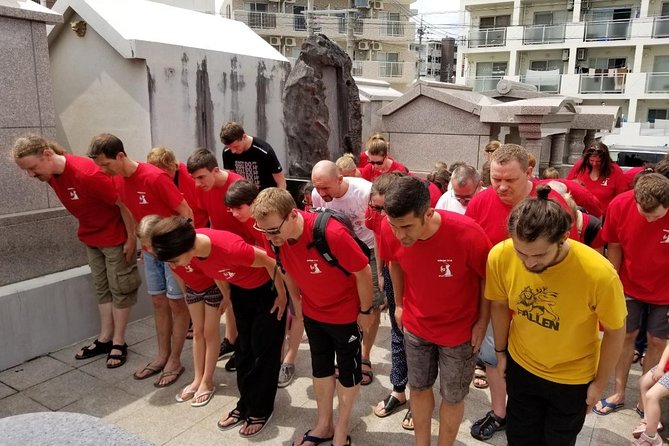
Karate begins long before the dojo. This private Naha tour traces Okinawa’s martial arts story through monuments, a museum, a famous shrine, and a karate goods shop. I like the chance to meet Tetsuhiro Hokama, a Goju-ryu 10th dan master, and I like that entrance fees and lunch are already covered. The main drawback is the pace: five to seven hours is a long stretch for anyone only casually interested in karate.
You also get a guide who can shape the day around your group. Yoshi is praised for friendly English and genuine care, while Kenny brings his own experience as a seventh dan Okinawan karate teacher. Carlo has also led the tour, with a reputation for explaining karate in a warm, accessible way. Just keep in mind that the listed stops are fairly short, and time spent in transit and at lunch fills much of the day.
In This Review
- Key points to know before booking
- Why this Naha tour matters to karate fans
- Matsuyama Park and two important karate names
- The Okinawa Prefecture Karate Museum and Tetsuhiro Hokama
- Lunch with a Japanese meal arranged by your guide
- Okino-gu Shrine and Gichin Funakoshi
- Shureido for karate equipment and souvenirs
- What the $125.50 price gives you
- Timing, transport, and the private format
- Who will get the most from this karate day
- Should you book the Karate History Tour in Okinawa?
- FAQ
- How long does the Karate History Tour in Okinawa last?
- How much does the tour cost?
- Is this a private tour?
- Are entrance fees included?
- Is lunch provided?
- Can I cancel for a full refund?
Key points to know before booking
- Meet a genuine Okinawan karate master: The Okinawa Prefecture Karate Museum includes a meeting with Tetsuhiro Hokama, a Goju-ryu 10th dan master.
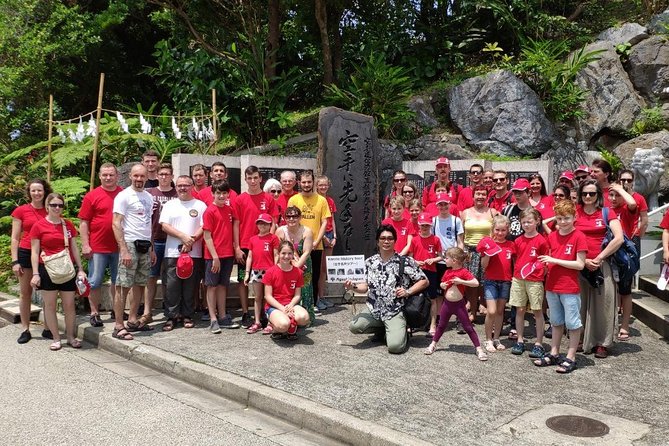
- See the people behind the art: Matsuyama Park honors Kanryo Higaonna and Chojun Miyagi, while Okino-gu Shrine has a monument to Gichin Funakoshi.
- Lunch is arranged for you: The guide organizes a Japanese meal, with sushi praised in one detailed account.
- Private touring keeps the day personal: Only your group participates, so you are not folded into a large coach party.
- Karate shopping is built in: Shureido is a well-known Okinawan karate goods shop where you can look for equipment and souvenirs.
- Plan on a full half-day: The tour lasts about five to seven hours, with pickup offered and admission included at the listed stops.
Why this Naha tour matters to karate fans
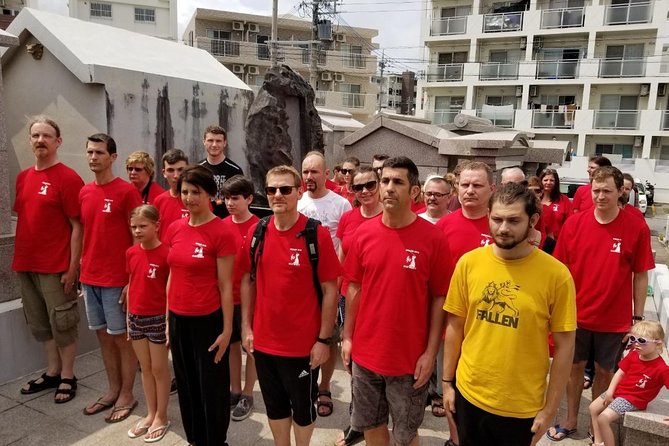
Okinawa is widely recognized as the birthplace of karate, and this outing gives you a way to connect the modern sport with the people and places that shaped it. You are not simply watching a demonstration or trying a short lesson. Instead, you move through memorials, a museum, a shrine, and a specialist shop while your guide explains how Okinawan karate developed.
That approach suits you if you want context. A training session can show you how karate feels in the body, but it may not explain the names, teachers, styles, and cultural links behind it. This tour focuses on those connections.
I would not book it only because karate is popular or because you have a spare afternoon in Naha. The monuments are brief stops, and the tour does not promise a full class or extended practice session. Its value comes from conversation, interpretation, and access to people and places that are easy to miss on your own.
The private format helps. Your group alone takes part, which means you can ask about a particular style, master, or item in the museum without worrying about holding up a large party. The guide can also explain terms at a pace that works for you.
More martial arts experiences:
- Kyoto: Kendo and Samurai Experience with Uniform and Gear
★ 4.9 · 815 reviews - Tokyo: Samurai Sword & Archery Class from Samurai Descendant
★ 5.0 · 603 reviews - Samurai Training Experience KENDO in Osaka
★ 5.0 · 515 reviews
Matsuyama Park and two important karate names
The first stop is Matsuyama Park, where you see monuments to Kanryo Higaonna and Chojun Miyagi. The visit lasts about 15 minutes, so set your expectations correctly. This is a focused introduction, not a long park tour.
The value here is the connection between names and place. If you already practice Goju-ryu, these figures may be familiar. If not, the guide can help explain why their memorials matter and how their teaching shaped Okinawan karate.
A short stop also has an advantage. You get a clear first look at the subject without spending an hour standing around a single monument. Take time to listen, look closely, and ask your guide to connect the two figures to the style and teachers discussed later in the day.
Matsuyama Park also helps set the tone. You are beginning with people rather than merchandise or spectacle. That gives the rest of the day a useful frame: karate is presented as a tradition passed between teachers, not merely as a modern competition sport.
Because the stop is only 15 minutes, comfortable shoes still make sense for the wider day, but you should not expect a long walk or a major park visit from this part of the schedule.
The Okinawa Prefecture Karate Museum and Tetsuhiro Hokama
The museum is likely the heart of the tour. You have about 45 minutes to see historical karate goods and learn more about the art’s development in Okinawa. That is enough time for a guided look, but not enough for a slow, detailed study of every item.
The museum’s collection gives the history a physical shape. Training objects, documents, and other karate-related goods can make the subject easier to understand than a string of dates or names. I find this kind of stop especially useful if you are new to karate, because the guide can explain what you are seeing instead of leaving you to guess.
The most unusual part is the meeting with Tetsuhiro Hokama, a Goju-ryu 10th dan master. A 10th dan rank is a major distinction, and meeting a senior teacher gives the visit a personal focus. The exact format of the meeting may depend on the day, but this is the stop where you should save your best questions.
One account also praises three videos shown during the museum visit. They help explain karate’s origins and give the historical material a more direct, visual presentation. If you are not familiar with Okinawan styles, the videos may be especially helpful.
Another guide associated with the tour is Kenny, described as a seventh dan black belt and an Okinawan karate teacher himself. That matters because the person leading you may bring training experience to the explanations, not just general sightseeing knowledge. Yoshi and Carlo have also led the day, and the available comments describe Yoshi as friendly, helpful, and able to communicate well in English.
Allow yourself to be an active listener here. Ask about the difference between karate as a local Okinawan practice and karate as an international martial art. Ask about the masters shown in the museum. A good question can turn 45 minutes of viewing into the most useful part of the day.
Lunch with a Japanese meal arranged by your guide
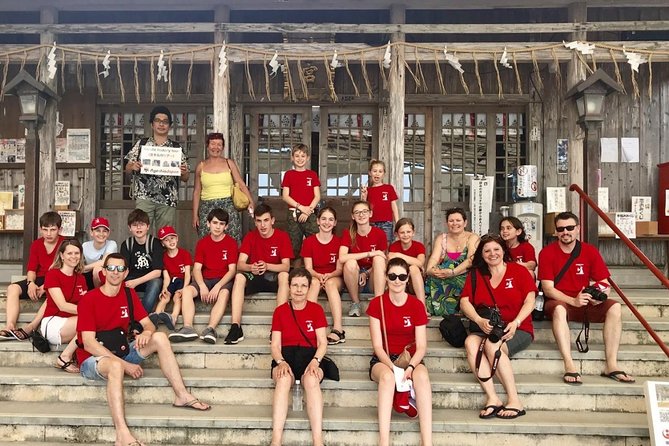
The guide organizes lunch, which removes one small but real travel problem. You do not need to search for a restaurant between scheduled stops or worry about losing time while deciding what to eat.
The exact restaurant and menu are not specified, so you should not assume a particular dish. One detailed account praised an excellent sushi lunch, but that does not guarantee sushi on every departure. If you have allergies, dietary restrictions, or strong preferences, raise them with the operator before the tour.
Lunch also gives you a chance to continue the conversation. You can ask the guide about the museum, Okinawan styles, or the monuments you have already seen. On a private tour, this meal may feel less like a formal break and more like a natural pause in the day.
Still, lunch is part of a five to seven hour schedule, not a separate food tour. If you are choosing this outing mainly for local cuisine, there are better ways to spend your budget. Here, the meal is valuable because it is organized and fits neatly into a day focused on karate.
More history tours:
- World Heritage Shirakawa-go and Experience Tours from Kanazawa
★ 5.0 · 4,049 reviews - Tokyo: Imperial Palace and Shogun Historical Walking Tour
★ 5.0 · 2,251 reviews - World Heritage Kyoto & Nara Uji Authentic Matcha Experience
★ 5.0 · 1,573 reviews - Kyoto Gion: 2-Hour Geisha Culture & History Walking Tour
★ 5.0 · 1,186 reviews
Okino-gu Shrine and Gichin Funakoshi
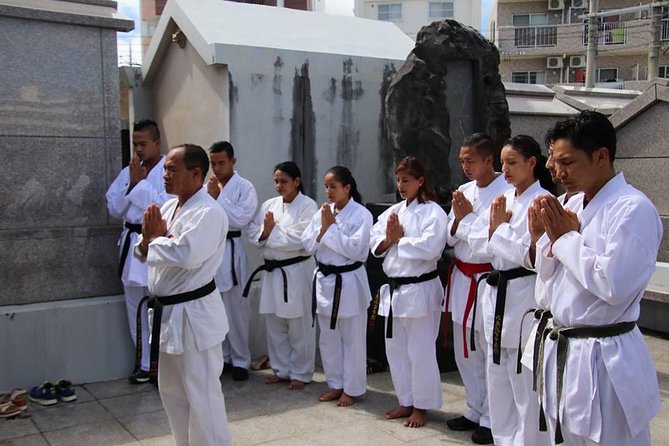
The tour then visits Okino-gu Shrine, one of Okinawa’s well-known shrines. You have about 30 minutes here, including time to see a monument to Gichin Funakoshi.
This stop adds a different setting to the day. The museum presents objects and videos, while the shrine connects karate history with a place of worship and remembrance. Funakoshi is an important name in the wider development of karate, so seeing his monument helps broaden the story beyond one Okinawan style.
You should treat this as both a cultural stop and a karate stop. The shrine itself is part of the visit, not just a backdrop for a monument. Take a moment to observe the setting and listen to the guide’s explanation instead of rushing straight to the memorial.
Thirty minutes is enough for a clear look, but it may feel short if you want a long shrine visit. That is one reason the private format helps: you can use the available time for the parts that interest you most, within the overall schedule.
The shrine also provides a useful contrast with Shureido later in the day. One represents remembrance and spiritual setting; the other deals with the practical world of karate equipment and training.
Shureido for karate equipment and souvenirs
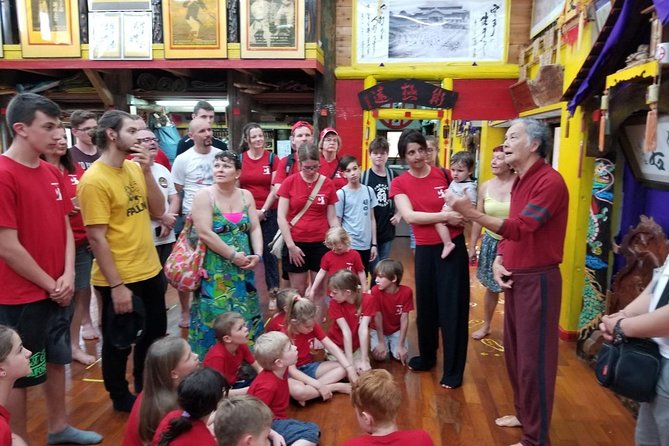
The last listed stop is Shureido, an Okinawan karate goods shop. You have about 30 minutes to browse.
This is a practical finish. After seeing monuments and historical objects, you can look at the items used by modern practitioners. You may find souvenirs or karate goods to take home, and the stop gives the day a tangible ending.
I would approach the shop with a clear idea of what you want. If you practice karate, you may be interested in equipment connected to your training. If you are buying for someone else, ask your guide for help with names and uses rather than guessing from appearance.
The 30-minute visit is enough for browsing, but it is not an open-ended shopping session. You may need to choose quickly, especially if the day runs toward the longer end of its five to seven hour range. The tour includes the stop, but purchases are not included in the tour price.
This is also the point where the tour may appeal to family members or companions who are less focused on historical detail. They can look for souvenirs while you ask about training goods and Okinawan styles.
What the $125.50 price gives you
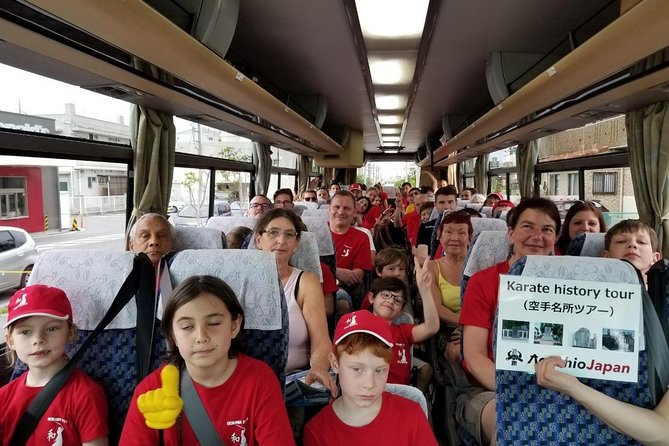
At $125.50 per person, the tour is not a bargain sightseeing shuttle, but the price covers several useful pieces. You receive a private experience, pickup is offered, entrance fees to the listed stops are included, and lunch is organized by the guide.
The private format is the biggest factor in the value. If your group includes serious karate practitioners, a guide such as Kenny, Yoshi, or Carlo can make the day more personal than a standard group excursion. You are paying for access, explanation, and convenience rather than simply transportation between four addresses.
The price makes less sense if you want a quick look at karate monuments. Matsuyama Park lasts about 15 minutes, and the shrine and shop each last about 30 minutes. The museum receives the most listed time, at 45 minutes, but the deeper value depends on how much you enjoy asking questions and hearing the historical links.
The included lunch and admissions also make the cost easier to judge. You do not have to add entrance charges at each stop, and you avoid arranging a meal during a busy day. Pickup can save time and reduce the need to work out the route yourself.
I would compare the price with the value of a private guide who can discuss karate in English. The available comments describe Yoshi as friendly and helpful, Kenny as a seventh dan teacher, and Carlo as an engaging guide. Since guides can vary, the best choice is to tell the operator about your interests when booking.
Timing, transport, and the private format
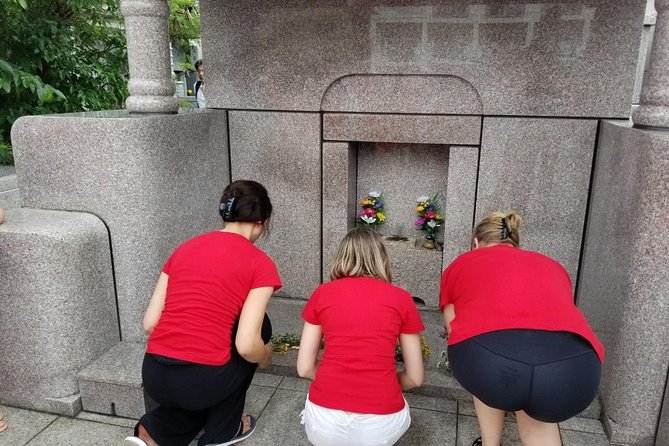
The tour lasts approximately five to seven hours. That wide range suggests the day can vary based on transport, lunch, questions, and the pace of your group.
Pickup is offered, but the exact pickup area and time are not provided here. Confirm those details before the tour begins. The activity is also near public transportation, which gives you another way to reach the starting point if pickup does not suit your plans.
Only your group participates. This is useful for families, couples, and small groups with different levels of karate experience. You can ask basic questions without feeling out of place, or focus on technical details if you already train.
Most people can participate, and service animals are allowed. The activity requires good weather, so poor conditions can lead to a different date or a full refund. The tour also requires a minimum number of participants. If that minimum is not met, you can receive another option or a full refund.
You can cancel for a full refund up to 24 hours before the start time. Changes or cancellations made inside that 24-hour window are not accepted for a refund, and the cut-off follows local Okinawan time.
The tour is booked, on average, about 50 days in advance. That does not guarantee you need to plan so far ahead, but it is a useful warning for a specialized private outing. I would reserve early if your Naha schedule is fixed or if meeting a particular guide is important to you.
Who will get the most from this karate day
I would recommend the tour most strongly to:
- Karate practitioners who want Okinawan context for their training
- Families with one serious karate fan and other people who enjoy culture and shopping
- Martial arts students curious about teachers, styles, and historical objects
- Visitors who prefer private guiding to a large scheduled group
- Anyone who wants a structured day with lunch and admissions handled
I would be more cautious if you want hands-on practice. The supplied details describe monuments, museum viewing, a meeting with a master, a shrine, lunch, and shopping. They do not promise a karate class, demonstration, or training session.
I would also think twice if you dislike structured sightseeing. The stops are fixed, and the day occupies much of your schedule. The private format gives you flexibility in conversation, but it does not turn the outing into a completely free-form visit.
The tour works best when you bring curiosity. Learn a few karate names before you go, note the styles that interest you, and prepare questions for the museum and guide. You will get more from the day than someone who simply follows the route and waits for the next stop.
Should you book the Karate History Tour in Okinawa?
Book it if karate is more than a passing interest, especially if meeting a senior Okinawan master and seeing historical material sounds worthwhile. The combination of Matsuyama Park, the museum, Okino-gu Shrine, and Shureido gives you a clear story arc from honored teachers to modern practice.
The strongest reasons to go are the private format, included admissions, arranged lunch, and the chance to learn from guides with real karate experience. The main limits are the long overall schedule, short visits at some stops, and the fact that no training session is promised.
For a serious practitioner, the $125.50 cost is reasonable because it buys access and interpretation that would be hard to arrange alone. For a casual sightseer, a shorter cultural tour may offer better value. If you choose this one, reserve ahead, confirm pickup details, and tell the operator what kind of karate questions you want answered.
FAQ
How long does the Karate History Tour in Okinawa last?
The tour lasts approximately five to seven hours.
How much does the tour cost?
The listed price is $125.50 per person.
Is this a private tour?
Yes. Only your group participates in the activity.
Are entrance fees included?
Yes. Entrance fees for all listed stops are included.
Is lunch provided?
Your guide organizes a Japanese lunch. The exact menu is not specified, although sushi was praised in one account.
Can I cancel for a full refund?
Yes. You must cancel at least 24 hours before the experience start time for a full refund. Poor weather or failure to meet the minimum number of participants can also result in another date or a full refund.
Just added around Naha
- Original Street Kart Experience in Naha, Okinawa★ 4.9 · 39 reviews
- Kerama Half-Day Snorkeling Tour★ 3.8 · 44 reviews
- From Naha Scuba Diving Trip in Kerama(for certified divers)★ 5.0 · 46 reviews
- Naha: Guided E-Bike Tour of the 12 Zodiac Temples★ 4.9 · 50 reviews
- Okinawa HIP-HOP BUS A Course Tour | Churaumi Aqualium,Kori Island★ 4.5 · 51 reviews
- Naha Bar Hopping Tour in Okinawa★ 5.0 · 51 reviews
- From Naha: Whale Watching with Pickup and English Guide★ 4.0 · 52 reviews
- Okinawa HIP-HOP BUS B – 1 Course Tour (Okinawa Churaumi Aquarium)★ 5.0 · 66 reviews
Martial Arts Experiences, compared.
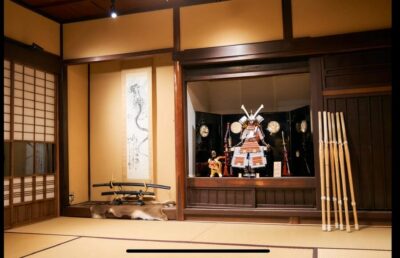
Kendo and Samurai Experience with Uniform and Gear
Read our review →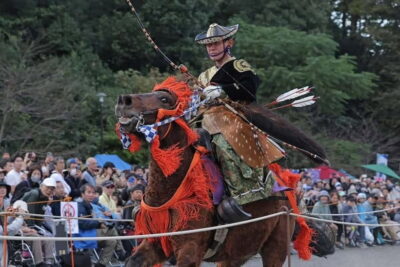
Samurai Sword & Archery Class from Samurai Descendant
Read our review →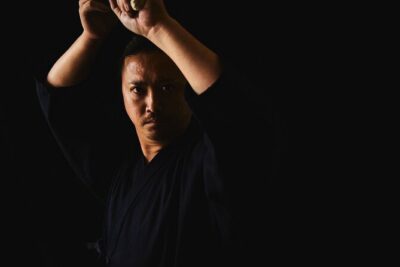
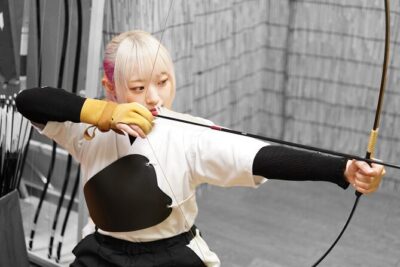
Japanesel Archery Experience HIROSHIMA CASTLE SHARAKU
Read our review →
Japanese Archery Workshop with Experienced Instructor
Read our review →
Samurai sword and archery class from a samurai descendant
Read our review →
Tokyo 2-Hour Genuine Samurai Experience: Kendo in Japan
Read our review →Browse the lists this tour appears in