
Reviewed · FOOD & DRINK
Shinjuku: Food Tour – 15 Dishes & 3 Drinks at 4 Eateries
Shinjuku tastes better after dark. This three-hour food tour takes you through Omoide Yokocho, Kabukicho, and Golden Gai, pairing 15 Japanese dishes with three drinks at four eateries. I like the broad menu, from sushi and gyoza to kushikatsu and sake, and I like that a guide handles the tricky restaurant doors and narrow lanes for you.
The tour also gives you a useful first look at Shinjuku nightlife, with stops in places you might not find on your own. The main concern is organization: most accounts describe friendly guides and a great evening, but one outing reportedly had a much larger group than expected and long periods spent finding the next restaurant.
In This Review
- Four things to know before you book
- Why this Shinjuku evening works well for first-time visitors
- Stop one: Omoide Yokocho and the old Tokyo food lanes
- Stop two: Kabukicho for a local-style izakaya
- Stop three: Golden Gai and the social side of bar hopping
- The fourth eatery and what the menu really means
- Guide quality can shape the whole night
- Walking, timing, and practical comfort
- Who should book this Shinjuku food tour?
- Should you book it?
- FAQ
- Where does the Shinjuku food tour begin?
- Where does the tour finish?
- How long does the experience last?
- How many dishes are included?
- How many drinks are included?
- Which parts of Shinjuku does the tour visit?
- What is the maximum group size?
- Do I need to remove my shoes?
- Can I cancel for a full refund?
Four things to know before you book
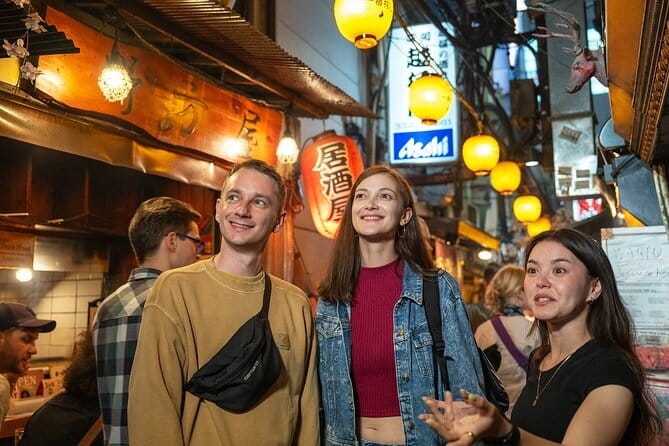
- Omoide Yokocho sets the mood: Start among Shinjuku’s famous old food lanes with yakitori, fried tofu, gyoza, grilled vegetables, beer, and sake.
- The menu covers more than sushi: You can expect up to 15 dishes, including sushi, crispy kushikatsu, juicy gyoza, and a range of Japanese foods.
- Three drinks are included: Beer and sake feature in the evening, including a sake flight on some outings.
- The route links three famous nightlife areas: Omoide Yokocho, Kabukicho, and Shinjuku Golden Gai each offer a different setting.
- The advertised group limit is 15: This should make the walking and restaurant seating easier, though one account described a much larger group.
- A little preparation helps: One restaurant requires you to remove your shoes, so wear socks and shoes that come off easily.
Why this Shinjuku evening works well for first-time visitors
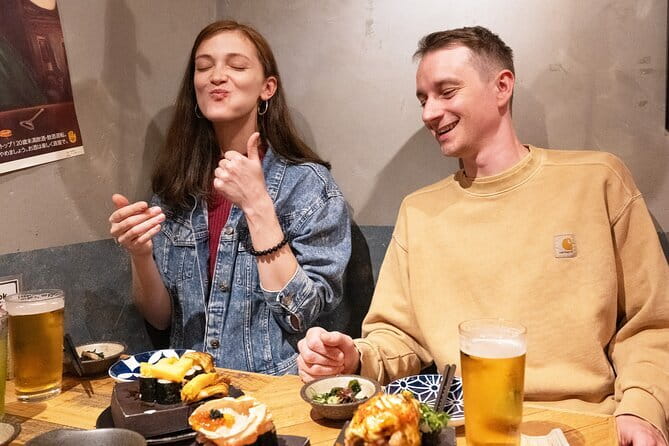
Shinjuku can feel like three different cities stitched together. You have the neon streets, narrow drinking alleys, tiny bars, department stores, train exits, and side streets where a restaurant sign may be easy to miss. This tour gives you a simple route through several of the area’s best-known nightlife districts without asking you to solve the evening on your own.
The value is not just the food. You are paying for a guide, a planned route, restaurant access, and a social evening built around Japanese food and drink. That matters in Shinjuku, where some small eateries are crowded and where a group without local help may struggle to know which door to open.
You meet at the police box by the East Exit of Shinjuku Station, at 3-chōme-38-1 Shinjuku. From there, the tour returns to the same meeting point. That is helpful if you are still learning the station, since Shinjuku Station can be confusing even after several visits.
The evening is designed for a maximum of 15 participants. A small group should make it easier to hear the guide, cross streets together, and fit into compact restaurants. Still, you should be aware of an important inconsistency in the available accounts: one group reportedly had around 50 people and struggled to keep up or hear the guide. That does not match the stated limit, but it is a reason to confirm the group size if a quiet, well-paced outing matters to you.
More Food Tours in Tokyo
- Tokyo: Shinjuku Food Tour (13 Dishes at 4 Local Eateries)
★ 5.0 · 6,603 reviews - Tokyo Tsukiji Fish Market Food and Culture Walking Tour
★ 5.0 · 3,184 reviews - Tokyo: Shinjuku Food Tour (15 Dishes and 4 Eateries)
★ 4.9 · 2,033 reviews
Stop one: Omoide Yokocho and the old Tokyo food lanes
The first hour takes place in Omoide Yokocho, one of the most recognizable food alleys in Shinjuku. The setting is part of the meal. You walk through narrow lanes lined with small izakaya, where the old-fashioned atmosphere feels far removed from the large signs and busy station outside.
This is where the tour introduces a spread of familiar Japanese bar food. The listed choices include yakitori, fried tofu, gyoza, grilled vegetables, craft beer, and sake. The portions are meant to build into a full tasting meal rather than one large dinner plate, so you get variety without having to commit to one unfamiliar dish.
I like this opening because it makes Japanese food easier to approach. Yakitori offers a familiar grilled option, gyoza gives you a crisp and savory favorite, and fried tofu and vegetables add different textures. You can also begin asking the guide what you are eating instead of trying to decode every menu on your own.
Omoide Yokocho is popular, and it is not a secret corner of Tokyo. That is not a flaw. It is one of the clearest places to see how small food stalls and drinking spots fit into the city’s nightlife. The trade-off is that the lanes can feel tight, and moving as a group requires attention.
The first stop lasts about an hour. Since several dishes and drinks are served here, you should not expect a long sit-down meal with one course at a time. Think of it as a guided tasting in a classic setting.
Stop two: Kabukicho for a local-style izakaya
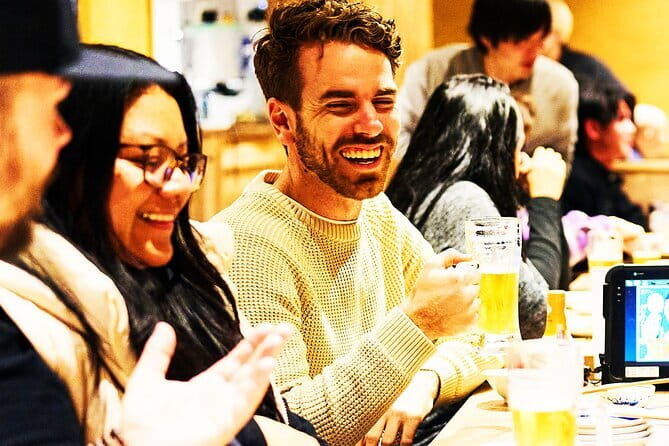
The second hour moves into Kabukicho, the nightlife district best known for its dense concentration of bars, restaurants, and evening entertainment. The tour takes you to an izakaya described as a place that locals recommend and one that can be difficult to enter without a reservation when it is busy.
This is one of the strongest reasons to book the tour. A guide can take you directly to the venue and manage the practical side of arriving with a group. Without that help, you might walk past the entrance, choose a place based only on a sign, or spend too long waiting for a table.
The food selection continues here, with the overall menu promising sushi, kushikatsu, gyoza, and other Japanese dishes. The precise dish list may vary, so you should read up to 15 dishes as a tasting total rather than a guaranteed fixed menu for every outing.
Kushikatsu is a useful addition to the evening. These breaded and fried skewers give you something crisp and hearty after the lighter grilled foods at the first stop. Sushi adds a different style of preparation, and the contrast between raw, grilled, and fried dishes keeps the meal from feeling repetitive.
This is also the point where the tour’s timing matters. You spend about one hour at each stop, and the evening includes walking between districts. That gives you enough time to eat and talk, but it does not leave much room for a slow, highly customized dinner. If you have strict dietary needs, ask ahead of time rather than assuming every dish can be changed.
One practical note is worth remembering: at least one venue requires shoes to be removed. Wear clean socks and comfortable shoes that are easy to take off. It is a small detail, but it can make the evening more comfortable.
Stop three: Golden Gai and the social side of bar hopping
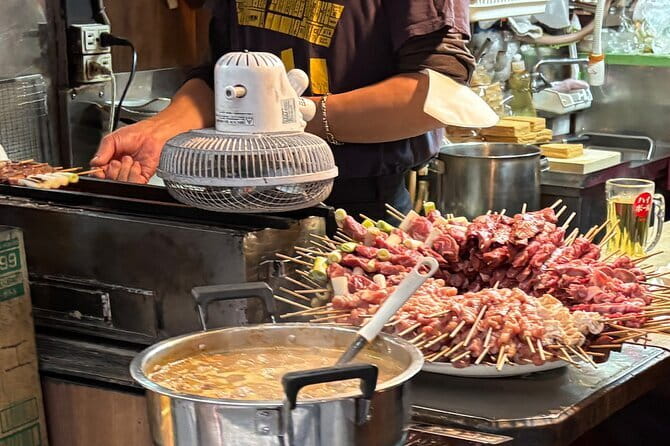
Shinjuku Golden Gai provides the most intimate setting on the route. Its narrow lanes are filled with very small bars, many with only a few seats. The tour uses this stop for mingling with local people and other participants.
That social focus is a major part of the appeal. You are not simply moving from restaurant to restaurant while listening to a speech. The format encourages conversation, and several accounts describe guides who were warm, patient, and willing to help people feel comfortable in an unfamiliar setting.
The best guide experiences seem to come from people such as Ayaka, Naoto, Shun, Midori, Luna, Yuki, and Nono. Specific names do not guarantee who will lead your outing, but they show the range of personalities associated with the tour. Shun, for example, was described as adapting a private outing with extra historical stops, while other guides were praised for patience, friendliness, and attention to individual needs.
Golden Gai can be a slightly awkward place for a large group. Its bars are small, and the lanes are easy to take in slowly but harder to manage if everyone is spread out. Keep close to the guide and pay attention when the group turns into a side street.
The social format suits solo participants and couples who want conversation during dinner. It may be less appealing if you prefer a private table, a quiet meal, or a carefully paced tasting. The tour is built around meeting people, not disappearing into your own corner.
A completely different kind of day out in Tokyo:
- Mt Fuji and Hakone 1-Day Bus Tour Return by Bullet Train
★ 5.0 · 26,383 reviews - 1-Day Tokyo Bus Tour
★ 5.0 · 14,250 reviews - Tokyo: TOKYO SKYTREE® Admission ticket
★ 4.5 · 11,192 reviews - Tokyo: teamLab Planets TOKYO Digital Art Museum Entry Ticket
★ 4.6 · 9,779 reviews
The fourth eatery and what the menu really means
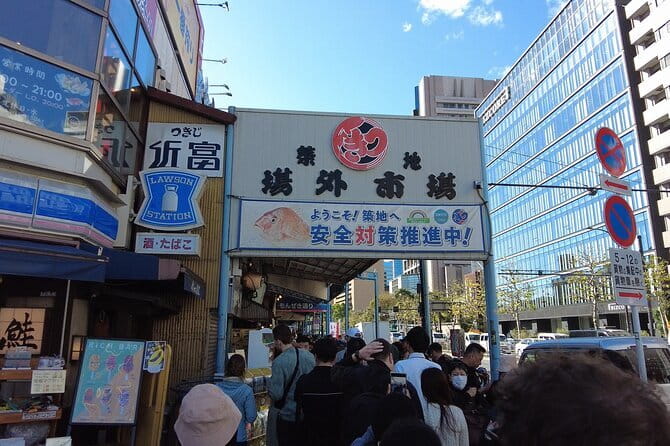
The tour description promises four eateries, while the listed route names three major areas. The fourth stop is part of the restaurant sequence, but the available details do not identify every venue or assign each dish to a specific location. You should therefore expect a progression through four food and drink settings, not four fully documented restaurants with a published menu.
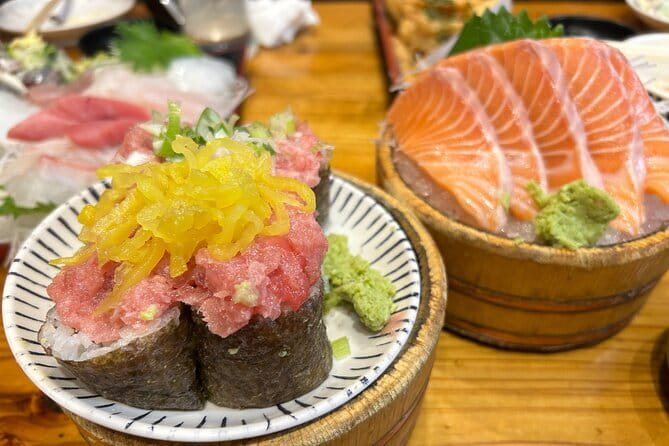
The total of 15 dishes is the evening’s biggest selling point. You may sample sushi, fried items, grilled food, gyoza, vegetables, and sweets or snacks such as custard-filled fish, which was singled out as a favorite on one outing. The variety gives you a good introduction to izakaya-style eating, where several small dishes are shared instead of ordering one main course per person.
Three drinks are included. Beer and sake are specifically part of the experience, and some outings include a sake flight. That is useful if you want to compare styles without ordering an entire bottle or guessing from a Japanese menu.
The alcohol inclusion also changes the price calculation. At $112.75 per person, this is not a cheap dinner, especially if you are comparing it with eating at a single casual restaurant. But the fee covers four stops, 15 dishes, three drinks, guiding, and the convenience of a planned night in some of Shinjuku’s most difficult-to-navigate dining zones.
For a person who would happily spend an evening sampling food and sake, the price can be reasonable. For someone who mainly wants a large meal and does not drink, the value is weaker. The tour is best seen as a guided night out, not simply a restaurant bill with a markup.
Guide quality can shape the whole night
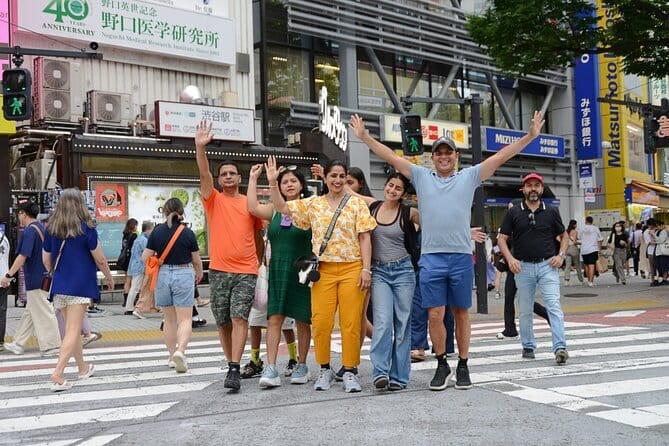
The strongest praise centers on the guides. Good guides appear to do three jobs at once: lead the route, explain the food and neighborhoods, and help the group relax around unfamiliar customs.
Ayaka was praised for helping participants find corners of Shinjuku they might have missed. Naoto was associated with four distinct spots and excellent gyoza. Midori was praised for combining food with stories about Shinjuku. Luna was noted for showing different areas and offering a broad range of foods and drinks.
The comments also point to a useful distinction. This tour is not automatically great simply because the route is good. The guide’s pace, local knowledge, and ability to keep everyone together matter a lot. One poor account described little information, repeated confusion between venues, and long waits outside. Another described a group so large that people could not hear or keep up.
That means I would book this with realistic expectations. You are buying a hosted group evening, and the quality may depend on the guide assigned and the size of the specific departure. If you want a highly polished private tour, ask about a private option or confirm the group arrangements before paying.
Walking, timing, and practical comfort
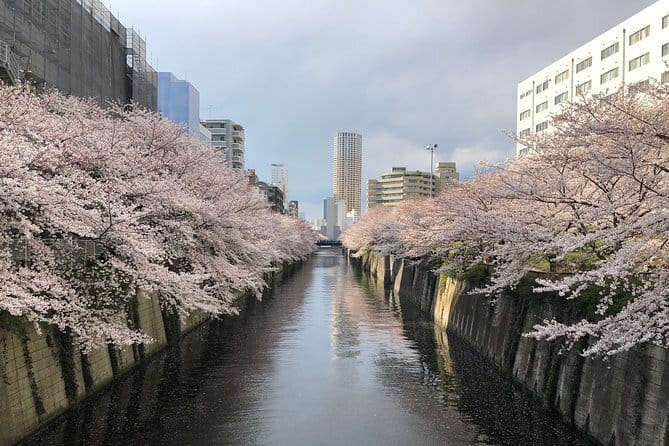
The meeting point is close to public transportation, and the tour begins and ends at the Shinjuku Station East Exit police box. You will spend the evening walking between nightlife districts, standing in narrow lanes, and entering compact eateries.
Three hours is a good length for a first introduction. It is long enough to cover several areas but short enough to fit into a larger Tokyo itinerary. I would avoid scheduling a major attraction immediately afterward, since restaurant service and group movement can run at different speeds.
Bring a mobile ticket, since that is the stated ticket format. Keep your phone charged and make sure you can find the East Exit before the start time. The station is large, and arriving early gives you a calmer start.
The tour is described as suitable for most participants. Still, the combination of walking, stairs or tight entrances, standing, and floor customs at one venue may not suit everyone. The available information does not give a detailed accessibility plan, so ask the provider directly if you need specific assistance.
The tour has a free cancellation policy up to 24 hours before the local start time. Cancellations made within 24 hours are not refunded, and late changes are not accepted. That is a fair policy for restaurant reservations, but it means you should not wait until the last evening to decide.
Who should book this Shinjuku food tour?

I would recommend it most strongly to first-time visitors who want a guided introduction to Shinjuku after dark. You get a useful route, plenty of tastes, and a chance to see how izakaya dining works without planning every stop yourself.
It also suits solo participants. The built-in group setting gives you people to talk with, and the Golden Gai stop is more approachable when a guide opens the door and explains the social setting.
Food-focused couples and small groups should also enjoy it, especially if you want to try many dishes rather than order one meal. The sake tasting and three included drinks add clear value if you drink alcohol.
I would be more cautious if you have major food allergies, strict dietary rules, or no interest in alcohol. The menu is varied, but the fixed group format may limit substitutions. I would also skip it if you dislike crowded nightlife areas, small bars, or eating on a set schedule.
Should you book it?
At $112.75, this Shinjuku food tour is worth considering as a complete evening rather than a simple meal. The strongest features are the 15-dish variety, three included drinks, access to four eateries, and the chance to move through Omoide Yokocho, Kabukicho, and Golden Gai with a local guide.
I would book it if you want an easy first night in Shinjuku and enjoy meeting people over shared food. Before booking, confirm the expected group size and mention any dietary concerns. If the group is truly capped at 15 and your guide is as attentive as Ayaka, Naoto, Shun, Midori, or Luna were described, this should be a lively and useful introduction to Tokyo nightlife.
FAQ
Where does the Shinjuku food tour begin?
It begins at the police box by the East Exit of Shinjuku Station, at 3-chōme-38-1 Shinjuku, Shinjuku City, Tokyo 160-0022, Japan.
Where does the tour finish?
The tour ends back at the meeting point near the Shinjuku Station East Exit police box.
How long does the experience last?
The tour lasts approximately three hours, with about one hour listed for each of the three main route sections.
How many dishes are included?
The experience includes up to 15 recommended Japanese dishes. The menu can include sushi, kushikatsu, gyoza, grilled foods, fried tofu, vegetables, and other Japanese specialties.
How many drinks are included?
Three drinks are included. Beer and Japanese sake are specifically mentioned, and some outings include a sake flight.
Which parts of Shinjuku does the tour visit?
The route includes Omoide Yokocho, Kabukicho, and Shinjuku Golden Gai, with four eateries included during the evening.
What is the maximum group size?
The stated maximum is 15 participants. One account described a much larger group, so you may wish to confirm the group size before booking.
Do I need to remove my shoes?
At one of the eateries, you need to remove your shoes. Comfortable shoes and clean socks are practical choices.
Can I cancel for a full refund?
Yes. You can cancel at least 24 hours before the experience start time for a full refund. Cancellations or changes made within 24 hours are not accepted and are not refunded.
Just added around Tokyo
- Tokyo 6hr Instagram Highlights Private Tour with Licensed Guide★ 5.0 · 38 reviews
- Tokyo Small Group Tour with Guide★ 4.5 · 38 reviews
- Tokyo Sumo Experience with Live Show & Audience Challenge★ 5.0 · 38 reviews
- Japanese Food Cooking Class in Asakusa, Tokyo★ 5.0 · 39 reviews
- Very popular in Harajuku♡Animal petting zoo★ 4.6 · 39 reviews
- Ramen Making from Scratch with Tokyo Mom(Vegan Option Available)★ 5.0 · 39 reviews
- Tokyo JDM Night: 600hp C63s AMG Edition 1 (Private)★ 4.9 · 39 reviews
- Tokyo: Kimono Rental inside Shinjuku Gyoen National Garden★ 4.9 · 39 reviews
Food & Drink, compared.
Shinjuku Food Tour (13 Dishes at 4 Local Eateries)
Read our review →
Tokyo Tsukiji Fish Market Food and Culture Walking Tour
Read our review →
Shinsekai Food Tour with 13-15 Dishes at 5 Eateries
Read our review →
Osaka Food Tour: 13 Dishes at 5 Local Eateries
Read our review →
Shinjuku Food Tour (15 Dishes and 4 Eateries)
Read our review →
Best of Shinjuku: Izakaya Food Tour (4 Stops, 14+ Tastings)
Read our review →
Kyoto Night Foodie Tour in Gion (9+ dishes + 6 Sake tastings)
Read our review →
Hungry Osaka Street Food Tour:15 Tastings & 3 Drinks with a Local
Read our review →Browse the lists this tour appears in