
Reviewed · FOOD & DRINK
Shinjuku: Golden Gai Food Tour
Tokyo reveals itself after dark. This three-hour Shinjuku food tour leads you from neon streets and smoky yakitori stalls to tiny bars in Golden Gai, with an English-speaking guide explaining the customs and past behind each stop. I especially like the small groups of up to eight and the chance to enter places that can feel hard to navigate on your own. The main drawback is the price: at $170 per person, the food itself may not seem to justify the cost for confident Tokyo diners.
I also like the generous amount of food, which can include sushi, yakitori, local dishes, and ramen, plus two drinks. Guides such as Alex, Ray, Wes, Yappy, and Daniele have earned praise for making the evening lively and easy to follow. Still, food quality can vary by stop, and the tour’s firm five-minute waiting limit makes arriving at the meeting point early essential.
In This Review
- Key points to know before booking
- Starting near Shinjuku Station’s West Gate
- Shinjuku’s post-war story in the neon
- Yakitori, smoky alleys, and a first drink
- Sushi, etiquette, and practical ordering tips
- Ramen with a local shortcut
- Entering Golden Gai after the meal
- What the $170 price really covers
- Who should book this Shinjuku evening?
- Booking details that matter
- Should you book the Golden Gai Food Tour?
- FAQ
- Where does the Shinjuku Golden Gai Food Tour meet?
- How do I reach the meeting point from Shinjuku Station?
- How long does the tour last?
- What language is the tour conducted in?
- How many people can join the group?
- What food is included?
- How many drinks are included?
- Can people under 20 join?
- What happens if I arrive late?
Key points to know before booking
- Golden Gai comes at the end: Finish in a tiny neighborhood bar among more than 200 compact pubs, karaoke rooms, and drinking spots.
- The evening is more than a meal: You learn about Shinjuku’s post-war black-market past, local etiquette, restaurant customs, and the changing nightlife district.
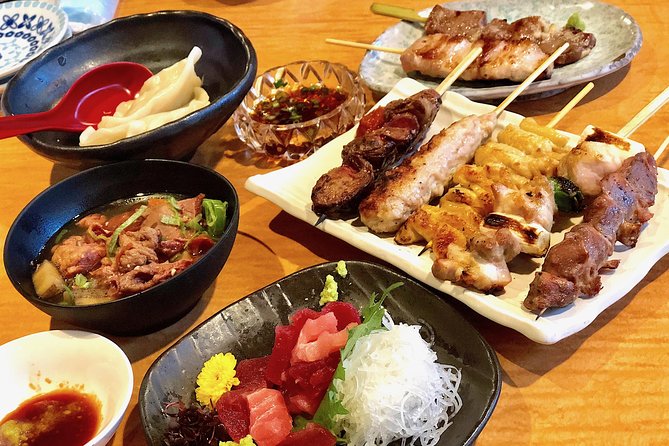
- Expect plenty of food: Stops may include yakitori, sushi, other Japanese dishes, and a bowl of ramen, with two drinks included.
- Eight people is the maximum: The small group makes it easier to hear the guide and ask questions in narrow alleys and small restaurants.
- You must be at least 20: Alcohol is central to the outing, and some venues do not permit younger people.
- The meeting point matters: Meet at KISSATEN Tajimaya Coffee House near Shinjuku Station’s West Gate, using exit B15.
Starting near Shinjuku Station’s West Gate
The tour begins in front of KISSATEN Tajimaya Coffee House at 1 Chome-2-6 Nishishinjuku. From Shinjuku Station, follow signs for the West Gate and leave through B15.
Give yourself extra time. Shinjuku Station is famously confusing, and the operator allows only five additional minutes after the scheduled start. Once the group leaves, the guide cannot provide directions or take phone calls to help late arrivals. That rule may sound strict, but it keeps the route moving and avoids holding up restaurants.
I would arrive at least 15 minutes early, especially if this is your first evening in Tokyo. Have the meeting address saved on your phone, and do not assume that being somewhere inside Shinjuku Station means you are close to the coffee house. The station has many exits, and a wrong turn can cost you those five minutes quickly.
The group is limited to eight participants. That number matters here. Golden Gai’s passageways are tight, and the bars are often built for only a handful of customers. A large tour would feel clumsy. With eight people or fewer, you have a better chance of hearing the guide and getting a seat together.
More Food Tours in Tokyo
- Tokyo: Shinjuku Food Tour (13 Dishes at 4 Local Eateries)
★ 5.0 · 6,603 reviews - Tokyo Tsukiji Fish Market Food and Culture Walking Tour
★ 5.0 · 3,184 reviews - Tokyo: Shinjuku Food Tour (15 Dishes and 4 Eateries)
★ 4.9 · 2,033 reviews
Shinjuku’s post-war story in the neon
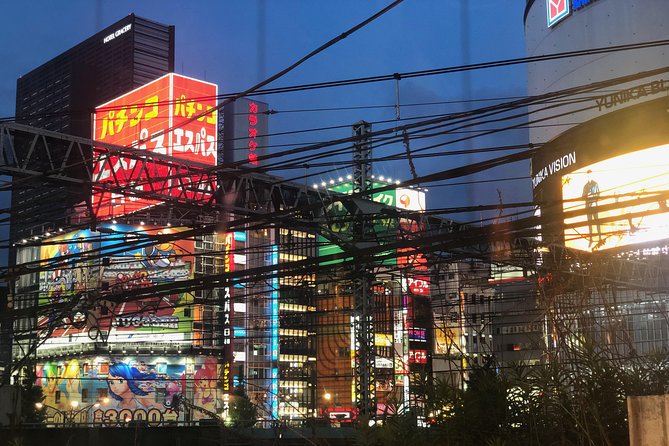
The first part of the evening sets the scene. You walk through Shinjuku while the guide explains how the district grew from a post-war black market into one of Tokyo’s major nightlife centers.
This context gives the streets more meaning. Neon signs, office towers, small food counters, and entertainment venues sit close together, but the area is not just modern Tokyo on display. Your guide connects the busy streets to the district’s earlier years and points out details you would likely pass without noticing.
The tour also takes in the edge of Asia’s largest red-light district. That part of Shinjuku can feel surprising if you expect Japan to be uniformly quiet and orderly. You will see a side of the city that is lively and adult-oriented, while remaining part of a generally safe central Tokyo setting.
Guides have been one of the strongest parts of this experience. Alex has been praised for his personality and broad understanding of Japan. Ray has helped explain Japanese food culture and table manners, while Wes has mixed local background with useful travel tips. Other guides, including Yappy, Norma, Tommy, Sandra, Hayato, and Daniele, have also been singled out for keeping conversation moving and making newcomers feel included.
Because guides change, the tone can vary from one departure to another. The common thread is the role they play: this is not simply a food delivery service with a walk attached. You are paying for navigation, explanations, ordering help, and access to a night that can be awkward to arrange alone.
Yakitori, smoky alleys, and a first drink
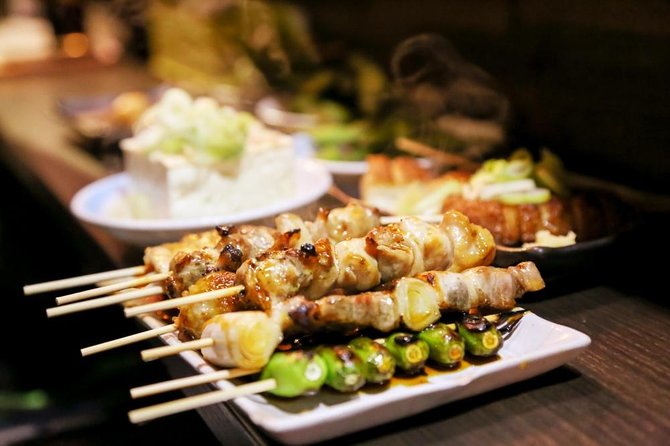
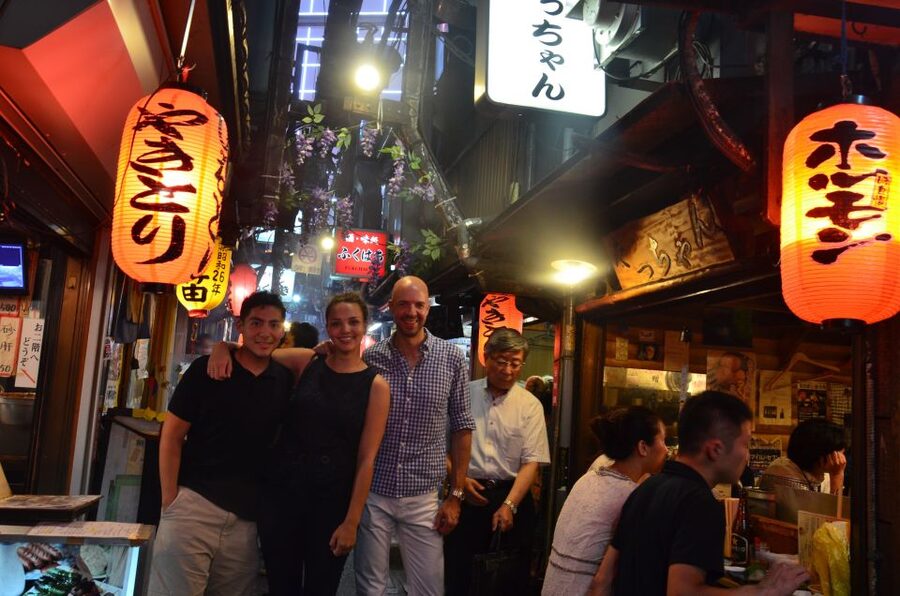
Food usually begins in the older entertainment lanes around Shinjuku. One route has included Omoide Yokocho, often nicknamed Piss Alley, where narrow passages hold small eateries and yakitori counters.
The name sounds rougher than the current experience. The appeal is the close-packed setting, the smoke from grilling skewers, and the feeling of eating in a place shaped by decades of local nightlife. You may receive crispy, juicy chicken skewers and other small dishes designed for sharing.
This is a useful first stop because yakitori is easy to enjoy but not always easy to order if you do not know the menu. Your guide can explain what you are eating, how to approach the counter, and how the dishes fit into Japanese drinking culture.
One drink is included during the evening, and it may be an alcoholic choice such as sake. Additional drinks and food are available at your own expense. Since drinking is central to the tour, this is not the right outing if you want a purely culinary walk with no alcohol.
The food portions appear to be generous overall. Some people may find the amount almost too much, especially with several stops packed into three hours. That is good news if you are hungry, but you may want to eat lightly beforehand and avoid planning a large dinner afterward.
Sushi, etiquette, and practical ordering tips
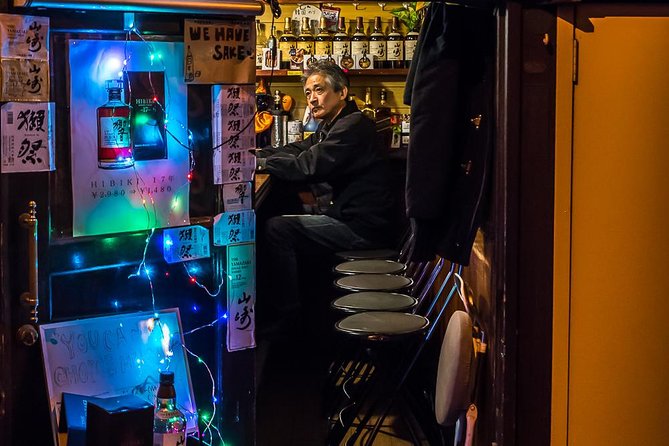
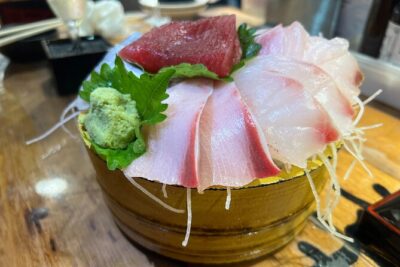
The route can include a sushi stop or another local food venue near the main Shinjuku entertainment streets. The purpose is not only to fill the table. Your guide may explain how to handle sushi, how to use condiments, and what to do at the restaurant table.
That small lesson can be worth a great deal for first-time visitors. Japanese dining customs are usually simple once someone explains them, but a few clear pointers can save you from hesitation. Ray, for example, has been praised for explaining food culture and table manners in a friendly way rather than turning the meal into a formal class.
Food quality is the most uneven part of the experience. Several meals have been described as delicious, and some participants have appreciated trying items they would never have ordered alone. Others have found the food merely average or felt that the cafes and restaurants did not match the tour price.
That criticism is fair. Tokyo has excellent inexpensive food, and many small restaurants do not need tour groups to bring them business. A guided group also has to use venues that can accept several people at one time. You should book this for the combined experience, not as a guarantee of the city’s best individual meal.
The guide adds value by making unfamiliar dishes approachable. If you already know Tokyo’s food scene and are comfortable ordering in Japanese, you may find the food portion less compelling. If you are new to Japan, the explanation and company can make each dish more rewarding.
A completely different kind of day out in Tokyo:
- Mt Fuji and Hakone 1-Day Bus Tour Return by Bullet Train
★ 5.0 · 26,383 reviews - 1-Day Tokyo Bus Tour
★ 5.0 · 14,250 reviews - Tokyo: TOKYO SKYTREE® Admission ticket
★ 4.5 · 11,192 reviews - Tokyo: teamLab Planets TOKYO Digital Art Museum Entry Ticket
★ 4.6 · 9,779 reviews
Ramen with a local shortcut
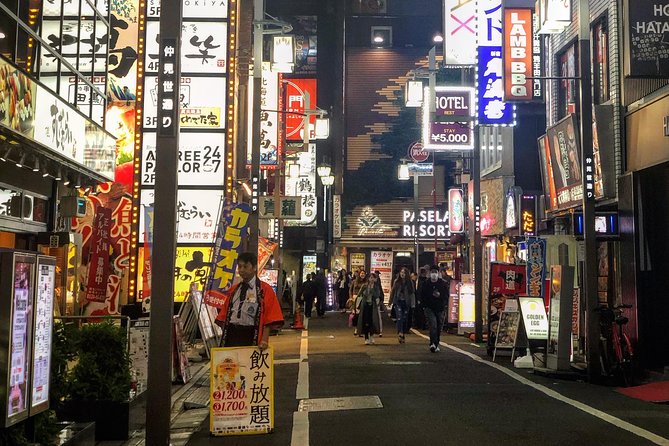
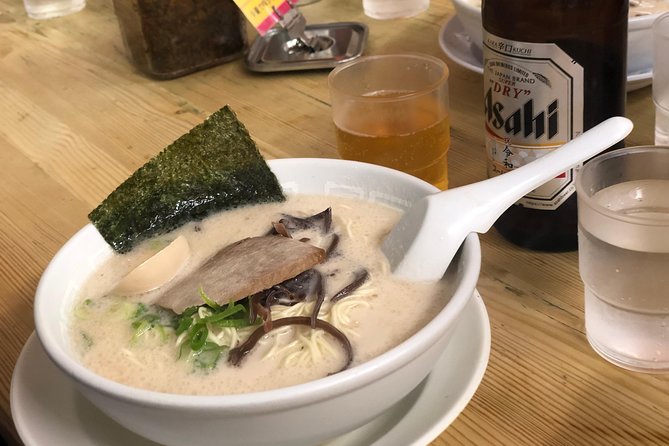
Ramen is another major stop, giving the evening a filling, familiar finish to the food portion. You can expect a bowl with the savory broth and noodles associated with Tokyo, though the exact shop and preparation may depend on the route.
A particularly useful tip from one guide was to use the top-left button on the ramen shop’s vending machine when ordering. That kind of small instruction is exactly why a local escort helps. Japanese ramen shops often use ticket machines, and the ordering process can feel rushed when you are standing at the entrance with a line behind you.
The ramen stop also gives you a chance to eat alongside local customers rather than in a restaurant designed only for international visitors. Keep in mind that the tour moves between several venues, so you may not linger over every meal. The goal is variety and orientation, not a long, leisurely dinner at one address.
By this point, you may already have eaten more than expected. Reports of generous portions are common, so pace yourself. The included drinks and final bar visit add to the evening without requiring you to order a full meal at each stop.
Entering Golden Gai after the meal
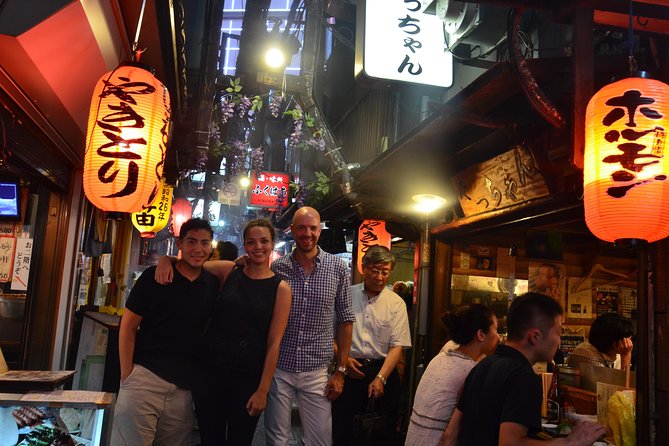
Golden Gai is the emotional high point for many people. Its maze contains more than 200 tiny pubs, bars, quirky stalls, and karaoke rooms, many of them just large enough for a few customers.
The area feels like a different Tokyo from the broad roads and huge station complex nearby. Instead of grand interiors, you get narrow stairways, old-fashioned decoration, small counters, and bar owners working in spaces with very limited seating. Some bars have a distinct regular crowd or their own entry customs, which can make a first visit feel uncertain.
This is where the guide’s presence is especially useful. You are not left to guess which door to open or how to behave in a room meant for a small number of people. The group visits a Golden Gai bar, and the second included drink is served here.
Some evenings have ended in a karaoke bar, adding a playful note to the final stop. You should not assume karaoke is guaranteed, since the precise route and venue can change, but Golden Gai itself is a central part of the experience.
I like this ending because it gives you time to absorb Shinjuku rather than simply checking off restaurants. You have seen the district’s older lanes, eaten several Japanese foods, and then finished with a drink in one of Tokyo’s most unusual nightlife quarters.
What the $170 price really covers
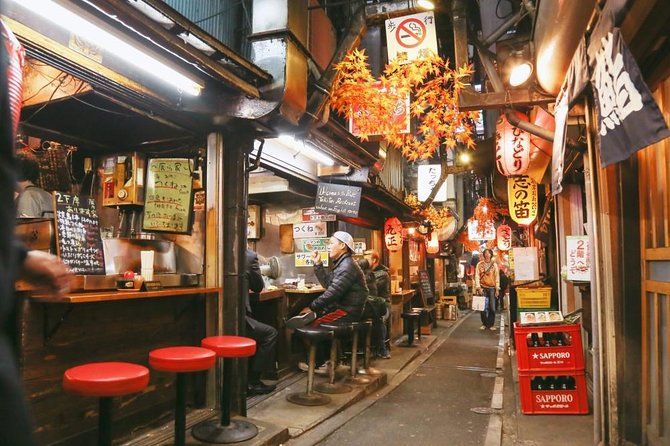
The cost is $170 per person for three hours. That is a serious price in Tokyo, especially because yakitori, ramen, and many local dishes can be inexpensive when purchased independently.
The included value comes from more than the food. You receive two drinks, several food stops, a Golden Gai bar visit, a local English-speaking guide, and a small group capped at eight people. You are also paying for restaurant coordination and a route that can be difficult to assemble without local help.
For a first visit to Tokyo, that package can make sense. You get a compact introduction to Shinjuku, practical dining advice, historical background, and nightlife without having to research which alleys are worth your time. The experience also reduces the risk of walking into a tiny bar without understanding its atmosphere or rules.
For a repeat visitor or serious food enthusiast, the calculation changes. You may prefer to spend $170 on several independent meals and drinks, especially if you already know how to use ramen ticket machines, read menus, and find Golden Gai on your own.
The strongest value lies in access and confidence. If the thought of navigating small Japanese restaurants makes you uneasy, the guide can save time and remove much of the guesswork. If you see the tour mainly as a way to buy food, it may feel overpriced.
Who should book this Shinjuku evening?
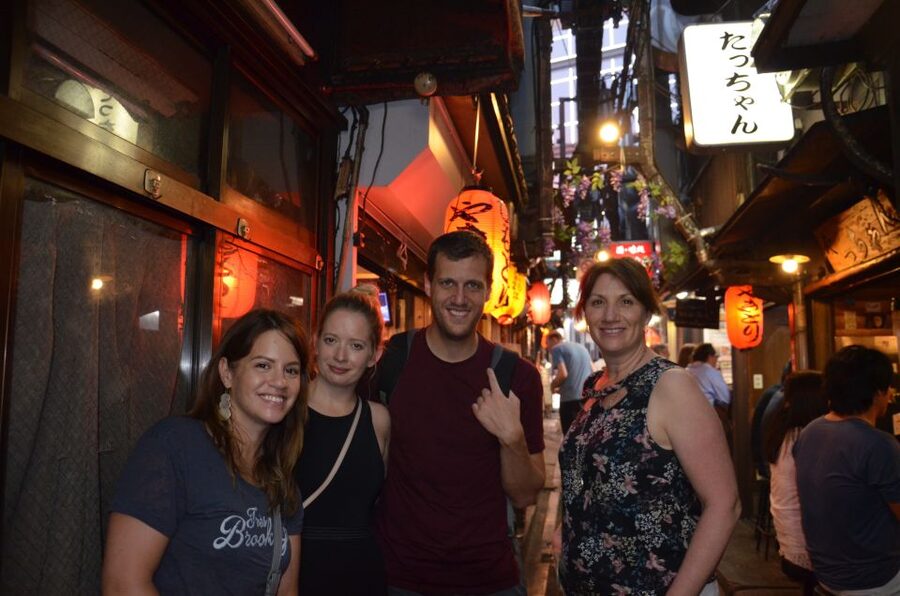
This tour suits first-time visitors who want a friendly introduction to Tokyo nightlife without spending days researching restaurants. Solo visitors and couples may especially appreciate the small group, since eating in tiny venues can be more social with an organized party.
It also works well for people who like history with their meals. The post-war black-market story, the development of Shinjuku, and the local customs explained at the table give the outing more depth than a simple crawl from one restaurant to the next.
You should be comfortable walking through busy nightlife streets and spending time in small, dimly lit bars. The activity is focused on alcohol, and every participant must be at least 20 years old. People under 20 cannot join.
This may not be ideal for anyone with strict dietary needs, since the supplied details do not promise a particular menu or accommodation for restrictions. It is also a poor choice if you need a slow meal, dislike group dining, or want only top-tier food.
The tour has a strong record of well-received guides. Alex, Ray, Wes, Yappy, and Daniele have each been praised for warmth, local tips, and good group energy. Still, the guide is the part you can count on most. The exact restaurants and food quality can vary.
Booking details that matter
You can cancel up to 24 hours before the tour for a full refund, and you can reserve now while paying later. Starting times vary, so check availability for your date.
Hotel pickup is not included, though it can be arranged for an additional charge. Transportation costs, gratuity, and any extra food or drinks are also separate.
Meet at KISSATEN Tajimaya Coffee House, not simply at Shinjuku Station. Arrive early, use West Gate exit B15, and treat the five-minute grace period as a hard deadline.
Should you book the Golden Gai Food Tour?
Book it if you want an easy, social first night in Shinjuku, with plenty of food, two drinks, local guidance, and a safe way to enter Golden Gai. The small group and strong guide-led format are the clearest reasons to choose it.
Think twice if your priority is maximum food value. At $170, the meals alone are unlikely to match what you could buy independently, and food quality may be uneven. For most first-time visitors, though, the history, ordering help, navigation, and access to tiny nightlife venues make this a worthwhile introduction to Tokyo after dark.
FAQ
Where does the Shinjuku Golden Gai Food Tour meet?
Meet in front of KISSATEN Tajimaya Coffee House at 1 Chome-2-6 Nishishinjuku, Shinjuku City, Tokyo 160-0023.
How do I reach the meeting point from Shinjuku Station?
Follow the signs for the West Gate, then exit the station through B15.
How long does the tour last?
The experience lasts three hours.
What language is the tour conducted in?
The live tour guide speaks English.
How many people can join the group?
The tour is limited to eight participants.
What food is included?
You receive a variety of dishes at multiple food stops. The route can include yakitori, sushi, local dishes, and ramen.
How many drinks are included?
Two drinks are included. Additional drinks and food can be purchased at your own expense.
Can people under 20 join?
No. Every participant must be at least 20 years old because the tour focuses heavily on nightlife and alcohol.
What happens if I arrive late?
The tour can wait only five additional minutes after the scheduled start. After that, it departs, and the operator cannot provide directions or contact the guide by phone once the tour has begun.
Just added around Tokyo
- Tokyo 6hr Instagram Highlights Private Tour with Licensed Guide★ 5.0 · 38 reviews
- Tokyo Small Group Tour with Guide★ 4.5 · 38 reviews
- Tokyo Sumo Experience with Live Show & Audience Challenge★ 5.0 · 38 reviews
- Japanese Food Cooking Class in Asakusa, Tokyo★ 5.0 · 39 reviews
- Very popular in Harajuku♡Animal petting zoo★ 4.6 · 39 reviews
- Ramen Making from Scratch with Tokyo Mom(Vegan Option Available)★ 5.0 · 39 reviews
- Tokyo JDM Night: 600hp C63s AMG Edition 1 (Private)★ 4.9 · 39 reviews
- Tokyo: Kimono Rental inside Shinjuku Gyoen National Garden★ 4.9 · 39 reviews
Food & Drink, compared.
Shinjuku Food Tour (13 Dishes at 4 Local Eateries)
Read our review →
Tokyo Tsukiji Fish Market Food and Culture Walking Tour
Read our review →
Shinsekai Food Tour with 13-15 Dishes at 5 Eateries
Read our review →
Osaka Food Tour: 13 Dishes at 5 Local Eateries
Read our review →
Shinjuku Food Tour (15 Dishes and 4 Eateries)
Read our review →
Best of Shinjuku: Izakaya Food Tour (4 Stops, 14+ Tastings)
Read our review →
Kyoto Night Foodie Tour in Gion (9+ dishes + 6 Sake tastings)
Read our review →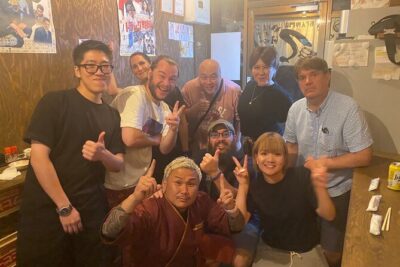
Hungry Osaka Street Food Tour:15 Tastings & 3 Drinks with a Local
Read our review →Browse the lists this tour appears in