
Reviewed · FOOD & DRINK
Tokyo: Food Tour in Ueno with 10+ Tastings of Japanese Classics
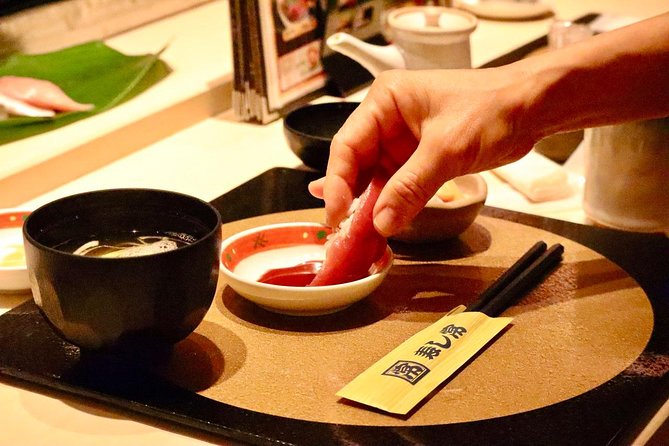
Come hungry, leave happily full. This 3.5-hour Ueno food tour brings together 10 or more Japanese tastings, from sushi and gyoza to yakitori, seasonal fruit, matcha ice cream, and a secret dish. I like the mix of food and neighborhood history, and I like that your English-speaking guide helps you order and understand dishes that can be hard to navigate on your own.
The price is $142 per person, so this is not a cheap way to eat in Tokyo. You could spend far less at casual restaurants. The value comes from the guiding, the range of tastings, the cultural context, and access to small food stops you might otherwise pass by. The main caution is that you need a good appetite, comfortable shoes, and an open mind about a menu that can change.
In This Review
- Key Things to Know Before You Book
- Why Ueno Is a Smart Place for a Food Tour
- Starting at Ueno Station and the Market Streets
- Eating Beneath the Elevated Train Tracks
- The Main Food Lineup: Sushi, Gyoza, Yakitori, and More
- Ueno Park: A Green Pause Between Bites
- A Shinto Shrine from 1627
- Buddhist Worship in Quiet Surroundings
- The Guides Make the Difference
- Is $142 a Fair Price?
- Who Should Book This Experience?
- Booking, Weather, and Practical Details
- Should You Book the Ueno Food Tour?
- FAQ
- How long does the Ueno food tour last?
- Where does the tour start and finish?
- What food and drinks are included?
- Is hotel pickup included?
- How many people can join the tour?
- Can I cancel for a full refund?
Key Things to Know Before You Book
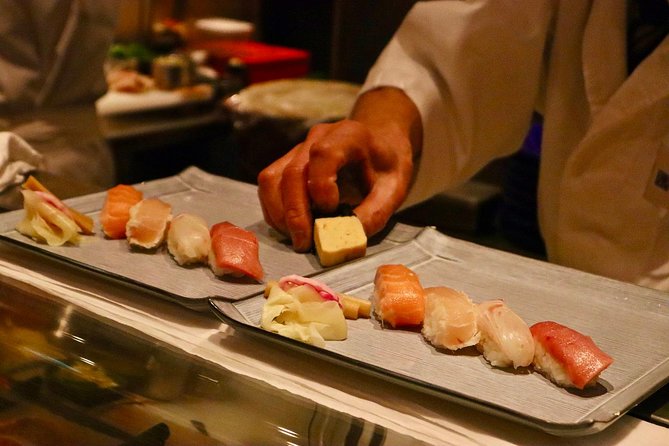
- Ten or more tastings fill the afternoon: Expect sushi, gyoza, yakitori, fruit, matcha ice cream, tea, beer, and other Japanese classics, with the exact selection subject to change.
- Ueno supplies more than food: The route brings together a market, railway arches, Ueno Park, a Shinto shrine, and a Buddhist place of worship.
- The guides receive strong praise: Harumi, Natsumi, Yumi, and Mari are singled out for warmth, food advice, and explanations of the area.
- The format may be private or shared: The description presents a private tour, while the stated maximum is 15 people and some feedback describes a small group. Confirm the arrangement before booking if privacy matters.
- You finish where you start: Meet at Ueno Station, 7 Chome-1 Ueno, and return there at the end.
- Plan around the meal: Skipping breakfast is sensible. Several people found the food plentiful, and one account was already full by the third stop.
Why Ueno Is a Smart Place for a Food Tour
Ueno is useful for a first food tour because it gives you several sides of Tokyo in one compact district. You begin around a popular indoor-outdoor market, move through the area beneath the elevated train tracks, and then reach green parkland and important religious sites.
That variety matters. You are not simply moving from one restaurant to another. Between bites, you get a feel for how commerce, rail travel, religion, and public life meet in old Tokyo.
The tour is also a practical introduction to Japanese food customs. A guide can explain what you are eating, point out ingredients, and help you cross the language gap at smaller shops. The value is not only in the food itself. It is in knowing what to try next when you return to a Japanese restaurant without a guide.
The route lasts about three and a half hours and involves a fair amount of walking. You should wear comfortable shoes and leave room in your schedule. This is not a quick tasting near the station followed by an easy exit.
More Food Tours in Tokyo
- Tokyo: Shinjuku Food Tour (13 Dishes at 4 Local Eateries)
★ 5.0 · 6,603 reviews - Tokyo Tsukiji Fish Market Food and Culture Walking Tour
★ 5.0 · 3,184 reviews - Tokyo: Shinjuku Food Tour (15 Dishes and 4 Eateries)
★ 4.9 · 2,033 reviews
Starting at Ueno Station and the Market Streets
The meeting point is Ueno Station, at 7 Chome-1 Ueno in Taito City. Starting here makes sense because Ueno is well connected to the rest of Tokyo, and the station places you close to the district’s food streets.
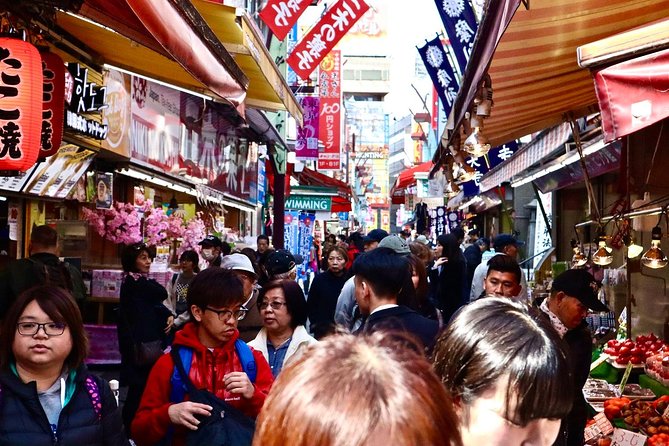
The first major stop is a popular market with indoor and outdoor sections. Its shops sell food, gifts, clothing, and other everyday goods. That mix gives the market a more useful local feel than a market built only for sightseeing.
Your guide helps turn the visual overload into a manageable meal. Instead of trying to guess which stall sells something worth ordering, you can ask about unfamiliar items and follow a route designed around multiple tastes.
This is where the tour’s language support earns its keep. Japanese food shops can be easy to enter but harder to understand. You may recognize sushi or grilled chicken, yet miss the less obvious specialties, preparation methods, or seasonal items. A guide can make those choices less intimidating.
The market can also be busy and crowded. That is part of its appeal, but it means you should stay close to the group and expect a quick-moving stop rather than a quiet sit-down meal.
Eating Beneath the Elevated Train Tracks
The next part takes you to an area beneath the elevated railway. The Japanese term refers to the space under the girders, and these railway arches are used for shops and restaurants.
This is a good setting for casual food. The area feels tied to the city’s transport network and working rhythm, rather than separated into a polished dining zone. You get a sense of how Tokyo makes practical use of every bit of urban space.
The food here may include some of the tour’s most approachable tastings. Gyoza, for example, is familiar enough for first-time visitors but still offers plenty to discuss, from its crisp underside to the filling and dipping sauce. Yakitori gives you another classic, with chicken grilled on skewers and served in a simple, direct style.
The exact dishes are not fixed. Availability, weather, and other conditions can change the route and menu. That is worth accepting before you book. You are paying for a guided food experience in a real neighborhood, not a guaranteed list of restaurant courses.
The Main Food Lineup: Sushi, Gyoza, Yakitori, and More
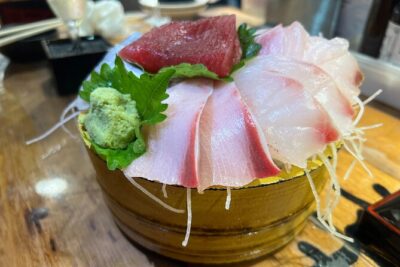
The advertised tasting list covers many of Japan’s best-known comfort foods. Fresh sushi provides the raw seafood element, while crispy gyoza offers something hot and savory. Yakitori brings grilled chicken and the smoky flavor of a busy food stop.
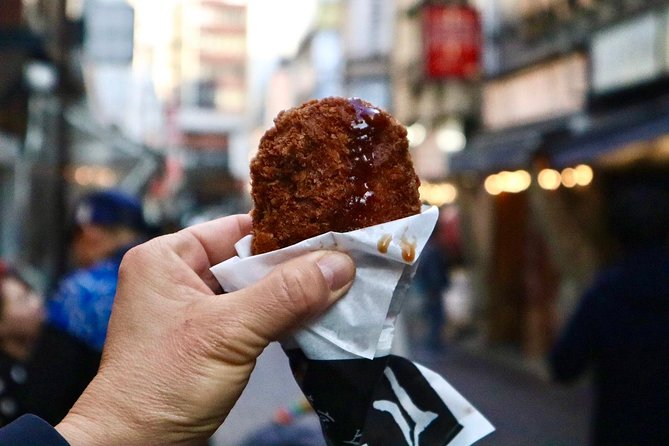
Specific accounts of the route also include croquette and sukiyaki. One detailed experience described seven stops, with sushi, gyoza, croquette, yakitori, and a surprise sukiyaki stop. These details help you understand the likely scale of the meal, though they should not be treated as a fixed promise.
The secret dish is another part of the format. It adds a small surprise and may be the item you would not have ordered alone. Still, if you have strict dietary needs, contact the operator before the tour. The menu can be adjusted as well as possible, but you should not wait until the meeting point to explain an allergy or restriction.
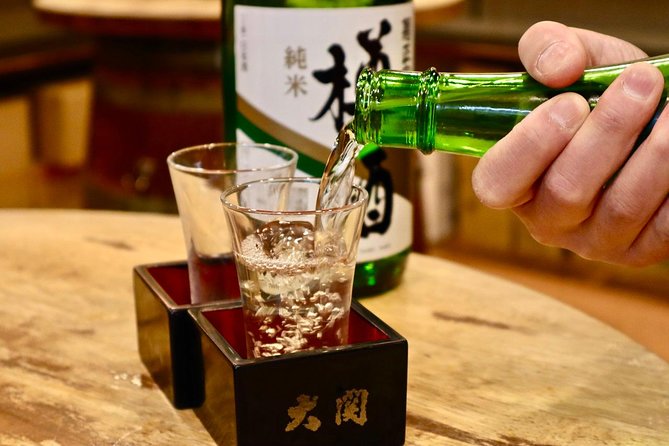
Two types of tea are included, along with water and one draft beer. The drinks help break up the food and give your guide a chance to explain Japanese tea habits or the role of beer with casual dishes. Matcha ice cream and seasonal fresh fruit provide a sweet finish, with matcha ice cream receiving especially strong praise.
You are likely to eat more than you expect. The best practical tip is to skip breakfast or have only something light. Arriving after a large meal would make it harder to enjoy the later stops.
A completely different kind of day out in Tokyo:
- Mt Fuji and Hakone 1-Day Bus Tour Return by Bullet Train
★ 5.0 · 26,383 reviews - 1-Day Tokyo Bus Tour
★ 5.0 · 14,250 reviews - Tokyo: TOKYO SKYTREE® Admission ticket
★ 4.5 · 11,192 reviews - Tokyo: teamLab Planets TOKYO Digital Art Museum Entry Ticket
★ 4.6 · 9,779 reviews
Ueno Park: A Green Pause Between Bites
Ueno Park gives the walking route a change of pace. It is a spacious public park in Taito’s Ueno district and is especially famous in spring, when cherry blossoms bring people out for hanami, or flower viewing.
The park is not only a scenic break. It helps explain why Ueno feels different from many of Tokyo’s dense commercial zones. After the market and railway area, the open space lets you see the district as a place for leisure and public gathering.
Your guide may use the park to explain how the area fits into Tokyo’s wider story. The tour description promises cultural information along with the food, and several accounts praise guides for explaining Ueno and Tokyo rather than simply handing out snacks.
The drawback is timing. If you visit during cherry blossom season, the park may be particularly crowded. The tour still offers a useful stop, but you should not expect solitude or an unhurried stroll during one of Tokyo’s busiest seasonal periods.
A Shinto Shrine from 1627
The route includes a Shinto shrine built and dedicated in 1627 in memory of Tokugawa Ieyasu, founder of the Tokugawa Shogunate. This gives the food walk a clear historical layer, especially if you are new to Japan’s religious traditions.
A guide can help you understand the difference between a Shinto shrine and a Buddhist temple, as well as the respectful behavior expected at each. That context is more useful than simply taking a few photographs and moving on.
The shrine also shows how close food, history, and daily city life can be in Ueno. You are not being sent across Tokyo for a separate sightseeing stop. The cultural sites are woven into the same neighborhood route.
As with the rest of the tour, the amount of time spent here may depend on the day and the pace of the group. If your main goal is detailed shrine history, a dedicated temple and shrine tour would be a better fit. Here, the shrine supports the food experience rather than replacing it.
Buddhist Worship in Quiet Surroundings
A second religious stop brings you to a storied Buddhist place of worship with tranquil landscaping. The contrast with the market and railway arches is one of the route’s strengths.
You can pause, take in the setting, and see a more reflective side of Ueno. The stop also helps you place Japanese food within a broader cultural setting. Meals in Japan are not separate from tradition, season, and ceremony, even when the dish itself is an everyday favorite.
Do not expect a long religious lecture or a formal service. The available information describes a cultural food tour, not a specialist Buddhist visit. The guide’s role is to give you enough background to appreciate the place while keeping the focus on the neighborhood and its food.
The Guides Make the Difference
A food tour can be only as good as the person leading it. Here, the strongest feedback focuses on the guides’ friendliness, clear explanations, and willingness to offer suggestions beyond the scheduled meal.
Harumi is praised as informative and fun. Natsumi is described as upbeat and generous with tips about places to visit and restaurants to try. Yumi receives repeated praise for guiding people to small restaurants they would not have found alone and for explaining both food and local history. Mari is also credited with combining food knowledge and an understanding of the area.
That range is encouraging, but you should remember that your guide will depend on the date. The experience is built around a passionate English-speaking local guide, not one named individual guaranteed for every departure.
The guide also helps set the mood in a group. A small group can make it easier to ask questions and talk during the walk. One family with children aged eight, nine, and ten found the tour easy to follow and enjoyable for the whole family. The maximum group size is 15, so the experience may feel intimate or moderately social depending on the booking.
Is $142 a Fair Price?
At $142 per person, the tour asks you to pay a premium for convenience and interpretation. The food alone would not justify the price for a budget-minded eater. Tokyo offers many inexpensive meals, and you could certainly eat for less if you chose restaurants yourself.
The case for the price is the combination. You receive at least 10 tastings, a draft beer, two kinds of tea, water, dessert, a local English-speaking guide, and a walking route through several sides of Ueno. You also avoid spending time deciding where to eat or worrying about how to order.
I see the tour as most valuable at the start of a Japan trip. It can give you a working list of dishes, eating places, and neighborhoods to revisit. It also helps you recognize foods that may look unfamiliar later.
If you already know Tokyo well, speak Japanese, and enjoy researching restaurants on your own, the value is weaker. The tour’s own response to one very negative assessment points to its role as an introduction to Ueno’s food scene. That is a fair way to judge it. It is not designed to provide three days’ worth of the finest food in Tokyo for the cost of one outing.
Who Should Book This Experience?
I would recommend it to first-time visitors who want an easy introduction to Japanese food without spending days learning how each restaurant works. It is also a good choice if you have limited time and want food, history, and neighborhood orientation in one morning or afternoon.
Families can consider it too, especially if children are willing to try several small portions. The food is plentiful, and the walking route provides enough variety to keep the experience moving.
It suits curious eaters who want more than sushi. You may taste gyoza, yakitori, croquette, sukiyaki, fruit, tea, beer, and matcha ice cream in one outing. That range makes it easier to discover what you actually like.
I would hesitate if you have very strict dietary requirements unless you contact the operator well in advance. I would also think twice if walking for three and a half hours is difficult, or if you prefer a quiet, formal meal rather than several stops.
The tour is described as private, but the maximum group size is 15 and some feedback refers to joining other people. If a private guide is essential to your plans, confirm that point before paying.
Booking, Weather, and Practical Details
Confirmation is sent within 48 hours of booking, subject to availability. The tour requires a minimum number of people, and poor weather can lead to a different date or a full refund.
You can cancel for a full refund up to 24 hours before the start time. Cancellations or changes made within 24 hours are not refunded or accepted, so keep your plans firm once you reach that deadline.
Hotel pickup and drop-off are not included. You meet at Ueno Station and return there, which is convenient if you are continuing around Tokyo afterward.
Wear comfortable shoes and bring an appetite. The tour is near public transportation, and most people can take part, but the walking should not be overlooked.
Should You Book the Ueno Food Tour?
Book it if you want a guided introduction to Japanese classics, local food streets, and Ueno’s religious and public spaces in a single outing. The guide support, wide tasting list, and strong praise for Harumi, Natsumi, Yumi, and Mari make it a promising first-day or early-trip activity.
Skip it if your main goal is the cheapest possible food in Tokyo. You can eat for less on your own, and experienced Japan visitors may prefer to choose their own restaurants.
For the right person, $142 buys more than a meal. It buys a map of what to eat next, help with the language barrier, and three and a half hours of guided orientation in one of Tokyo’s most useful food districts.
FAQ
How long does the Ueno food tour last?
The tour lasts approximately 3 hours and 30 minutes.
Where does the tour start and finish?
It starts at Ueno Station, 7 Chome-1 Ueno, Taito City, Tokyo 110-0005, Japan. The experience ends back at the meeting point.
What food and drinks are included?
Included items include fresh Japanese sushi, gyoza, yakitori, seasonal fruit, matcha ice cream, two types of tea, water, one draft beer, and a secret dish. The menu may change according to availability, weather, and other conditions.
Is hotel pickup included?
No. Hotel pickup and drop-off are not included. You are responsible for getting to and from the Ueno Station meeting point.
How many people can join the tour?
The activity has a maximum of 15 participants. The description also presents it as a private food tour, so confirm the exact group arrangement if that matters to you.
Can I cancel for a full refund?
Yes. You can cancel at least 24 hours before the experience begins for a full refund. Cancellations or changes made less than 24 hours before the start time are not accepted and are not refunded.
Just added around Tokyo
- Tokyo 6hr Instagram Highlights Private Tour with Licensed Guide★ 5.0 · 38 reviews
- Tokyo Small Group Tour with Guide★ 4.5 · 38 reviews
- Tokyo Sumo Experience with Live Show & Audience Challenge★ 5.0 · 38 reviews
- Japanese Food Cooking Class in Asakusa, Tokyo★ 5.0 · 39 reviews
- Very popular in Harajuku♡Animal petting zoo★ 4.6 · 39 reviews
- Ramen Making from Scratch with Tokyo Mom(Vegan Option Available)★ 5.0 · 39 reviews
- Tokyo JDM Night: 600hp C63s AMG Edition 1 (Private)★ 4.9 · 39 reviews
- Tokyo: Kimono Rental inside Shinjuku Gyoen National Garden★ 4.9 · 39 reviews
Food & Drink, compared.
Shinjuku Food Tour (13 Dishes at 4 Local Eateries)
Read our review →
Tokyo Tsukiji Fish Market Food and Culture Walking Tour
Read our review →
Shinsekai Food Tour with 13-15 Dishes at 5 Eateries
Read our review →
Osaka Food Tour: 13 Dishes at 5 Local Eateries
Read our review →
Shinjuku Food Tour (15 Dishes and 4 Eateries)
Read our review →
Best of Shinjuku: Izakaya Food Tour (4 Stops, 14+ Tastings)
Read our review →
Kyoto Night Foodie Tour in Gion (9+ dishes + 6 Sake tastings)
Read our review →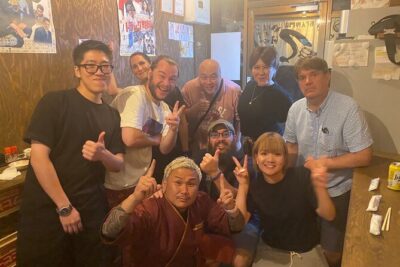
Hungry Osaka Street Food Tour:15 Tastings & 3 Drinks with a Local
Read our review →Browse the lists this tour appears in