
Reviewed · BUS TOURS IN TOKYO
Tokyo: Hop-On Hop-Off Sightseeing Bus Ticket
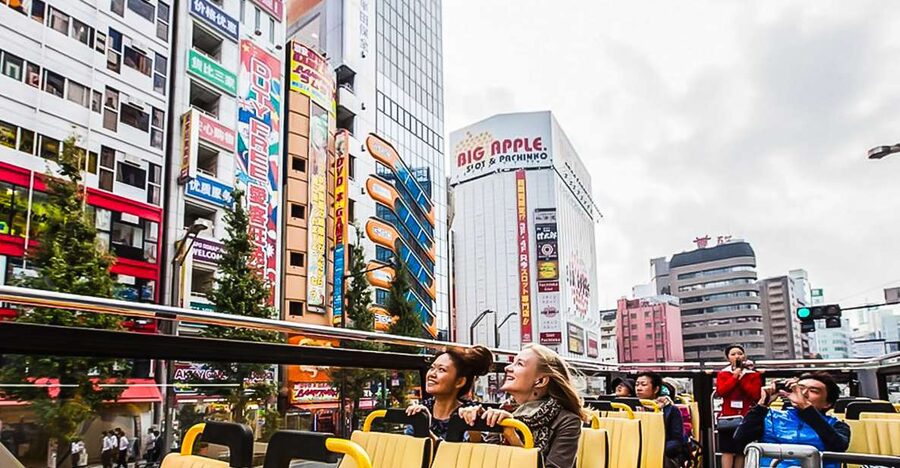
Tokyo is easier from above. This open-top bus gives you a broad first look at the city, linking Tokyo Skytree, Asakusa, Tokyo Tower, Tsukiji, Ginza, Shinjuku, and Shibuya without making you master the train system on day one. I especially like the three-route coverage and the chance to use your own phone for audio in 10 languages. The main catch is that buses can be 30 to 90 minutes apart, so this is not a ride-anytime service.
I also like the open-air views, especially at dusk when Tokyo’s lights begin to glow. Staff are generally friendly and helpful, and buses are often punctual. You should plan carefully, though, since a full loop can take about two hours and missed buses may leave you waiting.
In This Review
- Key points at a glance
- What this Tokyo bus tour is really good at
- Route 1: Skytree, Asakusa, Ueno, and Akihabara
- Route 2: Tokyo Tower, Zojo-ji, Tokyo Teleport, Tsukiji, and Ginza
- Route 3: Shinjuku, Harajuku, Meiji Jingu, and Shibuya
- Open-top views come with real weather limits
- The audio guide is useful, but bring your own setup
- Timing matters more than the phrase hop-on hop-off suggests
- Who gets the best value from $30
- Practical plan for a one-day ride
- Should you book the Tokyo sightseeing bus?
- FAQ
- How long is the Tokyo hop-on hop-off ticket valid?
- Where can I board the bus?
- Which sights are covered by the routes?
- Is the audio guide available in English?
- Do I need to bring earphones?
- What happens if it rains?
Key points at a glance
- Three routes cover different sides of central Tokyo: Skytree and Asakusa, Tokyo Tower and Ginza, plus Shinjuku and Shibuya.
- The open-top second floor gives you wide city views: There is no air-conditioning, so weather matters.
- The ticket works for one or two days: A two-day pass is useful if you want to hop off often and avoid rushing.
- Your own smartphone provides the widest language choice: Audio is available in Japanese, English, Korean, Chinese, French, German, Spanish, Thai, Vietnamese, and Indonesian.
- Bus frequency is the biggest practical weakness: This is not a constant stream of buses, so photograph the timetable before leaving a stop.
- The best use is orientation: Ride first, note the places you want to explore, then return by bus, train, or Metro.
What this Tokyo bus tour is really good at
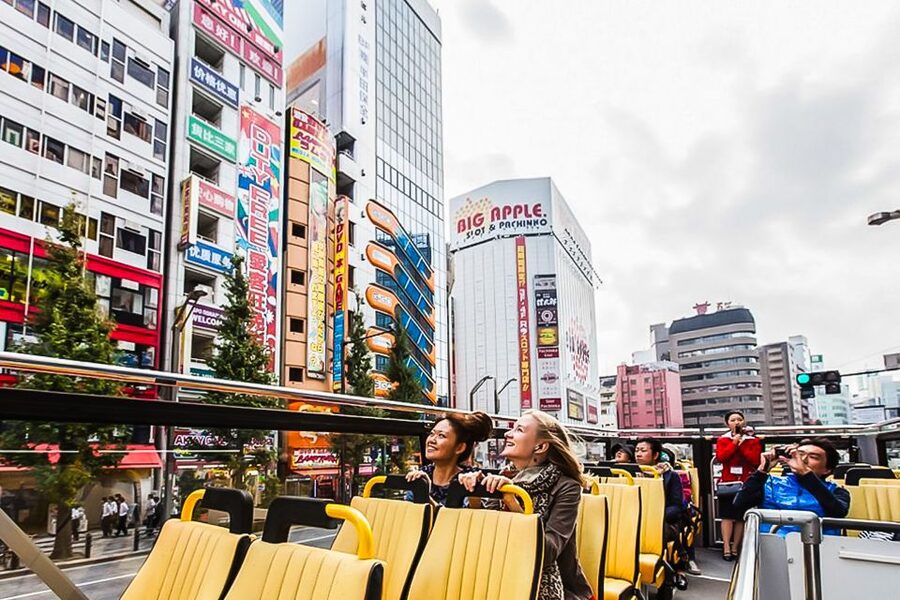
Tokyo is huge, spread out, and divided into districts that each feel like a separate city. The subway and JR trains are excellent, but they take you underground or through stations. From the top of this bus, you can see how the pieces fit together.
For about $30 per person, you get unlimited access to all three routes for one or two days. That price makes sense if you ride several hours, complete more than one route, or use the bus to decide where you want to spend the rest of your visit. It is less attractive as simple transportation. Tokyo’s trains are usually faster and often cheaper for direct trips.
I would use this on my first day, especially if I had only two or three days in Tokyo. A complete ride helps you get your bearings without spending the morning changing trains. You can then choose between old Asakusa, flashy Shibuya, grand Tokyo Tower, or the polished streets around Ginza.
The service is led by English and Japanese-speaking drivers, while the recorded audio supplies the sightseeing commentary. The audio system can use your own phone or tablet, which expands the language choice beyond the older vehicle-mounted system.
More Bus Tours in Tokyo
- Mt Fuji and Hakone 1-Day Bus Tour Return by Bullet Train
★ 5.0 · 26,383 reviews - 1-Day Tokyo Bus Tour
★ 5.0 · 14,250 reviews - Tokyo Mt Fuji 5th St & Hakone Cruise Bus Tour w/Bullet Train
★ 4.4 · 5,024 reviews
Route 1: Skytree, Asakusa, Ueno, and Akihabara
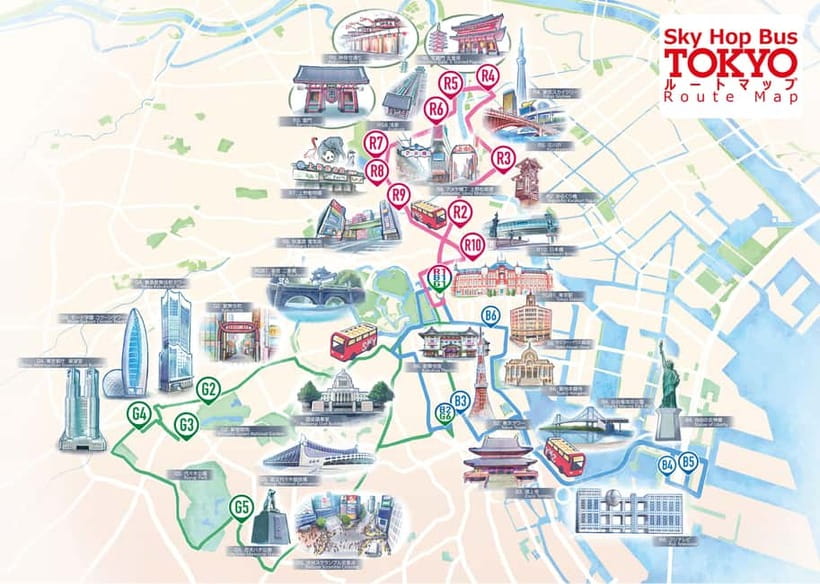
The TOKYO SKYTREE course begins at the Mitsubishi Building in Marunouchi. It then runs through Kodemmacho Station and toward Ryogoku, home of the Edo-Tokyo Museum area, before reaching TOKYO SKYTREE station.
Tokyo Skytree is the visual giant of this route. Even from street level, the tower gives you a useful sense of scale. You can hop off here for the tower and aquarium, then continue toward Asakusa. The route does not replace admission tickets to attractions, but it puts you near two of Tokyo’s most popular stops.
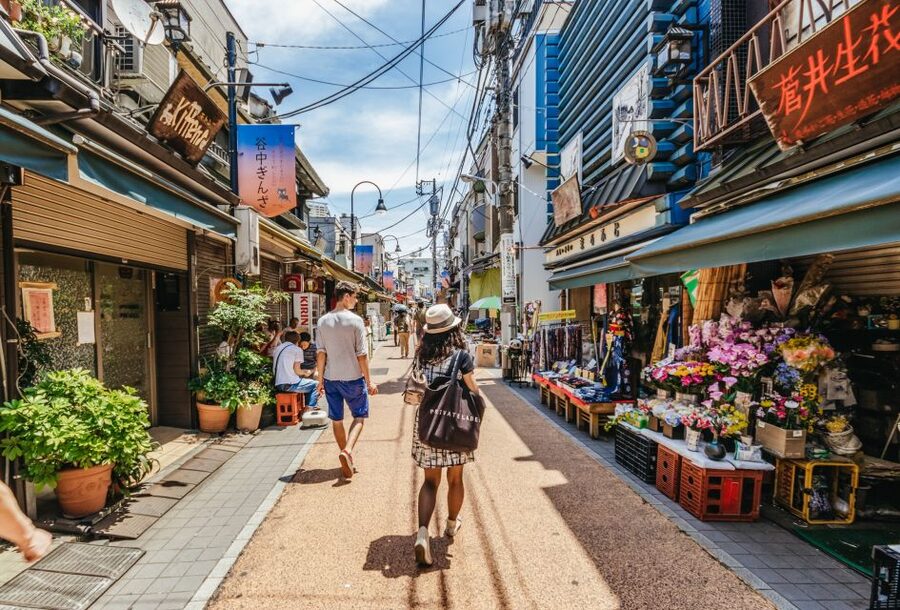
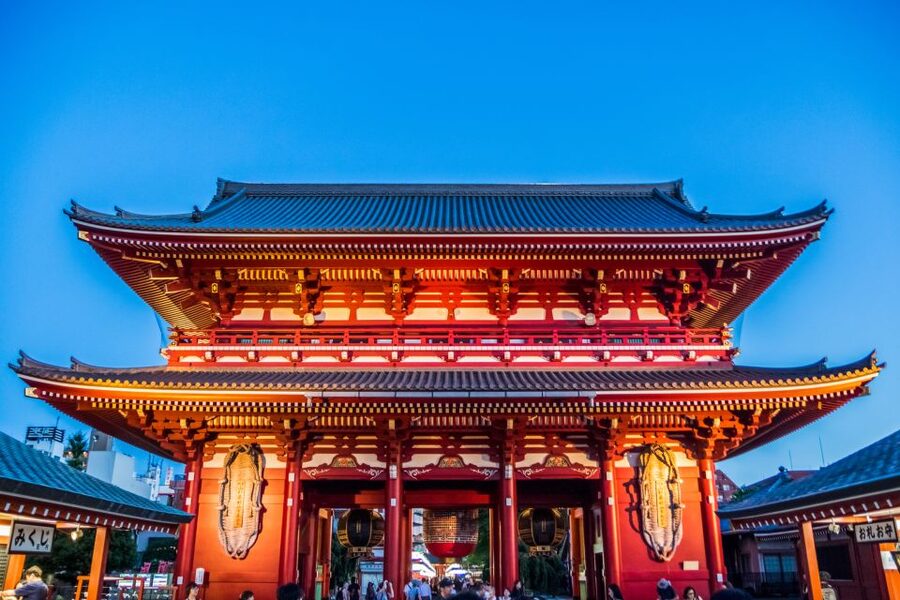
Next comes Asakusa Hanakawado and Asakusa Tawaramachi. This is the route to choose if you want a taste of older Tokyo, with the famous Senso-ji Temple area nearby. Allow plenty of time if you plan to leave the bus. Asakusa rewards walking, but that also means you need to watch the return departure.
The bus continues to Ueno Matsuzakaya and Akihabara at Suehirocho. Ueno gives you access to museums, parks, and shopping, while Akihabara is known for electronics, anime, games, and specialty stores. These stops serve very different interests, which makes this route useful for families and mixed groups.
The loop returns through Shin-Nihombashi Station to the Mitsubishi Building. If you ride the whole course without getting off, expect roughly two hours based on the operating pattern. That is a lot of sitting for a single circuit, but it gives you a strong overview before you choose where to return.
Route 2: Tokyo Tower, Zojo-ji, Tokyo Teleport, Tsukiji, and Ginza
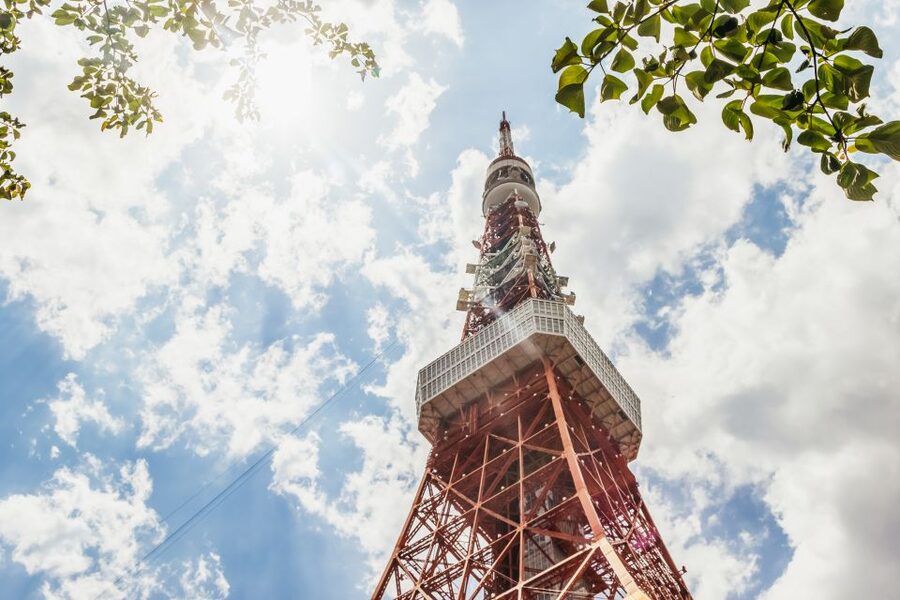
The TOKYO TOWER, Tsukiji, and Ginza course starts in Marunouchi and heads first to Tokyo Tower. The bright orange tower is one of the most recognizable sights in the city, and the open-top bus gives you good chances for photos as you approach it.
The next stop is Tokyo Prince Hotel and Zojo-ji Temple. Zojo-ji is a valuable contrast to the modern tower nearby. You get a classic Tokyo pairing here: a temple grounded in tradition with a tall steel-and-glass city icon rising behind it.
The route then travels toward Tokyo Teleport Station. This puts you in the Odaiba area, a modern waterfront district known for broad roads and futuristic urban views. The ride itself can be part of the appeal, particularly on clear days. One route section uses the expressway, and the speed and height make it a memorable part of the trip. Hold on to your hat on exposed sections, since the wind can be strong.
After Tokyo Teleport, the bus reaches Tsukiji Ginza. Tsukiji remains a strong choice for food and market atmosphere, while Ginza offers department stores, refined shopping streets, restaurants, and striking modern architecture. The route ends back at Marunouchi Mitsubishi Building.
This is also a good route for an evening ride if the operating schedule allows it. Several people have enjoyed seeing the city lights come on at dusk, and the expressway section can be especially striking after dark. Check the final departure carefully, since late service may be limited.
Route 3: Shinjuku, Harajuku, Meiji Jingu, and Shibuya
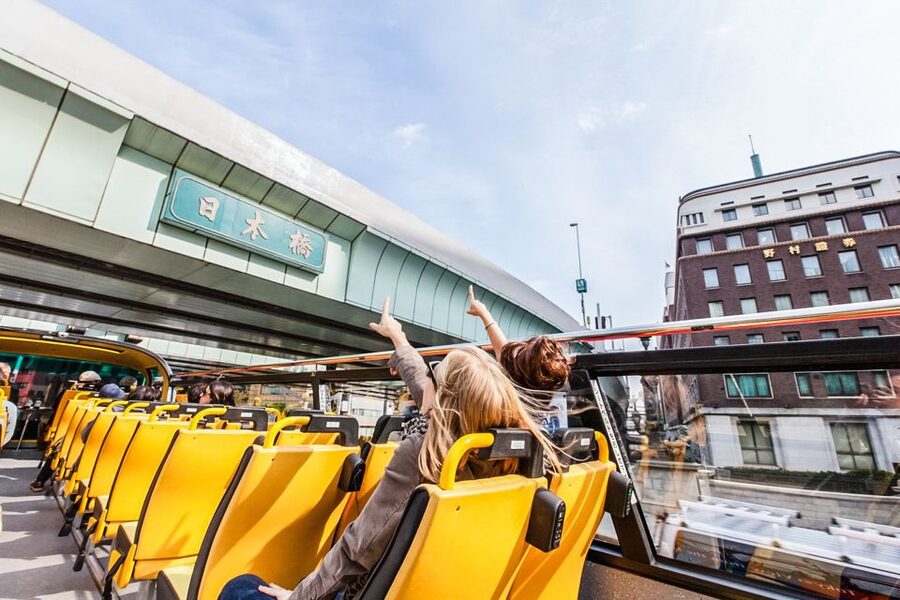
The SHINJUKU SHIBUYA course takes you west from Marunouchi. The first listed stop is Shinjuku-gyoemmae Station, near Shinjuku Gyoen National Garden. The garden is a calm break from the surrounding towers and traffic, though you will need to check the bus schedule before spending time inside.
The bus then reaches Shinjuku Station South Exit and Hotel Century Southern Tower. Shinjuku is one of Tokyo’s major transport and entertainment centers, with department stores, restaurants, tall buildings, and busy streets. The bus lets you see the area without the confusion of navigating the station’s many underground passages.
The next stop is Shinjuku Mitsui Building in Nishi-Shinjuku. Here, the tall office towers create a very different mood from Asakusa’s temple streets. It is a useful reminder that Tokyo is not one single type of city. It shifts from quiet gardens to dense commercial centers within a short distance.
The route continues to Shibuya City Hall, Harajuku, and Meiji Jingu Shrine. This combines youth culture, shopping, fashion, and one of Tokyo’s most important Shinto shrine areas. If you want to walk around Harajuku or visit Meiji Jingu, leave extra time and take a photo of the return timetable.
This route can be harder to complete with many stops in one day because the bus needs to cover a large area. If Shibuya is your priority, use the bus to see the approach, then plan your walking separately. The JR line and Metro are usually better for moving directly between western Tokyo districts.
A completely different kind of day out in Tokyo:
- Tokyo: TOKYO SKYTREE® Admission ticket
★ 4.5 · 11,192 reviews - Tokyo: teamLab Planets TOKYO Digital Art Museum Entry Ticket
★ 4.6 · 9,779 reviews - Mt Fuji & Hakone Cruise, Drum Show Bullet Train 1 Day from Tokyo
★ 4.0 · 7,413 reviews - Tokyo: Sumo Show Experience with Chicken Hot Pot and a Photo
★ 4.8 · 6,678 reviews
Open-top views come with real weather limits
The second floor is the passenger area, while the first floor is used for storage. That means you get the view, but you do not have an indoor backup seat on the standard open-air bus.
There is no air-conditioning. In Tokyo’s summer heat, the ride can be uncomfortable, especially during the hottest part of the day. Staff have warned passengers about the conditions and, in some cases, handed out frozen towels. That is kind service, but it does not change the basic issue: dress for the weather.
Rain is handled with ponchos or raincoats when needed. Umbrellas are not allowed on board, so bring a light waterproof jacket if rain is in the forecast. In severe weather, including typhoons or thunderstorms, the service may stop operating.
Clear spring and autumn days are the easiest time to enjoy the open top. Winter can also offer sharp views if you dress warmly. The best moments are often not at a famous stop, but while crossing a bridge, passing tall buildings, or watching Tokyo turn bright at dusk.
The audio guide is useful, but bring your own setup
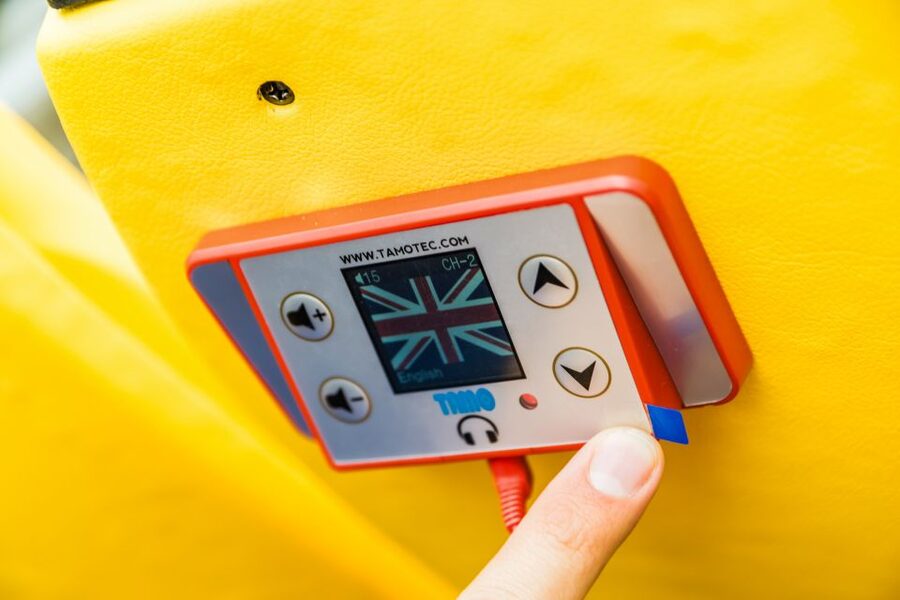
The newer audio system works through your smartphone or tablet. It supports 10 languages: Japanese, English, Korean, Chinese, French, German, Spanish, Thai, Vietnamese, and Indonesian.
You need to bring your own device and earphones. Mobile data charges may apply, and those costs are yours. Charge your phone before boarding, since a dead battery removes both the commentary and your route planning tool.
The older vehicle-mounted audio system may still be available on some buses, but it is not guaranteed. Some audio translations have not worked properly, and recorded commentary has occasionally been cut off mid-sentence. The personal-device system is therefore the safer choice.
The commentary is generally practical rather than theatrical. It covers Tokyo’s attractions, buildings, culture, and history, and it can help you notice what you are passing. I would not treat it as a substitute for a private guide, but it adds useful context while you sit back.
Timing matters more than the phrase hop-on hop-off suggests
This service is flexible, but it is not a bus arriving every few minutes. There may be 30 to 45 minutes between buses, and some gaps can reach 90 minutes. At busy stops, a full bus can mean waiting for the next one.
Your ticket is not a reserved seat. If there is no room, you must wait. Standing is prohibited while the bus is moving, and all passenger seats are upstairs, so you cannot solve the problem by riding below.
Before getting off, photograph the stop timetable. Mark the stop on your map and note the direction of travel. This simple habit can prevent a long wait, especially at Tokyo Tower, Tsukiji, or other stops where you are tempted to wander.
Traffic can also delay the bus. Tokyo roads are not immune to congestion, so avoid planning a tightly timed attraction immediately after a scheduled arrival. If you have a dinner booking or train connection, leave a generous buffer.
The one-day ticket works best for a morning start and a clear plan. A two-day ticket is better if you want to ride all three routes, visit Skytree or Tokyo Tower, and still have time to walk around. One useful strategy is to ride the full routes on the first day, write down your favorite areas, then use the second day for selected stops.
Who gets the best value from $30
I think the ticket earns its price in several situations:
- You have limited time and want a quick overview of central Tokyo.
- You are visiting Tokyo for the first time and want help choosing districts.
- You prefer sitting above ground instead of making repeated train changes.
- You want sightseeing commentary in a language that may not be available from a live guide.
- You plan to ride at least one full route and hop off at major sights.
- You are traveling with someone who finds Tokyo’s rail system tiring or confusing.
The value drops if you already know Tokyo well, need fast point-to-point transport, or plan to visit only one attraction. A train or Metro ride is usually more efficient for moving from Shibuya to Asakusa, for example.
The staff are a strong part of the experience. Service is often punctual and organized, and English-speaking attendants can help with boarding and route questions. The bus crew also makes an effort during bad weather, handing out ponchos and explaining changes.
Practical plan for a one-day ride
Start at the Mitsubishi Building so you can understand the routes and timetable before committing. You can also board directly at any listed stop using the QR code sent with your voucher.
For a first day, I would choose one complete route in the morning, then hop off at the district that interests you most. Use the afternoon for a second route or a selected return to Skytree, Tokyo Tower, Asakusa, or Shibuya.
Do not try to see every attraction properly in one day. The bus is best for seeing the city and making decisions, not for replacing time on the ground. If you do all three routes, you may spend most of the day seated, with little time for temples, markets, gardens, or museums.
A two-day ticket removes much of that pressure. You can take the Skytree and Asakusa route one day, then handle Tokyo Tower, Ginza, Shinjuku, and Shibuya at a calmer pace. If the bus schedule does not suit your plans, use the JR line or Metro for the return trip.
Should you book the Tokyo sightseeing bus?
Book it if you want an easy first look at Tokyo, enjoy open-air views, and can work around a fixed timetable. The strongest reasons are the wide route coverage, helpful staff, useful audio, and memorable city views at dusk.
Choose the two-day option if you dislike rushing or want to hop off several times. Choose one day if you mainly want orientation and plan to use trains afterward.
Skip it if you need rapid transport, are visiting during extreme summer heat, or dislike waiting for scheduled buses. At $30, it is a fair sightseeing price, but only when you ride enough to use the routes. Go early, carry earphones, photograph every timetable, and treat the bus as your Tokyo overview rather than your main transport system.
FAQ
How long is the Tokyo hop-on hop-off ticket valid?
You can choose a ticket for one day or two days. Check availability for the operating start times on your chosen date.
Where can I board the bus?
The main meeting point is in front of the Mitsubishi Building. You can also board directly at any listed bus stop in Tokyo using the QR code sent with your voucher.
Which sights are covered by the routes?
The routes cover Tokyo Skytree, Asakusa, Ueno, Akihabara, Tokyo Tower, Zojo-ji Temple, Tokyo Teleport, Tsukiji, Ginza, Shinjuku, Harajuku, Meiji Jingu Shrine, and Shibuya.
Is the audio guide available in English?
Yes. The audio guide supports English, Japanese, Korean, Chinese, French, German, Spanish, Thai, Vietnamese, and Indonesian through your own smartphone or tablet.
Do I need to bring earphones?
Yes. Bring your own device and earphones for the personal audio system. Data charges may apply and are your responsibility.
What happens if it rains?
Raincoats or ponchos are distributed when needed. Umbrellas are not allowed on board. The service may not operate during severe weather such as typhoons or thunderstorms.
Just added around Tokyo
- Tokyo Small Group Tour with Guide★ 4.5 · 38 reviews
- Tokyo 6hr Instagram Highlights Private Tour with Licensed Guide★ 5.0 · 38 reviews
- Tokyo Sumo Experience with Live Show & Audience Challenge★ 5.0 · 38 reviews
- Very popular in Harajuku♡Animal petting zoo★ 4.6 · 39 reviews
- Japanese Food Cooking Class in Asakusa, Tokyo★ 5.0 · 39 reviews
- Ramen Making from Scratch with Tokyo Mom(Vegan Option Available)★ 5.0 · 39 reviews
- Tokyo: Kimono Rental inside Shinjuku Gyoen National Garden★ 4.9 · 39 reviews
- Tokyo JDM Night: 600hp C63s AMG Edition 1 (Private)★ 4.9 · 39 reviews
Bus Tours in Tokyo, compared.
Mt Fuji and Hakone 1-Day Bus Tour Return by Bullet Train
Read our review →
Tokyo Mt Fuji 5th St & Hakone Cruise Bus Tour w/Bullet Train
Read our review →
Meiji Shrine, Asakusa, Skytree Bus Tour and Cruise
Read our review →
Mt Fuji and Hakone 1-Day Bus Tour Return by Bus
Read our review →
Mt.Fuji & Lake Kawaguchiko 1-Day Bus Tour w/Optional Lunch
Read our review →
Open Top Panoramic Sightseeing Bus with Audio Guide
Read our review →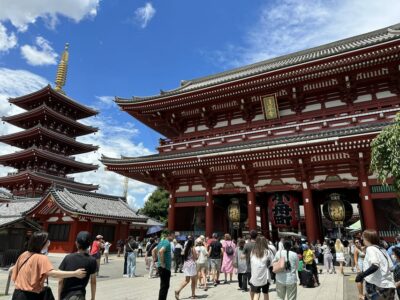
Browse the lists this tour appears in