
Reviewed · BUS TOURS IN TOKYO
Tokyo: Open Top Panoramic Sightseeing Bus with Audio Guide
Tokyo looks different from the top of a bus. This 70-minute open-top ride gives you a quick sweep of Tokyo Bay, Rainbow Bridge, Ginza, Tokyo Tower, and major city districts without the strain of changing trains. I especially like the low price and the GPS audio guide, which feeds information to you as the bus moves through town. The main catch is simple: weather controls the experience, and the roof may close in rain.
For a first day in Tokyo, this is a useful way to get your bearings fast. You can sit back, watch the city roll past, and mark places to revisit later. I would not treat it as a full sightseeing tour, though. Traffic can slow the route, the seats may feel tight, and music between audio segments has been too loud for some passengers.
In This Review
- Five things to know before you board
- Why this short bus ride works well in Tokyo
- Tokyo Station check-in and the short walk to the bus
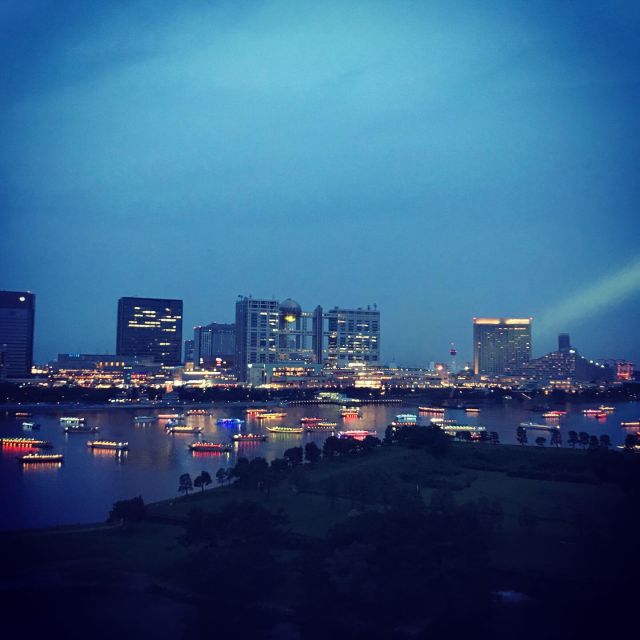
- Bay Course: Rainbow Bridge, Odaiba, and Tokyo waterfront views
- City Course: palace grounds, Roppongi, and the central skyline
- The audio guide is useful, but not perfect
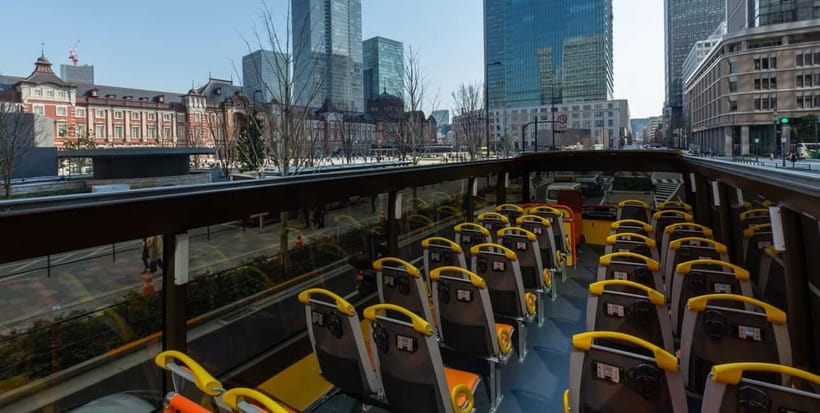
- Open-top seating, weather, and comfort
- How much value do you get for $11?
- Who should book the Bay or City Course?
- FAQ
- How long does the Tokyo open-top bus tour last?
- How much does the experience cost?
- Which routes are available?
- What does the Bay Course include?
- What does the City Course include?
- What languages are available on the audio guide?
- Are headphones provided?
- Where is the meeting point?
- What happens if it rains?
Five things to know before you board
- Two routes cover different sides of Tokyo: Choose the Bay Course for Rainbow Bridge and Odaiba, or the City Course for the Imperial Palace area, Roppongi, Tokyo Midtown, and Ginza.
- The audio follows the bus by GPS: Commentary starts according to your location and adjusts when traffic changes the route.
- The price is unusually low: At $11 per person, you get a broad city overview for less than many short guided activities.
- The meeting point is near Tokyo Station: Tokyo VIP Lounge is about a five-minute walk from the Yaesu North Exit, but you should allow time to find the correct building.
- Bring your own headphones if possible: Headphones cost 100 yen if needed, and the socket accepts only a 3.5 mm mini plug.
- The open roof is not guaranteed: The bus runs in light rain, but the roof may be closed, and extreme weather such as a typhoon can cancel service.
Why this short bus ride works well in Tokyo
Tokyo can feel like several cities stitched together. You have palace grounds, office towers, old temples, shopping streets, waterfront parks, and huge bridges spread across a very large urban area. Seeing that pattern from an open-top bus helps you understand the city before you start tackling it on foot.
The 70-minute length is the sweet spot for a first look. You will not spend an entire afternoon on board, and you can fit the ride around a temple visit, shopping, or a meal near Tokyo Station. The trade-off is that this is a viewing tour, not a stop-and-explore tour. The bus passes the sights, but it does not give you time to get off at Tokyo Tower, Odaiba, Ginza, or the Imperial Palace.
I particularly like the automatic audio system. It uses GPS to identify the bus’s position, so information arrives as you approach the relevant area. That is more useful than a fixed recording that falls out of step when traffic changes the route.
The commentary is available in Japanese, English, Chinese, French, Korean, Vietnamese, and Thai. The instructor and staff speak Japanese, so you should not expect a full live tour in English. The strength here is the recorded multilingual information, with staff assistance mainly focused on check-in and boarding.
More Bus Tours in Tokyo
- Mt Fuji and Hakone 1-Day Bus Tour Return by Bullet Train
★ 5.0 · 26,383 reviews - 1-Day Tokyo Bus Tour
★ 5.0 · 14,250 reviews - Tokyo Mt Fuji 5th St & Hakone Cruise Bus Tour w/Bullet Train
★ 4.4 · 5,024 reviews
Tokyo Station check-in and the short walk to the bus
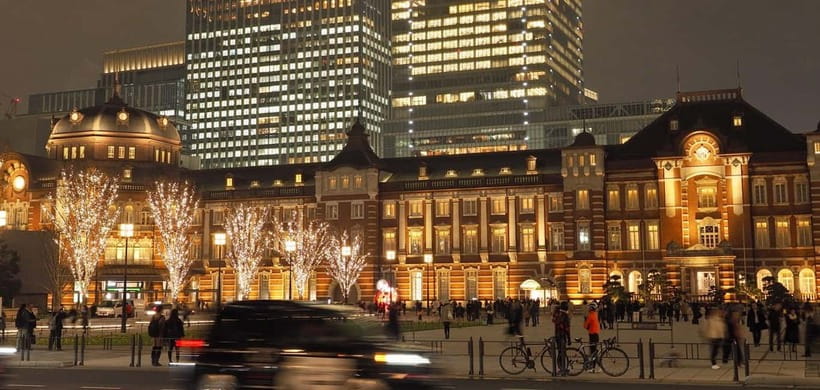
The meeting point is Tokyo VIP Lounge, on the second and third floors of a building with Family Mart on the ground floor. It is around a five-minute walk from Tokyo Station’s Yaesu North Exit, at approximately 35.681763, 139.7713517.
Give yourself extra time. Tokyo Station is large, and a five-minute walk on a map can take longer when you are carrying luggage or trying to identify the right exit. You need to check in 20 to 40 minutes before departure. The bus leaves on time and does not wait for late arrivals, even if you call ahead.
The lounge is a shared facility, not a polished private club. You can use its facilities free of charge starting 40 minutes before departure. Outside that window, a facility fee may apply. Since it is shared with other users, follow the staff instructions and do not assume every seat or table is available for waiting.
This is one place where a little planning pays off. Save the meeting-point map before leaving your hotel, note the Yaesu North Exit, and avoid cutting it close after arriving by train. One visitor found the reception area confusing and another had difficulty communicating with staff who spoke little English. The staff have also been described as kind and helpful, but the check-in atmosphere can vary.
After check-in, staff lead you on a very short walk to the bus. That handoff is helpful, especially when you are new to Tokyo and not sure which vehicle or street corner to use.
Bay Course: Rainbow Bridge, Odaiba, and Tokyo waterfront views
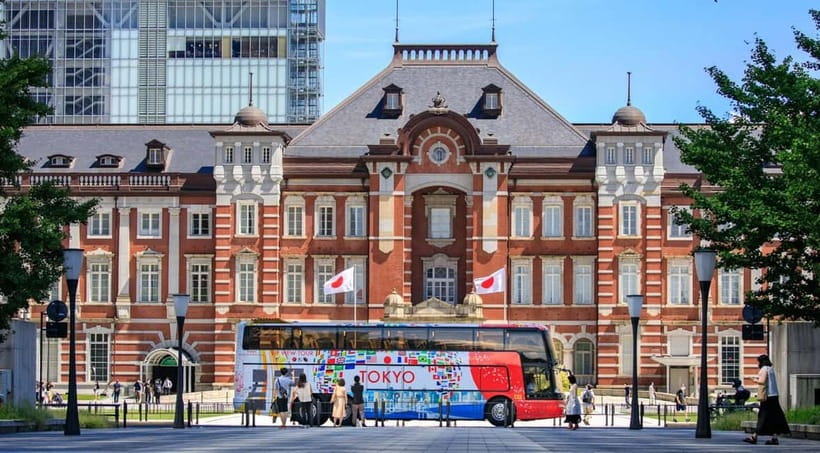
The Bay Course takes about 70 minutes and offers the more dramatic route if bridges and water appeal to you. It begins at the Tokyo Station Red Brick Station Building, then passes through Marunouchi before heading toward Zojoji Temple and Tokyo Tower.
Marunouchi gives you an early look at Tokyo’s business center, with broad streets and major office buildings around the station. Zojoji Temple adds a cultural counterpoint before the route reaches Tokyo Tower. From an open-top seat, you get a clean upward view of the tower and a better sense of how it fits into the surrounding city.
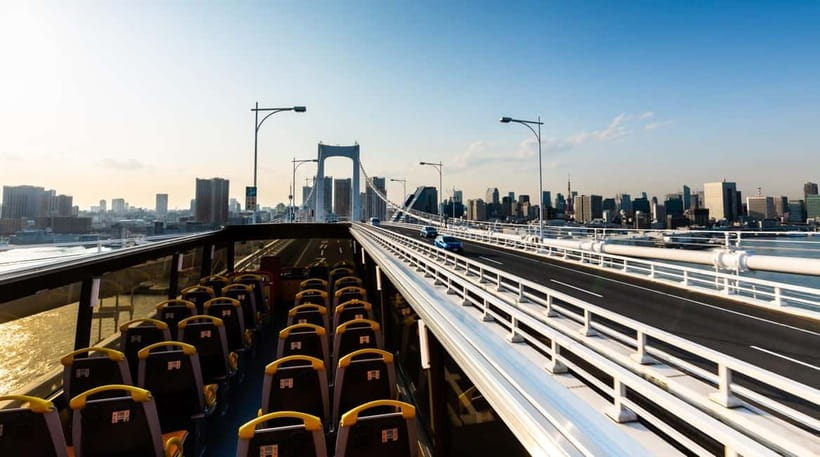
The route then reaches Shibaura and the first level of Rainbow Bridge. The bridge is the big moment on this course. You see Tokyo from above the water, with the bay opening out around you and the city spreading across both sides. The ride across Rainbow Bridge was singled out as a highlight, and I can see why. It gives you a stronger sense of Tokyo’s scale than a normal street-level drive.
On the Odaiba side, the bus passes the Fuji TV Building, the Statue of Liberty, and Odaiba Seaside Park. The Statue of Liberty is a small replica, a playful reminder that Tokyo often mixes imported ideas with its own style. The waterfront park offers a different mood from the dense streets around Tokyo Station and Ginza.
The bus then crosses Rainbow Bridge at its second level before heading through Shiodome and Ginza. Shiodome brings more modern high-rise views, while Ginza is one of Tokyo’s best-known shopping districts. The course ends back near the central city after giving you sea views, bridges, towers, parks, and retail streets in one compact loop.
Choose this route if you want:
- A stronger mix of water and skyscrapers
- The best chance to make Rainbow Bridge the main memory of the ride
- Odaiba sights without arranging a separate trip
- A relaxed first look at Tokyo Bay
The limitation is that Odaiba deserves more time than the bus can provide. If the waterfront catches your interest, treat the ride as a preview and return later on your own.
City Course: palace grounds, Roppongi, and the central skyline
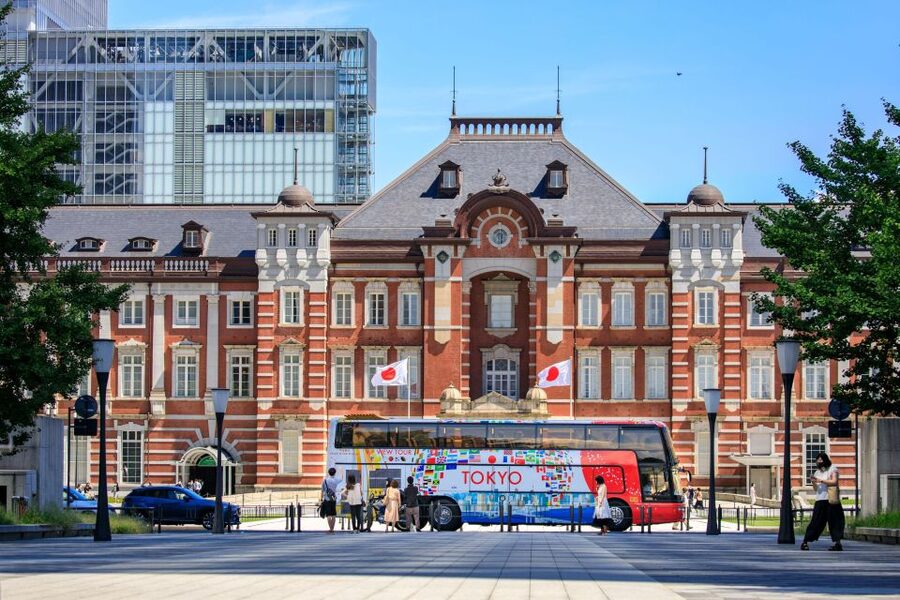
The City Course also lasts 70 minutes, but its focus is central Tokyo and the city’s major districts. From the Tokyo Station Red Brick Station Building, you pass through Marunouchi and the Chidorigafuchi area before reaching the Akasaka State Guest House.
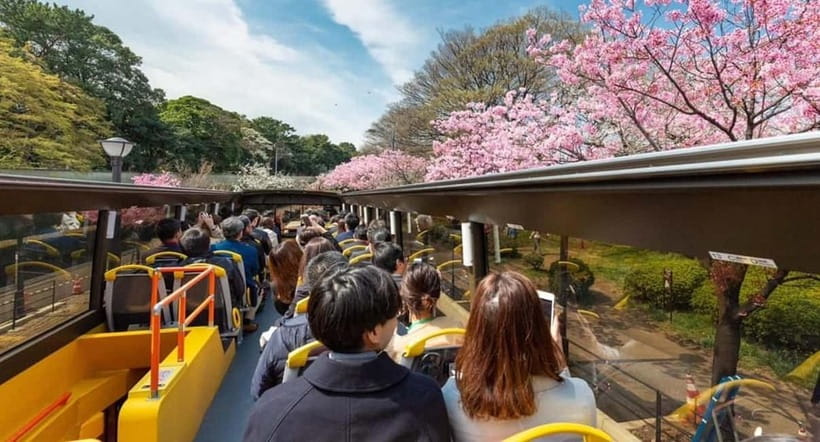
This route shows how quickly Tokyo changes character. Around the Imperial Palace area, you get broad roads and open spaces near the center of the capital. Chidorigafuchi is known for its moat and seasonal scenery, though the exact view will depend on traffic, timing, and the season.
The bus continues to Meiji Jingu Gaien, then Tokyo Midtown and Roppongi. These areas present Tokyo’s polished modern side, with tall buildings, art and shopping complexes, and a concentrated skyline. If you want to see how the city’s business and entertainment districts connect, this course gives you a useful overview.
Tokyo Tower appears again on the City Course, followed by Hibiya and Ginza. Hibiya adds another central district with a more open, formal feel, while Ginza brings the route back into Tokyo’s commercial core.
Choose the City Course if you want:
- Central Tokyo rather than the waterfront
- Views near the Imperial Palace area
- Roppongi and Tokyo Midtown
- A compact introduction to Tokyo’s high-rise districts
- Ginza and Tokyo Tower without a long day of walking
The City Course may be the better choice for a first visit if you plan to spend most of your time around central Tokyo. It is also useful if you already intend to visit Odaiba separately and would rather see districts such as Roppongi and Hibiya from the bus.
A completely different kind of day out in Tokyo:
- Tokyo: TOKYO SKYTREE® Admission ticket
★ 4.5 · 11,192 reviews - Tokyo: teamLab Planets TOKYO Digital Art Museum Entry Ticket
★ 4.6 · 9,779 reviews - Mt Fuji & Hakone Cruise, Drum Show Bullet Train 1 Day from Tokyo
★ 4.0 · 7,413 reviews - Tokyo: Sumo Show Experience with Chicken Hot Pot and a Photo
★ 4.8 · 6,678 reviews
The audio guide is useful, but not perfect
The GPS audio guide is the core of the experience. You sit in your seat, watch the streets, and receive facts linked to the area outside. That makes the ride calmer than a nonstop live presentation, and it avoids the problem of trying to hear a guide while looking in several directions.
The commentary is generally clear and contains plenty of factual information about the sights. It helps you understand why a district matters instead of simply passing a name on a sign. The automatic timing is also practical because Tokyo traffic can alter the pace of the route.
There are two small irritations. Music plays between some announcements, and it can be louder than the spoken commentary. Also, staff may speak Japanese over a loudspeaker during parts of the ride. That live Japanese commentary can make the recorded guide harder to hear, even though it may be useful to Japanese-speaking passengers.
Bring your own wired headphones if you have them. The tour does not include headphones, and the optional pair costs 100 yen. The headphone jack supports only a 3.5 mm mini plug, so wireless earbuds may not work unless your device or adapter supports that connection.
Open-top seating, weather, and comfort
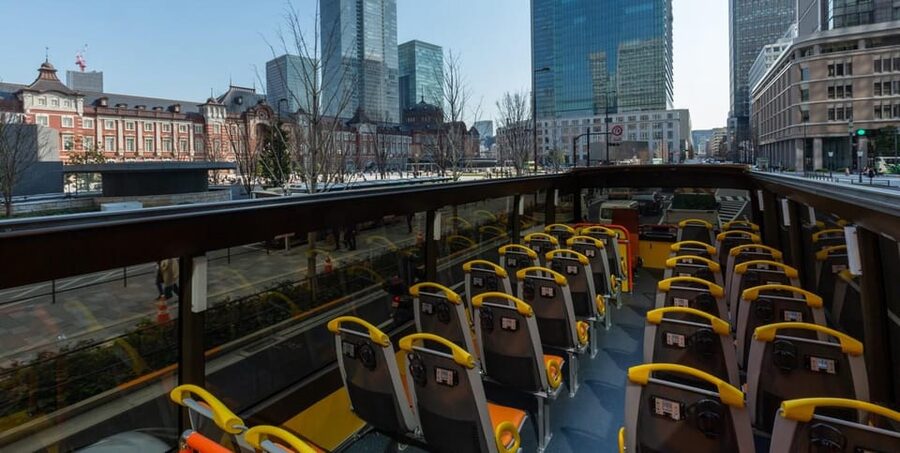
An open-top bus is fun because you can see above ordinary traffic and get wide views of buildings and bridges. It also puts you directly into Tokyo’s weather. On a hot day, you may find the sun tiring. On a cold day, the wind matters. One passenger specifically found the limited knee space uncomfortable and felt caught between heat and cold.
Rain changes the experience most. The tour operates rain or shine, but the open top may be closed if it rains. That means you can still complete the route, but the open-air benefit may disappear. Heavy weather, including typhoons, can lead to cancellation.
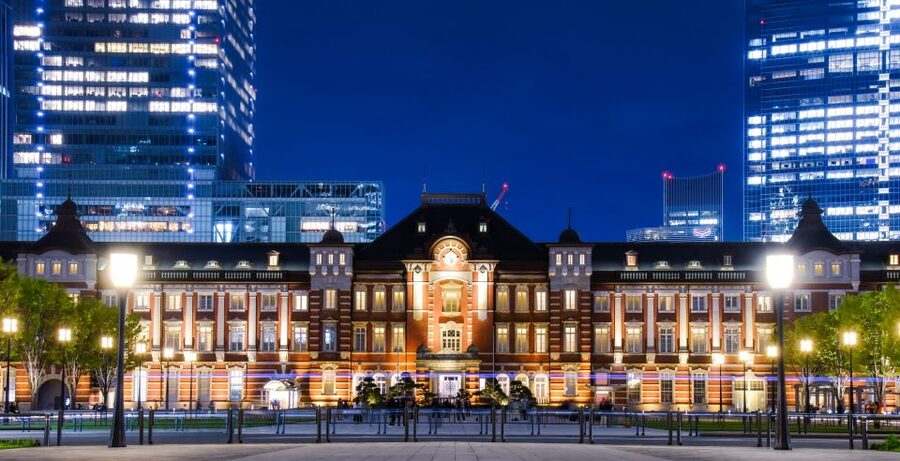
Check the forecast before you commit to a particular time. A clear evening can be especially appealing on the Bay Course, since city lights add another layer to the waterfront and bridge views. Still, do not book this as your only Tokyo activity for the day if the weather looks uncertain.
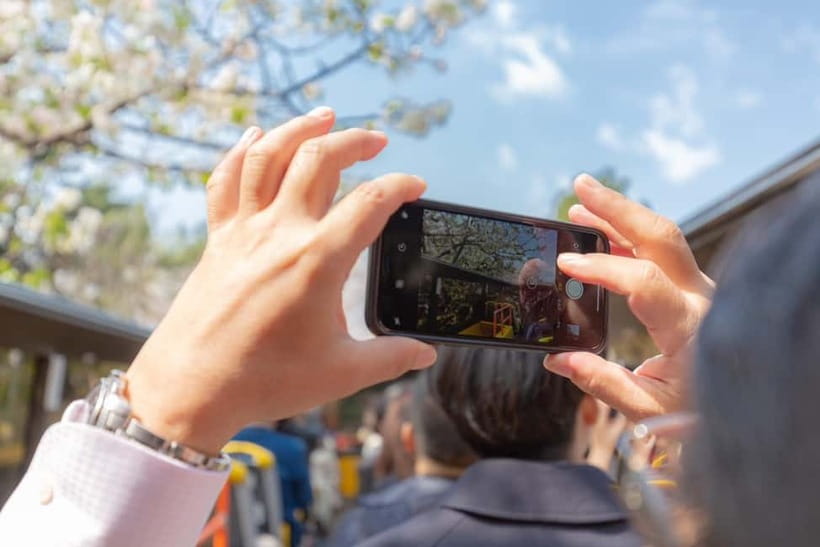
Food, smoking, umbrellas, and selfie sticks are not allowed on the vehicle. Those rules make sense on an open bus, where loose objects and crowded seating can cause problems. Eat before boarding, and keep your hands free for photographs.
How much value do you get for $11?
At $11, this is one of the cheaper ways to see a wide section of Tokyo in a single sitting. You are paying for transport, the open-top format, and location-based commentary rather than admission to attractions or a private guide.
The value is strongest in three situations. First, you have limited time and want a broad look at the city. Second, you are arriving in Tokyo and want an easy first-day activity. Third, you want to compare neighborhoods before deciding where to spend the rest of your visit.
The price also makes the weather risk easier to accept. A rainy ride is disappointing, but the financial loss is smaller than with a costly private tour. On the other hand, you should not expect luxury. The meeting lounge is basic, the seats may have limited legroom, and the bus cannot stop whenever you spot something interesting.
The experience has an overall score of 3.8 out of 5 from 254 bookings. The strongest praise centers on organization after check-in, friendly assistance, safe driving, the views, and the amount of Tokyo covered for the money. The most common criticisms involve finding the meeting place, audio music, live announcements, weather, and comfort.
Who should book the Bay or City Course?
I would recommend this to first-time visitors, people staying only a short time, and anyone who enjoys seeing a city from above street level. It is also a good choice if walking long distances is not appealing, since you can take in major districts while seated.
Families and mixed-age groups may appreciate the simple format, although you should consider the weather and the lack of food on board. The ride can also work well at the start of a longer Tokyo stay, when you want to identify areas to revisit.
I would choose the Bay Course for Rainbow Bridge, Odaiba, Tokyo Bay, and the strongest change of scenery. I would choose the City Course for the Imperial Palace area, Roppongi, Tokyo Midtown, Tokyo Tower, Hibiya, and Ginza.
I would skip it if you want long visits inside attractions, a detailed personal conversation with a guide, or guaranteed open-air seating. It is also a poor fit if you cannot reliably reach the meeting point early, since late arrivals receive no refund.
Book it if you see the ride as a low-cost orientation to Tokyo, not as a substitute for sightseeing on foot. Choose your route carefully, arrive early, bring a compatible headset, and check the weather. At $11, the bus offers a lot of city for very little money, with Rainbow Bridge providing the clearest reason to pick the Bay Course.
FAQ
How long does the Tokyo open-top bus tour last?
The tour lasts 70 minutes.
How much does the experience cost?
The listed price is $11 per person.
Which routes are available?
You can choose the 70-minute Bay Course or the 70-minute City Course, subject to availability.
What does the Bay Course include?
The Bay Course passes Tokyo Station, Marunouchi, Zojoji Temple, Tokyo Tower, Rainbow Bridge, the Fuji TV Building, the Statue of Liberty, Odaiba Seaside Park, Shiodome, and Ginza.
What does the City Course include?
The City Course passes Tokyo Station, Marunouchi, Chidorigafuchi, the Akasaka State Guest House, Meiji Jingu Gaien, Tokyo Midtown, Roppongi, Tokyo Tower, Hibiya, and Ginza.
What languages are available on the audio guide?
The audio system is available in Japanese, English, Chinese, French, Korean, Vietnamese, and Thai.
Are headphones provided?
Headphones are not included. You can buy a pair for 100 yen, and the headphone jack accepts only 3.5 mm mini plugs.
Where is the meeting point?
The meeting point is Tokyo VIP Lounge, on the second and third floors of a building with Family Mart on the ground floor. It is about a five-minute walk from Tokyo Station’s Yaesu North Exit.
What happens if it rains?
The tour runs in rain unless extreme weather causes cancellation, but the open top may be closed. Check the weather forecast before departure.
More Self-Guided Tours
- Tokyo: 60min Panoramic Open Top Bus Tour with Audio Guide
★ 4.0 · 40 reviews
Just added around Tokyo
- Tokyo 6hr Instagram Highlights Private Tour with Licensed Guide★ 5.0 · 38 reviews
- Tokyo Small Group Tour with Guide★ 4.5 · 38 reviews
- Tokyo Sumo Experience with Live Show & Audience Challenge★ 5.0 · 38 reviews
- Japanese Food Cooking Class in Asakusa, Tokyo★ 5.0 · 39 reviews
- Very popular in Harajuku♡Animal petting zoo★ 4.6 · 39 reviews
- Ramen Making from Scratch with Tokyo Mom(Vegan Option Available)★ 5.0 · 39 reviews
- Tokyo: Kimono Rental inside Shinjuku Gyoen National Garden★ 4.9 · 39 reviews
- Tokyo JDM Night: 600hp C63s AMG Edition 1 (Private)★ 4.9 · 39 reviews
Bus Tours in Tokyo, compared.
Mt Fuji and Hakone 1-Day Bus Tour Return by Bullet Train
Read our review →
Tokyo Mt Fuji 5th St & Hakone Cruise Bus Tour w/Bullet Train
Read our review →
Meiji Shrine, Asakusa, Skytree Bus Tour and Cruise
Read our review →
Mt Fuji and Hakone 1-Day Bus Tour Return by Bus
Read our review →
Mt.Fuji & Lake Kawaguchiko 1-Day Bus Tour w/Optional Lunch
Read our review →
Browse the lists this tour appears in