
Reviewed · TEMPLE & SHRINE TOURS
Tokyo: Nikko Toshogu Shrine and Kegon Waterfall Tour
Nikko makes Tokyo feel far away. This long day combines Toshogu Shrine with Kegon Falls, Lake Chuzenji, and a scenic mountain drive, giving you culture and nature without sorting out several train and bus connections. I like the clear English and Chinese guidance, plus the comfortable coach with Wi-Fi and USB charging reported on recent departures. The main drawback is the travel time: expect about 10 and a half hours, with traffic able to shorten your time at the shrine.
I also like the strong value at $84 per person, since the Toshogu admission ticket and bilingual guide are included. You will need to pay for lunch and bring cash for some purchases, including the optional Kegon Falls elevator. The onsen stop has also changed: departures through September 30, 2025, use a Nikko hot spring, while departures from October 1, 2025, visit Shinkyo Bridge instead.
In This Review
- Key points before you book
- Why Nikko works as a day from Tokyo
- Starting in Tokyo and settling into the coach
- Shinkyo Bridge and the gateway to sacred Nikko
- Toshogu Shrine and the Tokugawa story
- The Iroha Slope and the ride into the mountains
- Kegon Falls, the dramatic centerpiece
- Lake Chuzenji and the cooler mountain air
- Timing, traffic, and the real pace of the day
- What to pack and what to expect on site
- Is $84 good value for this Nikko day trip?
- Should you book this Nikko tour?
- FAQ
- How long is the Nikko tour from Tokyo?
- What languages does the guide speak?
- Is the Toshogu Shrine admission included?
- Is lunch included?
- What replaces the Nikko onsen?
- Can I bring large luggage?
Key points before you book

- Toshogu Shrine is the cultural heart of the day: The ornate UNESCO World Heritage complex honors Tokugawa Ieyasu, founder of the shogunate that ruled Japan for more than 250 years.
- Kegon Falls requires a weather check: The nearly 100-meter waterfall can be spectacular, but fog and rain may hide much of it.
- The Iroha Slope is part of the fun: This mountain road has 48 sharp turns and is famous for autumn color and its appearance in Initial D.
- The tour is built for convenience: A coach handles the long journey from Tokyo, while your guide explains the sites and keeps the day moving.
- The seasonal stop matters: Shinkyo Bridge replaces the Nikko onsen from October 1, 2025.
- Pack for changing temperatures: Tokyo can be warm while Lake Chuzenji feels cold, especially in late autumn and winter.
Why Nikko works as a day from Tokyo
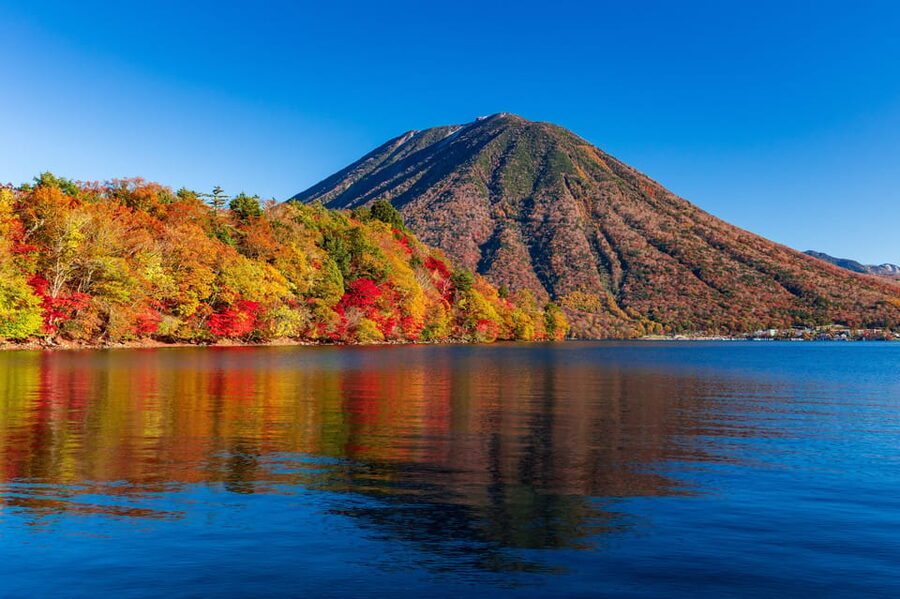
Nikko sits in Tochigi Prefecture, north of Tokyo, where forested mountains, shrines, lakes, and waterfalls come together in one compact area. It is one of the better day trips if you want a break from city streets but do not want to arrange a complicated independent journey.
The tradeoff is distance. The outward ride takes about two and a half hours, and the return can take around three hours. That is a lot of coach time, but the route is practical because Kegon Falls and Lake Chuzenji are high in the mountains and are not as simple to combine with Toshogu Shrine by public transportation in one day.
At $84, I see the price as reasonable for a guided excursion. Your shrine ticket is included, and the guide provides context during the drive, when you would otherwise be watching the highway. Lunch is not included, so the final cost depends on what you buy at the waterfall or lake area.
More Temple & Shrine Tours in Tokyo
- Tokyo: Meiji Shrine, Asakusa, Skytree Bus Tour and Cruise
★ 4.7 · 1,986 reviews - Tokyo: Asakusa Walking Tour with Sensoji Temple Visit
★ 4.8 · 1,583 reviews - Nikko: Kegon Falls, Lake Chuzenji & Toshogu Temple
★ 4.6 · 1,577 reviews
Starting in Tokyo and settling into the coach
There are two possible pickup areas. One is the Tokyo Yaesu Bus Terminal area at 2-chome-2-1 Yaesu. The other is the ground floor of the Sumitomo Mitsui Bank, Shinjuku Nishiguchi Branch. Your meeting point can depend on the date and booking option, so check the schedule carefully rather than relying only on the general tour description.
This is a group excursion, and the tour leader accompanies everyone throughout the day. Guides such as Tina, Zoe, Vicki, Jeff, Annie, Sheila, Jax, and Sophie have been praised for being friendly, clear, and helpful with food suggestions. The guide usually gives background on the way to the stops, then lets you explore on your own once you arrive.
That balance is useful. You get enough explanation to understand what you are seeing, but you are not required to follow a nonstop lecture around every building. Bilingual English and Chinese guidance also makes this a practical option for mixed-language groups.
The coach has been described as clean and comfortable, with generous seating on some departures. Wi-Fi and USB charging have also been available on recent buses, though I would treat onboard features as subject to the vehicle assigned that day. Keep only one carry-on bag with you. Large luggage is not allowed.
Shinkyo Bridge and the gateway to sacred Nikko
From October 1, 2025, the first sightseeing stop is Shinkyo Bridge, a red arched crossing over the Daiya River. You have about 20 minutes for photographs and a short look around.
The bridge is not a large attraction that requires a long visit. Its value is symbolic and visual. It marks the entrance to Nikko’s sacred area, and the red structure against the river and surrounding trees gives you an immediate sense that you have left ordinary city Japan behind.
You should keep this stop in perspective. Twenty minutes is enough for photographs and a quick look, not for a leisurely walk through the surrounding area. If you are taking pictures, move promptly and listen for the guide’s instructions about where to regroup.
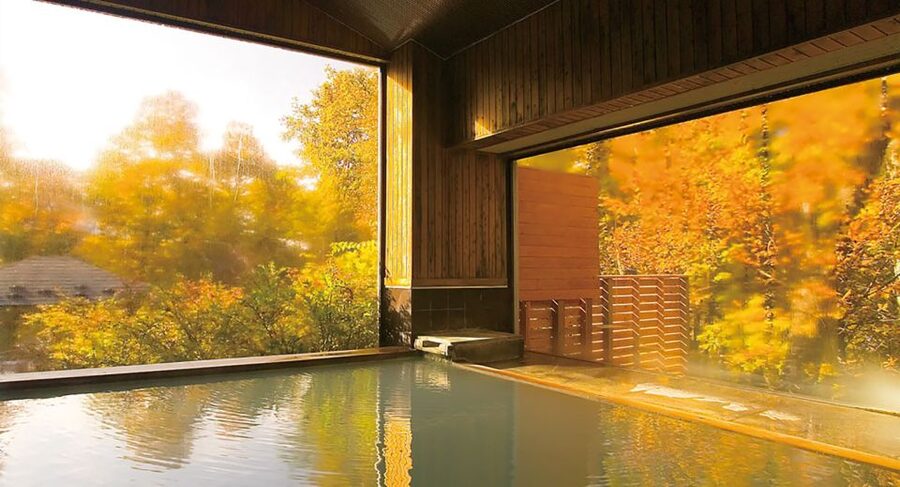
For departures through September 30, 2025, this stop is replaced by a Nikko onsen experience. The hot spring was warmly received by one departure, but practical details such as bathing arrangements, towel requirements, and facilities are not provided here. Check the exact schedule before booking if the onsen is a major reason for choosing the tour.
Toshogu Shrine and the Tokugawa story
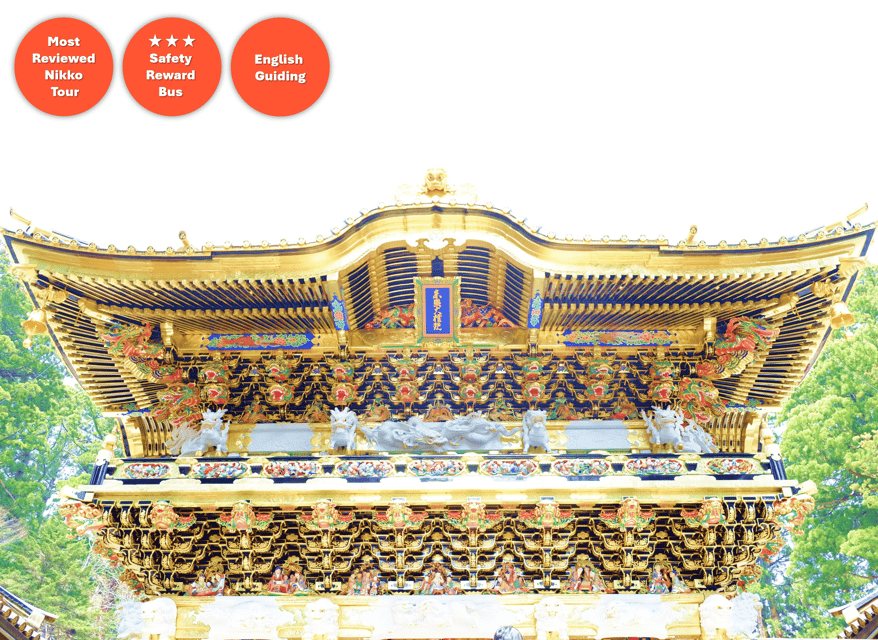
Toshogu Shrine gets about 75 minutes, and this is the stop that gives the tour its historical weight. The complex is the mausoleum of Tokugawa Ieyasu, the military leader who founded the Tokugawa Shogunate. That government controlled Japan for more than 250 years, until 1868, during the Edo Period.
The shrine is famous for elaborate wood carvings, bright decoration, gates, and layers of detail. You will not get the spare simplicity associated with some Japanese temples. Toshogu is theatrical, dense, and deliberately impressive.
A good guide makes a major difference here. Anna appreciated receiving a short history lesson before arrival, because the buildings made more sense once the political background was clear. Guides including Jeff, Tina, and Zoe have been singled out for explaining Japanese history and culture in an approachable way.
The 75-minute visit is useful but not generous. Several departures have found the shrine breathtaking yet wished for more time. Crowds and group schedules can make the visit feel rushed, especially if you want to study the carvings, climb toward the upper area, or stop for detailed photographs.
One review refers to a climb of 207 steps that was worth the effort. Comfortable shoes are important, and you should expect stairs and walking on uneven surfaces. If you love architecture or Japanese history, you may finish wanting another hour. If you mainly want a strong introduction, the included admission and guided orientation work well.
There is also a Buddhist temple beside the Shinto shrine area, but it is not included in this tour. You should not count on having time or admission to see it. That omission matters most if you want to compare Shinto and Buddhism in detail.
A completely different kind of day out in Tokyo:
- Mt Fuji and Hakone 1-Day Bus Tour Return by Bullet Train
★ 5.0 · 26,383 reviews - 1-Day Tokyo Bus Tour
★ 5.0 · 14,250 reviews - Tokyo: TOKYO SKYTREE® Admission ticket
★ 4.5 · 11,192 reviews - Tokyo: teamLab Planets TOKYO Digital Art Museum Entry Ticket
★ 4.6 · 9,779 reviews
The Iroha Slope and the ride into the mountains
After Toshogu, the coach follows the Iroha Slope, a winding road famous for 48 sharp turns. The route is part sightseeing and part transport, with about 20 minutes listed for passing through it rather than a dedicated walking stop.
The road is especially attractive in autumn, when the trees bring color to the mountain route. It also has a pop-culture connection through the animation Initial D, which gives car and road fans an extra reason to pay attention.
You will not be getting out to photograph every turn. Instead, enjoy the changing views from the bus and appreciate the driver’s work. One passenger specifically praised the driver’s handling of the mountain road, and that matters here. The turns are tight, and traffic or weather can slow the climb.
Some departures have also spotted monkeys along the route. That is an occasional bonus, not a promised part of the outing, so keep your eyes open but do not build your expectations around wildlife.
Kegon Falls, the dramatic centerpiece
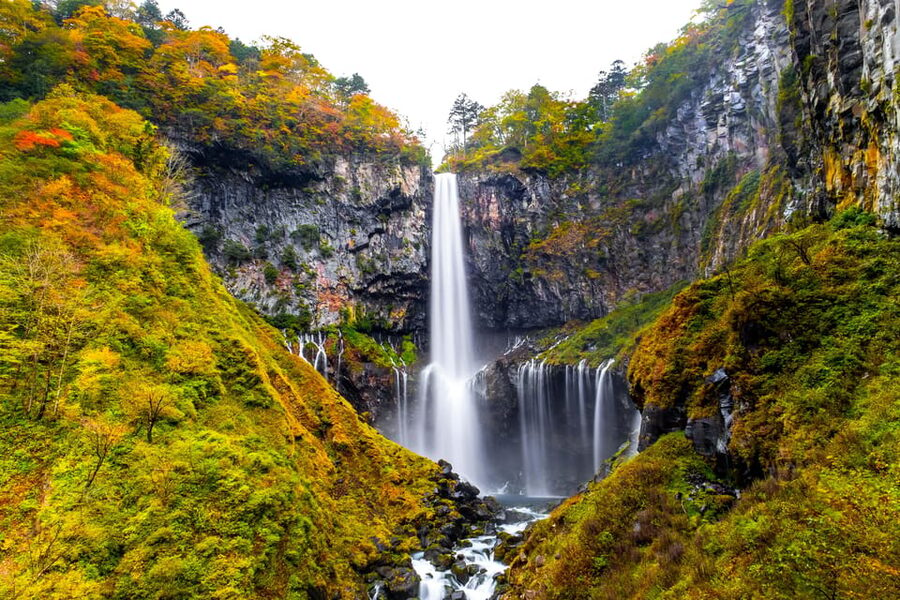
Kegon Falls drops nearly 100 meters and is one of Japan’s three famous waterfalls, along with Nachi Falls in Wakayama Prefecture and Fukuroda Falls in Ibaraki Prefecture. The tour allows about 75 minutes here, including time for sightseeing and lunch.
The waterfall is powerful after rain and often framed by mountain forest. It can also be hidden by mist. In April, one departure found the afternoon fog too thick to see the falls properly. Another May visit had mist covering parts of both the waterfall and lake. Bad weather is not a fault of the tour, but it is a real factor in deciding how much you get from the day.
You can photograph the falls from the viewing area. The elevator to a lower viewpoint is not included in the tour price, according to one detailed departure, so bring cash if you want that extra perspective. The tour information also warns that credit cards are not accepted at all locations.
Lunch is your responsibility. The stop provides a chance to buy food, and guides may point you toward local options. Jax was praised for taking a group to an authentic udon restaurant near the waterfall, while Tina and Sophie offered useful food recommendations. Still, you should not assume a specific restaurant or menu is guaranteed.
The 75-minute allocation can work well if you choose food quickly and keep your sightseeing focused. It will feel short if you want the lower elevator viewpoint, a full meal, and unhurried photographs. Bring a snack or eat efficiently so lunch does not take the whole stop.
Lake Chuzenji and the cooler mountain air
Lake Chuzenji receives about 45 minutes. The stop may include photographs, a short walk, sightseeing, and time to buy a drink or snack.
The lake is a calmer counterpoint to Kegon Falls. After the noise and force of the waterfall, you get open water, mountain views, and a slower pause before the long return to Tokyo. Coffee and cake have proved welcome on damp days, especially when fog limits the views.
Weather again controls the experience. In mist, you may see only brief openings across the lake. In late autumn, the temperature can drop sharply. Rose specifically advised bringing warm clothes after finding it very cold by the lake in mid-November. Snow around the lake made a March visit especially striking, while summer visitors valued the cooler air as a break from Tokyo’s heat.
Forty-five minutes is enough for a short walk and photographs. It is not enough for a full lakeside exploration. Think of this as a scenic pause, not a separate lake holiday.
Timing, traffic, and the real pace of the day
The advertised duration is 630 minutes, or 10 hours and 30 minutes. The schedule includes roughly five and a half hours of driving, plus stops at Shinkyo Bridge, Toshogu Shrine, Iroha Slope, Kegon Falls, and Lake Chuzenji.
Traffic can affect the balance. Autumn weekends and busy sightseeing periods may lengthen the drive, leaving less free time at the stops. The itinerary can be adjusted during a serious traffic jam. One November departure still enjoyed the day despite delays, but this is a useful reminder not to plan an important Tokyo reservation immediately after the scheduled return.
The tour normally returns to the same general areas used for pickup, either Tokyo Yaesu Bus Terminal or the Sumitomo Mitsui Bank location in Shinjuku. Exact arrangements depend on the option booked.
I would choose this format if you value ease over complete independence. You can sleep, charge your phone, and listen to explanations while someone else handles the mountain roads. If you prefer lingering at one shrine, choosing your own lunch, or changing plans around the weather, a self-guided visit may give you more control.
What to pack and what to expect on site
Wear comfortable shoes. Toshogu involves walking and stairs, while the waterfall and lake stops may require outdoor walking. Bring water, cash, and clothing that can handle a cooler mountain temperature.
Large bags and luggage are not allowed. Unaccompanied minors cannot join, and all children must be with an adult. Tattoos are considered taboo in this area, so you should take that cultural rule seriously, particularly if the onsen option applies to your departure.
Credit cards are not accepted everywhere. Cash may be needed for food, drinks, small purchases, and the optional Kegon Falls elevator. Lunch is not included, so budget for it separately.
If severe weather forces cancellation, you will be informed on or before 2:00 PM the previous day. Fog may still affect visibility without canceling the tour, so a bad-weather day can continue with reduced views.
Is $84 good value for this Nikko day trip?
For $84, you get round-trip coach transport from Tokyo, a bilingual English and Chinese tour leader, and admission to Toshogu Shrine. You also cover three very different Nikko experiences in one day: a major historical shrine, a famous waterfall, and a mountain lake.
The value is strongest for first-time visitors who would find the waterfall and lake difficult to combine with the shrine independently. The coach saves you from arranging several connections and navigating the Iroha Slope yourself.
The price is less attractive if you are mainly interested in Toshogu and want several hours there. The shrine visit is the most culturally important portion, yet the schedule cannot give you unlimited time. You also pay extra for lunch and possibly the waterfall elevator.
The high overall score of 4.5 from 1,266 reviews matches the pattern of praise: guides are often friendly and informative, transport is comfortable, and the day is well organized. The repeated criticism is narrow but fair: Toshogu can feel rushed, and weather may reduce the waterfall and lake views.
Should you book this Nikko tour?
Book it if you want a simple, well-supported day outside Tokyo with both Japanese history and mountain scenery. It is especially suitable for first-time visitors, couples, families with accompanied children, and anyone who would rather ride comfortably than manage rural connections.
Book with realistic expectations. You are not getting a slow shrine study or a full Nikko exploration. You are getting a broad introduction, with enough time to see the main sights and a guide who can explain why they matter.
Choose a warm layer even in mild Tokyo weather, carry cash, eat efficiently, and leave room in your schedule after the return. If those details suit your style, this is a strong-value way to see Toshogu, Kegon Falls, and Lake Chuzenji in one demanding but rewarding day.
FAQ
How long is the Nikko tour from Tokyo?
The tour lasts 630 minutes, or about 10 hours and 30 minutes. The trip to Nikko takes about two and a half hours, and the return journey can take around three hours.
What languages does the guide speak?
Live tour guidance is available in English and Chinese.
Is the Toshogu Shrine admission included?
Yes. The Toshogu Shrine entry ticket is included in the tour price.
Is lunch included?
No. Lunch is not included, so bring cash to buy food during the Kegon Falls stop.
What replaces the Nikko onsen?
The Nikko onsen is used through September 30, 2025. Starting October 1, 2025, the tour visits Shinkyo Bridge instead.
Can I bring large luggage?
No. Large luggage and huge bags are not allowed. Only one carry-on bag is permitted.
Just added around Tokyo
- Tokyo 6hr Instagram Highlights Private Tour with Licensed Guide★ 5.0 · 38 reviews
- Tokyo Small Group Tour with Guide★ 4.5 · 38 reviews
- Tokyo Sumo Experience with Live Show & Audience Challenge★ 5.0 · 38 reviews
- Very popular in Harajuku♡Animal petting zoo★ 4.6 · 39 reviews
- Japanese Food Cooking Class in Asakusa, Tokyo★ 5.0 · 39 reviews
- Ramen Making from Scratch with Tokyo Mom(Vegan Option Available)★ 5.0 · 39 reviews
- Tokyo: Kimono Rental inside Shinjuku Gyoen National Garden★ 4.9 · 39 reviews
- Tokyo JDM Night: 600hp C63s AMG Edition 1 (Private)★ 4.9 · 39 reviews
Temple & Shrine Tours, compared.
Fushimi Inari, Kinkakuji, Bamboo Grove 1 Day Bus Tour
Read our review →
Tea Ceremony in a Traditional Tea House in Kiyomizu
Read our review →
Meiji Shrine, Asakusa, Skytree Bus Tour and Cruise
Read our review →
Fushimi Inari Hidden Hiking Tour (Private Option Available)
Read our review →
Osaka/Kyoto:Kinkakuji,Arashiyama,FushimiInariShrine,NaraPark
Read our review →
Asakusa Walking Tour with Sensoji Temple Visit
Read our review →
Nikko: Kegon Falls, Lake Chuzenji & Toshogu Temple
Read our review →Browse the lists this tour appears in