
Reviewed · FOOD & DRINK
Tokyo: Shibuya Food Tour (13 dishes and 4 Eateries)
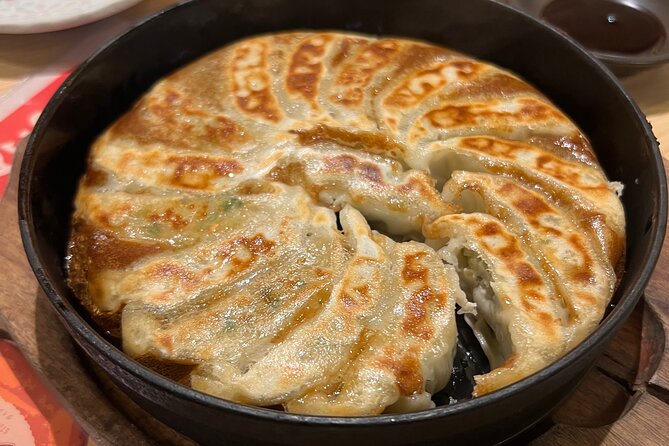
Shibuya tastes better after dark. This three-hour walk takes you beyond the usual photo stops and into four local eateries, where you sample 13 Japanese dishes including sushi, yakiniku, udon, karaage, dumplings, tuna, drinks, and dessert. I like the generous range of food and the small maximum of 10 people, which makes it easier to ask questions and keep the evening moving. The main drawback is that the guide chooses the food for the group, so you do not control every dish or restaurant.
I also like the simple route through Shibuya Crossing, Hachiko, Dogenzaka, and Center-gai. It gives you a quick look at famous Shibuya while steering you toward places you might not find on your own. Guide quality matters here, and names such as Hoshi, Naruto, Kei, Benjamin, Mat, and Will have received especially warm praise, though one experience was marked by weak commentary and little enthusiasm.
In This Review
- Key points to know before booking
- Why a Shibuya food walk works
- Starting at Shibuya Crossing and Hachiko
- Dogenzaka, where the eating begins
- Center-gai and the second half of dinner
- What 13 dishes really means
- Guide quality can shape the entire evening
- Is $77.44 a fair price?
- Who should book this Shibuya experience?
- Practical booking advice
- Should you book it?
- FAQ
- How long does the Shibuya food tour last?
- How many dishes are included?
- What types of food might be served?
- Where does the tour begin?
- Where does the tour end?
- Are alcoholic drinks included for everyone?
- What happens if I need to cancel?
Key points to know before booking
- Four eateries, 13 dishes: Expect a full evening of Japanese food rather than a few token samples.
- A local-food route through Shibuya: The walk includes Dogenzaka and Center-gai, two useful areas for finding izakayas and casual dining later.
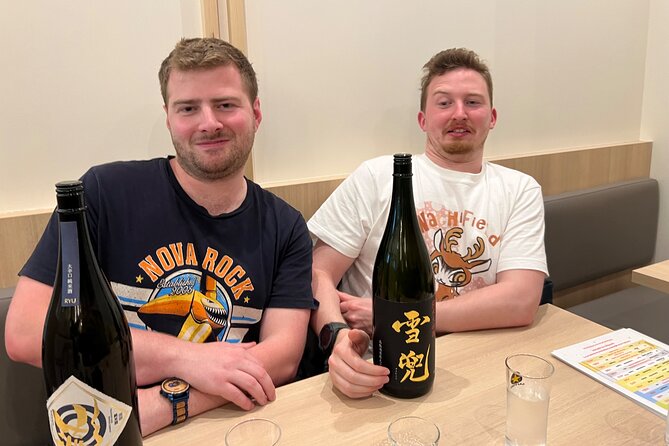
- Small group of up to 10 people: This is a better fit for conversation than a large bus-style food outing.
- Food and drinks are included: Additional orders cost extra, and alcoholic drinks are served only to people age 20 or older.
- Good value for hungry diners: The $77.44 price is easier to justify if you want dinner, drinks, guidance, and neighborhood orientation in one package.
- Meet near Dogenzaka: The starting point is Kusumoto Building, 1-chome-3-3 Dogenzaka, with the walk ending in Shibuya near the station.
Why a Shibuya food walk works
Shibuya can feel like several different districts packed into one small area. The famous crossing draws cameras and crowds, Center-gai fills with shops and restaurants, and Dogenzaka climbs into a more local dining zone where izakayas and small eateries take over.
That mix makes the neighborhood a smart setting for a food walk. You get the famous sights at the beginning, then spend most of the evening learning how people actually eat in the district. I would not book this mainly as a sightseeing tour. The crossing and Hachiko stops are brief. The food is the main event.
The format is social without being unwieldy. With no more than 10 people, you can hear the guide, share dishes, and ask about ingredients. A smaller group also matters in Japanese restaurants, where space can be tight and ordering for a crowd takes care.
The pace appears comfortable. You walk between restaurants, spend about an hour around Dogenzaka and another hour around Center-gai, and fit in short stops at Shibuya Crossing and Hachiko. Wear shoes you can walk in, and arrive ready to eat.
More Food Tours in Tokyo
- Tokyo: Shinjuku Food Tour (13 Dishes at 4 Local Eateries)
★ 5.0 · 6,603 reviews - Tokyo Tsukiji Fish Market Food and Culture Walking Tour
★ 5.0 · 3,184 reviews - Tokyo: Shinjuku Food Tour (15 Dishes and 4 Eateries)
★ 4.9 · 2,033 reviews
Starting at Shibuya Crossing and Hachiko
The route begins at Kusumoto Building on Dogenzaka, not directly at the crossing. That is useful because you avoid starting in the middle of the busiest pedestrian flow. Still, Shibuya station has many exits and can be confusing, so allow extra time to locate the building.
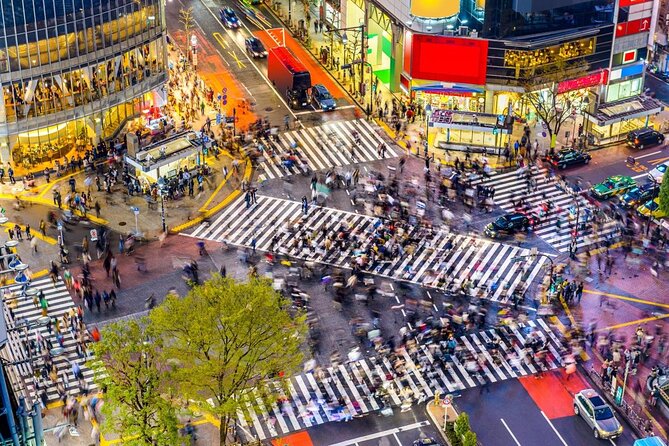
The first sightseeing stop is Shibuya Crossing. You get about 15 minutes to see Japan’s best-known pedestrian scramble and cross with the group. It is a good orientation point, but the short stop is not intended as a full explanation of the area.
Hachiko follows as another 15-minute stop. The guide is meant to explain the story of the loyal dog whose statue became one of Tokyo’s most popular meeting points. This is a worthwhile bit of local context, but the route does not always deliver every planned sight consistently. Some participants did not see the statue and visited it afterward.
My advice is simple: if Hachiko matters to you, see the statue before or after the food walk as a backup. It is close to the station, and the tour’s short timing leaves little room for delays.
Dogenzaka, where the eating begins
The tour then spends about an hour around Dogenzaka. This hillside district is known for local izakayas, bars, and small shops. It is a better place than the main crossing area for seeing the kind of casual dining that makes Tokyo such a rewarding food city.
Here you may encounter dishes such as sushi, grilled meat, dumplings, udon, karaage, and other Japanese specialties. The precise menu can change, but the overall promise is substantial: 13 tastes across four venues, with food and drinks included.
The strongest part of this setup is variety. You are not committing to one restaurant for an entire meal. Instead, you can compare several styles of food and see how different eateries handle familiar Japanese dishes. One evening may include several types of tuna, dumplings, drinks, and dessert. Another may lean more toward grilled dishes or noodles.
You should also expect the guide to order for the group. That keeps the tour efficient and ensures the cost stays within the package, but it removes some choice. If you have strong preferences, allergies, or food restrictions, raise them before ordering. The guide has arranged accommodations for some people, but the available information does not promise that every dietary request can be handled.
Guide performance makes a real difference in Dogenzaka. Hoshi has been praised for explaining how to eat each dish and for making the group feel comfortable. Naruto has been singled out for humor, friendliness, and stories about the food. Kei is often described as helpful with restaurant suggestions and able to explain dishes in detail when asked.
Those qualities turn dinner into more than a meal. You learn what is on the plate, how to approach it, and what you might order later. But you should keep your expectations realistic. The tour provides local guidance, not a formal lecture on Japanese food.
Center-gai and the second half of dinner
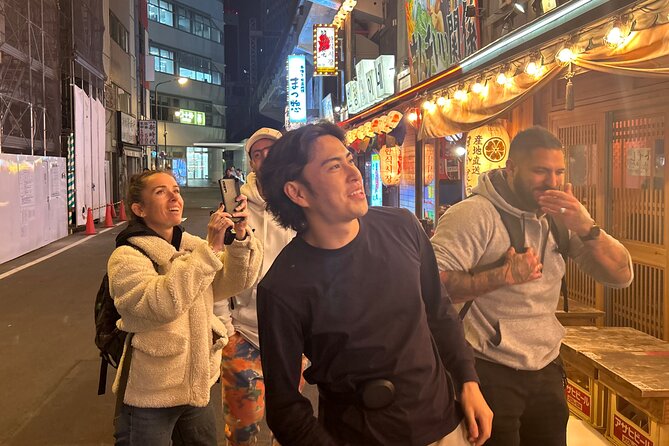
The route continues into Shibuya Center-gai, the busy shopping and dining street at the heart of the district. This is the louder, more commercial side of Shibuya, with plenty of signs, shops, and people moving in every direction.
Spending about an hour here gives you a practical look at the district after dark. The guide can help you avoid wandering into restaurants that are difficult to navigate or hard to order in. The included walk also helps you learn the area for later evenings, when you may want to return without a guide.
The food remains the focus. Across the four stops, portions are described as generous enough to fill a family of four, and several people advise arriving very hungry. That is important. This is not a light tasting followed by a separate dinner. For many people, it functions as dinner itself.
The final stop includes dessert. That may be a pastry ordered in advance because it can sell out. This is an interesting local-food detail, but the presentation may feel less polished than you expect. One account described receiving the pastry in a mall basement rather than sitting in a traditional dessert shop. If atmosphere matters as much as flavor, this part could feel anticlimactic.
The food quality receives much stronger praise than the presentation of every stop. That distinction is worth keeping in mind. You are paying for access, variety, food, drinks, and a guide who handles the evening, not for four carefully staged restaurant experiences.
A completely different kind of day out in Tokyo:
- Mt Fuji and Hakone 1-Day Bus Tour Return by Bullet Train
★ 5.0 · 26,383 reviews - 1-Day Tokyo Bus Tour
★ 5.0 · 14,250 reviews - Tokyo: TOKYO SKYTREE® Admission ticket
★ 4.5 · 11,192 reviews - Tokyo: teamLab Planets TOKYO Digital Art Museum Entry Ticket
★ 4.6 · 9,779 reviews
What 13 dishes really means
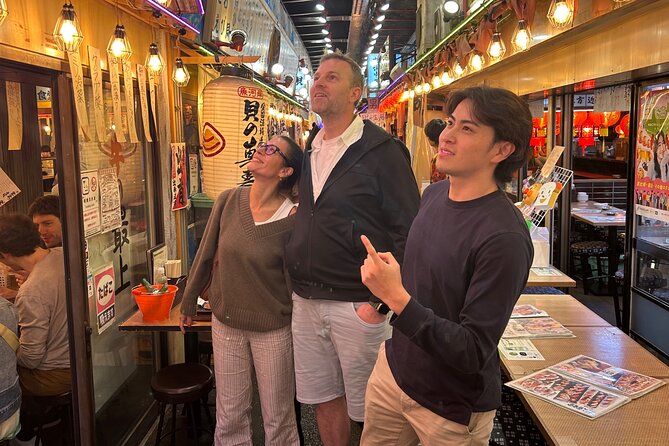
The number 13 sounds impressive, but tasting counts can include small portions and shared plates. Even so, the descriptions point to a filling meal rather than a few bites. Sushi, yakiniku, udon, karaage, dumplings, tuna, drinks, and dessert cover a broad section of Japanese casual dining.
I like this approach for a first visit to Tokyo. You can try foods you might not order alone, and the guide can explain unfamiliar items. Naruto has been praised for introducing dishes people would not have selected by themselves, while Hoshi has been appreciated for showing the correct way to eat them.
The tradeoff is control. You do not choose the menu, and the four eateries are selected within the tour’s budget. If you want a specific sushi bar, a particular cut of beef, or a carefully planned tasting menu, book a different type of experience.
The tour also may not feel especially exotic to an experienced Tokyo diner. One account found the food authentic but not especially exciting, with a route that circled around Shibuya station. That criticism is fair. The value here is convenience and breadth. It is not a guarantee of rare ingredients or a once-in-a-lifetime meal.
Guide quality can shape the entire evening
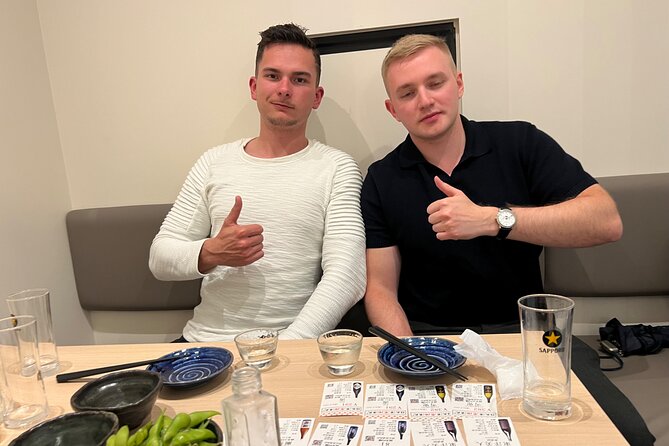
The best accounts of this experience focus on the guides as much as the food. Hoshi is described as personable, clear, considerate, and able to explain the dishes well. Naruto comes across as playful and engaging, with enough warmth to connect with families and children. Kei has been praised for advance communication, useful suggestions, and detailed answers.
Benjamin is noted for handling four restaurants and several alcoholic drinks with energy, while Mat is described as thorough and thoughtful. Will has been praised for making the food and culture easy to follow.
That range matters because this tour depends on human delivery. The restaurant bills and food may be fixed, but your understanding of the evening depends on whether the guide explains the sights, introduces the dishes, and helps the group interact.
There have also been clear complaints about a guide who offered little information, skipped the Hachiko explanation, and showed limited enthusiasm. Another account found the food plentiful but the cultural content thin. I would treat those comments as a reminder to judge the tour as both dinner and guided orientation. The food alone may not justify the fee for everyone.
If you want the strongest experience, ask questions. Ask how a dish is normally eaten, what locals order with it, and which Shibuya restaurants the guide would recommend for another night. Guides such as Kei and Naruto appear especially well suited to that kind of conversation.
Is $77.44 a fair price?
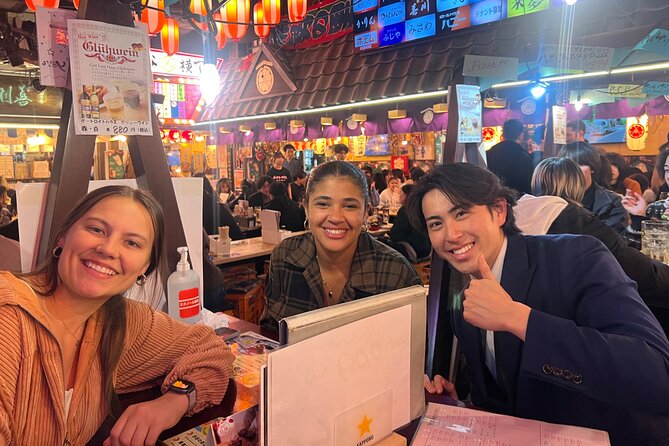
At $77.44 per person, the tour is not cheap, but the calculation is fairly simple. You receive about three hours of walking, four eateries, 13 dishes, drinks, a local English-speaking guide, and help with the logistics of dining in a busy district.
For a full evening meal in Tokyo, that can be good value. Several accounts describe generous portions, enough food for a family, and drinks that made the package feel worthwhile. You also avoid the risk of choosing four disappointing places, getting lost at night, or struggling to order.
Still, the price will feel high if you see the tour mainly as a sightseeing walk. The included stops at the crossing and Hachiko are short, and additional food or drinks cost extra. You are also paying for the guide’s time and restaurant coordination, not only the ingredients.
One person compared the cost unfavorably with a much less expensive Michelin meal. That is an important warning for serious food lovers. A formal restaurant may offer better food per dollar, but it will not give you the same range of neighborhoods, dishes, and casual stops.
I see the price as reasonable for a first-night orientation, especially if you want dinner included and prefer not to plan. It is less attractive if you already know Shibuya well or enjoy researching and ordering your own meals.
Who should book this Shibuya experience?
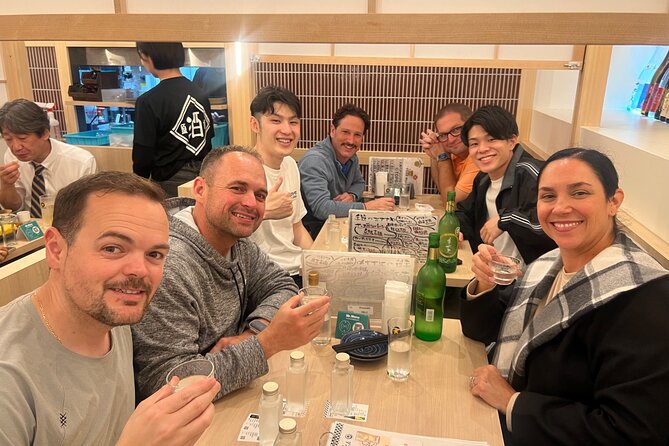
I would recommend it to first-time visitors who want a friendly introduction to Japanese food without spending hours studying menus. Families can also do well here, since the food is varied, the pace is manageable, and Naruto in particular has been praised for connecting with children.
It suits solo diners and couples who want company for the evening. A small group gives you people to talk with while still keeping the walk personal. It is also useful for anyone staying in Shibuya, since the tour teaches you the area around the station and Dogenzaka.
Food-focused visitors should consider their expectations. You will sample a lot, but you will not select every dish or receive a formal food history lesson. If your priority is unusual ingredients, precise restaurant selection, or a polished dining room at every stop, this may feel ordinary.
People with mobility concerns should note that this is a walking tour through busy Shibuya. The information says most people can participate and that the route is near public transportation, but it does not give a detailed accessibility breakdown. Ask the operator before booking if stairs, slopes, or crowded streets are a concern.
Alcohol is limited to people age 20 and older. Since drinks are part of the experience, younger participants should expect nonalcoholic alternatives only if the guide and venues provide them.
The tour ends in Shibuya, and the guide can take you to Shibuya station. That makes the finish convenient, especially after several drinks or a long evening of eating.
Practical booking advice
Use the mobile ticket and save the meeting address before leaving your hotel. The starting point is Kusumoto Building, 1-chome-3-3 Dogenzaka, Shibuya, Tokyo 150-0043. Tokyo’s station exits can turn a short walk into a frustrating search, so arrive early.
Do not eat a large meal beforehand. The combination of 13 dishes, drinks, and dessert is meant to replace dinner for most people. You should also wear comfortable shoes and keep your schedule flexible for the full three hours.
Free cancellation is available if you cancel at least 24 hours before the start time. Changes made inside that window are not accepted, and poor weather or too few bookings can cause the experience to be rescheduled or refunded.
Should you book it?
Book this tour if you want a filling, social introduction to Shibuya dining and prefer a guide to handle the restaurants and ordering. The variety is its biggest strength, and guides such as Hoshi, Naruto, and Kei can add humor, food advice, and useful recommendations for the rest of your stay.
Think twice if you want complete control over the menu, a serious culinary education, or four elegant restaurant settings. The sights are brief, the route may circle the station, and the evening depends heavily on which guide leads your group.
For most first-time visitors, the $77.44 price is defensible because it combines dinner, drinks, a walking route, and local help. Arrive hungry, ask questions, and treat the experience as a practical introduction to Shibuya rather than a grand restaurant tour.
FAQ
How long does the Shibuya food tour last?
The tour lasts approximately three hours.
How many dishes are included?
The experience includes 13 different Japanese dishes served across four local eateries.
What types of food might be served?
The food may include sushi, yakiniku, udon, karaage, dumplings, tuna, drinks, and dessert. The exact dishes can vary because the guide orders for the group.
Where does the tour begin?
The meeting point is Kusumoto Building, 1-chome-3-3 Dogenzaka, Shibuya, Tokyo 150-0043, Japan.
Where does the tour end?
The tour ends in Shibuya. The guide can take you to Shibuya station.
Are alcoholic drinks included for everyone?
Alcoholic beverages are served only to people age 20 or older. Food and drinks are included, but additional orders are not.
What happens if I need to cancel?
You can receive a full refund if you cancel at least 24 hours before the experience start time. Cancellations or changes made less than 24 hours before the start time are not accepted for a refund.
Just added around Tokyo
- Tokyo 6hr Instagram Highlights Private Tour with Licensed Guide★ 5.0 · 38 reviews
- Tokyo Small Group Tour with Guide★ 4.5 · 38 reviews
- Tokyo Sumo Experience with Live Show & Audience Challenge★ 5.0 · 38 reviews
- Very popular in Harajuku♡Animal petting zoo★ 4.6 · 39 reviews
- Japanese Food Cooking Class in Asakusa, Tokyo★ 5.0 · 39 reviews
- Ramen Making from Scratch with Tokyo Mom(Vegan Option Available)★ 5.0 · 39 reviews
- Tokyo: Kimono Rental inside Shinjuku Gyoen National Garden★ 4.9 · 39 reviews
- Tokyo JDM Night: 600hp C63s AMG Edition 1 (Private)★ 4.9 · 39 reviews
Food & Drink, compared.
Shinjuku Food Tour (13 Dishes at 4 Local Eateries)
Read our review →
Tokyo Tsukiji Fish Market Food and Culture Walking Tour
Read our review →
Shinsekai Food Tour with 13-15 Dishes at 5 Eateries
Read our review →
Osaka Food Tour: 13 Dishes at 5 Local Eateries
Read our review →
Shinjuku Food Tour (15 Dishes and 4 Eateries)
Read our review →
Best of Shinjuku: Izakaya Food Tour (4 Stops, 14+ Tastings)
Read our review →
Kyoto Night Foodie Tour in Gion (9+ dishes + 6 Sake tastings)
Read our review →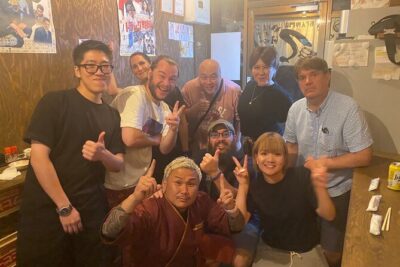
Hungry Osaka Street Food Tour:15 Tastings & 3 Drinks with a Local
Read our review →Browse the lists this tour appears in