Reviewed · TOKYO TOURS
Tokyo:Stroll in Old traditional culture towns~Yanaka & Nezu
Quiet Tokyo begins here. This 3.5-hour walk through Yanaka and Nezu trades neon signs for old houses, temple bells, narrow lanes, and small shops that still serve local customers. I like the unhurried pace and the chance to see how Shinto and Buddhist traditions fit into daily life. I also like the small-group format, where guide Sui can answer questions, adjust the walk, and point out details you would likely miss alone.
The main drawback is simple: this is a walking tour with stairs, and the full route can run through lunchtime. Summer heat adds another challenge, though the seasonal café stop helps. Shops may also be closed on Mondays, so this experience suits you best if you want local atmosphere more than a packed shopping schedule.
In This Review
- Key reasons to consider this Yanaka and Nezu walk
- Why Yanaka and Nezu feel unlike central Tokyo
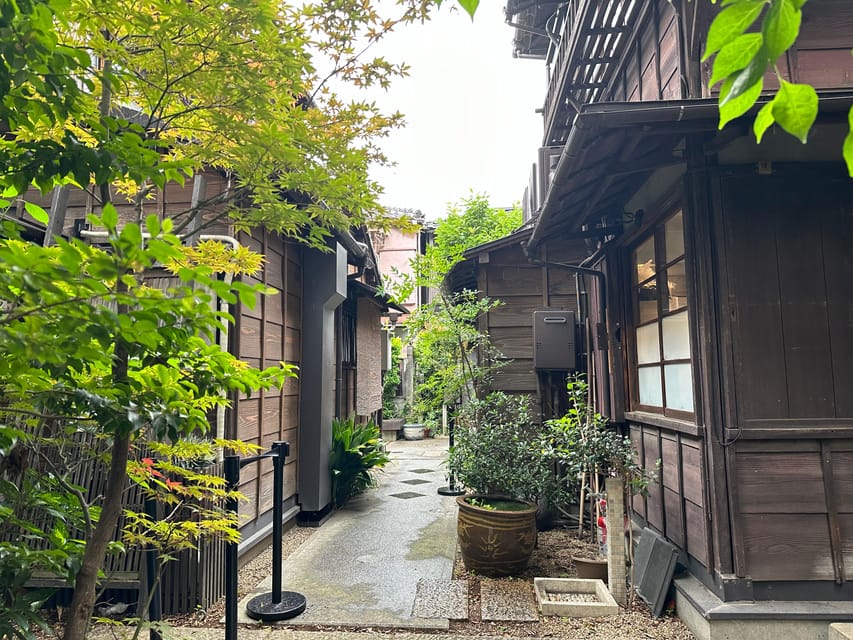
- A relaxed start through residential Yanaka
- Nezu Shrine and its red torii path
- Tennoji Temple and a quieter Buddhist pause
- Yanaka Cemetery and Tokyo’s long memory
- Old buildings from Meiji to Showa
- Yoshida Liquor Store and the old local shop tradition
- Yanaka Ginza, street food, and practical shopping
- Sunset Staircase and the final view
- Guide Sui and the small-group advantage
- Is $29 a good value?
- Who should book this walk?
- My verdict: a smart way to meet old Tokyo
- FAQ
- How long is the Yanaka and Nezu walking tour?
- Where does the tour begin?
- Where can the tour finish?
- Is the tour conducted in English?
- Is this a private tour?
- Does the tour visit both a shrine and a temple?
- Is food included?
- Should I bring cash?
- Are there stairs on the route?
- Is the tour suitable for wheelchair users?
Key reasons to consider this Yanaka and Nezu walk
- Old Tokyo streets: See residential lanes, wooden houses, small businesses, and buildings dating from the Meiji and Showa periods.
- Two major religious traditions: Visit Nezu Shrine, Tennoji Temple, and smaller places of worship while learning how Japanese people approach religion.
- A guide who adds personal detail: Sui is praised for her clear English, local knowledge, patience, humor, and willingness to answer questions.
- A quieter side of the capital: Yanaka and Nezu feel far removed from the bright crowds of Shinjuku and Shibuya.
- Local food and shopping advice: Explore Yanaka Ginza, try street foods, and get suggestions for handmade snacks, souvenirs, cafés, and restaurants.
- Seasonal extras: Spring may include sakura mochi, while summer includes one drink at a café in a traditional building.
Why Yanaka and Nezu feel unlike central Tokyo
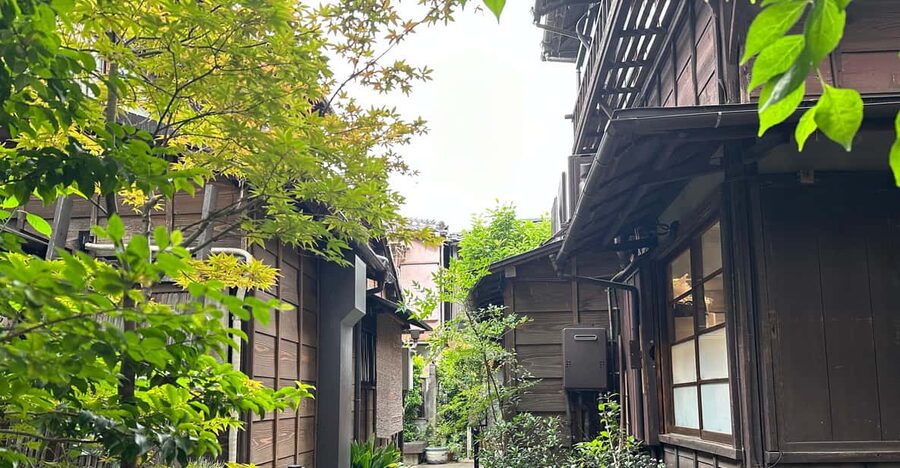
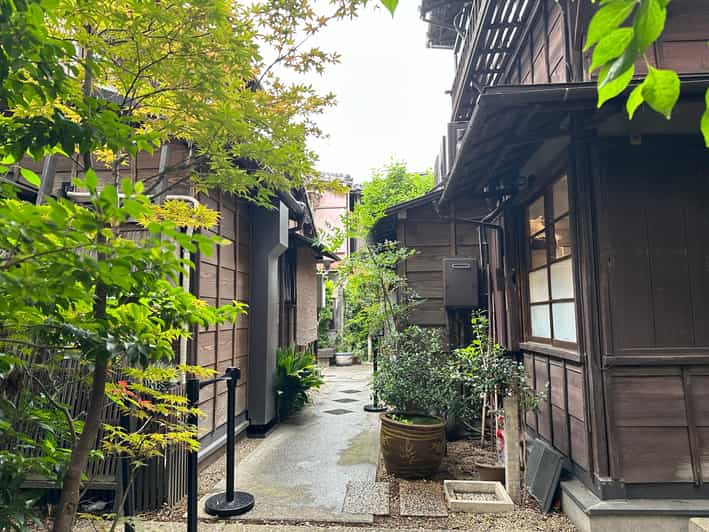
Tokyo is often presented through skyscrapers, department stores, crossings, and glowing signs. Yanaka and Nezu offer a slower picture. Here, the road can narrow to a lane lined with homes, potted plants, little workshops, and modest shops. The city has not disappeared, but it has changed its volume.
This part of Tokyo is especially useful if you want to understand ordinary life rather than collect famous sights. You may see nursery children, older residents going about their day, and local businesses that have survived across generations. The appeal is not one spectacular monument. It is the steady accumulation of small details.
The guide gives those details a place in the story. A house becomes part of Tokyo’s prewar survival. A temple becomes a way to discuss Buddhism. A shrine visit explains Shinto customs and the proper way to pray. That context gives shape to streets that could otherwise look simply old and pleasant.
You begin at the West Exit of Nippori Station, marked for Yanaka. The meeting point is the waiting area just outside the exit. Be on time, since the walk starts promptly. The route finishes at one of three useful points: Nippori Station, Yanaka Ginza, or Nezu Station.
A few more Tokyo experiences worth weighing up
- Mt Fuji and Hakone 1-Day Bus Tour Return by Bullet Train
★ 5.0 · 26,383 reviews - 1-Day Tokyo Bus Tour
★ 5.0 · 14,250 reviews - Tokyo: TOKYO SKYTREE® Admission ticket
★ 4.5 · 11,192 reviews
A relaxed start through residential Yanaka
The opening section leads through quiet residential streets. This is where the tour earns its keep. Instead of rushing between headline attractions, you get time to notice the mix of old and new houses, small storefronts, and daily neighborhood activity.
The guide explains local life as you walk. You might encounter children from a nursery, older residents, or people working in small shops. These encounters are part of the experience, but they are not staged performances. The value comes from observing a normal district while someone helps you understand what you are seeing.
I like this beginning because it prevents the temples and shrines from feeling disconnected from real life. Religion, homes, food, work, and neighborhood relationships appear side by side. The walk also gives Sui room to learn what interests you. Several people have found that she adjusted explanations, added extra stops, or spent a little more time answering questions.
The pace is described as easy, but you should still wear comfortable shoes. There are staircases, uneven stretches, and roughly three and a half hours on your feet. This is not a good match for wheelchair users.
Nezu Shrine and its red torii path
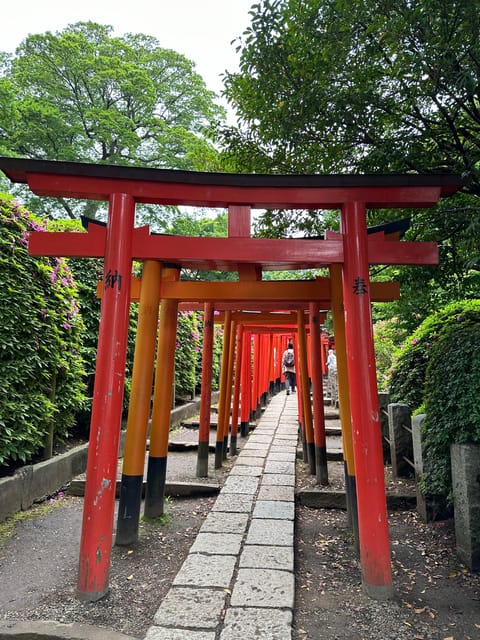
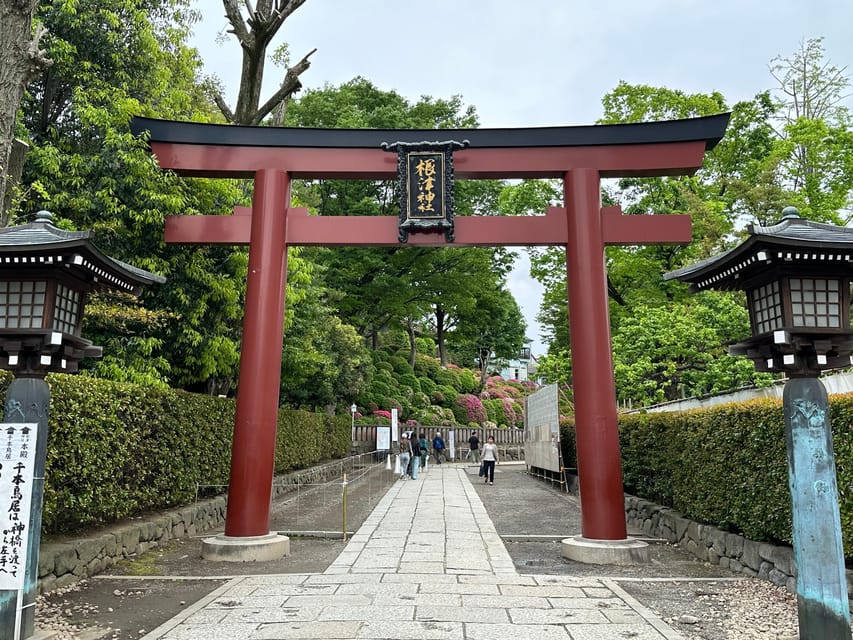
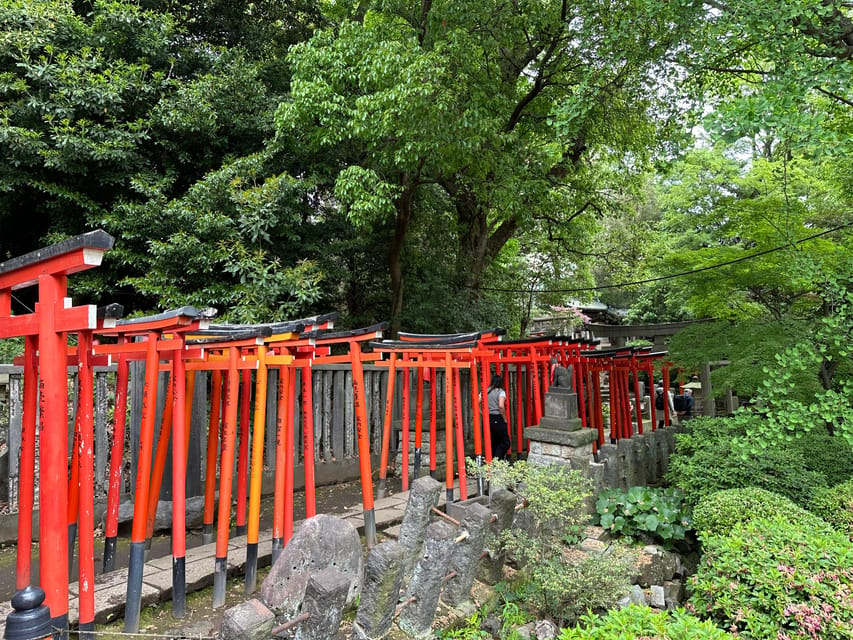
Nezu Shrine is one of the main stops. It is described as one of Tokyo’s oldest places of worship, with a picturesque path lined by torii gates. The repeated red gates create one of the walk’s best photo settings, but the guide’s explanation is more important than the picture.
At a shrine, you can learn how Shinto worship differs from Buddhist practice. Sui has helped people learn how to pray at the various religious sites, making the visit less awkward if you have never used a purification fountain or approached a shrine before.
The shrine also gives the tour a strong visual change. After the plain lanes and local homes, the torii pathway feels formal and symbolic. Yet it remains part of the neighborhood rather than an isolated attraction designed only for international sightseers. The contrast helps you see how sacred places are woven into Tokyo’s residential districts.
Take your time here. The route is not built around rushing in, taking a photograph, and leaving. You can ask about customs, observe worshippers, and enjoy a calmer pause in the middle of the city.
Tennoji Temple and a quieter Buddhist pause
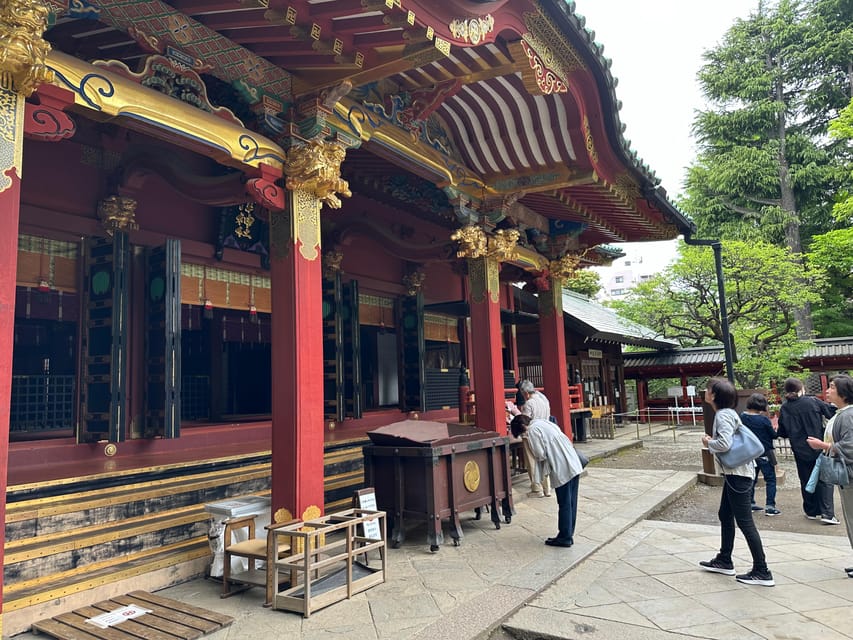
Tennoji Temple brings the Buddhist side of the tour into focus. Its large bronze seated Buddha is the central feature, along with a Japanese garden that offers a quiet place to stop.
This visit works well after Nezu Shrine because you can compare the settings. The tour does not treat Japanese religion as a single system. Instead, it introduces the different places and practices you encounter in a natural order.
The garden and temple grounds are also a welcome change of pace. Several stops on this walk are meant to be calming rather than dramatic. You may find the quieter temples more rewarding than the famous sights elsewhere in Tokyo, especially if you need a break from packed streets and busy stations.
Sui’s role matters here. Religious customs can be confusing when you are seeing them for the first time. A guide who explains what to do, and why, lets you take part respectfully rather than simply watch from the side.
A completely different kind of day out in Tokyo:
- Tokyo: teamLab Planets TOKYO Digital Art Museum Entry Ticket
★ 4.6 · 9,779 reviews - Mt Fuji & Hakone Cruise, Drum Show Bullet Train 1 Day from Tokyo
★ 4.0 · 7,413 reviews - Tokyo: Sumo Show Experience with Chicken Hot Pot and a Photo
★ 4.8 · 6,678 reviews - Tokyo: Shinjuku Food Tour (13 Dishes at 4 Local Eateries)
★ 5.0 · 6,603 reviews
Yanaka Cemetery and Tokyo’s long memory
Yanaka Cemetery is one of Tokyo’s largest and most scenic cemeteries. A row of trees gives the grounds a distinctive appearance, and the cemetery adds a thoughtful pause to the route.
This is not a quick photo stop. It helps explain why Yanaka retained so much of its older character. Cemeteries, temples, and residential streets sit close together, giving the district a strong sense of continuity. You are walking through a living neighborhood, but also through places connected to earlier generations.
The tree-lined paths can be particularly appealing in spring, when the seasonal offer may include free sakura mochi. The dates supplied for the spring benefit include March 25 to April 25, 2026, with a separate note mentioning March 25 to April 10 for the sakura-season special. Since flowering depends on weather, do not book solely for guaranteed blossoms. If sakura mochi is unavailable, it is replaced with another traditional sweet or food item.
Old buildings from Meiji to Showa
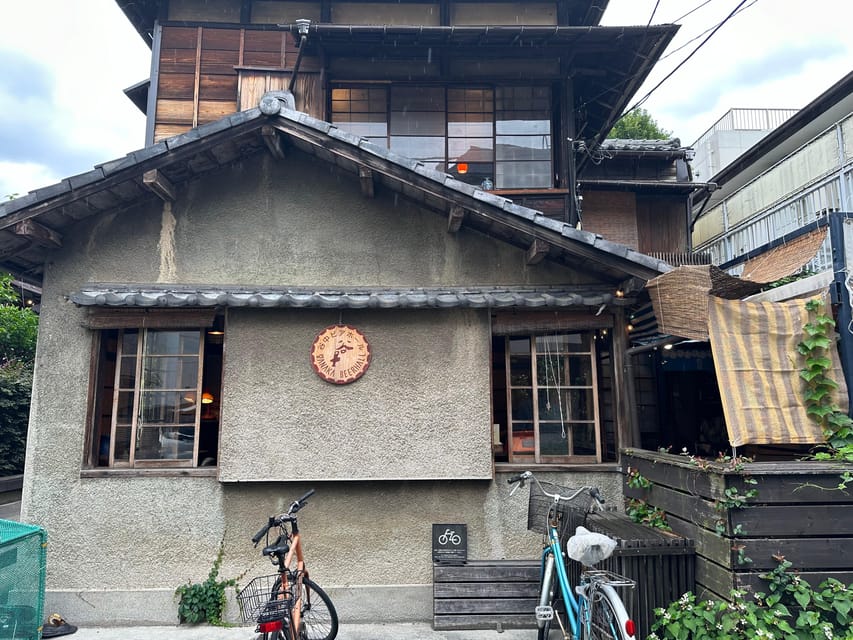
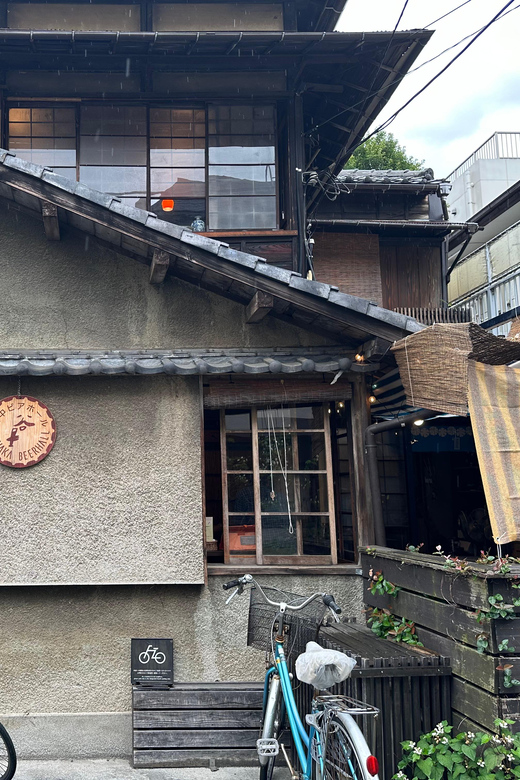
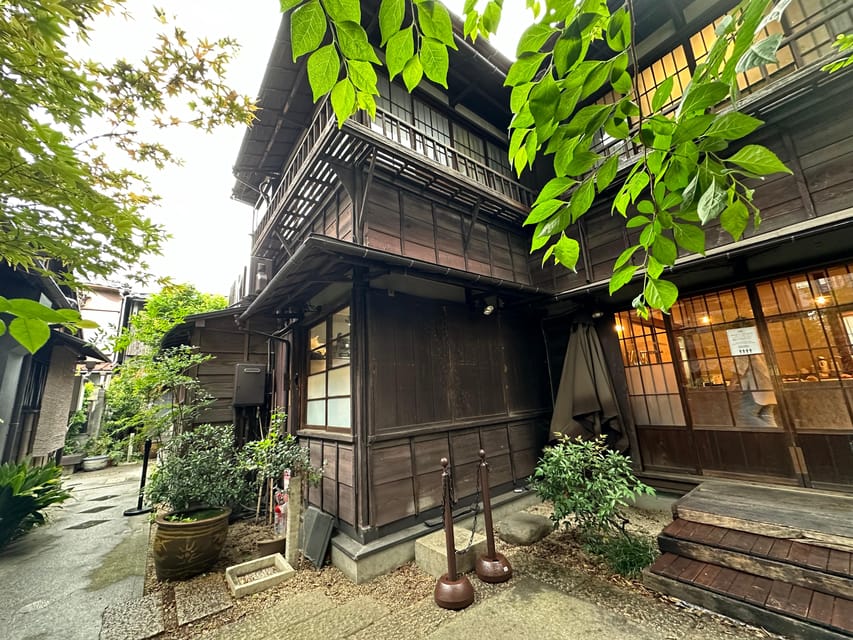
One of the walk’s best features is the look at buildings from the Meiji period, 1868 to 1912, through the Showa period, 1926 to 1989. You see traditional houses and older commercial structures in a district where not every building has been replaced by a modern tower.
The point is not to expect a preserved open-air museum. Yanaka is a working neighborhood. Old buildings appear beside newer ones, which makes the history easier to understand. Tokyo’s past is not presented behind glass. It survives in streets where people still live, shop, and move through their day.
The guide helps identify what you are seeing and explains how the area differs from more commercial parts of the city. Some past tour participants especially valued seeing wooden homes, old bathhouses, and local businesses. Those details can be easy to overlook if you explore without someone who knows the lanes well.
Photography is welcome, but remember that many of these streets are residential. Keep voices low, avoid blocking narrow paths, and treat homes as homes rather than museum displays.
Yoshida Liquor Store and the old local shop tradition
Yoshida Liquor Store provides a look at a traditional Japanese sake shop. Small stores like this help show how shopping once worked and how some family businesses continue across generations.
You may be able to speak with local shopkeepers, although opening hours and daily conditions can vary. Cash is worth carrying, especially if you want to buy a snack, drink, or souvenir from a small business.
This is also where the tour’s personal recommendations become useful. Sui has pointed people toward handmade snacks, local products, and small gifts. You are not simply shown a shopping street and left to guess what is worth trying. The guide can explain what to look for and help you connect a product with the neighborhood.
Keep expectations sensible. This is not a sake tasting event, and the tour does not promise that every shop will be open. Its value is the introduction to a type of business that is easy to miss in Tokyo’s large retail districts.
Yanaka Ginza, street food, and practical shopping
Yanaka Ginza is the liveliest part of the route. This traditional shopping street has food shops, souvenir sellers, and places where your guide can introduce local street foods.
It is a good spot to let your appetite guide you. You may want cash for small purchases, and you should consider eating before the tour or carrying something with you. The walk can extend into lunchtime, and one person specifically found the final stretch hungry.
Yanaka Ginza can also feel busier than the residential lanes and temple grounds. That change is useful because it shows another side of old downtown Tokyo, but it means the tour is not quiet from beginning to end.
The usual route includes Yanaka Ginza, but the summer version does not. From June 1 to September 11, 2026, the tour avoids Yanaka Ginza and ends at Nezu Station. To reduce the risk of heat illness in Tokyo’s hot, humid summer, the route includes a stop at a café in an old traditional building, with one drink included.
Sunset Staircase and the final view
The Sunset Staircase is a popular local photo spot and a natural closing point. The stairs are part of the experience, so this is another reason to choose sensible footwear.
The appeal is modest but real. It is not a grand observation deck. Instead, it gives you a neighborhood view and a chance to photograph the everyday character of Yanaka. If you enjoy small street scenes more than monumental city views, you will likely appreciate this ending.
Depending on the day and the group, the tour may finish a little early or late. The listed drop-off choices are Nippori Station, Yanaka Ginza, and Nezu Station, while the summer version ends at Nezu Station. If you have a tight reservation afterward, leave some spare time.
Guide Sui and the small-group advantage
Sui is the main guide for this Yanaka walk, and her personal approach is one of its strongest features. She is praised for excellent English, humor, patience, clear directions, and a willingness to answer questions well beyond the basic route.
That matters because this is a neighborhood tour, not a checklist of famous monuments. You need a guide who can explain small religious customs, local habits, historical changes, and the practical question of where to eat next.
The small-group setup makes conversation easier. Families have found the walk manageable, and Sui has provided toys and treats for children. She has also helped people find lunch, choose restaurants, locate stations, and take photographs. Private groups are available, so you may have more room to shape the discussion around your interests.
Do not assume every departure will be private. The activity offers private or small-group options, and group size can vary. The benefit is the chance for direct conversation rather than a large crowd following a flag.
Is $29 a good value?
At $29 per person, this is a strong value if you want cultural context and neighborhood access. You are paying for 210 minutes with an English-speaking guide, not for transportation, a major admission ticket, or a meal.
The price works because the route covers several different experiences in one morning or afternoon: residential streets, a Shinto shrine, Buddhist temples, a cemetery, old shops, a shopping street, and local food suggestions. Hiring a guide privately for that much time would usually cost far more, though no outside prices are supplied here.
The included extras are seasonal. During the stated spring period, you may receive sakura mochi or another traditional sweet if the mochi is unavailable. During the summer period, one café drink is included. Outside those periods, do not expect food or drinks to be part of the price.
Who should book this walk?
I would choose this for a first or second Tokyo visit if you want a break from Shibuya and Shinjuku. It suits people who enjoy history, religion, local shops, photography, and conversation more than rapid sightseeing.
Families can benefit from Sui’s attentive approach, especially if children need occasional help staying interested. It also works well for solo visitors, since a small group or private format creates easy conversation.
You should think twice if you dislike walking, stairs, humid weather, or flexible finishing times. It is also less suitable if your main goal is shopping, since some shops may be closed, particularly on Mondays. The tour is not wheelchair accessible.
Free cancellation is available up to 24 hours before the start, and you can reserve now and pay later. Check the exact departure time and seasonal route before booking.
My verdict: a smart way to meet old Tokyo
Book this tour if you want Tokyo to feel like a collection of neighborhoods rather than a parade of famous sights. The temples and torii are attractive, but the real reward is the connection between those places and the people, homes, shops, and customs around them.
I especially like the combination of a relaxed route and a guide who gives practical help. Sui’s local suggestions, clear English, family-friendly manner, and willingness to spend extra time have made this walk unusually personal.
Come prepared to walk, carry cash, eat beforehand, and accept that a few shops may be closed. If that sounds fine, $29 buys an unusually useful introduction to Yanaka and Nezu, two of Tokyo’s best areas for seeing the city at street level.
FAQ
How long is the Yanaka and Nezu walking tour?
The tour lasts 210 minutes, or about 3.5 hours. It may finish slightly earlier or later depending on the day and the group.
Where does the tour begin?
It begins at Nippori Station, at the West Exit marked for Yanaka. The guide waits in the waiting area after you leave the exit.
Where can the tour finish?
The listed finishing points are Nippori Station, Yanaka Ginza, and Nezu Station. The summer route ends at Nezu Station.
Is the tour conducted in English?
Yes. The tour includes a live English-speaking guide.
Is this a private tour?
Private and small-group options are available. The exact format depends on the option you book.
Does the tour visit both a shrine and a temple?
Yes. The route includes Nezu Shrine and Tennoji Temple, along with other temples, shrines, and religious sites.
Is food included?
Food is not generally included. During the stated spring season, sakura mochi or another traditional sweet is provided. During the stated summer season, one drink at an old traditional café is included.
Should I bring cash?
Yes. Cash is recommended for purchases at small shops, local food sellers, and souvenir stores.
Are there stairs on the route?
Yes. Staircases are used during the tour, including at the Sunset Staircase.
Is the tour suitable for wheelchair users?
No. The tour is not suitable for wheelchair users.
Just added around Tokyo
- From Tokyo: Tokyo Private Customize Tour With English Driver★ 5.0 · 37 reviews
- Tokyo Time Machine: Exploring Old School Monzen-Nakacho★ 5.0 · 37 reviews
- Tokyo Tsukiji Fish Market Food & Culture Walking Tour★ 5.0 · 37 reviews
- Private Tokyo with Exceptional Guide Tailored to Your Needs★ 5.0 · 37 reviews
- Tokyo Photoshoot Tour with a Local Photographer★ 5.0 · 37 reviews
- Traditional Japanese Comedy, Juggling & Magic Live Show in Tokyo★ 5.0 · 37 reviews
- Tokyo Tower Observation Deck E-Tickets.★ 4.0 · 37 reviews
- Tokyo: 7 Kinds of Sake Tasting with Japanese Food Pairings★ 4.9 · 37 reviews
Tokyo Tours, compared.
Mt Fuji and Hakone 1-Day Bus Tour Return by Bullet Train
Read our review →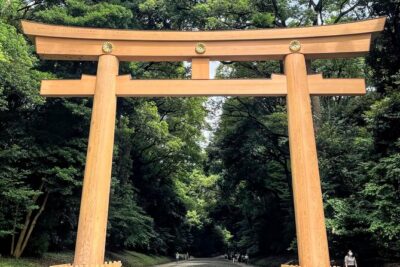


teamLab Planets TOKYO Digital Art Museum Entry Ticket
Read our review →
Mt Fuji & Hakone Cruise, Drum Show Bullet Train 1 Day from Tokyo
Read our review →
Shinjuku Food Tour (13 Dishes at 4 Local Eateries)
Read our review →
Tokyo Mt Fuji 5th St & Hakone Cruise Bus Tour w/Bullet Train
Read our review →