Reviewed · GUIDED
Private Tokyo with Exceptional Guide Tailored to Your Needs
Tokyo rewards curiosity.
This private tour lets you shape the day around what you actually want to see, from Senso-ji and Shibuya Crossing to quiet shopping streets and local food stops. I especially like the one-to-one format and the choice between public transport and a private car. The main consideration is that lunch, transit, and many entrance fees cost extra.
You can book four or eight hours, then choose roughly two or three places for a half-day or four or five for a full day. I also like the advance WhatsApp planning, which guides such as Hitomi, Miyuki, Miho, and Kaz have used to match sightseeing with each group’s interests. The only catch is that Tokyo is huge, so an ambitious wish list may mean rushing between districts.
In This Review
- What makes this Tokyo tour different
- A private day that starts at your hotel
- How much can you see in four or eight hours?
- Tsukiji Fish Market: a tasty start
- Senso-ji and Asakusa: Tokyo’s traditional face
- Meiji Jingu: trees, quiet, and a change of pace
- Shibuya Crossing: Tokyo in one short burst
- Imperial Palace: moats and the old Edo center
- Akihabara, Harajuku, and Omotesando
- Yanaka Ginza and Ueno: slower Tokyo
- Smaller districts and special local stops
- The guides are a major part of the value
- Price, extra costs, and overall value
- Who should book this private Tokyo experience?
- Should you book it?
- FAQ
- How long is the private Tokyo tour?
- How many places can I visit?
- Is hotel pickup included?
- Can I use public transportation?
- Is lunch included?
- Are attraction entrance fees included?
- What happens if the weather is poor?
What makes this Tokyo tour different
- Your itinerary is built around you: Pick major sights, food markets, shopping streets, museums, temples, or local neighborhoods.
- Hotel pickup removes a morning headache: You begin at your accommodation instead of finding a meeting point in an unfamiliar city.
- Public transport teaches you Tokyo: Guides help you use the city’s trains and subways, a skill that remains useful for the rest of your visit.
- Several guides bring different local connections: Hitomi, Miyuki, Miho, and Kaz are praised for thoughtful planning, humor, and strong cultural explanations.
- Four hours can cover highlights, while eight hours allows contrast: Combine famous Tokyo with less familiar districts, but keep the route realistic.
- The private format suits families and first-time visitors: You set the pace, ask questions freely, and avoid being held to another group’s schedule.
A private day that starts at your hotel
Tokyo can feel like several cities stitched together by rail. A private guide helps turn that apparent confusion into a workable plan, especially on your first or second day.
Before you meet, you can discuss interests and priorities through WhatsApp. This matters because the tour is not a fixed sightseeing march. You might focus on temples and shrines, anime and manga, food, fashion, traditional neighborhoods, museums, or a mixture of all five.
Hotel pickup is included, which is especially useful after a long flight. Your guide can meet you where you are staying and begin with the route that makes the most sense. The exact pickup area is not specified, so confirm it when booking.
You also choose how to move around. Public transport costs extra, and buying a Tokyo Subway 24-hour, 48-hour, or 72-hour ticket in advance is recommended. If you choose the private car option, the car is included, giving you more comfort and reducing the time spent changing trains.
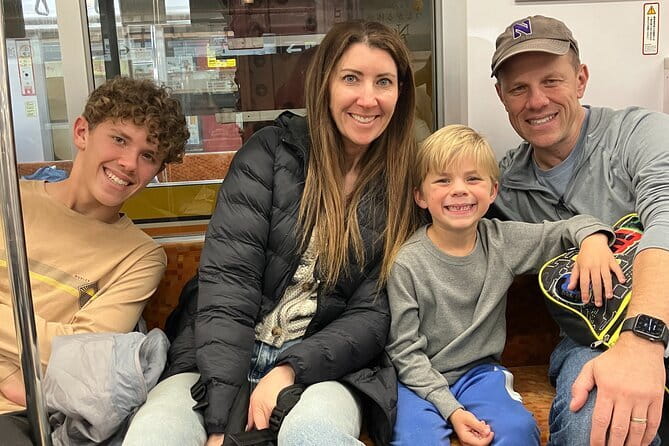
I would choose public transport if you want to learn Tokyo’s system and keep costs down. Guides have helped families become comfortable enough to continue using trains and subways on their own. Choose the car if your group includes people who tire easily, if you want less walking between districts, or if you are carrying shopping bags.
A few more Tokyo experiences worth weighing up
- Mt Fuji and Hakone 1-Day Bus Tour Return by Bullet Train
★ 5.0 · 26,383 reviews - 1-Day Tokyo Bus Tour
★ 5.0 · 14,250 reviews - Tokyo: TOKYO SKYTREE® Admission ticket
★ 4.5 · 11,192 reviews
How much can you see in four or eight hours?
The four-hour option is best treated as an introduction, not a citywide sweep. You can select two or three locations, with about an hour at larger sights and less time at quick photo stops.
A sensible half-day might combine Tsukiji Fish Market with Asakusa, or Meiji Jingu with Shibuya and Harajuku. Trying to include Tsukiji, the Imperial Palace, Akihabara, Yanaka, and Shibuya in four hours would leave little time for the experiences that make a private guide worthwhile.
The eight-hour tour allows four or five places. That is still not enough for every district listed, but it gives you time to mix major attractions with a neighborhood that you probably would not reach alone.
The guides are happy to recommend a route. Take that advice seriously. Tokyo’s size, rail connections, crowds, and walking distances make geography more important than a simple list of famous names.
Tsukiji Fish Market: a tasty start
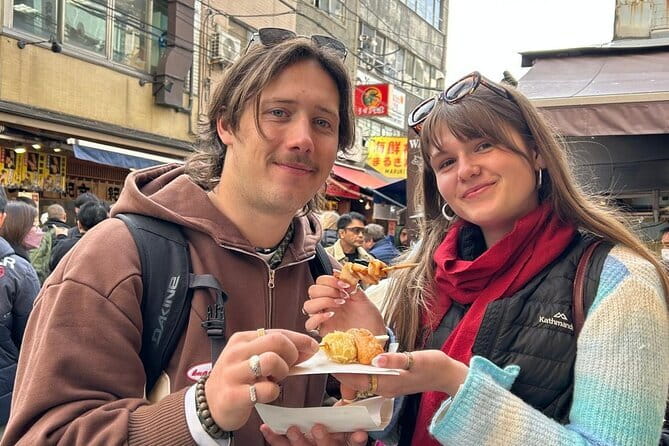
Tsukiji is a good choice if food is one of your reasons for visiting Japan. You can look over fresh seafood, watch local shopping activity, and try snacks from small vendors.
Admission is free, but you should budget for anything you eat. The market is best approached as a sensory stop rather than a formal attraction. You browse, sample, and follow your appetite.
A guide helps explain what you are seeing and can make the stop less awkward if you are unsure how to order or what to try. Keep in mind that this is an active market, not a quiet museum. It can be crowded, and the pace may be quick.
Senso-ji and Asakusa: Tokyo’s traditional face
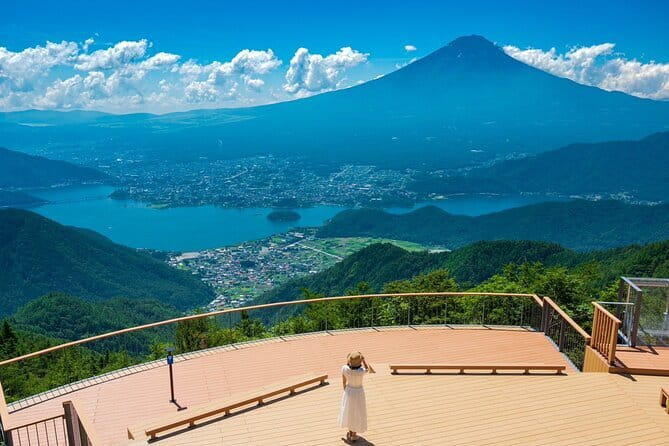
Senso-ji offers one of the clearest introductions to old Tokyo. The huge red lanterns and temple grounds make an immediate impression, while Asakusa gives you a chance to talk about Japanese customs, fortune slips, prayers, and everyday religious practice.
Your guide can add context that a photograph cannot. You may learn how to behave at the temple, how to approach a fortune, or why visitors write wishes and hang them at the site.
Admission is free, though food and shopping nearby are extra. Allow about an hour. Asakusa is popular, so do not expect a private, empty temple visit. The value here comes from having someone explain the details while you watch the crowds and ceremonies around you.
A completely different kind of day out in Tokyo:
- Tokyo: teamLab Planets TOKYO Digital Art Museum Entry Ticket
★ 4.6 · 9,779 reviews - Mt Fuji & Hakone Cruise, Drum Show Bullet Train 1 Day from Tokyo
★ 4.0 · 7,413 reviews - Tokyo: Sumo Show Experience with Chicken Hot Pot and a Photo
★ 4.8 · 6,678 reviews - Tokyo: Shinjuku Food Tour (13 Dishes at 4 Local Eateries)
★ 5.0 · 6,603 reviews
Meiji Jingu: trees, quiet, and a change of pace
Meiji Jingu gives the day breathing room. Its wooded approach and sacred atmosphere feel far removed from nearby Harajuku, even though the two can be paired conveniently.
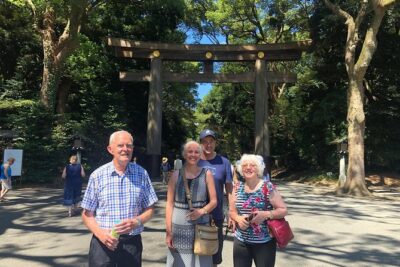
A guide can explain the shrine’s customs and its place in modern Japanese life. The experience is less about checking off a building and more about noticing the approach, the trees, the gates, and the respectful rhythm of the visit.
The stop is free and generally takes about an hour. It does involve walking, so sensible shoes matter. The tour requires a moderate level of physical fitness, and this is one of the places where that condition becomes practical rather than mere fine print.
Shibuya Crossing: Tokyo in one short burst
Shibuya Crossing is a quick stop with a big visual payoff. You can watch the famous intersection, record a video, and visit the bronze Hachiko statue.
Thirty minutes is enough for the basic experience. Your guide can help you understand how to approach the area and connect it with nearby sights. It is not a place for a long historical talk, but it provides a sharp contrast with Meiji Jingu.
If you want a slower look at the district, say so before the tour. Otherwise, Shibuya works well as part of a half-day route with Harajuku or Meiji Jingu.
Imperial Palace: moats and the old Edo center
The Imperial Palace area occupies the former site of Edo Castle. You can see broad parkland, moats, and massive stone walls, all free to visit according to the tour details.
This stop is useful for understanding Tokyo’s transformation from Edo to the modern capital. It also gives you a break from tightly packed commercial streets.
Plan on about an hour, with walking involved. The palace grounds are not simply another quick photo stop, so adding them to a route that already crosses the entire city may make the day feel hurried.
Akihabara, Harajuku, and Omotesando
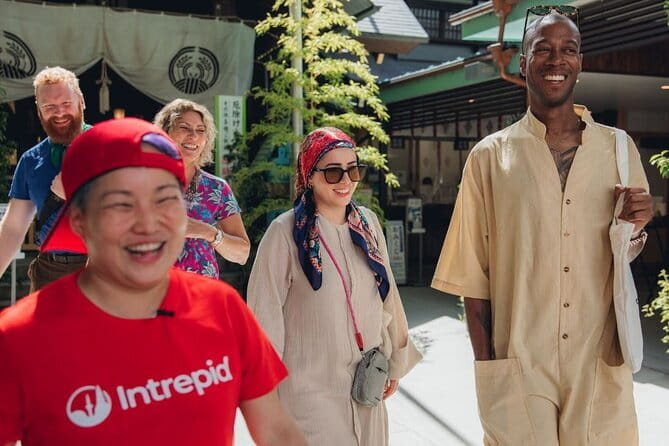
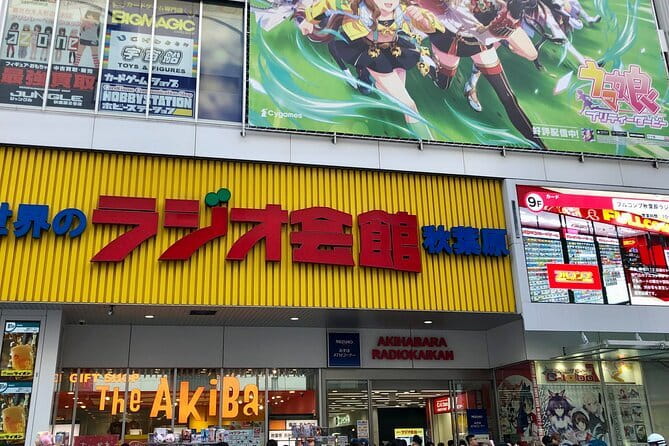
Akihabara is the obvious choice for anime, manga, games, and other parts of Japanese pop culture. Thirty minutes gives you a first look, but anyone with a serious interest in the area should tell the guide in advance so the stop can be shaped around that interest.
Harajuku offers two different moods. Takeshita Street is packed with cute merchandise, fashion, and colorful treats such as rainbow cotton candy. Omotesando, often compared with Paris’s Champs-Elysees, brings striking architecture, designer shops, youth-oriented stores, and galleries.
Takeshita Street and Omotesando each receive about thirty minutes in the suggested schedule. That is enough to see the character of each, not enough for a long shopping session. If shopping is your priority, use fewer stops.
One of the tour’s more unusual suggestions is a break at a contemporary art cafe connected with Takashi Murakami. The description presents it as a way to see that there is more to Akihabara than the usual anime circuit. Confirm availability and the exact plan with your guide before counting on it.
Yanaka Ginza and Ueno: slower Tokyo
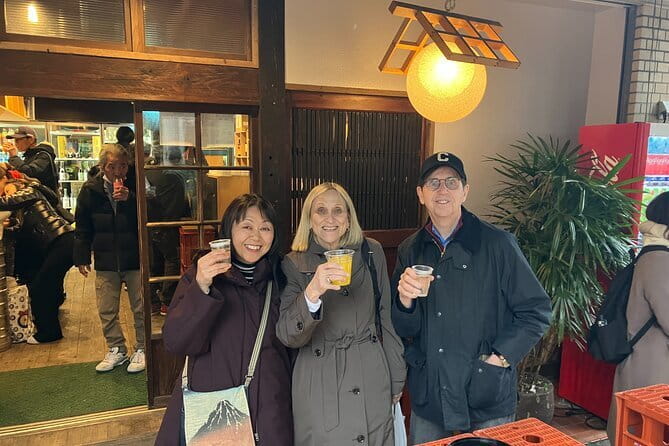
Yanaka Ginza Shopping Street is a strong choice if you want a neighborhood feel. Narrow streets retain traces of older Tokyo, with small shops, snacks, and places where locals eat or drink informally.
This is the kind of stop that benefits most from a private guide. You are not just looking at a famous landmark. You are given a chance to notice how a neighborhood works and to ask about the food, customs, and shops along the way.
Ueno Park is known for cherry blossoms, but the suggested visit points beyond seasonal flowers. The area includes seven museums and Ueno Toshogu, a richly decorated mausoleum associated with the Tokugawa family. The tour does not include entrance fees, so ask about costs if you want to enter a museum or facility.
Yanaka and Ueno pair naturally for a quieter day, but they may not satisfy someone who wants Tokyo’s giant signs and famous crossings. Tell your guide what kind of city experience you want.
Smaller districts and special local stops
The additional suggestions show how flexible this experience can be. One route leads through a cluster of shopping streets, with vintage clothing and vinyl records, plus a weather shrine where you can pray for sunshine.
Another visits the birthplace of beckoning cats. The temple grounds are lined with Maneki Neko figures, and the guide can explain the story behind this familiar Japanese symbol.
For a film-related outing, Teishakuten Temple preserves scenery associated with the movie Otoko wa Tsuraiyo. Its sculptures and Japanese garden make it a good choice for a slower excursion, and you may stop for dumplings at a tea house.
These options are not interchangeable with central Tokyo highlights. Some require more planning and may suit a full day better. They are valuable because they let you see the city through a local connection instead of repeating the same central route used by almost everyone.
The guides are a major part of the value
The strongest part of this tour is not simply transportation or sightseeing. It is the guide assigned to your group.
Hitomi is praised for being funny, friendly, organized, and attentive. She has guided families through museums, parks, temples, shrines, shopping areas, and major central sights. She also helped one couple use public transport and plan their days around personal interests.
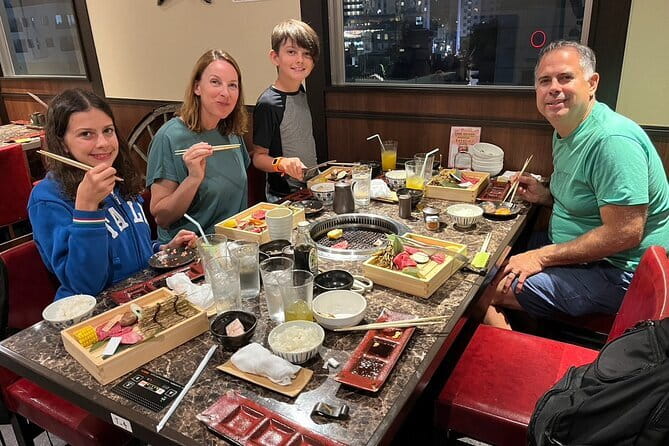
Miyuki is noted for detailed historical explanations, practical suggestions, food recommendations, and advance help through WhatsApp. She has taken groups to small neighborhood restaurants for gyoza, Japanese-style fried chicken, and warm sake, though food and lunch are not included in the tour price.
Miho is described as careful with time planning. She asked what the group wanted and arranged the four-hour visit accordingly, including seasonal flowers, Asakusa, and fortune-telling.
Kaz is praised for discussing interests before the tour and adding suggestions to a must-see list. His approach suits people who want both famous sights and conversation along the way.
The company also helped one mother and teenage son arrange additional cultural activities, including a private samurai sword experience and difficult-to-obtain Ghibli Museum tickets. Those arrangements are not part of this tour, so treat them as examples of possible assistance, not promised inclusions.
Price, extra costs, and overall value
The listed price is $151.54 per person. The final value depends heavily on your group size, tour length, and transport choice.
For a private group, that price can be reasonable because you are paying for planning, hotel pickup, interpretation, local advice, and time with a dedicated guide. A guide can also help you avoid wasting half a morning on the wrong train or an overpacked route.
The price does not include lunch, public transportation, or entrance fees. If the guide enters a paid facility with you, you must cover the guide’s admission as well. Factor these costs in before booking.
Public transport is likely the better value if you are comfortable walking and want to learn the system. A private car costs more if selected, but it can be worthwhile for comfort and for groups that prefer not to navigate stations.
The included bottled water and advice for the rest of your stay are small benefits, but the continuing advice may be the most useful part. A good first day can help you make better choices for the following days.
Who should book this private Tokyo experience?
I would recommend it most strongly to first-time visitors, families, couples with different interests, and anyone who wants a custom day rather than a fixed route.
It also suits visitors with only one free day in Tokyo. You can identify your priorities, ask the guide to arrange the route, and get a practical introduction to public transport.
It is less suited to independent visitors who already know Tokyo well and enjoy building every route themselves. It may also disappoint anyone expecting every major sight in one day. The tour is flexible, but Tokyo is still enormous.
Wear comfortable shoes and be ready for walking, stairs, stations, and changing neighborhoods. If rain would seriously affect your plans, remember that the experience requires good weather and may be moved or fully refunded if poor conditions cause cancellation.
Should you book it?
Book this tour if you want Tokyo explained as you see it, not just photographed. The strongest reasons are the careful pre-trip planning, hotel pickup, private format, and guides who can connect major sights with local streets, food, customs, and personal interests.
Choose the four-hour option for a focused introduction. Choose eight hours if you want both classic Tokyo and less familiar districts. I would select public transport for practical value and a private car for comfort.
With a perfect 5 rating from 37 published ratings and 100 percent recommending it, the experience has a strong record. Still, its success depends on sharing clear priorities and accepting that extra costs apply. If you do that, this is a useful first step into a very large city.
FAQ
How long is the private Tokyo tour?
You can choose a half-day tour of about four hours or a full-day tour of about eight hours.
How many places can I visit?
For four hours, you can generally choose two or three places. For eight hours, you can generally choose four or five places. Your guide can recommend a practical route.
Is hotel pickup included?
Yes. Hotel pickup is offered for added convenience. Confirm the exact pickup details when booking.
Can I use public transportation?
Yes. You can travel by public transport or select the private car option. Public transportation costs extra, and advance purchase of a Tokyo Subway 24-hour, 48-hour, or 72-hour ticket is recommended.
Is lunch included?
No. Lunch is not included. You must also pay for the guide’s portion of lunch.
Are attraction entrance fees included?
No. Entrance fees are not included. If you want the guide to accompany you into a paid facility, you must pay the guide’s entrance fee as well.
What happens if the weather is poor?
The experience requires good weather. If it is canceled because of poor weather, you will be offered another date or a full refund. You can also cancel up to 24 hours before the start time for a full refund.
Just added around Tokyo
- From Tokyo: Tokyo Private Customize Tour With English Driver★ 5.0 · 37 reviews
- Tokyo Time Machine: Exploring Old School Monzen-Nakacho★ 5.0 · 37 reviews
- Tokyo Tsukiji Fish Market Food & Culture Walking Tour★ 5.0 · 37 reviews
- Tokyo Photoshoot Tour with a Local Photographer★ 5.0 · 37 reviews
- Traditional Japanese Comedy, Juggling & Magic Live Show in Tokyo★ 5.0 · 37 reviews
- Kyoto: Nijo Castle World Heritage Guided Tour with Admission★ 4.9 · 37 reviews
- Tokyo Tower Observation Deck E-Tickets.★ 4.0 · 37 reviews
- Tokyo: 7 Kinds of Sake Tasting with Japanese Food Pairings★ 4.9 · 37 reviews
Guided, compared.
Tokyo 6hr Private Tour with Government-Licensed Guide
Read our review →
Shinjuku Local Bar and Izakaya Guided Walking Tour
Read our review →
Private City Highlights Tour with Local Guide
Read our review →
Kyoto Early Morning Tour with English-Speaking Guide
Read our review →
Tokyo 4hr Private Tour with Government-Licensed Guide
Read our review →
Kyoto 6hr Private Tour with Government-Licensed Guide
Read our review →