
Reviewed · CASTLE TOURS
Kyoto: Nijo Castle World Heritage Guided Tour with Admission
Power once spoke through floorboards. This 90-minute walk through Kyoto’s Nijo Castle brings the shogun and Emperor rivalry into clear focus, with a guide explaining why Tokugawa rulers built such a grand palace beside the Emperor’s home. I especially like the small group, limited to 10 people, and the chance to hear the nightingale floors chirp underfoot inside Ninomaru Palace.
I also like that admission is included, so you can focus on the castle rather than sorting out another ticket. The main consideration is time: 90 minutes gives you a strong introduction, but Nijo Castle is large, and you will not see every corner at a leisurely pace. The palace also requires you to remove your shoes, so wear socks you will not mind showing off.
In This Review
- Key points at a glance
- Why Nijo Castle is more than an old palace
- Meeting at Nijōjō-mae Station
- Entering a castle built for display
- Ninomaru Palace and the rules written into wood
- The room where the shogunate ended
- Gardens, moats, and a slower look outside
- How the guides shape the experience
- Is $40 a fair price?
- Who should book this Nijo Castle tour?
- Should you book it?
- FAQ
- Where does the Nijo Castle tour meet?
- How long does the tour last?
- Is admission to Nijo Castle included?
- What language is the tour offered in?
- How large is the group?
- Do I need to remove my shoes?
- Is the route wheelchair accessible?
- What is the cancellation policy?
- Can I reserve now and pay later?
Key points at a glance
- The 1867 turning point: Visit the palace where Tokugawa Yoshinobu returned authority to the Emperor, ending more than 260 years of shogunate rule.
- A palace built to intimidate: Room size, floor height, gates, and decoration all expressed social rank and political power.
- The famous nightingale floors: Hear the boards chirp as you walk, a clever warning system designed to expose intruders.
- A small, personal group: The tour is limited to 10 people, and some departures may feel almost private if attendance is low.
- Koi and castle gardens: Take time to look beyond the buildings for colorful carp moving through the moats and ponds.
- Several praised guides: Nao, Naoya, Uta, Benjamin, and Alexander have all been singled out for clear English, humor, patience, and useful Kyoto advice.
Why Nijo Castle is more than an old palace
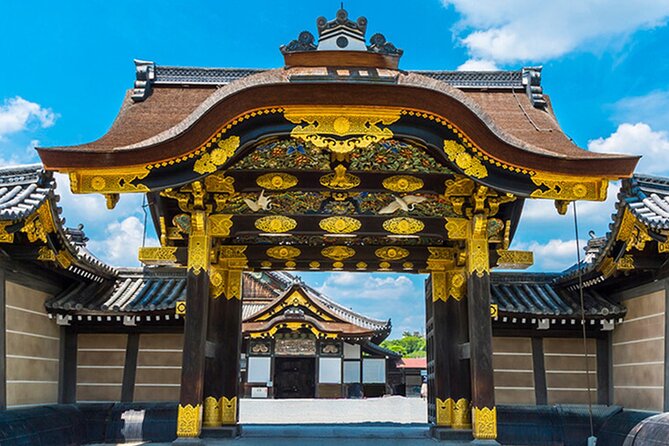
Nijo Castle can look, at first glance, like another grand Japanese landmark with tiled roofs, gates, gardens, and carefully maintained wooden buildings. The guided visit gives those details a political purpose.
This was not simply a defensive fortress. The Tokugawa shoguns ruled Japan from Edo, now Tokyo, yet they built an impressive palace in Kyoto, right beside the Emperor’s residence. The message was blunt: the shogun might live far away, but his authority reached into the Emperor’s own city.
I find that idea makes the visit much easier to understand. The castle was designed for display, intimidation, and control. Every approach, doorway, corridor, and room helped put visitors in their place. You are not just admiring old architecture. You are walking through a carefully arranged statement of power.
That is where a guide earns the $40 price. Without context, you might notice the polished wood and painted panels but miss the political theater. With an English-speaking local guide, you can connect the building to the long rivalry between military rulers and the imperial court.
More Castle Tours in Tokyo
- Tokyo Castle & Imperial PalaceーShogun Walking Tour
★ 4.7 · 1,068 reviews - Tokyo Castle & Imperial PalaceーShogun Walking Tour
★ 5.0 · 724 reviews - Imperial Palace East Garden and Edo Castle Walking Tour in Tokyo
★ 5.0 · 510 reviews
Meeting at Nijōjō-mae Station
The tour begins outside Exit 1 of Nijōjō-mae Station. Look for a guide holding a Local Guide Stars sign. This is a practical meeting point because you do not need to search around the castle grounds or guess which entrance to use.
Arrive with enough time to find Exit 1 without rushing. The activity starts at the station and returns there after the castle visit, making it easy to continue your Kyoto sightseeing afterward.
The group limit of 10 matters here. Nijo Castle has plenty of details that are easy to miss, and a smaller group lets you stay close to the guide. You can ask about the castle’s design, Japanese customs, or the transition from shogunate rule to imperial government without trying to speak over a large crowd.
The group may be even smaller. Bronte and Franziska both described tours that became almost private experiences because they were the only participants. That is not guaranteed, but it shows the potential value of booking a small-group departure rather than joining a large coach tour.
Entering a castle built for display
The first part of the walk introduces Nijo Castle as a stage for political power. You will move through spaces that were meant to impress and unsettle visitors, not just protect the people inside.
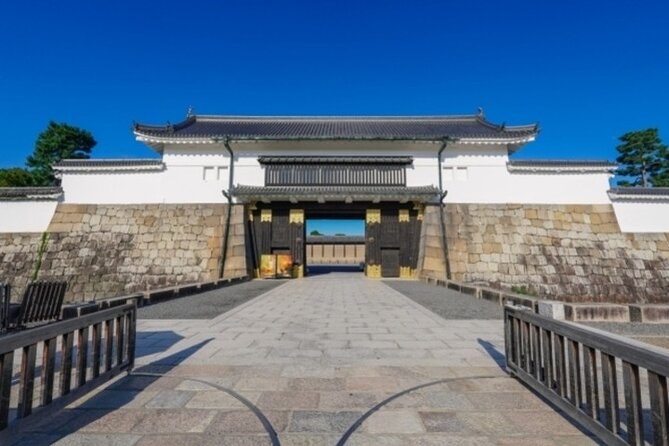
The gates and corridors are important. Their arrangement helped control how people approached the palace and how much they could see. A visitor did not simply stroll straight to an important room. The route itself reinforced rank and obedience.
I like this approach because it turns a formal building into a readable one. Instead of hearing a list of dates, you learn how architecture can make a visitor feel small. The guide points out how layered gates, controlled views, and changes in room proportions worked together.
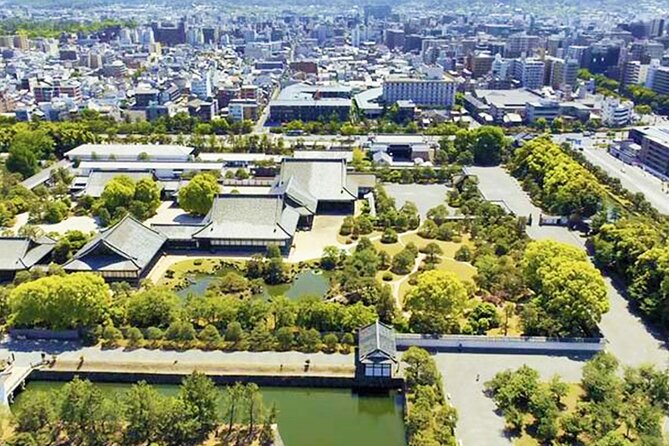
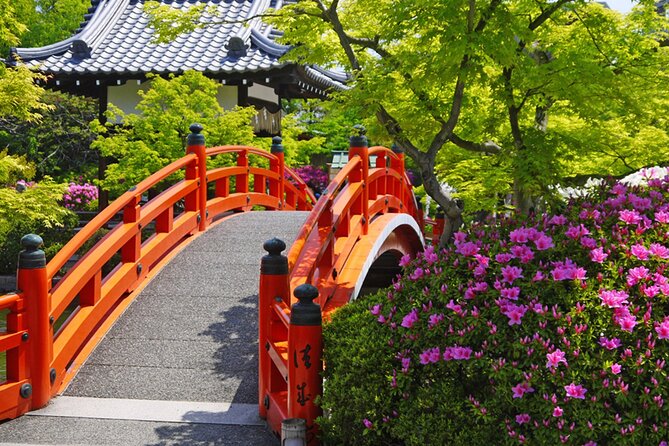
The grounds also give the tour visual appeal. The gardens and moats offer photogenic views, with colorful koi carp swimming through the water. You will want to pause for photographs, but keep an eye on the clock. The tour has a clear 90-minute limit, and the palace interior is the main historical focus.
Ninomaru Palace and the rules written into wood
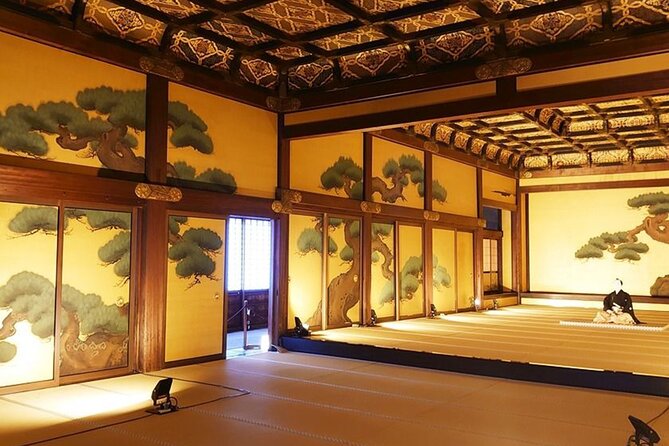
Ninomaru Palace is the heart of the experience. Inside, you remove your shoes and follow the route through a series of rooms and corridors. The palace’s design makes social hierarchy visible in ways that are surprisingly easy to grasp.
Room size, floor height, decoration, and position all reflected status. Important visitors did not stand wherever they liked. The building told them where to wait, where to sit, and how close they could come to the shogun.
That is a useful detail for families and first-time visitors. Children may not care about a long date list, but they can understand a building where the rooms themselves show who mattered most. The same is true for adults who want more than a quick look at painted screens.
You will also hear the famous nightingale floors. The wooden boards chirp underfoot as you walk, warning occupants when someone moves through the corridors. The sound is one of Nijo Castle’s best-known features, and experiencing it in person is more memorable than reading about it.
Do not expect a dramatic alarm system. The charm is in the small mechanical detail. The floor makes an ordinary act, walking, impossible to ignore. It is a good example of how the castle used design to support security without turning every room into a military installation.
The shoe removal is a practical point worth planning for. You must remove your shoes before entering the palace, and the tour involves walking through the interior. Comfortable socks are a sensible choice. The mostly flat terrain helps, and the activity is listed as wheelchair accessible, though the palace’s shoe-removal rule still applies to all visitors.
More History Tours in Tokyo
- Tokyo: Imperial Palace and Shogun Historical Walking Tour
★ 5.0 · 2,251 reviews - Tokyo: Imperial Palace Japanese History Walking Tour
★ 4.9 · 987 reviews - Tokyo: Shinjuku Historical Walking Tour & Secret Backstreets
★ 5.0 · 530 reviews - Yanaka Walking Tour: Historic and Traditional District of Tokyo
★ 5.0 · 530 reviews
The room where the shogunate ended
The most powerful stop comes near the end of the political story. In 1867, Tokugawa Yoshinobu returned authority to the Emperor at Nijo Castle, ending more than 260 years of Tokugawa shogunate rule.
The event helped open the way to the Meiji Restoration, a major change in Japan’s government and society. Standing in the room connected to that decision gives the visit a clear finish. You begin with the shogun asserting power beside the Emperor’s residence, then end with that military government giving authority back to the imperial court.
I appreciate that the tour does not treat the castle as frozen in an earlier age. Nijo Castle also marks a national turning point. The same building that displayed Tokugawa control became associated with the end of that rule.
This is where a good guide can make a real difference. Nao was praised for explaining the castle in depth and answering questions. Naoya was also noted for linking the site to both past and present Japanese culture. Uta brought local customs into the discussion, while Benjamin was praised for mixing information with humor.
Guide quality can vary on any scheduled tour, but the repeated praise for clear English and personal attention is encouraging. The strongest reports describe guides who answer questions rather than reciting a fixed speech.
Gardens, moats, and a slower look outside
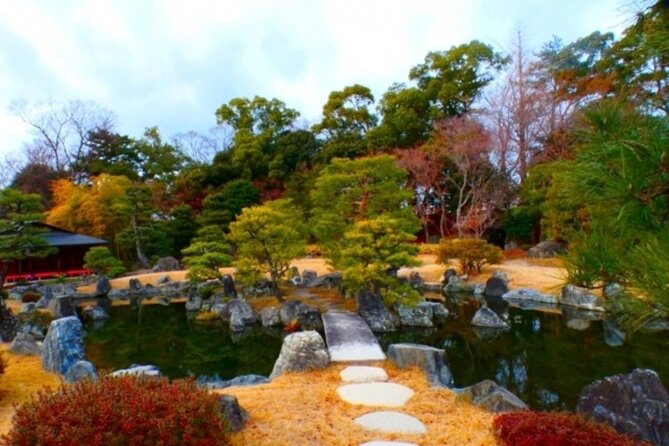
The palace rooms provide the main lesson, but the gardens keep the visit from feeling like an indoor history lecture. Nijo Castle’s grounds include moats, stonework, planted areas, and water where koi carp add flashes of color.
I would make room for a few quiet pauses outside. The gardens show another side of the castle’s purpose. A ruler needed to appear cultured and refined as well as powerful. The polished palace interiors and composed gardens helped create that image.
Photography is especially appealing around the water and gardens. The koi are a small detail, but they give the grounds movement and color. If you are visiting Kyoto with a camera or phone, this is where you can collect some of the most attractive images.
The tradeoff is that a guided 90-minute visit can feel brisk. You will have enough time to understand the main buildings, palace interiors, political story, and selected garden views. You may not have time to stop at every attractive angle or read every sign on your own.
If you want a long, unhurried garden visit, plan to return independently or allow extra time around the tour. The guided experience is best for structure and context, not for wandering without a schedule.
How the guides shape the experience
The tour’s most praised feature is the human element. Nao is repeatedly described as friendly, passionate, and able to explain the castle in clear English. Naoya received similar praise for answering questions, keeping to the group’s pace, and offering suggestions for other places to see.
That pace can matter if you are traveling with several generations. Alina took the tour with relatives over 65 and two children, ages 13 and 8, and found that Naoya handled the mixed group well. He answered questions and adjusted to their pace.
Uta was praised for adding information about local culture and customs, not just the castle itself. Benjamin was described as friendly and amusing while still covering the important facts. Alexander received a short but very positive report for explaining the material clearly.
You should not book this expecting a private guide guaranteed by name. Guides are assigned by the operator, and the available names can change. Still, the pattern is clear: the experience depends heavily on a guide who can turn architecture into a story, and this team has received a strong 4.9 rating from 37 reviews.
Is $40 a fair price?
At $40 per person, the tour costs more than simply entering a historic site on your own. The value comes from the combination of admission, a 90-minute English tour, a group capped at 10, and the chance to ask questions.
I would call it fair value for a first visit to Nijo Castle, especially if Japanese political history is not already familiar to you. The guide helps explain why the castle sits where it does, how the palace enforced rank, and why the 1867 event matters.
The price is less compelling if you prefer to move slowly, take many photographs, or read every display independently. You are paying for interpretation and structure, not just access.
The reserve-now-and-pay-later option adds some flexibility, and free cancellation is available up to 24 hours before the activity for a full refund. Those policies are useful when Kyoto plans are still shifting, though you should check the available starting times before booking.
Who should book this Nijo Castle tour?
I would recommend it to first-time Kyoto visitors who want the castle to make sense, not just look beautiful. It is also a good choice for anyone interested in the Tokugawa shoguns, the Meiji Restoration, Japanese architecture, or the relationship between military and imperial power.
Families can benefit from the shorter format and small group. The mostly flat route is helpful, and the guide can answer questions at a level that works for different ages. The palace’s shoe-removal rule is the main practical point to explain in advance.
It also suits solo visitors and couples. A small group gives you a better chance to speak with the guide, and low attendance may create an especially personal visit.
I would hesitate only if you want a full-day castle study, complete freedom to wander, or a garden-focused outing. In that case, 90 minutes may feel too structured and too short.
Should you book it?
Book this tour if you want context, clear storytelling, and a small group. Nijo Castle is attractive on its own, but the guide helps you notice the political messages built into the gates, corridors, rooms, and floors.
The strongest reason to choose it is the way the visit connects two opposite moments: the Tokugawa shoguns asserting control beside the Emperor’s home, and Tokugawa Yoshinobu returning authority to the Emperor in 1867. Add the chirping floors, koi-filled moats, included admission, and strong reports about guides such as Nao and Naoya, and $40 is a sensible spend for many visitors.
Skip it if you mainly want unhurried photography or private exploration. For everyone else, this is a focused and personable way to understand one of Kyoto’s most important buildings.
FAQ
Where does the Nijo Castle tour meet?
Meet outside Exit 1 of Nijōjō-mae Station. The guide will hold a Local Guide Stars sign.
How long does the tour last?
The guided experience lasts 90 minutes.
Is admission to Nijo Castle included?
Yes. Admission to Nijo Castle is included in the $40 per person price.
What language is the tour offered in?
The live guided tour is offered in English.
How large is the group?
The tour is limited to a maximum of 10 participants.
Do I need to remove my shoes?
Yes. All visitors must remove their shoes when entering the palace.
Is the route wheelchair accessible?
The activity is listed as wheelchair accessible, and the grounds are mostly flat.
What is the cancellation policy?
You can cancel up to 24 hours in advance for a full refund.
Can I reserve now and pay later?
Yes. You can reserve your place and pay later, which keeps your plans more flexible.
Just added around Tokyo
- From Tokyo: Tokyo Private Customize Tour With English Driver★ 5.0 · 37 reviews
- Tokyo Time Machine: Exploring Old School Monzen-Nakacho★ 5.0 · 37 reviews
- Tokyo Tsukiji Fish Market Food & Culture Walking Tour★ 5.0 · 37 reviews
- Private Tokyo with Exceptional Guide Tailored to Your Needs★ 5.0 · 37 reviews
- Tokyo Photoshoot Tour with a Local Photographer★ 5.0 · 37 reviews
- Traditional Japanese Comedy, Juggling & Magic Live Show in Tokyo★ 5.0 · 37 reviews
- Tokyo Tower Observation Deck E-Tickets.★ 4.0 · 37 reviews
- Tokyo: 7 Kinds of Sake Tasting with Japanese Food Pairings★ 4.9 · 37 reviews
Castle Tours, compared.

Tokyo Castle & Imperial PalaceーShogun Walking Tour
Read our review →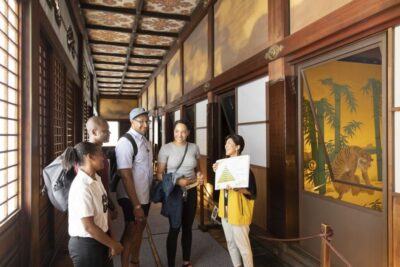
Nijo-jo Castle and Ninomaru Palace Guided Tour
Read our review →
Ultimate Osaka Walking Tour: Castle, Dotonbori & Hidden Gems
Read our review →Tokyo Castle & Imperial PalaceーShogun Walking Tour
Read our review →
Nijo Castle, Kiyomizu & Fushimi Inari Guided Tour
Read our review →
Osaka Castle Walking Tour and Castle Tower Admission
Read our review →
Imperial Palace East Garden and Edo Castle Walking Tour in Tokyo
Read our review →Browse the lists this tour appears in