
Reviewed · NAGOYA TOURS
From Nagoya: Hida Takayama & Shirakawa-go Tour w/Opt. Lunch
Japan’s mountain villages are worth the long ride. This $61 day trip links two of central Japan’s most atmospheric places: Takayama’s Edo-era Old Town and UNESCO-listed Shirakawa-go. I like the easy air-conditioned bus connection from Nagoya, and I like the freedom to explore on your own after the guide explains the route.
The main tradeoff is time. The day lasts about 10 hours, but the drive takes a large share of it, leaving roughly 90 minutes in Takayama and 90 minutes in Shirakawa-go when lunch is included. If you want a relaxed visit, Takayama may feel too short, especially if you hope to browse the market, taste sake, eat Hida beef, and visit several historic buildings.
In This Review
- Key points to know before booking
- Why this day trip works from Nagoya
- The morning ride through central Japan
- Takayama Old Town in a 90-minute window
- Choosing lunch at Koshiyama Restaurant
- Shirakawa-go and its famous gassho roofs
- What happens if winter closes the road
- The guide makes a real difference
- How to handle the tight schedule
- Is the $61 price good value?
- Who should book this tour?
- FAQ
- How long is the Nagoya Takayama and Shirakawa-go tour?
- Where does the tour begin?
- How much time is available in Takayama?
- How much time is available in Shirakawa-go?
- Is lunch included?
- What languages are offered?
- What happens if snow closes the road to Shirakawa-go?
- Does the tour operate in bad weather?
- Can I cancel the booking?
- Should you book it?
Key points to know before booking
- Takayama gets about 90 minutes, enough for a focused walk through the old streets but not a full town visit.
- Shirakawa-go’s steep thatched roofs were designed to cope with heavy snow and are the star of the day.
- The optional Koshiyama lunch includes Hida beef, Hida pork, Kobe beef shabu-shabu, or tofu oden.
- The bus makes this difficult route simple, though the journey from Nagoya is long.
- English and Chinese guides share the bus, and commentary may be given in both languages.
- Winter road closures can change the destination to Gujo Hachiman, known as the Little Kyoto of Gifu.
Why this day trip works from Nagoya
Takayama and Shirakawa-go are not easy places to connect by public transport in one day from Nagoya. You can make the journey independently, but it takes planning, careful train and bus timing, and a willingness to manage mountain roads on your own.
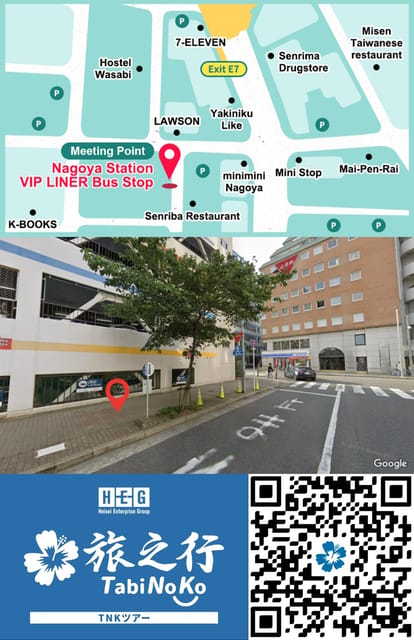
This tour takes care of the main problem: transport. You meet at the VIPLINER Nagoya bus stop near 20-20 Tsubakicho, board an air-conditioned coach, and let someone else handle the route. For $61, that is good value if your priority is seeing both places in one day rather than spending hours arranging connections.
The price becomes even more attractive when you consider the distance covered. You are not simply paying for a short guided walk. You are reaching two remote destinations from a major city and returning to Nagoya the same day.
Still, this is a bus tour, not a leisurely mountain retreat. The full day includes a long ride, scheduled stops, and fixed return times. Some people loved the comfortable reclining seats and attractive countryside views. One summer visit was less pleasant because the air conditioning did not cool the full bus well, so you should keep that possibility in mind during hot weather.
A few more Japan experiences worth weighing up
- Bike Tour Exploring North Kyoto plus Lunch
★ 5.0 · 1,087 reviews - Tokyo: Mt.Fuji & Lake Kawaguchiko 1-Day Bus Tour w/Optional Lunch
★ 4.5 · 839 reviews - Osaka/Kyoto: Arashiyama, Nara & Fushimi Inari Shrine w/Lunch
★ 4.4 · 754 reviews
The morning ride through central Japan
The day begins at the Nagoya meeting point, which can be easy to miss. The address is near Nagoya Station, but the bus stop is around the corner, so check the product photo and QR code carefully before setting out. A taxi driver may take you to the correct address without placing you directly beside the bus.
Once aboard, expect a scenic ride through rural Japan. The trip passes from the city toward the mountains, with changing views of small communities, wooded slopes, and countryside. The drive is part of the experience, but it is also the reason the schedule feels tight.
Rest stops are part of the rhythm. One account described breaks of about 15 minutes roughly every two hours. Use them well. Buy a drink, visit the toilet, and be back at the coach early. The bus cannot wait for late arrivals, even for a short delay.
Guides have handled the timing in different useful ways. Alberto used maps, marked meeting points, and sent reminders through a WhatsApp group. Other guides, including Liu, Bara-san, Akari, Leonardo, Leo, and Xiaoyu, were praised for keeping the day organized and helping people understand where to return.
The quality of the commentary can vary by guide and by seating position. Some guides provide history, customs, food advice, and practical directions. One passenger seated at the back had trouble hearing because the bus had no microphone. If the guide begins speaking, listen carefully near the front when possible.
Takayama Old Town in a 90-minute window
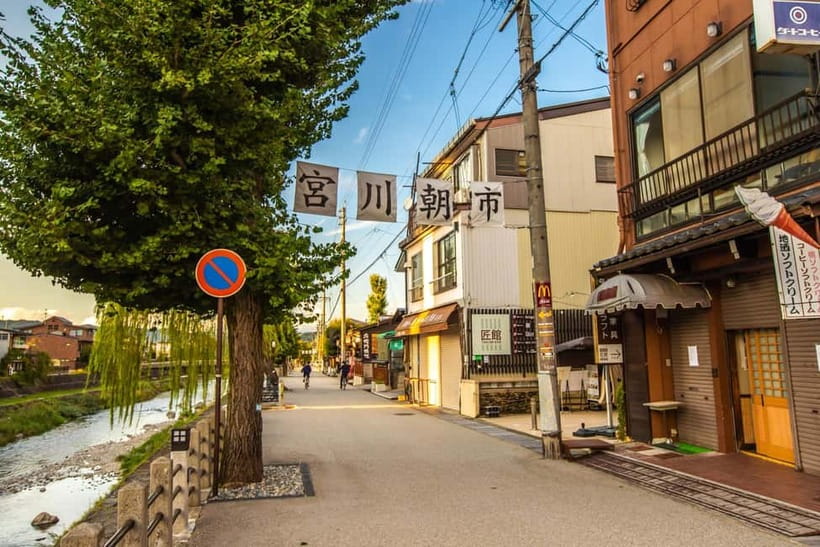
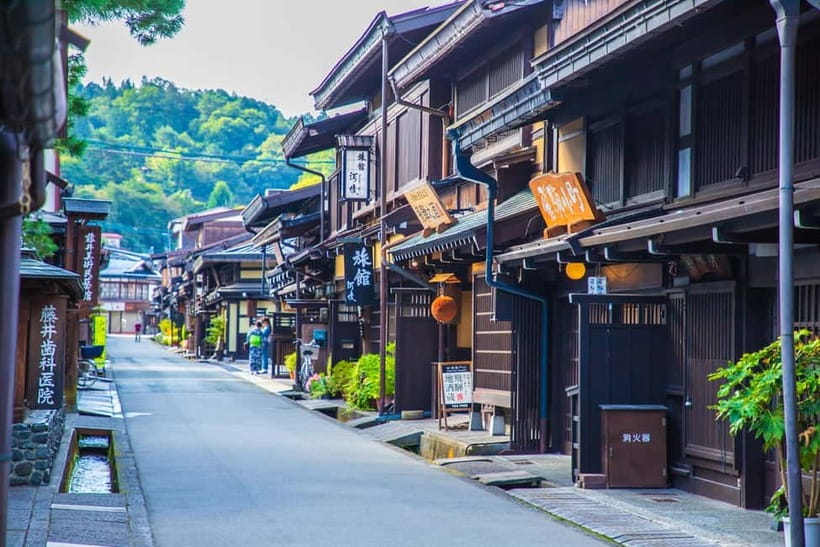
Takayama is the first major stop, with about an hour and a half for a self-guided visit. The appeal is immediate: preserved wooden buildings, narrow lanes, small shops, and an old-town atmosphere that feels far removed from Nagoya’s busy streets.
The historic district is best treated as a concentrated walk rather than a full sightseeing session. You can stroll along Furuimachinami Guchi, browse traditional shops, and look for regional snacks and drinks. The old streets are compact enough for a pleasant orientation walk, but every extra stop takes time from the next one.
The Miyagawa Morning Market is included in the route, though the amount of time available depends on the schedule and the pace of your group. It offers a chance to browse local goods and food stalls, but do not assume you can linger over a long breakfast, shop extensively, and still visit every historic building.
Takayama Jinya adds a different layer. This former government building helps explain how the town functioned during the Edo period. Even if your visit is brief, it gives context to the wooden streets outside. You are not only looking at attractive old houses. You are seeing a town shaped by administration, trade, mountain life, and local craftsmanship.
The central problem is choice. You may want to:
- Walk the old streets and take photographs.
- Visit the morning market.
- Stop for Hida beef.
- Taste local sake.
- Enter Takayama Jinya.
- Browse craft and food shops.
You cannot do all of these comfortably in 90 minutes. Several people specifically wished for two hours in Takayama. One person wanted more time for photographs, sake tasting, Hida beef restaurants, and the market. I agree with that concern. Takayama deserves a separate full day if you want to see it properly.
My advice is to choose one main goal before arrival. If you want photographs, go directly to the prettiest old streets. If food is your priority, keep your shopping short. If Takayama Jinya matters most, make it your first stop after leaving the bus.
Choosing lunch at Koshiyama Restaurant
The optional lunch at Koshiyama is useful for anyone who does not want to search for food during a tightly timed day. The menu presents several regional choices:
- Hida beef steak, or yakiniku, using marbled local wagyu grilled on a hot plate.
- Hida pork, prepared to show off the sweetness of the local meat.
- Wagyu Kobe beef shabu-shabu, with thin slices cooked in a light broth.
- Gokayama tofu oden, a vegetarian-friendly choice with firm local tofu.
The meal has received warm praise, especially from people who selected Hida beef or tofu. It gives you a chance to try food associated with the area without spending your limited free time comparing restaurants.
There is one practical catch: lunch is outside the main Shirakawa-go village. If you imagined eating among the thatched houses, adjust your expectations. One person enjoyed the meal but disliked having lunch away from the village. Another found the included Hida beef meal less impressive than expected.
The lunch choice also changes your sightseeing time. The stated schedule gives about 45 minutes for lunch and 90 minutes in Shirakawa-go when a meal is selected. Without lunch, you receive about two hours in Shirakawa-go. That extra 30 minutes matters, especially if you plan to reach the observation deck.
I would choose lunch if convenience and local food matter more than maximum village time. I would skip it if you are comfortable buying something independently and want every possible minute in Shirakawa-go.
A completely different kind of day out in Japan:
- Mt Fuji and Hakone 1-Day Bus Tour Return by Bullet Train
★ 5.0 · 26,383 reviews - 1-Day Tokyo Bus Tour
★ 5.0 · 14,250 reviews - PERFECT KYOTO 1-Day Bus Tour
★ 5.0 · 13,518 reviews - Tokyo: TOKYO SKYTREE® Admission ticket
★ 4.5 · 11,192 reviews
Shirakawa-go and its famous gassho roofs
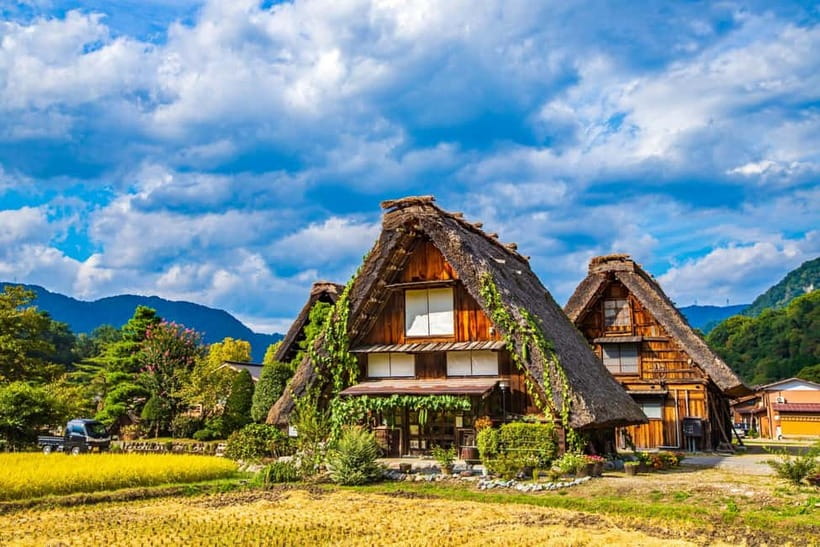
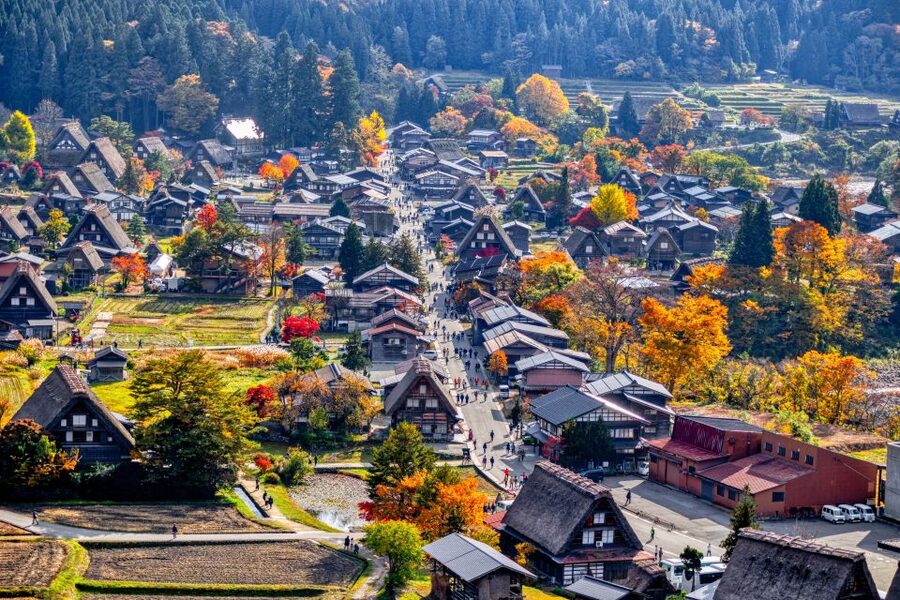
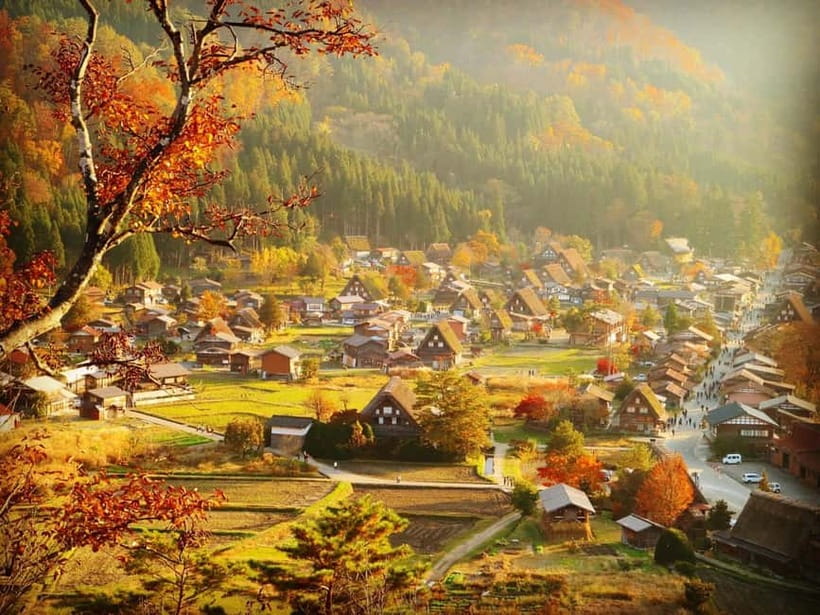
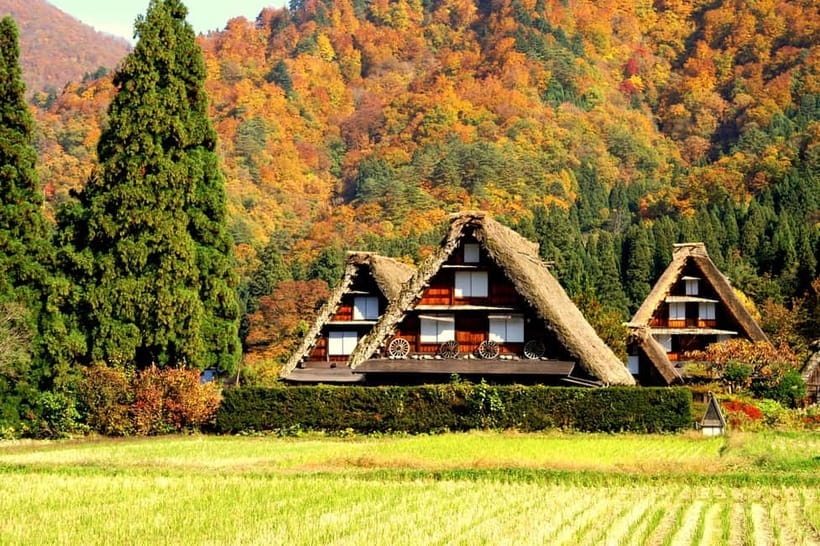
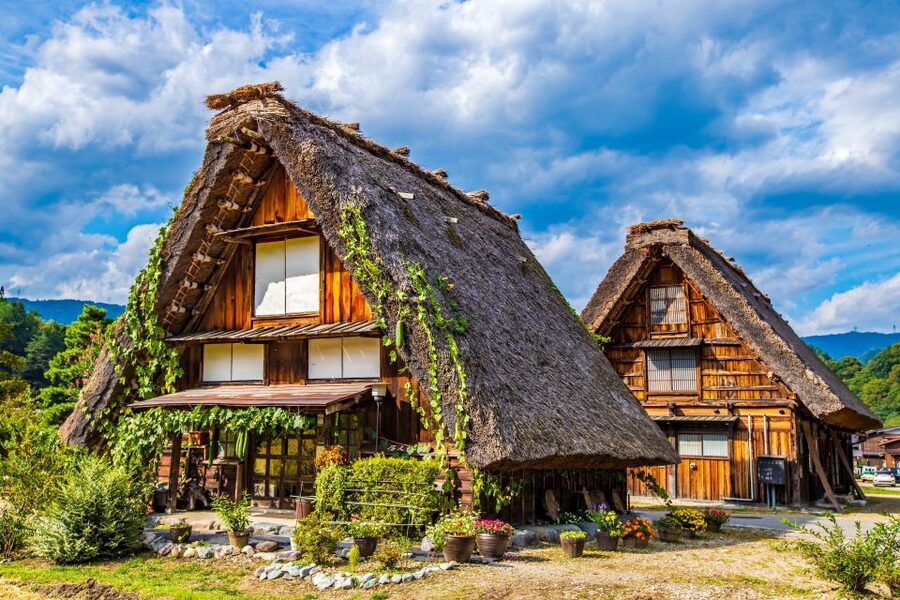
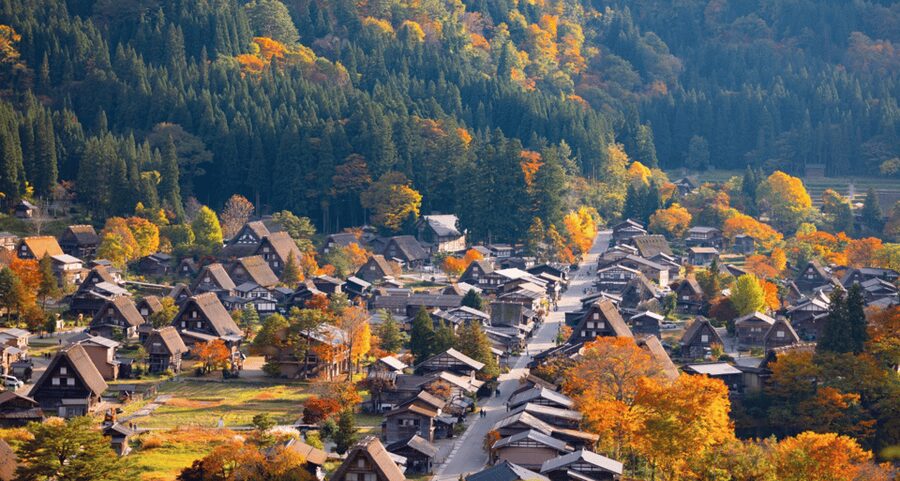
Shirakawa-go is the day’s main visual reward. The village is known for its gassho-zukuri houses, with sharply angled thatched roofs built to shed heavy snow. Some of these houses are more than 100 years old, and their form gives Shirakawa-go its distinctive appearance.
The setting matters as much as the buildings. Rice paddies, mountain views, quiet lanes, and traditional homes create a place that feels very different from urban Japan. Autumn brings colored foliage, while winter snow can make the steep roofs look especially striking.
You have about 90 minutes with the lunch option, or two hours without it. That is enough for the key views, but not enough to inspect every house or wander without a plan. Shirakawa-go is larger in feel than the short stop suggests, and walking time adds up quickly.
The route includes Wada House and Kanda House Gassho-Zukuri. These homes let you see more than the roofs from the outside. They give you a closer look at the scale and construction of traditional rural houses. Entry details are not specified here, so check with the guide about what is open and included on the day.
The Ogimachi Castle Observation Deck is the essential photo stop. The elevated view helps you understand the village layout, with the houses spread below and mountains framing the scene. The climb takes time, so do not leave it until the final few minutes.
A sensible order is to head toward the observation deck early, take your photographs, then return through the village. Save the remaining time for Wada House, Kanda House, shops, and quieter side streets. Keep an eye on your watch. The return to the bus is not flexible.
What happens if winter closes the road
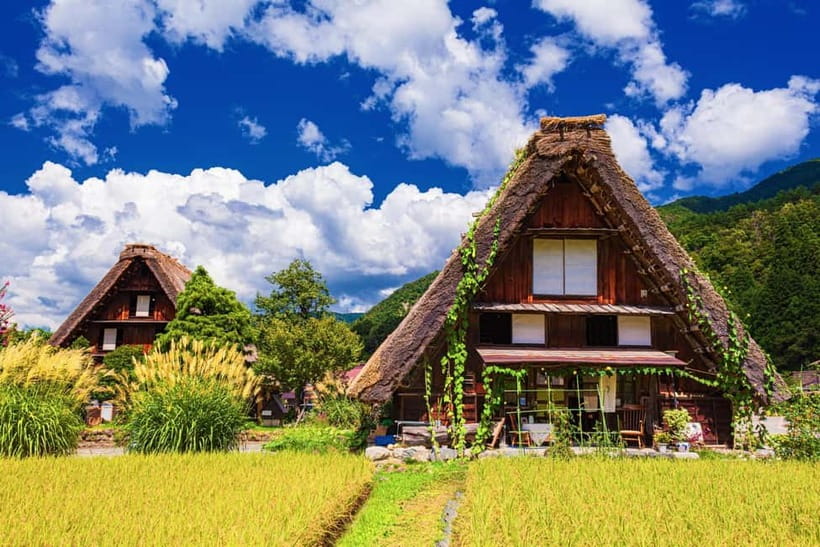
Snow is one of Shirakawa-go’s great attractions, but it can also make access difficult. During winter, extreme snowfall or road closures may prevent the coach from reaching the village.
If that happens, the tour changes to Gujo Hachiman, called the Little Kyoto of Gifu. The town is known for historic streets, traditional buildings, a castle-town feel, small shops, and clear water running through the community.
This is not the same experience as Shirakawa-go, so you should not book in winter assuming the thatched village is guaranteed. The change is made for safety and road conditions, not as an optional extra. The tour operates in rain or shine, with cancellations generally limited to extreme weather such as typhoons, but schedules can change because of traffic, weather, or other unexpected problems.
The guide makes a real difference
This is not a tour with constant guided narration at every building. Much of the sightseeing is self-guided, so the guide’s main jobs are explaining the places, giving directions, sharing useful food and photo tips, and keeping the group together.
That practical role has been a major strength. Alberto was praised for giving maps, marking good spots, sending links, and using WhatsApp to help people who were lost or running late. He also helped one person recover a wallet left at a rest stop, spending about an hour contacting the police and sharing updates.
Other highly praised guides include Leo, Akari, Bara-san, Liu, Leonardo, and Xiaoyu. The strongest guide reports describe friendly organization, clear reminders, local customs, and suggestions that improved free time. The tone is helpful rather than heavy with lectures.
The language setup requires some patience. The tour offers English and Chinese, and both languages may be used on the same coach depending on the group. If you want a completely English-only experience, this may not feel ideal. There have also been occasional past mix-ups involving language assignments, so confirm your selected language at the meeting point.
How to handle the tight schedule
The best way to enjoy this tour is to decide in advance what you want from each town. Do not try to recreate a full Takayama and Shirakawa-go itinerary in one day.
For Takayama, pick two priorities. A walk through Old Town plus the market works well. Old Town plus Takayama Jinya also makes sense. Adding a long meal or sake tasting may leave you rushing.
For Shirakawa-go, go to the observation deck early if photographs are important. Then visit one or two gassho houses and use any remaining time for the village lanes. Wear shoes suited to walking, particularly in winter or wet weather, though no specific footwear requirement is stated.
Return to the bus before the official meeting time. The guides send reminders when that service is available, but you remain responsible for getting back. A late departure can affect every other person on the coach and may delay the return to Nagoya.
Is the $61 price good value?
At $61 per person, the tour offers strong practical value for a difficult day from Nagoya. The air-conditioned bus, return transport, live English or Chinese guide, and access to two well-known destinations make it cheaper and simpler than arranging the same route independently.
The value is strongest for first-time visitors who want a broad introduction. You can see Takayama’s traditional streets, sample regional food if you choose lunch, and visit Shirakawa-go without changing buses or worrying about mountain schedules.
The value is weaker if you want slow travel. You are paying for reach and convenience, not long stays. The ride may total several hours, and the short stops mean you will have to leave interesting places unfinished.
I would also compare the lunch and no-lunch prices before booking. The supplied information confirms that lunch is optional, but it does not give separate prices for each selection. The meal may be worth it for ease, while skipping it buys more time in Shirakawa-go.
Who should book this tour?
I would recommend it to you if you are staying in Nagoya, have one free day, and want to see rural central Japan without planning a complicated route. It suits first-time visitors, couples, small groups, and anyone who values a guide’s maps, reminders, and food suggestions.
It also works well if you prefer a mix of guided help and personal freedom. You receive background information and directions, then explore the old towns at your own pace.
I would hesitate if Takayama is your main interest. The 90-minute stop is simply short for a town with a market, historic buildings, food, and old streets. I would also hesitate if you dislike long bus rides, fixed departure times, or the possibility of a bilingual commentary schedule.
FAQ
How long is the Nagoya Takayama and Shirakawa-go tour?
The tour lasts about 10 hours, including transportation, sightseeing stops, lunch if selected, and the return to Nagoya.
Where does the tour begin?
The listed starting point is the VIPLINER Nagoya bus stop at 20-20 Tsubakicho, near Nagoya Station. The exact meeting point may vary by booking option, so check the supplied photo and QR code.
How much time is available in Takayama?
The planned visit to Takayama is about 1.5 hours. This includes time for areas such as the Old Town, Miyagawa Morning Market, Takayama Jinya, and Furuimachinami Guchi.
How much time is available in Shirakawa-go?
With the lunch option, the schedule provides about 90 minutes in Shirakawa-go. Without lunch, the stated sightseeing time is about two hours.
Is lunch included?
Lunch is optional. If selected, the meal is at Koshiyama Restaurant and may include Hida beef, Hida pork, Kobe beef shabu-shabu, or Gokayama tofu oden.
What languages are offered?
The live guide service is available in English and Chinese. Depending on the group size, both languages may be used on the same bus.
What happens if snow closes the road to Shirakawa-go?
The tour may change to Gujo Hachiman, known as the Little Kyoto of Gifu. The town has historic streets, traditional buildings, shops, flowing water, and a castle-town setting.
Does the tour operate in bad weather?
It operates in rain or shine, with cancellations generally occurring only in extreme weather such as typhoons. Weather, traffic, and unexpected conditions can still change the schedule.
Can I cancel the booking?
You can cancel up to 24 hours in advance for a full refund. The reserve-now-and-pay-later option allows you to book without paying immediately.
Should you book it?
Book this tour if you want an efficient first look at Takayama and Shirakawa-go from Nagoya. The bus removes the transport headache, the guides often add useful local advice, and the $61 price is fair for covering two remote destinations in one day.
Choose the no-lunch option if Shirakawa-go is your top priority and you want two hours there. Choose the meal if you value convenience and want to try Hida beef or regional tofu without using sightseeing time to find food.
Just set your expectations correctly: this is a long, well-organized introduction, not a slow exploration. If you can accept the bus ride and keep your plans focused, it offers a rewarding change from Nagoya’s city streets and a practical taste of Japan’s mountain culture.
Just added around Japan
- Osaka Food Tour with 10 Classic Japanese Tastings & Drinks★ 5.0 · 38 reviews
- Kanazawa private half day/Photoshoot by professional photographer★ 5.0 · 38 reviews
- Osaka: Highlights & Hidden Gems Private Walking Tour★ 4.7 · 38 reviews
- Tokyo Small Group Tour with Guide★ 4.5 · 38 reviews
- Tokyo 6hr Instagram Highlights Private Tour with Licensed Guide★ 5.0 · 38 reviews
- From Tokyo: Kamakura Private Customize Tour by Luxury Van★ 4.6 · 38 reviews
- Tokyo Sumo Experience with Live Show & Audience Challenge★ 5.0 · 38 reviews
- Kyoto: Private Customizable Day Trip by Car★ 5.0 · 38 reviews
Nagoya Tours, compared.

![Hiking the Historic Nakasendo Trail [1 Day Tour from Nagoya]](https://7.thejapaneseguide.com/wp-content/uploads/hiking-the-historic-nakasendo-trail-1-day-tour-from-nagoya-400x267.jpg)
Hiking the Historic Nakasendo Trail [1 Day Tour from Nagoya]
Read our review →
Nagoya Highlight Tour guided by a friendly local
Read our review →
Japanese Traditional Sweets making and Tea Ceremony
Read our review →
Magome-juku, Tsumago-juku & Ena-kyo 1d Bus Tour from Nagoya
Read our review →
Nagoya Full-day Private Custom Tour with National Licensed Guide
Read our review →
Ise’s Sacred Shrines and Captivating Coastlines – From Nagoya
Read our review →Browse the lists this tour appears in