
Reviewed · TEA CEREMONY EXPERIENCES
Nagoya: Japanese Traditional Sweets making and Tea Ceremony
Make sweets, then sip the season. This Nagoya experience pairs hands-on nerikiri making with a guided Uji matcha session, giving you a calm, practical look at two Japanese food traditions. I like the use of Kyoto-made bean paste and the chance to create two sweets shaped for the season. The main consideration is that this is an introduction to tea ceremony, not a full formal ceremony.
I also like the easy location, just one minute from Kokusai Center Station, and the modest $18 price. English support has been excellent for some groups, with hosts including Mariko and Saki praised for clear, patient instruction, but Japanese is the listed operating language, so you should request English help ahead of time.
In This Review
- Key Points Before You Book
- Why This Small Nagoya Class Works So Well
- Turning Kyoto Bean Paste Into Seasonal Nerikiri
- What the 55-Minute Sweets Session Feels Like
- Preparing Uji Matcha After the Break
- Eating Your Sweets With Your Own Tea
- Clear Teaching, With English Support to Confirm
- Location, Timing, and the Third-Floor Climb
- Who Will Enjoy This Experience Most
- Is This Nagoya Tea and Wagashi Class Worth $18?
- FAQ
- How long does the Japanese sweets and tea experience last?
- How much does the experience cost?
- Where does the experience meet?
- How many sweets will I make?
- Do the sweet designs change during the year?
- What ingredients are used?
- Is the tea ceremony fully traditional?
- Is English available?
- Is the venue accessible by elevator?
- Can I cancel for a full refund?
Key Points Before You Book
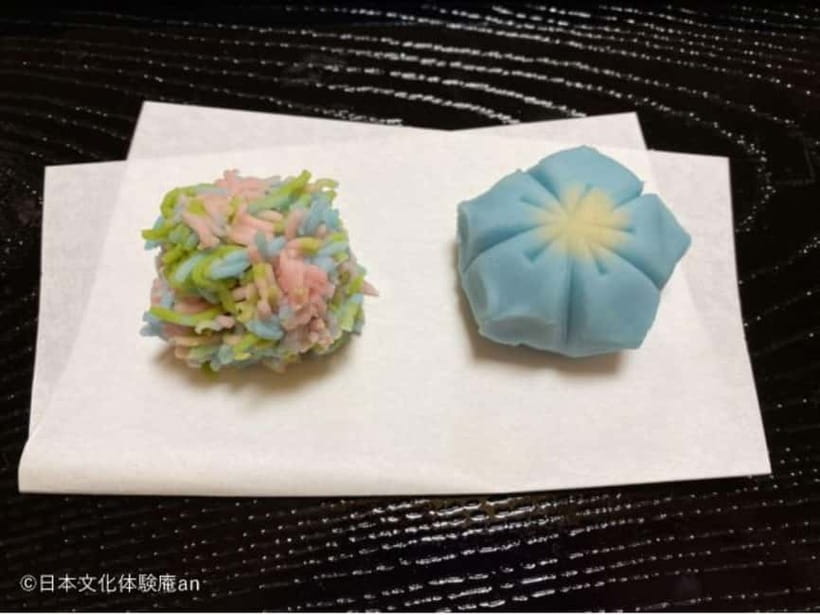
- Make two seasonal nerikiri sweets: Shape a flower, leaf, fruit, or other seasonal design from colored white bean paste.
- Use Kyoto-made ingredients: The white and red bean pastes come from long-established Kyoto shops.
- Learn matcha by doing it: You will see a matcha grinding demonstration, prepare your own tea, and practice the basic way to drink it.
- Stay close to Nagoya Station: The venue is a one-minute walk from Exit 3 of Kokusai Center Station, or about 13 minutes on foot from Nagoya Station.
- Plan for stairs: The room is on the third floor, and there is no elevator.
- Allow the full 95 minutes: The session includes sweets, a break, tea instruction, photos, and time to eat and drink what you made.
Why This Small Nagoya Class Works So Well
Nagoya has plenty of major attractions, but not every good Japan memory needs a grand building or a packed schedule. This 95-minute class gives you something to do with your hands, then lets you sit down and enjoy the result. That simple rhythm works well after a busy day of stations, shopping, and sightseeing.
At $18 per person, the price is unusually friendly for a guided cultural activity. You are not only watching a demonstration. You make two sweets, prepare matcha, and receive explanations about the food and customs involved. The price does not include extras such as a take-out box for 100 yen or a completion certificate for 300 yen, but those are optional.
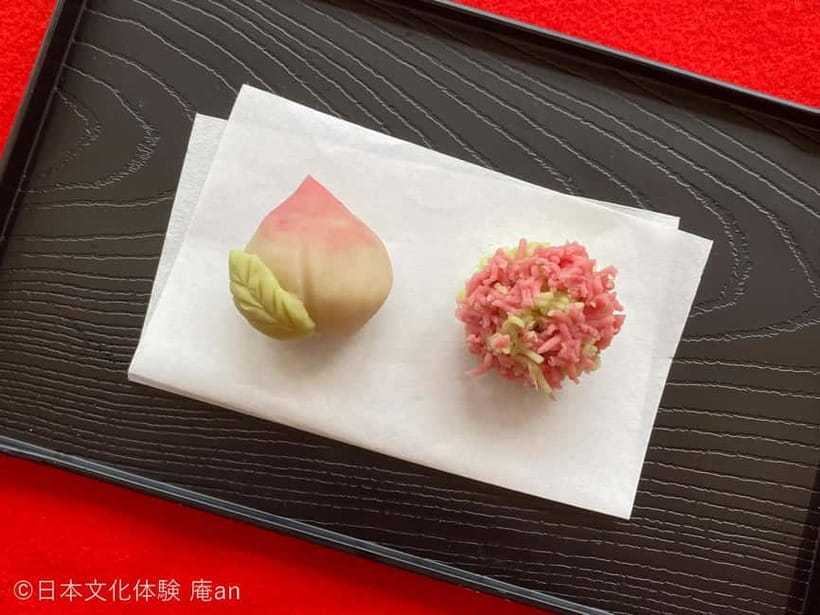
The strongest part is the balance between craft and tasting. Nerikiri can look intimidating in a shop window, with its smooth surfaces and delicate seasonal shapes. Here, you get to see how colored bean paste becomes a flower-shaped sweet or a kinton-style design. Your result may not look perfect. That is part of the fun, and the activity is structured so you can follow along.
The tea portion gives the class a calmer finish. You will learn about Uji matcha, watch a grinding demonstration, prepare your own tea, and drink it with the sweets. The sweetness of the bean paste is meant to soften matcha’s stronger, grassy taste.
More tea ceremonies in Japan:
- Kyoto: Tea Ceremony in a Traditional Tea House in Kiyomizu
★ 4.9 · 3,519 reviews - Kyoto: Tea Ceremony Ju-An at Jotokuji Temple
★ 4.9 · 3,207 reviews - Kyoto: 45-Minute Tea Ceremony Lesson Experience
★ 4.3 · 2,378 reviews
Turning Kyoto Bean Paste Into Seasonal Nerikiri
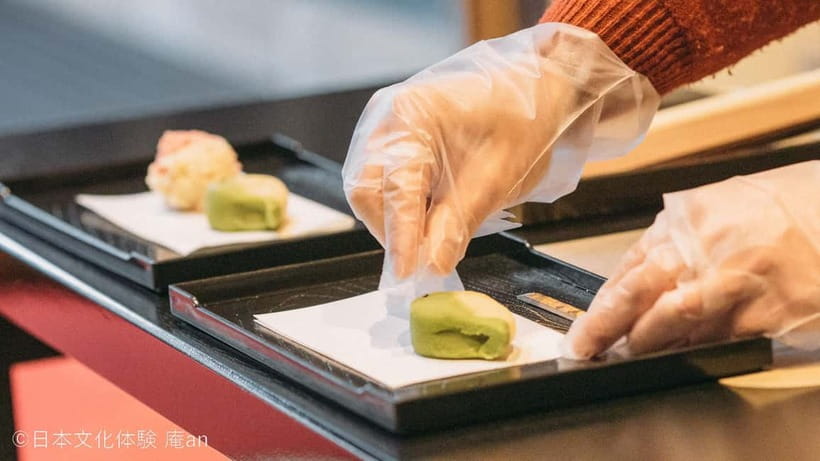
The class begins with an explanation of Japanese traditional sweets before you start making anything. This matters because nerikiri is not simply candy or a decoration. It is a refined wagashi sweet made from white bean paste, colored and shaped to suggest flowers, fruit, leaves, or other seasonal images.
You begin by coloring the white bean paste. This first step is more important than it sounds. The color sets the mood of the finished sweet, and the seasonal theme gives the activity a connection to the Japanese habit of noticing the time of year through food.
The ingredients are a real strength. The white and red bean pastes come from long-established shops in Kyoto. You can taste the difference between a carefully made bean paste and something designed only for sweetness. The texture and flavor are central to nerikiri, so using good paste makes the lesson more worthwhile.
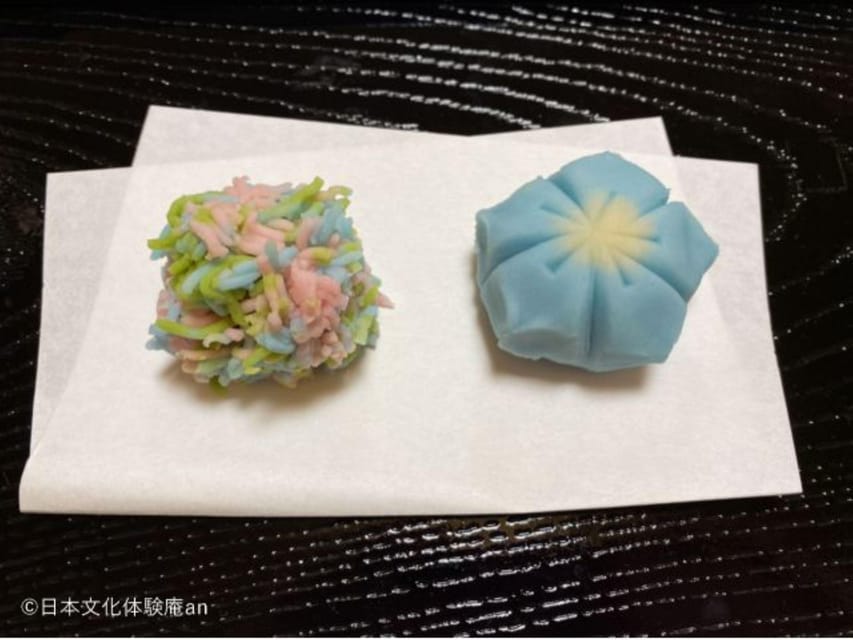
The first sweet is flower-shaped nerikiri. You will work the colored paste and shape it into a delicate design. Exact techniques are not described in detail, so you should expect hands-on guidance rather than a free-form workshop. The instructors show the process, then help you copy it.
Next comes kinton nerikiri. Kinton usually has a more textured appearance, with fine strands or a soft, threadlike surface that can suggest chestnuts or other seasonal forms. The exact designs change with the season. In late autumn, for example, the class has used ginkgo leaves and chestnut sweets.
That seasonal change is a quiet bonus. If you return at another time of year, the shapes may be different. You are not just repeating a fixed souvenir project. The class links the food to what is happening outside.
What the 55-Minute Sweets Session Feels Like
The sweet-making portion takes about 55 minutes, including the opening explanation and both designs. That is enough time to learn the steps without turning the activity into a full-day cooking course.
You will likely find the work more delicate than expected. The paste must be colored and shaped carefully, and the final form depends on small movements. A few people have described the process as challenging in a fun way, especially when comparing their own results with the instructor’s polished example.
This makes the class suitable for families. A six-year-old child took part with support, and the hosts helped the child stay involved with the adults. Children under two who sit on a parent’s lap are free, but other children require the relevant booking arrangement.
The format also suits adults who do not think of themselves as artistic. You do not need to arrive with special skills. The point is not to produce a shop-perfect sweet. It is to understand the handwork and leave with something you made yourself.
After the two sweets, there is a short break. The schedule places this at about the 55-minute mark, with the tea explanation beginning around minute 65. Use the pause to reset your hands and take a breath before the quieter second half.
Preparing Uji Matcha After the Break
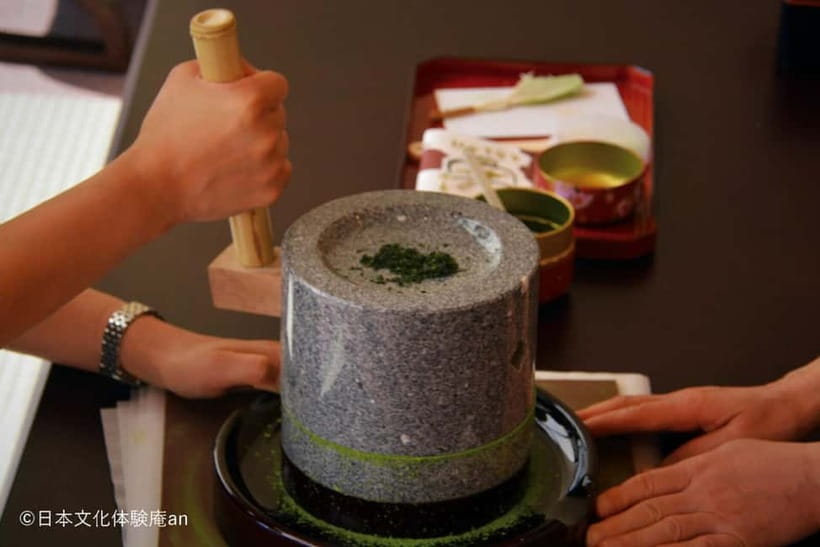
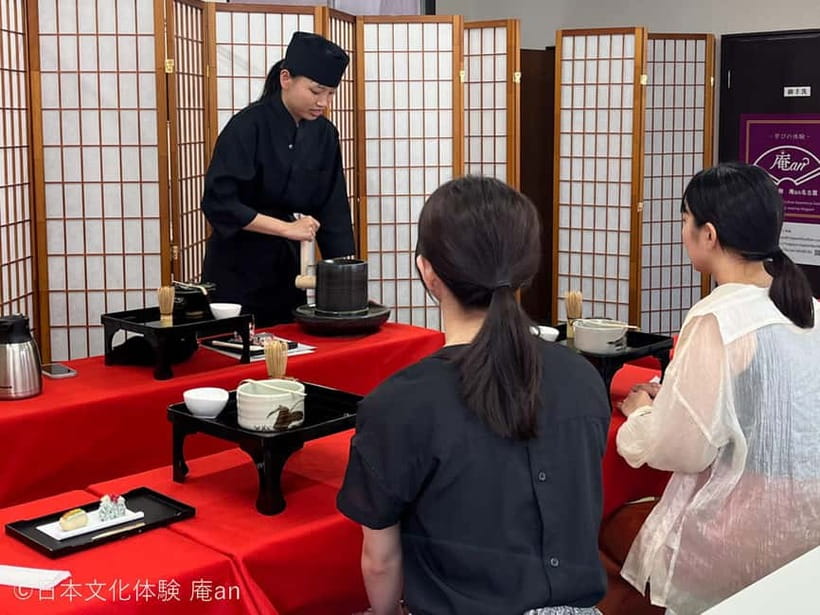
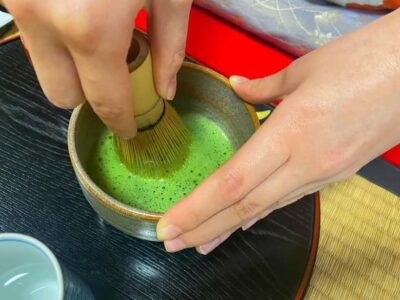
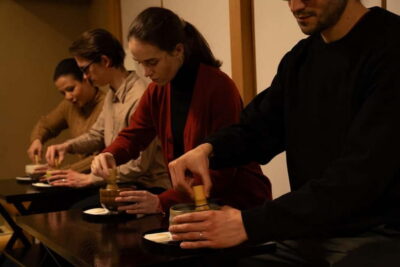
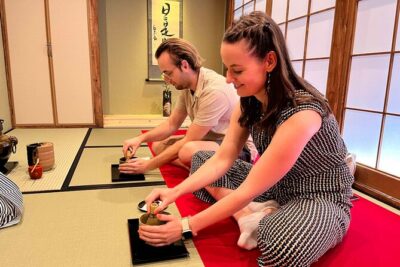
The tea section begins with an explanation of tea, followed by a matcha grinding demonstration. You will then take part in the tea ceremony experience and prepare your own matcha.
The use of single-origin special matcha gives this portion a clear focus. The matcha is identified as Uji matcha, a name associated with one of Japan’s best-known tea-producing areas. The point here is not only to drink green tea. You learn how the powder is prepared and how it fits with the sweet you made earlier.
The demonstration helps put the drink in context. Matcha is powdered tea, not a tea bag steeped in hot water. The preparation gives you a better sense of the care involved before the cup reaches your hands.
The instructor also explains the proper way to drink matcha. You should not expect a long, highly formal tea-school performance. One useful comment about the class is that it is not a full traditional tea ceremony. That is not a serious flaw, as long as you book it for what it is: an approachable introduction with participation, explanation, and tasting.
This shorter format may actually suit a busy Nagoya schedule better. A formal tea ceremony can demand more stillness and ceremony. Here, you get the cultural context without committing a large part of your day.
More dessert tours in Japan:
- Matcha Making Class in Tokyo with Authentic Japanese Sweets Set
★ 5.0 · 744 reviews - Matcha Making Class in Osaka with Authentic Japanese Sweets Set
★ 5.0 · 509 reviews - Tokyo: Matcha Making Experience with Mochi Sweets in Asakusa
★ 4.9 · 388 reviews - Kyoto: Japanese Traditional Sweets Making and Tea Ceremony
★ 4.4 · 314 reviews
Eating Your Sweets With Your Own Tea
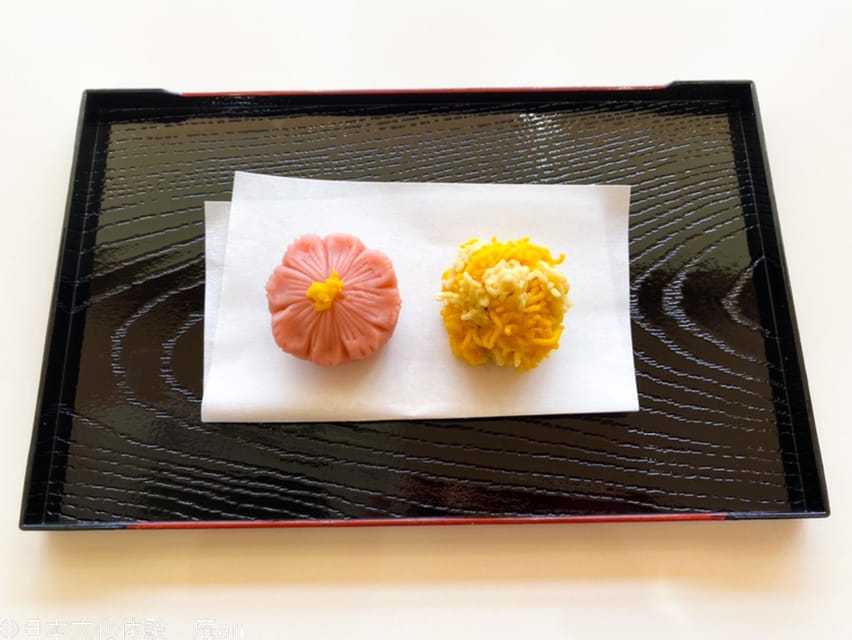
After the tea experience, there is picture time, followed by eating and drinking time. The listed program ends at about 85 minutes, with room departure at 95 minutes.
The tasting is more satisfying because you have made the sweets yourself. The smooth bean paste, seasonal design, and slightly bitter matcha make a classic pairing. The sweet gives the tea a softer finish, while the matcha keeps the bean paste from feeling too heavy.
This is also the moment when the class becomes more than a craft lesson. You have seen the paste being colored, shaped two designs, watched matcha being ground, and prepared the drink. Sitting down to taste everything connects the separate parts.
You can buy a take-out box for 100 yen if you want to carry the sweets away. The information does not specify how long the sweets can be kept, so ask the instructor if you plan to save them rather than eat them at the venue.
A completion certificate costs 300 yen. If you want a certificate with your name printed on it, provide your names in advance. Otherwise, a blank space will be left for the name.
Clear Teaching, With English Support to Confirm
The listed language is Japanese, and English translation is provided as much as possible. That wording is worth taking seriously. You should contact the provider in advance if English instruction is important to you.
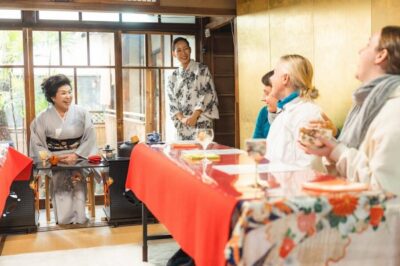
At the same time, English support has been a major strength for several groups. Mariko was praised for clear explanations about the sweets, tea, and ingredients. Saki was described as welcoming and effective. Another group reported impeccable English delivery, while others found their host fluent, kind, and patient.
The practical lesson is simple: request English assistance before arrival rather than assuming every session will be fully bilingual. If English is available for your date, the class appears well suited to beginners. The activities are visual and hands-on, which also helps when a phrase or technical term needs extra explanation.
The instructors explain the food as well as the movements. You learn why the sweets are seasonal, what makes nerikiri a high-grade wagashi, and how the tea fits with the sweets. That added background makes the $18 fee feel like payment for an actual lesson, not just a snack-making stop.
Location, Timing, and the Third-Floor Climb
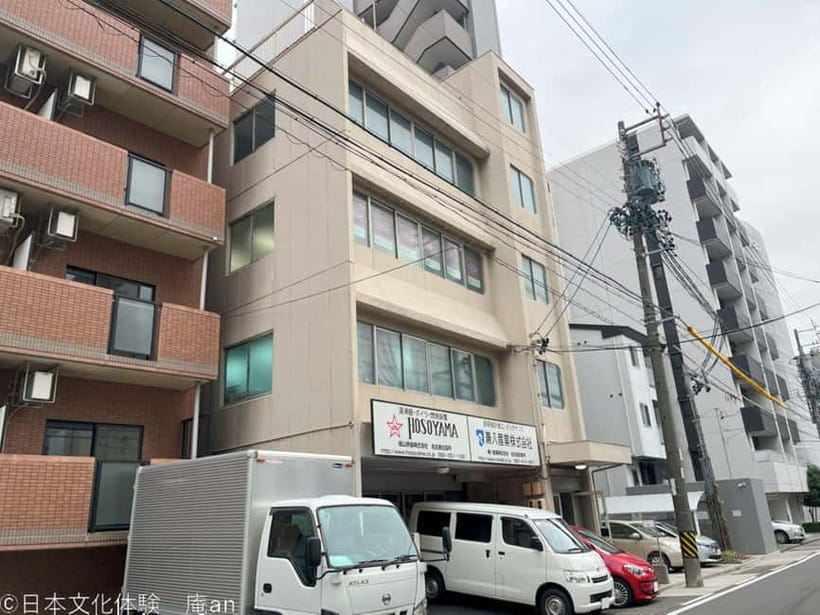
The meeting point is convenient for a short Nagoya visit. The venue is one minute from Exit 3 of Kokusai Center Station on the Subway Sakura-dori Line. From the Sakura-dori side of Nagoya Station, it is about a 13-minute walk.
The venue is on the third floor with no elevator. You should be comfortable using stairs, and you should allow extra time to find the room. The experience cannot be held for late arrivals, regardless of the reason, so do not plan a last-second dash from a train platform.
Operating hours are 10:00 to 17:00. Reservations received after 17:00 are processed the next day. The activity itself lasts 95 minutes, but you should build in time before it for the walk, station exit, and stairs.
The cancellation policy allows a full refund when you cancel at least 24 hours ahead. Once a cancellation fee applies, changing the date or time can create another specified fee. If you cancel, travel expenses to the venue are not compensated, so avoid making a special cross-city trip until your booking is secure.
Who Will Enjoy This Experience Most
I would choose this class for a first visit to Japan when you want cultural context without a long lecture. It is also a good fit for families, couples, and solo visitors who like food, craft, or quiet activities.
You will get the most from it if you enjoy:
- Hands-on activities rather than passive sightseeing
- Seasonal Japanese design
- Traditional sweets and unusual ingredients
- A gentle introduction to matcha
- A central location near Nagoya Station
- A short activity that fits between larger plans
It may be less suitable if your main goal is a formal tea ceremony with strict traditional procedure. The tea section is participatory and explanatory, not a lengthy ceremonial performance.
You should also think about language and stairs. The instructors have provided strong English support for some sessions, but English is not the listed primary language. The third-floor room has no elevator, and late arrivals cannot be accommodated.
Is This Nagoya Tea and Wagashi Class Worth $18?
Yes, for most people who want a short cultural activity at a low price. You receive two connected experiences, not just a demonstration. The Kyoto bean paste, single-origin Uji matcha, seasonal designs, and guided instruction give the class more substance than its price suggests.
The best value comes from the doing. You color and shape the paste, prepare matcha, and eat the finished sweets. The class also gives you a useful way to understand why Japanese sweets are designed around the seasons.
Book it if you want an easy-to-reach, family-friendly activity and you are happy with an introductory tea experience. Contact the provider first if you need English instruction. Skip it if you want a full formal tea ceremony, cannot manage three flights of stairs, or need a flexible start time.
For a compact taste of Japanese sweets and tea, this is a smart Nagoya choice. It slows your day down, keeps your hands busy, and gives you something better than a souvenir: a skill you may try again at home.
FAQ
How long does the Japanese sweets and tea experience last?
The full experience lasts 95 minutes, including the sweets lesson, break, tea activity, picture time, and eating and drinking time.
How much does the experience cost?
The listed price is $18 per person.
Where does the experience meet?
The venue is one minute from Exit 3 of Kokusai Center Station on Nagoya’s Subway Sakura-dori Line. It is about a 13-minute walk from the Sakura-dori side of Nagoya Station.
How many sweets will I make?
You will make two Japanese traditional sweets. The program includes a flower-shaped nerikiri and a kinton nerikiri.
Do the sweet designs change during the year?
Yes. The sweets are matched to the season. Examples include ginkgo leaf and chestnut designs.
What ingredients are used?
The class uses white and red bean paste produced by long-established shops in Kyoto. It also uses single-origin Uji matcha.
Is the tea ceremony fully traditional?
The activity provides a tea ceremony experience with explanations, a matcha grinding demonstration, and matcha preparation. It is an introduction rather than a full formal traditional tea ceremony.
Is English available?
Japanese is the listed language. English translation is provided as much as possible, and you should contact the provider in advance if you would like English support.
Is the venue accessible by elevator?
No. The venue is on the third floor, and there is no elevator.
Can I cancel for a full refund?
You can cancel up to 24 hours in advance for a full refund. Cancellation fees apply after that point, and changing the date or time after a fee has been incurred may involve another specified fee.
Just added around Japan
- Kanazawa private half day/Photoshoot by professional photographer★ 5.0 · 38 reviews
- Osaka Food Tour with 10 Classic Japanese Tastings & Drinks★ 5.0 · 38 reviews
- Osaka: Highlights & Hidden Gems Private Walking Tour★ 4.7 · 38 reviews
- Tokyo Small Group Tour with Guide★ 4.5 · 38 reviews
- Tokyo 6hr Instagram Highlights Private Tour with Licensed Guide★ 5.0 · 38 reviews
- From Tokyo: Kamakura Private Customize Tour by Luxury Van★ 4.6 · 38 reviews
- Tokyo Sumo Experience with Live Show & Audience Challenge★ 5.0 · 38 reviews
- Magome & Tsumago Nakasendo Trail Day Hike with Government-Licensed Guide★ 5.0 · 38 reviews
Tea Ceremony Experiences, compared.
Tea Ceremony in a Traditional Tea House in Kiyomizu
Read our review →
Browse the lists this tour appears in