
Reviewed · MOUNT FUJI TOURS
From Tokyo: Private Mt. Fuji and Hakone Tour by Car
Fuji views require good timing. This private 10-hour car tour links Mt. Fuji, Lake Yamanaka, Owakudani, Lake Ashi, Hakone Shrine, and shopping at Gotemba Premium Outlets in one long day. I especially like the hotel pickup and drop-off and the freedom to adjust the pace for a family or group of up to five.
I also like that the driver can take photographs and adapt the route. Past guests singled out drivers including Haider, Umer, Anas, Jabir, Mohinder, and Deo for careful driving, patience, and flexibility. The main drawback is the packed schedule: you cover a huge area, but some stops may feel rushed, and entry fees, food, and optional rides cost extra.
In This Review
- Key points to know before booking
- Why a private car works well for Fuji and Hakone
- Starting from Tokyo and heading toward Fuji
- Mt. Fuji’s 5th Station: the highest stop on the route
- Lake Yamanaka and the Fuji Five Lakes
- Owakudani and the smell of volcanic Japan
- Lake Ashi and Hakone’s red torii gate
- Lunch in Hakone and the Open-Air Museum
- Gotemba Premium Outlets: useful, but not for everyone
- What the driver adds, and what the driver may not provide
- Price, group size, and extra costs
- Weather, communication, and practical planning
- Who should book this Fuji and Hakone day?
- Should you book it?
- FAQ
- How long is the tour from Tokyo?
- Where can pickup and drop-off take place?
- Is Mt. Fuji’s 5th Station included automatically?
- Is the Lake Ashi cruise included?
- Is lunch included?
- Is a tour guide included?
- How many people can join the private tour?
- What happens if the tour runs overtime?
Key points to know before booking
- A private car changes the day: You can spend more time at a favorite stop and avoid the limits of a bus schedule.
- The route covers a lot: Mt. Fuji’s 5th Station, Lake Yamanaka, Owakudani, Lake Ashi, Hakone, the Open-Air Museum, Gotemba, and Hakone Shrine are all possible in one day.
- Fuji visibility is never guaranteed: The tour runs in rain or shine unless conditions are unsafe, so clear views depend on the weather.
- The $488 price works best for a full group: With five people, the listed cost comes to about $97.60 per person before tickets and extras.
- The driver is not automatically a full guide: An English-speaking driver provides travel advice, while an expert Driver-Guide is an optional upgrade.
- Allow extra cash: Attraction tickets, food, drinks, possible tolls or other charges, and overtime are not covered by the base price.
Why a private car works well for Fuji and Hakone
Mt. Fuji and Hakone are close enough to combine, but their attractions are spread across roads, lakes, mountain areas, and resort towns. Public transport can take you to many of these places, but fitting them all into one day requires careful connections and little room for delays.
A private vehicle gives you a simpler day. You leave from your hotel in one of Tokyo’s 23 wards, ride in an air-conditioned car, and return to an agreed drop-off point. For families, older visitors, or anyone traveling with luggage and tired children, that comfort has real value.
The private format also gives you some control. You can ask to spend longer at a viewpoint, adjust lunch, or change the final drop-off within the permitted areas. One past guest described being able to stop for a preferred lunch and another praised the driver for allowing extra time when a child felt carsick.
The trade-off is that this is still a very ambitious day. Ten hours sounds generous, but Tokyo traffic, mountain roads, crowds, and the distance between Fuji and Hakone can eat into your sightseeing time. I would treat the day as a highlights tour, not a slow exploration of every location.
More ways to see Mount Fuji:
- Mt Fuji and Hakone 1-Day Bus Tour Return by Bullet Train
★ 5.0 · 26,383 reviews - Mt Fuji & Hakone Cruise, Drum Show Bullet Train 1 Day from Tokyo
★ 4.0 · 7,413 reviews - Tokyo Mt Fuji 5th St & Hakone Cruise Bus Tour w/Bullet Train
★ 4.4 · 5,024 reviews
Starting from Tokyo and heading toward Fuji
Tokyo pickup applies to hotels inside the city’s 23 wards, including areas such as Shibuya, Shinjuku, Minato, Chiyoda, Taito, and Setagaya. Pickup outside those wards can bring a surcharge of ¥5,000 to ¥20,000, depending on the location.
The listed transfer time is about two hours. That makes an early start important, especially if you hope to see Mt. Fuji clearly and visit several attractions before the day ends. Your driver handles the road, leaving you free to watch the suburbs give way to the mountain region.
The tour can also begin in Hakone or Fujikawaguchiko. In those cases, pickup is listed around 9:30 to 10:00 in the morning, with drop-off around 4:00 in the afternoon if you finish in either the Fuji or Hakone area. The exact day is therefore different from the Tokyo version and may be adjusted according to the starting point.
Mt. Fuji’s 5th Station: the highest stop on the route
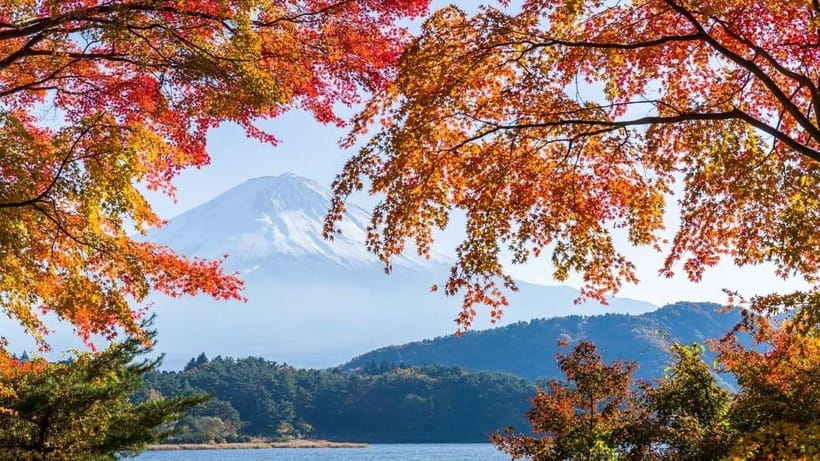
Mt. Fuji’s 5th Station at Komitake Baiten is the most alpine stop offered. At roughly the midway point up the mountain, it provides a chance to feel closer to Japan’s highest peak than you do from the lakes below.
The visit is planned as a photo stop and sightseeing period, with about two hours shown in the schedule. That is a substantial amount of time, though actual access can depend on road conditions and seasonal operations. You must select the 5th Station option when booking if you want it included.
This stop is best for you if getting physically close to Fuji matters more than adding another lakeside village or museum. It may not be the best use of time on a cloudy day, since the high point can disappear into cloud while lower viewpoints remain more attractive.
Bring comfortable shoes and warm, comfortable clothing. Mountain conditions can feel different from Tokyo, and you should not plan this stop in fashion shoes or thin city clothes.
Lake Yamanaka and the Fuji Five Lakes
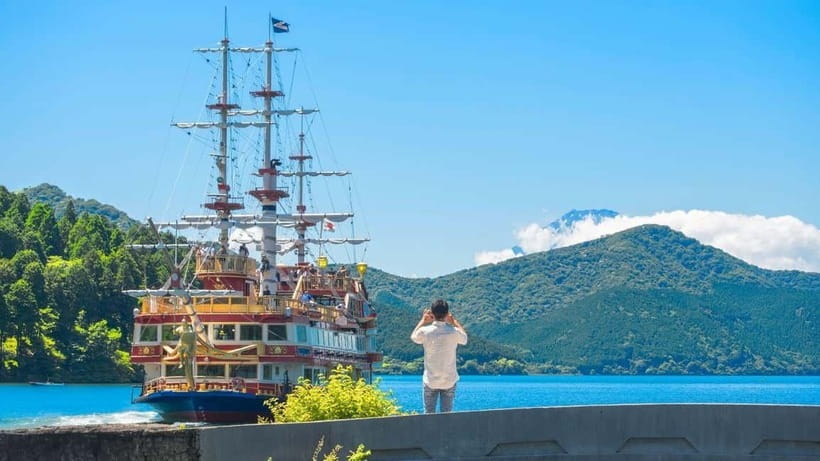
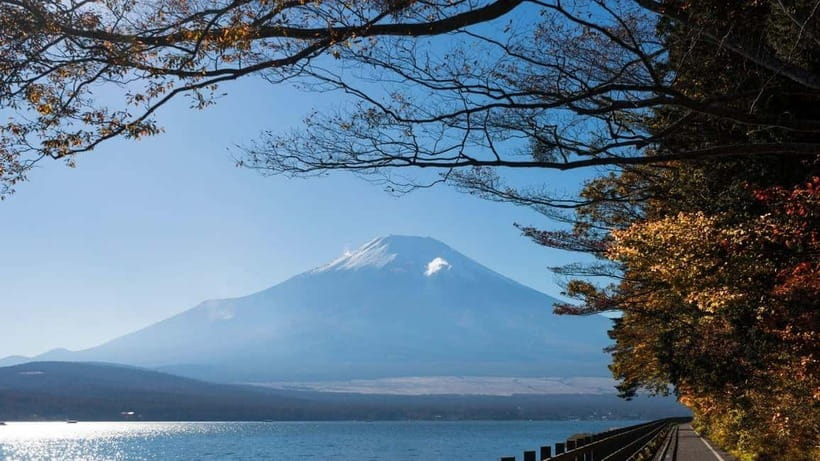
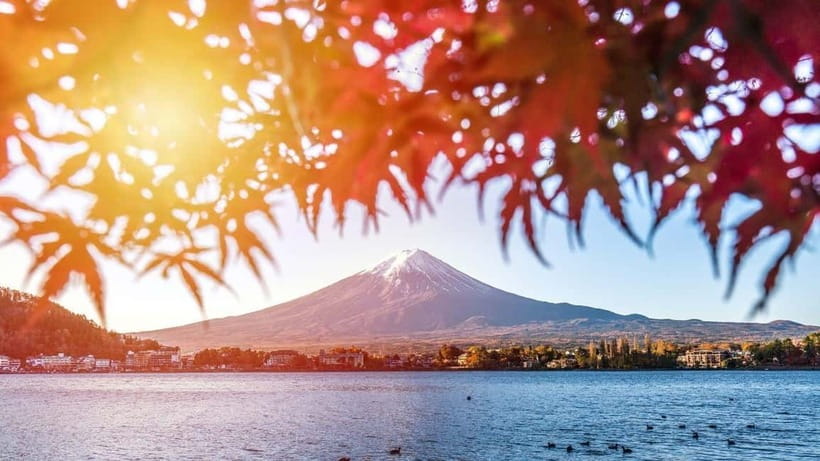
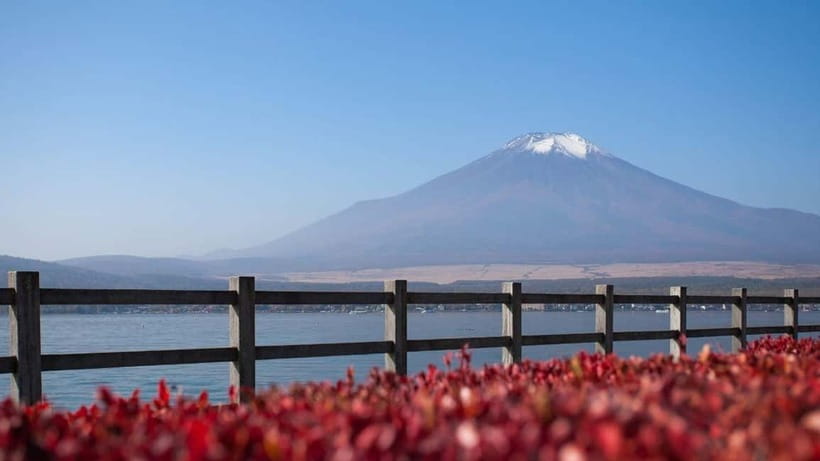
Lake Yamanaka is one of the Fuji Five Lakes and is scheduled for about 45 minutes. Its calm water can reflect Mt. Fuji when the air is clear and still, making this a good early photo stop.
I like this part of the route because it gives you a gentler view of Fuji. The lake, open water, and mountain backdrop create a different picture from the built-up viewpoints near the more famous sightseeing areas.
Forty-five minutes is enough for a walk and photographs, but not a long lakeside outing. If the mountain is hidden, the stop loses some of its impact. This is one reason the private format helps: you can ask your driver how the view looks and decide how much time to spend before moving on.
A few more Tokyo experiences worth weighing up
- 1-Day Tokyo Bus Tour
★ 5.0 · 14,250 reviews - Tokyo: TOKYO SKYTREE® Admission ticket
★ 4.5 · 11,192 reviews - Tokyo: teamLab Planets TOKYO Digital Art Museum Entry Ticket
★ 4.6 · 9,779 reviews - Tokyo: Sumo Show Experience with Chicken Hot Pot and a Photo
★ 4.8 · 6,678 reviews
Owakudani and the smell of volcanic Japan
Owakudani is the day’s most unusual natural stop. This volcanic valley has steaming vents and signs of underground heat, giving it a stronger sense of place than a standard mountain viewpoint.
The famous black eggs are the local snack to try. Their shells darken during cooking in the volcanic area, and buying one adds a small, memorable ritual to the visit. Food is not included, so carry cash and budget separately for snacks and lunch.
The schedule allows about one hour for photographs and walking. Paths and viewpoints can be affected by volcanic conditions, so follow local instructions on the day. Owakudani also tends to be one of the more popular stops, which means you may spend part of the hour moving with other sightseers.
I would keep this stop even if you are not interested in the eggs. The steam, mountain setting, and volcanic ground make it unlike the lake stops later in the day.
Lake Ashi and Hakone’s red torii gate
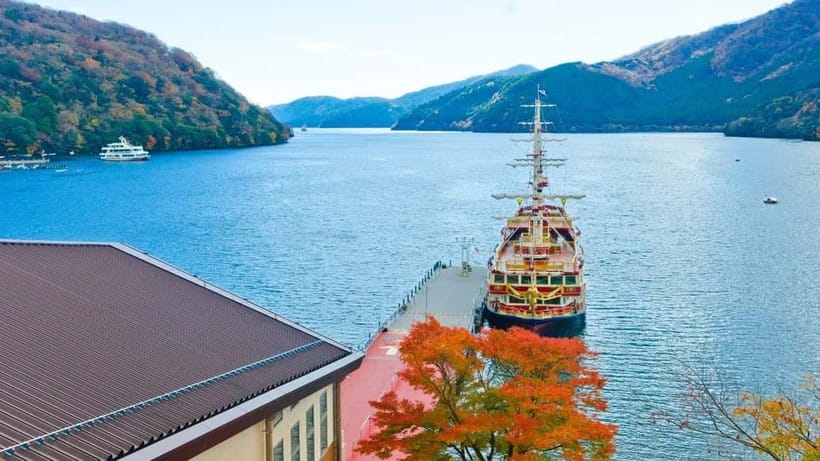
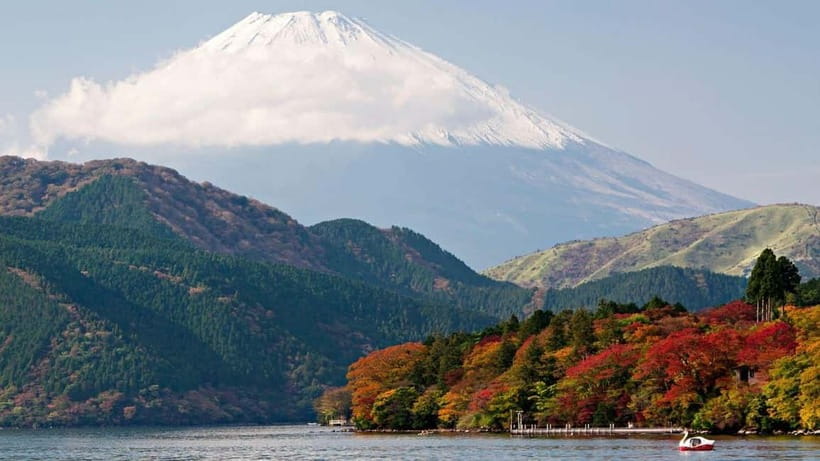
Lake Ashi is the classic Hakone view, with wooded hills around the water and, on a clear day, possible views toward Mt. Fuji. The driving and photo stop here is listed at about 45 minutes.
An optional sightseeing cruise can add a different angle. From the water, you get broad views across the lake instead of seeing it through roadside openings. The cruise is not included in the base price, so check the current ticket cost and available departure times before counting on it.
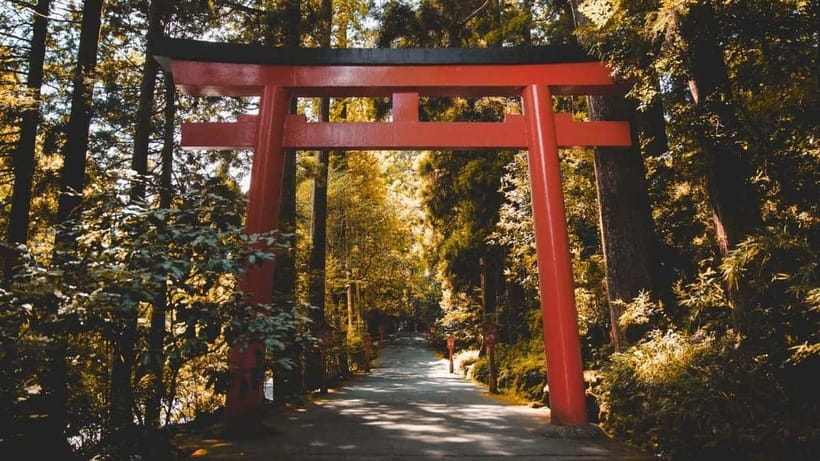
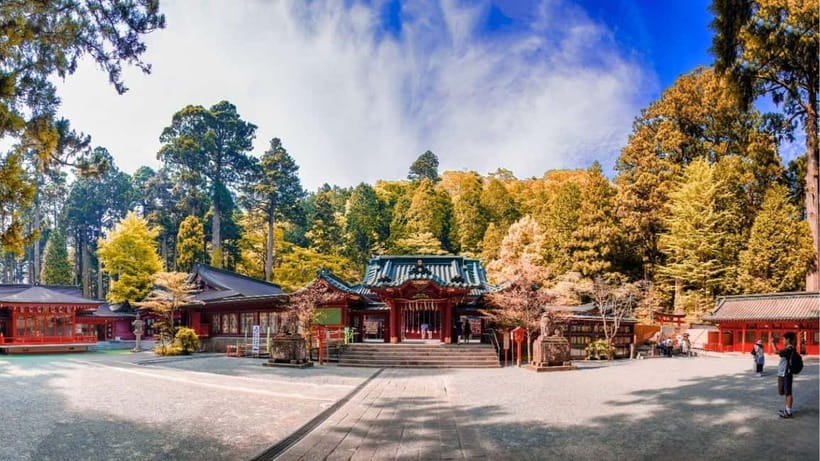
After the lake, the route includes Heiwa no Torii, the famous red torii gate associated with Hakone Shrine. It sits in the water near the lakeshore and is one of the area’s most recognizable photo spots. The visit is planned for about 30 minutes, enough for a short walk and photographs.
The gate is not a quiet secret, and you may need patience for a good picture. Still, it is worth seeing because it combines Japanese religious architecture with the lake setting in a single view.
Lunch in Hakone and the Open-Air Museum
Lunch is allowed about 1.5 hours in Hakone. Food and drinks are not included, but the long lunch window gives you room to choose a local restaurant and eat without turning the meal into a rushed roadside stop.
I would tell the driver early if you have a particular food preference. One guest appreciated having lunch adjusted to suit a craving, which shows the practical benefit of a private car. The exact restaurant is not fixed, so you should not expect a prepaid meal or a set menu.
The Hakone Open-Air Museum follows with about 1.5 hours. Here, sculptures and art installations are displayed outdoors against the surrounding mountains. It gives the day a cultural pause after the lakes and volcanic valley.
The museum is a good choice for you if you want more than scenic photographs. It is less useful if your only goal is to maximize Fuji viewpoints, since every museum minute is time not spent by the lakes. The schedule also mentions a cable car ride, but attraction tickets are extra, so confirm what is operating and what is included before arrival.
Gotemba Premium Outlets: useful, but not for everyone
Gotemba Premium Outlets is planned as a roughly 65-minute stop. It is one of Japan’s larger outlet malls, with international and Japanese brands and possible discounts.
This makes sense as a final stop for shoppers or anyone who wants practical souvenirs, clothing, or gifts. The location can also offer pleasant views toward Mt. Fuji when the mountain is visible.
For you, the key question is how you want to use limited time. If shopping is not a priority, this stop may feel like a detour after an already full day. A private tour should give you a chance to discuss the balance with the driver, but the route cannot create extra hours. I would choose the outlets only if someone in your group genuinely wants to shop.
What the driver adds, and what the driver may not provide
The tour includes an English-speaking driver who can offer travel advice. The strongest practical praise has focused on careful driving, politeness, good communication, and flexibility.
Jabir was praised for driving gently on winding mountain roads and helping a child who became carsick. Anas was described as punctual, easy to communicate with, and willing to support changes to the drop-off point. Umer, Haider, Mohinder, and Deo were also praised for friendliness, photography, and adapting the day to personal needs.
You should understand the difference between a driver and a dedicated guide. The included service is not automatically a full historical tour. One useful piece of feedback was that the sightseeing felt more like a scenic photography day than a lesson in local history.
If you want detailed explanations of Hakone Shrine, Owakudani, and Fuji traditions, request the expert Driver-Guide option when booking. Otherwise, use the driver mainly for transport, practical advice, route adjustments, and photographs.
Price, group size, and extra costs
The price is $488 per private group of up to five. That is not cheap for one person, but it becomes much more reasonable when shared:
- Two people: about $244 each
- Three people: about $162.67 each
- Four people: $122 each
- Five people: about $97.60 each
Those figures do not include food, drinks, attraction tickets, or optional cruise costs. Overtime is charged at ¥2,500 per 30 minutes, payable in cash to the driver. Plan your stops carefully, since a delayed start or slow lunch can become expensive.
The value is strongest for a family or small group that would otherwise need several trains, buses, taxis, and reservations. It is weaker for a solo visitor who is comfortable with public transport and wants to focus on one area at a slower pace.
The vehicle is modern and air-conditioned, and the booking is wheelchair accessible. Food and nonalcoholic drinks can be taken in the car, but a ¥7,000 cleaning charge may apply if the vehicle becomes unusually dirty. Alcohol is not allowed.
Weather, communication, and practical planning
Fuji is a weather-dependent destination. The tour operates in rain unless conditions are judged unsafe, but cloudy weather can hide the mountain and reduce the value of several photo stops. I would avoid making this your only Fuji viewing opportunity if seeing the peak is the central purpose of your Japan trip.
The operator contacts you through WhatsApp the afternoon before the tour, usually around 4:00 to 5:00 Japan time. Make sure the phone number used for the booking can receive WhatsApp messages.
Wear comfortable shoes and clothes, and carry cash. You will need it for food, black eggs, tickets, optional rides, and any overtime. Attractions are paid for on the spot, so do not assume the $488 covers admission.
Free cancellation is available up to 24 hours before departure, and you can reserve now and pay later. Those terms help if your Fuji day needs to remain flexible around weather and other plans.
Who should book this Fuji and Hakone day?
I would recommend it most strongly to families, groups of friends, and visitors who value comfort over the lowest possible price. It is also a good fit if you want photographs, several major sights, and a driver who can adjust the day when someone is tired, carsick, or eager to linger.
It suits first-time visitors who do not want to work out a complicated route across Fuji and Hakone. The private car removes much of the transport stress and makes it possible to finish at a different permitted drop-off point.
I would hesitate if you want a slow, deeply historical tour or a relaxed visit to every stop. The route is full, and the standard driver service may offer only light commentary. I would also think twice if Fuji itself is your only goal, since a tour covering both Fuji and Hakone spends time on many different attractions.
Should you book it?
Book this tour if you want to see a wide set of Fuji and Hakone highlights in one day, especially with four or five people sharing the cost. Select Mt. Fuji’s 5th Station in advance if that view matters, and consider the cruise or Driver-Guide upgrade only after checking the added cost.
Before departure, decide which stops matter most. I would prioritize Fuji visibility, Lake Yamanaka, Owakudani, Lake Ashi, and Hakone Shrine, then treat the museum and outlets as flexible additions. That approach protects the best parts of the day when traffic, weather, or a long lunch trims the schedule.
FAQ
How long is the tour from Tokyo?
The Tokyo version lasts 10 hours, including pickup and drop-off. The operator may adjust timing for pickups or drop-offs outside Tokyo’s 23 wards.
Where can pickup and drop-off take place?
Tokyo pickup and drop-off apply to locations within Tokyo’s 23 wards. The tour also lists Hakone and Fujikawaguchiko as possible pickup and drop-off areas, with different timing.
Is Mt. Fuji’s 5th Station included automatically?
The 5th Station visit must be selected when booking at checkout. Attraction admission and other tickets are not included.
Is the Lake Ashi cruise included?
The Lake Ashi sightseeing cruise is optional and is not included in the base booking price. You should purchase the ticket separately if you choose to take it.
Is lunch included?
No. Lunch and all other food and drinks are paid for separately. The planned lunch stop in Hakone lasts about 1.5 hours.
Is a tour guide included?
The booking includes an English-speaking driver who can offer travel advice. A dedicated expert Driver-Guide is an optional choice, and the standard service does not include a separate guide.
How many people can join the private tour?
The private group can include up to five people. The listed price is charged per group rather than per person.
What happens if the tour runs overtime?
Overtime costs ¥2,500 per 30 minutes and must be paid in cash to the driver. Careful timing is important because the route includes many stops.
Just added around Tokyo
- Tokyo 6hr Instagram Highlights Private Tour with Licensed Guide★ 5.0 · 38 reviews
- Tokyo Small Group Tour with Guide★ 4.5 · 38 reviews
- Tokyo Sumo Experience with Live Show & Audience Challenge★ 5.0 · 38 reviews
- Japanese Food Cooking Class in Asakusa, Tokyo★ 5.0 · 39 reviews
- Very popular in Harajuku♡Animal petting zoo★ 4.6 · 39 reviews
- Ramen Making from Scratch with Tokyo Mom(Vegan Option Available)★ 5.0 · 39 reviews
- Tokyo JDM Night: 600hp C63s AMG Edition 1 (Private)★ 4.9 · 39 reviews
- Tokyo: Kimono Rental inside Shinjuku Gyoen National Garden★ 4.9 · 39 reviews
Mount Fuji Tours, compared.
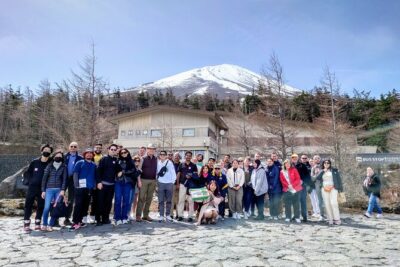
Mt Fuji and Hakone 1-Day Bus Tour Return by Bullet Train
Read our review →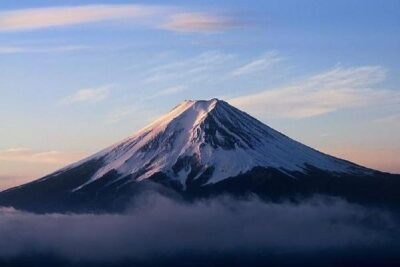
Mt Fuji & Hakone Cruise, Drum Show Bullet Train 1 Day from Tokyo
Read our review →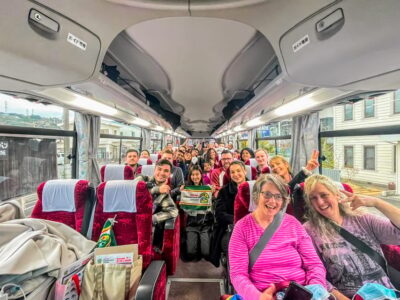
Tokyo Mt Fuji 5th St & Hakone Cruise Bus Tour w/Bullet Train
Read our review →
Mt. Fuji Tour, Hakone Ropeway, Owakudani, Lake Ashi
Read our review →
Mt.Fuji,Kawaguchiko Oishi Park,Arakurayama Sengen Park
Read our review →
Mt. Fuji 5th Station & Hakone Cruise 1-Day Bus Tour
Read our review →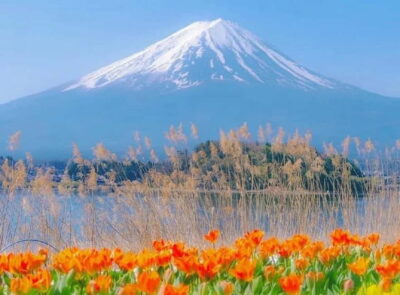
Mt Fuji Top 5 Spots Day Tour: Arakurayama Park,Oshino Hakkai
Read our review →Browse the lists this tour appears in