
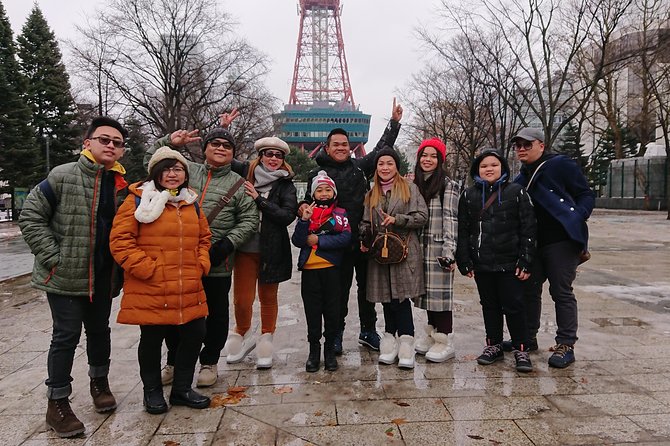
Reviewed · GOVERNMENT-LICENSED GUIDE TOURS
Sapporo 4hr Private Tour with Government Licensed Guide
Sapporo rewards a well-chosen route. This private, four-hour tour gives you a licensed English-speaking guide and the freedom to choose two or three sights instead of following a fixed circuit. I like the hotel-area pickup on foot, and I like how guides such as Roy Aoki, Kumiko Nakamura, Teri, Waka, and Tamaki Yakuwa have shaped outings around food, history, shopping, and local festivals.
The main catch is simple: this is a walking tour, not a private-car tour. Transportation, entrance fees, lunch, and personal costs are extra, so far-flung choices such as Jozankei Onsen, Moerenuma Park, and the Historic Village of Hokkaido need careful planning within four hours.
In This Review
- Key points to know before booking
- What this four-hour Sapporo tour really offers
- Picking the right two or three sights
- Odori Park, the Clock Tower, and Sapporo’s central grid
- Nijo Market and Susukino after dark
- Beer, chocolate, and family-friendly attractions
- Parks, shrines, and mountain views
- The farthest options need careful planning
- Guides who shape the experience
- Price, walking, and what is not included
- Is this Sapporo tour right for you?
- FAQ
- How long is the Sapporo private tour?
- Is the tour private?
- How many sights can I choose?
- Does the guide pick me up at my hotel?
- Is transportation included?
- Are entrance fees included?
- Is lunch included?
- Can I cancel for a full refund?
Key points to know before booking
- Choose only two or three sights: The long list of possible stops is a menu, not a promise to visit them all.
- Meet your guide on foot: Pickup is offered within a designated Sapporo area, but there is no private vehicle.
- Great for city orientation: Odori Park, Nijo Market, the Clock Tower, Susukino, and the Former Hokkaido Government Office fit the central-city format well.
- Guides add personal value: Roy Aoki is praised for planning around individual interests, while Kumiko Nakamura is especially good with food, culture, and subway navigation.
- Allow extra money for admission and transit: Museums, observatories, the ski jump, and some attractions charge separately.
- The price can make sense for a small private group: At $122.20 per person, value depends heavily on group size and how much you use the guide’s local knowledge.
What this four-hour Sapporo tour really offers
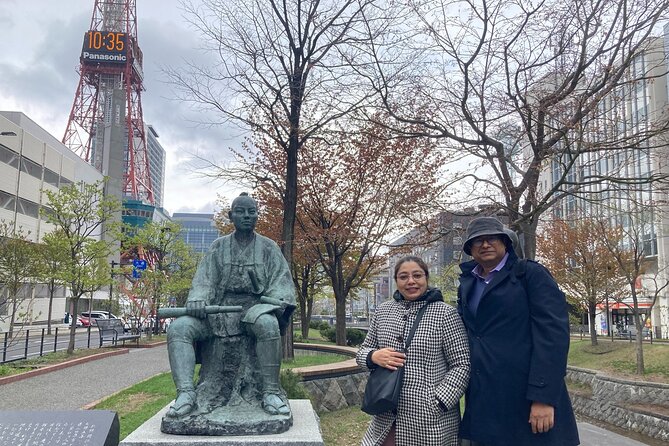
This experience is best understood as a private introduction to Sapporo, not a sightseeing bus ride. You meet a government licensed local guide on foot within the designated area, then build a route around two or three places from a long list of possible sights.
That freedom matters in Sapporo. The city spreads well beyond its compact central grid, and its attractions range from seafood markets and western-style government buildings to ski-jump stadiums, parks, museums, and hot springs. A guide can help you avoid wasting time on a route that looks sensible on a map but is awkward by public transport.
I particularly like this setup for a first day in town. You can ask for help understanding the city layout, Japanese customs, local food, or the best use of a short stay. The guides also seem comfortable adjusting their pace. Kumiko Nakamura has taken guests through Maruyama Park and Hokkaido Shrine, then used a taxi to reach Odori Park and a seasonal lilac festival. Another outing included an okonomiyaki lunch, the Sapporo Beer Museum, and beer tasting.
The four-hour limit is useful, but it also requires realism. Two central sights with time to talk can produce a satisfying morning or afternoon. Three larger attractions may feel rushed, especially if you add admission lines, subway rides, taxis, or a climb to a viewpoint.
More licensed guide tours:
- Sapporo 6hr Private Tour with Government Licensed Guide
★ 5.0 · 57 reviews - Tokyo 6hr Private Tour with Government-Licensed Guide
★ 5.0 · 3,902 reviews - Tokyo 4hr Private Tour with Government-Licensed Guide
★ 5.0 · 1,394 reviews
Picking the right two or three sights
The most important decision comes before the tour begins: tell the guide what kind of Sapporo you want. The available choices fall into several clear groups.
For a first look at the city center, choose Odori Park, the Clock Tower, and the Former Hokkaido Government Office Building. These are close enough to connect sensibly on foot, and together they explain Sapporo’s planned streets, public spaces, and strong western influence.
If food is your priority, choose Nijo Market and the Sapporo Beer Museum. Nijo Market occupies about one city block and sells local seafood, including crab and salmon. The Beer Museum explains why Sapporo became one of Japan’s major brewing centers, with brewing in the city dating to 1877. You can expect food and tasting costs to be separate.
For scenery and local culture, Maruyama Park and Hokkaido Shrine make a good pair. The shrine dates to 1871 and sits beside the park, which is known for seasonal flowers and its 226-meter hill. This combination gives you a quieter break from the central streets and a chance to ask your guide about Shinto customs and Hokkaido’s development.
For families, the Sapporo Science Center may be the strongest choice. It has more than 200 displays, many of them hands-on, and is specifically suited to children. Waka, one of the guides praised for being patient and family-friendly, also has a particular interest in food, which could help families shape a more enjoyable day.
Odori Park, the Clock Tower, and Sapporo’s central grid
Odori Park is the city’s long central green space, stretching about 1.5 kilometers through the middle of Sapporo. It separates the north and south sides of the city and gives you a useful reference point for getting around later.
The park changes with the season. It hosts major events, including the Sapporo Snow Festival in February and an autumn food festival. A guide can explain what you are seeing rather than leaving you to treat the park as only a pleasant strip of grass.
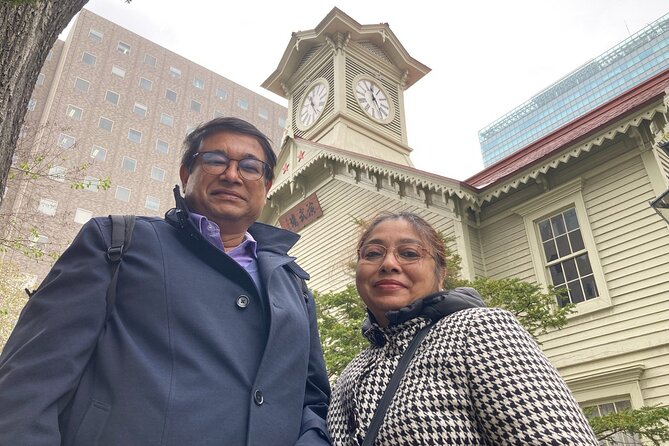
Nearby, the Clock Tower is one of Sapporo’s best-known symbols. Built in 1878 as a drill hall for Sapporo Agricultural College, it reflects the city’s early development and its unusual mix of Japanese setting with western architectural ideas.
The Former Hokkaido Government Office Building adds another piece of that story. Built in 1873, it is one of the clearest examples of western influence in central Sapporo. These stops are valuable less for long visits than for the context a guide supplies. Without explanation, you might see attractive old buildings. With a good guide, you get a clearer sense of how a relatively young Japanese city was planned and built.
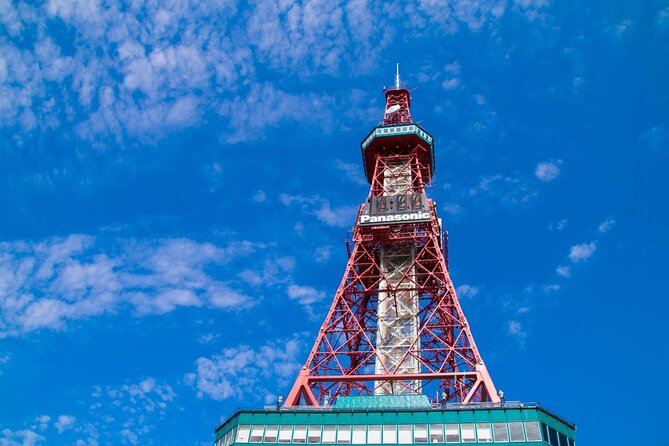
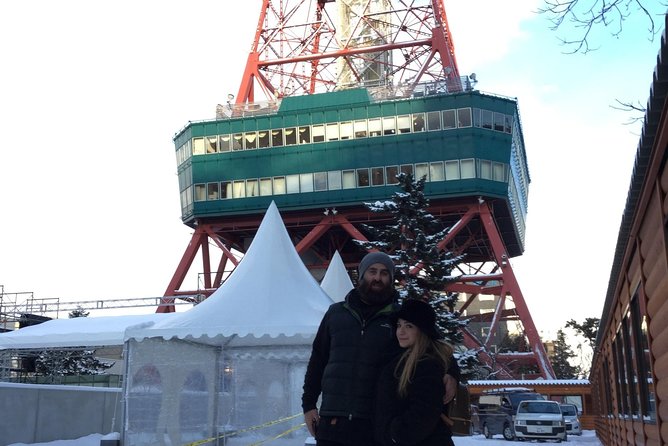
The Sapporo TV Tower is another central option. Built in 1957, it rises 147 meters beside Odori Park and offers city views from its observatory. The admission cost is extra, and a tower visit can consume a useful portion of a four-hour tour, so choose it for the view rather than trying to squeeze it in as an afterthought.
Nijo Market and Susukino after dark
Nijo Market is a practical choice if you want Sapporo on a human scale. It is compact, central, and focused on fresh produce and seafood. You can ask your guide how to approach the market, what local products mean, and where a meal might fit into the day.
Lunch is not included, so plan for that separately. A market stop can also run longer than expected if you want to eat, shop, and browse. I would pair Nijo Market with the Clock Tower or Odori Park rather than with a distant attraction.
Susukino provides a different view of the city. It is Sapporo’s major entertainment district, packed with restaurants, bars, karaoke shops, pachinko parlors, stores, and adult-oriented businesses. It is a useful stop if you want help understanding the nightlife area and choosing where to eat, but it may not suit every family or every daytime itinerary.
The private format helps here because you can state your comfort level plainly. You do not have to follow a group into places that do not interest you, and your guide can keep the visit focused on food, architecture, or street life.
A few more Sapporo experiences worth weighing up
- Sapporo Bar Hopping Food Tour
★ 5.0 · 232 reviews - Hokkaido Seasonal: Lake Toya & Noboribetsu Jigokudani Valley
★ 4.7 · 173 reviews - Sapporo Private Tour with a Local – Highlights & Hidden Gems
★ 5.0 · 91 reviews - Sapporo: Sumo Show Experience with Japanese food & Photo
★ 4.9 · 81 reviews
Beer, chocolate, and family-friendly attractions
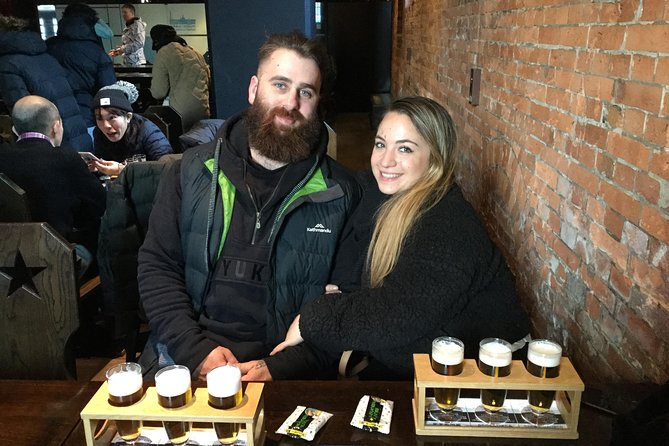
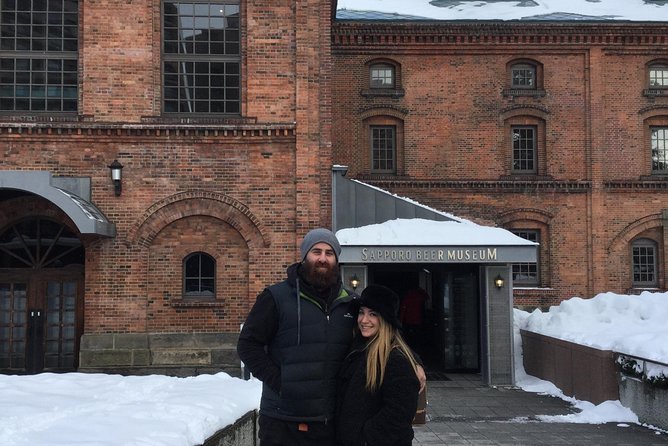
The Sapporo Beer Museum is one of the city’s most distinctive stops. Hokkaido is the birthplace of beer in Japan, and Sapporo Beer has been brewed here since 1877. The museum gives historical context to a brand many people already recognize, while tasting options provide a more relaxed finish.
Admission and tasting costs are not included. If you choose the museum, avoid adding too many other paid attractions. The museum works well with Nijo Market for a food-focused route, though the two are not a substitute for a broad city tour.
Shiroi Koibito Park offers a sweeter version of Sapporo. It is operated by Ishiya, the local company known for its Shiroi Koibito cookies, made with thin butter biscuits and a layer of chocolate. The site is part chocolate attraction and part shopping stop, with admission extra.
This choice may appeal to families and anyone who wants a lighter break from historical sights. It is less useful if your goal is to understand Sapporo’s civic history or see several central landmarks in one short outing.
Sapporo Factory is another indoor option. Opened in 1993, it contains around 160 shops, restaurants, cafes, and entertainment businesses. It can be a sensible choice in poor weather or for souvenir shopping, though it is a commercial complex rather than a traditional cultural site.
Parks, shrines, and mountain views
Maruyama Park and Hokkaido Shrine form one of the strongest pairings on the list. The park is used year-round, while spring brings notable flower displays. The neighboring shrine, founded in 1871, is among Hokkaido’s most important Shinto sites.
This is where a guide can add real value. You can learn how to behave at a shrine, what the buildings represent, and how Hokkaido’s history differs from that of older Japanese regions. Kumiko Nakamura has been praised for explaining Japanese culture and Sapporo’s past clearly in English, and her conversations have included topics ranging from the samurai period to everyday customs.
Mount Moiwa offers a broad view over Sapporo and is one of the city’s most popular scenic spots. The supplied tour information does not include a private ride or guarantee the ropeway or summit access, so ask how the visit will work and check the added fees. A mountain stop is best treated as the main event of the four hours, not a quick extra beside several downtown sights.
Okurayama Ski Jump Stadium recalls the 1972 Winter Olympics, when the 90-meter jump hosted competitions. Today, the site is a sightseeing attraction with a strong Olympic connection. Admission is extra, and reaching it by public transport takes time, so combine it with only one nearby or central stop.
The farthest options need careful planning
Moerenuma Park is a large park on Sapporo’s outskirts, surrounded by marshland and extending for about four kilometers around its perimeter. It is known for attractive grounds and broad open spaces, but its size makes a 30-minute visit feel more like a quick look than a full park experience.
The Historic Village of Hokkaido, also called Kaitaku-no Mura, is an open-air museum with about 60 buildings from the Meiji and Taisho periods. The structures come from different parts of Hokkaido and offer a useful look at settlement and daily life in the region. Admission is extra, and the suburban location means you should not pair it with a long list of downtown stops.
Jozankei Onsen is the most ambitious option. It lies about an hour from central Sapporo inside Shikotsu-Toya National Park, along the Toyohira River and among high cliffs. It is appealing for hot springs and scenery, but a four-hour walking tour cannot realistically treat it like a casual central-city stop. Confirm the route, transport, and timing before choosing it.
The Sapporo Science Center is also outside the core sightseeing cluster, but it may be worth the extra movement if you are traveling with children. Its interactive displays give younger visitors something to do while adults learn about science and the natural world.
Guides who shape the experience

The strongest theme in the guide feedback is personal attention. Roy Aoki is praised for punctuality, city knowledge, and adjusting the route to individual needs. One custom outing included the Beer Museum, a high observatory, Odori Park, and a seasonal food event.
Kumiko Nakamura appears especially versatile. She has guided visits to seafood markets, the TV Tower, local shops, Maruyama Park, Hokkaido Shrine, and food stops. She has also helped people use the subway and discussed Hokkaido culture in detail.
Teri is described as professional and friendly, while Waka is praised for patience, family focus, and practical food knowledge. Tamaki Yakuwa, also called Tom, has been appreciated for explaining Sapporo’s history and helping with subway navigation.
You cannot select every guide in advance from the information provided, so it is wise to send clear interests when booking or in your pre-tour message. Mention children, mobility concerns, food goals, seasonal events, shrine visits, shopping, or a wish to use public transport.
Price, walking, and what is not included
The listed price is $122.20 per person. For one or two people, that is not a cheap city walk. For a private group, the cost may be reasonable because you are paying for a licensed guide’s time, route planning, local explanations, and the ability to avoid a generic group schedule.
The value improves if you need help with Sapporo’s subway system, want English explanations, or have a short stay and cannot afford a wrong turn. It falls if you mainly want transportation, several distant sights, or entry into multiple paid attractions.
You pay separately for transportation, admissions, lunch, and personal purchases. There is no private vehicle, and the pickup is on foot within a designated area. Most people can participate, service animals are allowed, and the tour operates as a private activity for only your group.
The experience has a 98 percent recommendation rate and a 4.9 rating from 42 reviews, which supports the idea that guide quality is its main strength. Still, the route itself depends on your choices, the guide assigned, weather, transport, and how much time you spend at each stop.
Is this Sapporo tour right for you?
Book it if you have four hours, want a private introduction, and care more about useful local context than checking off every landmark. It is particularly good for first-time visitors, families, older couples who prefer a measured pace, and anyone who wants help connecting food, history, and daily life.
I would choose a central route with Odori Park, the Clock Tower, Nijo Market, the Former Hokkaido Government Office, Susukino, or the Beer Museum. Choose only one major outlying attraction, such as Mount Moiwa, Okurayama, Moerenuma Park, or the Historic Village.
Skip it if you expect a chauffeur, a fixed all-inclusive price, or a full-day tour of every place listed. The best way to use this experience is to arrive with two priorities, let the guide build the practical route, and keep enough time for conversation. Free cancellation is available up to 24 hours before the start time, which gives you some flexibility if your Sapporo plans change.
FAQ
How long is the Sapporo private tour?
The tour lasts approximately four hours.
Is the tour private?
Yes. Only your group participates in the activity, and multiple tour groups cannot be combined.
How many sights can I choose?
The included service provides a customizable tour covering two or three sites from the available list.
Does the guide pick me up at my hotel?
Pickup is offered on foot within a designated area of Sapporo. The tour does not provide a private vehicle.
Is transportation included?
No. Transportation fees are not included, and the tour is described as a walking tour. Public transportation or a taxi may be needed for some selected sights.
Are entrance fees included?
Entrance fees are not included. Guide entry fees are covered only for sights listed under the tour’s specified expectations.
Is lunch included?
No. Lunch and other personal expenses are separate.
Can I cancel for a full refund?
You can cancel at least 24 hours before the experience start time for a full refund. Changes or cancellations made less than 24 hours before the start time are not accepted for a refund.
Just added around Sapporo
- Sapporo: Furano Flower Sea & Biei Blue Pond Tour w/ Pickup★ 4.0 · 40 reviews
- 2 hours sushi class★ 5.0 · 40 reviews
- One Day Highlights Tour of Sapporo★ 5.0 · 41 reviews
- [Biei/Furano] One-day sightseeing by private car!★ 5.0 · 43 reviews
- Wagashi traditional japanese sweets class★ 5.0 · 49 reviews
- From Sapporo: Hokkaido Highlights Day Trip★ 4.6 · 56 reviews
- Sapporo 6hr Private Tour with Government Licensed Guide★ 5.0 · 57 reviews
- 【Private Car】Asahiyama Zoo, Blue Pond, Shirahige Falls, Ningle Terrace (from Sapporo)★ 5.0 · 60 reviews
Government-Licensed Guide Tours, compared.
Tokyo 6hr Private Tour with Government-Licensed Guide
Read our review →
Tokyo 4hr Private Tour with Government-Licensed Guide
Read our review →
Kyoto 6hr Private Tour with Government-Licensed Guide
Read our review →
Hiroshima / Miyajima Full-day Private Tour with Government Licensed Guide
Read our review →
Kyoto 4hr Private Tour with Government-Licensed Guide
Read our review →
Hiroshima City 4hr Private Walking Tour with Licensed Guide
Read our review →
Private Kyoto Tour with Licensed Guide & Vehicle (Max 15 persons)
Read our review →Browse the lists this tour appears in